Week-4 Challenge WOT Condition Part-2
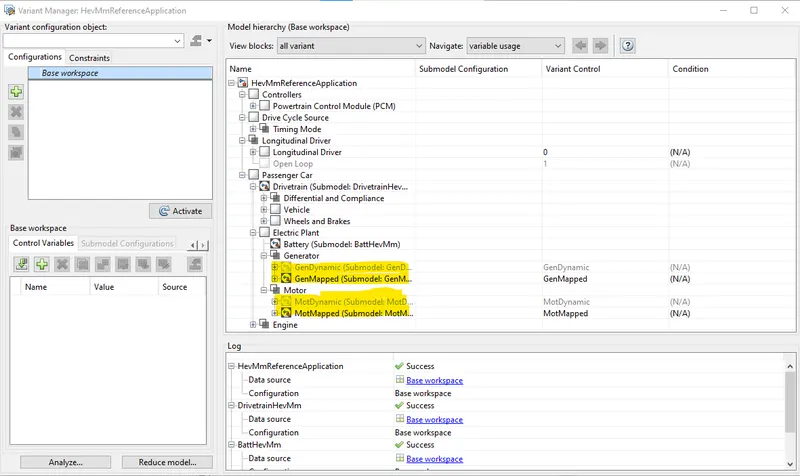
- What is the difference between mapped and dynamic model of engine, motor and generator? How can you change model type?
Answer :
Power train blockset provide two types of models : Mapped and Dynamic Models
Mapped Models :
Mapped Models (Engine, Motor, Generator) uses preassigned data only in lookup tables means it runs on the data which is predefined for the Models and has not real time considerations.
Take less time for simulation but output is not that accurate.
Dynamic Models :
Dymanic Models(Engine, Motor, Generator) generate the final output by combining the output of variour subsystems which is fed as an input in real time for the Simulations.
Simulation of Dynamic Models that longer time but result is very much accurate.
How can you change model type?
Change the model in Simulink - Modelling - Variant Manger
2. How does the model calculate miles per gallon? Which factors are considered to model fuel flow?
Miles per gallon (MPG) is a fuel Economy rating determined by how far a car can travel on a gallon of gasoline or disel. Although the metric version would be kilometres per litre, MPG is adopted in many metric-system countries, like Canada.
To calculate the fuel flow, battery Power and Vehicle Speed taken into consideration.
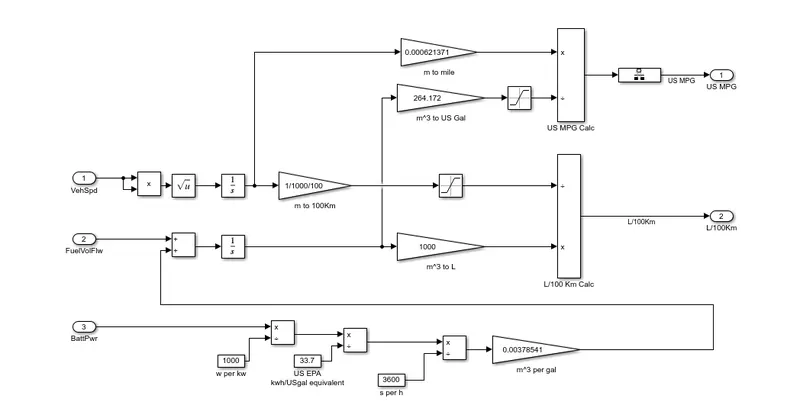
As shown in above Model,
1) Battery Power in Watt converted into KW and than KWh.
2) converted into kwh/USgal equivalent by dividing 33.7. and again convetred into US gallen per second.
3) US gallen per second multiple with standard value 0.00378541 and converted into m3 per gallen and finally added with fuel vol. flow .
4) Vehicle Speed intergrated to get distance in meter which again converted into mile by multipling with 0.000621371.
5) Finally we get US MPG by divide distnce in mile by US gallen.
- Run the HEV ReferenceApplication with WOT drive cycle. Change the grade and wind velocity in the environment block. Comment on the results.
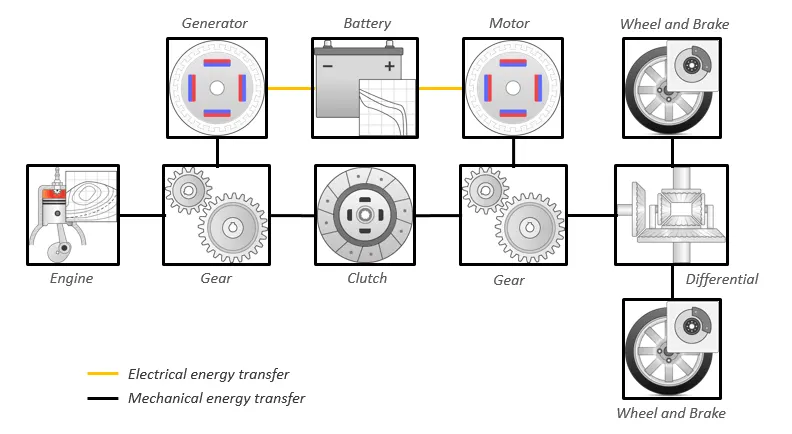
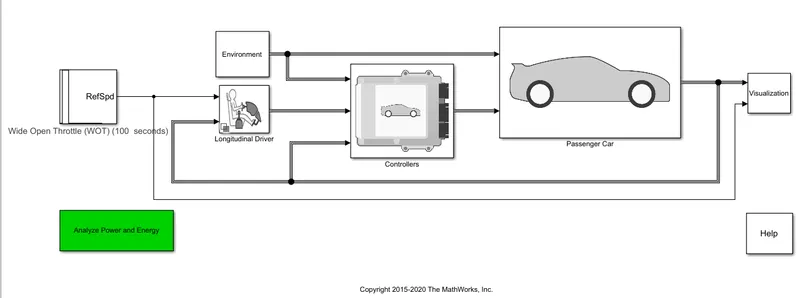
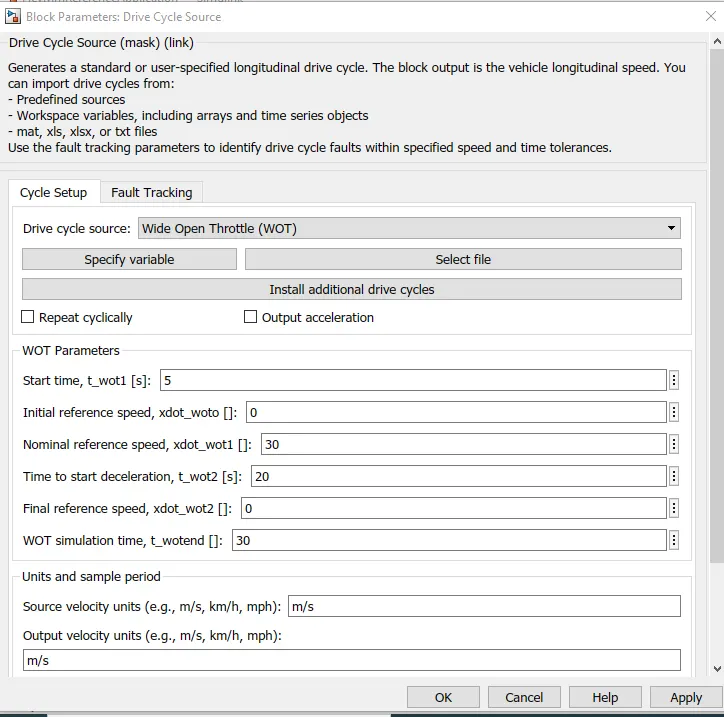
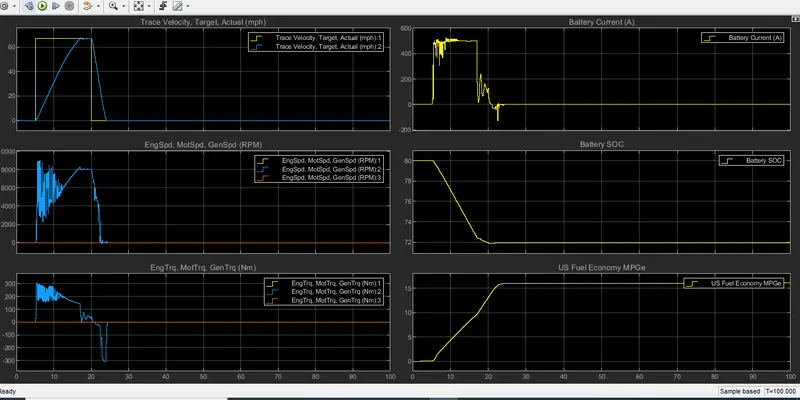
Grade = 7, Wind Velocity = 20m/s
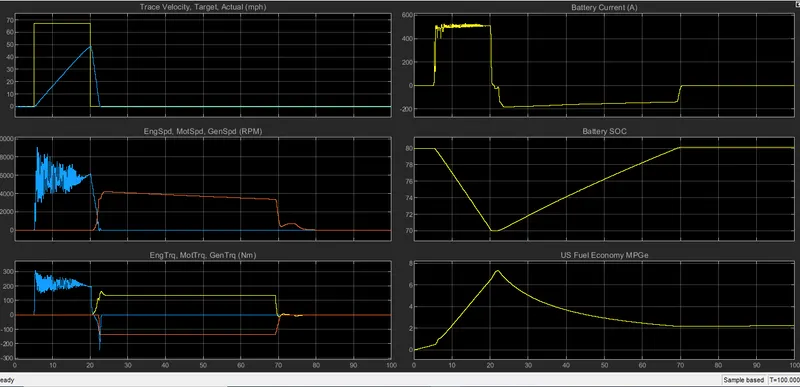
Graph 1: The Vehicle Speed reach to its Max at 20 sec and start decreasing.
Graph 2: Due to Drive and Wind energy resistance , high motor power required at starting as battery is full charge. initially, Engine and Generator not required, so they both overlapped and almost zero value when vehicle reach its maximum speed.But when battery is discharging and Battery SOC reached 70%, than Engine will start to maintain vehicle speed and generator also start to charge the battery.
Graph 3 : Intially Vehicle start and reach its max speed with the help of Battery power, hence the motor torque is high value and when vehicle speed decrease than no need of Motor torque i.e(its value is negative) and goes to constant value once the battery going to charing state.Engine torque is increasing beacusebattery SOC reach 70%, and generator torque is negative means charge the battery.
Graph 4 : When vehicle use electrical motor than only its use to generator power for the motor. Intially increase because Vehicle start with Motor Power and than no current when vehicle speed decrease.when charing of battery , battery current is almost constant.
Graph 5 and 6 : Self Explainery, battery charing decreasing SOC also decrease and at (SOC of 70%) when the battery is in charing state battery SOC increase. Graph 6 show use of fuel during vehicle running.
Keeping all other parameters same, compare the simulated results of hybrid and pure electric powertrain
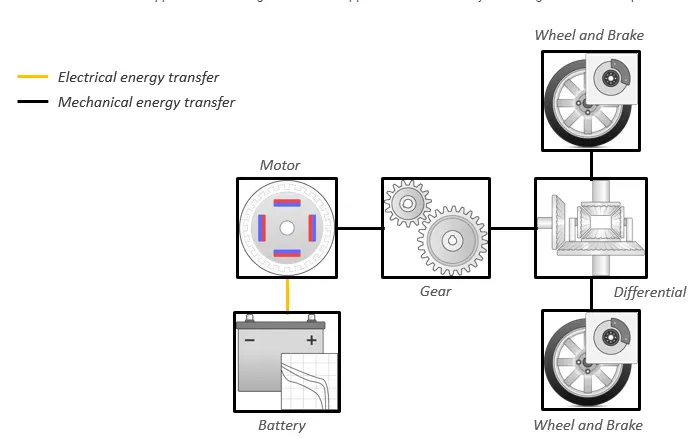
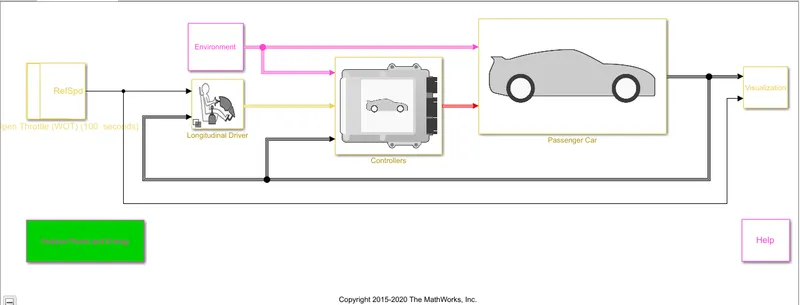
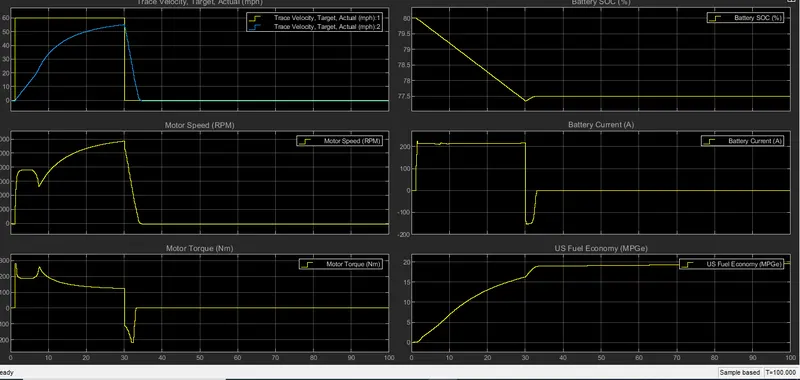
1) Vehicle speed in EV is above 50mph which is greater than HEV.
2) Time required to reached its maximun speed is 30 sec which is greater than HEV.
3) Motor Speed is less in EV than HEV.
4) Motor Torque is same as follow than same path in EV and HEV , but in HEV reach upto 300Nm.
5) battery Current in HEV is 400 A and in EV is 200A.
6)Fuel Economy is high in EV than HEV.