Week-4 Challenge WOT Condition Part-2
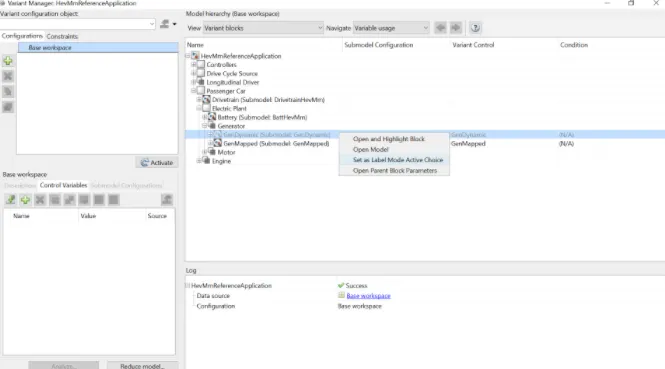
1. What is the difference between mapped and dynamic model of engine, motor and generator? How can you change model type?
Powertrain block set provides in two types of combustion engine models: mapped and dynamic.
- Mapped engine: Mapped engine is the defualt setting in powertrain blockset.
- Mapped engines represents macro engine behaviour as a set of lookup tables(brake torque, fuel flow,air mass flow , exhaust temp.,efficiency,and emission.) as a function of command load measured.
- Mapped motor: The mapped motor in torque control mode.This type is used when the user requred a fater simution.
- Input torque or speed can be specified, electrical losses and maximum motor power and torque can be defined.
- Mapped generator block is also simmilar like other blocks.Most of the data required is taken from the lookup tables corresponding to the given input parameters.
- Dynamic engine:This type of model uses real time data fed by the user at run time for modelling. This model is more accurate then mapped than mapped engine model.
- The Dynamic motor works in torque controle mode.This type of motor is used when the user required a faster simulation and more than the three phase interior permanent magnet synchrounums motor is used.
- The generator involves user entering the parameters naually during the run time for their particular applications.
Open the Ev model in simulink.
Enter the passenger car block by double clicking it.
Then go to electric plant block.
Inside the motor click it to find the vraiant option.
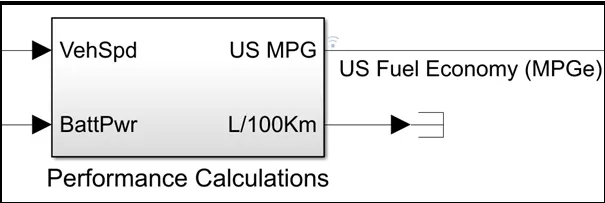
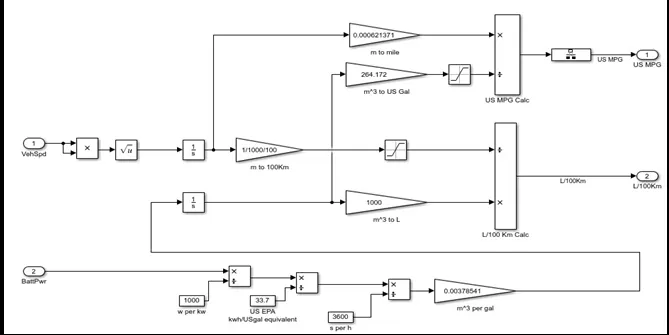
2.How does the model calculate miles per gallon? Which factors are considered to model fuel flow?
MPG, or miles per gallon, is the distance, measured in miles, that a car can travel per gallon of fuel. MPG is also the primary measurement of a car's fuel efficiency: The higher a car's MPG, the more fuel efficient it is.
A car's MPG can be inconsistent because it is affected by a number of different factors, so it is difficult to get an accurate measurement. For example, factors like traffic and road conditions can affect MPG in any given context. That's why the EPA runs tests over a standard set of courses, then averages the results to calculate a vehicle's official MPG.
The EPA gives each vehicle three different MPG ratings:
- Highway MPG: the average a car will get while driving on an open stretch of road without stopping or starting, typically at a higher speed.
- City MPG: the score a car will get on average in city conditions, with stopping and starting at lower speeds.
- And, combined MPG, a combined average of highway and city MPG.
In recent years, the EPA has expanded its testing capacity to include alternatively-fueled vehicles including electric vehicles. These ratings calculate the equivalent amount of energy that a vehicle uses to one gallon of traditional fuel. This allows consumers to compare the fuel efficiency of electric vehicles with regular ones.
MPGe is determined by converting the vehicle consumption per unit distance, as determined through computer modeling or completion of an actual driving cycle, from its native units into a gasoline energy equivalent.

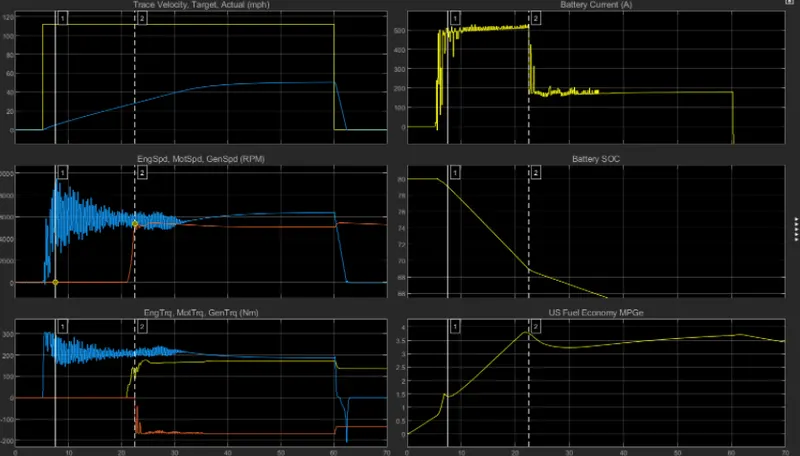
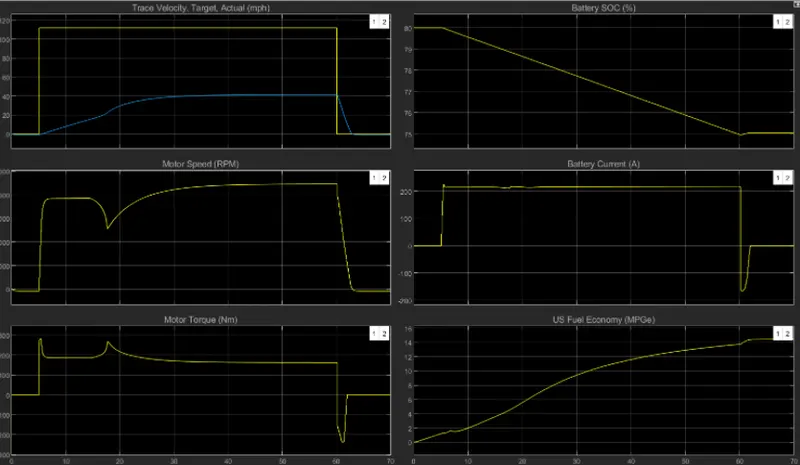
| Parameter | Hev results | EV Results |
| Top speed (mph) | 50 | 42 |
| Top motor (RPM) | 6224 | 4544 |
| Top motor torque(Nm) | 300 | 298 |