Wide Open Throttle Vehicle Characteristics
Wide Open Throttle Vehicle Characterstics
1.What is the difference between mapped and dynamic model of engine, motor and generator? How can you change odel type?
Ans: A mapped model of Engine, motor or a generator means that they operate based on the data which is provided in a lookup table, i.e we are simulating based on the existing data that we have tabulated.
Lets take the example of a Mapped motor used in a EV Reference Model in powertrain blockset.
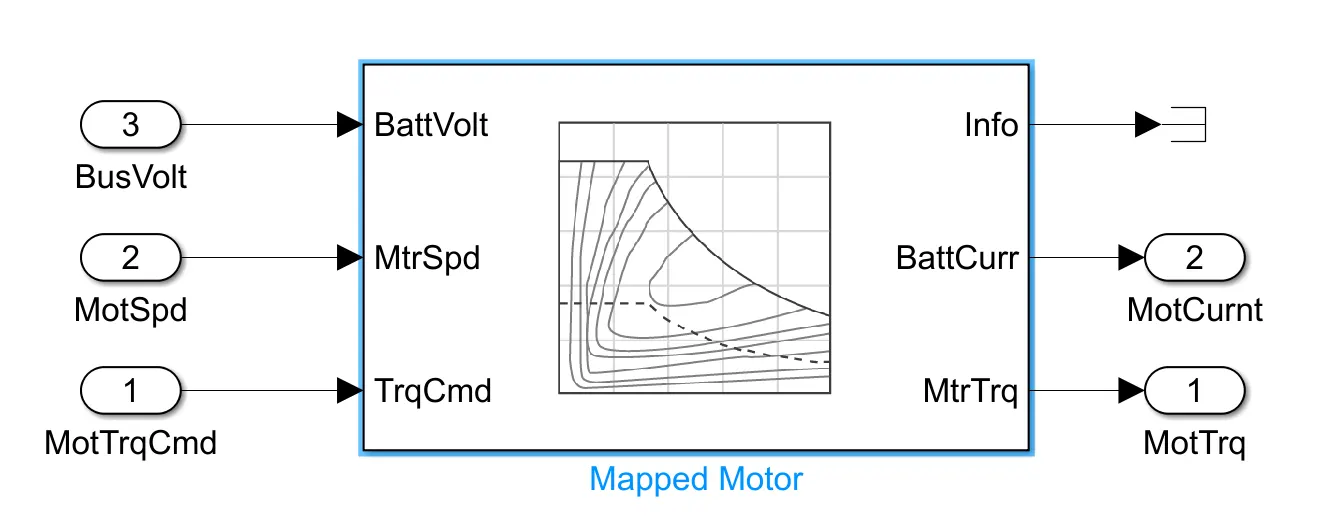
- The mapped motor blockset implements a mapped motor and drive electronics operating in torque-control mode.
- We Specify electrical torque range with a torque-speed envelope or maximum motor power and torque.
- Output torque tracks a torque reference demand and includes a motor and drive response time constant.
- We can also specify electrical losses as a single operating point that estimates loss across the operating range, measured loss, or measured efficiency.
- The block assumes that the speed fluctuations due to mechanical load do not affect the motor torque tracking.
Here we have parameterized Electrical torque by Maximum torque and power.
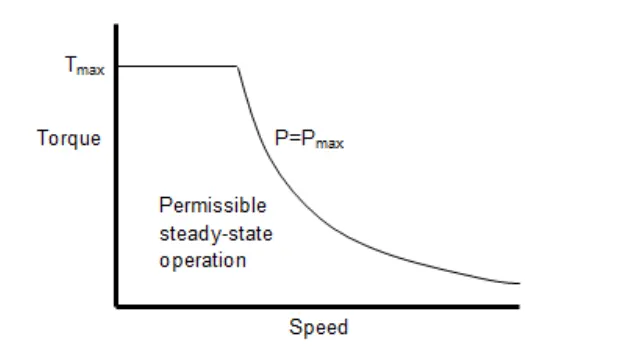
So we are having a motor which is 80Kw and can produce a maximum torque of 280 N-m. This block will generate a Torque Power envelop based on our data.
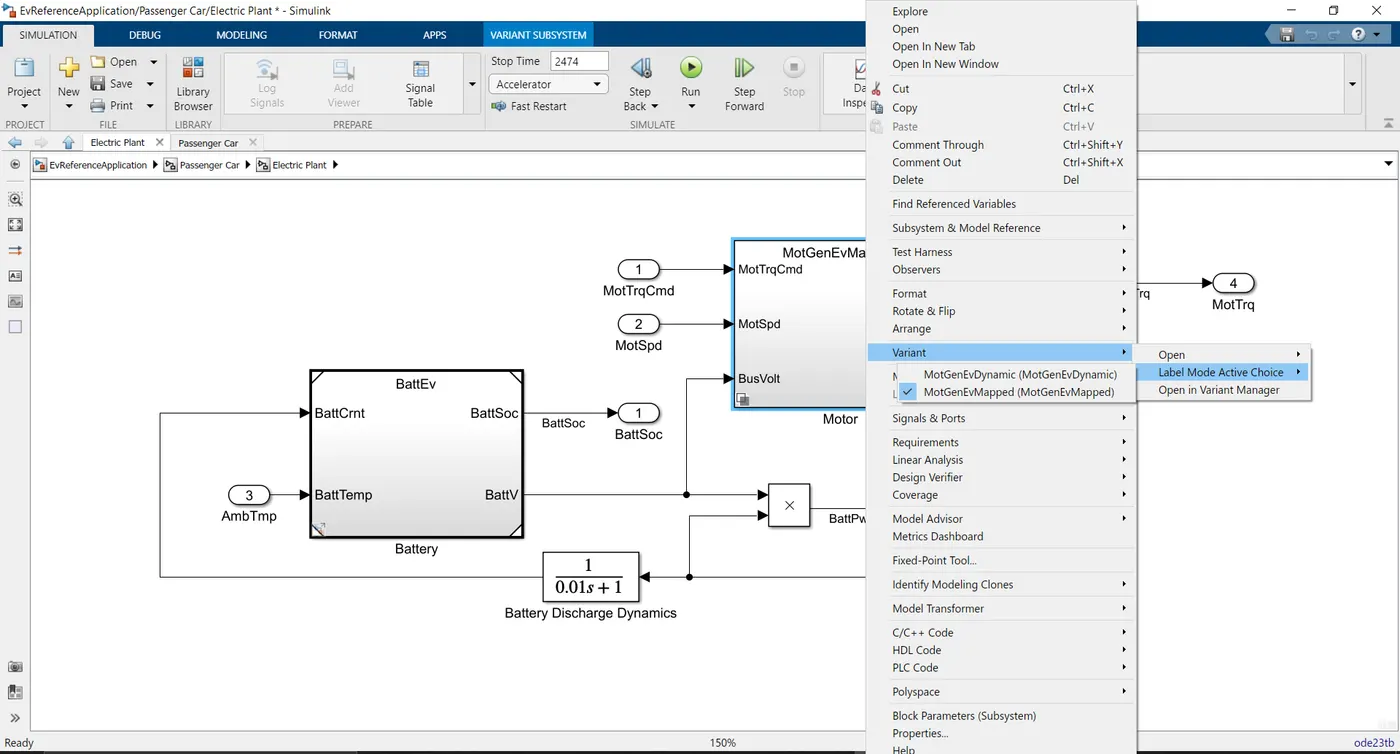
Now for chaning the varaint type to Dynamic Motor, we will change the variant as shown below:
A Dynamic Motor model is used when we want to simulate the actual motor using its components that enable a motor to work.
Lets take the example of the Dynamic Motor variant in the EV reference model.
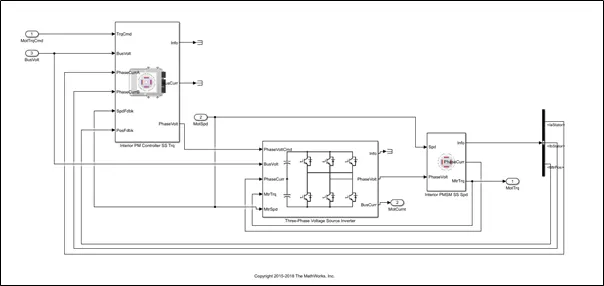
Here we have a interior permanent magnet controller which Torque-based, field-oriented controller for an internal permanent magnet synchronous motor and a 3 phase voltage source inverter.
Simiarly we have a mapped SI or mapped CI engine, which works with data provied in lookup table while a dynamic model of a engine will have different type of actuators, piston movements, fule injection etc, and we can use dynamic model while working on these parameteres specifically.
2.How does the model calculate miles per gallon? Which factors are considered to model fuel flow?
Ans:
Miles per gallon gasoline equivalent (MPGe or MPGge) is a measure of the average distance traveled per unit of energy consumed. MPGe is used by the United States Environmental Protection Agency (EPA) to compare energy consumption of alternative fuel vehicles, plug-in electric vehicles and other advanced technology vehicles with the energy consumption of conventional internal combustion vehicles rated in miles per U.S. gallon.
The unit of energy consumed is 33.7 Kilowatt hours without regard to the efficiency of conversion of heat energy into electrical energy, also measured in Kilowatt hours.
The equivalence of this unit to energy in a gallon of gasoline is true if and only if the heat engine, generating equipment, and power delivery to the car battery are 100% efficient.

Here the model is calculating miles per gallon using the block shown below:
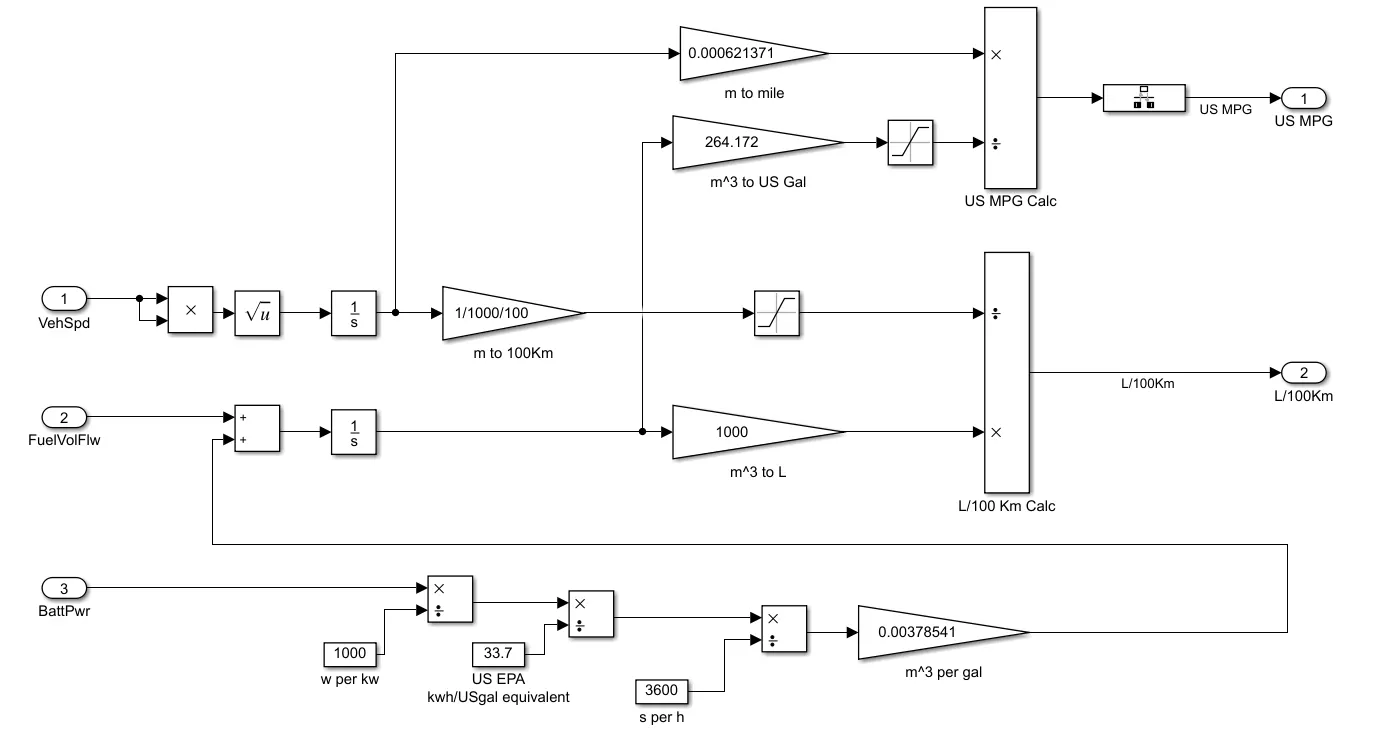
Using simulink block the formula for MPGe is evaluated, we can see that the velocity is converted into distance, and as the Hybrid vehicle has two fuels, we can observe the total fuel consumed is calculated and then we divide the total distance travelled by the total fuel consumed.
To calculate the fuel economy for high-fidelity models, the block uses the volumetric fuel flow.
`Q fuel = m_(fuel)/ ( (1000kg )/(m^3 )Sg_(fuel`
The equation uses these variables.
| m_fuel | Fuel mass flow |
| Sgfuel |
Specific gravity of fuel |
| Qfuel |
Volumetric fuel flow |
3.Run the HEV ReferenceApplication with WOT drive cycle. Change the grade and wind velocity in the environment block. Comment on the results.
Ans :
WOT Drive cycle for HEV :
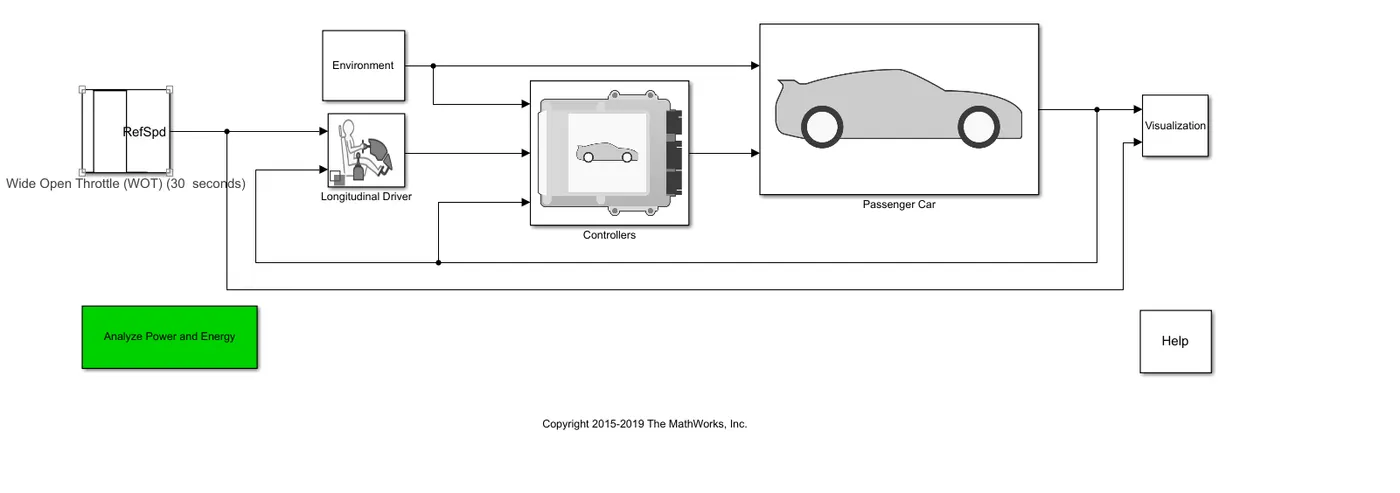
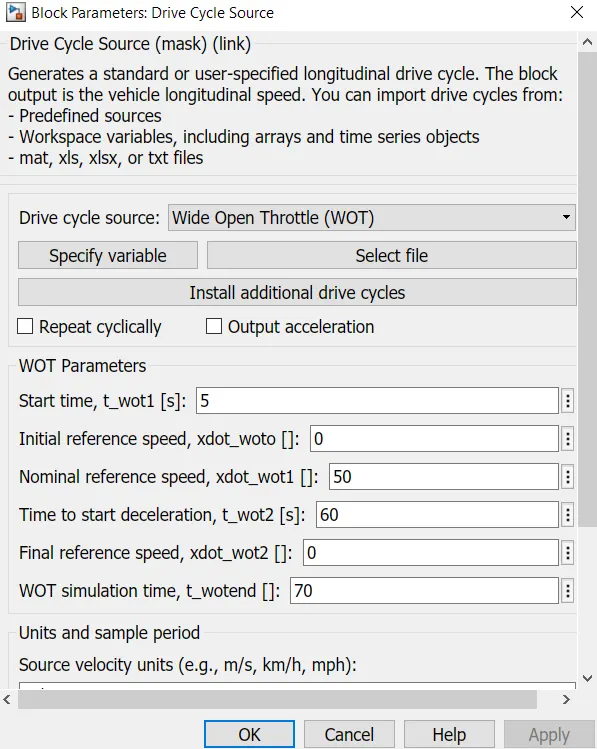
WOT Cycle Inputs are given as below :
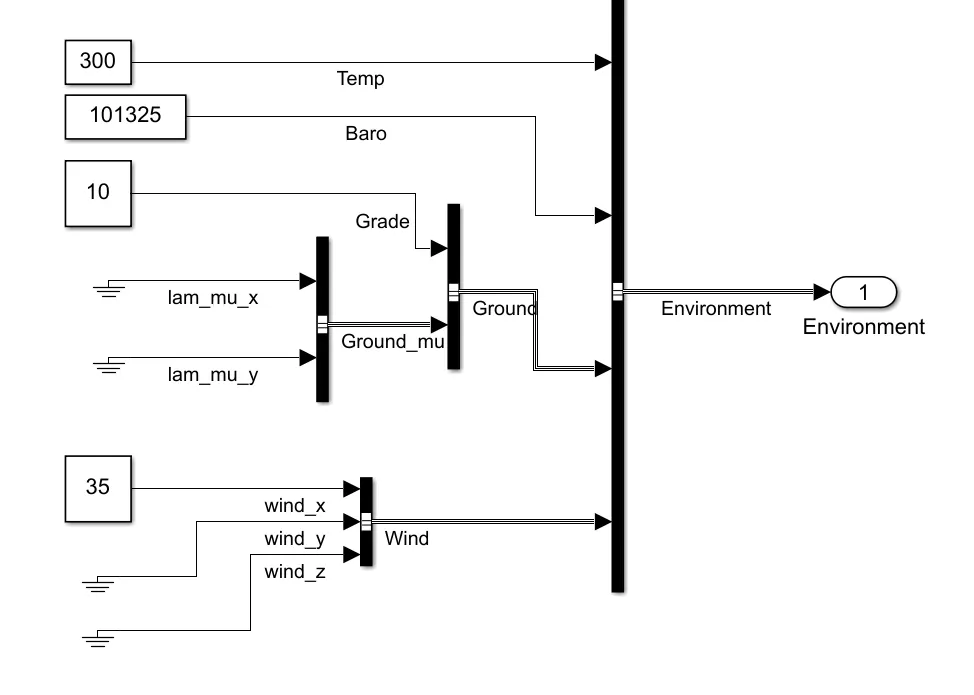
Enviroment variables are given as below : We are giving the grade of 10 degrees and a wind velocity of 35m/sec.
Lets look at the results in the FE Scope :
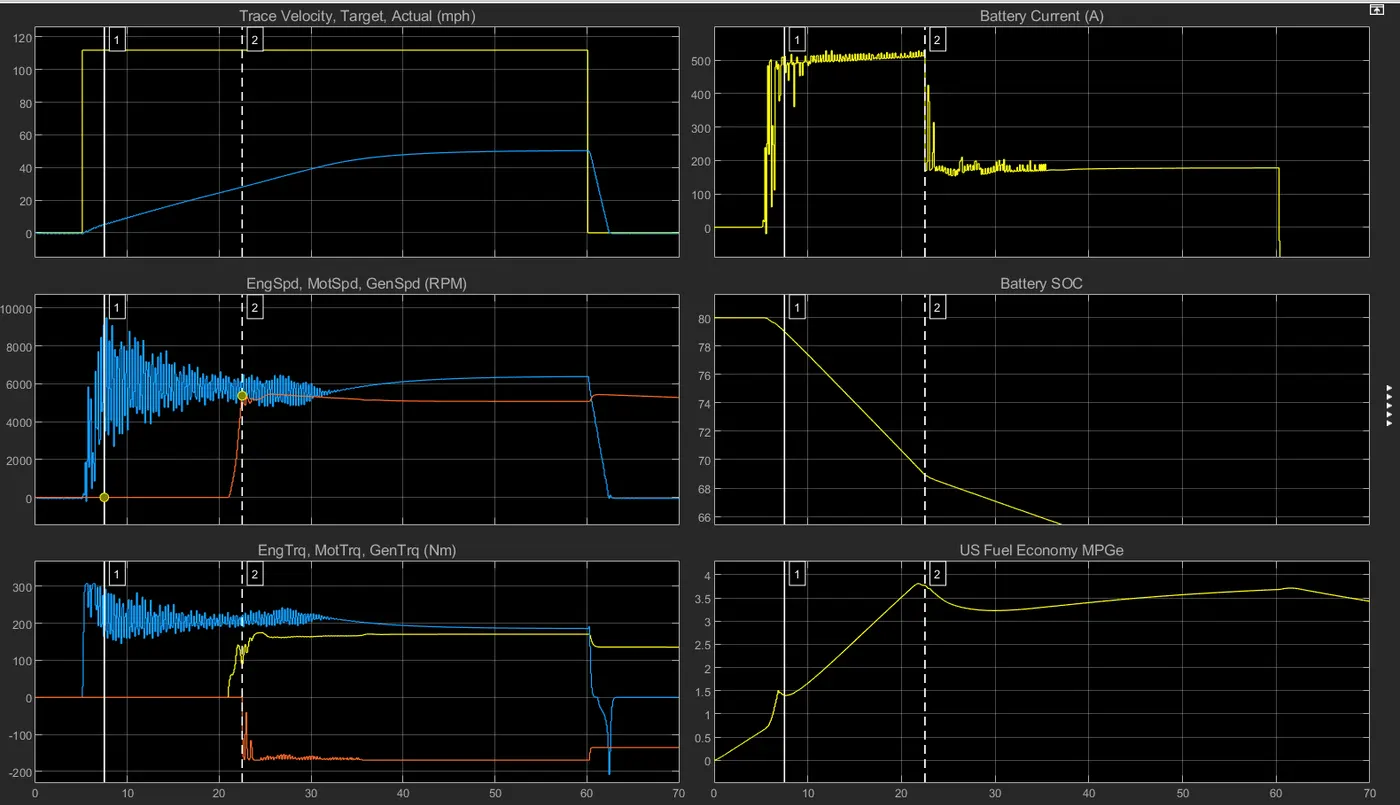
Trace Velocity , Target Actual : Here we can see that the Actual velocity is lagging from Target velocity, that means the HEV is not eqipped with sufficient power to achive the target velocity instantaneously.
Engine Speed,Motor Speed, Generator Speed : We can observe that the engine speed (depicted by red line) is 0 rpm till about 25 secs , i.e only battery is rotating the motor. The motor speed (depicted by blue line) is significantly higher than the engine speed throughout the cycle. And the generator speed traces the same path as of the engine speed, as when the engine is operating the genrator is operating as well.
Engine Torque, Motor Torque, Genrator Torque: Here again we can see that the maximum torque is produced by the motor (depicted by blue line) rather than engine (depicted by yellow line) and kicks in around 25 secs. The Motor is producing a torque of about 306 Nm. The gerator is operating in sync with the engine.
Battery Current : We can observe that the current increases till 25 secs as only the motor is producing the torque required to achive the target speed, later on, as soon as the engine kicks in, we can see a decline in the current used, but as the motor is still operating, it doesnt reduces to zero.
Battery SOC : The SOC decreases till the engine starts operating, this is when we can observe the depletion slope reducing, it doesn't decreases to zero, as the motor is still operating.
US Fuel Economy : There is rise in MPGe, till the engine kicks in, then there is slight decrease as the engine kicks in and increases the total fuel energy being used.
4.Keeping all other parameters same, compare the simulated results of hybrid and pure electric powertrains.
Ans: With all the parameteres of WOT and the Enviroment variables same, if we run a fully electric vehicle and observe the results :
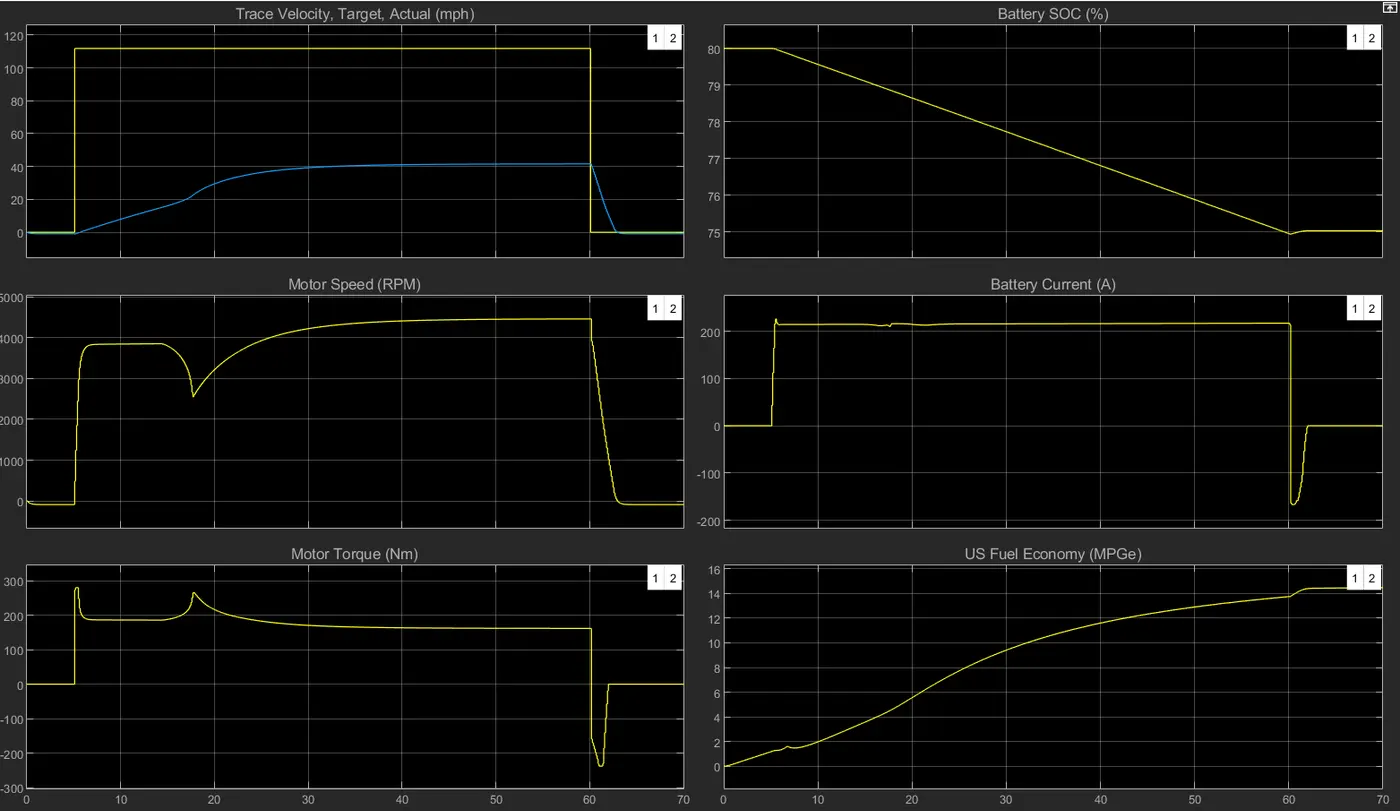
Here, we can observe that the Actual velocity is not able to match the target velocity, i.e required power is greater than what can be supplied by the motor of our EV.
Lets observe the differences in the models in terms of Motor performance :
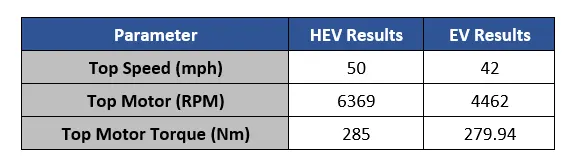
The SOC and the Current values will be totally different, as in the HEV when the engine kcks in so does the generator which changes the SOC and the current requirement.
But the EV draws a higher current of 217 Amperes while the maximum current drawn by the HEV is 177 Amperes.
The MPGe for the HEV is lower than that for the EV. The MPGe for the EV is in the range of MPGe.