Week-4 Challenge WOT Condition Part-2
OBJECTIVE-1 : DIFFERENCE BETWEEN MAPPED AND DYNAMIC MODEL OF ENGINE, MOTOR AND GENERATOR & TO CHANGE THE MODEL TYPE
SOLUTION:- Mapped model and dynamic model schemetic are shown below -
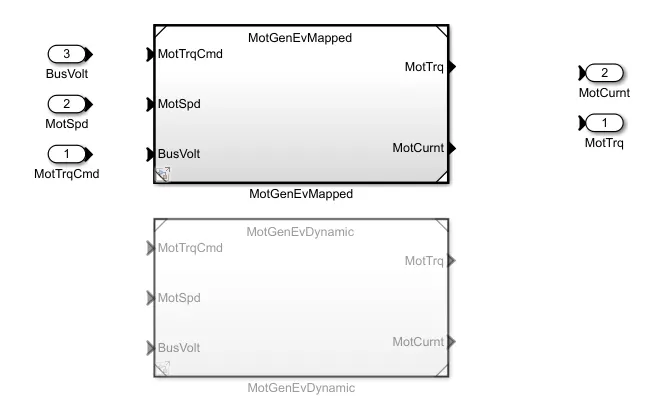
1. Mapped Model
- It is a type of model in which data types are pre assigned in the look up tables.
- Predefined data can be entered as parameters and can be run after feeding up the data for mapped motor.
- Output values are stored for the corrosponding input values of engine motor & generator.
- The simulation is not that much accurate as of real time but it reqires much less simulation time as compared to dynamic model.
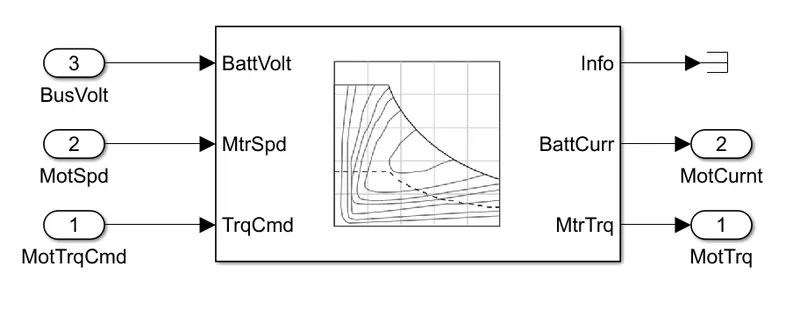
In this predefined data of mapped motor can be feeded.
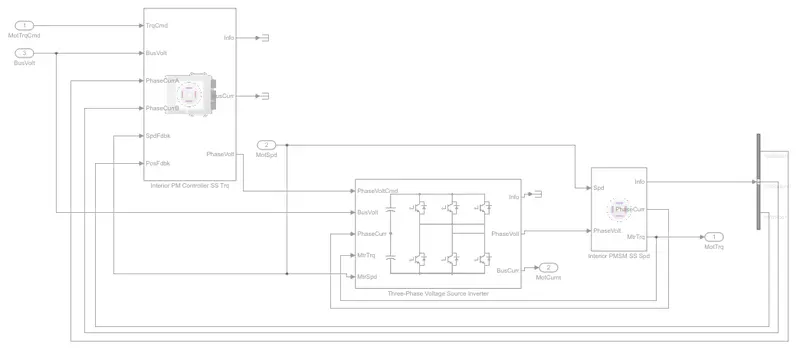
2. DYNAMIC MODEL
- Unlike mapped system dynamic model runs on the real time simulations and calculate the performance of complete sub system and gives the output.
- So due to real time simulation dynamic modelling takes more time then mapped modelling for simulating result.
- It considers the parameters like real drive cycle bus voltage current along with vehicle feedback.
- Accuracy of these models are much higher.
- Dynamic model can be represented as -
STEPS TO CHANGE MODEL TYPE :-
- In help search for EV reference model, the open the model in simulink.
- The model will be opened on simulink go for the passenger -> electric plant ->motor
- After this right click on the blank are and go to variant the select the label mode active choices and do the selection.
OBJECTIVE-2 : MODEL CALCULATION FOR MILES PER GALLON & FACTORS AFFECTING MODEL FUEL FLOW
SOLUTION - Miles per gallon calculation can be explained as
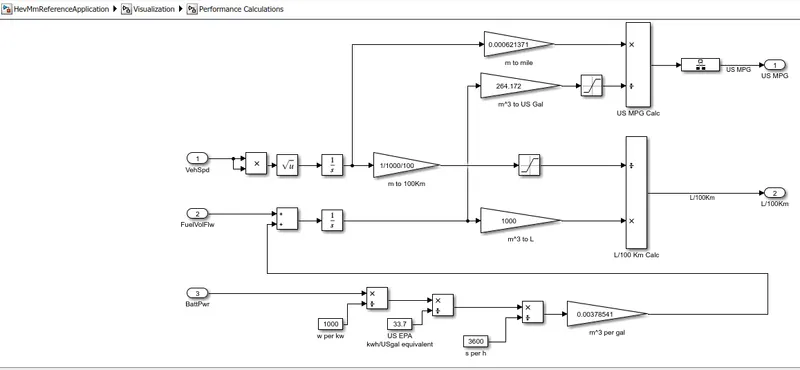
As we know 264.172 US gallons is 1000L
Here as we know HEV operates both on battery and fuel injection system which results in better efficience then normal IC engine.
Here this model considers all the factors like speed of vehicle power of battery and the fuel flow to calculate the overall fuel consumption & battery consumption and calculates miles per gallons.
Factors effecting fuel efficiency in HEV are:-
- Vehicle Speed & Fuel Flow - Vehicle speed directly effects the drive cycle which effects the fuel efficiency of vehicle. Also fuel flow can be explained as amount of fuel flowing per sec and as we know speed of vehicle is directly proprtional to the flow of fuel.
- Battery Power - As we have studied in HEV vehicle can extracts power upto some specific value from battery. So during that SOC the fuel is not brought into used thus increasing the fuel efficiency of the vehicle.
OBJECTIVE-3 :-HEV REFERENCE APPLICATION WITH WOT DRIVE CYCLE & VARYING GRADE AND WIND VELOCITY IN ENVIRONMENT BLOCK
SOLUTION - Simulation of HEV with WOT drive cycle
Simulink window of HEV WOT is shown below
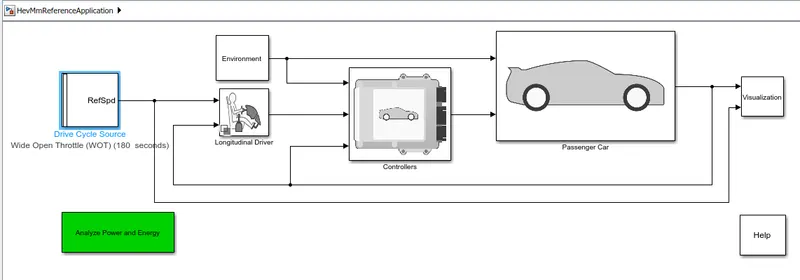
1. Open HEV file in help in matlab and then open the project in simulink.
2.Go to the drive cycle block and select the WOT mode. Update the drive cycle simulation time to 180s.
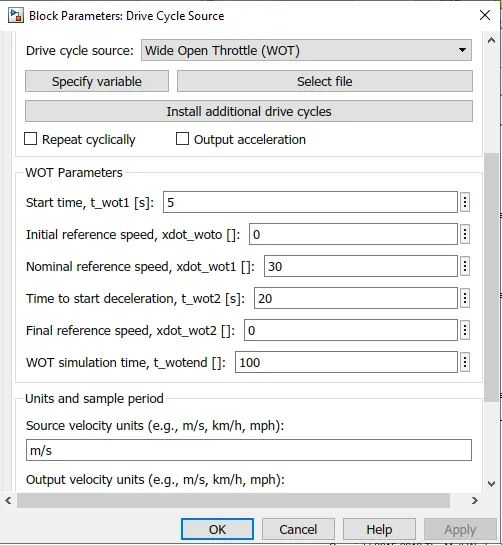
3. Now running the model for 100s we get
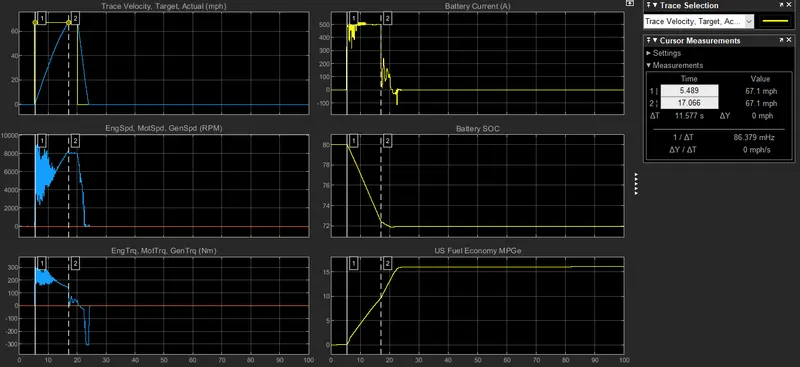
- It took around 11s to reach the top speed of 65 mph.
- Battery current increased to top of 500amp and maintained that value for11.5s.
- Required RPM was of 8000 approx to attain the vehicle top speed of 65mph
- SOC was reduced from 80 to 72 in the time interval of 15s
- Engine torque goes to nagative after attaining the maximum speed.
- Fuel economy gradually increases as the SOC decreases and maintains the contsant value when SOC maintains at 72.Fuel economy is of around 15mpge.
CHANGING THE WIND VELOCITY & GRADE IN ENVIRONMENT BOX
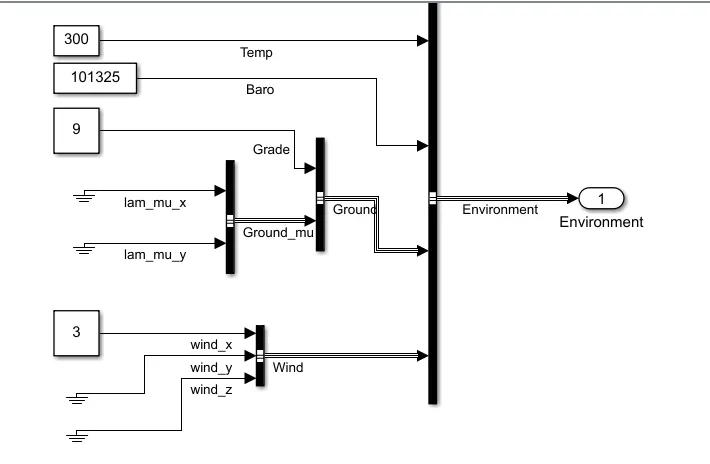
Here changing the Grade from 0 to 9 and wind from 0 to 3 and running the simulation result we get is:-
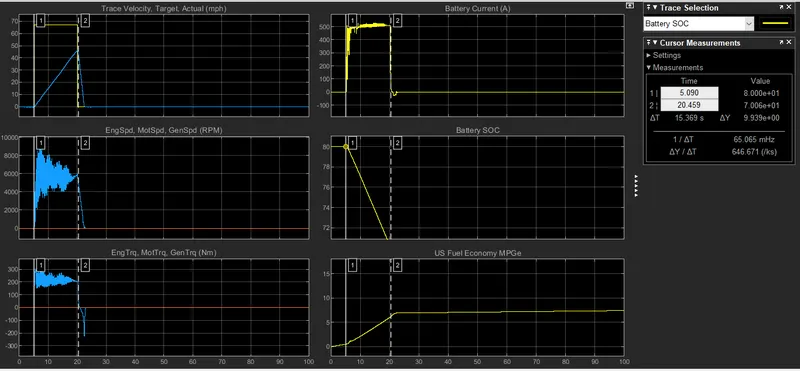
- The top speed is reduced to 45mph in duration of 15s.
- RPM required for attaining top speed is around 6000rpm.
- SOC has dropped down to 70 & so the fuel economy has reduced to around 7 mpge.
OBJECTIVE-4 :- KEEPING THE PARAMETERS SAME COMPARING THE SIMULATED RESULTS OF HYBRID AND PURE ELECTRIC POWERTRAINS
SOLUTION - Considering the schemetic and simulation of Hybrid Vehice :-
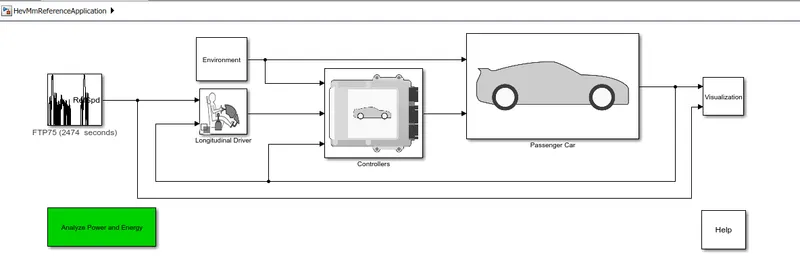
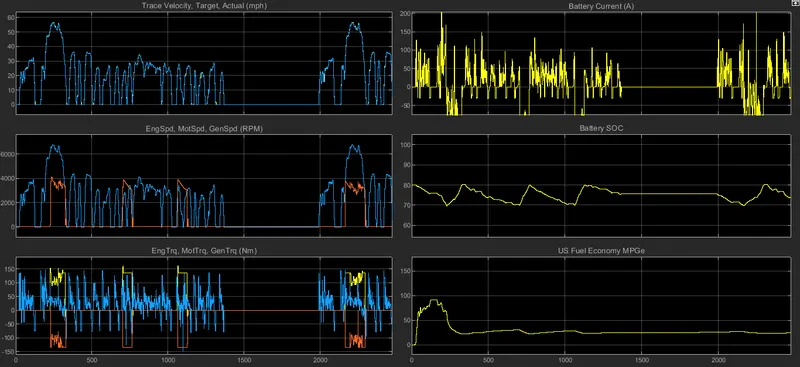
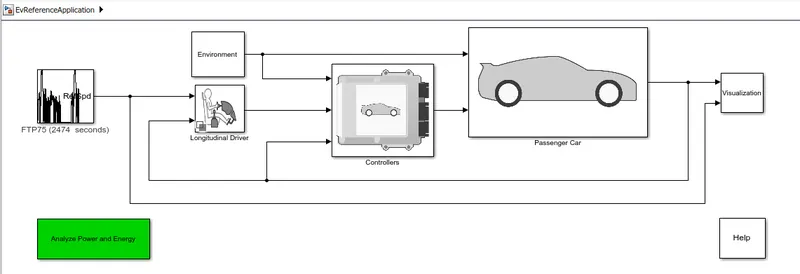
Now considerin the pure Electric Vehicle we get :-
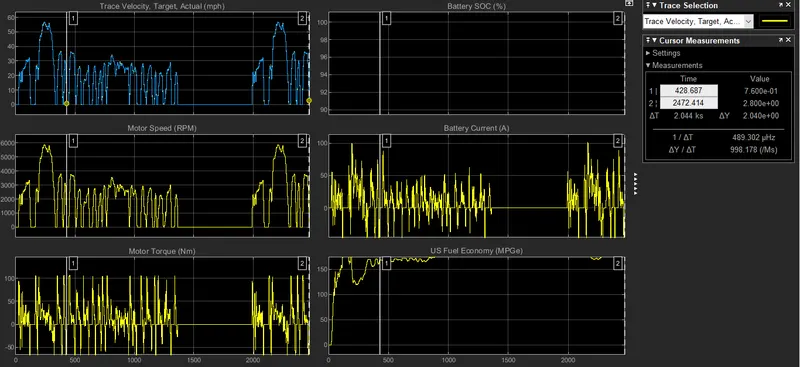
RESULT
- The major difference between two is that Hybrid vehicle operates on both Battery and IC/SC engine wheras pure EV vehicle runs only on batteries.
- One of the major points on which they differ is emission the amount of emission in pure ev is much less then that of Hybrid Vehicle
- Motor speed RPM are found to be much higher in Hybrid vehicle then pure EV.
- SOC is much better in EV as compared to Hybrid car. The dicharging and charging rate of batteries are much better in EV cars.