Week-4 : Basic Calibration of Single cylinder CI-Engine
OBJECTIVES:
1. Compare SI vs CI engine and list down the differences.
| SI ENGINE | CI ENGINE |
| SI Engine is also know as the Spark Ignition engine. | Ci Engine is known as the Combustion Ignition engine. |
| The fuel used here is Gasoline or Petrol. | In the CI engine, the fuel used is Diesel. |
| The compression ratio is 6 to 9. | The compression ratio is high around 15 to 20. |
| The light in weight because of the low pressure developed here. | This is heavy in weight because of the high pressure developed here. |
| Low vibration and noise here. | Here is more vibration and noise. |
| SI engine works on the otto cycle. | CI engine works on the Diesel cycle. |
| The speed is higher in the SI engine varies from 1000-8000 rpm | The speed is lower in the CI engine which varies from 1000-4000 rpm |
|
This System emmits majorly CO, HC, Nox |
This system emmits majorly CO,HC, Nox, Soot |
| They use fuels with high octane number | They use fuels with a high cetane number |
| Common fuels include Petrol, LPG and CNG | Common fuels include Diesel, biodiesel |
| The heat addition takes place at a constant volume. | The heat addition takes place at contant pressure. |
| Kncoking is the major problem | Detonation is the major drawback |
| A homogenous mixture of fuel. | A heterogeneous mixture of fuel |
| Petrol fuel is used in aerospace and automobiles. | Diesel fuel used in heavy vehicles such as lorries, buses, and trucks, more. |
| Thermal efficiency is lower or average. | Thermal efficiency is high. |
| This is kind of cheaper in prize. | This we get higher in prize. |
Mass Fraction Burned :
Mass fraction burned (MFB) in each individual engine cycle is a normalized quantity with a scale of 0 to 1, describing the process of chemical energy release as a function of crank angle.
The determination of MBF is commonly based on burn rate analysis. The energy conversion during a combustion cycle can be described by the Mass Fraction at a specific crank angle degree(CAD) and teh MBF depends on engine geometry, engine speed, A/F, ignition angle, residual mass etc. Measuring and controlling the results can compensate many variable that affect the combustion process compensated on an individual cyclinder basis.
2. Comments on following parameters
- BSFC
- Exhaust Temperture
- A/F ratios
BSFC:
CI Engine tends to have higher Brake Specific Fuel Consumptions(BSFC) than SI Engine, since CI engineshave higher Thermal efficiency and leaner Air Fuel ratio.
Exhaust Temperature:
CI engines have higher thermal efficiency since they have high compression ratio. Due to higher expansion ratio during expansion stroke CI engines tend to have to lesser exhaust temperature than SI engine.
Air-fuel ratio:
CI engines operates at leaner Air fuel ratio and Stichiometric air fuel ratio is maintained in case of SI engine in order to achieve higher combustion efficiency. In the case of CI engine fuel is directly injected in to the cylinder to form hetrogenous mixture of air. Some of the fuel molecules will not be able to burn due to insufficient supply of oxygen and this results in formation of Soot.
3. Change MFB 50 and observe impact on performance.
CASE SETUP:
1. The model is imported from tutorials > modeling applications > Engine_performance > 1cylDI-final.gtm
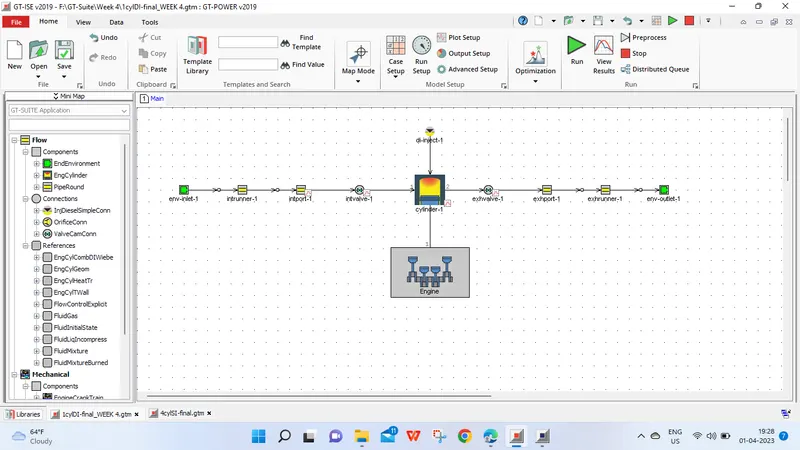
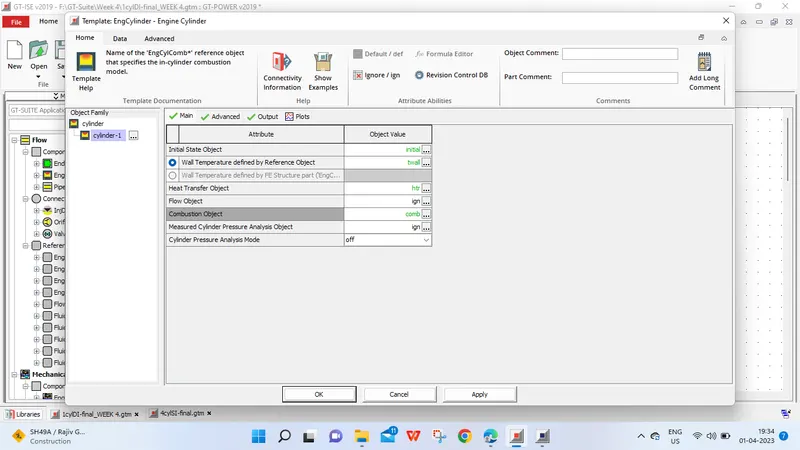
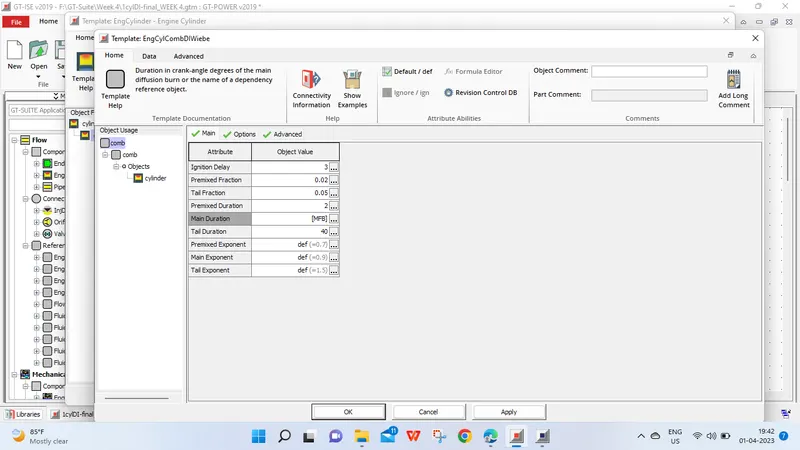
2. Double click on 'Cylinder' > double click on 'Comb' > Write down [MFB] in the Main Duration and apply.
3. Came back to layout and Double click on CASE SETUP and provide the value of MFB i.e 30 and 50 and click ok.
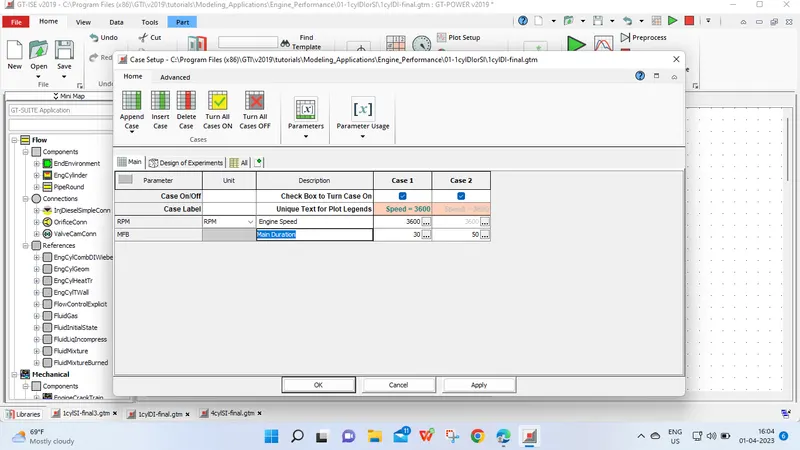
4. Run the CaseSetup.
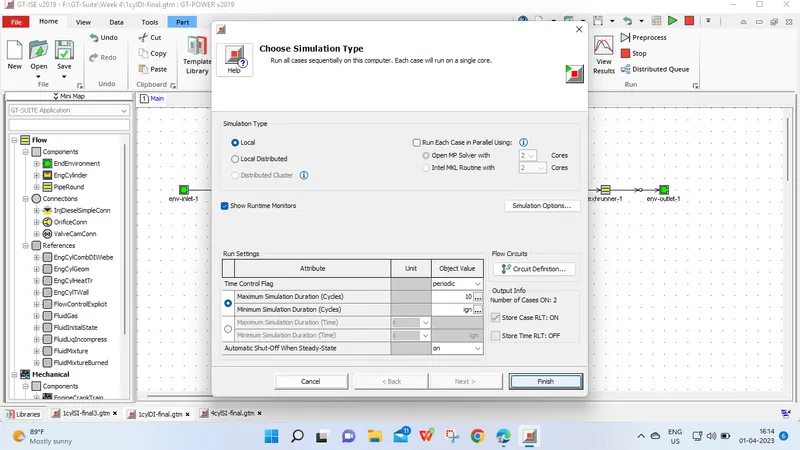
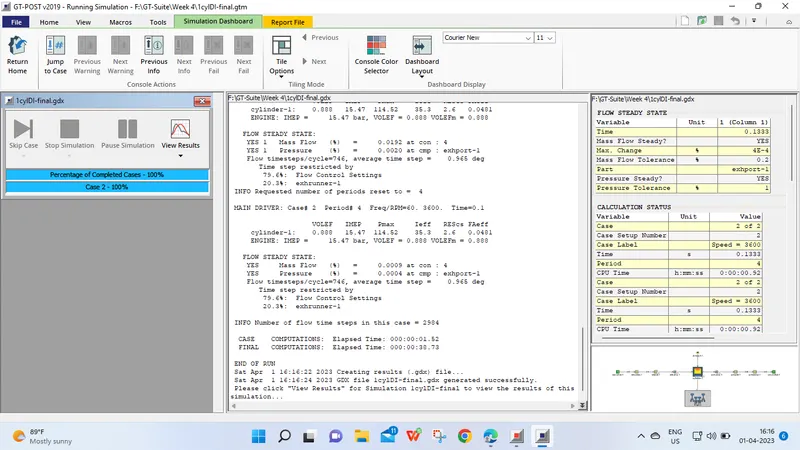
5. Click on View results and see the results.
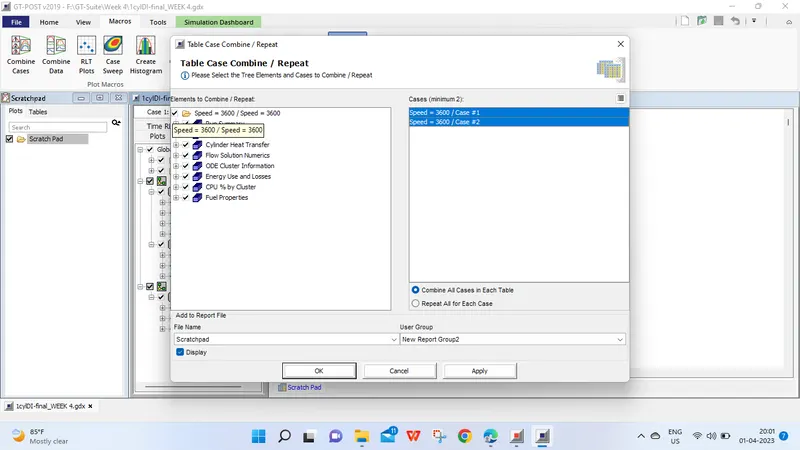
6. In order to see the Comparison Go to Macros > Combine table data > select both case and Check the speed = 3600 left upper sode of the window and click on ok.
GT-Post : -
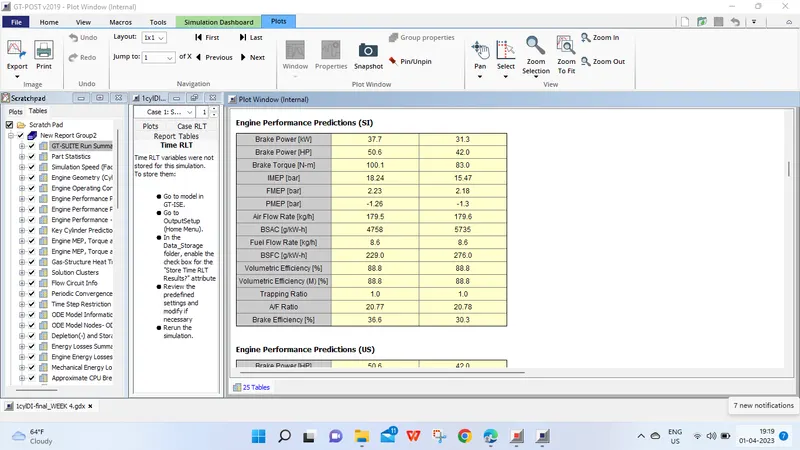
Engine Performance predictions
Results: -
Pressure
Temperature
Burn rate
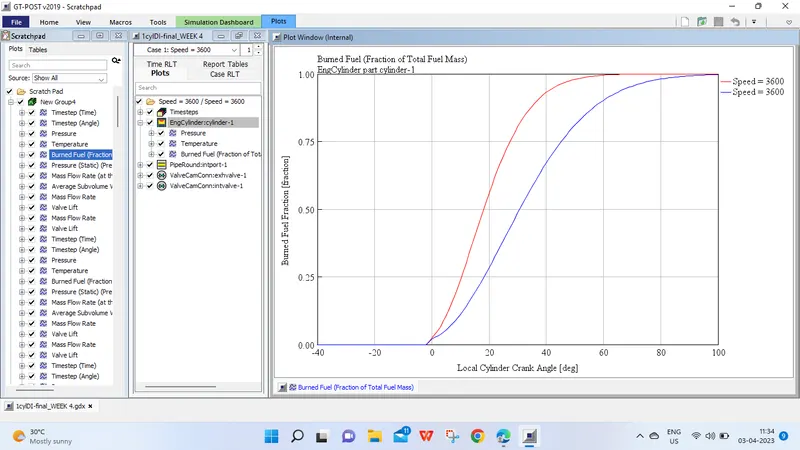
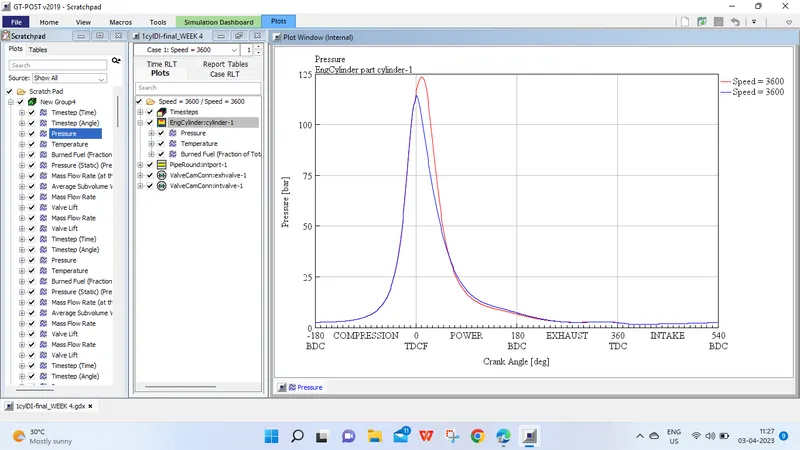
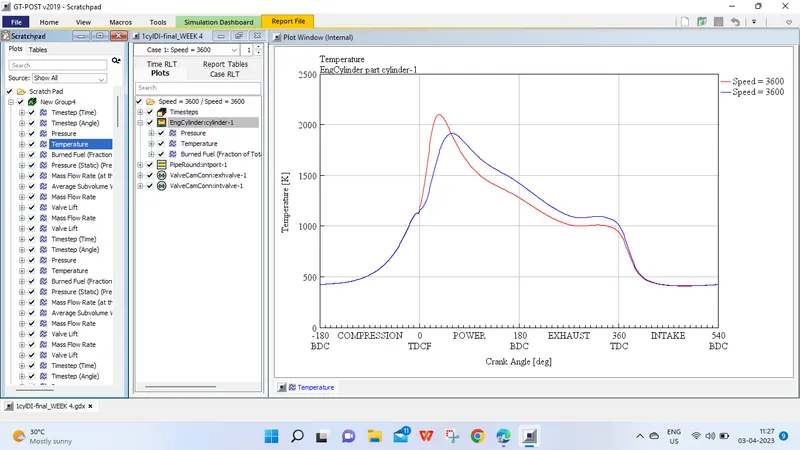
It is clear from the graph the burn rate has decreased due to increase in the burn duration. Peak of pressure and temperature has reduced because fuel is not burning violently. Longer duration of burn rate has reduced the torque and power, while it increased the BSFC. Other parameters are moer or less some.
Conclusion:
- The burned fuel rate decreases with increase in MBF.
- With increase in MBF, the temperature decreases before power stroke and increases after power stroke.
- There is pressure decreases in net with increase in MBF.
- Brake power, brake torque and brake efficiency decreases and BSFC increases.