Week-4 : Basic Calibration of Single cylinder CI-Engine
AIM:
In this challenge the concept , principles of the Calibration of Single cylinder CI-Engine through the tutorials and examples which is present in the GU-SUITE .
1.Compare SI vs CI and list down differences
2.Comments on following parameters
- BSFC
- Exhaust Temperature
- A/F ratios
3.Change MFB 50 and observe impact on performance
COMPARISON BETWEEN SI AND CI ENGINE:
Spark Ignition Engines (SI) - Merits: Otto cycle is employed in petrol engine. Otto cycle is more efficient for a given compression ratio.
Compression Ignition Engines (CI) - Demerits: Diesel engines works on diesel cycle. Diesel cycle is less efficient than Otto cycle for a given compression ratio.
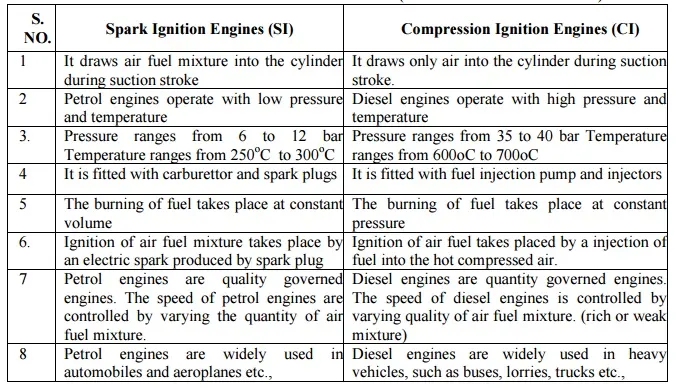
Spark Ignition Engines (SI):
Merits: Otto cycle is employed in petrol engine. Otto cycle is more efficient for a given compression ratio.
Operating speed is more. Speed range is 3000 to 6000 rpm.
Starting is easy, since cranking effort required is less.
Merits: Initial cost and maintenance cost are less.
Produces less noise.
Weight per unit power is less.
Specific fuel consumption is more.
The fuel used is petrol. It is costlier than diesel. It is volatile and fire hazard is more.
Compression Ignition Engines (CI):
Demerits: Diesel engines works on diesel cycle. Diesel cycle is less efficient than Otto cycle for a given compression ratio.
Operating speed is less. Speed range is400 to 3500 rpm.
Starting is difficult since more cranking effort is required.
Demerits: More initial and maintenance costs since the construction is heavy and sturdy.
Produces more noise.
Weight per unit power is more.
Specific fuel consumption is less.
The fuel used is diesel. It is cheaper than petrol. It is less volatile and fire hazard is less.
The spark ignition (SI) engines, uses petrol or gasoline as fuel, while in compression ignition (CI) engines, diesel is used as fuel. Petrol engines are lightweight and achieve higher speed while diesel engines, on the other hand, are heavy engines and achieve lesser speeds.
2.Comments on following parameters on the assignment on the (assignment no 2-SI)
- BSFC
- Exhaust Temperature
- A/F ratios
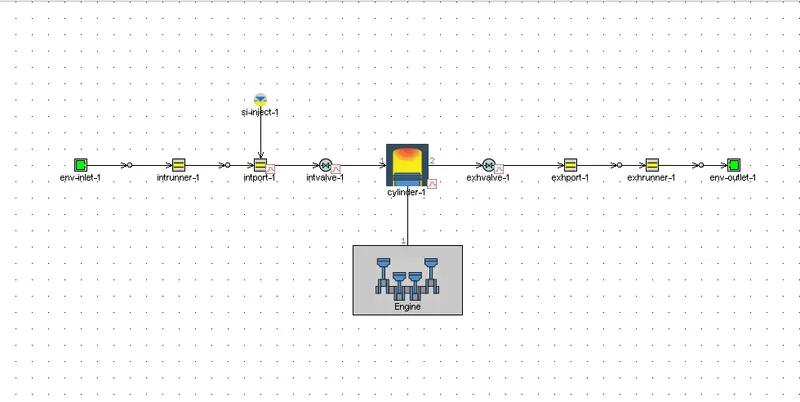
MODEL:
The model of the SI engine as taken as given in the challenge ,.
The CI ENGINE for use the challenge ;
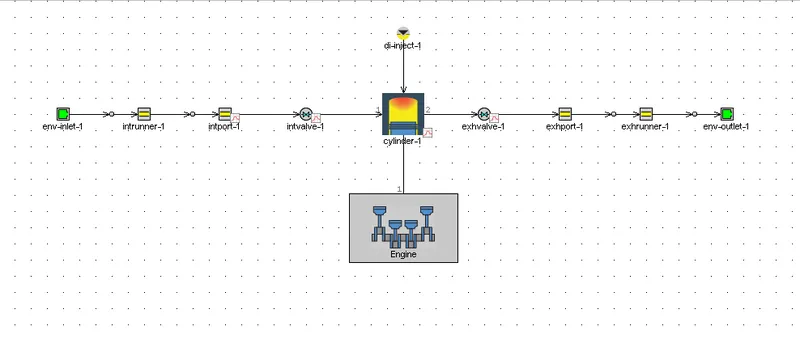
this is the ci engine ehich is comapered with the model of the si engine.
BSFC:
BSFC is the measurement of efficiency of fuel by the engine that combusts the fuel air mixture and produces the rotational motion of the crankshaft. This is used for comparing the efficiency of the engine. BSFC is the ratio of the rate of fuel consumption and the effective power produced from the engine.
BSFC-- Brake-specific fuel consumption. Any engine will have different BSFC values at different speeds and loads. For example, a reciprocating engine achieves maximum efficiency when the intake air is unthrottled and the engine is running near its peak torque.
BSFC numbers change a lot for different engine designs, and compression ratio and power rating. Engines of different classes like diesels and gasoline engines will have very different BSFC numbers, ranging from less than 200 g/(kW⋅h) (diesel at low speed and high torque) to more than 1,000 g/(kW⋅h) (turboprop at low power level).
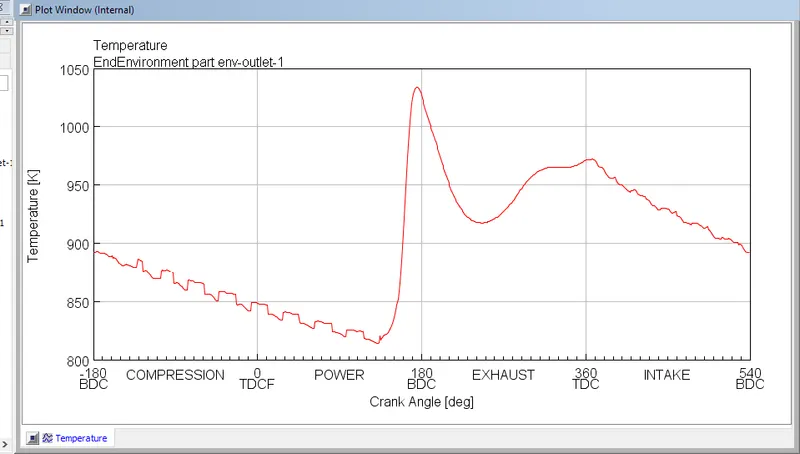
EXHAUST TEMPERATURE:
Generally, temperatures of 500–700°C (932–1293°F) are produced in the exhaust gases from diesel-cycle engines at 100% load to 200–300°C (392–572°F) with no load. Exhaust gases normally discharges at a temperature of around 420°C (788°F).
However, several high-performance exhaust pipes can reach temperatures of 1,000 degrees Fahrenheit or more. The gases are at their hottest point while exiting the engine and entering the exhaust system.
Fouling of the turbine side of the turbocharger is a common cause for high exhaust gas temperatures. The sequence of events is often as follows: → Fouling of turbine (coke deposit) → Bad turbocharger performance → Lower airflow and charge air pressure → Higher exhaust gas temperatures.
A/F RATIO:
Usually, this ratio stays pretty close to 14.7:1, as at this ratio all of the fuel and oxygen is completely used up. A diesel engine, however, generally operates from 18:1 to as high as 70:1, and is capable of operating in super lean ratios.
The stoichiometric mixture for a gasoline engine is the ideal ratio of air to fuel that burns all fuel with no excess air. For gasoline fuel, the stoichiometric air–fuel mixture is about 14.7:1 i.e. for every one gram of fuel, 14.7 grams of air are required.
Mass fraction burned (MFB):
The mass fraction burned (MFB) of the gas mixture in combustion process as the function of the combustion duration time, reflects the percentage of fuel consumed at the every moment in the combustion process, and is an important factor for analysing of the fuel combustion performance, and it has high engineering value .
The mass fraction burned (MFB) is determined from the analysis of measured in-cylinder pressure data. In this paper, a net pressure method (model 2) is used to evaluate the MFB curves at different load conditions (3.3 bar indicated mean effective pressure and wide-open throttle) using a constant polytropic index.
(a) Mass fraction burned 50 % (MFB 50) and
(b) ignition delay as various diesel injection timings under four different natural gas fraction and neat diesel conditions.
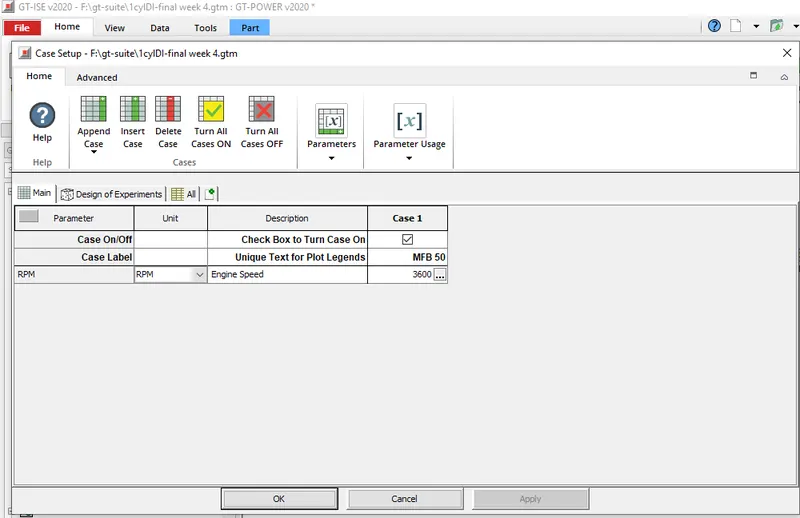
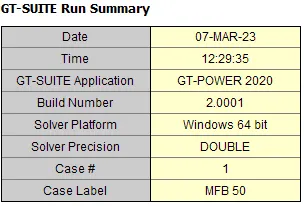
This is the case setup of MFB 50 as per the thing given in the challenge.the input parameters and tthe duration of the fuel out is available in the file which is attached in the report.
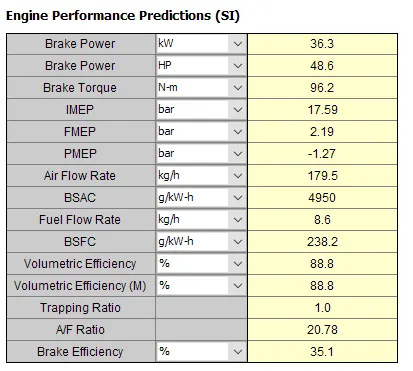
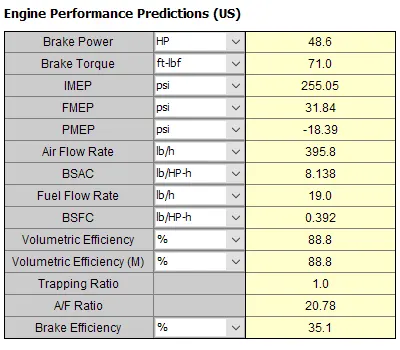
the results of this setup is shown in the GT-POst and that is following below;
TEMPERATURE AT THE END ENVIRONMENT PART:
PRESSURE GRAPH :
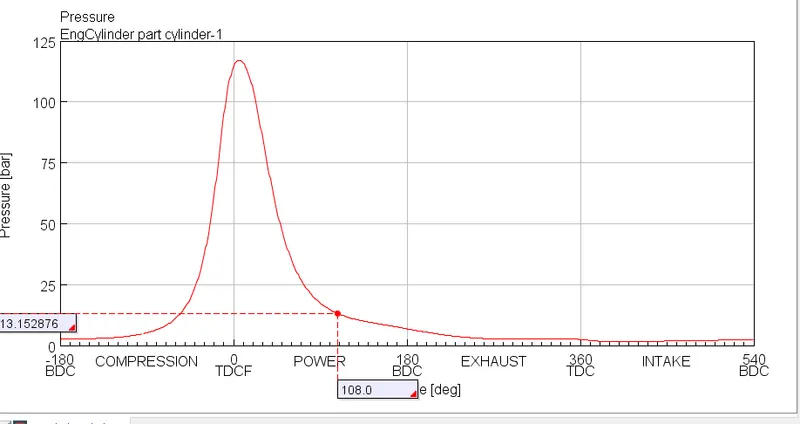
AS PER THE RESULT OF THE GT-POST , FOR THE
MFB-50 ;
BSFC - 238.2 g/kw-h
A/F RATIO - 20.78
CONCLUSION:
The calibartion of the CI ENGINE IS explored peoperly as said in the video and the all questions of the challenge are answered properly.
the BSFC, A/F RATO , EXHAUST TEMPERATURE are all determined with the help of the GU-SUITE AND GU-POST software.