Week-4 : Basic Calibration of Single cylinder CI-Engine
Aim: Basic Calibration of Single cylinder CI-Engine
objective:
1.Compare SI vs CI and list down differences (assignment no 2-SI)
2.Comments on following parameters
- BSFC
- Exhaust Temperature
- A/F ratios
3.Change MFB 50 and observe impact on performance
theory: A diesel engine is a type of internal combustion engine that uses diesel fuel to ignite a fuel-air mixture in the engine's cylinders. Unlike spark-ignition (SI) engines, which use a spark plug to ignite the fuel, diesel engines rely on the heat generated by high compression to ignite the fuel.
Diesel engines are known for their high thermal efficiency, which results in better fuel economy compared to SI engines. They also produce a high amount of torque, making them suitable for heavy-duty applications such as trucks, buses, and construction equipment.
working process of deisel engine
-
Intake: Air is drawn into the engine through the air intake system and compressed in the engine's cylinders.
-
Compression: The air is compressed to high pressure and temperature, which creates heat energy. This heat energy is used to ignite the diesel fuel when it is injected into the engine.
-
Fuel injection: The diesel fuel is injected into the engine's cylinders through high-pressure injectors. The fuel is atomized into a fine mist and mixed with the compressed air.
-
Combustion: When the fuel is injected into the high-pressure, high-temperature air in the engine's cylinders, it spontaneously ignites and burns. This creates a high-pressure, high-temperature mixture of gases that expands and drives the engine's pistons.
-
Power: The expanding gases push the pistons down, converting the thermal energy of the combustion process into mechanical energy that drives the engine's crankshaft. The crankshaft, in turn, powers the wheels or other mechanical components of the vehicle or equipment that the engine is driving.
-
Exhaust: After the combustion process, the exhaust gases are expelled from the engine through the exhaust system. These gases are typically cleaned of pollutants and emissions before they are released into the atmosphere.
Overall, the working process of a diesel engine involves compressing air, injecting diesel fuel, and igniting the fuel-air mixture through compression to create a high-pressure, high-temperature mixture of gases that drives the engine's pistons and powers the engine's crankshaft.
fuel injection in deisel engine
-
Fuel pump: The fuel pump draws fuel from the fuel tank and delivers it to the high-pressure fuel rail.
-
High-pressure fuel rail: The high-pressure fuel rail maintains a constant pressure of the fuel and provides it to the injectors.
-
Injectors: The injectors are responsible for atomizing the fuel into a fine mist and injecting it into the engine's cylinders.
-
Injection timing: The injectors are controlled by the engine control module, which determines the timing of the fuel injection based on various engine parameters such as engine speed, load, and temperature.
-
Injection pressure: The pressure at which the fuel is injected into the engine's cylinders is critical to the combustion process. The fuel injection pressure is typically in the range of 30 to 100 bar and is controlled by the engine control module based on engine conditions.
-
Fuel atomization: The injectors atomize the fuel into a fine mist that is mixed with the compressed air in the engine's cylinders. The atomization of the fuel allows for a more complete combustion process and reduces emissions.
Overall, the fuel injection process in an internal combustion engine is a critical component of the engine's performance and efficiency. The engine control module uses precise control of the injectors and fuel injection pressure to ensure optimal combustion and emissions.
difference b/w SI and CI engine
SI (Spark Ignition) engines and CI (Compression Ignition) engines are two types of internal combustion engines that are commonly used in vehicles and other applications.
The main difference between SI and CI engines lies in the way they ignite the fuel-air mixture in the engine's cylinders.
SI engines use a spark plug to ignite the fuel-air mixture, which is a mixture of gasoline and air. This type of engine typically operates with a high compression ratio and requires high-quality fuel. The fuel-air mixture is compressed in the engine's cylinders and then ignited by the spark plug.
CI engines, on the other hand, use the high temperature and pressure generated by the compression of the air in the engine's cylinders to ignite the fuel. In a CI engine, diesel fuel is injected directly into the engine's cylinders, and the heat and pressure generated by the compression of the air ignites the fuel. CI engines typically have a lower compression ratio and are more efficient than SI engines.
Another difference between SI and CI engines is the type of fuel they use. SI engines use gasoline as fuel, while CI engines use diesel fuel.
In summary, the main difference between SI and CI engines is the way they ignite the fuel-air mixture in the engine's cylinders. SI engines use a spark plug to ignite gasoline, while CI engines use the high temperature and pressure generated by the compression of air to ignite diesel fuel.
case setup
open gt power application in tutrial
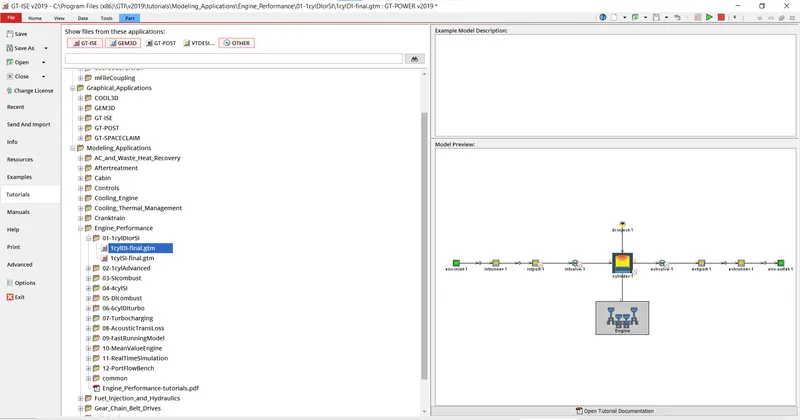
save the file in different folder
the almost ci engine setup looks like Si engine but one notice able difference the fuel is injected directly into the cylinder
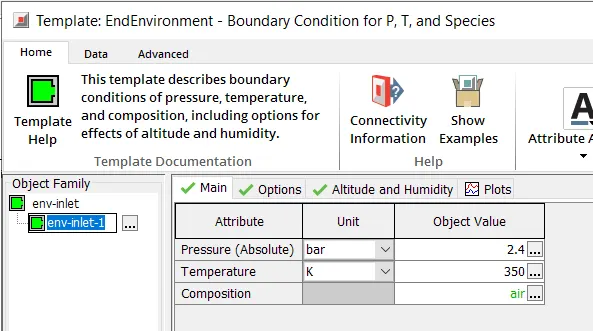
inlet and outlet environment
intake runner and exhaust runner are same as si engine
and valve opening and closing are same as si engine
cylinder
in cylinder the setup changes with respect to si engine
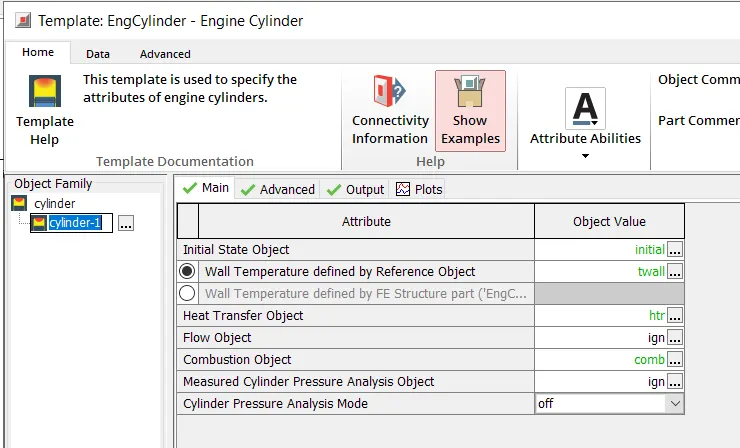
cylinder
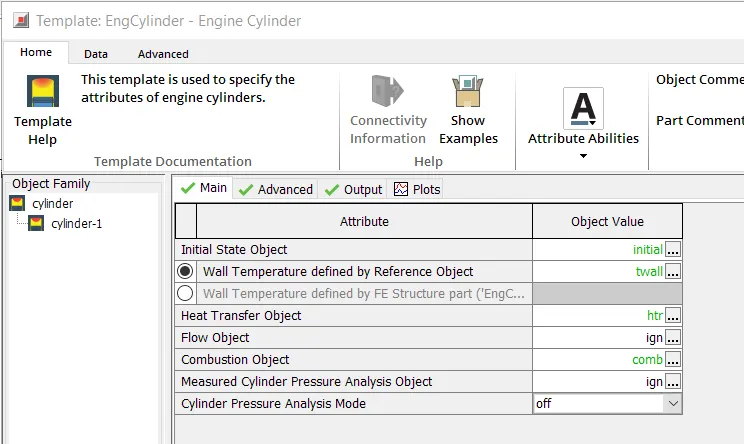
iniial state
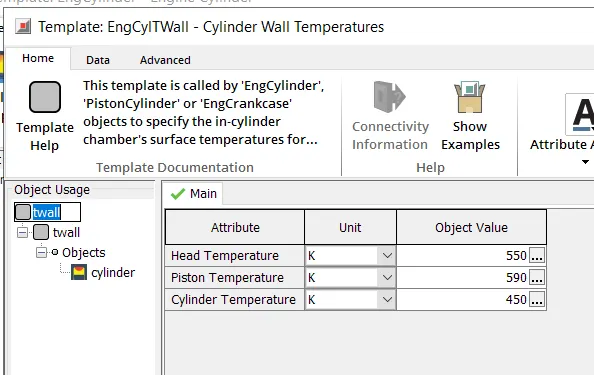
wall temprature
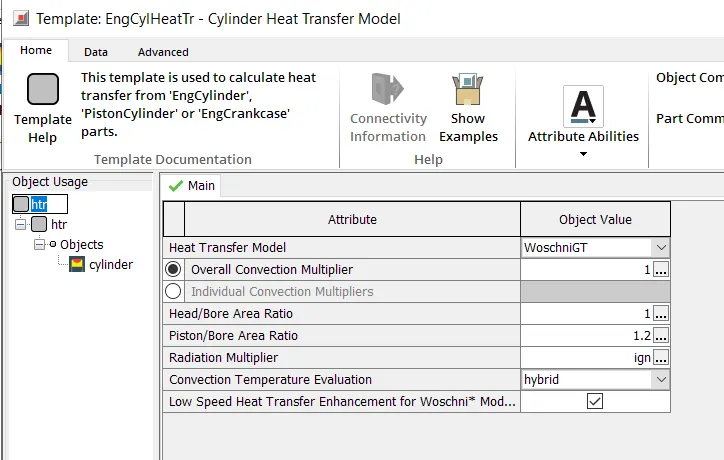
heat transfer in cylinder
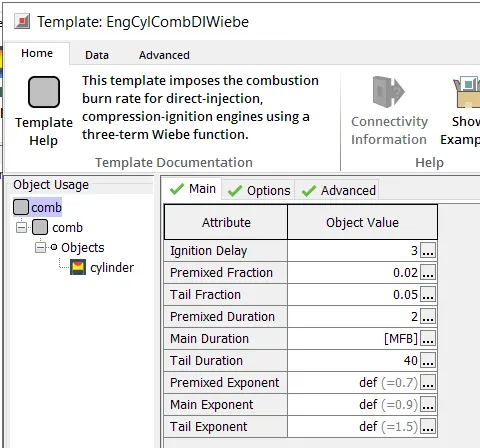
combustion model
EngCylCombDIWiebe - Direct-Injection Diesel Wiebe Combustion Model
This template imposes the combustion burn rate for direct-injection, compression-ignition engines using a three-term Wiebe function. This model should only be used when the fuel is injected directly into the cylinder with an 'InjProfileConn' connection. When the attributes below are imposed (i.e. Ignition Delay and the Fraction or Duration attributes are not set to "def"), the injection profile will not influence the combustion rate. The only exception is that if at any instant the specified cumulative combustion exceeds the specified injected fuel fraction, the combustion rate will be limited by the amount of fuel available.
An Excel file named WiebeComb.xls is included in the installation directory of GT-SUITE and is useful in determining the Wiebe constants. The combustion spreadsheet has a feature to match the Wiebe constants to a heat release rate that has been calculated from measured cylinder pressure using the 'EngBurnRate' template. However, note that the 'EngCylCombProfile' reference object can be used to directly input the heat release rate calculated from cylinder pressure, and so it is not necessary to match the Wiebe parameters to measured heat release data.
If the Ignition Delay or any of the Fraction or Duration attributes have been set to "def", this model becomes semi-predictive by trying to choose the attributes automatically. They are calculated from the injection profile, air-to-fuel ratio, pressure and temperature. Therefore, to obtain meaningful results when "def" has been entered for any of these attributes, the injector geometry and injection pressure profile must be specified as accurately as possible because they will affect the combustion rate. It is NOT recommended to use "def" for FRM/RT models because this will increase computational time
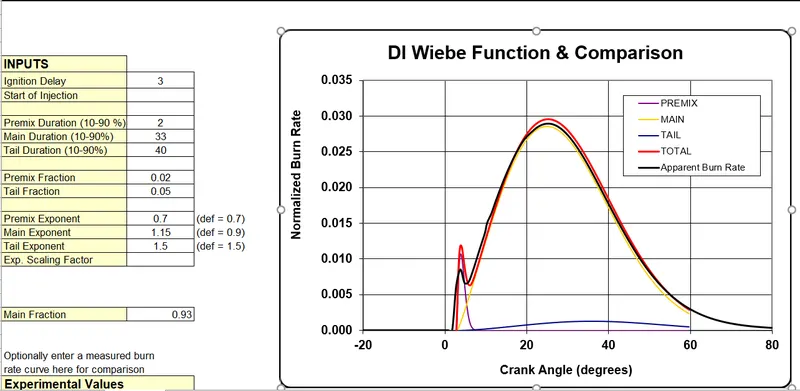
comarision b/w apperent burn rate vs total burt rate(33)
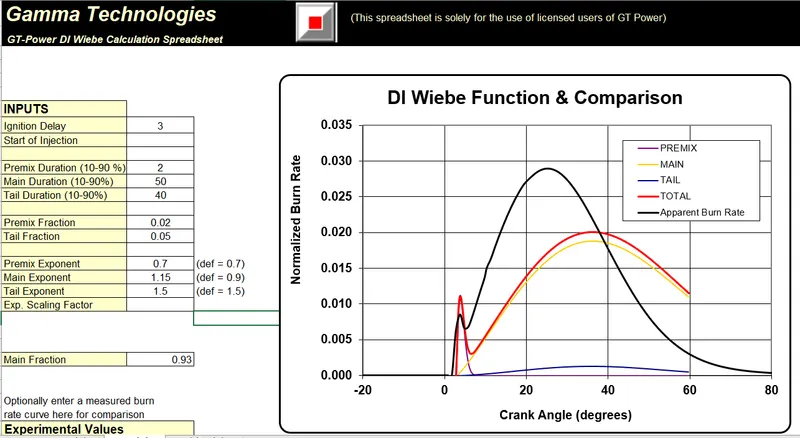
comarision b/w apperent burn rate vs total burt rate(50)
Fuel injection
InjDieselSimpleConn - Simple Direct Fuel Injector for Diesel Engines
This injection connection is designed for direct-injection diesel engines when detailed injection data is not necessary. This template differs from other diesel injectors (e.g. 'InjProfileConn') since it does not require injection profile or nozzle hole data. The basic goal of this injector is to deliver the desired amount fuel needed for combustion. It can be used with non-predictive combustion models, or with Measured Cylinder Pressure and TPA (Three-Pressure-Analysis) cylinder pressure analysis options. This template should NOT be used when detailed injection data is important for other calculations, such as when modeling predictive combustion (e.g. 'EngCylCombDIJet', 'EngCylCombDIPulse').
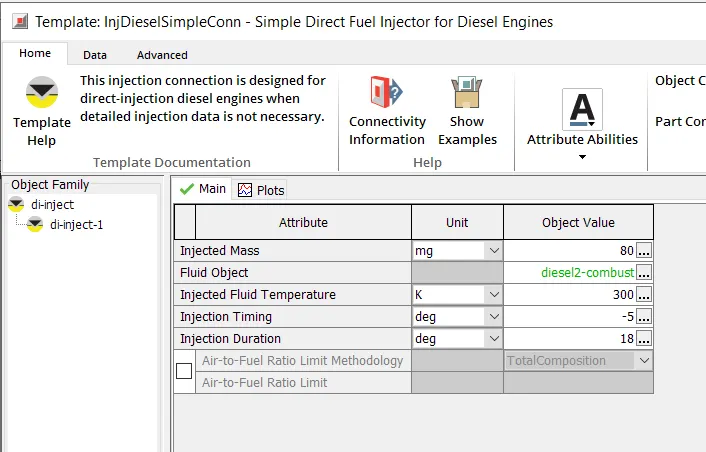
injection fuel (injection mass 80 mg )
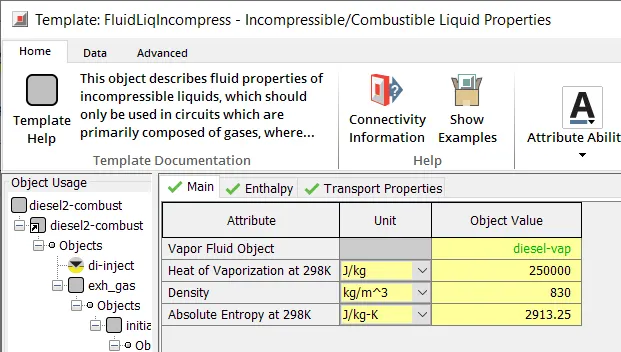
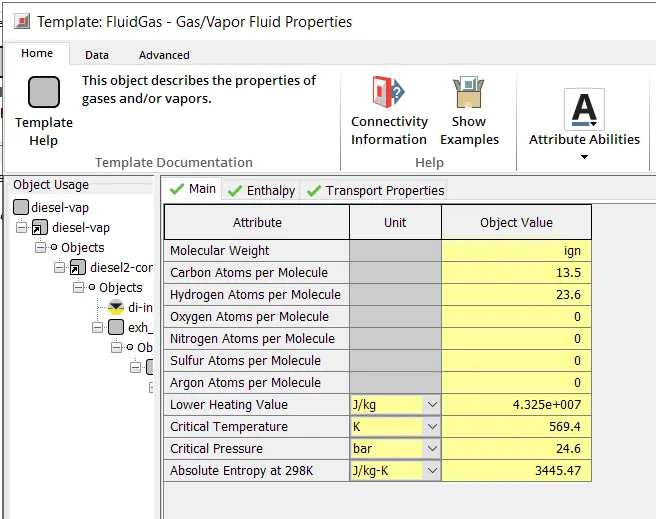
select the object and all the objects are pre difined
engine
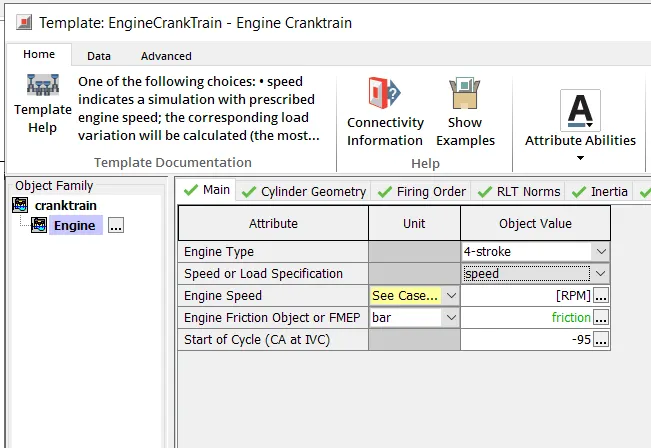
engine defined
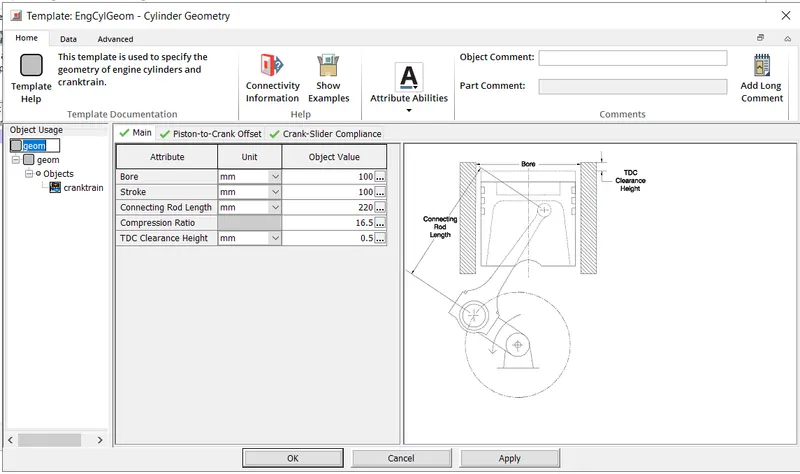
engine geometry (CR 1.5)
case setup
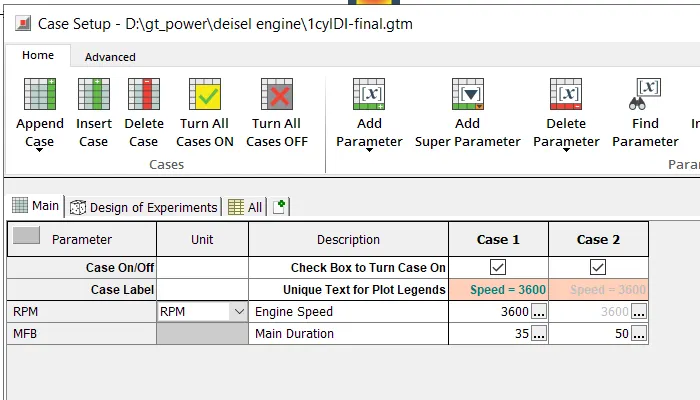
case setup
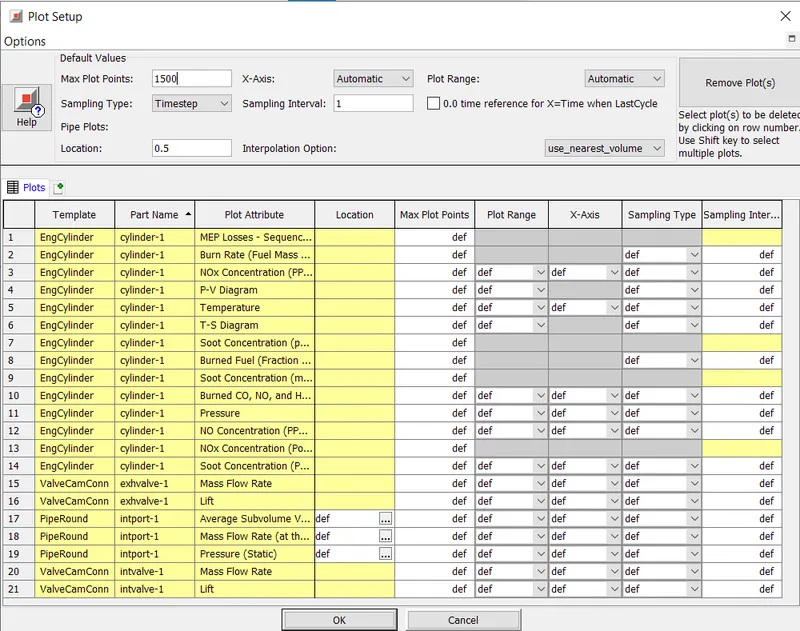
plot setup
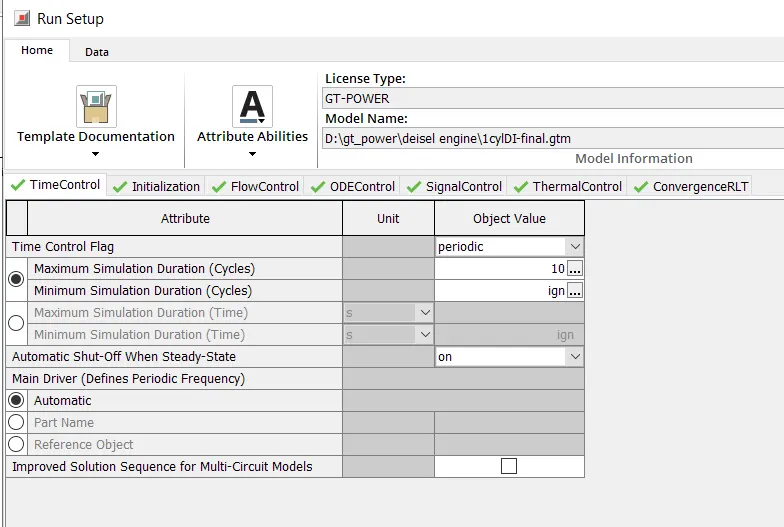
run setup
after setup run the simulation and post process the results
Result
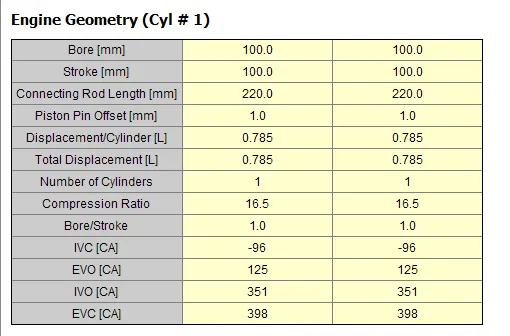
engine geometry
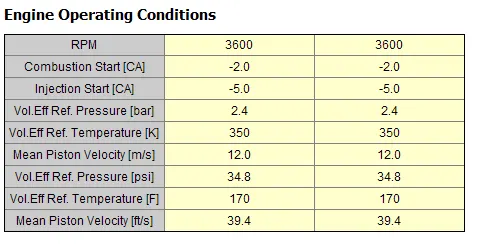
engine operating condtion
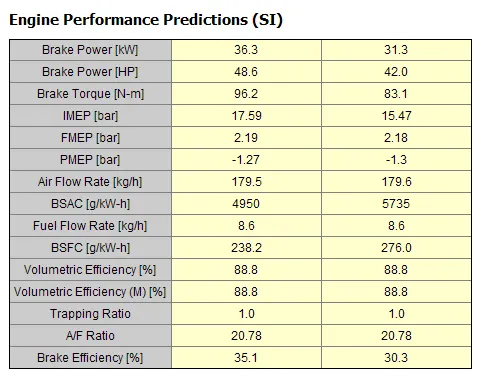
engine performence
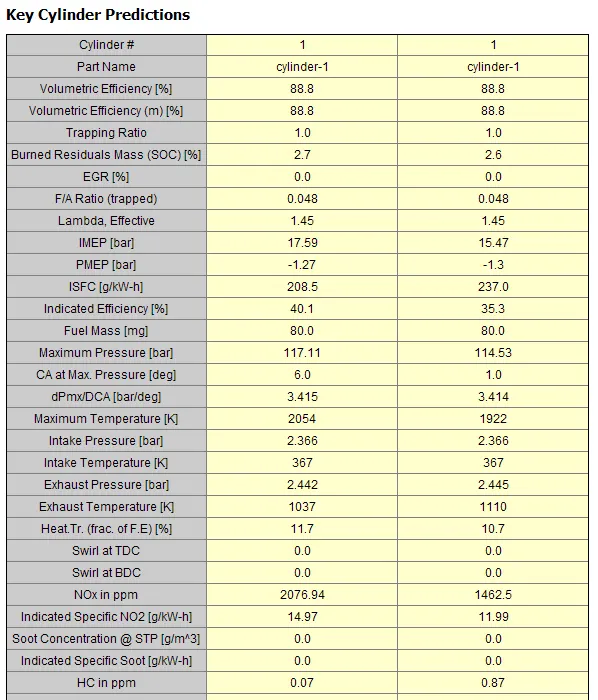
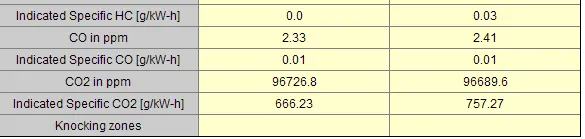
key cylinder performence
plots
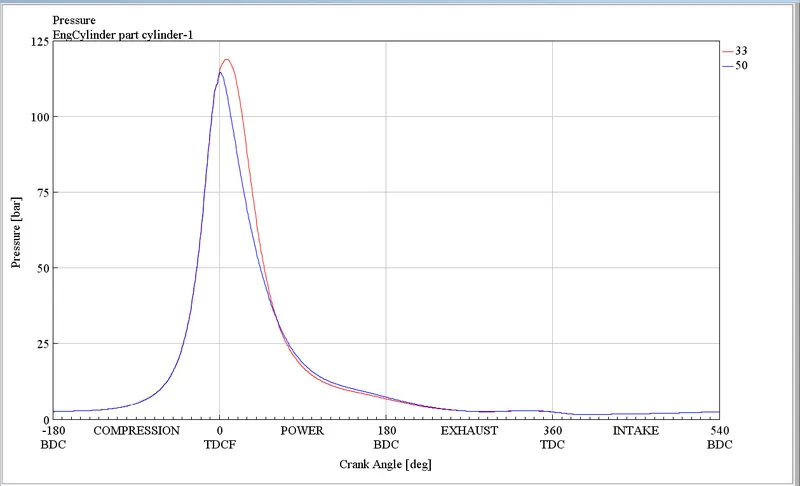
cylinder pressure
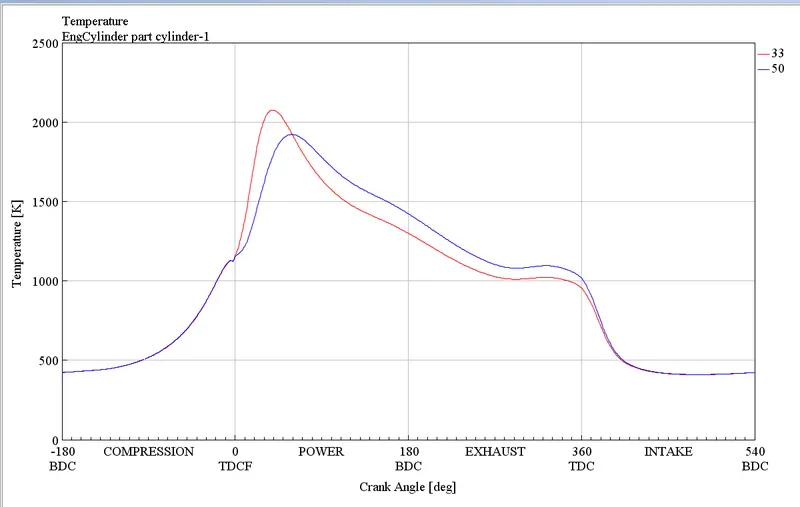
cylinder temprature
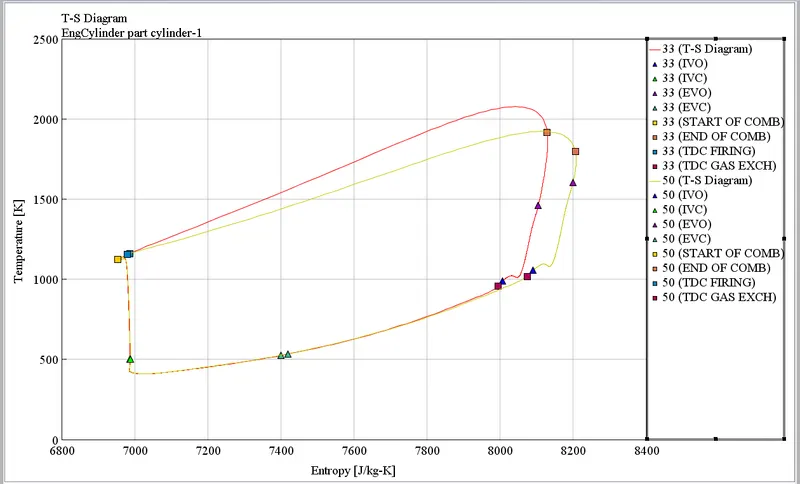
ts Diagrm
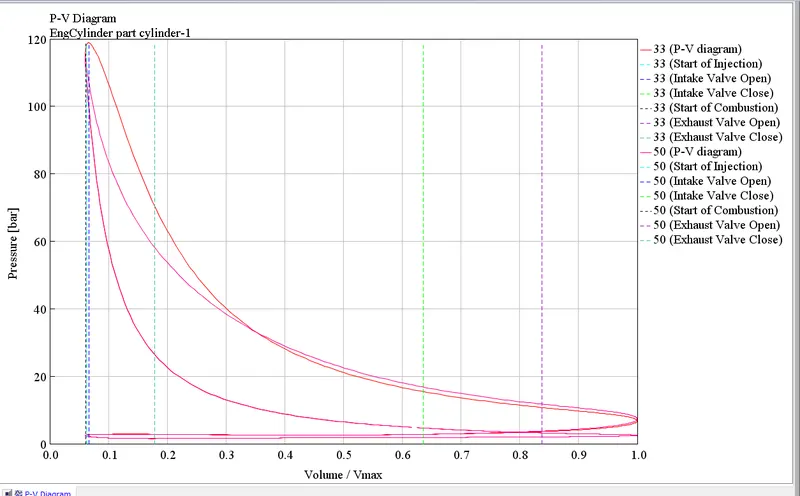
pv diagram
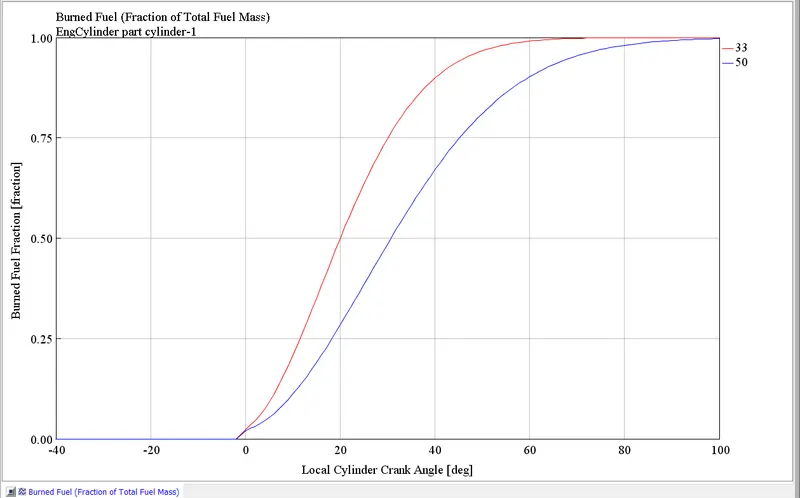
burend fuel gases
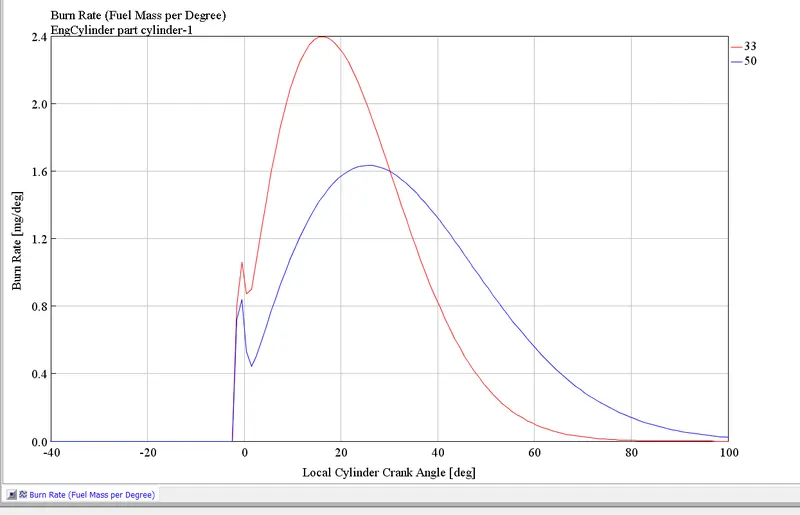
burn rate
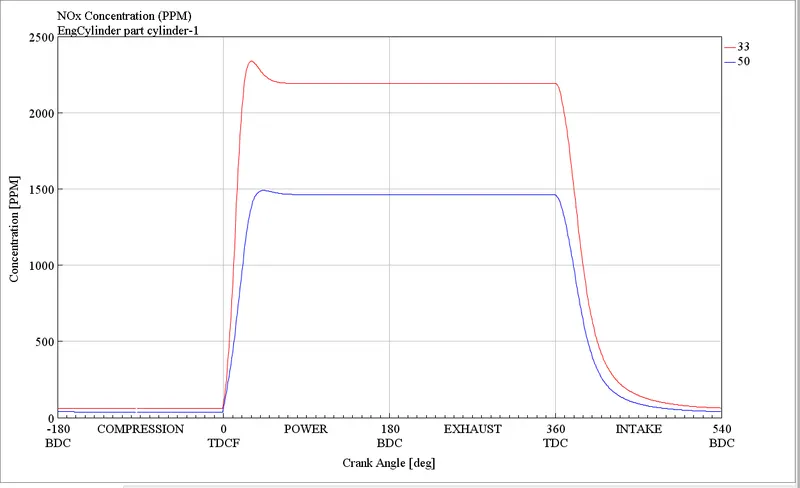
NOX ppm
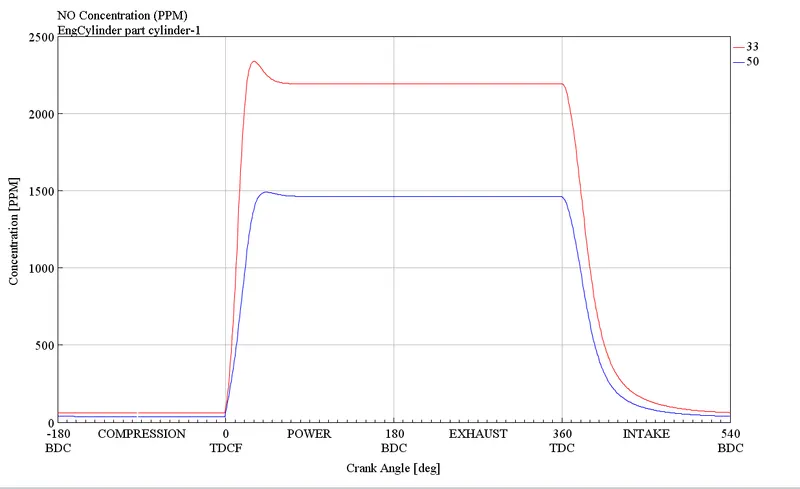
NO ppm
conclusion
from results it can been seen that the (for MFB 33 and 50)
- brake power and torque in creases with the 33 MFB than 50
- BSFC is more in 50 MFB
- air fuel ratio is same
- brake efficiency is more in 33 MFB
- reduction in NOX with MFB 50
- increse in HC with MFB 50
- co and co2 emission almost same
comparision b/w si engine and ci engine
- air fuel mixture is more in deisel engine
- compression ratio engine
- with same speed ci produces more power and torque