Week-4 : Basic Calibration of Single cylinder CI-Engine
Aim:
Basic calibration of single cylinder CI-Engine.
Objective:
- Compare SI vs. CI and list down differences.
- Comments on following parameters.
BSFE
Exhaust Temperature
A/F ratio.
- Change MFB 50 and observe impact on performance
Comparison between SI and CI Engine;
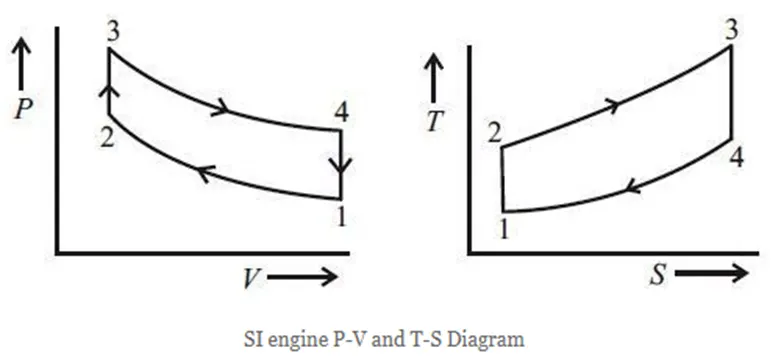
Spark Ignition Engines (S.I. Engine)
It works on Otto cycle. In Otto cycle, the energy supply and rejection occur at constant volume process and the compression and expansion occur isentropically. The engines working on Otto cycle use petrol as the fuel and incorporate a carburetor for the preparation of mixture of air fuel vapor in correct proportions for rapid combustion and a spark plug for the ignition of the mixture at the end of compression. The compression ratio is kept 5 to 10.5. Engine has generally high speed as compared to C.I. engine. Low maintenance cost but high running cost. These engines are also called spark ignition engines or simply S.I. Engine.
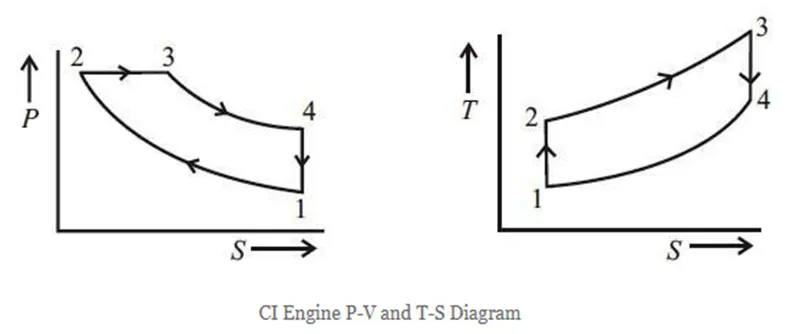
Compression Ignition Engines (C.I. Engine)
It works on diesel cycle. In diesel engines, the energy addition occurs at constant pressure but energy rejection at constant volume. Here spark plug is replaced by fuel injector. The compression ratio is from 12 to 25. Engine has generally low speed as compared to S.I. engine. High maintenance cost but low running cost. These are known as compression ignition engines, (C.I) as the ignition is accomplished by heat of compression.
The upper limit of compression ratio in S.I. Engine is fixed by anti-knock quality of fuel. While in C.I. Engine upper limit of compression ratio is limited by thermal and mechanical stresses of cylinder material. That’s way the compression ratio of S.I. engine has more compression ratio as compared to S.I. Engine.
|
S.NO |
Spark Ignition Engines |
Compression Ignition |
|
1 |
It draws air fuel mixture into the cylinder duration suction stroke |
It draws only air into the cylinder during suction stroke. |
|
2 |
Petrol engine operate with low pressure and temp |
Diesel engine operate with high pressure and temp |
|
3 |
Pressure ranges from 6 to 12 bar temp ranges from 250 C to 300 C |
Pressure ranges from 35 to 40 bar temp ranges from 600 C to 700 C |
|
4 |
It is fitted with carburetor and spark plugs |
It is fitted with fuel injection pump and injectors |
|
5 |
The burning of fuel takes place at constant volume |
The burning of fuel takes place at constant pressure |
|
6 |
Ignition of air fuel mixture takes place by an electric spark produced by spark plug |
Ignition of air fuel takes place by a injection of fuel into the hot compressed air. |
|
7 |
Petrol engine are quality governed engines. The speed of petrol engine are controlled by varying the quality of air fuel mixture |
Diesel engine are quantity governed engines. The speed of diesel engines is controlled by varying quality of air fuel mixture (rich or weak mixture) |
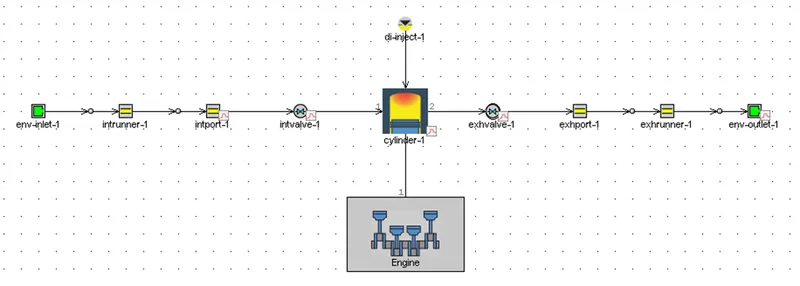
Simulation model:
To select 1cyclD1 engine
Boundary condition:
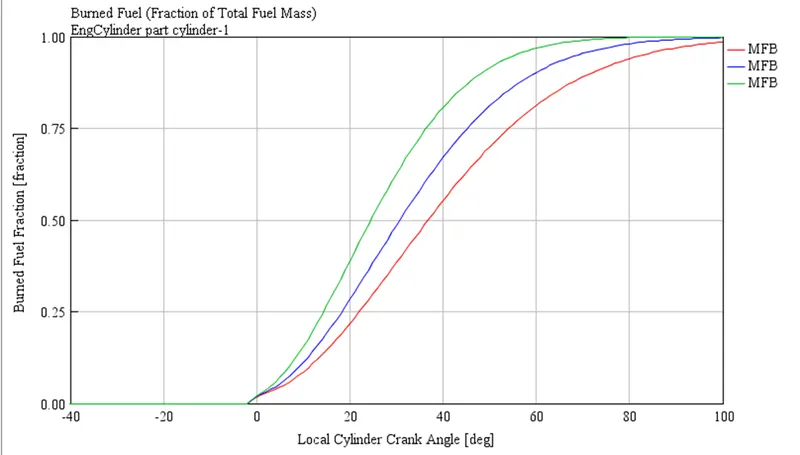
Combustion duration:
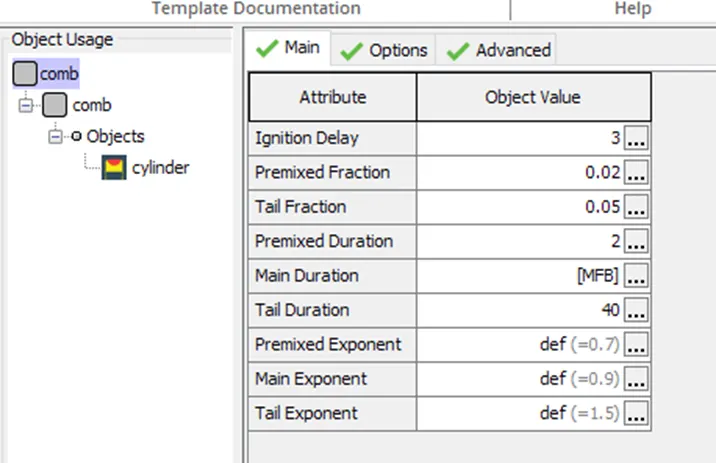
Case set up as a function of rpm and combustion duration:

Results:
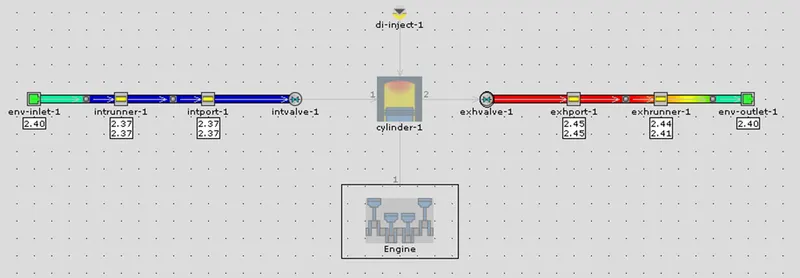
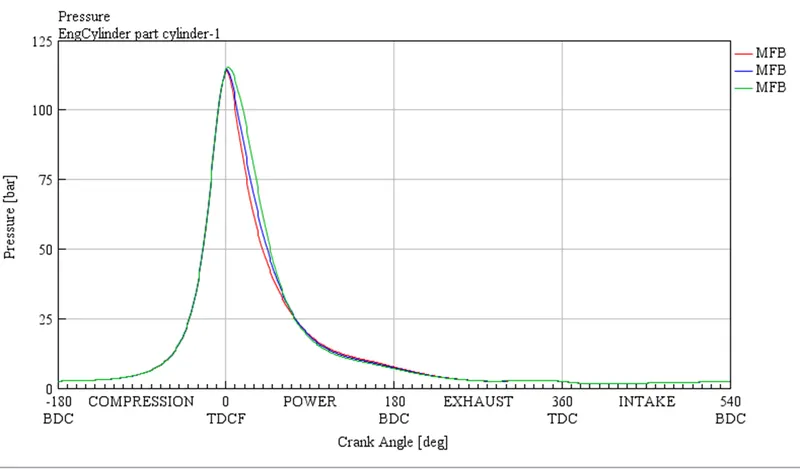
Pressure:
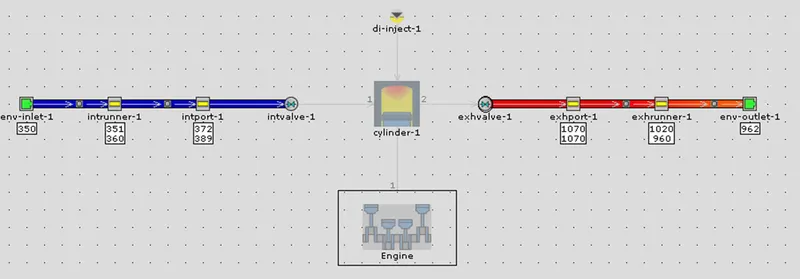
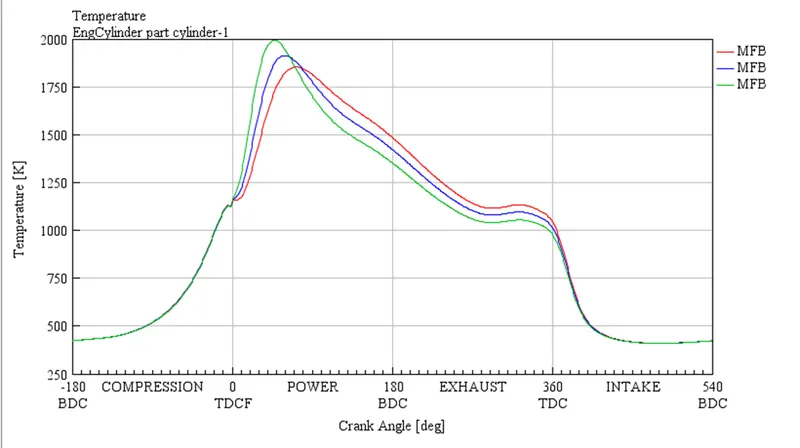
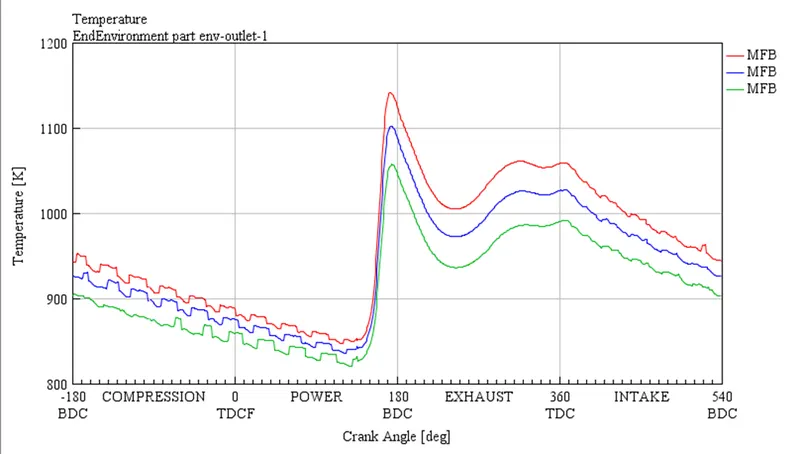
Temperature:
Burn rate:
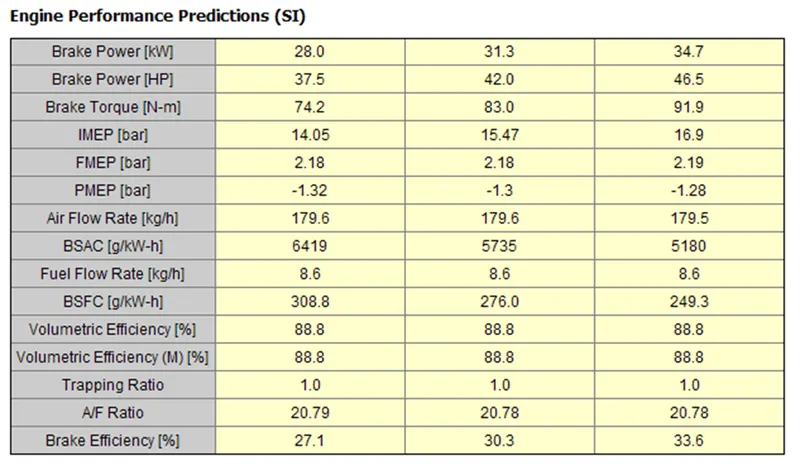
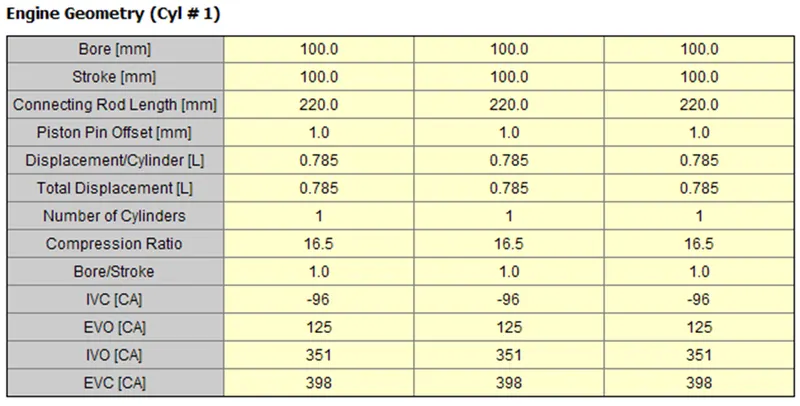
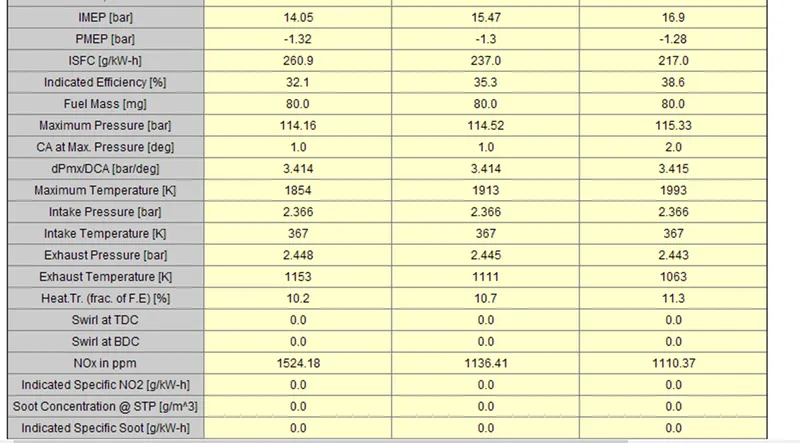
Form the engine performance data
BSFC at MFB 60 = 308.8 g/KW - h
BSFC at MFB 50 = 276 g/KW - h
BSFC at MFB 40 = 249.3 g/KW - h
A/F ratio at MFB 60 = 20.79
A/F ratio at MFB 50 = 20.78
A/F ratio at MFB 40 = 20.78
BP at MFB 60 =28 KW
BP at MFB 50 = 31.3 KW
BP at MFB 40 = 34.7 KW
Exhaust temperature at MFB 60 = 1153 K
Exhaust temperature at MFB 50 = 1111K
Exhaust temperature at MFB 40 = 1063K
Conclusions:
It is clear from the graphs the burn rate has decreased due to increase in the burn duration. Peak of pressure and temperature has reduced because fuel is not burning violently. Longer duration of burn rate has reduced the torque and power, while it increased the BSFC. Other parameters are more or less same.