Week - 4
Washing Machine:Washing machine is a machine used for washing cloths.
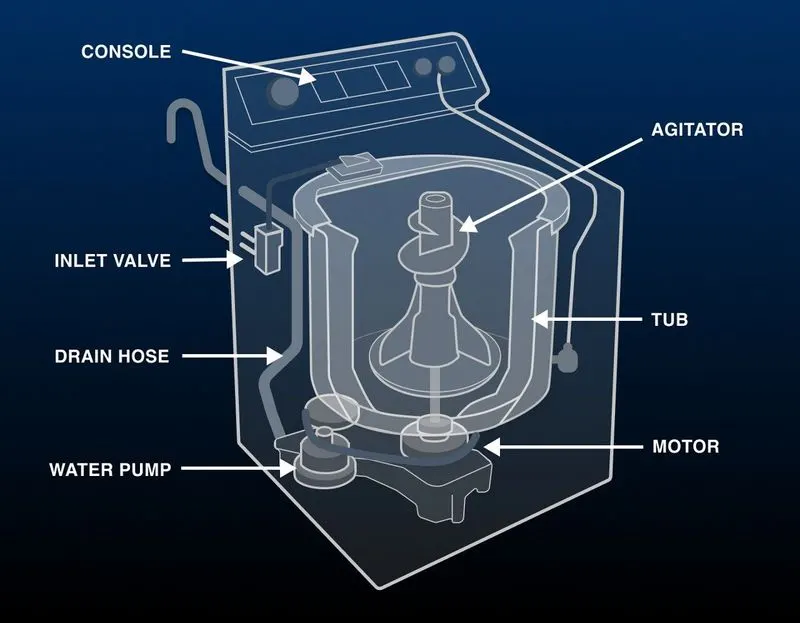
Components of Washing Machine:
Water pump: The water pump is located inside the washer, so you can’t actually see it. The pump has a double duty of circulating water during the cycle as well as draining the water once the cycle is complete. Some machines may have two different pumps–one that just pumps water, and one that drains. This will vary by model of the washer.
Drain house: Usually sitting close to the drain pump, the drain pipe will rid all the dirty water from washing a load of laundry out of the tub.
Water inlet control valves: Located near the water inlet point. These valves open and close depending on the size of the load and how much water needs to be dispensed for a wash cycle.
Tub/drum: There are technically two tubs in your washer. The first one is a movable, perforated tub where the clothes are placed. The perforated surface allows for water to come in and out during the cycle. The outer tub supports the inner tub and also holds water during the washing cycle.
Agitator/Impellor: Whether you have an depends on the model of your washing machine. Regardless of what kind you have, they are located on the inside of the inner tub of your washer, and they are an essential part of cleaning your clothes. Their movements cause clothing to move and rub against each other, which in turn lifts dirt and stains from fabric.
Motor: The washing machine motor powers the movement that causes your agitator, discs or drum to rotate as your machine runs through a cycle.
Printed circuit board: The printed circuit board (PCB) is the brains of the washing machine. It commands the control panel and wash cycles, as well as firing off the different electronic parts that are needed for your washer to do its job. The PCB is also responsible for water levels, how much detergent is dispensed and other functions your washing machine may have.
Timer: Timers on washing machines can either be set manually or automatically, and will set the wash time for your laundry cycles. Not all washers come with a timer, so your washer may not have this feature.
Control panel/control signal: All your settings and wash cycles will be controlled on this panel, which is either on top or front of the washing machine.
Heating Element:
When using cycles that will run either warm or hot water, this element heats up the water to the desired temperature. Heating elements are model dependent.
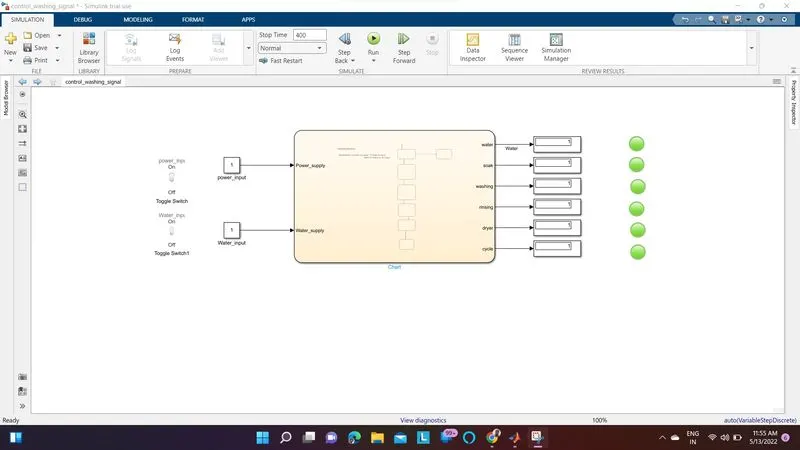
Condition1:
- If the power supply is available, the system gets activated
- Soaking time should be 200s followed by Washing time of 100s.
- Then rinsing happens for next 20s & dryer runs for 50s
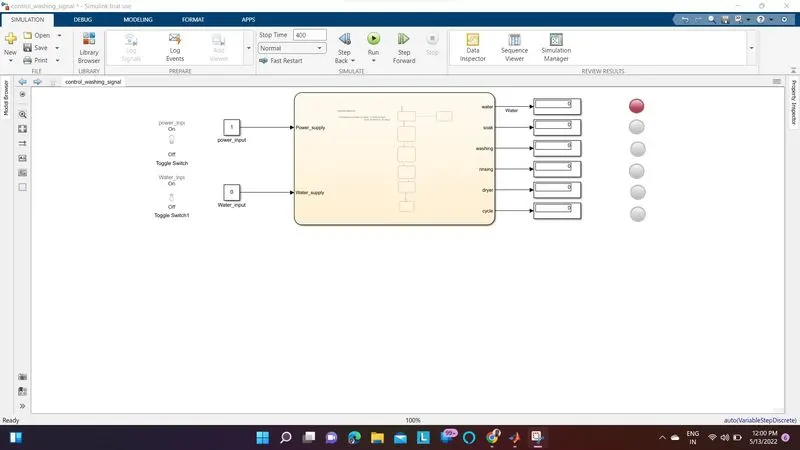
Condition2:
- If the Water supply is not available, stop the process & indicate through LED
Gear shift Logic:
A Gear is a rotating circular machine part having cut teeth or, in the case of a cogwheel or gearwheel, inserted teeth, which mesh with another toothed part to transmit torque and speed.
The gear ratio is the number of turns the output shaft makes while the input shaft turns one time. If the gear ratio is 2:1, then the smaller gear is turning two times while the larger gear turns just once. It also means that the larger gear has twice as many teeth as the smaller gear. The larger gear is just called a "gear" while the smaller gear is also called a pinion.
Many modern gears use a special tooth profile called an Involute. This profile has the very important property of maintaining a constant speed ratio between the two gears.
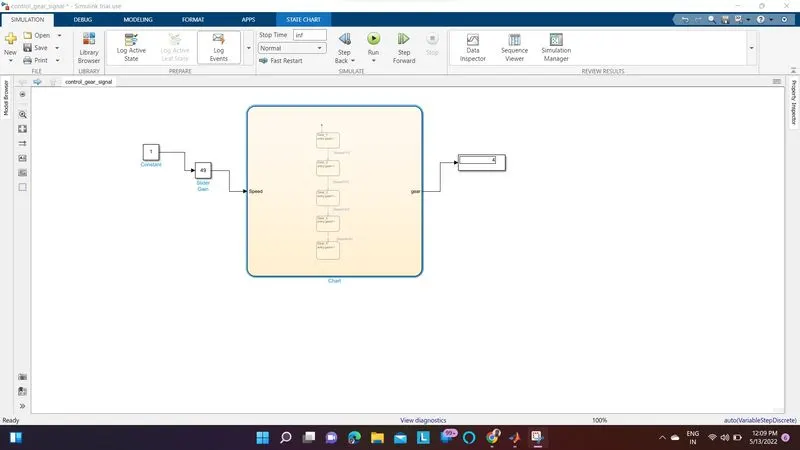
According to the speed condition the gear change will happen by manually or automatic ,So according to that conditions the gear logic works if speed is less with lesser speed.& inceases with increase in speed so speed is input & gear shift is output.