Week 4.1: Project - Steady state simulation of flow over a throttle body
JORGE LOZANO
Advanced CFD for IC Engine Applications using Converge
Project - Steady state simulation of flow over a throttle body
Objective
- Set up and run the steady state simulation for flow over throttle body.
- Post process the results and show pressure and velocity contours.
- Show the mesh (i.e surface with edges)
- Show the plots for pressure, velocity, mass flow rate and total cell count.
- Create an animation in which it throttle movement should be visible.
RNG K-E TURBULENCE MODEL
k-e turbulence modelling [1]
The RNG model was developed using Re-Normalization Group (RNG) methods by Yakhot et al to renormalize the Navier-Stokes’s equations, to account for the effects of smaller scales of motion. In the standard k-epsilon model the eddy viscosity is determined from a single turbulence length scale, so the calculated turbulent diffusion is that which occurs only at the specified scale, whereas all scales of motion will contribute to the turbulent diffusion. The RNG approach, which is a mathematical technique that can be used to derive a turbulence model like the k-epsilon, results in a modified form of the epsilon equation which attempts to account for the different scales of motion through changes to the production term.
Application: Although the technique for deriving the RNG equations was quite revolutionary at the time, it's use has been lower key. Some workers claim it offers improved accuracy in rotating flows, although there are mixed results in this regard: It has shown improved results for modelling rotating cavities but shown no improvements over the standard model for predicting vortex evolution (both these examples from individual experience). It is favored for indoor air simulations.
Pre-processor
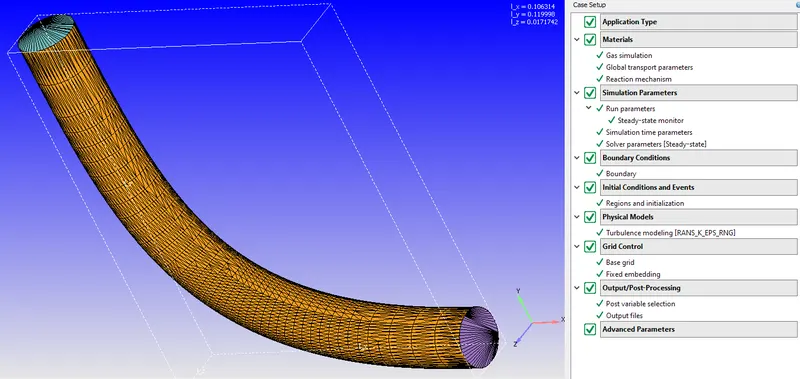
Geometry & Case Setup
Postprocessing
Steady state case
Paraview
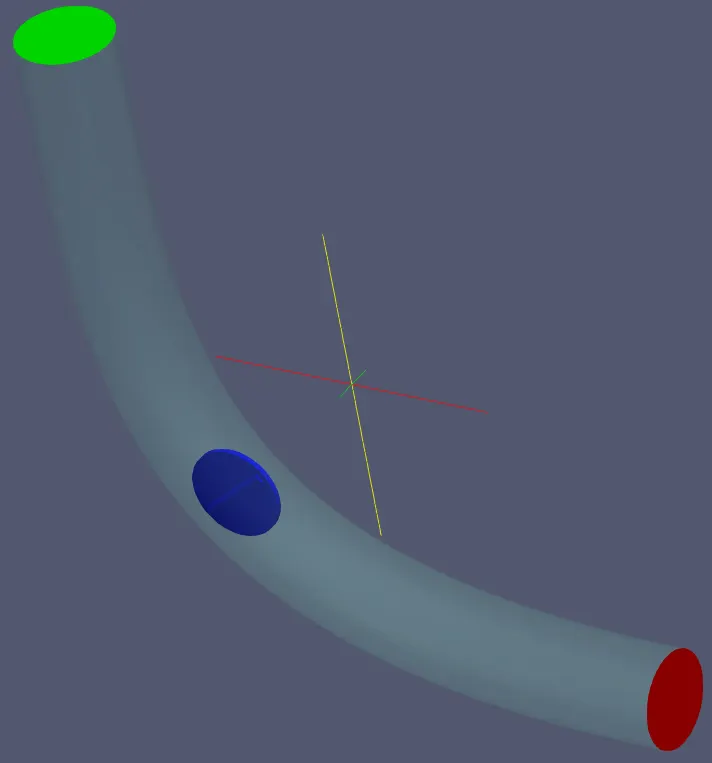
Mesh
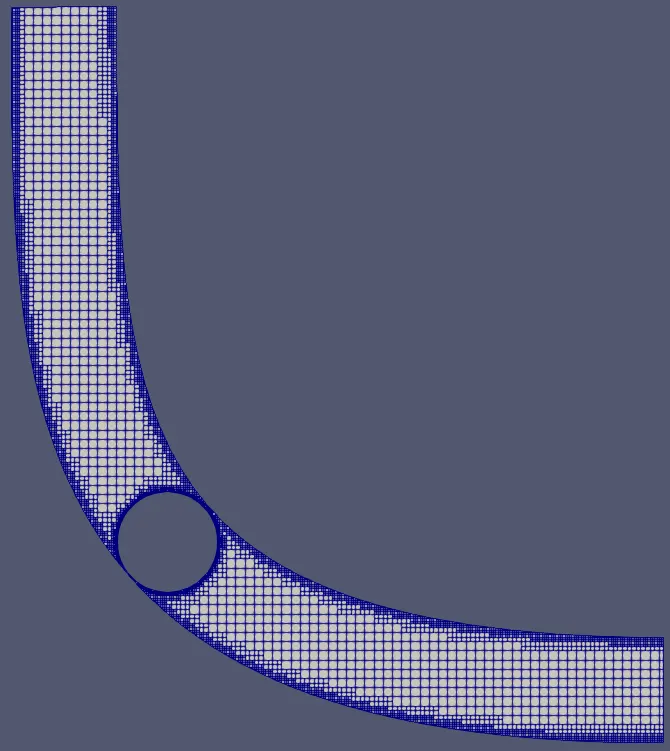
Mesh close-up

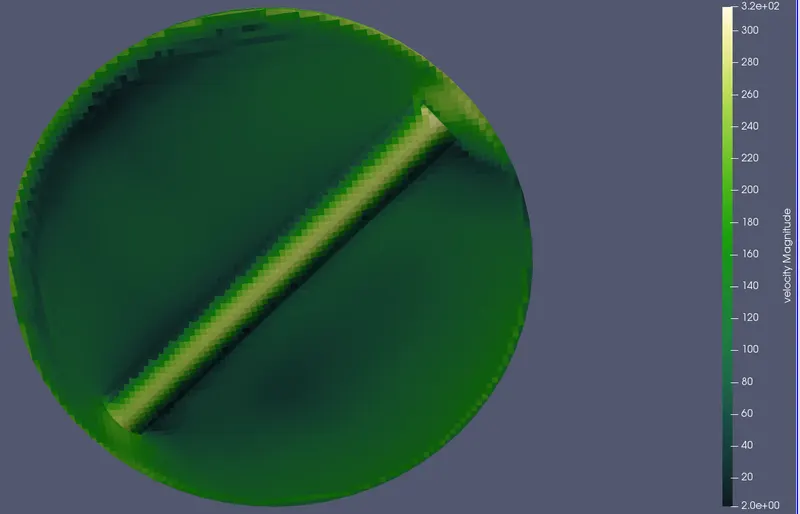
Velocity contour, Pressure vectors complete geometry
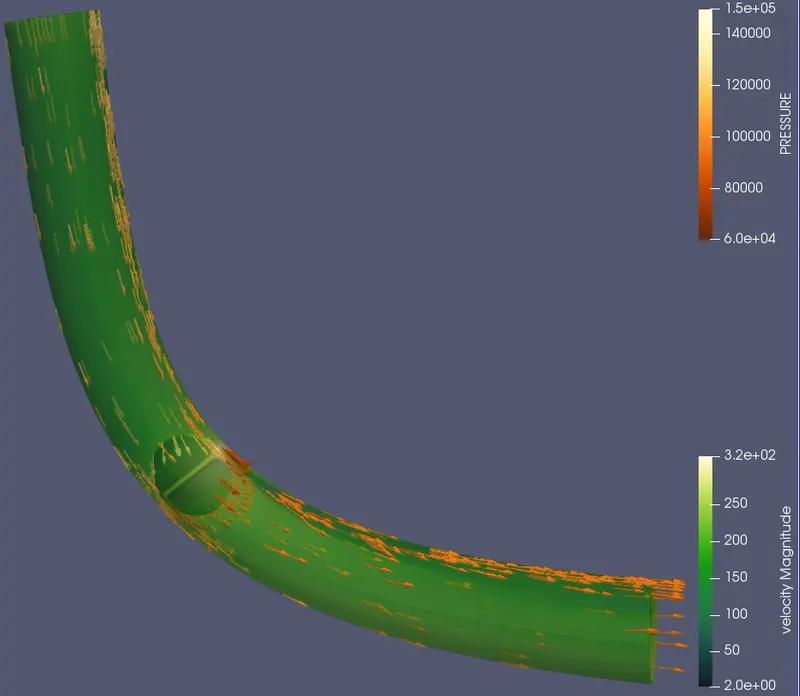
Throttle Pressure contour
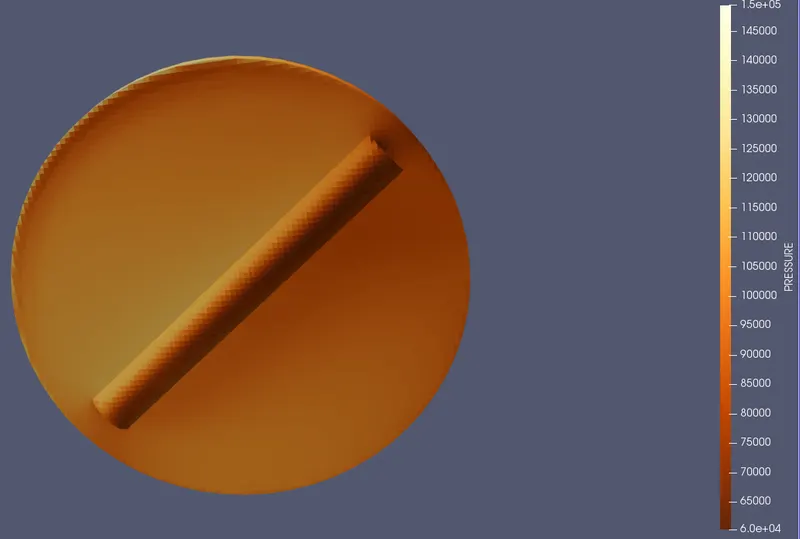
Velocity Pressure contour
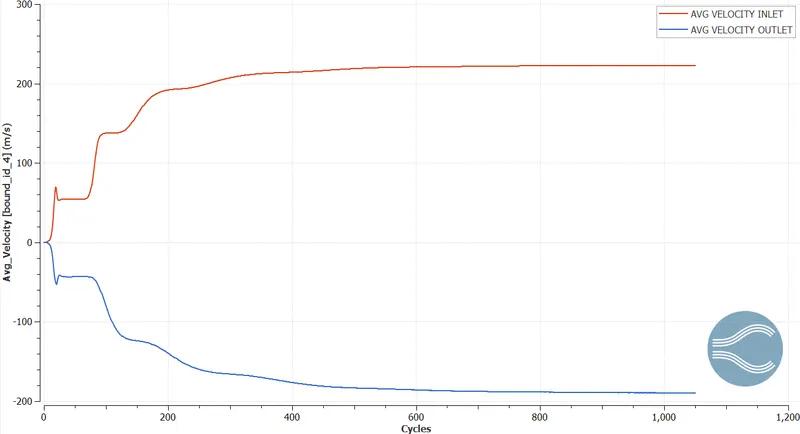
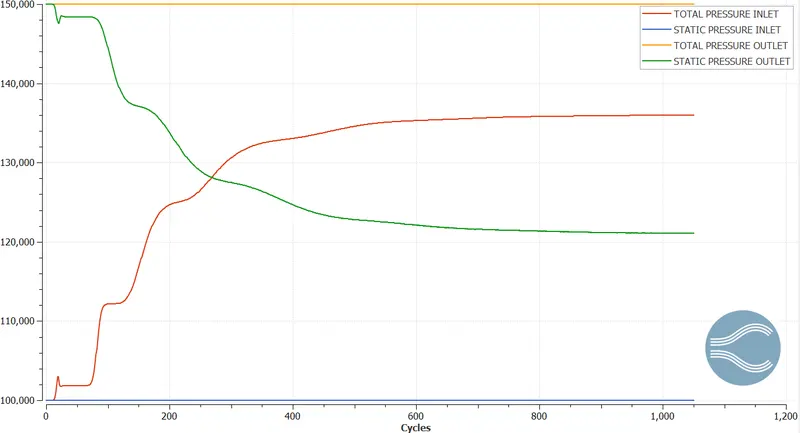
Converge plots
Velocity plot
Pressure plot
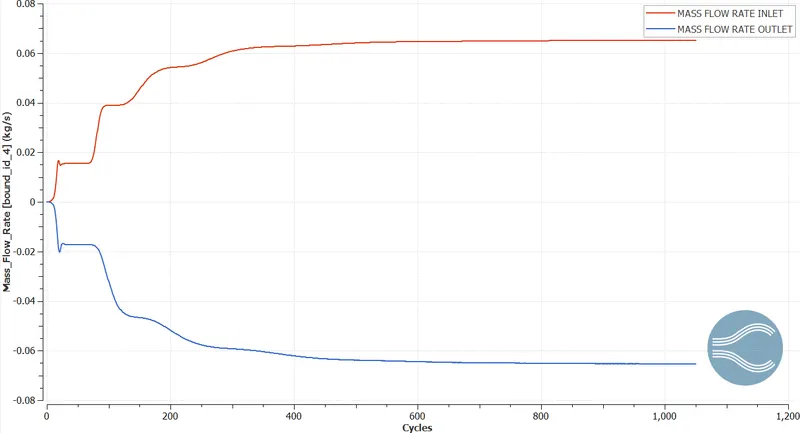
Mass flow rate plot
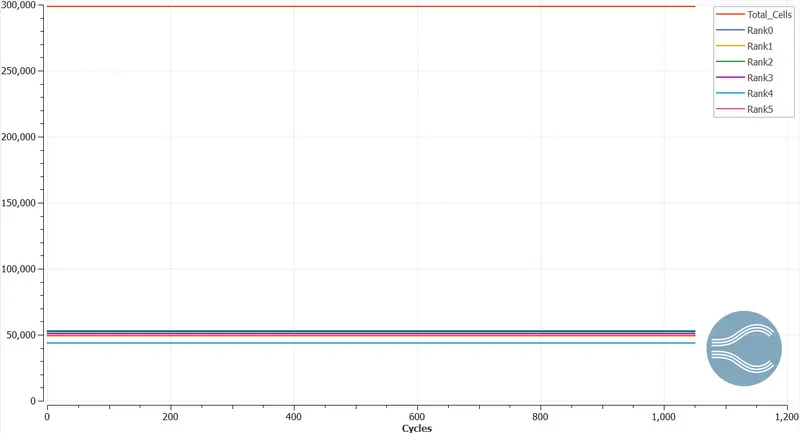
Cell count
Conclusion
A steady state simulation of an elbow with a throttle was performed converging due to velocity and pressure tolerances given at the outlet boundary, having at least 500 cycles from the user’s given condition, obtaining velocity and pressure contours, as well as the mass average flow characteristic variables such as average velocity, pressure, mass flow rate and total cells in the geometry mesh. Using a PISO algorithm density-based solver and RNG turbulence model. As seen in the cell count the load balancing algorithm from Converge has a good result dividing the equations as well as the mesh generation with the embedding applied generated a faster well focused computational analysis.
PRESSURE VELOCITY VIDEO
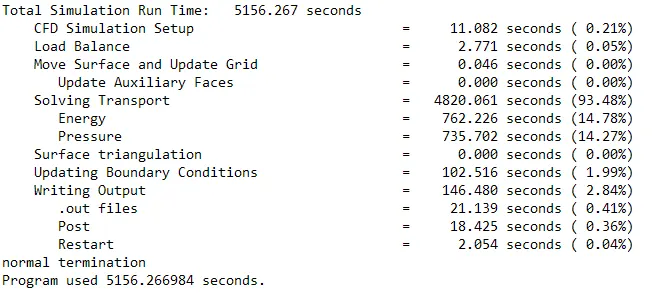
TIME ANALYSIS
References