Week 3 Verification of Weld Joints
Verification of Weld Joints
Aim
To verify weld joints using static structural analysis.
OBJECTIVE
CASE 1 welding can be done with structural steel material.
CASE 2 welding can be done with Aluminium Alloy material.
CASE 3 welding can be done with Bronze and Copper material.
PROCEDURE
Simulate three different types of welding using three different weld materials
Weld Material used:
Case 1. Stainless Steel: In this case, the material of the plates must also be the same. Use Stainless steel for both weldments and plates. No need to add flux to the weldments.
Case 2. Aluminium Alloy:The material to be chosen for this case is Aluminium alloy(high strength, wrought). [Plate material to be used is stainless steel]
Case 3.Bronze: In order to simulate "Brazing", you should be using bronze as the weld material. Assign Stainless Steel to both plates and Copper to the "Ribs".
Run the simulation for a load of 15000N that is to be applied at the rectangular hole in the small plate(Same as in the video).
For each case, find out the Directional Deformation and equivalent strain experienced by the setup. Identify the weld joint that experiences the highest equivalent stress in each case and compare the results for all three cases
CASE 1 welding can be done with structural steel material.
Stainless Steel: In this case, the material of the plates must also be the same. Use Stainless steel for both weldments and plates. No need to add flux to the weldments.
Import the model.
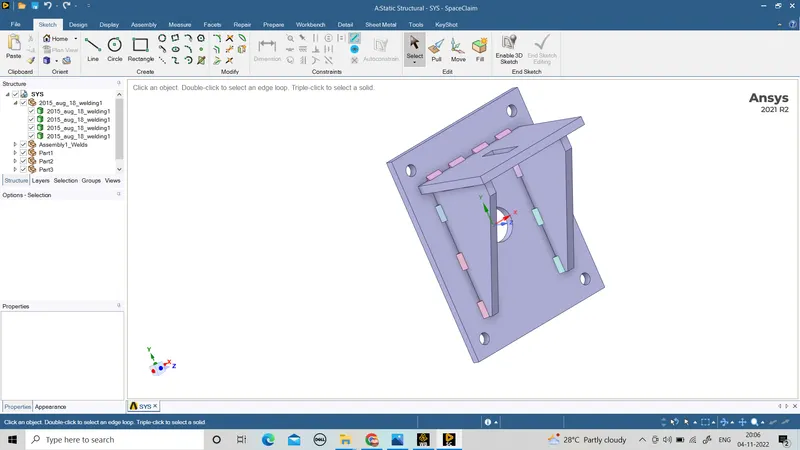
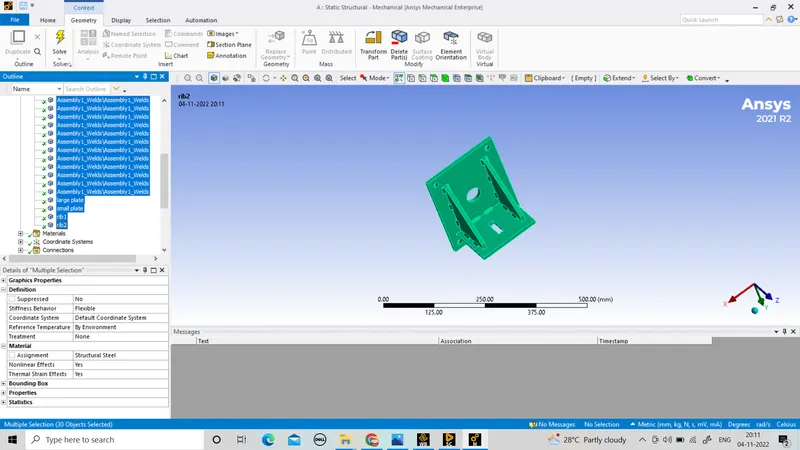
select the material as stainless steel.
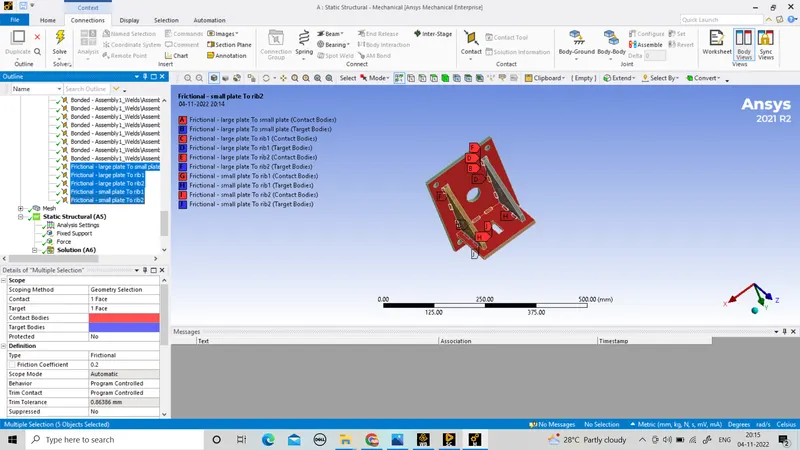
contact the connection.
plate,ribs,welding are in frictional.
frictional co-efficient of 0.2.
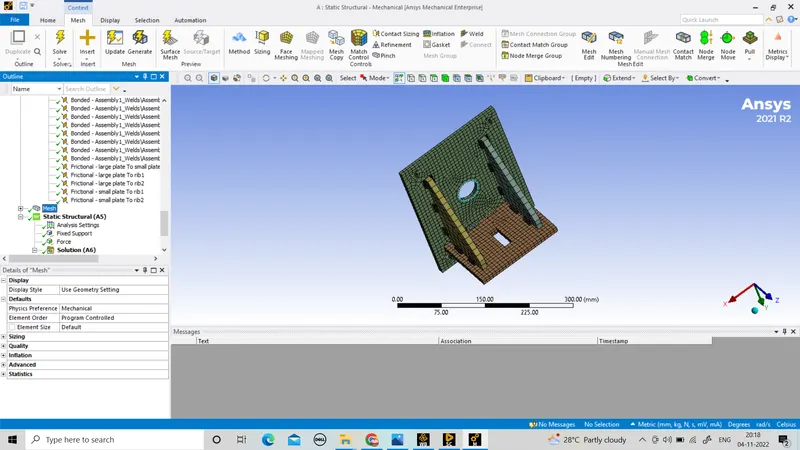
mesh the component with element size of 7mm
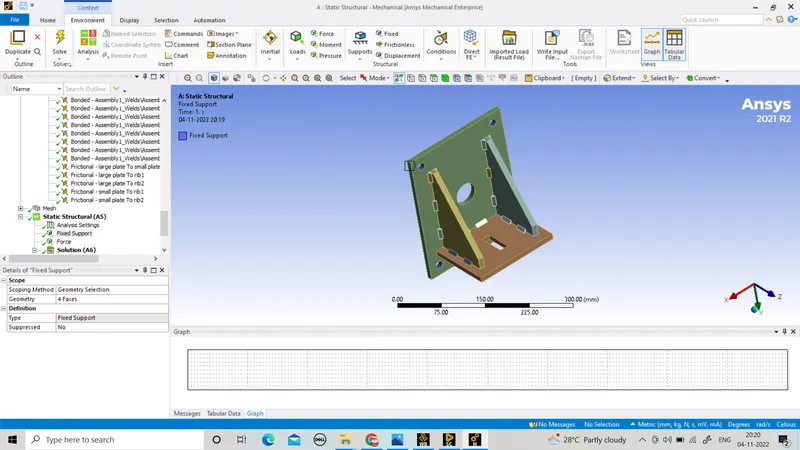
fixed support
In all four corner fixed support can be implemented.
Force
Force can be applied on the 15000N ON Y-direction.
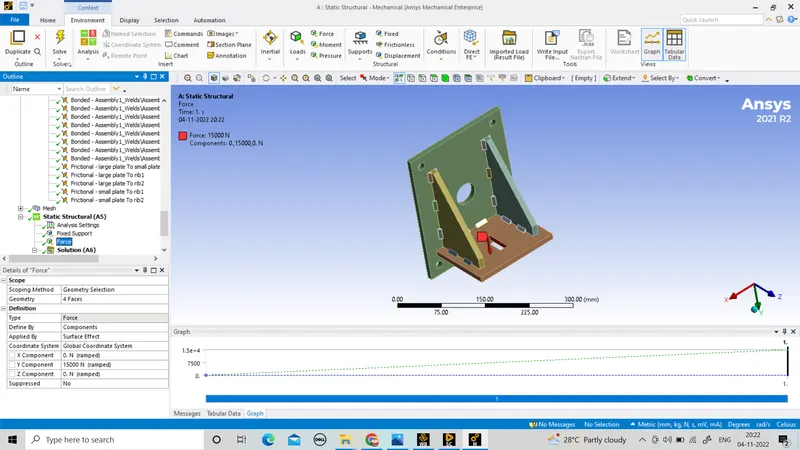
solve the problem
CASE 2
Aluminium Alloy:The material to be chosen for this case is Aluminium alloy(high strength, wrought). [Plate material to be used is stainless steel]
Import the model.
select the material as aluminium alloy.
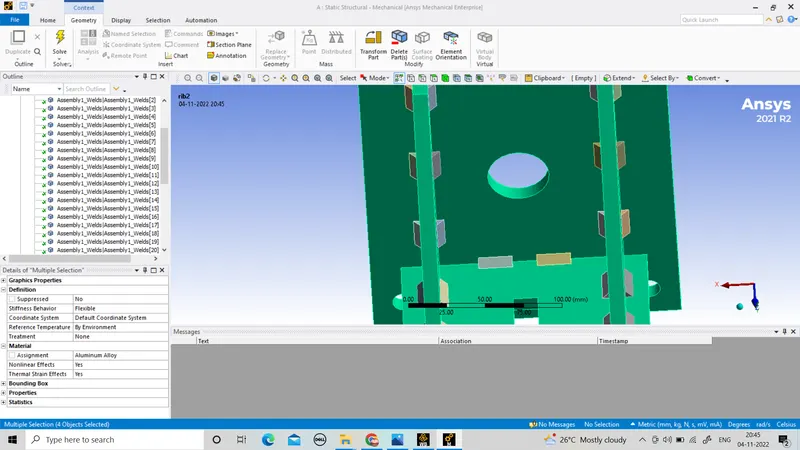
contact the connection.
plate,ribs,welding are in frictional.
frictional co-efficient of 0.2.
mesh the component with element size of 7mm
fixed support
In all four corner fixed support can be implemented.
Force
Force can be applied on the 15000N ON Y-direction.
solve the problem.
CASE 2
Aluminium Alloy:The material to be chosen for this case is Aluminium alloy(high strength, wrought). [Plate material to be used is stainless steel]
Import the model.
select the material as copper and bronze alloy.
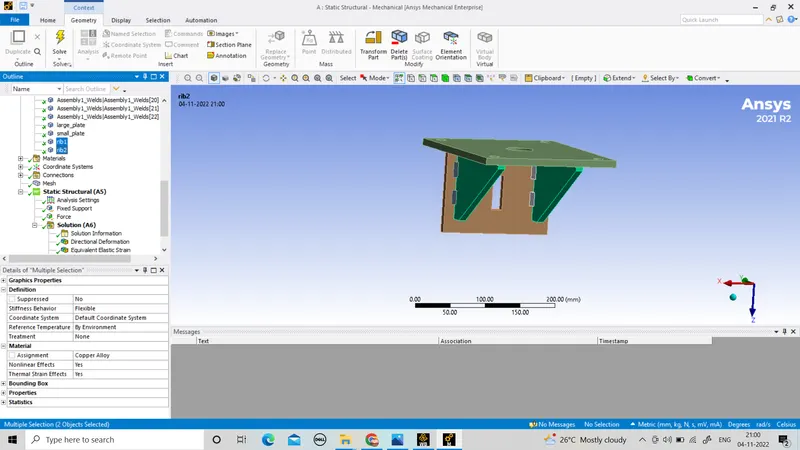
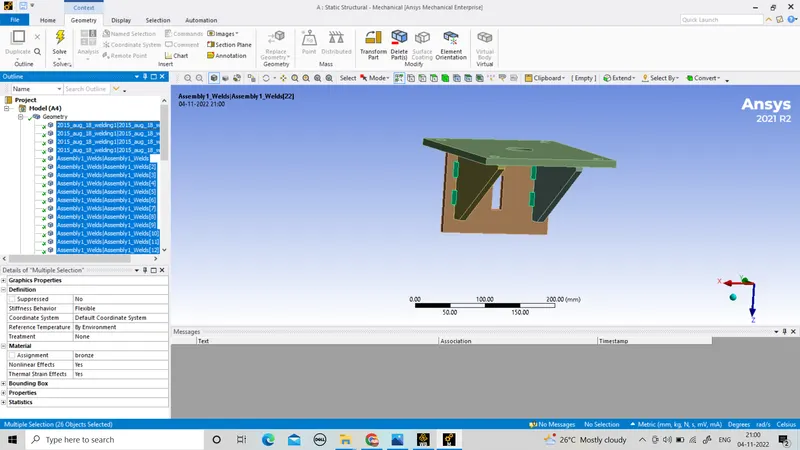
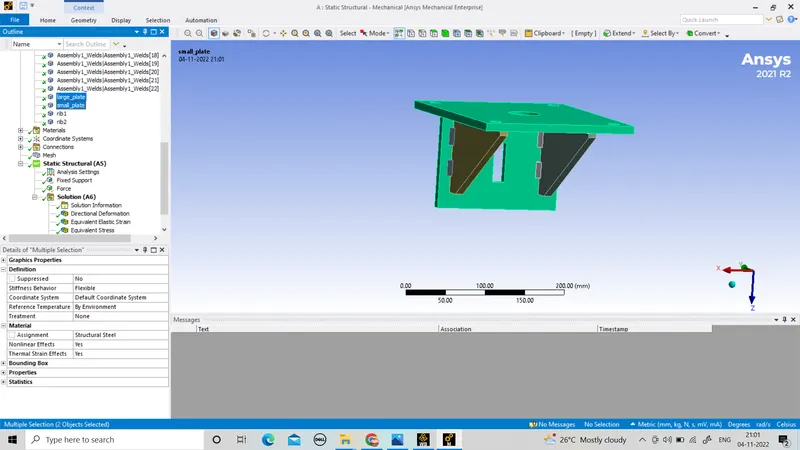
contact the connection.
plate,ribs,welding are in frictional.
frictional co-efficient of 0.2.
mesh the component with element size of 7mm
fixed support
In all four corner fixed support can be implemented.
Force
Force can be applied on the 15000N ON Y-direction.
solve the problem
RESULT
Stainless Steel
Directional deformation.
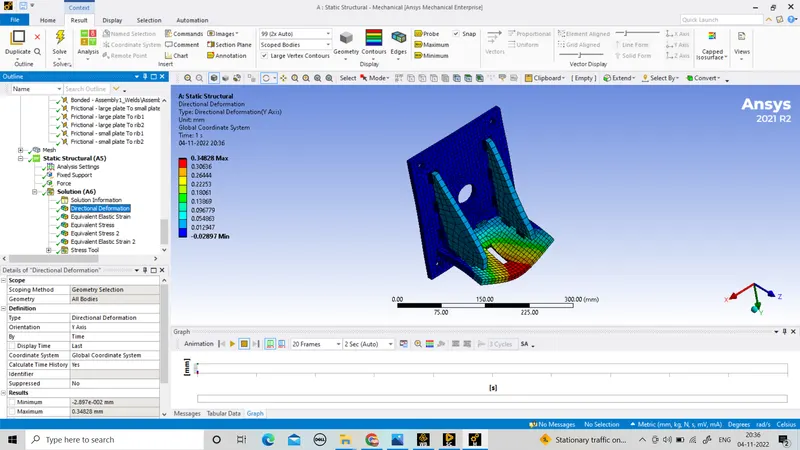
strain
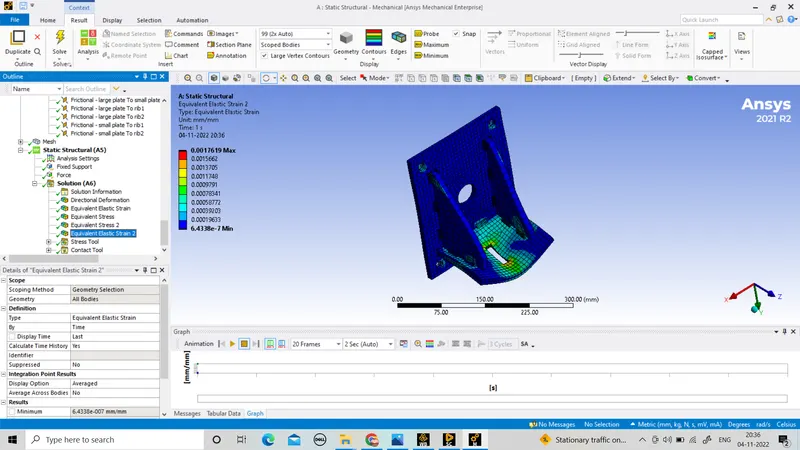
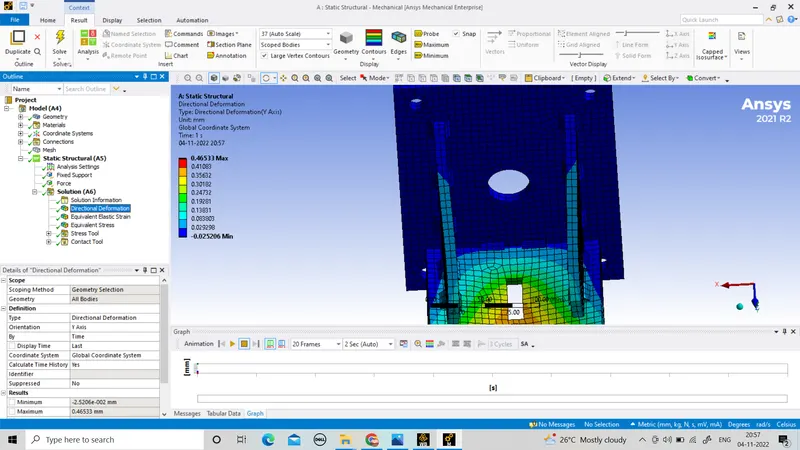
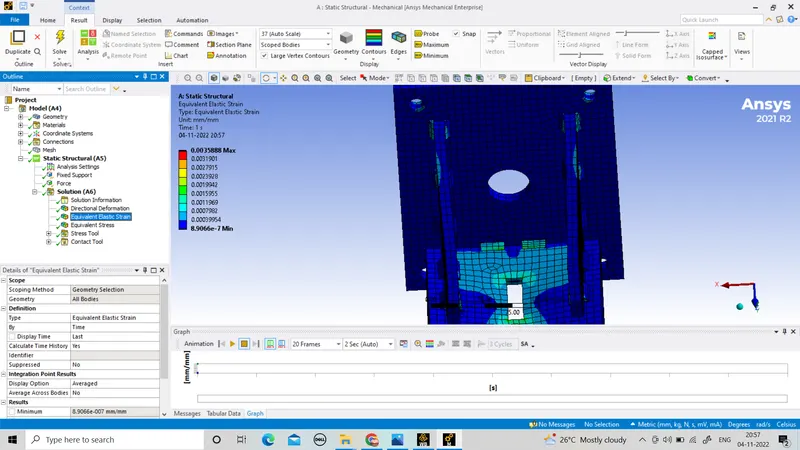
Aluminium Alloy
Directional deformation
strain
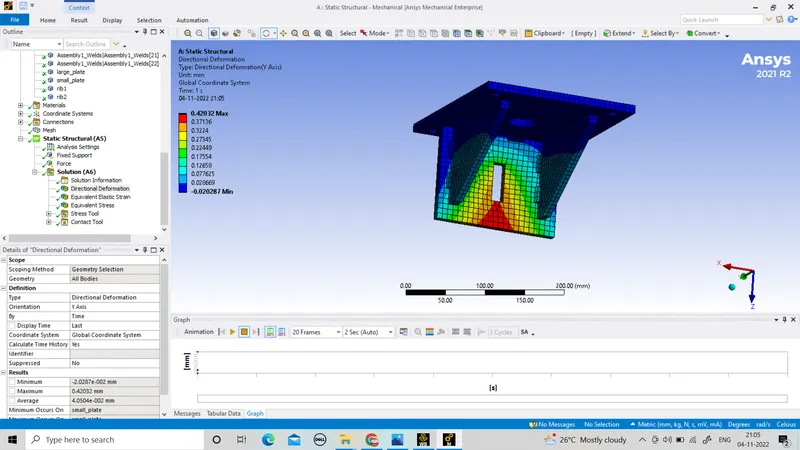
Bronze and copper
Directional deformation.
strain
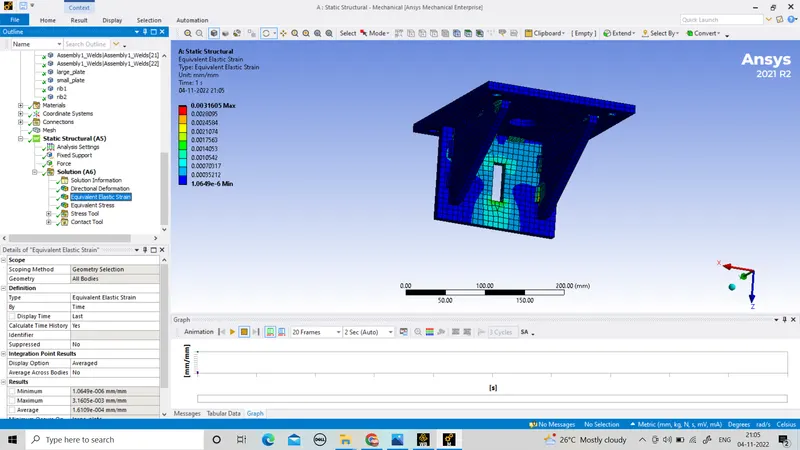
Directional deformation strain
Stainless Steel 0.34828MAX 0.0017619MAX
Aluminium Alloy 0.46533MAX 0.0035888MAX
Copper and bronze 0.42032MAX 0.0031605MAX