Week 3 Verification of Weld Joints
VERIFICATION OF WELD JOINTS USING ANSYS
OBJECTIVE
1. To simulate three different types of welding using three different weld materials,
i. Case 1: Weld Material used is Stainless Steel. The material of plates and ribs are also Stainless Steel.
ii. Case 2: Weld Material used is Aluminium Alloy (high strength, wrought). The material of plates and ribs are Stainless Steel.
iii. Case 3: Weld Material used is Cast Bronze. The material of plates is Stainless Steel and ribs is Copper.
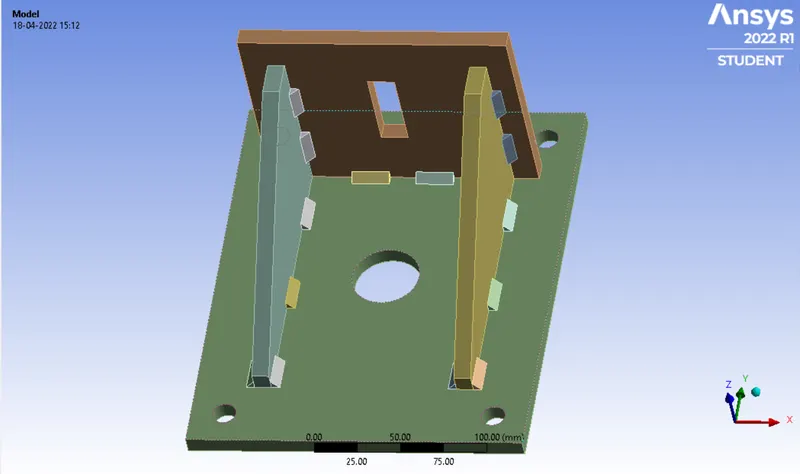
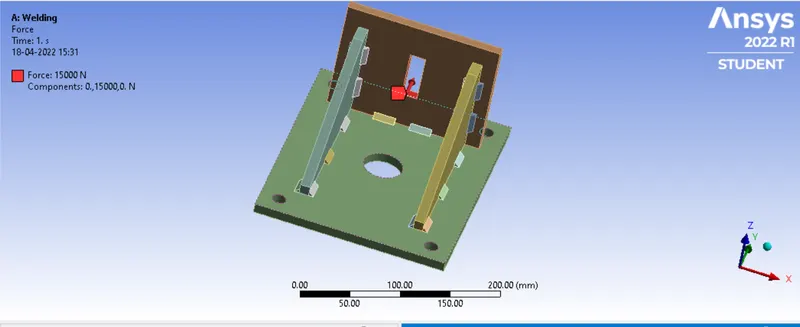
2. To run the simulation for a load of 15000 N that is to be applied at the rectangular hole in the small plate for each
case.
3. To find out the Directional Deformation and Equivalent Strain experienced by the setup for each case.
4. To Identify the weld joint that experiences the highest Equivalent Stress in each case and compare the results for all three cases.
1. THEORY
1.1 Welding:
Welding is a process in which materials of the same fundamental class or type are brought together and caused to coalesce through the formation of chemical bonds under the combined action of heat and pressure, without or with any filler Welding is used to fabricate new equipment or structures by building up detail parts into a unitized assembly or weldment. The fundamental types of welds used to accomplish joining include those that are used to make butt joints, corner joints, tee or T-joints, lap joints, and edge joints
Edge joint
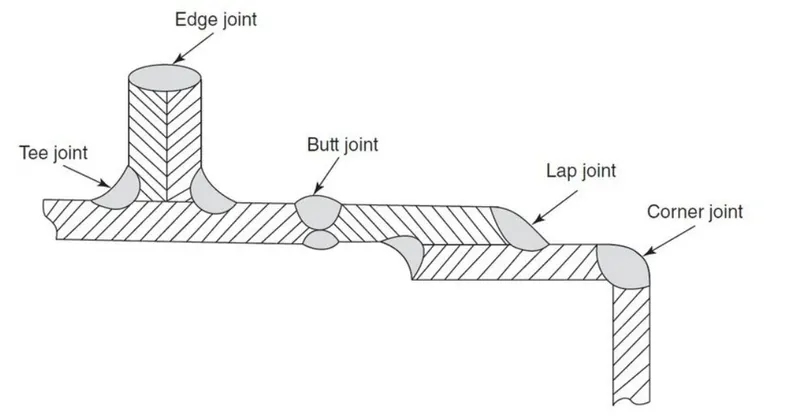
Fig.1.1 Cross section of a hypothetical weldment showing the five fundamental types of joints found in welding
One of the principal reasons welding is often selected as the preferred process for joining components into an assembly is the high joint efficiency obtained; joint efficiency being the percentage of the strength in the joint compared to the strength of the adjacent joint elements. High joint efficiency by welding is the combination of two key factors: (i) the ability of the weld itself to provide strength comparable to the base metals and (ii) the nearly negligible added weight of a weld to a structure.
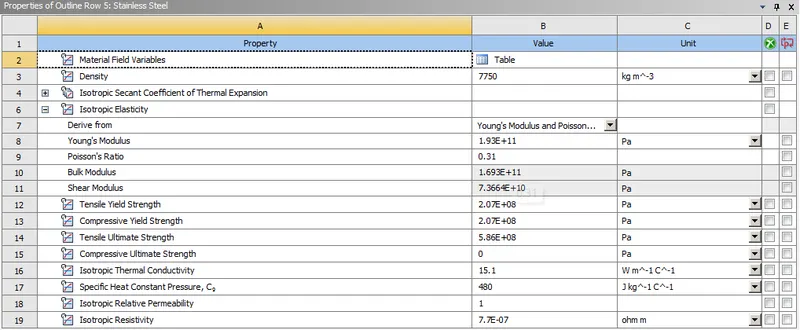
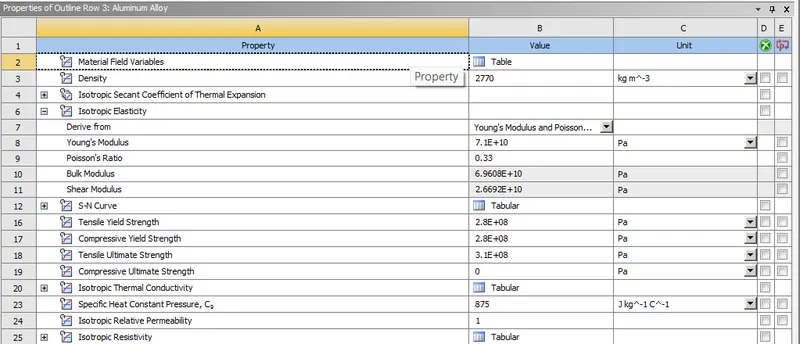
The weld materials used for the weld joint assembly in the project are (i) Stainless Steel (ii) Aluminum Alloy (iii) Cast Bronze.
Stainless steels represent a broad family of iron-based alloys that contain a minimum of approximately 12% chromium. The addition of chromium produces an extremely thin but stable and continuous chromium-rich oxide film that gives these alloys their stainless and corrosion-resistant properties.
Aluminum alloys represent a family of widely used engineering materials in applications that usually require a combination of low density (light weight) and corrosion resistance. The corrosion resistance of these alloys results from the rapid formation of an aluminum oxide on the surface, which is relatively stable at ambient temperatures
1.2. Braze welding:
Braze-welding can be used to join similar or dissimilar metals by ng a filler material with a lower melting temperature range than the parent metals being joined. When brazing, the filler material is drawn into a close-fitting joint by capillary attraction. Traditionally, braze-welding was known as bronze welding because the process resembled welding and, originally, the filler material was a copper - tin - phosphorus alloy, that is, a bronze However the name is a misnomer because the filler material used nowadays is essentially a copper - zinc alloy, that is, a brass.
2. ANALYSIS SETUP
Geometry :
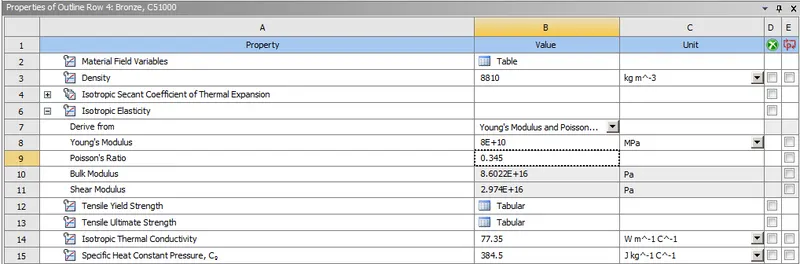
Material Properties :
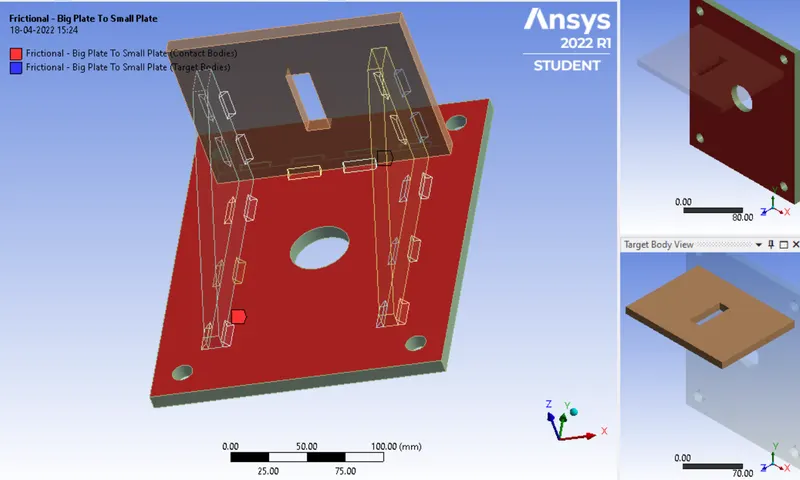
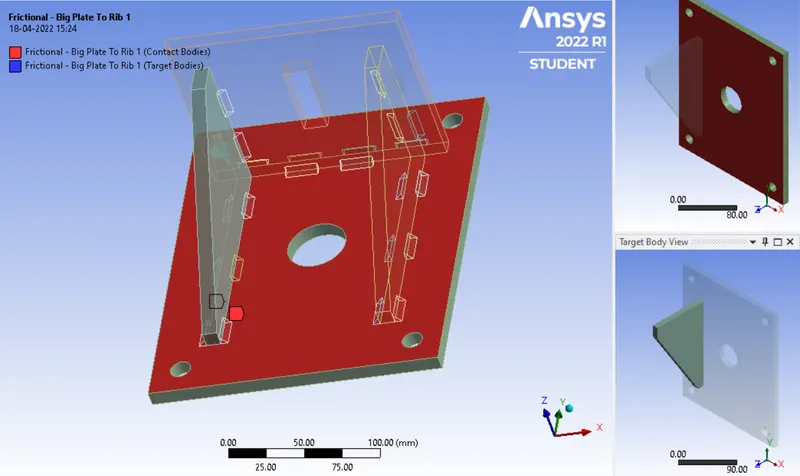
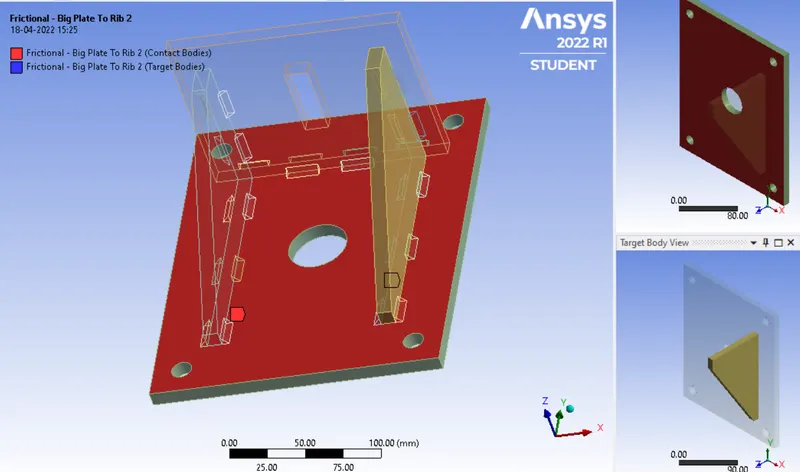
Contact Detail :
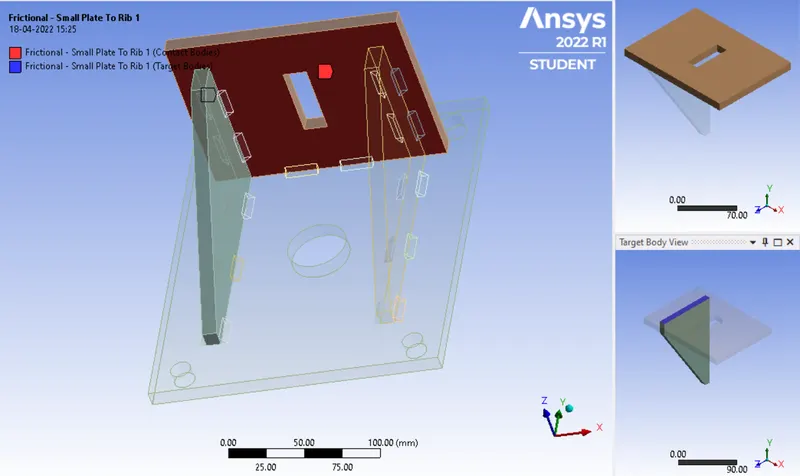
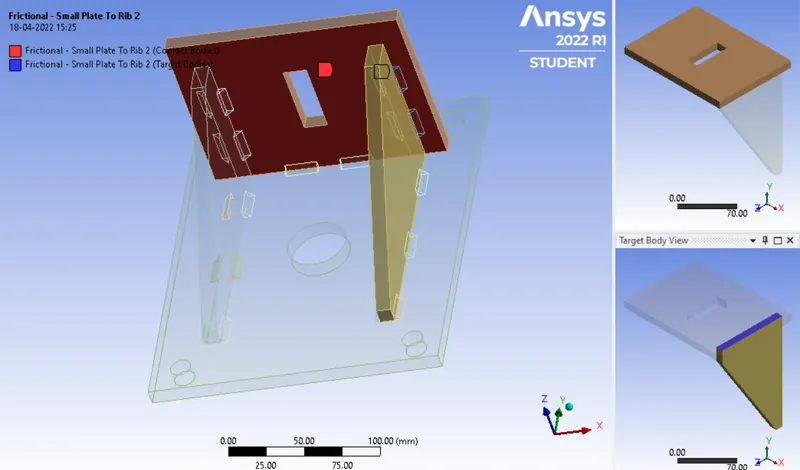
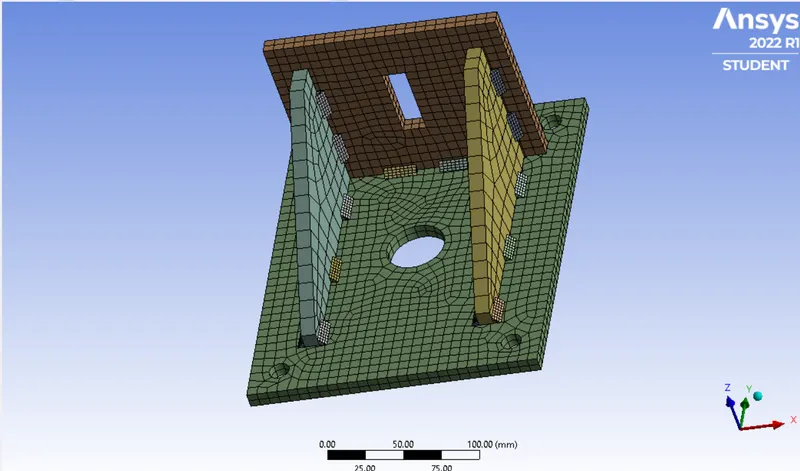
Meshing :
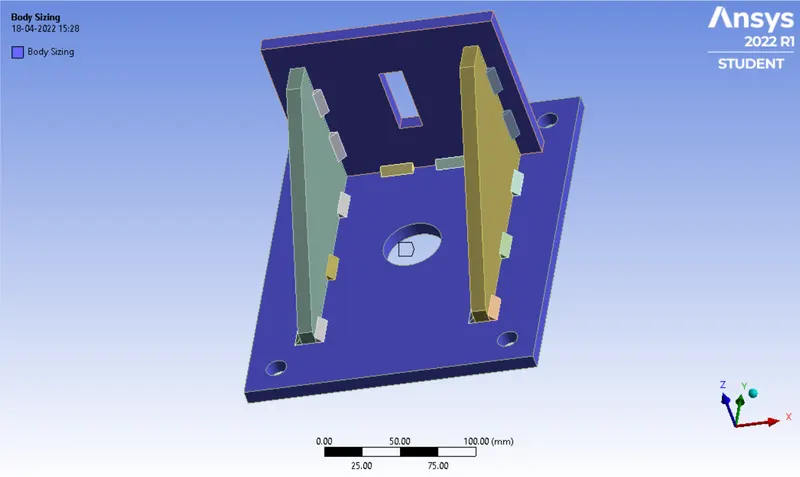
Body Sizing :
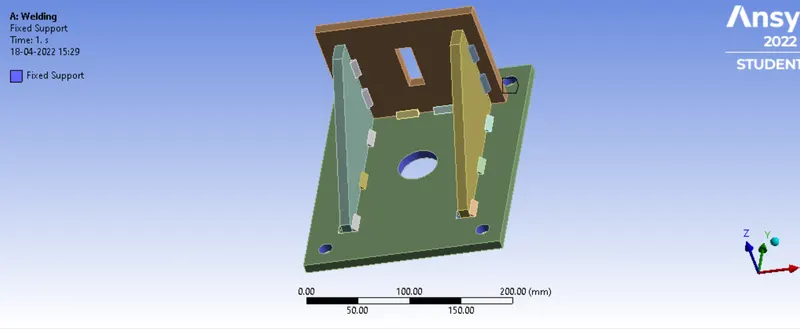
Boundary condition :
Fixed Support
Force
Result And Discussion :
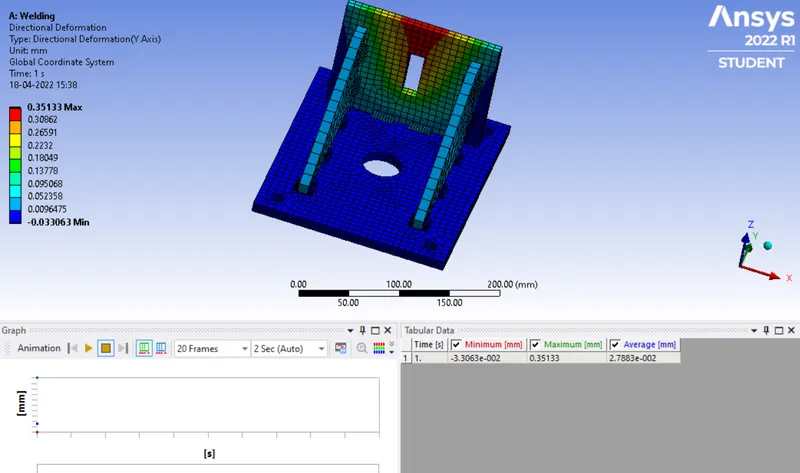
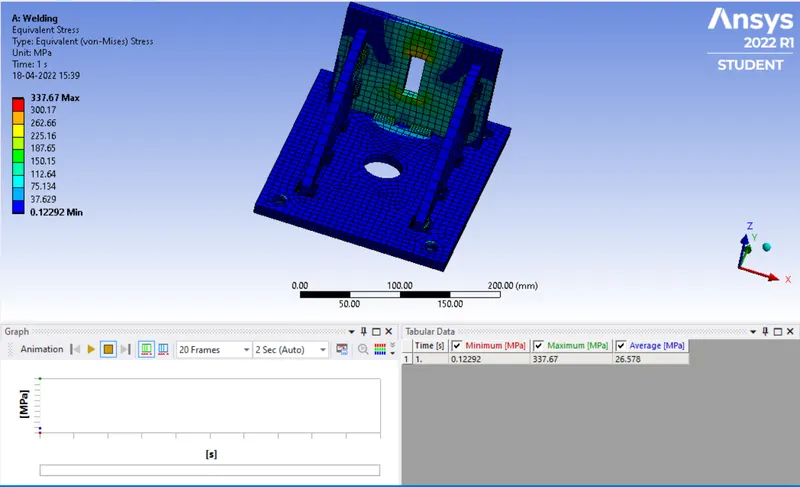
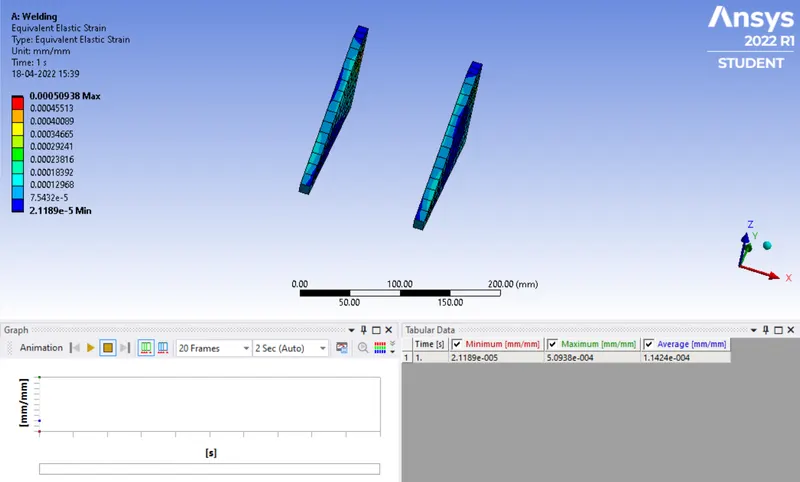
CAse 1 : Stainless Steel: In this case, the material of the plates must also be the same. Use Stainless steel for both weldments and plates. No need to add flux to the weldments.
Directional Deformation
Equivalent Stress
Equivalent Strain
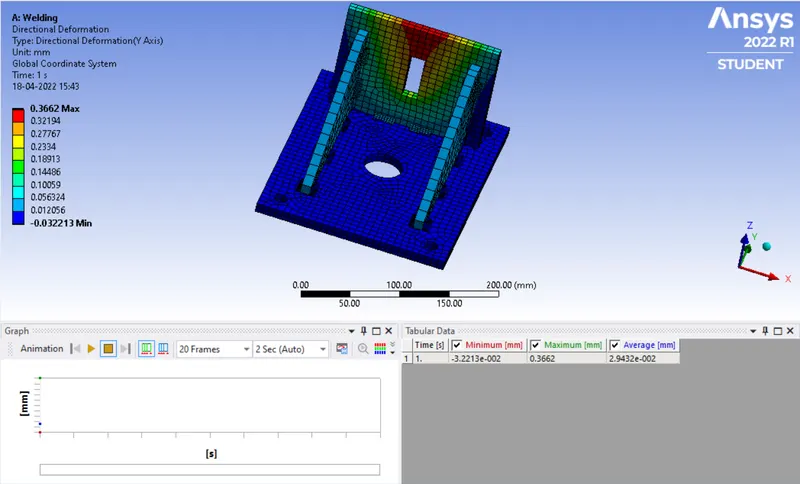
CAse 2 :Aluminium Alloy:The material to be chosen for this case is Aluminium alloy(high strength, wrought). [Plate material to be used is stainless steel]
Directional Deformation
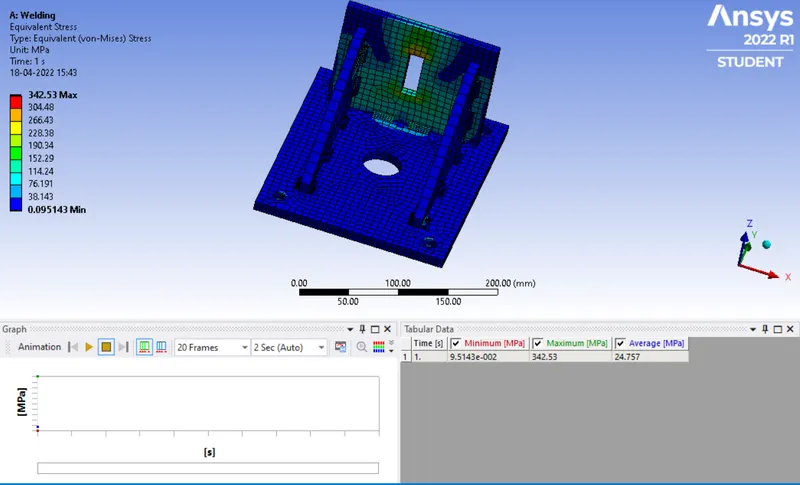
Equivalent Stress
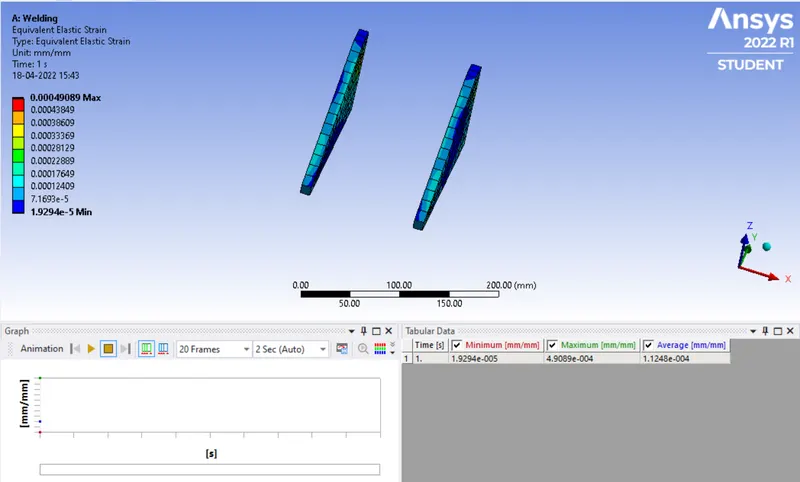
Equivalent Strain
CAse 3 :Bronze: In order to simulate "Brazing", you should be using bronze as the weld material. Assign Stainless Steel to both plates and Copper to the "Ribs".
Directional Deformation
Equivalent Stress
Equivalent Strain
Comparison of results:
Weld Material Deformation equivalent stress Equivalent Strain
mm mpa mpa
max min max min max min
CAse 1 Stainless steel 0.35133 -0.03306 337.67 0.12292 0.00050938 2.1189e-5
Case 2 Aluminium Alloy 0.3662 -0.0322213 342.53 0.095143 0.000049089 1.929e-5
Case 3 CAst Bronze 0.29198 -0.022651 273.04 0.068769 0.000038619 1.6325e-5
CONCLUSION
1. The simulation of three different types of welding using three different weld materials were done successfully by applying a load of 15000 N on the rectangular hole of the small plate, for the following cases,
i. Case 1: Weld Material used is Stainless Steel. The material of plates and ribs are also Stainless Steel.
ii. Case 2: Weld Material used is Aluminium Alloy (high strength, wrought). The material of plates and ribs are Stainless Steel.
iii Case 3: Weld Material used is Cast Bronze. The material of plates is Stainless Steel and ribs is Copper.
2. From the results of Directional Deformation and Equivalent Strain, the stainless-steel weldment experienced least deformation and strain compared to other weldments.
3. The stainless-steel weld joint experienced the highest equivalent stress whereas, Aluminium alloy experienced the least equivalent stress.
4. From the point of design, the Aluminium weld joint is preferred choice, because deformation and strain experienced is less and the maximum equivalent stress developed is less than the yield stress value as well as safety factor is above one.