Week 3 Verification of Weld Joints
Aim- Simulate three different types of welding using three different weld materials
Weld Material used:
Case 1. Stainless Steel: In this case, the material of the plates must also be the same. Use Stainless steel for both weldments and plates. No need to add flux to the weldments.
Case 2. Aluminium Alloy:The material to be chosen for this case is Aluminium alloy(high strength, wrought). [Plate material to be used is stainless steel]
Case 3.Bronze: In order to simulate "Brazing", you should be using bronze as the weld material. Assign Stainless Steel to both plates and Copper to the "Ribs".
Run the simulation for a load of 15000N that is to be applied at the rectangular hole in the small plate( Same as in the video).
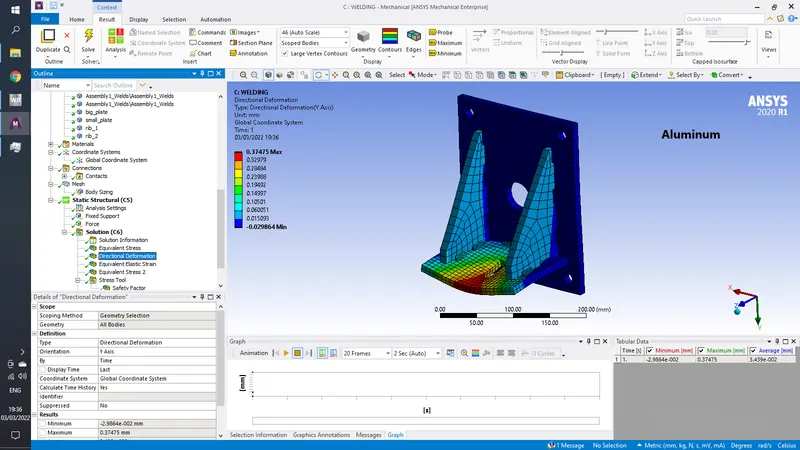
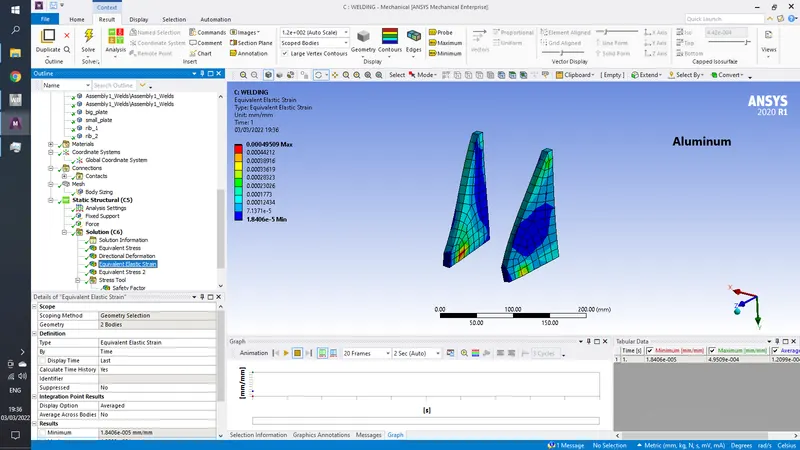
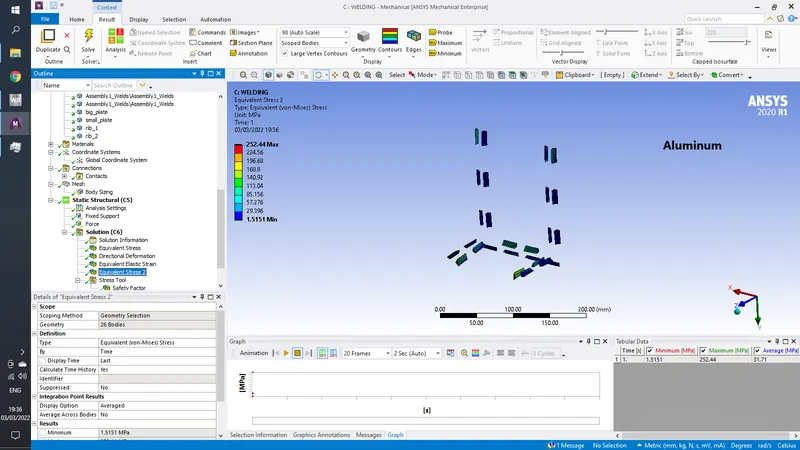
For each case, find out the Directional Deformation and equivalent strain experienced by the setup. Identify the weld joint that experiences the highest equivalent stress in each case and compare the results for all three cases
Procedure-
1) Drag the satatic structural model into the workbench and click on egineering data to add materials, in our case it will be Engineering Data Source>>Garanta Design Sample Materials>> and add the above mentioned matrials by clicking on plus.
2) Exit the engineering matrials tab and right click on geometry tab and import the required model, then double click on geometry to open spaceclaim to inspect the geometry for any abnormality, if everthing is all right exit the space claim
3) double click on Model to perform simulation, as the model browser opens under geomerty tree last 4 parts are plates and ribs so rename them as shown in image
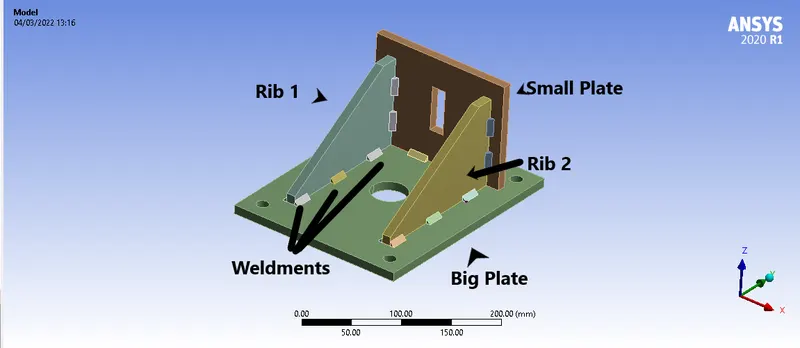
4)To see what matrials are availible click on materials tab, to allot the matrials click on the parts using left mouse button and ctrl on which we want to assign it , click on Details View then matrials to assign the material of our choice
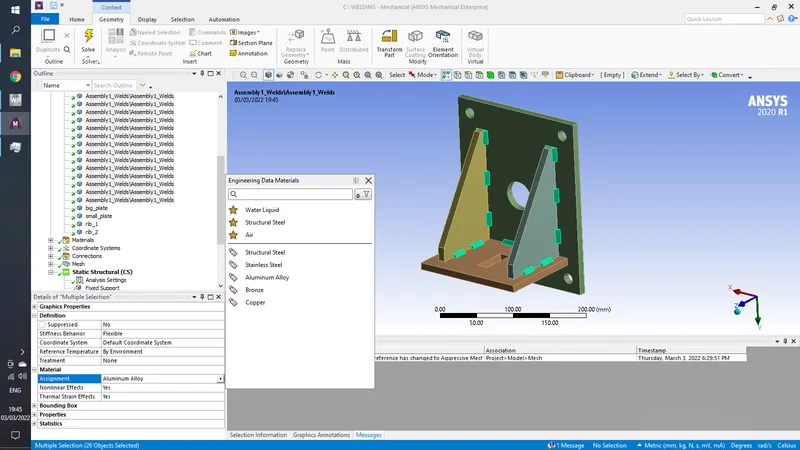
5)In connections right click>>Rename based on defination, change the connection between Big plate-small plate, big plate-rib1, big plate-rib2, small plate-rib1, small plate-rib2 from bonded to frictional , add frictonal coefficient to 0.2
6)In mesh add body sizing to big plate and small plate of 7mm and generate mesh.
7) in Static structural add fixed supports to 4 holes in big plate, force to rectangular hole of small plate of 150000N for each case.
8) in solutions insert total deformation,Equivalent Stress for individual components
CASE 1
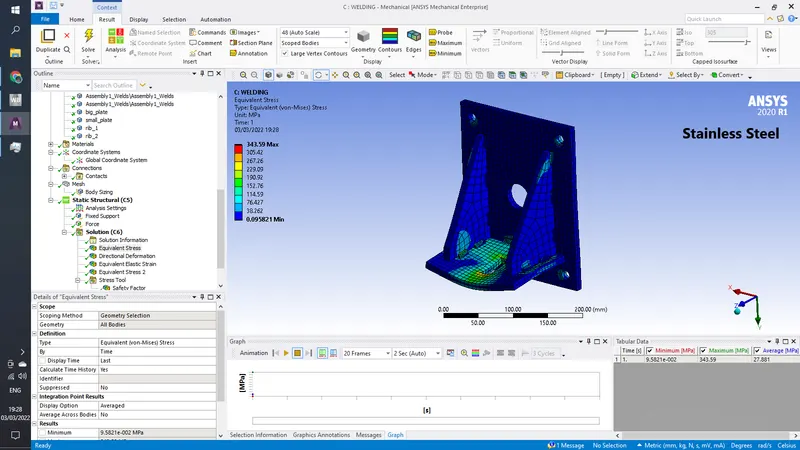
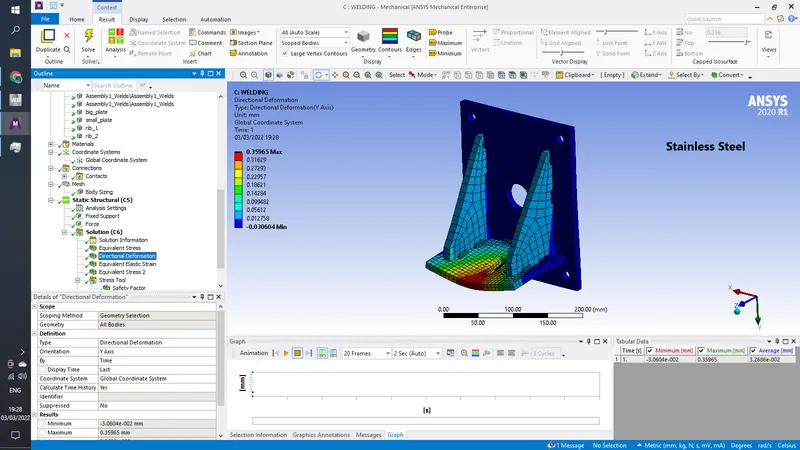
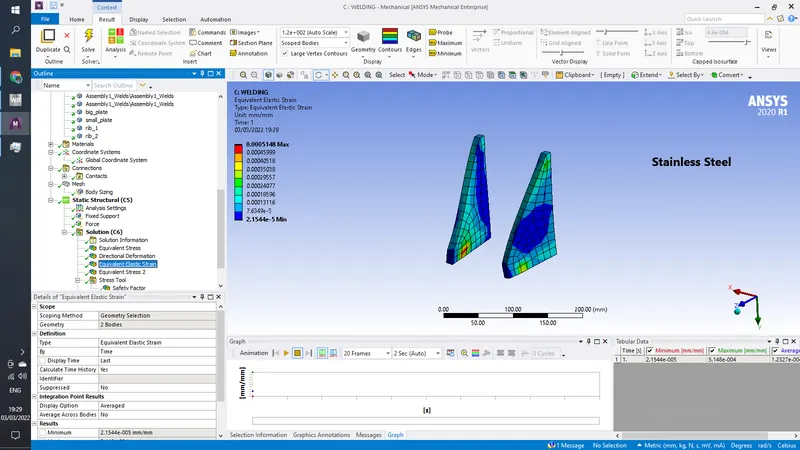
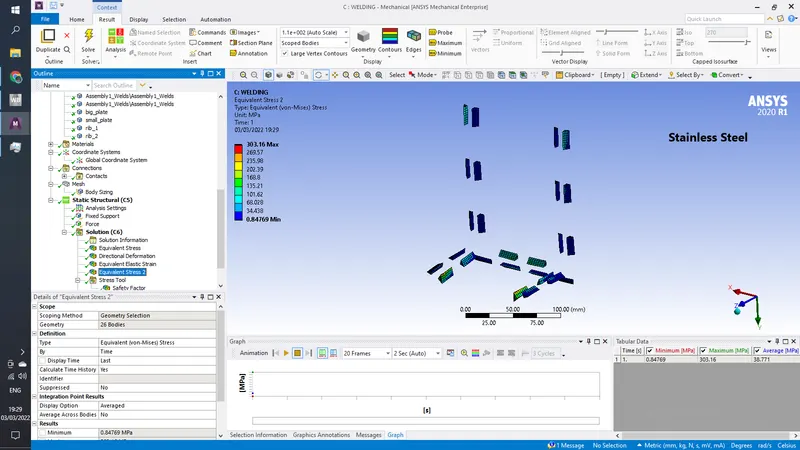
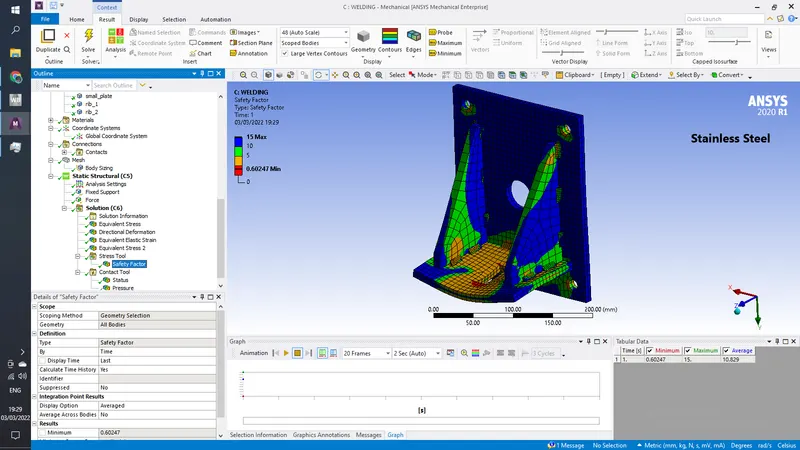
CASE 2
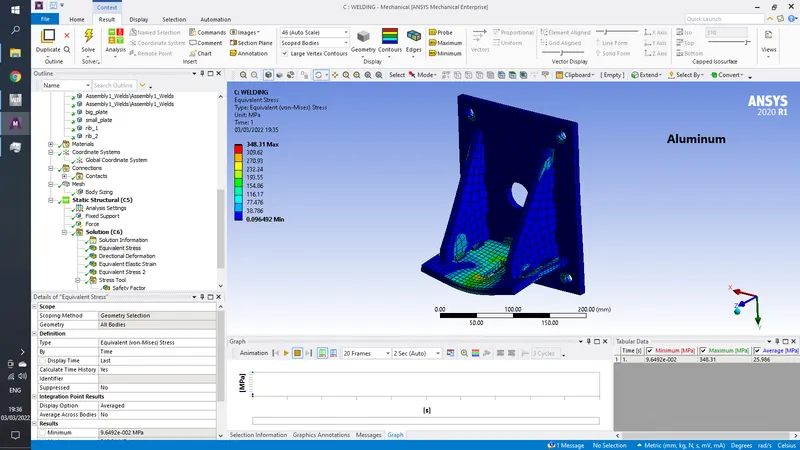
CASE 3
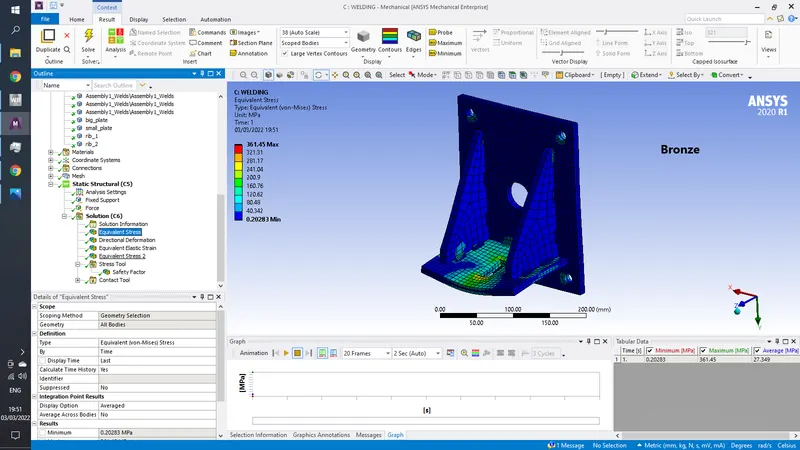
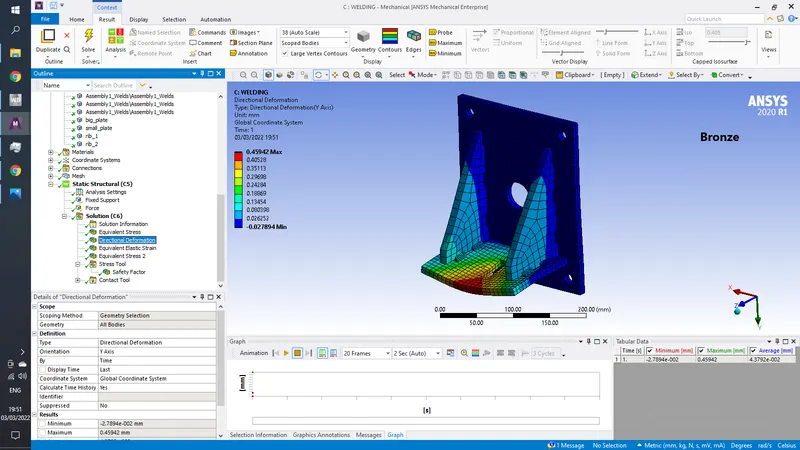
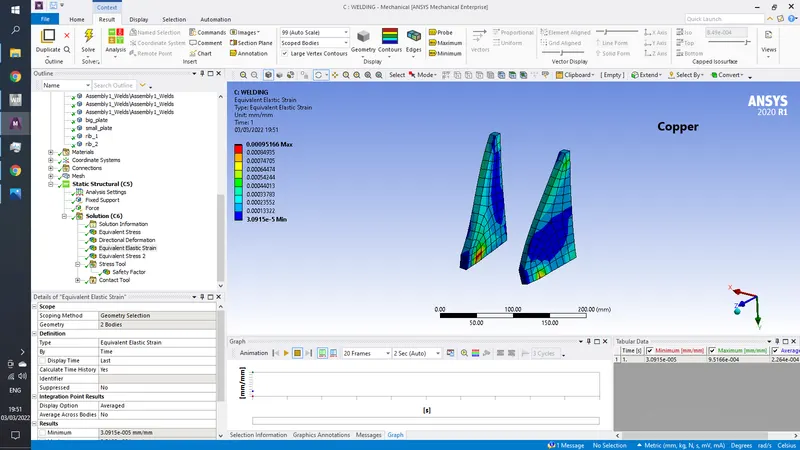
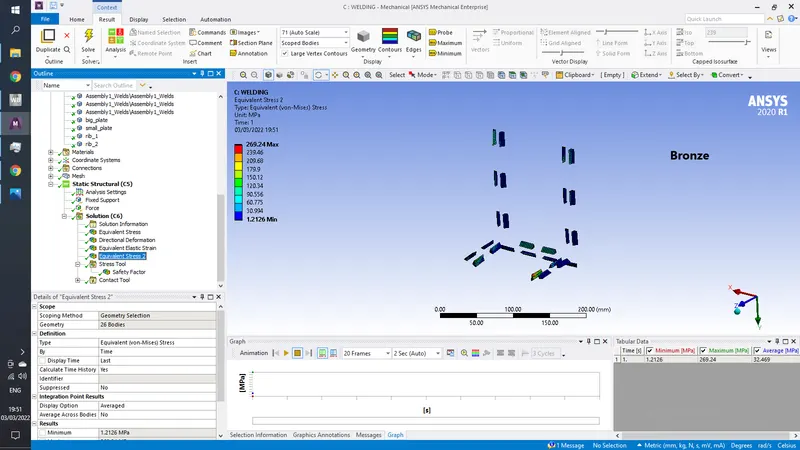
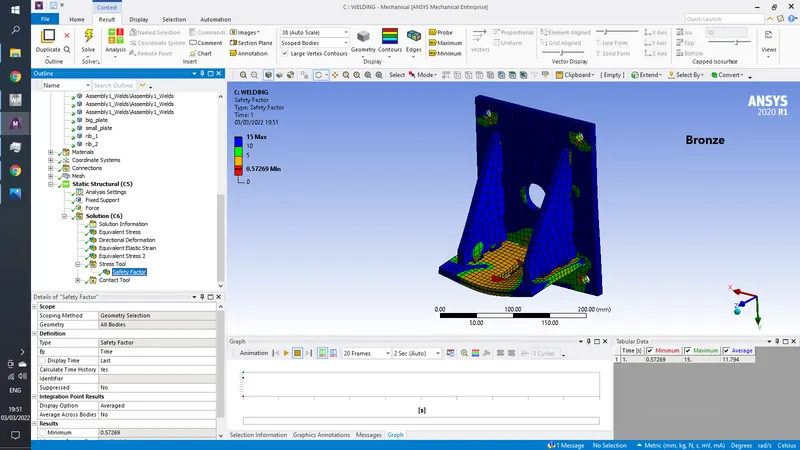
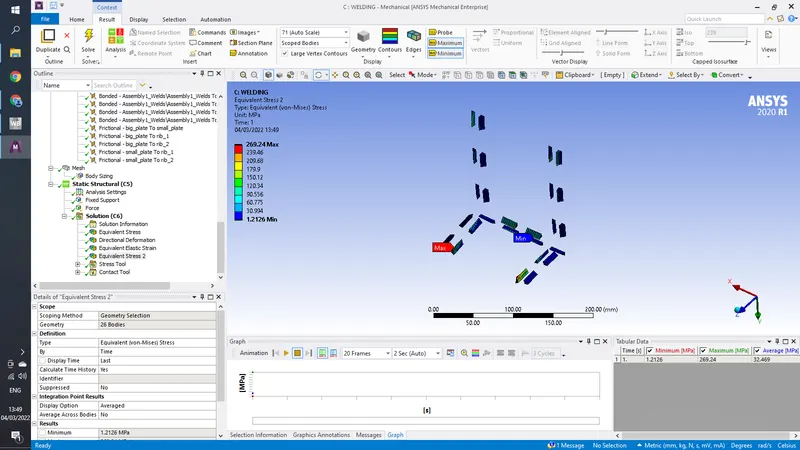
For Each case these weldements experienced maximum and minimum stresses
Conclusion-
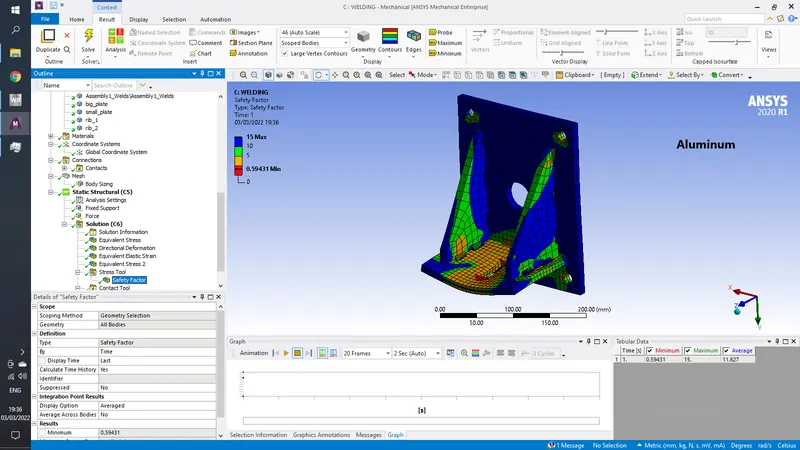
Bronze was the weakest material of 3 because it expreienced most stress and its factor of safety was least
Stainless steel was the strongest of 3