Week 3 Verification of Weld Joints
Objective:-
To perform static structural analysis on welding joints using three different materials and to compare the results like directional deformation, stress generated on welded joints and strain developed.
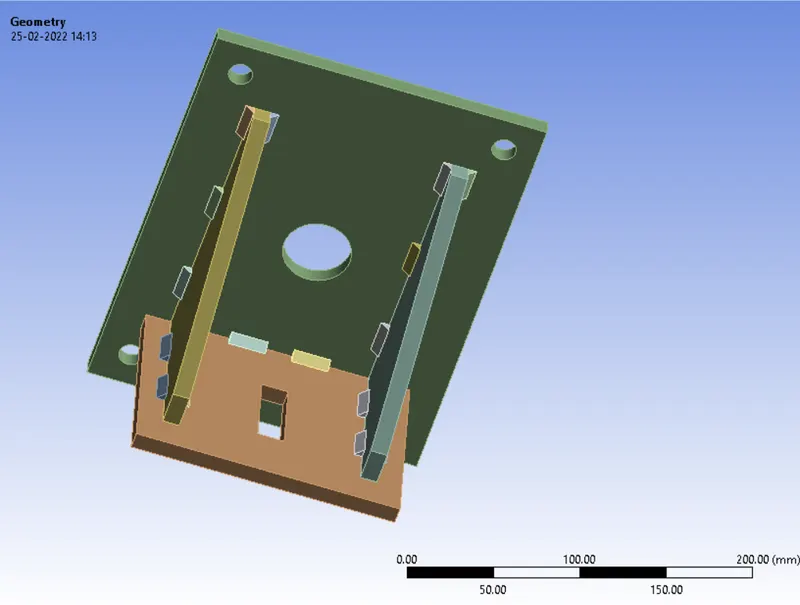
Geometry:
The given geometry was imported.
Weld materials:
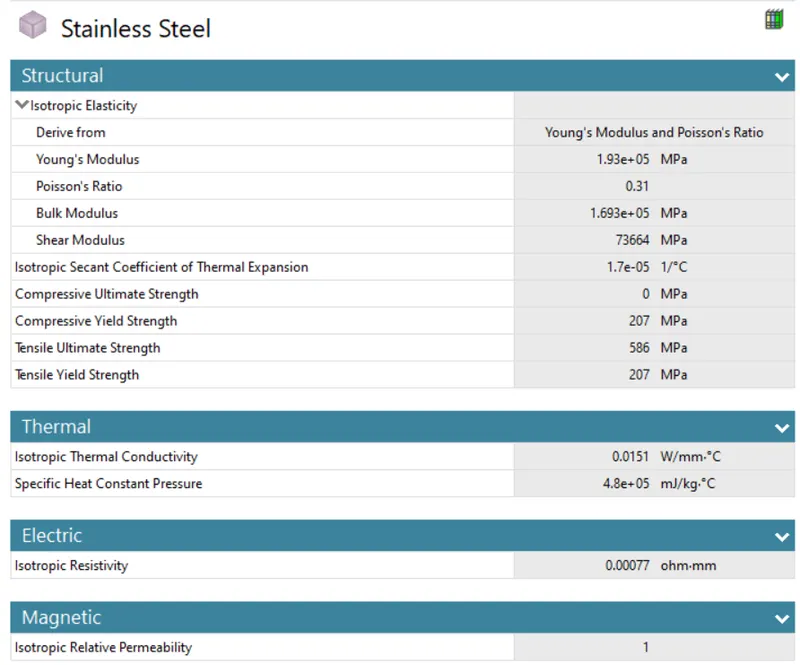
Stainless steel-
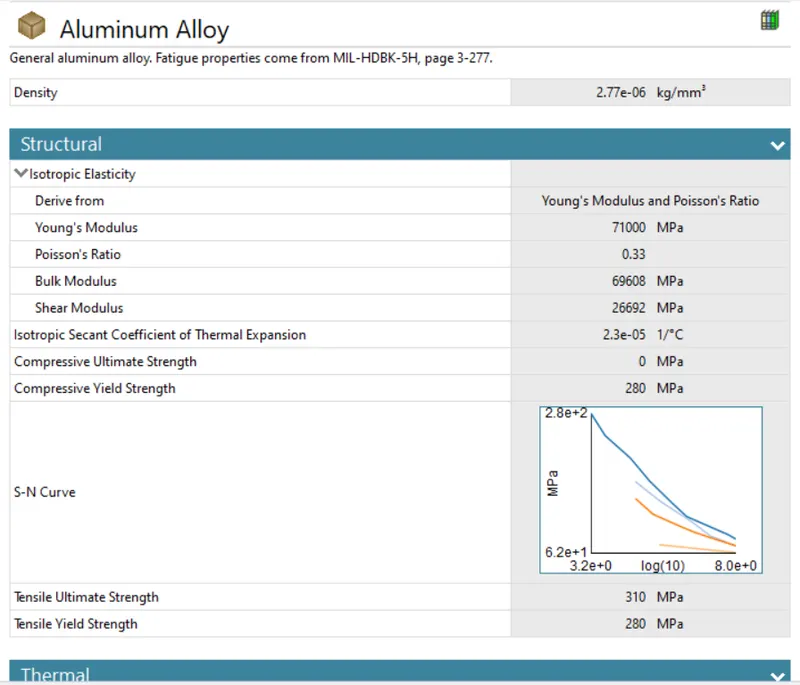
Aluminium Alloy;
Meshing:
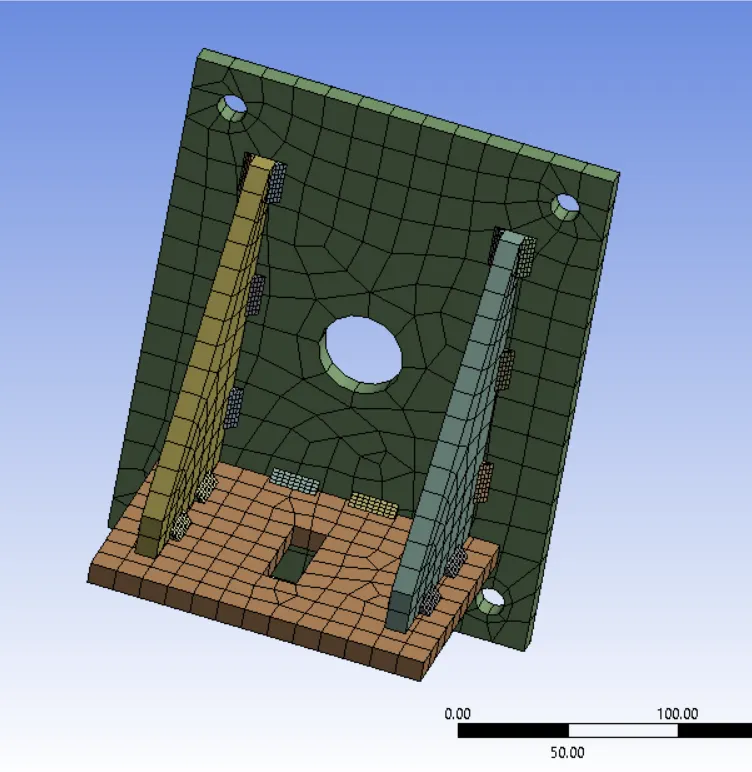
Mesh size of 7mm is done for big and small plate.
Fixed support & force:-
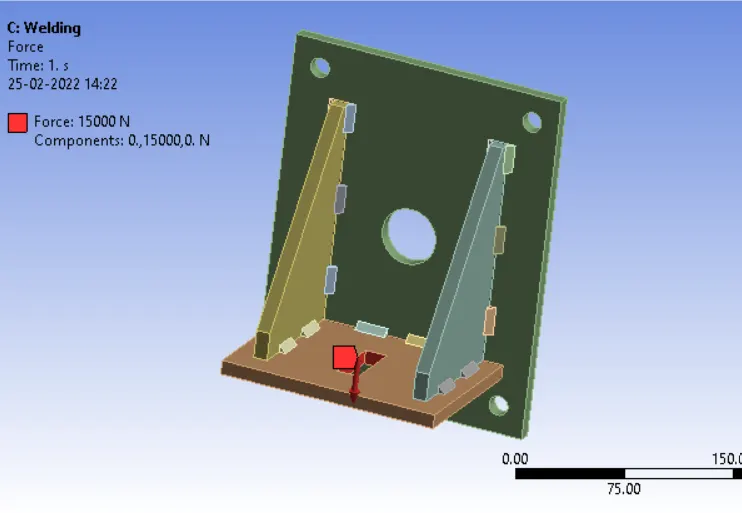
15000N Force for rectangular hole which is in small plate applied and circular hole which is in big plate fixed.
Contact:-
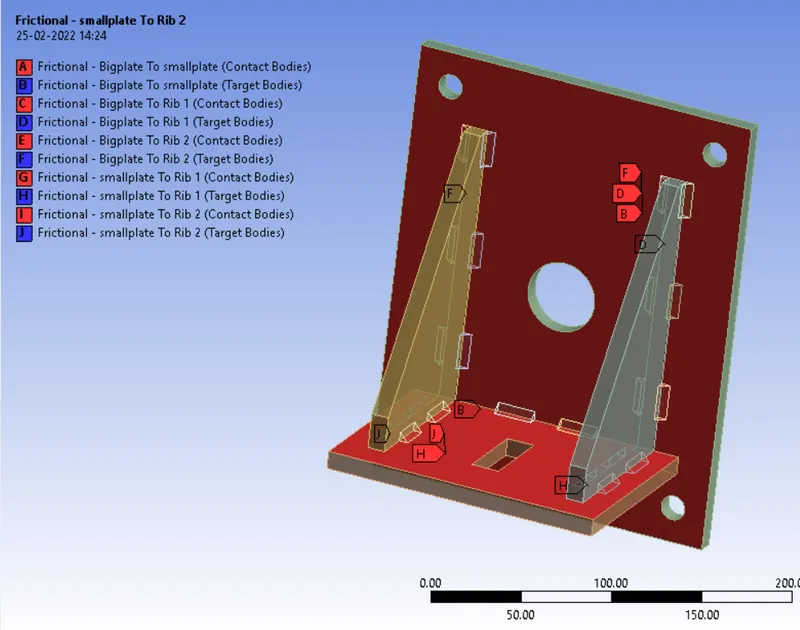
Frictional contacts between big plate to small plate, big plate to rib 1, big plate to rib 2, small plate to rib 1 and small plate to rib 2 were created with friction value of 0.2.
Case 1: Stainless steel used for every connection and plate and ribs.
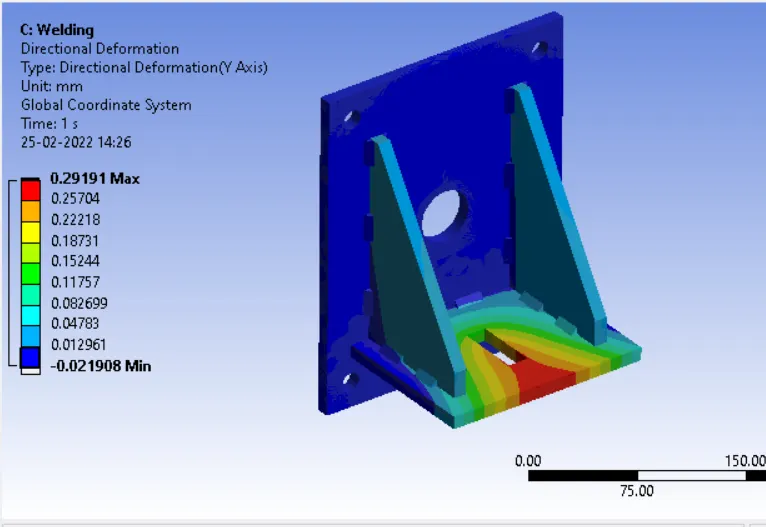
Directional Deformation:
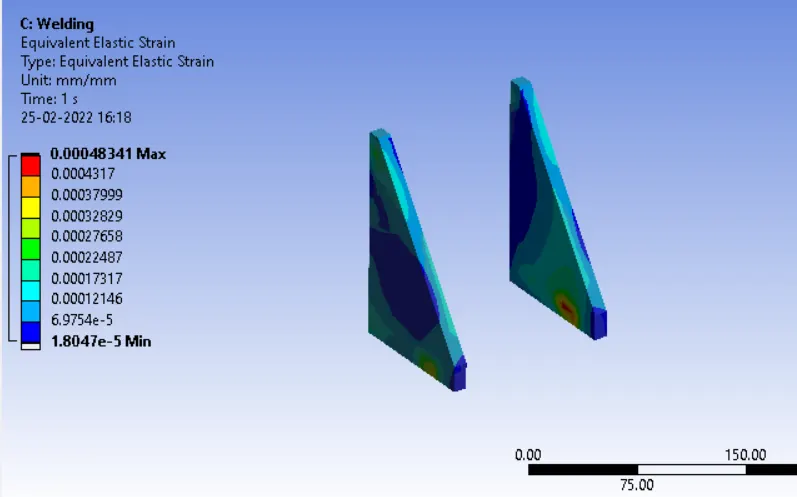
Equivalent strain:
Equivalent stress for weld joints:
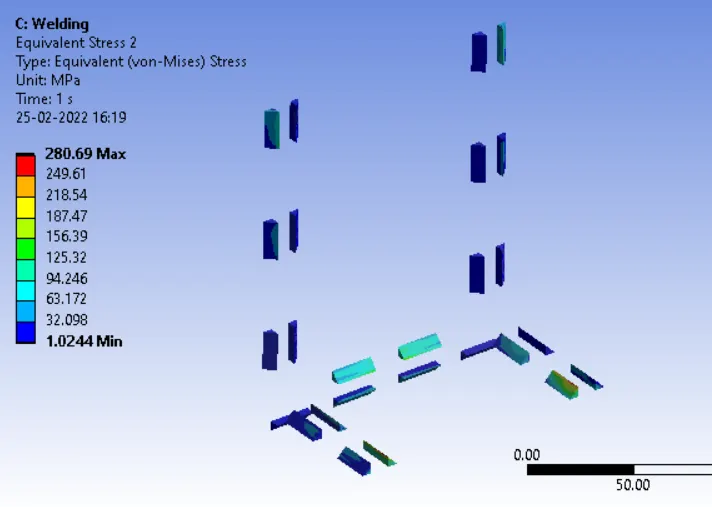
Case 2:- Aluminium alloy used for every connection and plate and ribs.
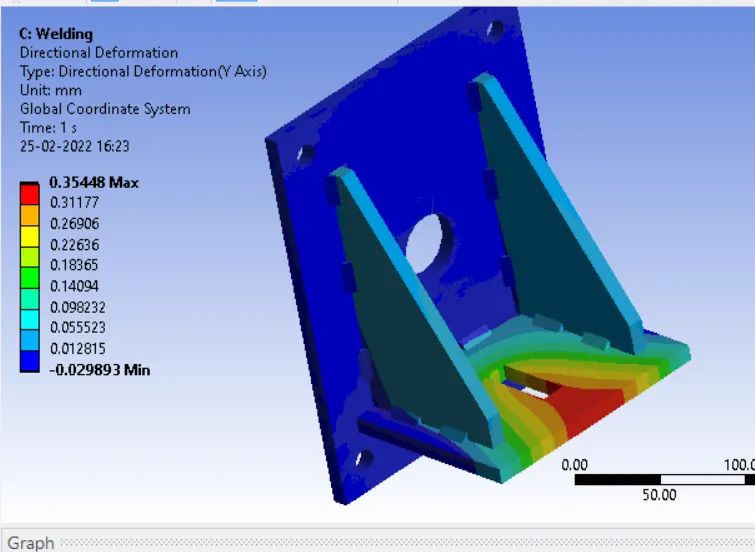
Directional Deformation:
Equivalent strain:-
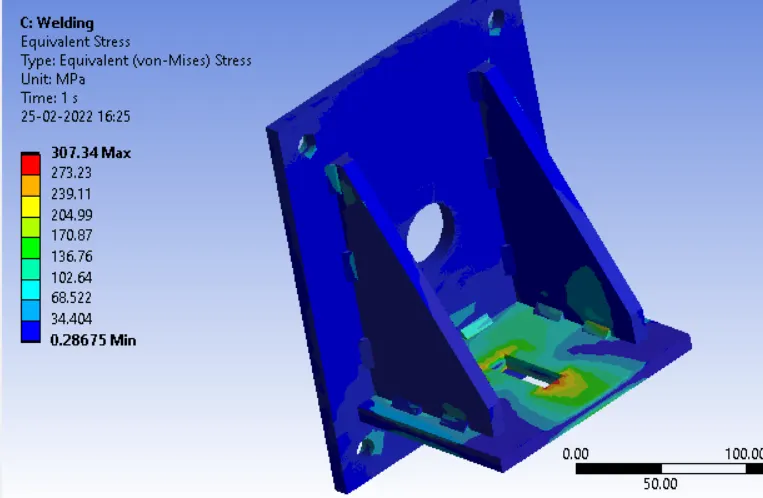
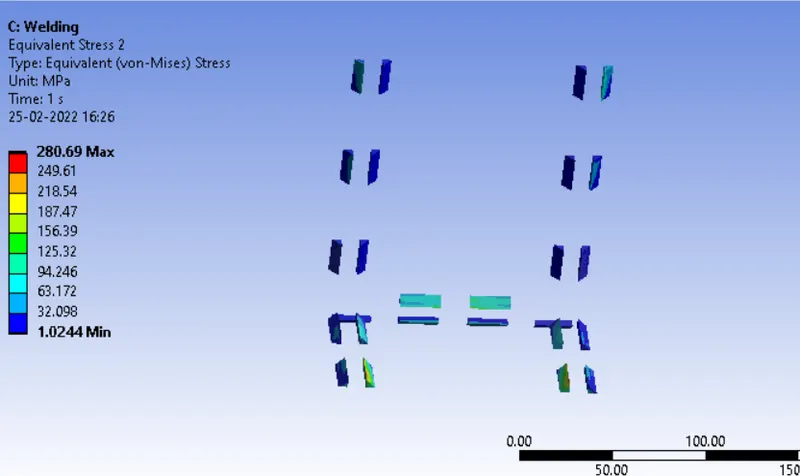
Equivalent stress for weld joint:-
Simulation animation:-
https://drive.google.com/file/d/1VM2lj0fMWkIvuaYK09XcW4cZBHPGEq8V/view?usp=sharing
Conclusion:-
1. Directional deformation is highest in aluminium compared to other cases.
2. Equivalent strain is highest in the case 2 where the aluminium alloy is used as weldments.
3. Equivalent stress is highest in the case 1 where strainless steel used as a weldments.
Here we compared the results of all the two cases with pictoral presentation.
Stainless steel is the most aptable material to do welding work with stainless.