Week 3 Sheet metal Bending challenge
Objective
1. To carry out the structural analysis for three different materials and obtain the results in equivalent stress, equivalent strain, and directional deformation in the y-axis.
2. To change the frictional coefficient to 0.19 for aluminium and compare the results from the previous study.
3. To refine the mesh on the plate and compare the results with the initial study for aluminium.
Materials and Meshing
The three different materials namely Aluminium Alloy 1199, Copper Alloy NL, and magnesium Alloy NL are imported from the ANSYS materials library into the workspace. After that, the geometries are named and then meshed. Both the punch and the die are given a body mesh of 4 mm in size whereas the sheet is given a 1 mm in size element.
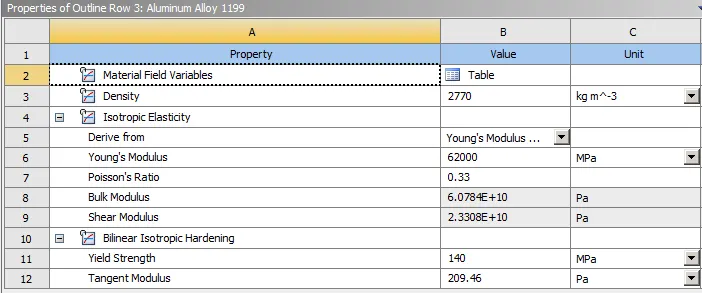
Properties of Aluminium Alloy
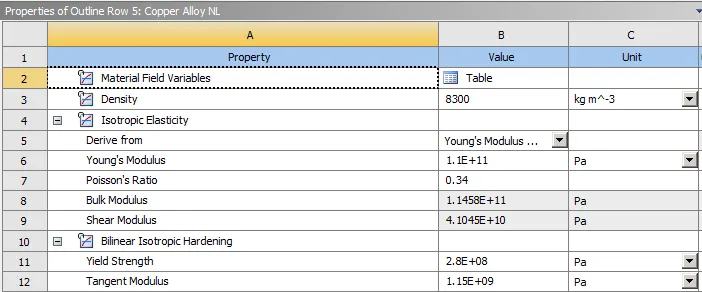
Properties of Copper Alloy NL
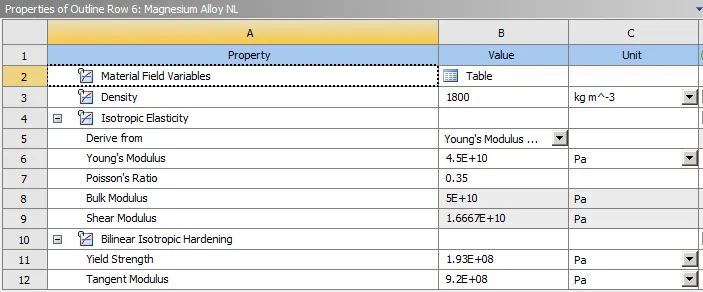
Properties of Magnesium Alloy NL
Case I
Simulation Setup
There are two contact areas in the model. The first one is between the punch and the sheet. The second one is for the sheet and the die. The contacts and target faces are specified for both the contact regions and the contact type is set to frictional with the friction coefficient to 0.1. In the analysis settings, the total number of steps is set to 10, the large deflection is turned on, the stabilization is set to constant, and the energy dissipation factor is set to 0.1.
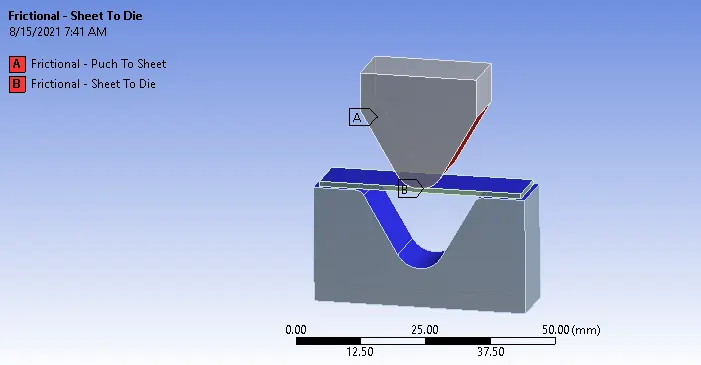
Fig: Contact Setup
Boundary Conditions
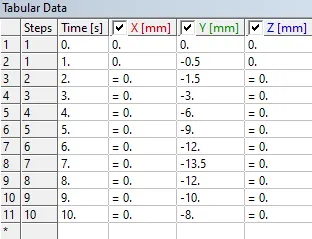
As for the boundary conditions, the three faces of the punch are given displacement in steps as shown in the table below:
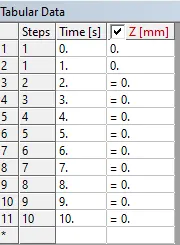
Similarly, the sheet is constrained in the z-direction by providing zero displacement values however the motion is set free in x and y-direction.
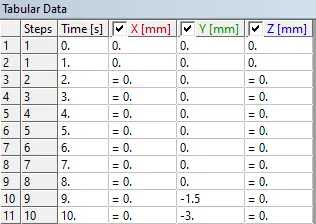
As for the die, the displacement is given as shown in the table below:
Results
A. Aluminium 1199 as the material
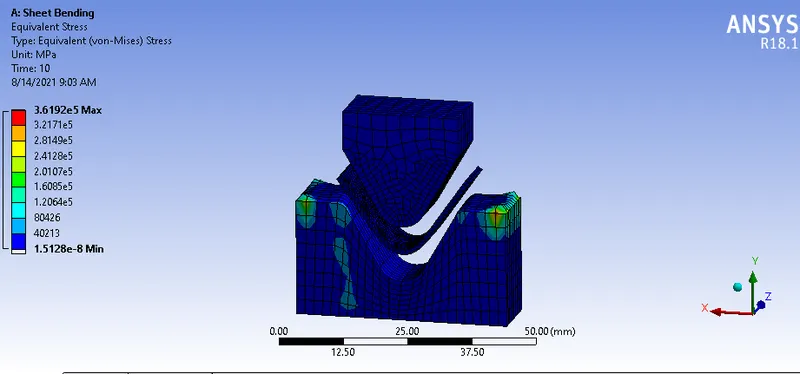
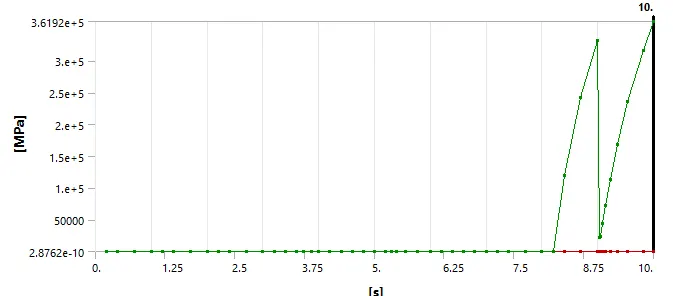
i. Equivalent Stress
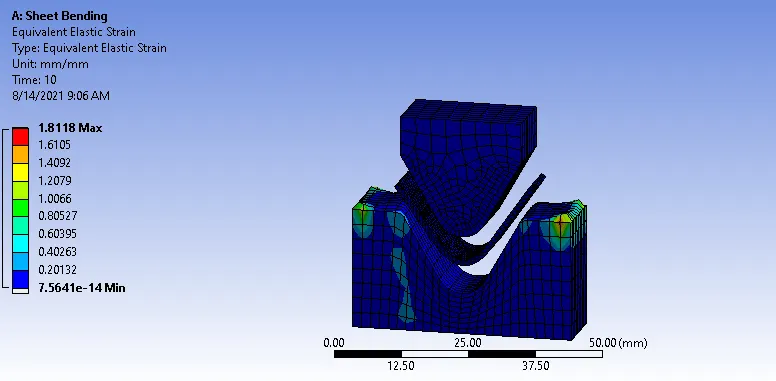
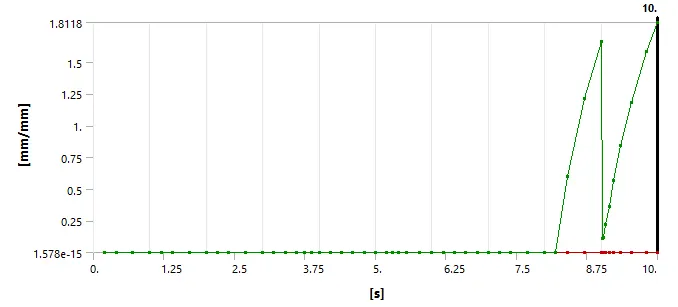
ii. Equivalent Elastic Strain
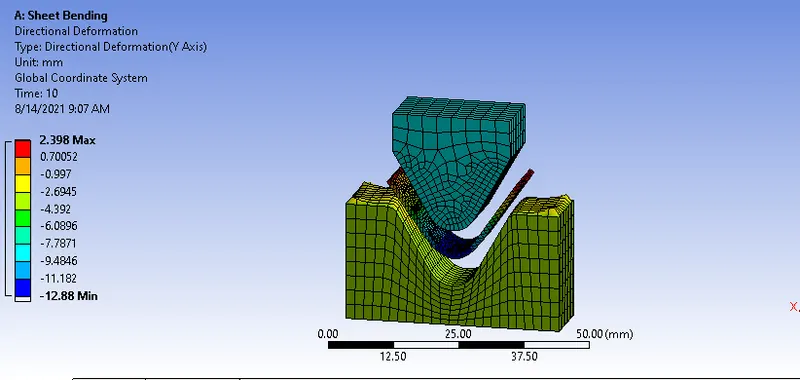
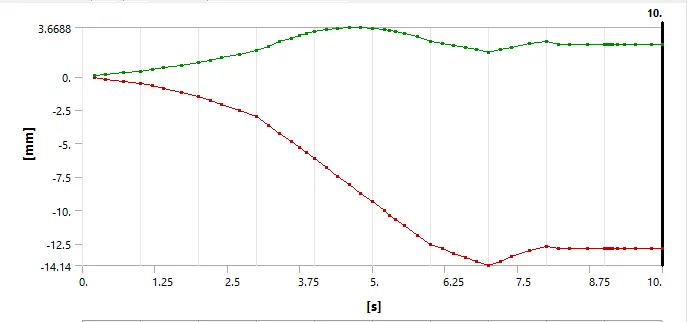
iii. Directional Deformation
B. Copper Alloy NL as the material
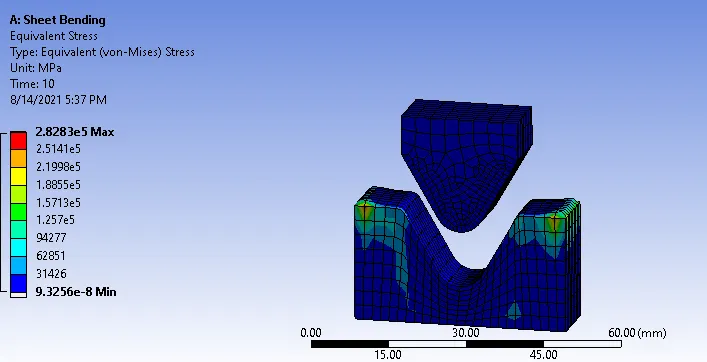
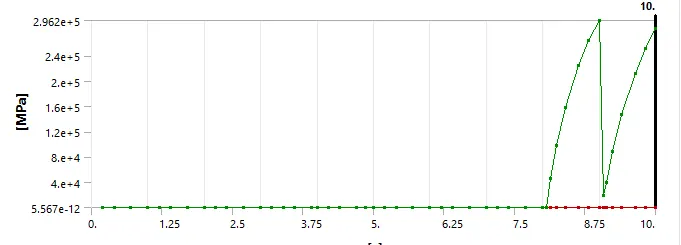
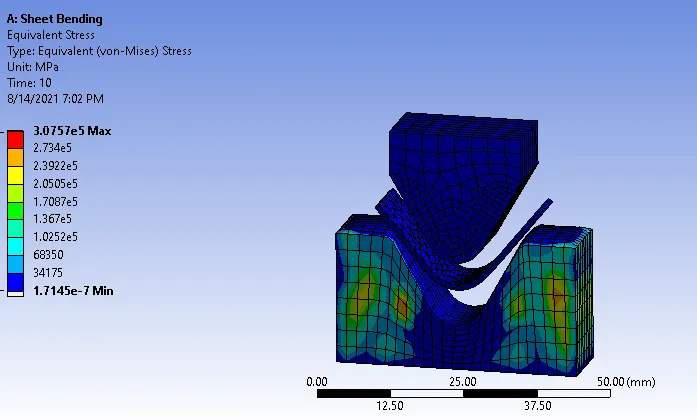
i. Equivalent Stress
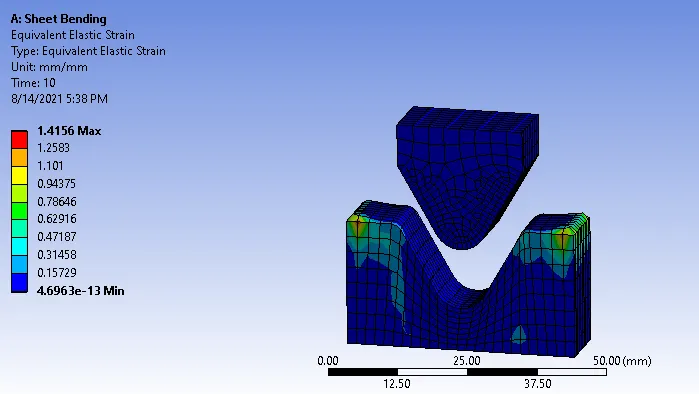
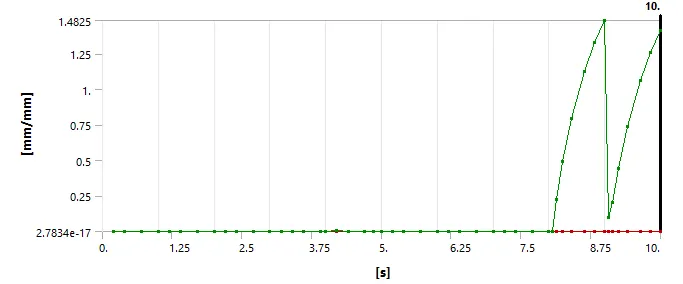
ii. Equivalent Strain
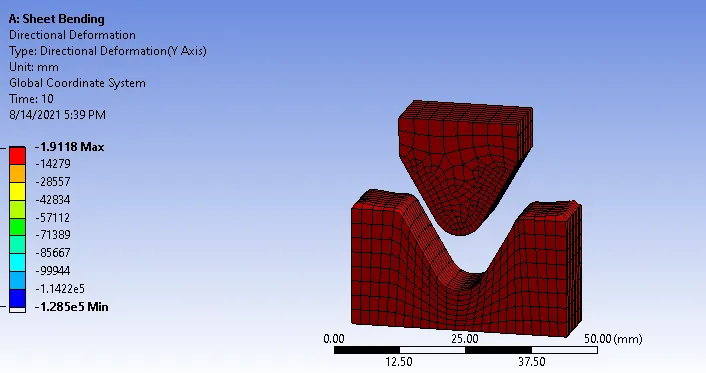
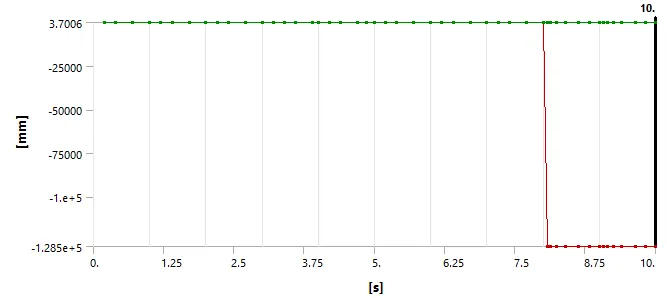
iii. Directional Deformation
C. Magnesium Alloy NL
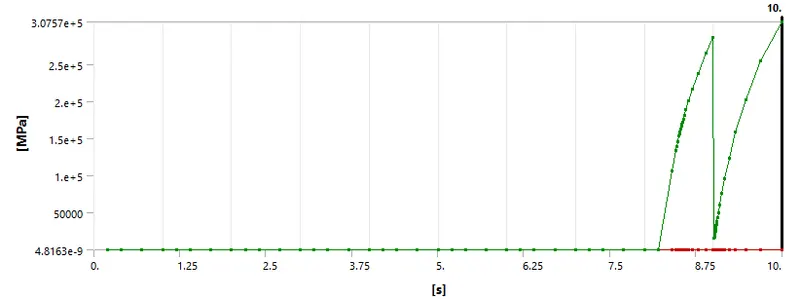
i. Equivalent Stress
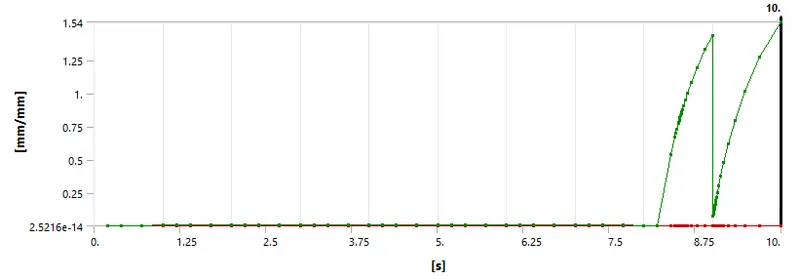
ii. Equivalent Elastic Strain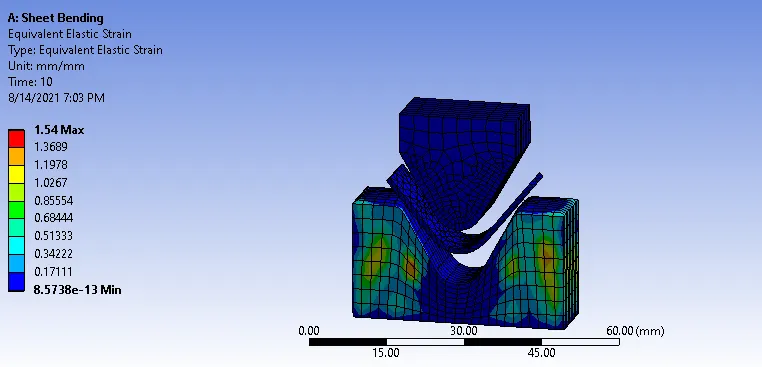
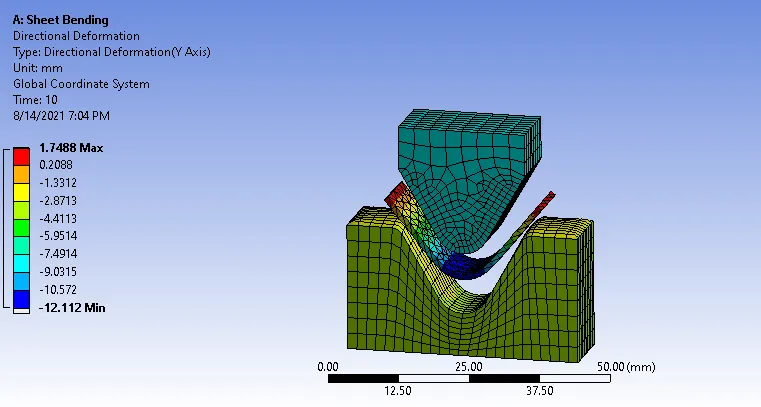
iii. Directional Deformation
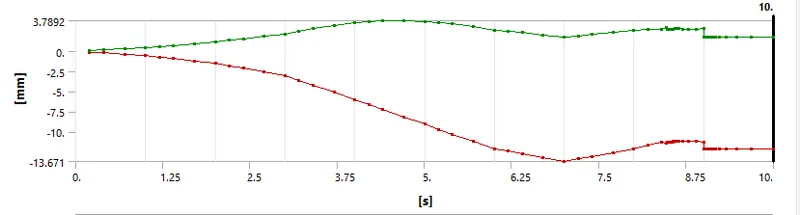
Summary of the results
Materials Equivalent Stress Equivalent Strain Directional Deformation
Aluminium Alloy 1199 3.61e5 MPa 1.8118 12. 88
Copper Alloy NL 2.96e5 MPa 1.4825 12.25
Magnesium Alloy NL 3.15e5 MPa 1.54 12.112
The above results show that the copper Alloy NL has the maximum amount of equivalent stress and minimum value of equivalent strain. This may be attributed to the fact that the young's modulus of the copper is highest.
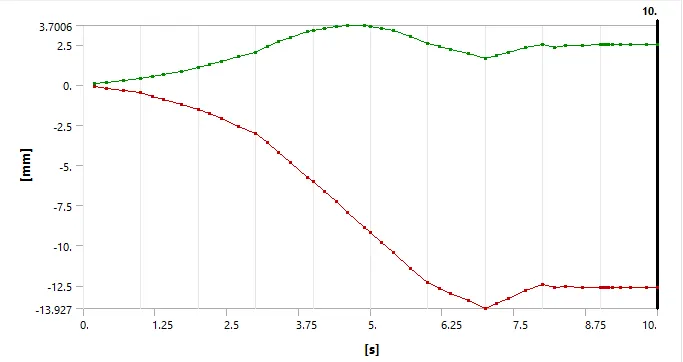
Case 2: When the frictional coefficient is changed to 0.19.
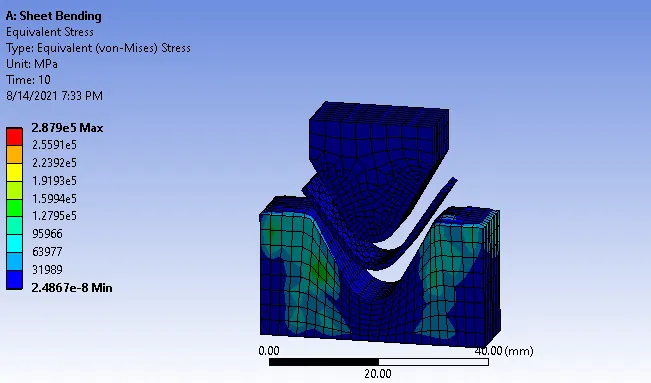
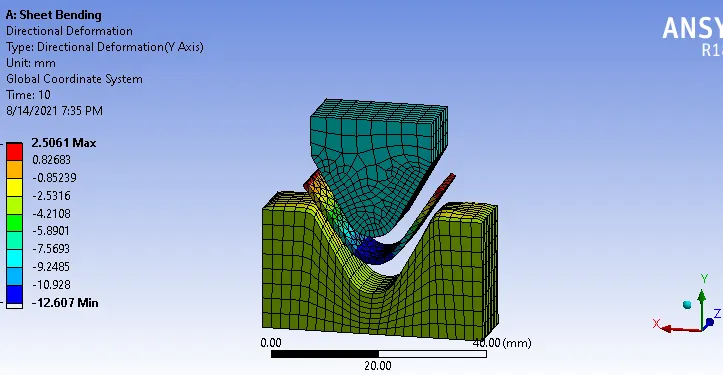
Total Deformation
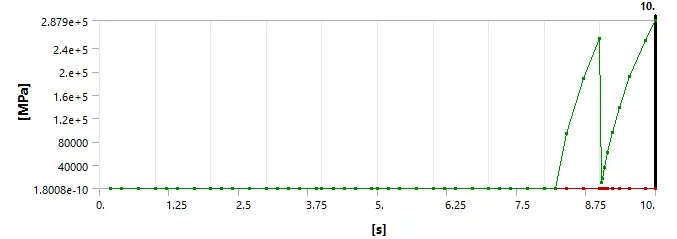
Frictional Coefficient Equivalent Stress
0.1 3.61e5 MPa
0.19 2.879e5 MPa
From the results, it is observed that the value of equivalent stress decreased with the increase in frictional coefficient.