Week 3 Sheet metal Bending challenge
Sheet metal Bending Simulation using Ansys
Objective
Performed sheet metal bending simulation using the static module, parameters such as friction, material, and mesh size is varied. The results are noted and compared.
Briefing
The model consists of 3 parts - Die, punch, and workpiece
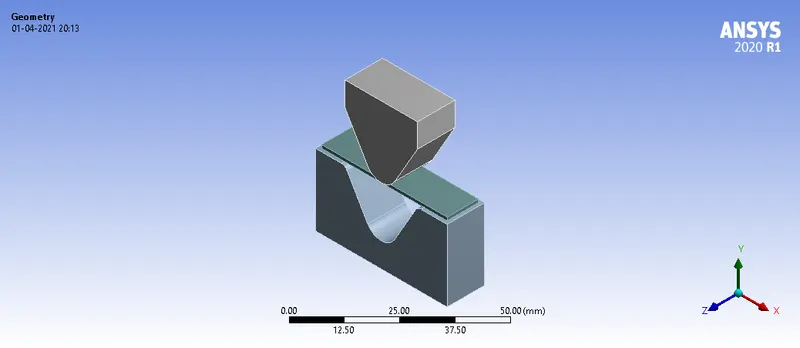
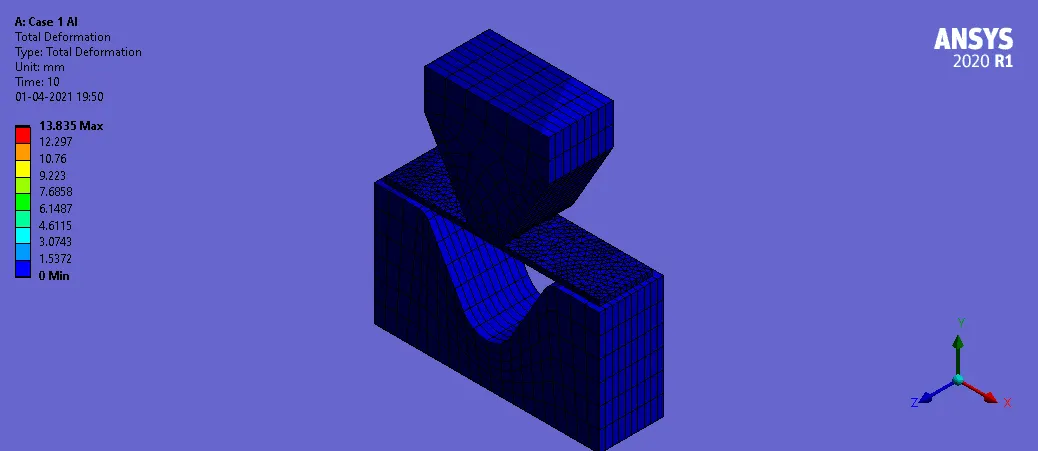
3 cases are to be simulated which are:
- Case 1: Aluminium Alloy 1199 NL, Copper Alloy NL, and Magnesium Alloy NL materials are used as Workpiece material, and then generated data is compared.
- Case 2: Similar to case 1 Aluminum Alloy is set up, only the coefficient of friction is set to 0.19
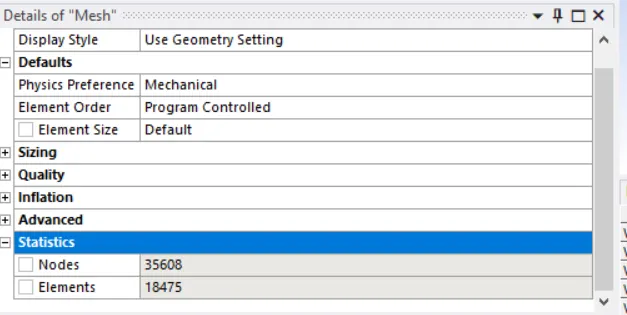
- Case 3: Case 1 Aluminium Alloy 1199 NL plate is meshed with more refinement till the academic limit and again the results are compared with case 1 as a mesh dependency study.
Procedure and Setup:
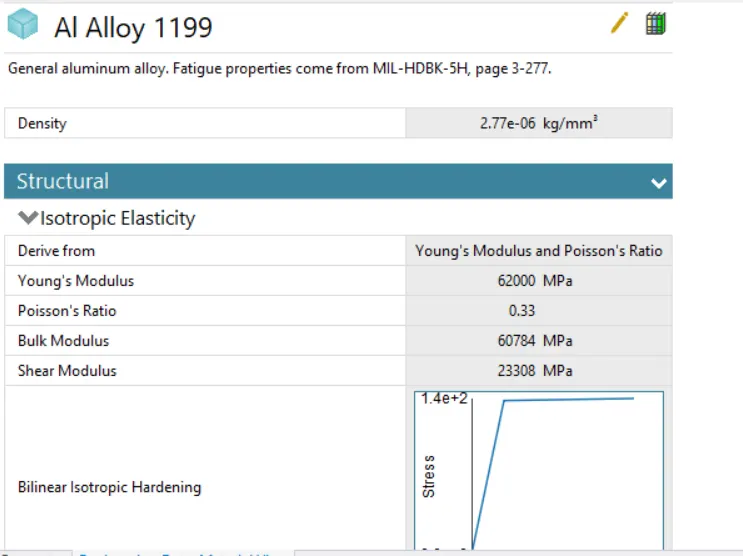
- Structural Steel material is set for the die and the punch parts for all the 3 cases which are simulated.
Case 1:
- For the first case, the workpiece is given Aluminium Alloy 1199 NL, Copper Alloy NL, Magnesium Alloy NL are used.
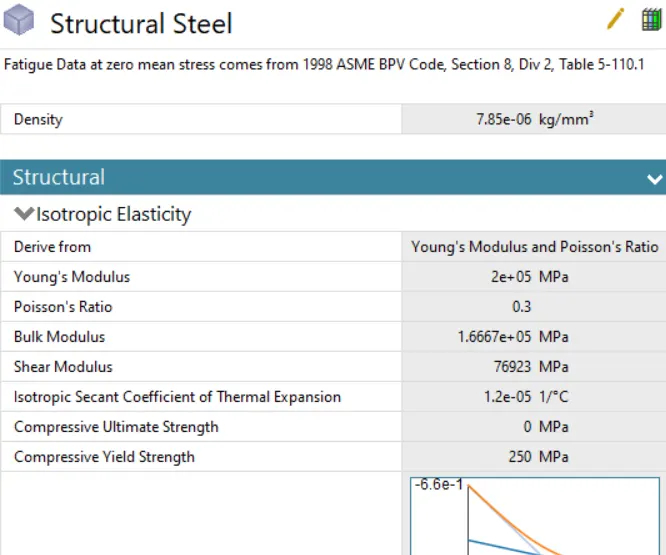
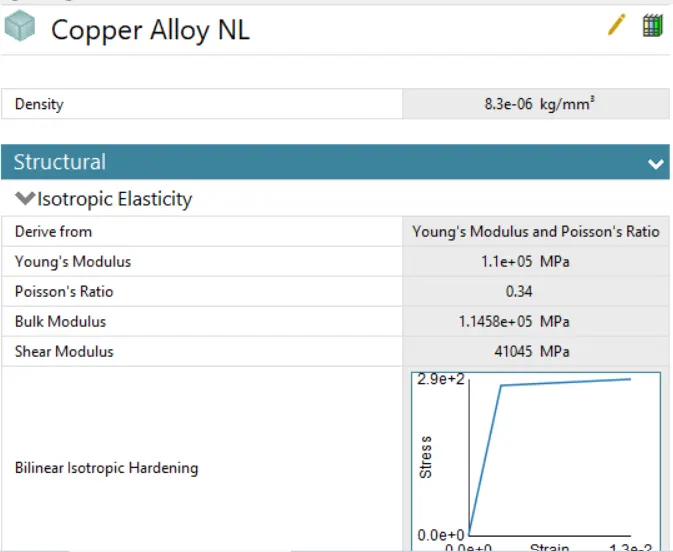
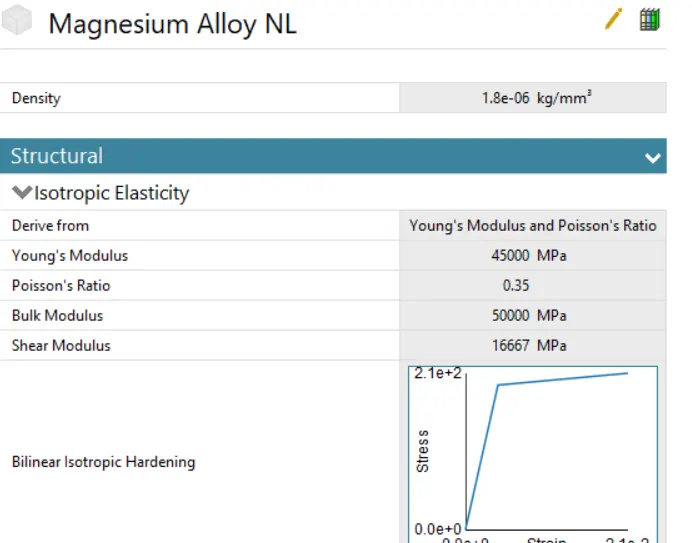
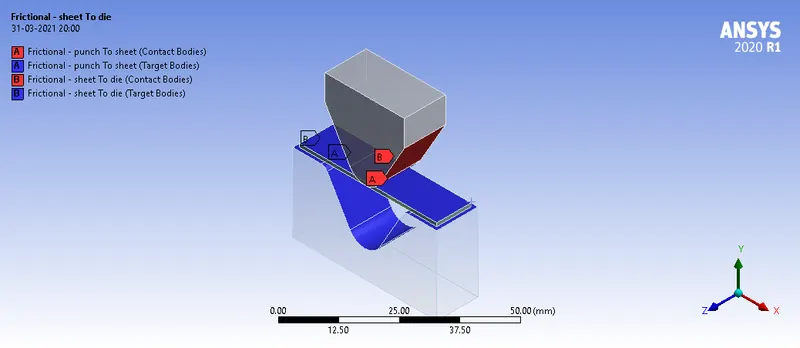
Contact Definitions: Frictional contacts are created between the workpiece and the punch , workpiece and the die
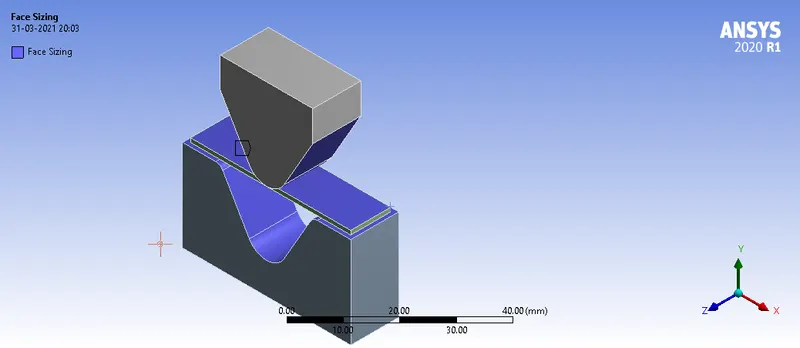
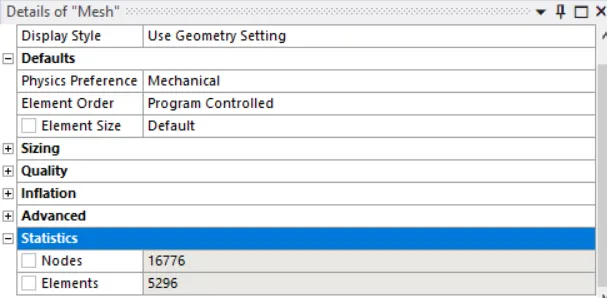
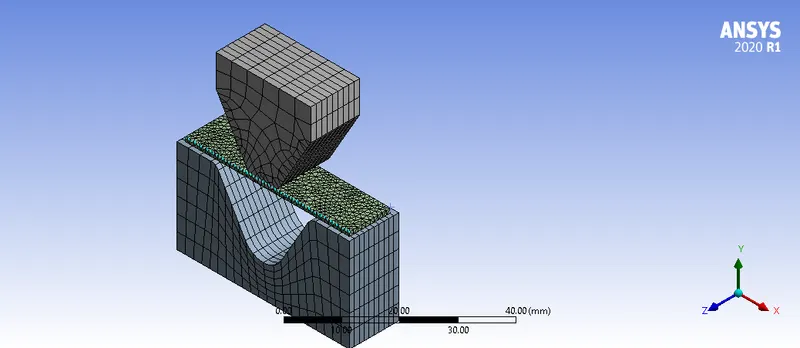
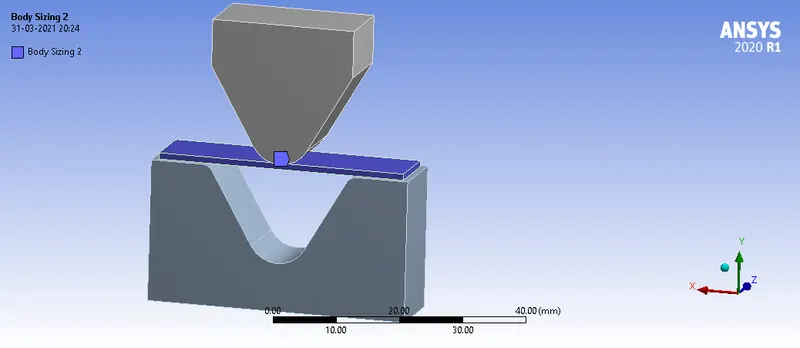
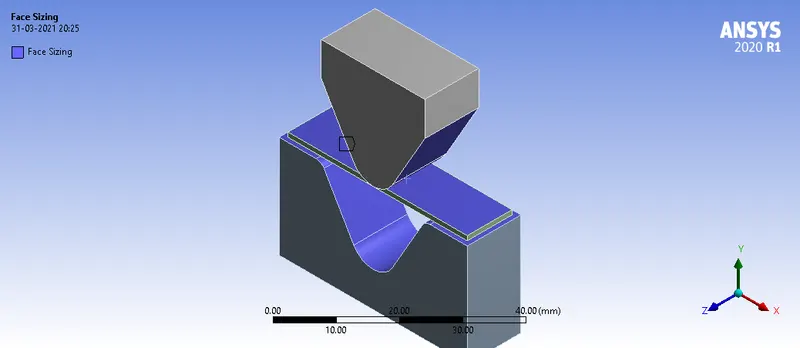
Meshing: All the parts are given body sizing of 4mm mesh size and the faces shown below are given 1mm mesh size. The workpiece is tetrameshed.
Boundary Conditions:
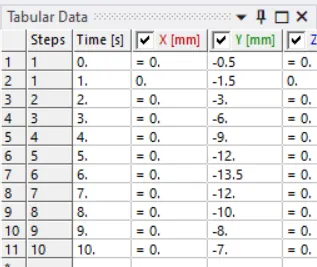
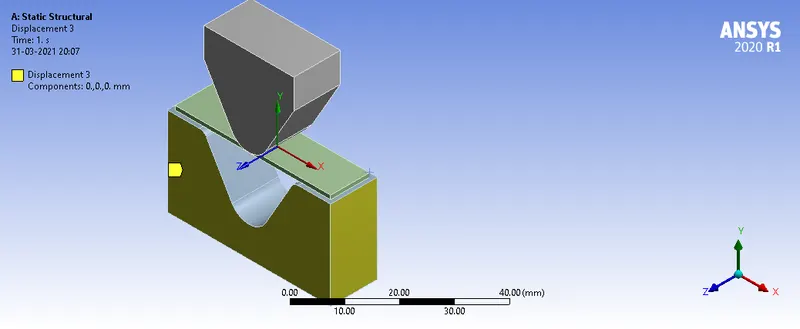
Displacement is given to the punch to bend the work piece and the die is fixed as shown below.
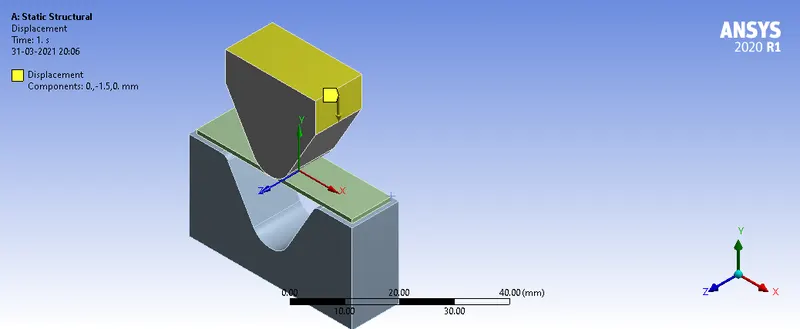
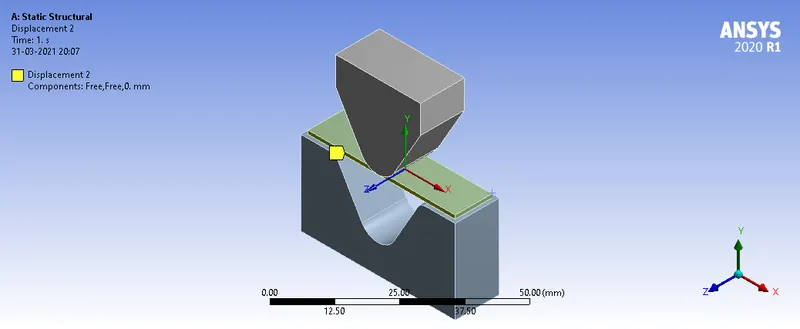
The workpiece is given constrained only in the z-axis and other 2 translation motion is left free for tension and compression during bending.
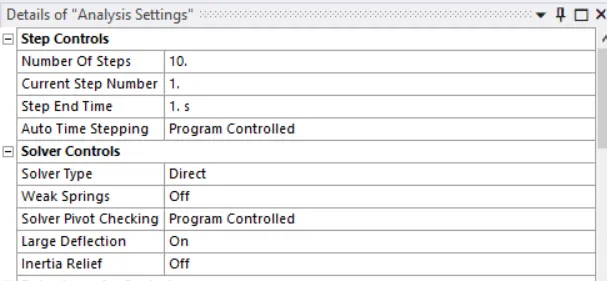
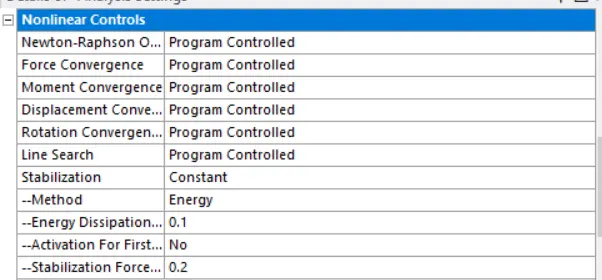
Analysis Settings: Direct solver method is used to solve this case for 10 load steps.
Case 2:
With the material as Aluminium Alloy, the friction coefficient is changed to 0.19 and the rest of the setting remains the same.
Case 3:
Similar to Case 1, the mesh is refined by applying a body sizing of 0.5mm to the workpiece and the face sizing of 1mm to the faces shown below.
Results and Case Study
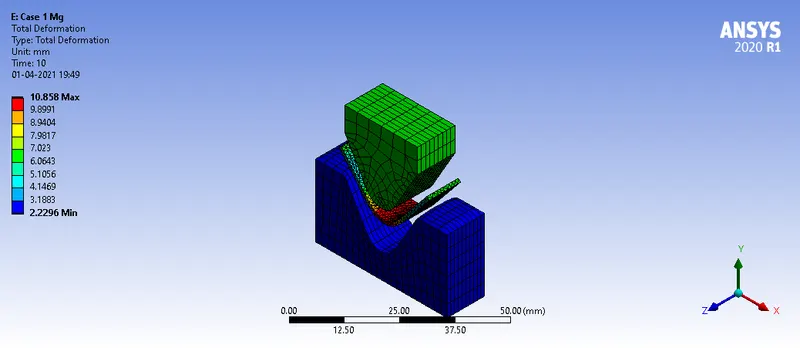
Case 1: Material comparisons
| Materials / Parameter | Aluminium Alloy 1199 | Copper Alloy NL | Magnesium Alloy NL |
| Equivalent stress (Mpa) Max | 184.89 | 384.62 | 278.75 |
| Equivalent elastic strain Max (mm/mm) | 1.5047e-003 | 3.502e-003 | 6.2068e-003 |
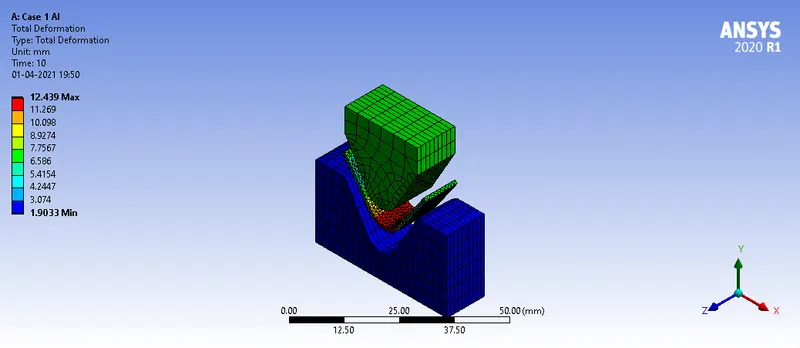
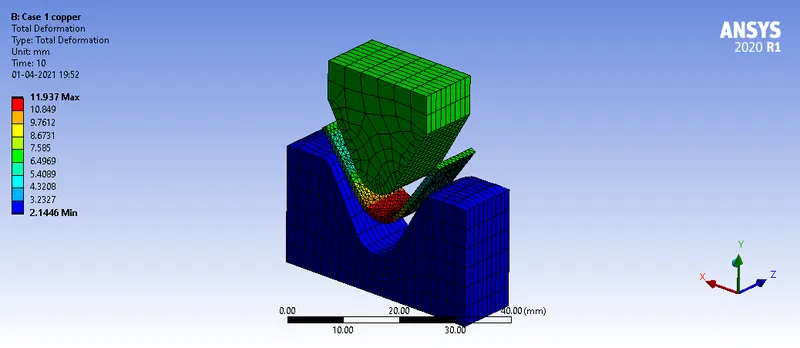
| Total Deformation in Y-direction (mm) Max | -13.833 | -13.652 | -13.618 |
| Yield Stress MPa | 140 | 280 | 193 |
- All the materials have gone into plastic deformation as the yield limit has been exceeded.
- Magnesium Alloy has undergone the maximum amount of elastic strain compared to the other two material cases.
- And we can infer that the Aluminium Alloy 1199 is the stiffest of the materials bended
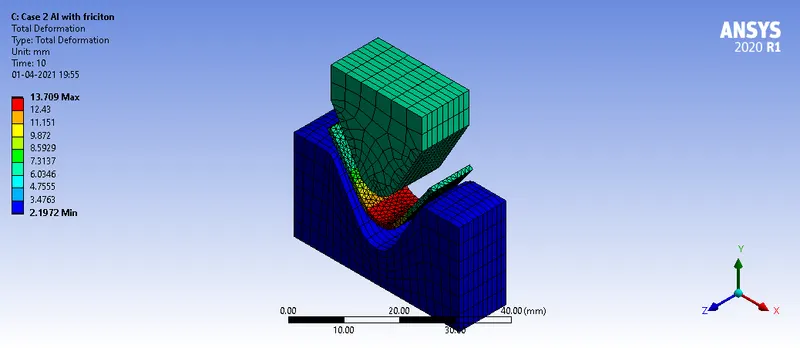
Case 2: Comparison of Case 1 Aluminium Alloy with and without frictional coefficient 0.19
| Materials / Parameter | Aluminium Alloy 1199 coefficient of friction of 0.1 | Aluminium Alloy 1199 with a coefficient of friction of 0.19 |
| Equivalent stress (Mpa) Max | 184.89 | 185.84 MPa |
| Equivalent elastic strain Max (mm/mm) | 1.5047e-003 | 3.018e-003 |
| Total Deformation in Y-direction (mm) Max | -13.833 | -13.859 |
- In case 2 with more coefficient of friction, we can observe that the max strain generated is more than the one with the coefficient of friction of 0.1.
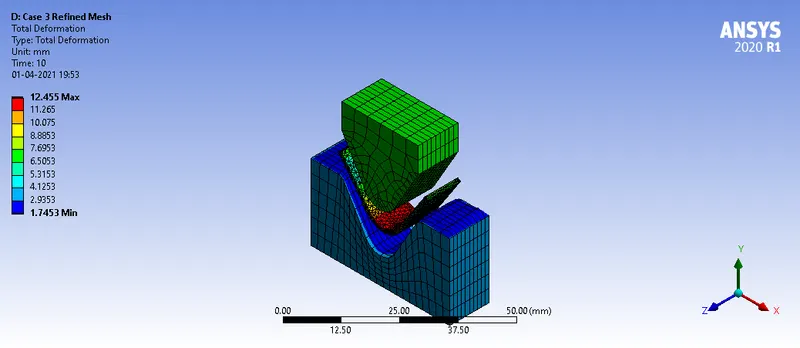
Case 3: Comparison of Case 1 Aluminium Alloy with refined mesh
| Materials / Parameter | Aluminium Alloy 1199 (case 1) | Aluminium Alloy 1199 Refined mesh |
| Equivalent stress (Mpa) Max | 184.89 | 184.58 MPa |
| Equivalent elastic strain Max (mm/mm) | 1.5047e-003 | 2.9796e-003 |
| Total Deformation in Y-direction (mm) Max | -13.833 | -13.671 |
- Refining the mesh size doesn't make many changes to the results as compared to case 1.
We can conclude that Tensile Strength, yield stress, Bending Strength are the important properties to be considered when choosing the sheet metal processing parameters.