Week 3 Sheet metal Bending challenge
Objective:-
Perform stress analysis on sheet metal bending setup for three different materials and test following cases.
Case 1:- Apply Aluminium alloy 1199, copper alloy NL and magnisium alloy NL to the sheet. Find out the equivalent stress, Equivalent elastic strain and total deformation in the Y direction and comapare the result for the three materials.
Case 2:- With the materials as Aluminium alloy, change the friction coefficient to 0.19 and run the analysis as mentioned in case 1. Compare the results with in case1.
Case 3:- Refine the mesh on the plate such that it doesnt cross the academic limit. With aluminium alloy as material, run the analysis as in case1 and compare the results.
PROCEDURE:-
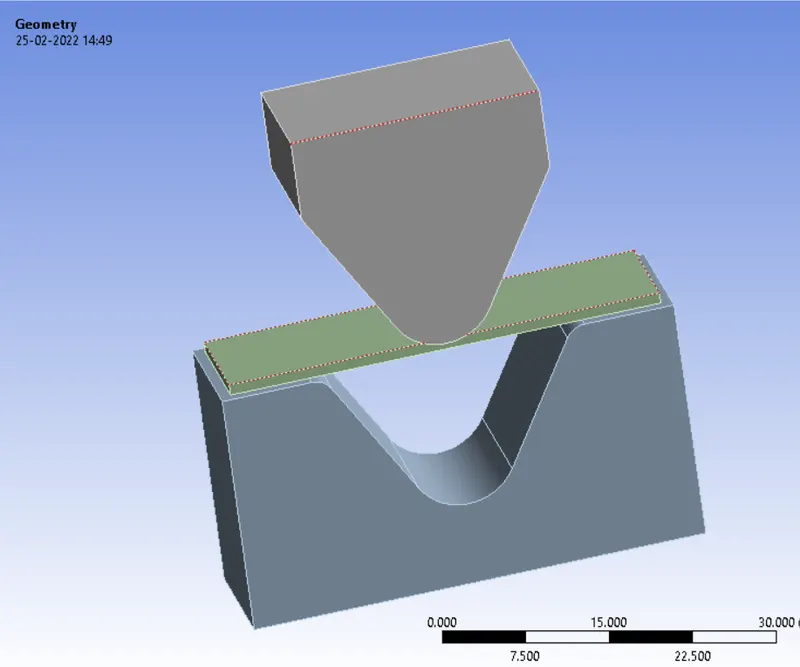
Geometry model:-
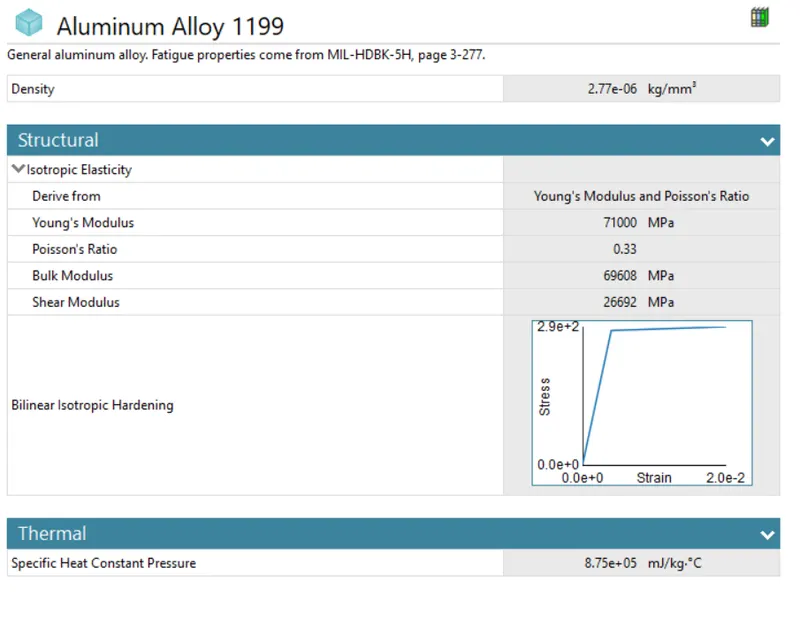
Properties of aluminium alloy 1199:-
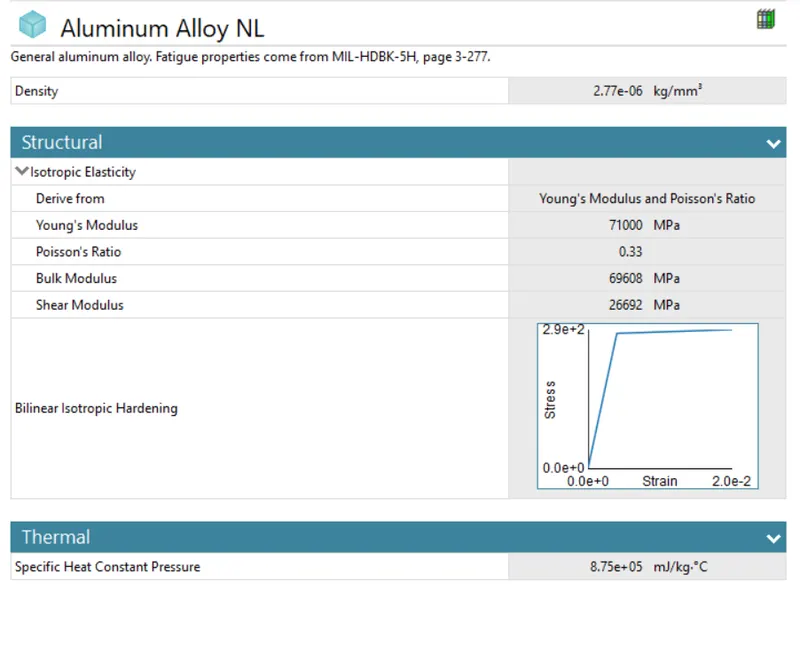
Properties of aluminium alloy NL:-
Meshing:-
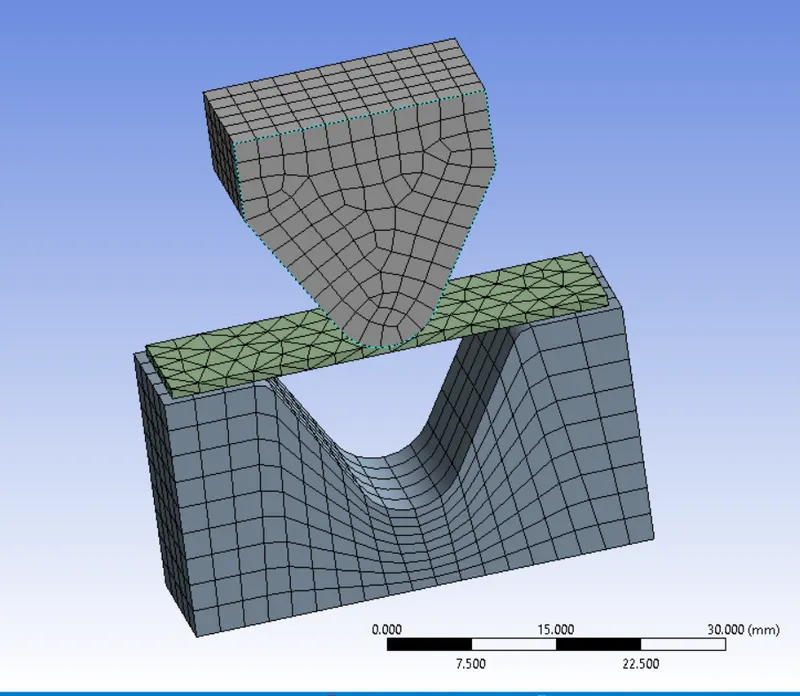
The meshing for the sheet is done with tetrahedrons elements with patch conforming algorithm. Body sizing is provided to punch and die as 4mm element length and for sheet it is 1mm. Face sizing for the die and punch at the faces where they interact with each other is given as 1mm.
Connections:-
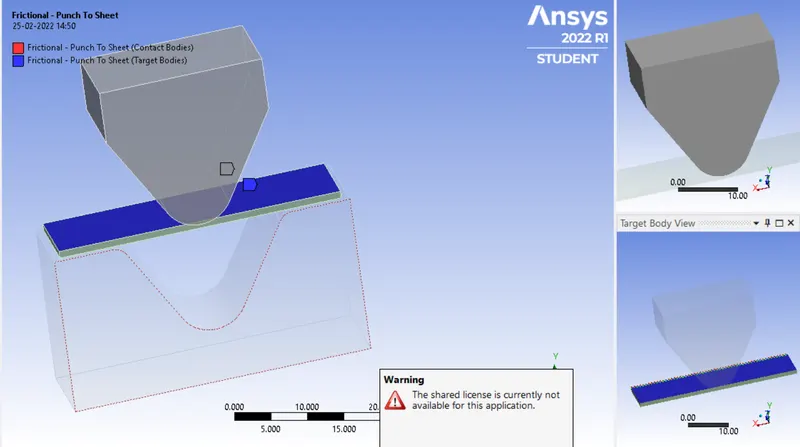
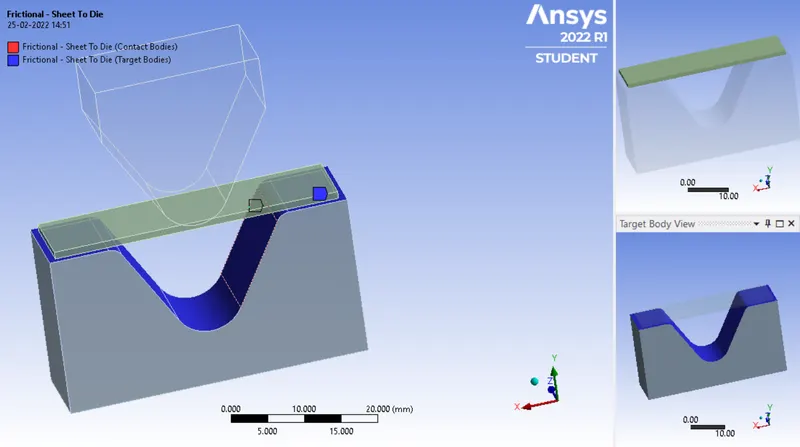
Frictional contacts are provided at the interface were the punch will press the sheet, and another contact between the sheet and die. The frictional coefficient of 0.1 is inputed at both places.
Contact between the punch and the sheet-
Contact between the sheet and the die-
Analysis settings:-
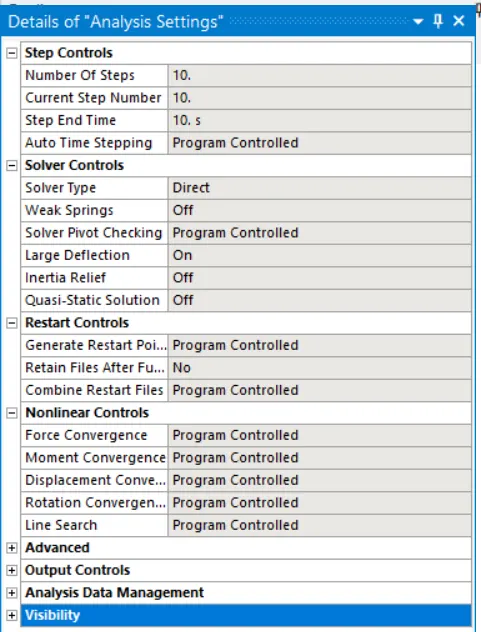
Simulation is performed in 10 steps with large deflection turned ''ON'' to account for large deformation with solver type as direct. Convergence difficulty is due to unstable problem which is usually the result of a large displacement for small load increments.Nonlinear stabilization technique can help in achieving convergence. we can change the dissipation ratio factor to 0.1. It can be thought of as adding an artificial dampers to all the nodes.
Boundary conditions:-
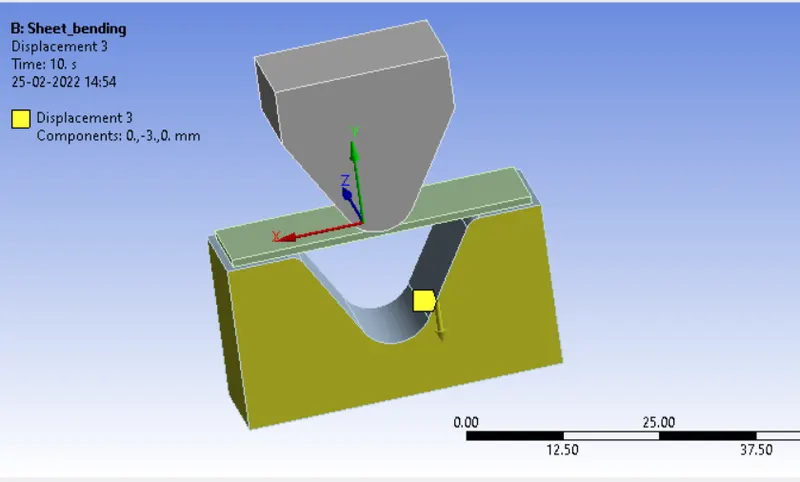
- Displacement load is provided to the punch in the negative Y-direction. Punch will move towards the sheet and after pressing it to a distance of 13.5, it will revert back to the positive Y-direction.
- Sheet is kept fixed along Z-direction using displacement load. During the deformation the sheet will move along X and Y direction thats why movement along both the axis is set free.
- For the last two steps the die is provided displacement along the negative Y-direction.
Results:-
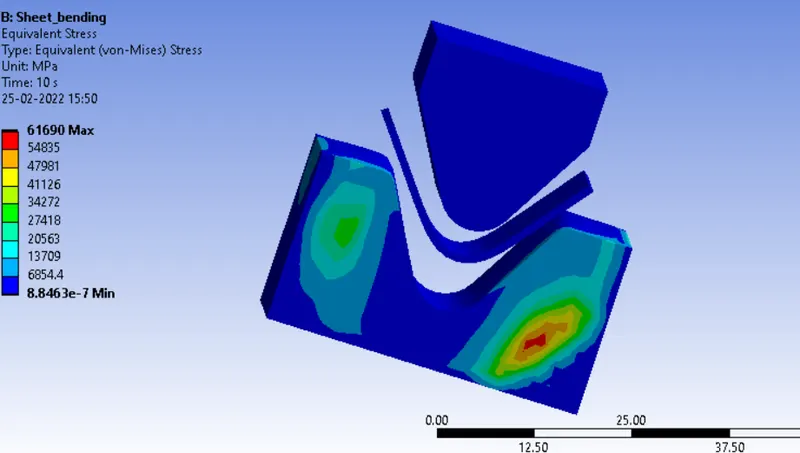
Equivalent stress for the aluminium sheet
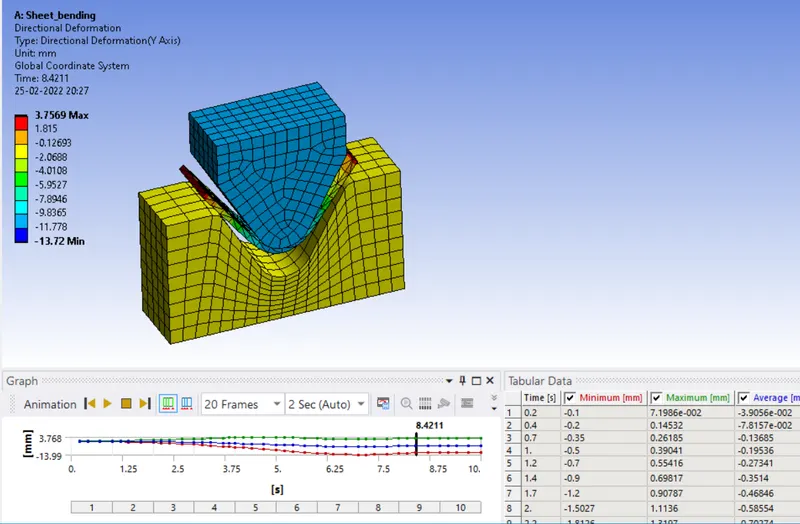
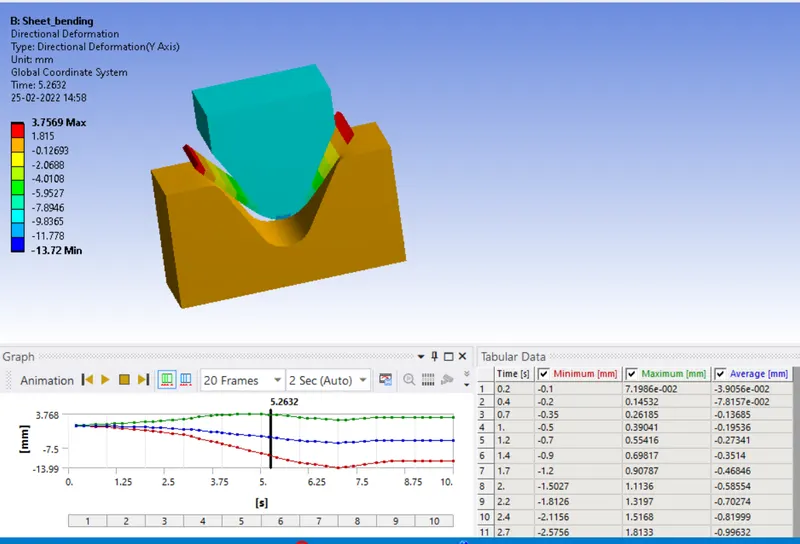
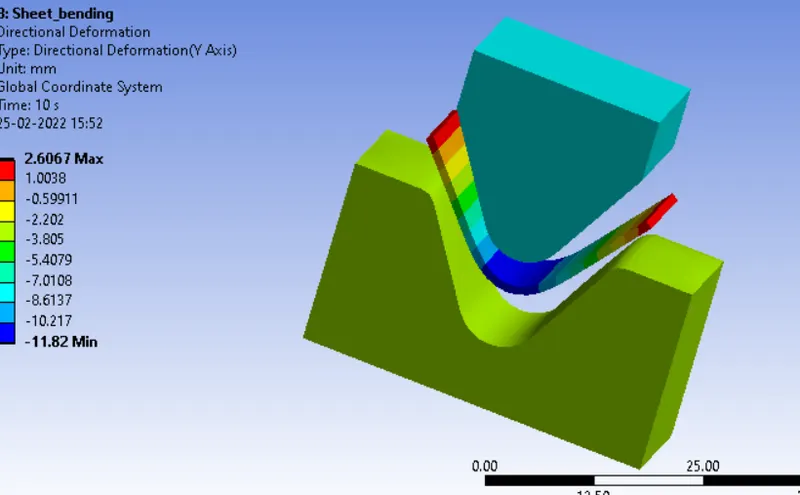
Directional Deformation:-
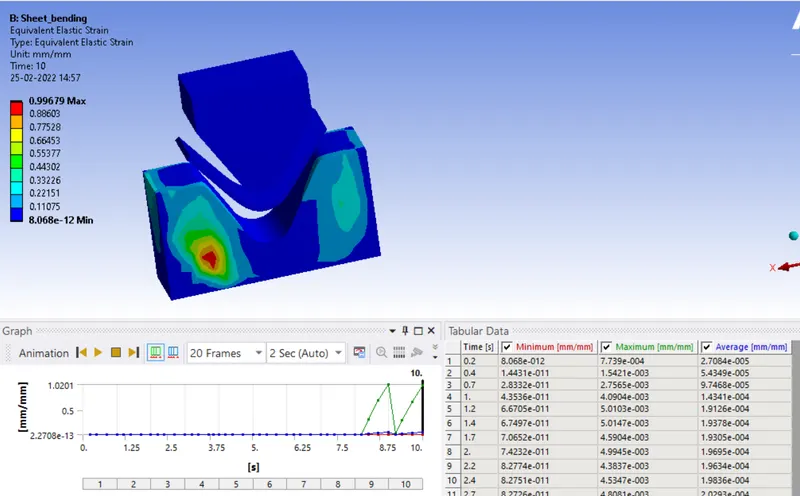
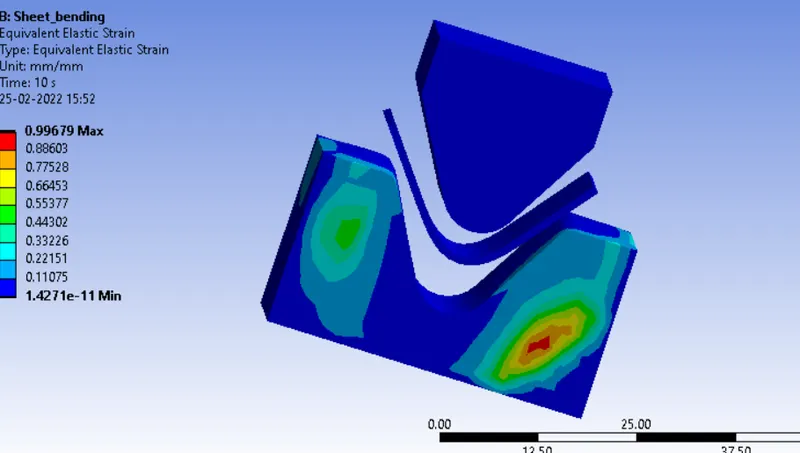
Equivalent strain for the aluminium sheet:-
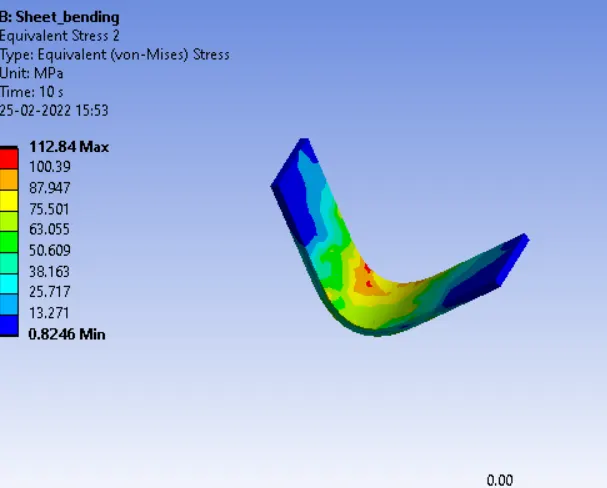
Von-mises stress for the sheet-
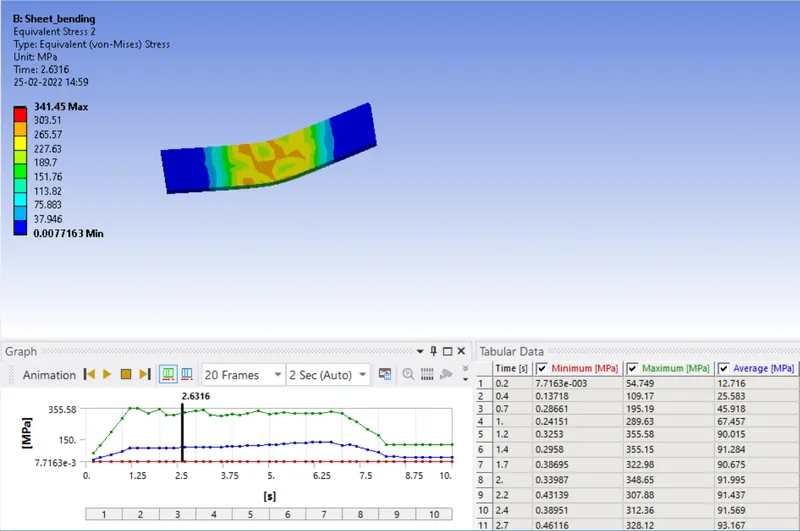
Table:-
Case lll: Magnesium alloy NL as material for the sheet.
Conclusion:-
- Non-linear stabilization technique when unstable problem arise due to large displacement and also good understanding of the paremeters in the non-linear controls for static analysis.
- Refining the mesh even with smaller element size will give us better approximation in the result. Therefore this makes it necessary to use the optimized element for better accuracy.