Week 3 - External flow simulation over an Ahmed body.
Aim: External flow simulation over an Ahmed body.
Objective:
Q1. Describe Ahmed's body and its importance.
Q2. Explain the reason for the negative pressure in the wake region.
Q3. Explain the significance of the point of separation.
A1. Describe Ahmed's body and its importance.
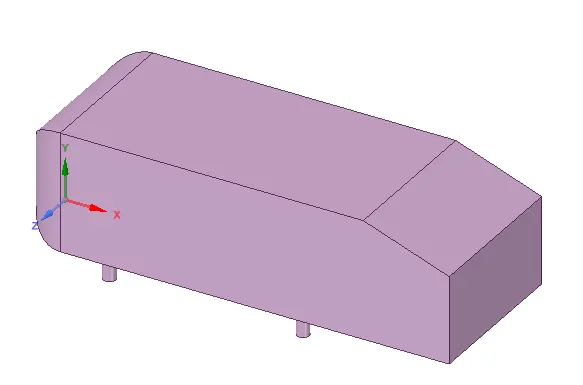
The Ahmed body is a simplified car body used in the automotive field to study the impact of the flow pattern on the drag. The
external aerodynamics of the car defines many major traits of an automobile like stability, comfort, and fuel consumption at
high speeds. The flow around the vehicle is characterized by high turbulent and three-dimensional flow separations. There is a growing need for more insight into the physical features of these dynamic flows. The Ahmed Body is a simplified car,
used in the automotive field to investigate the flow analysis and find the wake flow around the body. Ahmed's body is made up
of around the front part, a moveable z slant plane in the rear of the body to study the detachment phenomena at different angles,
and a rectangular box that links the front part and the rear slant plane. The principal objective to study such a simplified car
body is to tackle the flow processes involved in drag production. By perceiving the mechanisms involved in creating drag, one can design a car to minimize drag and reduce fuel consumption and maximize vehicle performance.
Important of Ahmed body:
An Ahmed body represents a simplified vehicle volume which helps understand the fundamental physics defining by the
engineers the lift and drag forces and coefficients at certain characteristically velocities, pressure differences, and seeing and
analyzing the vortices, turbulence, and Reynolds number obtained. ANSYS is a general-purpose FEA and CFD simulation
software. It gives a numerical prediction of the behavior of a system.
These numerical predictions need to be validated by experimental data. People working in vehicle aerodynamics use Ahmed
body to validate their numerical model because the experimental data from wind tunnel testing is available for Ahmed body.
Once the numerical model is invalidated, it is used to design new models of the car.
Its shape is simple enough to allow for accurate flow simulation but retains some important practical features relevant to
automobile bodies. This model describes how to calculate the turbulent flow field around a simple car-like geometry using the
Turbulent Flow, k-epsilon, and k-omega interface. Later, either experimentally or computationally it can be recreated all the
same but with the desired geometry, new to come up to the market or research.
The Ahmed body was described originally by S. R. Ahmed in 1984 [1]. Three main features were seen in the wake:
1. The A recirculation region that is formed as the flow separates at the top of the vertical back surface of the model
2. The B recirculation region is formed due to the separation at the base of the model.
3. The c-pillar vortices that form as the vorticity in the side boundary layers roll up over the slant edge
The wake was shown to be highly dependent on slant angle. For slant angles less than 12°, the flow remains attached over the
slant. The flow is essentially two-dimensional and has low drag. Between 12° and 30°, the flow becomes much more threedimensional as the c-pillar vortices form. These reach maximum strength at 30°. The drag increases significantly as the low-pressure cores act on the rear surfaces. Past 30° the flow separates fully off the slant. This results in a sudden decrease in drag
and weaker c-pillar vortices.
A2. Reason for negative pressure in the wake region:
The path lines showing the exact circular motion or vorticity generation just at the rear end of the car. The separation takes two
regions of distribution. One at the upper part of the rear and the other at the lower part of the rear end.
The path lines show the nature of the fluid interaction with the rear end of the Ahmed body which here shows that the
fluid just after leaving the contact from the slope still possess the momentum in it and the fluid particles near to the surface
almost show the no-slip region which means the very least possible velocity of the fluid particles is in contact with the slope
and base of the rear part. Thus the fluid particles away from the rear region having the higher pressure beside the wake region
try to approach from the higher pressure region to the lower pressure region thus creating a circularity exactly in the wake region
created.
The body penetrating the fluid creates a region of emptiness just beside its end due to the nature of the geometry of the body
here which can be seen least in the case of a perfectly streamlined-shaped body. This emptiness created is a low-pressure region
towards which the fluid column exactly behind the wake region which of atmospheric pressure tries to fill the space thus
dragging the fluid column with it thus creating the region of vorticity. This also results in the huge pressure gradient in the region
exactly rear of the body creating the –ve pressure at the end. Also, this is the layman’s reason why there is negative gauge
pressure in the wake region.
A3. Significance of the point of separation:
The fluid separation point can be defined as a point where the dv/dy i.e. gradient of velocity goes zero along with the dp/dx = 0,
for the specific point. In a more simplified term we can say that at the point where the velocity gradient goes zero and the pressure
gradient along the x-direction goes zero the point of separations starts occurring or the negative pressure gradient starts
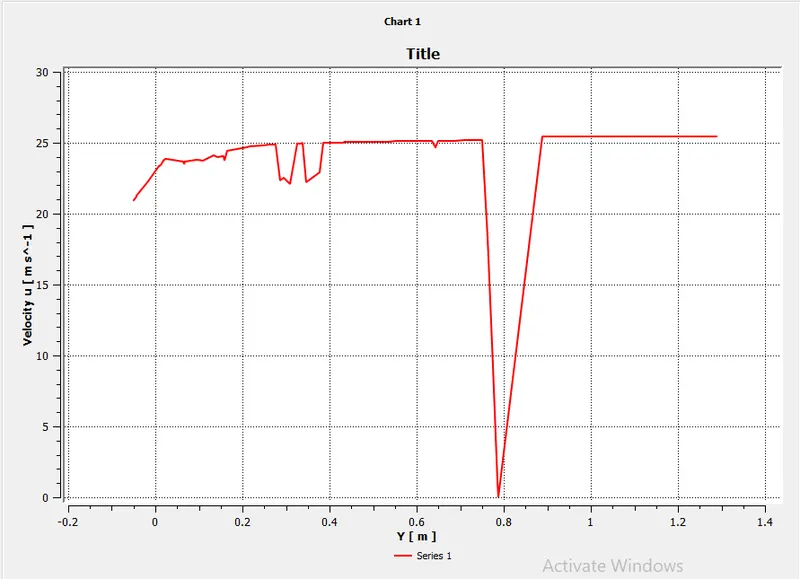
forming after that point. The point of separation cannot be understood just by a single contour in a hard and fast way. It can be
supportively studied with the help of the dp/dx plots or velocity plots w.r.t the Y direction and other such plots in which we can
see the nature of such physical properties like dp/dx=0, and dv/dy=0 experiencing in a particular region of fluid and body
interaction.
Geometry setup in SpaceClaim:
As the body is perfectly symmetric, we can run the simulation by considering only half the body. This is the best practice where
you can save on the number of cells and get the results faster as well. The geometry which is provided with the challenge needs
a modification which you should be able to do at this stage of a course. You need to use the 'split body' command in
SpaceClaim to perform the operation and then you can use the symmetry boundary condition in fluent to perform the
simulation.
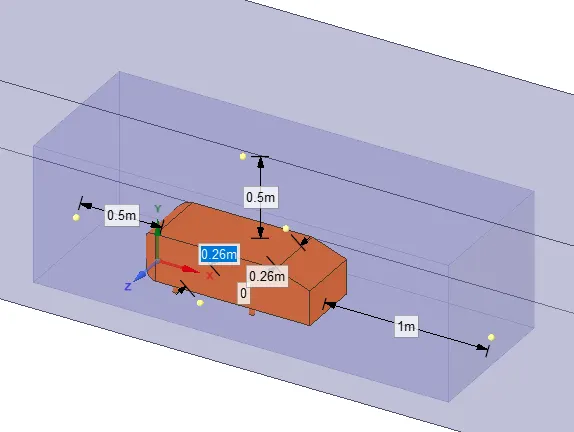
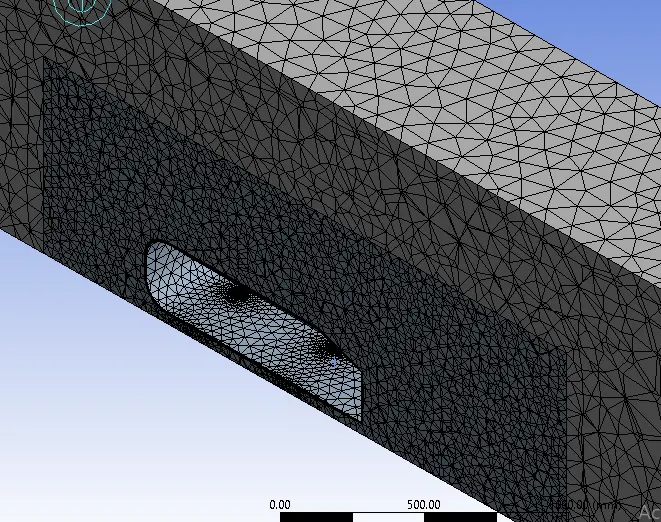
1. Load the Ahmed body model into SpaceClaim and convert the units from millimeters to meters
2. Go to prepare and click on the enclosure and select the Ahmed body. Enter the enclosure dimensions as shown in the below
snap. And uncheck the symmetric option before giving the value
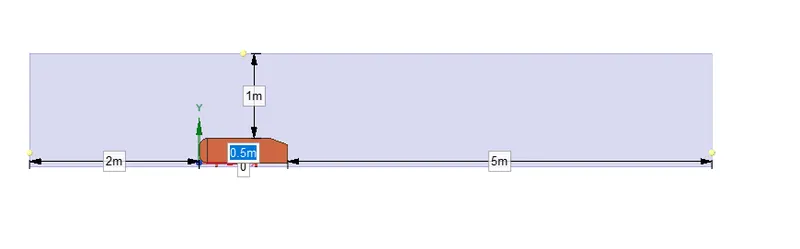
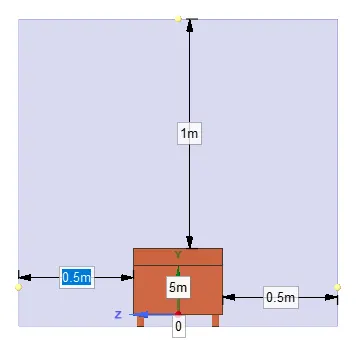
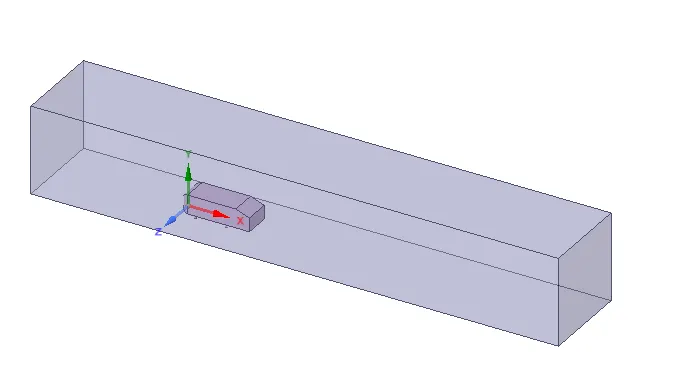
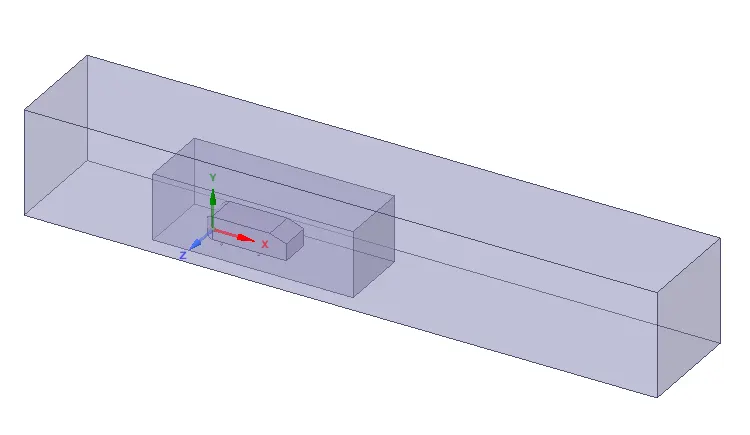
4. After both the enclosure is created, we can check interference and avoid overlapping of meshing in the 2nd enclosure by
applying check interference and deleting the overlap. This is automatically done by Spaceclaim when the interference option is
selected inside prepare.
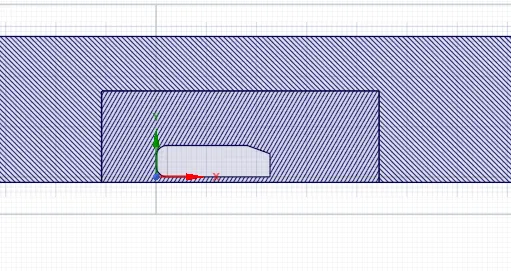
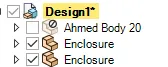
6. After achieving the split, hide the Ahmed body, suppress the physics and go to properties, and select Share topology. Now
the mesh from both the enclosures can share the information and have symmetry.
Fluent Set up procedure:
Update the mesh before opening the fluent setup and mesh checking should be done
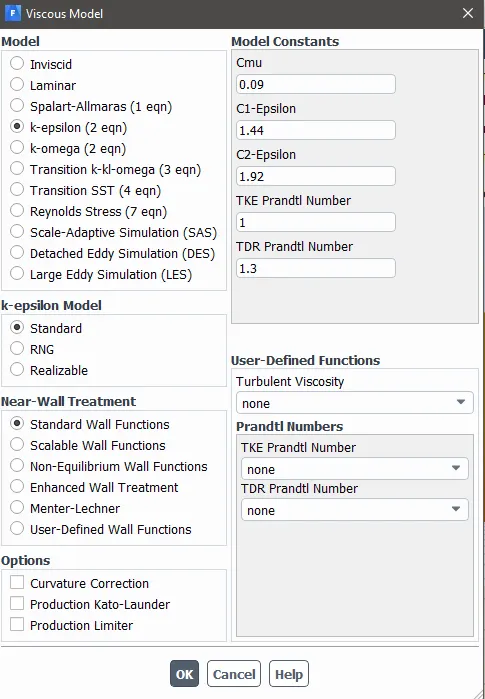
Take the k-epsilon turbulence model because we are taking the inlet velocity 25m/s which is smaller
Consider the pressure density solver
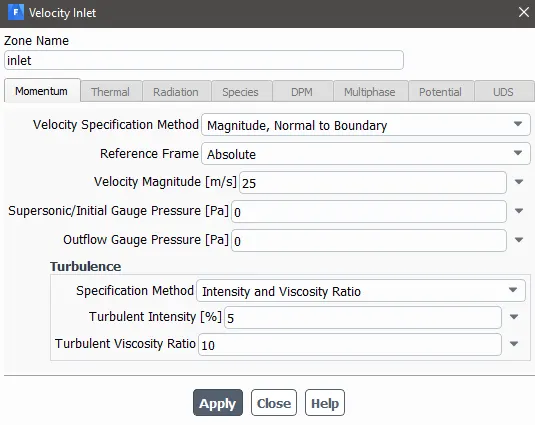
Take 25m/s as a velocity for the inlet boundary
Then initialize the solution
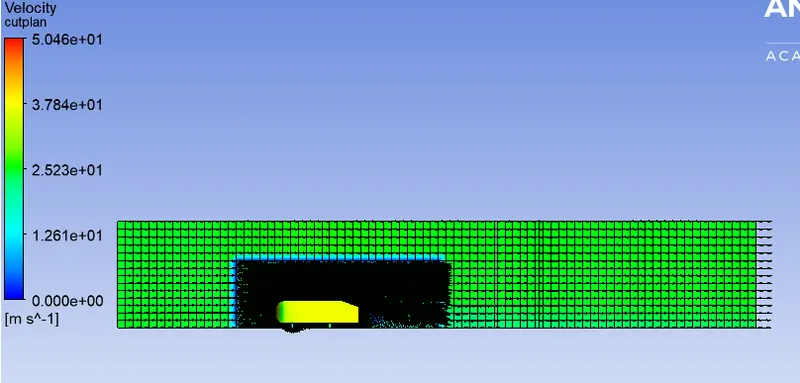
After initialize we should go to the post process to create a cut plane to see the velocity profile on it
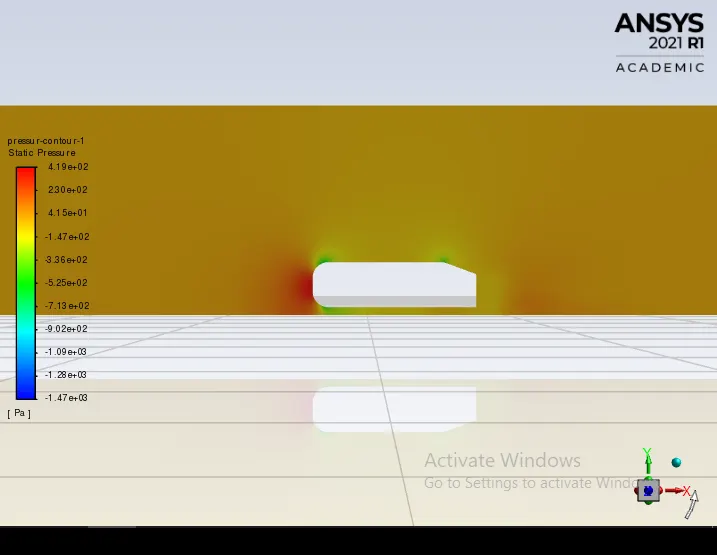
And create a contour plot for both pressure and velocity
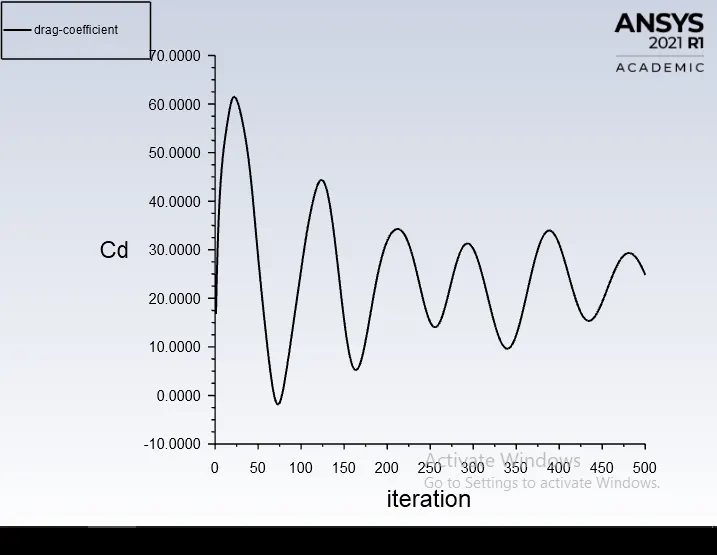
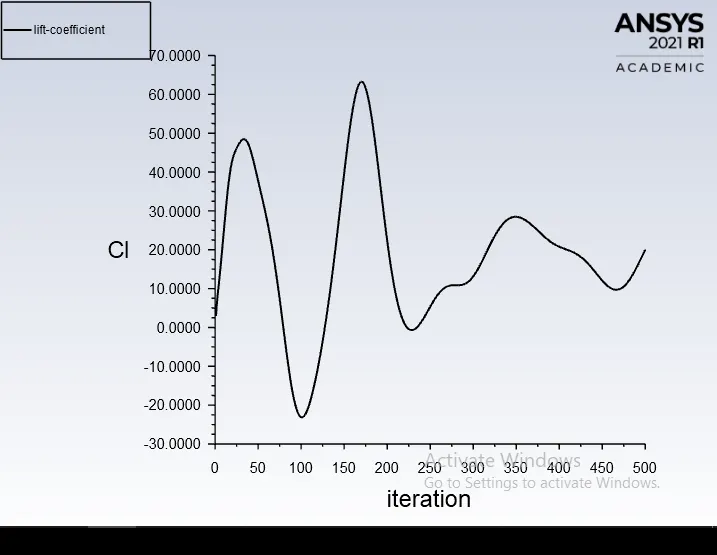
Also, create a plot for drag and lift using the definition tool
And give the reference values for the Ahmed body
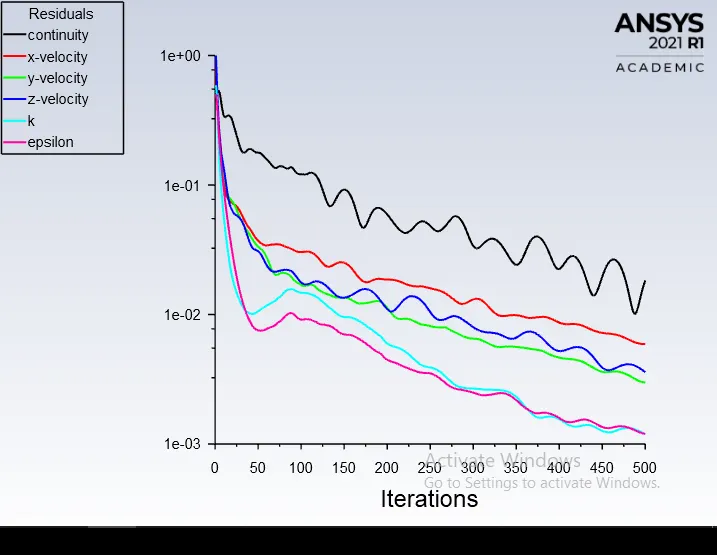
Run the simulation for 500 iterations.
Conclusion:
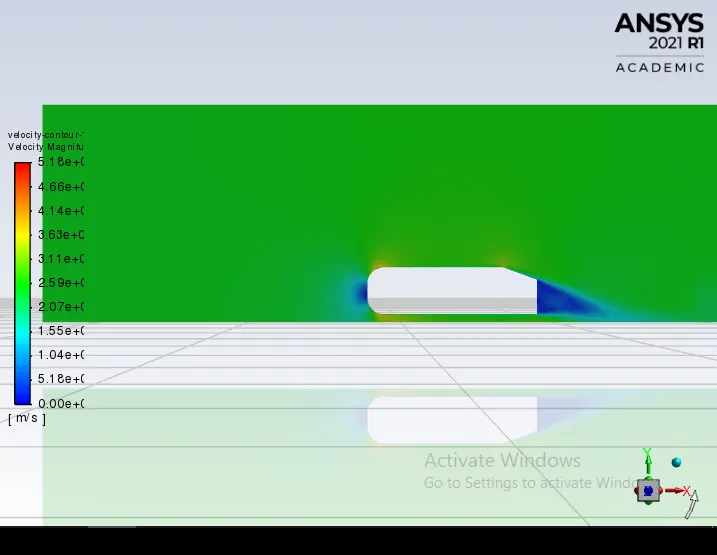
For all three cases, the velocity distribution is almost similar.
The velocity decreases at the front of the Ahmed body because of the impact of the fluid with the body due to which the
pressure increases.
Due to the impact, there is an initial acceleration of the flow on the top, followed by which the velocity decreases
gradually. The pressure decreases in the regions where velocity increases.
The flow once again speeds up because of the sudden change in geometry at the end of the top surface, which results in
the separation of flow & the formation of the wake.
This wake formation leads to a significant reduction in pressure at the rear region of the Ahmed body as compared to the front
the region, where pressure is higher due to the impact of flow on the body, and this results in the generation of a drag force.