Week 3 - External flow simulation over an Ahmed body.
AIM:
- Run the simulation for the velocity of 25 m/sec with the default air properties in fluent.
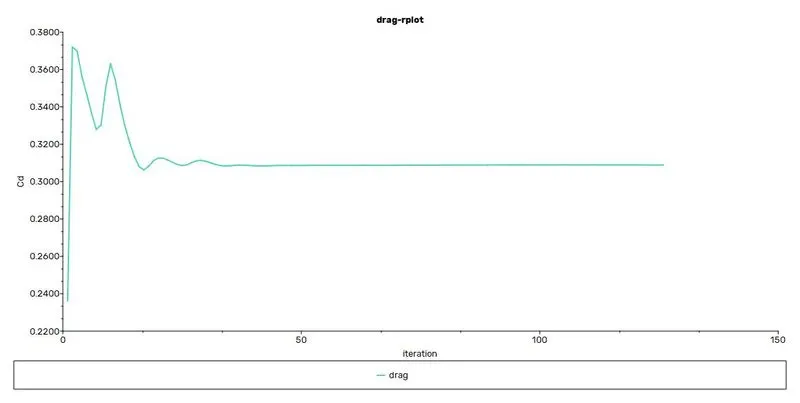
- Having drag coefficient around 0.33.
Method:
- Split the geometry to half and make an enclosure. 2 meter from front of the body , 5 meter from rear body, 0.5 meter side, 1 meter from top of the body and 0 meter from bottom.
- Make another small enclosure. 1 meter from front, 2 meter from rear, 0.5 from top,0.250 meter from side and 0 meter at the bottom.
- Interference and share topology.
- Supress ahmad body for physics.
- Name surface according for its uses. (Input, Output, Carwall, Symmetry and Wall)
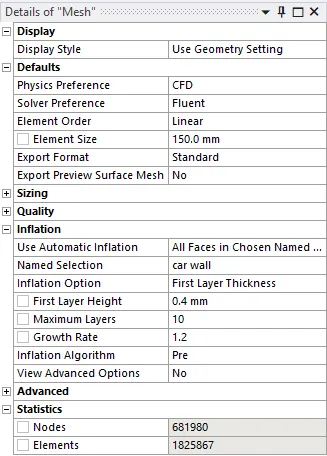
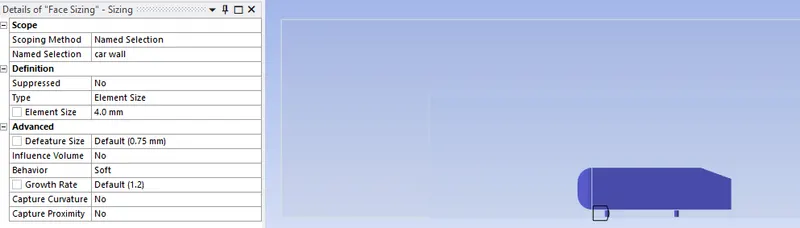
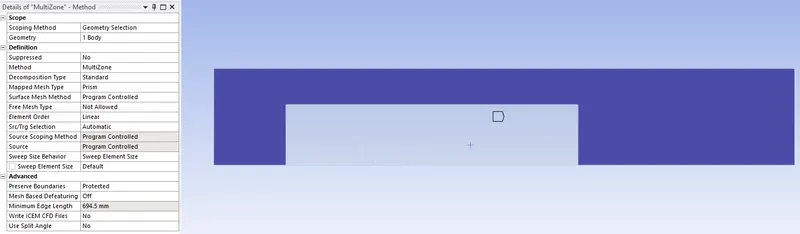
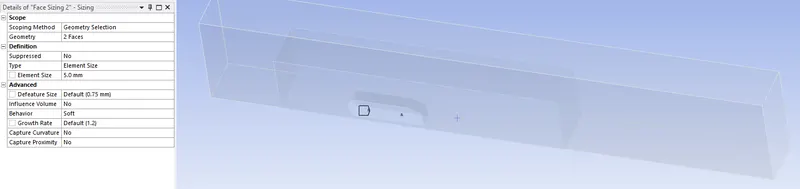
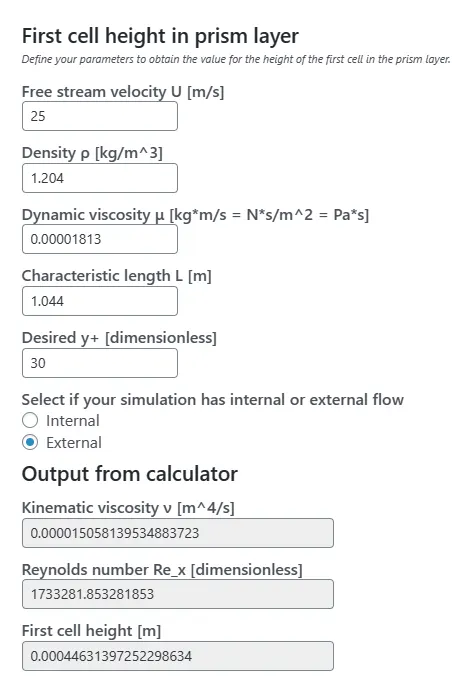
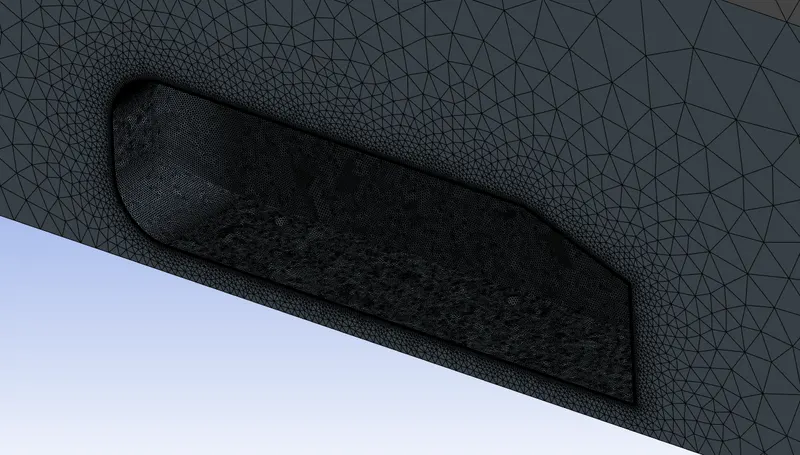
- Mesh according to Y+ calculator. Use multizone.
SIMLATION :
- Boundary condition - INPUT VALUE (25 m/s velocity)
- K-epsilon (30 - 300 y+)
- material (air)
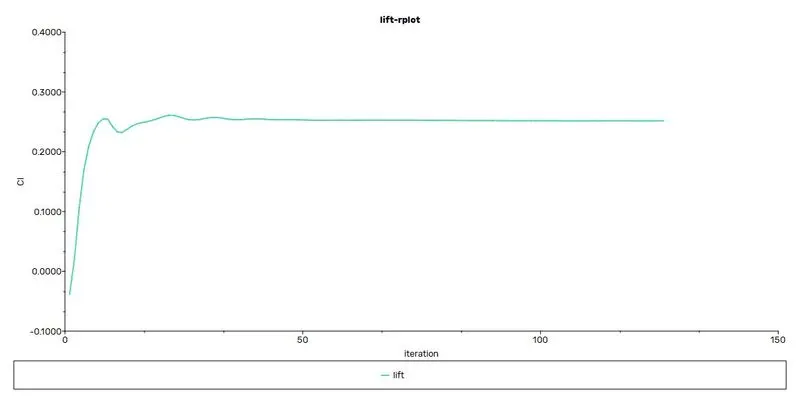
- 500 iteration.
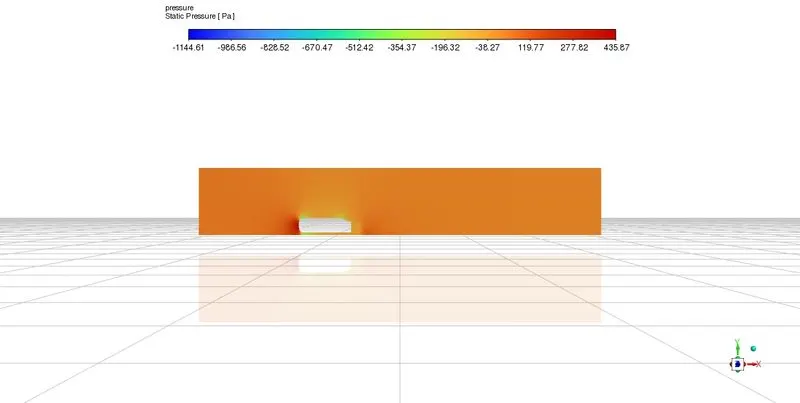
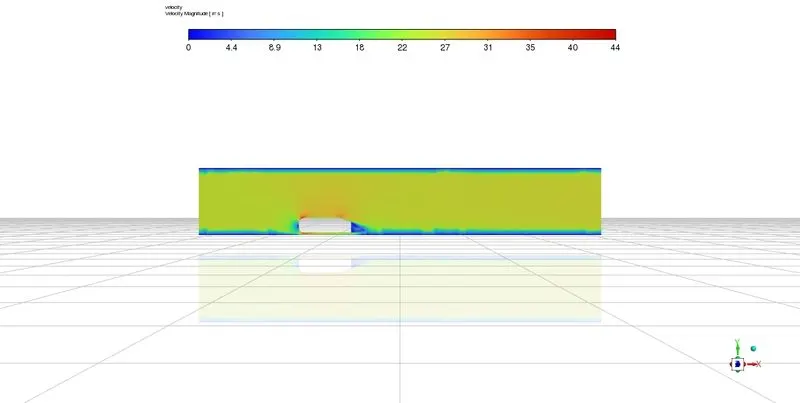
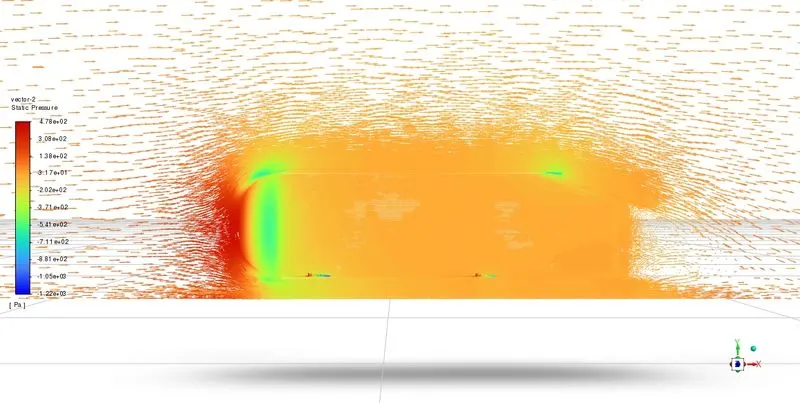
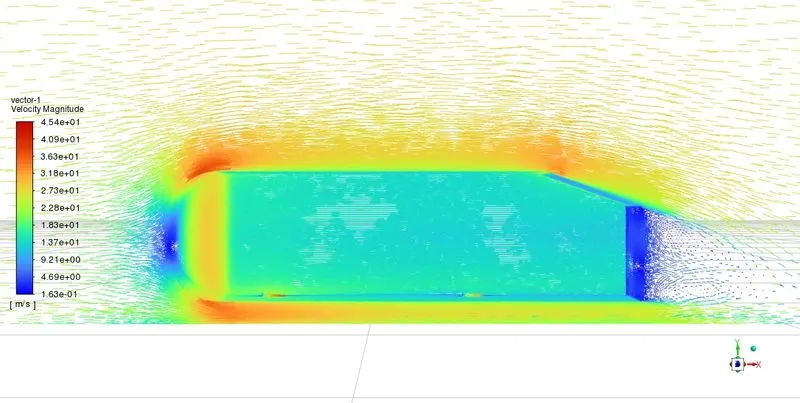
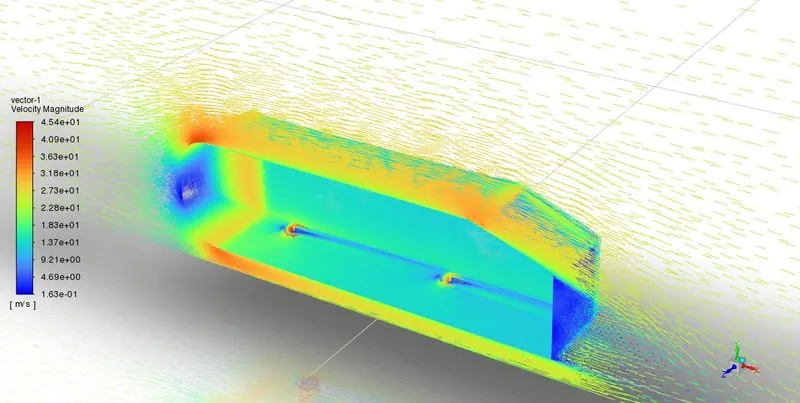
Conclusion:
As I can see the wake region is having a negative pressure because of the slang angle and it is causing the vacuum pressure towards it and also every corner of the body is having a high velocity.
Additional question:
Q1. Describe Ahmed's body and its importance.
Ahmed body is a shape that is widely used in wind tunnel testing to simulate the aerodynamic characteristics of a full-scale automobile in a reduced scale. The Ahmed body is a simple geometric shape that resembles a cube with a slightly rounded front and a flat back, and its design is based on the principles of fluid dynamics.
The importance of the Ahmed body lies in the fact that it provides a standardized and repeatable way to measure the aerodynamic drag and lift forces acting on a vehicle in a wind tunnel, which is crucial for improving fuel efficiency and vehicle performance. By testing vehicles in a wind tunnel using a scaled Ahmed body model, engineers can gather data on the effects of changes to the vehicle's design, such as the shape and placement of mirrors, grilles, and spoilers, on its aerodynamics. This information can then be used to optimize the design of the full-scale vehicle for improved fuel efficiency and performance.
Q2. Explain the reason for the negative pressure in the wake region.
In the wake region of an Ahmed body in wind tunnel testing, a negative pressure is created due to the separation of the flow from the surface of the body. This separation occurs when the flow over the rounded front of the Ahmed body becomes unstable, causing it to separate from the surface and form a wake of swirling, low-pressure fluid behind the body.
The negative pressure in the wake region is a result of the decreased fluid velocity and increased turbulence in the wake compared to the surrounding fluid. The Bernoulli equation states that as the velocity of a fluid increases, its pressure decreases. Thus, the low velocity in the wake region leads to a reduction in pressure compared to the surrounding fluid, resulting in a negative pressure.
This negative pressure contributes to the overall aerodynamic drag on the Ahmed body, as the fluid in the wake region is pulled towards the body, increasing the flow resistance and reducing its overall performance. Understanding the formation and characteristics of the wake region is important for optimizing the aerodynamic design of the Ahmed body, and for improving the fuel efficiency and performance of full-scale vehicles in wind tunnel testing.
Q3. Explain the significance of the point of separation.
The point of separation in Ahmed body analysis refers to the location on the body where the flow of fluid over the surface becomes unstable and begins to separate, forming a wake region behind the body. The position of this point of separation is significant because it determines the size and strength of the wake region, and thus has a direct impact on the aerodynamic drag and lift forces acting on the body.
In wind tunnel testing of Ahmed bodies, the position of the point of separation is often used as a measure of the body's aerodynamic performance. A well-designed body will have a point of separation that is as far forward as possible, minimizing the size of the wake region and reducing the aerodynamic drag. On the other hand, a poorly designed body will have a point of separation that is further back, leading to a larger wake region and increased aerodynamic drag.
Additionally, the point of separation is also an important factor in the transition between laminar and turbulent flow regimes. In general, as the Reynolds number increases, the flow over the surface of the Ahmed body becomes more turbulent, and the point of separation moves further back. Understanding the behavior of the point of separation and its relationship with the Reynolds number is critical for optimizing the design of the Ahmed body for improved aerodynamic performance.