Week 3 - External flow simulation over an Ahmed body.
Aim :- To simulate external flow over an Ahmed body.
Tools used :-
1) Space claim
enclosure , measure , split body , face , interference , share
2) Ansys mesh
Body sizing ,Face sizing, inflation
3) Fluent
Turbulence model , Material , Boundary condition , Reference value , Projected area , Initialization , Compute
4) CFD post
contour , plane , Streamline , vector
Theory :-
AHMED BODY AND ITS IMPORTANCE
Ahmed body is a specified vehicle model of bluff body type , it is a benchmark for validation of aerodynamic simulation of ground vehicle because it has a very simple shape, Ahmed body allows us to capture characteristic features that are relevant to bodies in the automobile industry.This model is also used to describe the turbulent flow field around a car-like geometry. Once the numerical model in validated, it is used to design new models of the car. It was developed by S.R. Ahmed in 1984.
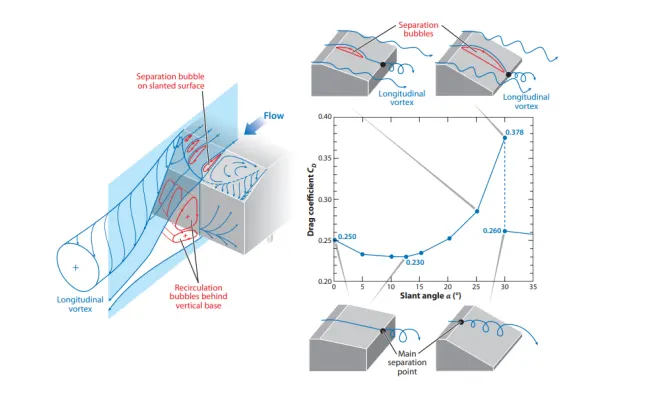
WAKE FORMATION & SEPERATION POINT
Ahmed body has curved surface in front face and there is slant surface in rear also has four legs. So when airflow around Ahmed body there is variation of pressure , velocity and stream of air. When air pass through slant surface there is seperation of air takes place and there is possibility of two seperation point, one at top slant edge or bottom slant edge .
Angle of the rear slanted surface strongly influences the flow downstream of the Ahmed body, which indicates that development of three-dimensional vortex separation from the rear slant surface produces a major component of the aerodynamic drag acting on the vehicle. On Ahmed body there is major pressure drag and friction drag occur, also pressure drag occur at rear end and it depend on rear slant angle. It has been found out that on increasing rear slant angle ,pressure drag increases and is maximum at angle 30 degree. At near 30 degree, flow seperates and reattaches at bottom slant edge forming two vorticities also called wake and is responsible for higher drag.
Procedure :-
1) Preprocessing
Geometry
a) Import the downloaded Ahmed body in Space claim
b) Construct two enclosure around Ahmed body
| Faces | External enclosure (m) | Inner enclosure (m) |
| Front | 2 | 0.5 |
| Rear | 5 | 1 |
| Top | 1 | 0.5 |
| Bottom | 0 | 0 |
| Side | 0.5 , 0.5 | 0.26 , 0.26 |
c) Both inner and external enclosure have interference so to remove ,go to interfernce option and click it and interference between both enclosure will be removed
d) To pass data/information from external enclosure to inner enclosure , there has to be create share topology ,so click on share option.
e) Make two geometry , one full body geometry and one half body geometry
* Half body geometry is to reduce number of cells which will reduce cost , time and processing power for silmulation. And compare the result with full body geometry.
Meshing
a) Transfer geometry in Ansys Meahing
b) Create three mesh by varying element size
| Cases | Ext. enclosure | Int.enclosure | Circular surface |
| Full body | 250mm | 100mm | 5mm |
| Half body 1 | 100mm | 50mm | 2mm |
| Half body 2 | 50mm | 20mm | 1mm |
* Circular surface is at legs of Ahmed body
c) To capture boundary layer , create 6 inflation layer with first layer thickness 0.4
d) Now give name to surface as inlet, outlet , symmetry , Car wall .
2) Solving
a) To solve the given problen , open solver which is Ansys Fluent.
b) As the flow is incompressible so select pressure based solver
c) Now select turbulence model for simulation which is k-`epsilon` standard , wall enhanced treatment type of turbulence model for this simulation.
d) Material will be air with standard property.
e) Now give boundary condition
for inlet - 25m/s
outlet - pressure outlet
f) Give reference value as compute from inlet and length 1.04 m and for area ,compute frontal area from fluent itself using projected area option in result.
g) Select method as Coupled
h) Form report definition which is Lift ,Drag
i) Now initialize the problem with hybrid initialization
j) Iterate the simulation for 400 times
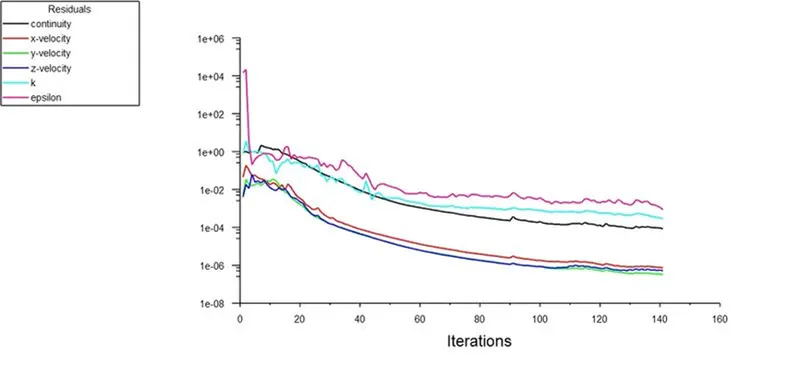
k) When problem gets converged , it means we got the result ,so to view the result we need to do post precessing
3) Post Processing
a) Open CFD-post
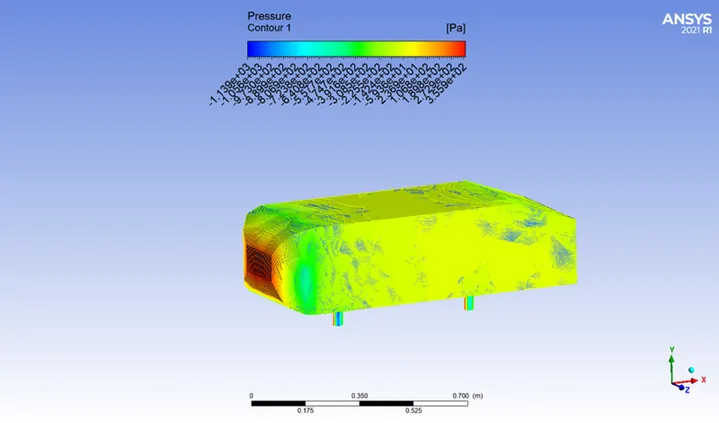
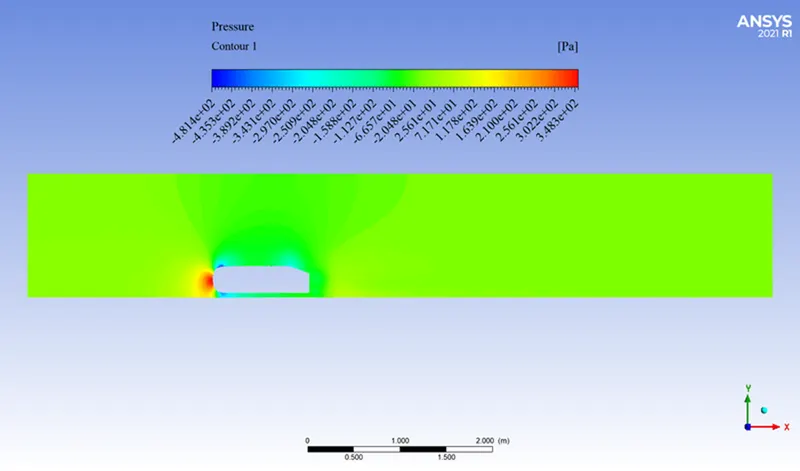
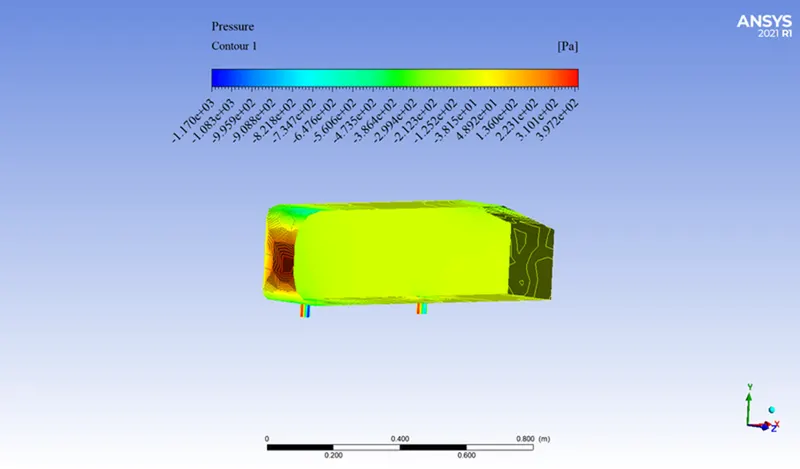
b) Creat velocity ,pressure , Streamline , Velocity vector contour on a constructed plane along the enclosure
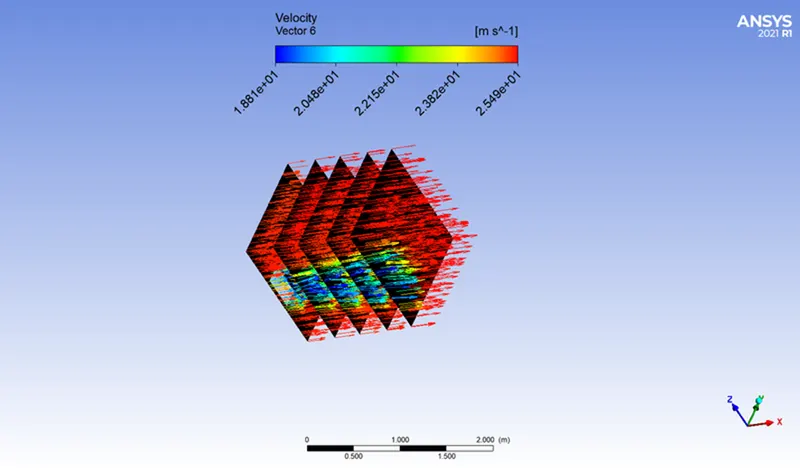
c) Create planes along y direction for vorticity visualization at different loaction behind Car wall
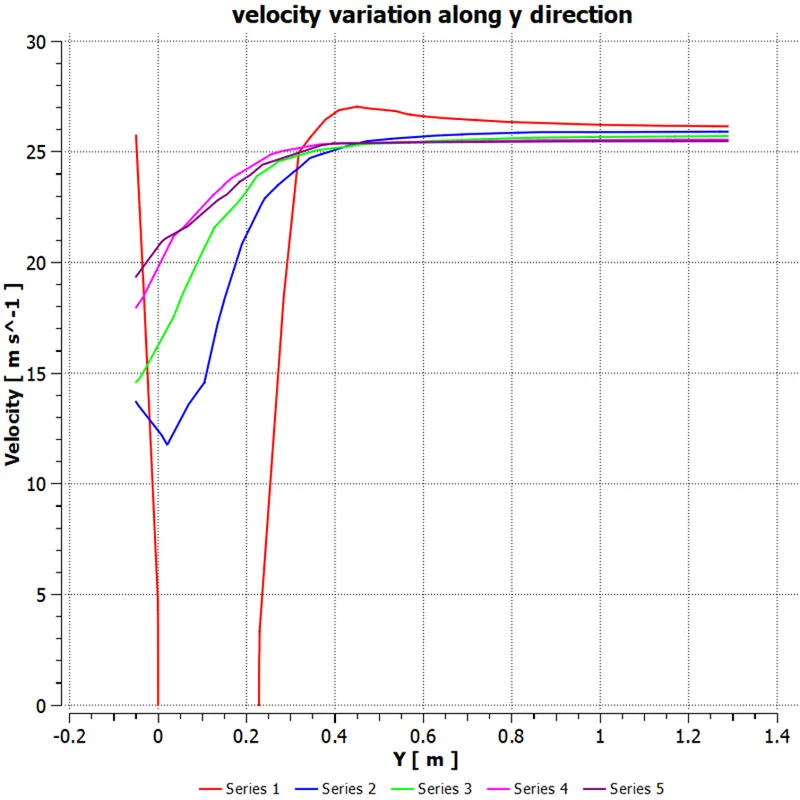
d) Plot velocity graphs of those plane
Result :-
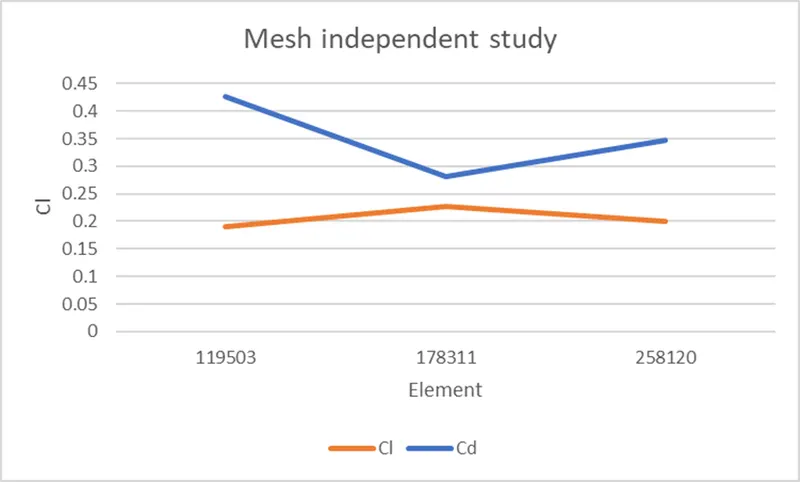
1) Cl & Cd values for three Cases :-
| Cases | Cl | Cd |
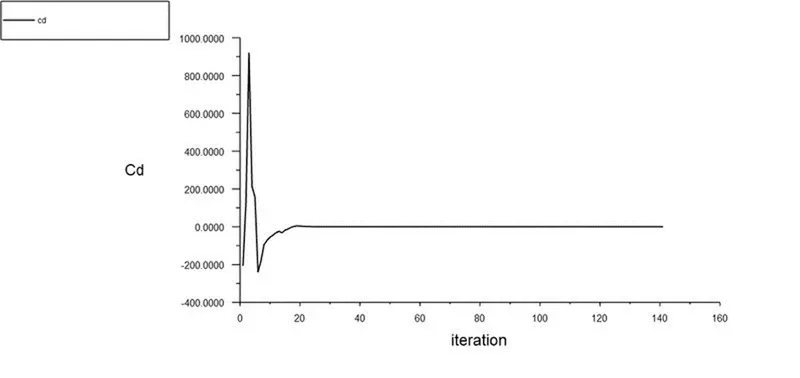
| Case 1- full body | 0.1894 | 0.4259 |
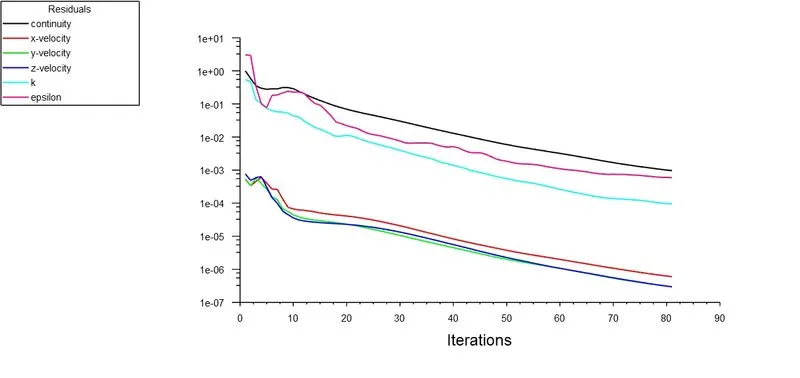
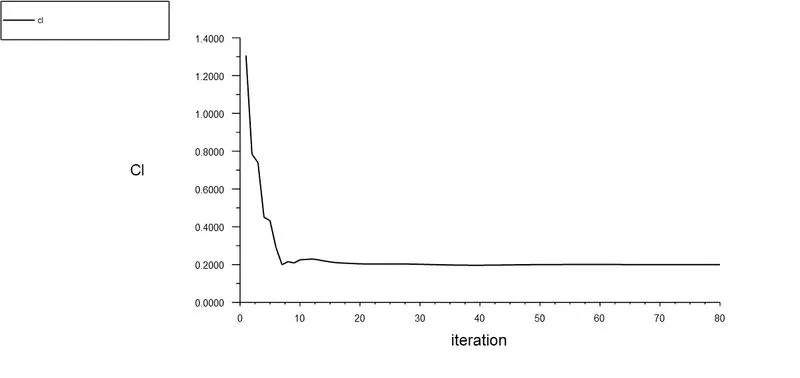
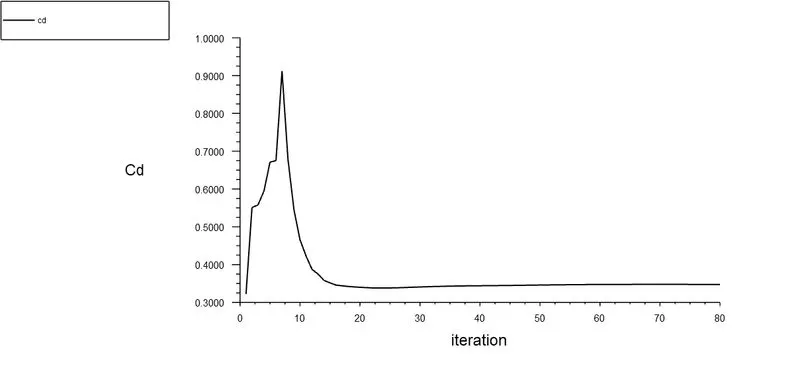
| Case 2 - half body 1 | 0.2002 | 0.3475 |
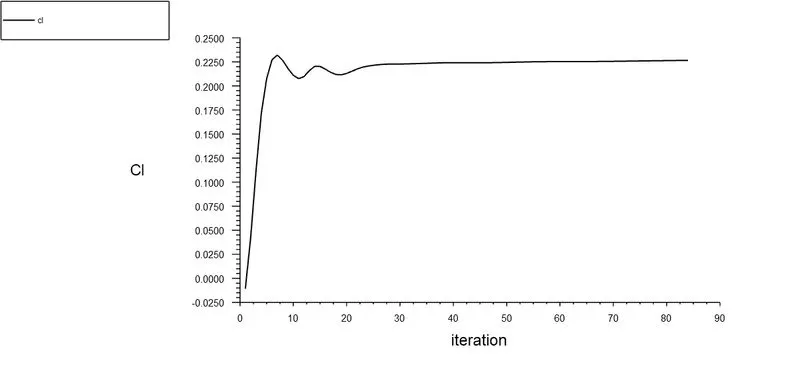
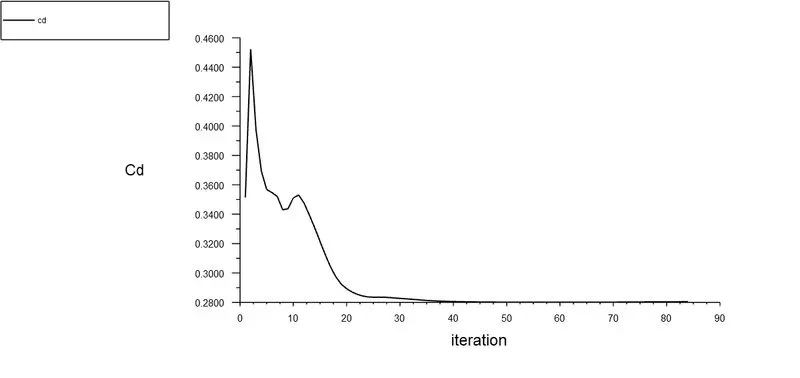
| Case 3 - half body 2 | 0.2265 | 0.2804 |
2) Mesh independent study
3) Plots
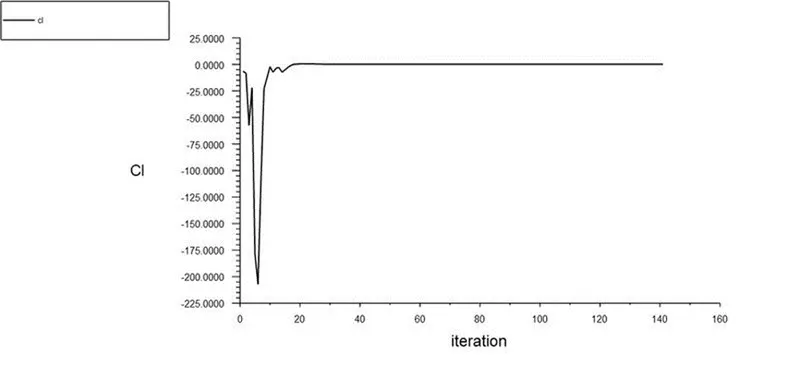
Case 1 full body
Convergence plot
Cl plot
Cd plot
Case 2 Half body 1
Convergence plot
Cl plot
Cd plot
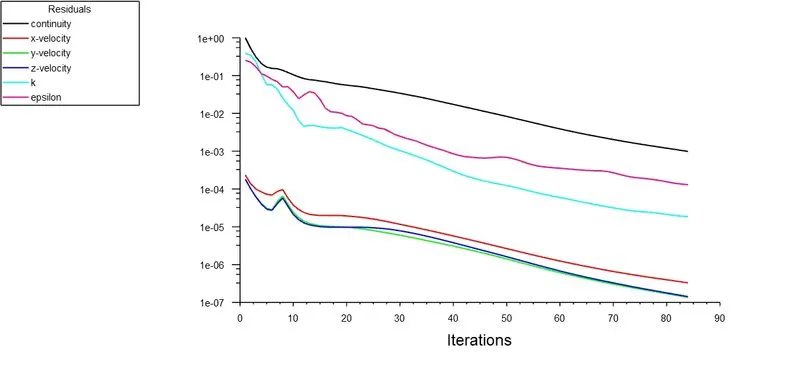
Case 3 Half Body 2
Convergence plot
Cl plot
Cd plot
4) Contours :-
Case 1
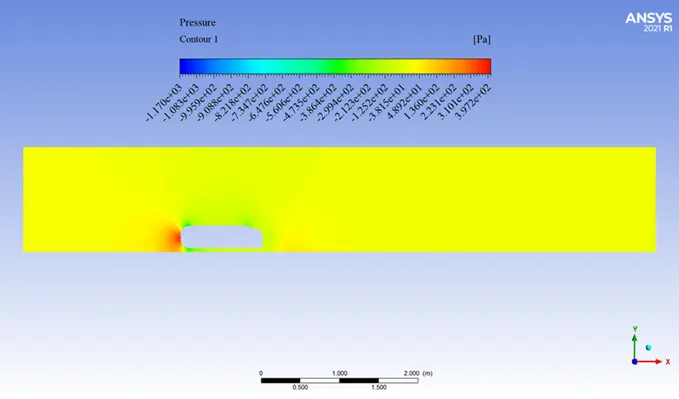
Pressure contour
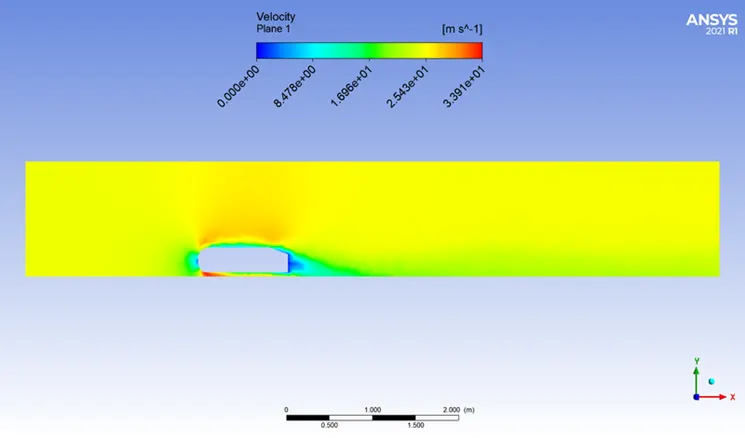
Velocity contour
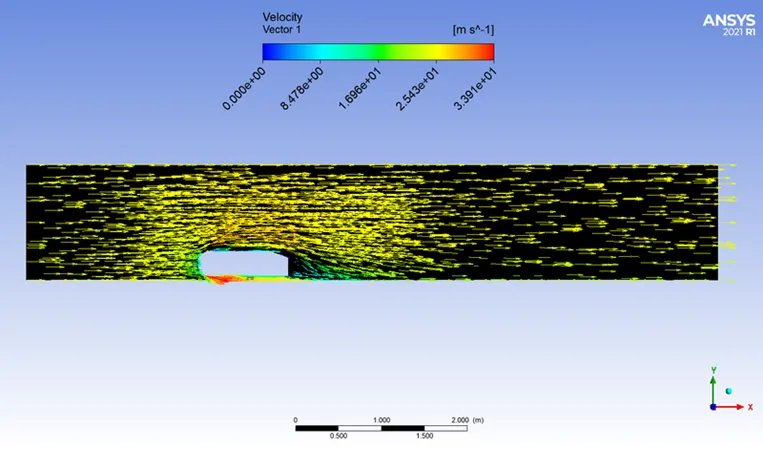
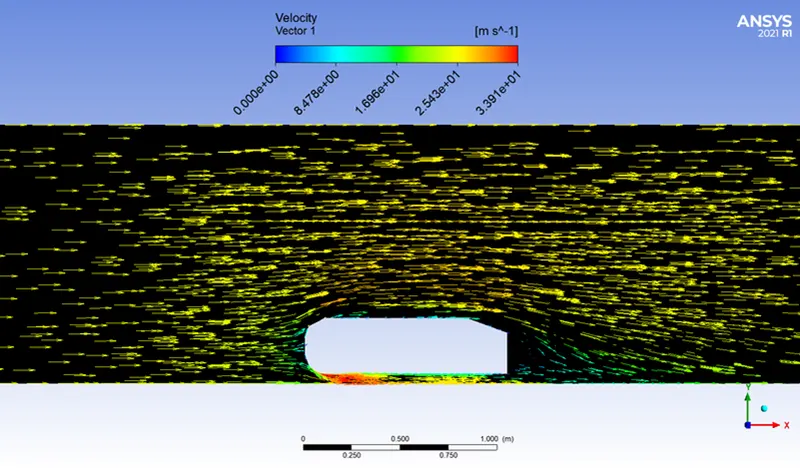
Velocity Vector
Case 2 Half body 2
Pressure contour
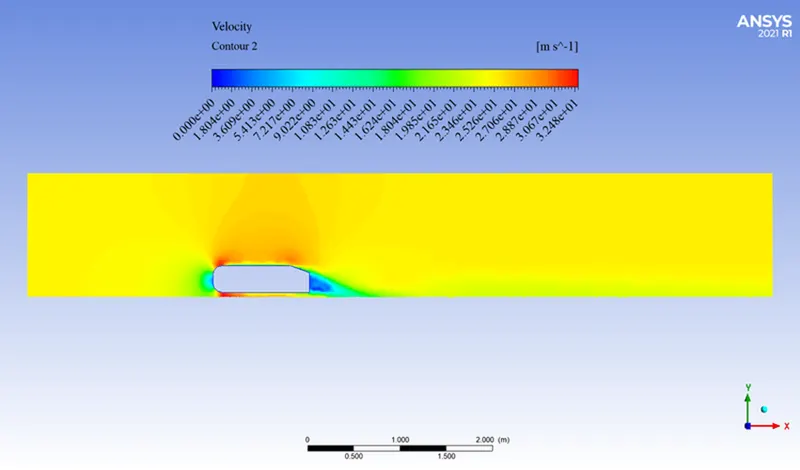
Velocity contour
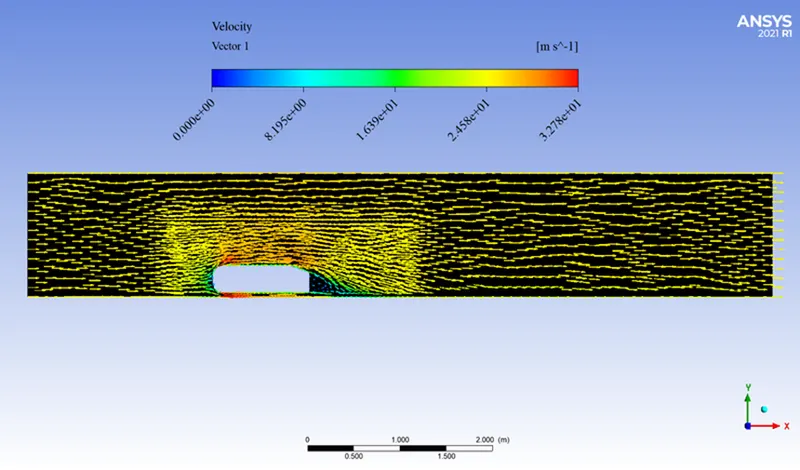
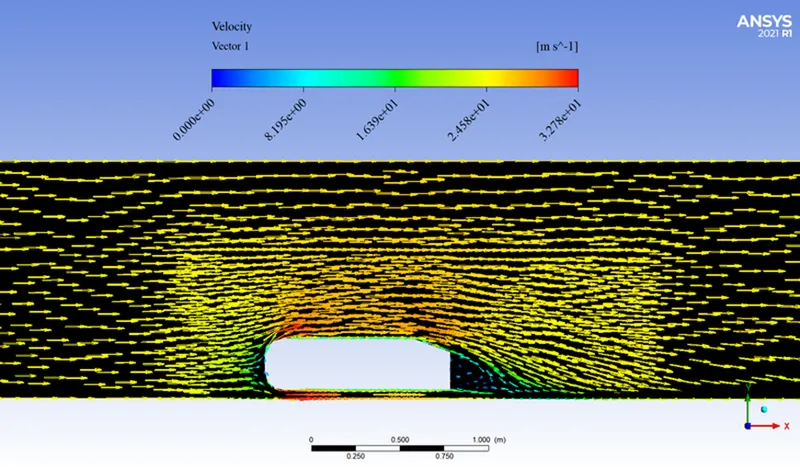
Velocity Vector
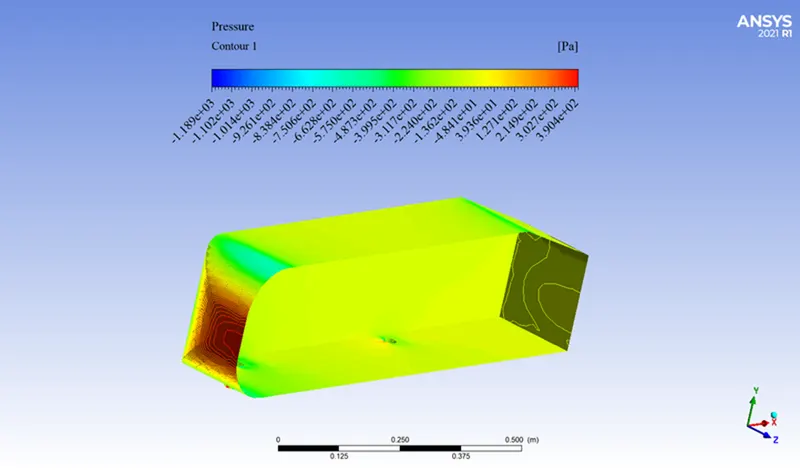
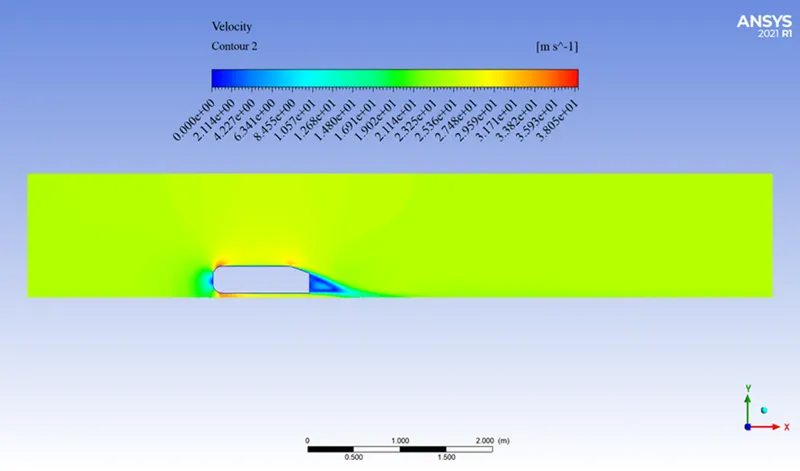
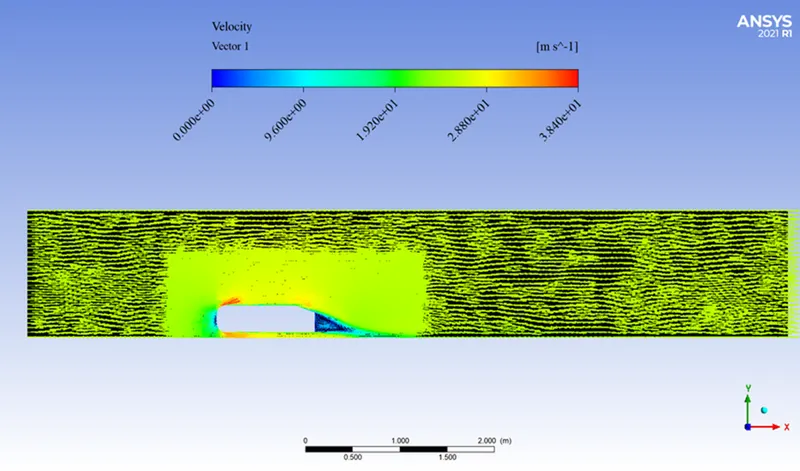
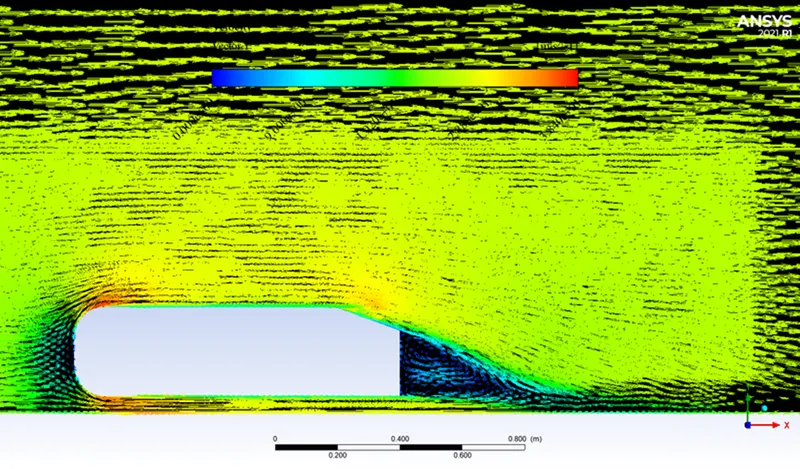
Case 3 Half body 2
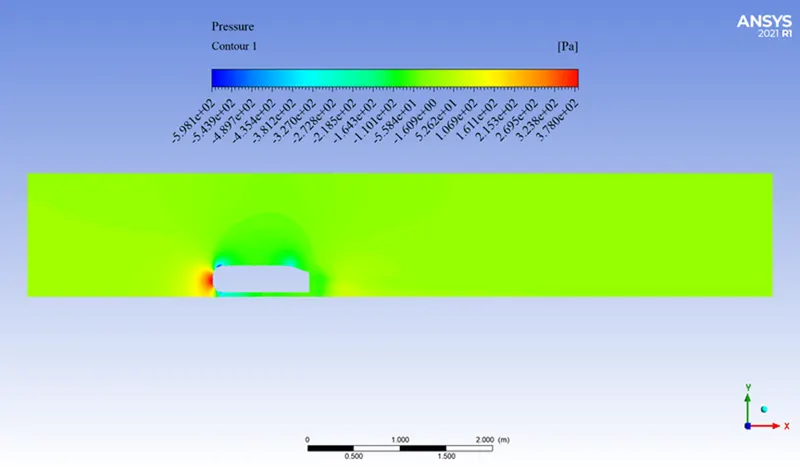
Pressure Contour
Velocity Contour
Velocity Vector
Conclusion :-
Simulation of external flow over AHMED BODY at velocity 25m/s has been done with 3 cases which is
Case 1 Full Body ,
Case 2 Half Body1 ,
Case 3 Half Body 2
with different element size on External enclosure , internal enclosure and Curved surface ,which gives different element numbers and these gives different values of Lift coefficient , Drag coefficient which has been plotted on Mesh independence study.
From simulation on different element size it has been observed that as element size decreased ,Cl is increasing and Cd is decreasing. And in refined mesh the Cd is 0.28 which is very less than expected result which was 0.33.
From the Velocity contour it is observed that there is very less velocity behind the Car and Velocity vector plot shows the wake formation behind the Car which is creating high drag on Car.
Also , velocity vector plot along y direction at different location behind Car is plotted and it shows that near car floor there is very less velocity because of high vorticity and as height increases that is y value increases velocity is also increasing and at certain height all velocity become freestream velocity.