Week 3 - External flow simulation over an Ahmed body.
External flow simulation over an Ahmed body
Aim:
To an external flow simulation over an Ahmed body
Objective:
The objective of this project is to determine the aerodynamic forces on the Ahmed body such as drag and lift coefficient and to perform the grid independence test.
Q1. DESCRIBE AHMED BODY AND ITS IMPORTANCE.
The Ahmed body is a benchmark model widely used in the automotive industry for validating simulation tools. The Ahmed body shape is simple enough to model while maintaining car-like geometry features. This body allows us to capture all the characteristics and features that are relevant to bodies in the vehicle industry. A lot of studies can be performed using the geometry like calculating drag and lift forces on the vehicle, studying the presence of vortices, and wake region behavior at different slant angles at the back of the vehicles.
Q2. EXPLAIN THE REASON FOR THE NEGATIVE PRESSURE IN THE WAKE REGION.
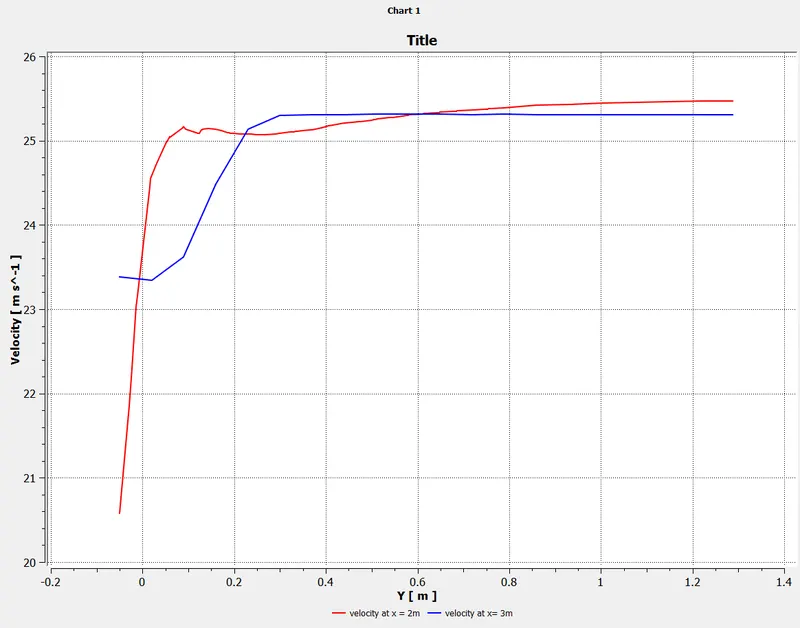
The wake region is a disturbed flow region around a solid body moving through a fluid. This is caused due to the boundary layer separation which creates a high turbulent flow zone. The velocity and pressure in the region are low and increase the drag force on the body. Therefore the formation of the wake region is one of the important characteristics to consider while designing an automobile.
Q3. EXPLAIN THE SIGNIFICANCE OF THE POINT OF SEPARATION.
The point of separation is a point where the fluid flow no longer follows the contour of the body and gets detached from the surface of the body. When there is a fluid flow over a solid body there is a retarding effect on the fluid flow because of shear stress between fluid and solid body. This gives rise to the negative pressure gradient and the fluid flow detaches from the surface giving rise to vortices and eddy forces. Once the fluid is detached it exerts constant pressure on the surface instead of exerting a continually increasing pressure.
Y plus:
Y+ is a non-dimensional distance that is used to describe how coarse or fine a mesh is for a particular flow pattern. It is important in turbulence modeling to determine the proper size of the cells near domain walls. The turbulence model wall laws have restrictions on the y+ value at the wall.
Density, rho = 1.225
Velocity, U = 25m/s
Length, l = 1.044 m
Viscosity, mu = 1.79*10^(-5) pa.s
REYNOLDS NUMBER, re = (rho.U.l)/mu
Reynolds number @ 25m/s = 1.7862e+06
SETUP:
AHMED BODY AND ITS SIGNIFICANCE:
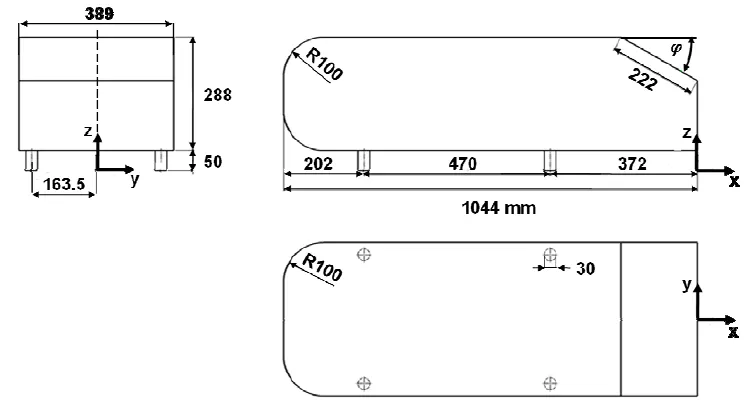
The Ahmed body is a geometric entity that represents a standard passenger car. The geometry was first proposed by Ahmed and Ramm in 1984 and was extensively used to study the effects of the geometry on the wake region. Over the years, numerous studies have been conducted on the Ahmed body both computationally and experimentally using wind tunnels. Since a lot of data is available on the Ahmed body, today the geometry is primarily a validation tool for CFD codes. The geometry of Ahmed body is shown below:
DIMENSIONS:
GEOMETRY:
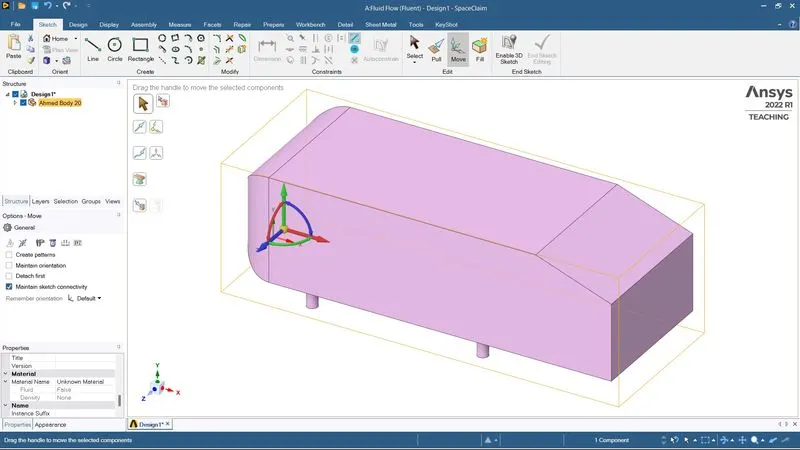
Ahmed body model
Creating an enclosure across Ahmed body
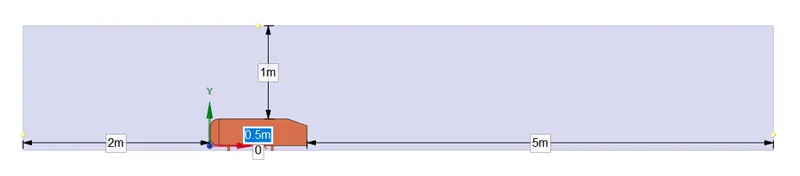
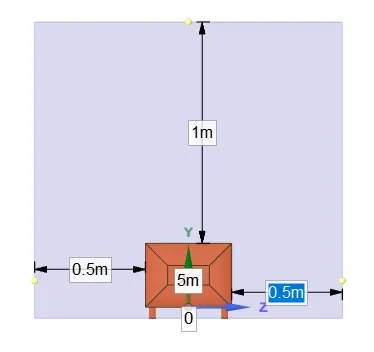
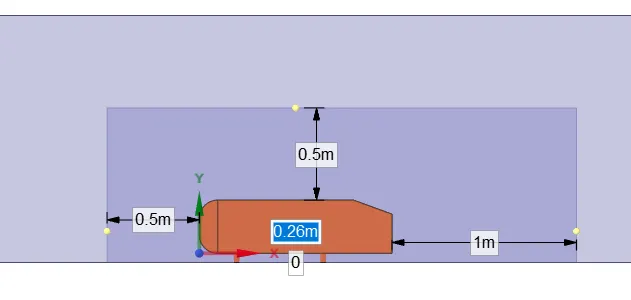
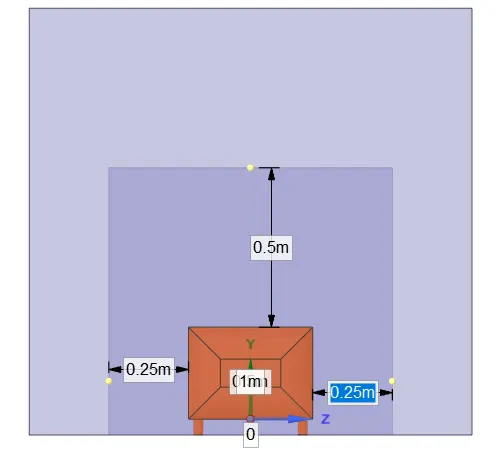
- Shown below is the final geometry that is to be used for meshing. Note that the 'split body' command has already been used on the geometry.
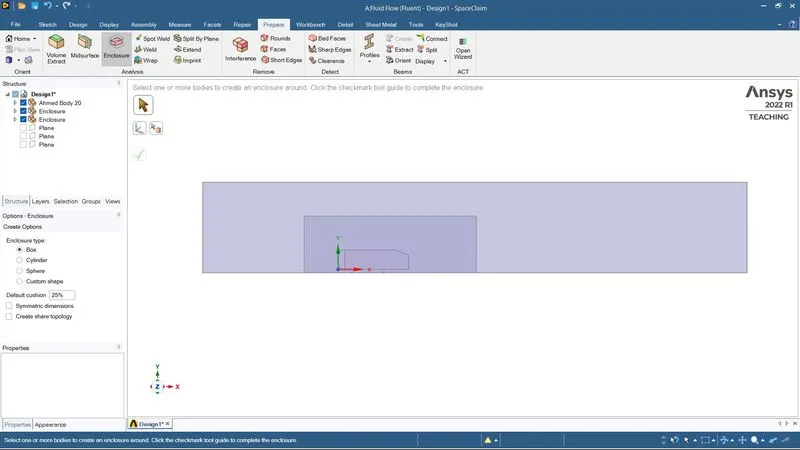
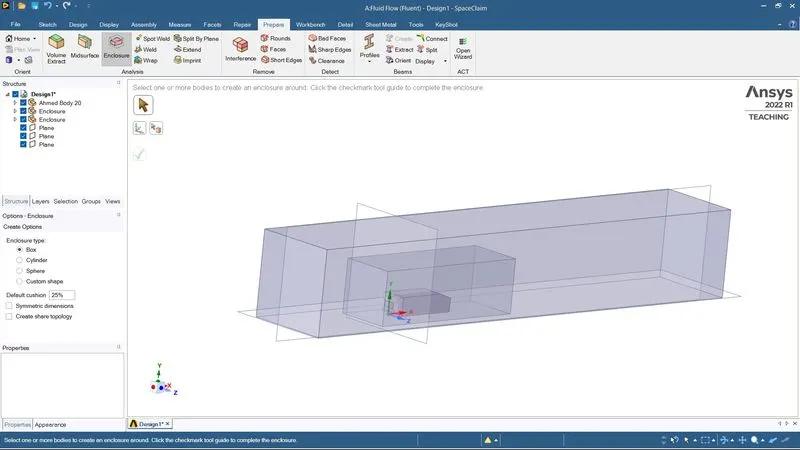
Creating a plane section on the origin
GENERATING MESH:
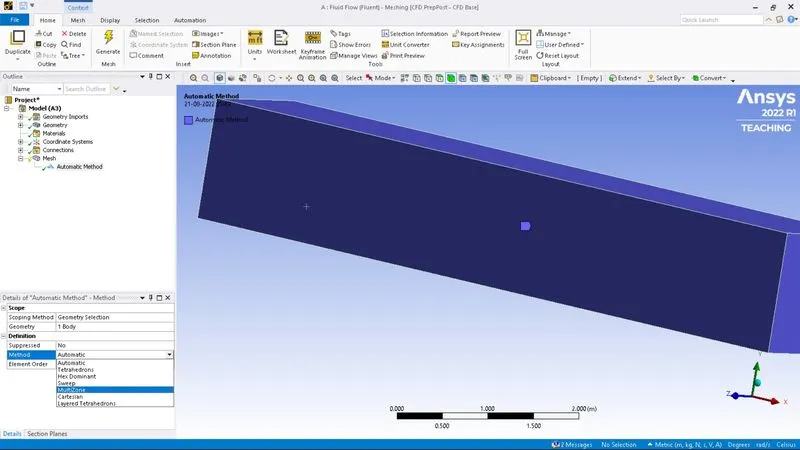
The method used – multizone
MULTIZONE:
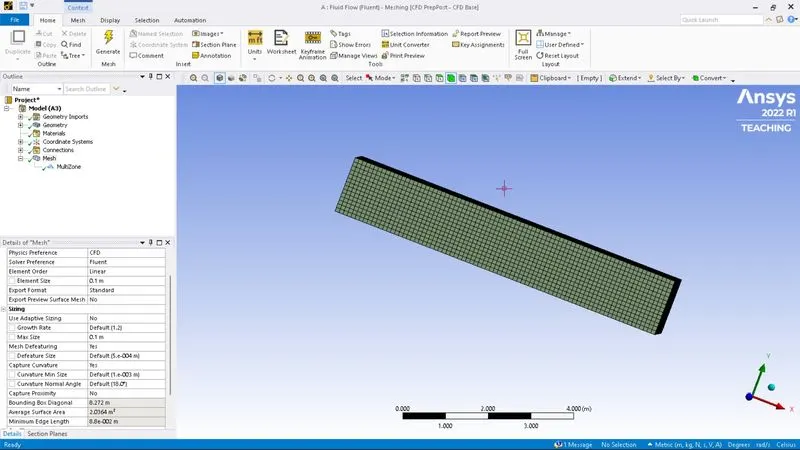
The outer enclosure is provided with hexahedral meshes. Hexahedral meshes are the ones that are better than tetrahedral meshes, but it doesn’t fit complex geometries as this is a simple geometry we can use hexahedral mesh.
Multizone creates a hexahedral mesh wherever possible.
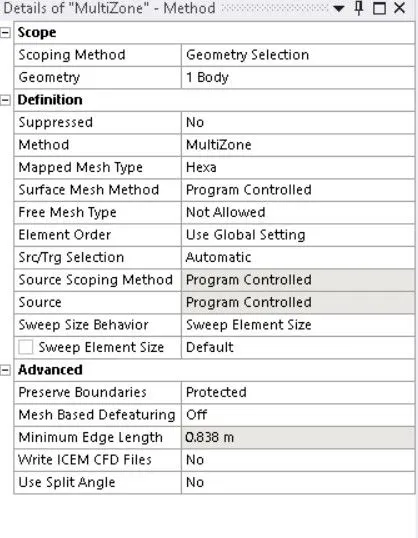
The mesh size of 0.1m is used for a larger enclosure.
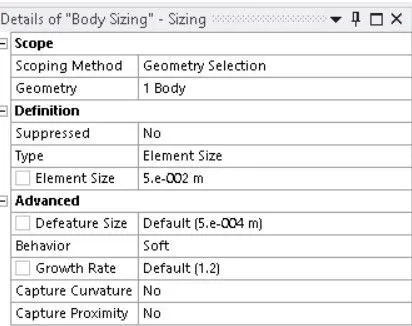
The inner enclosure will have the baseline tetrahedral mesh, the element size of the mesh is reduced using the sizing option and hence an element size of 0.05m is used for the meshes of the inner enclosure.
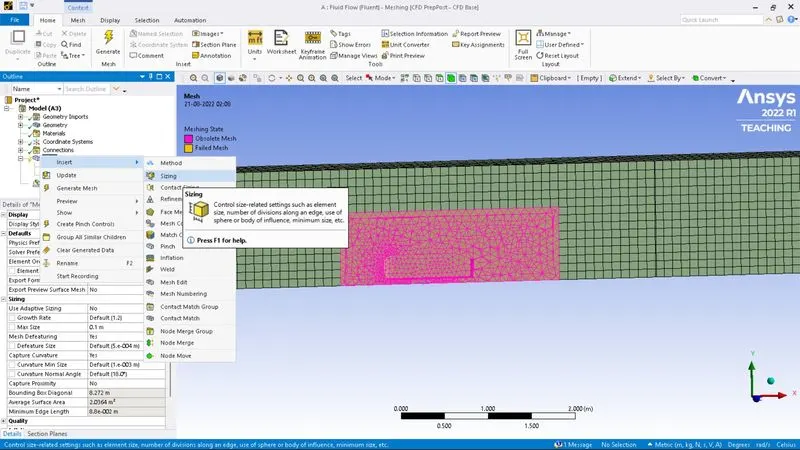
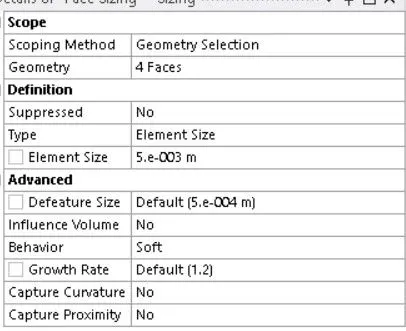
The face sizing for 5mm is used for the circle openings at the bottom of Ahmed body.
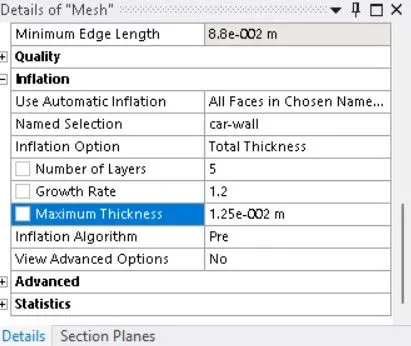
The inflation layer is used to refine the local region just above the wall/body to capture the boundary layer precisely.
The 6 inflation layer with a total thickness of 12.5mm is created around the car wall.
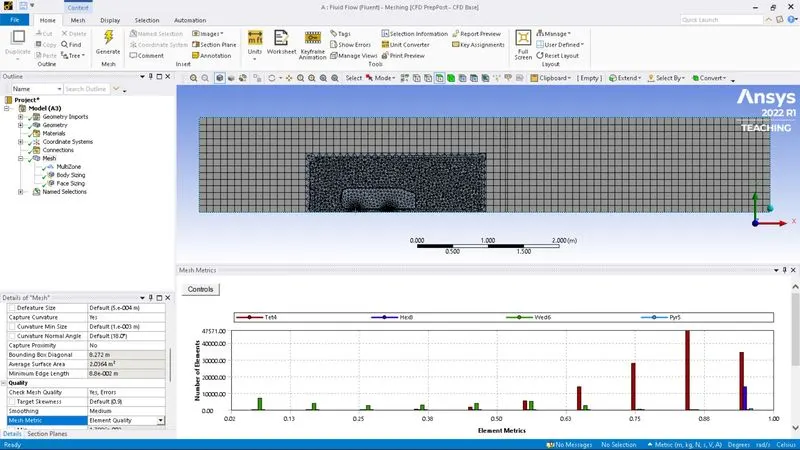
The above figure shows the proportion of tetra, hex, wedge, and pyramid type of mesh under the multizone meshing type. This plot shows the minimum mesh metric criterion.
SETUP:
|
SOLVER TYPE |
Pressure based |
|
VELOCITY FORMULATION |
Absolute |
|
TIME |
Steady |
|
VISCOUS MODEL |
Standard K-epsilon with standard wall function |
|
MATERIAL |
Fluid - air |
|
CELL ZONES |
Dynamic viscosity – 1.79e-5 kg/ms |
|
BOUNDARIES |
Velocity magnitude 25m/s
Gauge pressure – 0 pa
No slip (condition) |
The model was initialized using hybrid initialization with 500 iterations to run the simulation.
Case 1:
Outer enclosure: 100mm(elemental size)
inner enclosure:5mm(elemental size)
Face sizing for Ahmed body:5mm(elemental size)
inflation for Ahmed body:5layer with a total thickness of 12.4mm
RESULTS:
RESIDUAL:
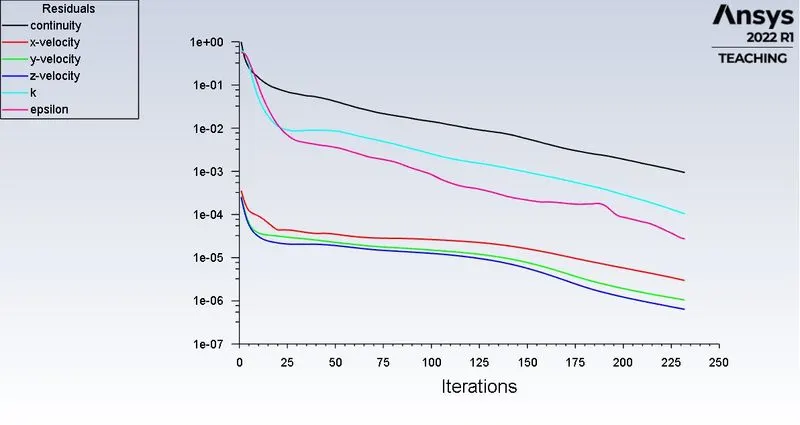
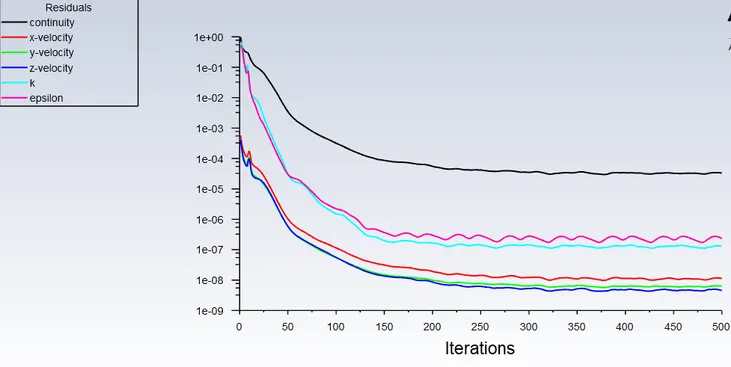
The number of iterations was set to 500.
and time scalar factor 0.1
But it is observed that the residuals have fallen below the specified tolerances and the solution attains convergence in ~234 iterations.
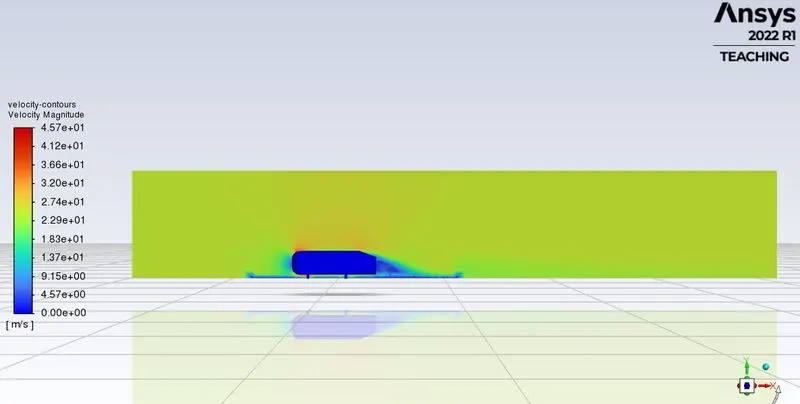
VELOCITY CONTOUR:
Youtube Link:
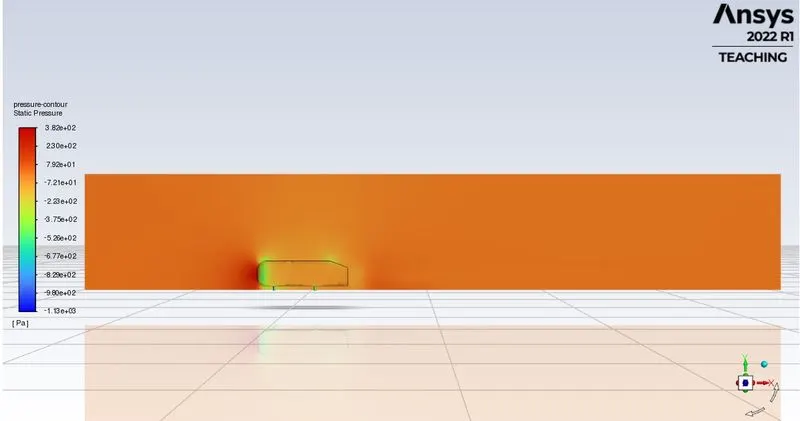
PRESSURE CONTOUR:
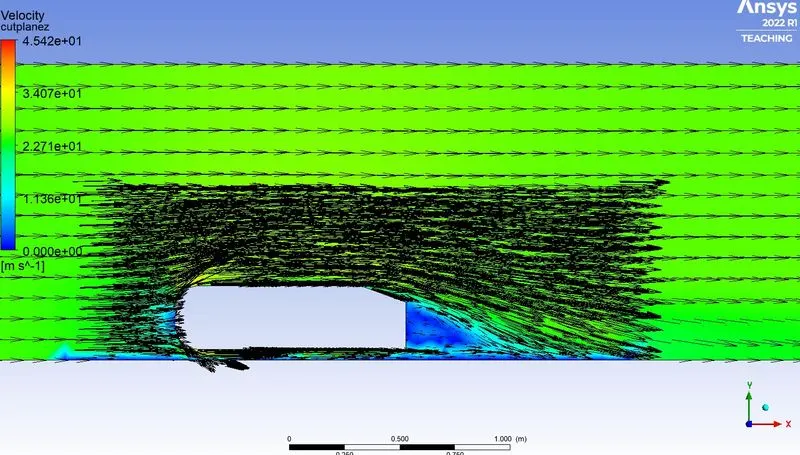
VECTOR PLOT:
DRAG PLOT AND LIFT PLOT:
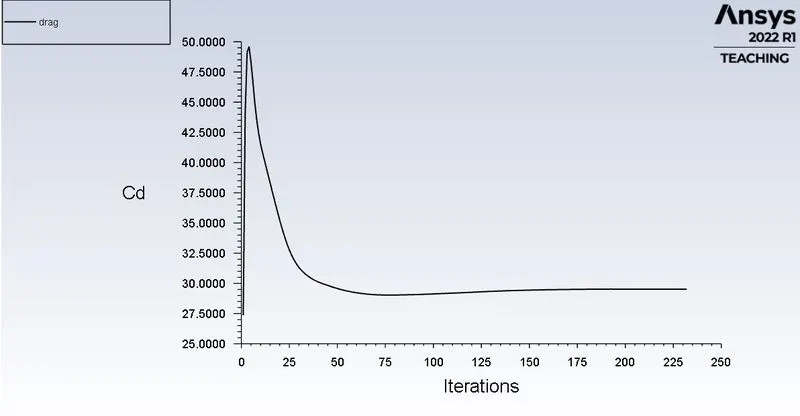
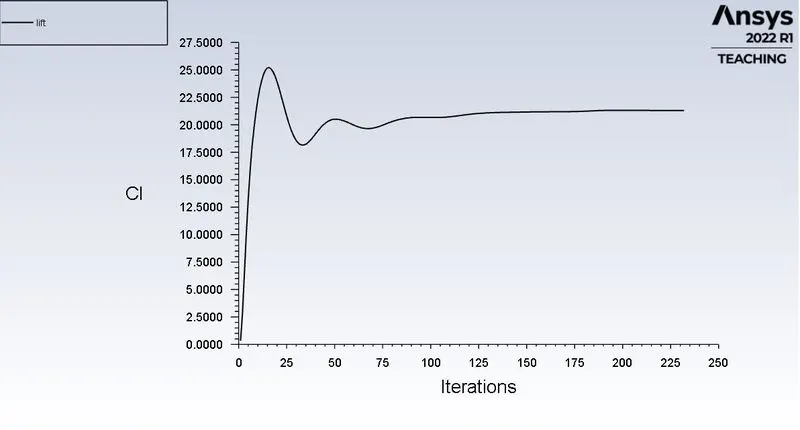
The coefficient of drag value for this case comes out to be 0.36329838 which is much considerable as our aim was to get the value around 0.33. similarly, the coefficient of lift value comes out to be 0.26910341.
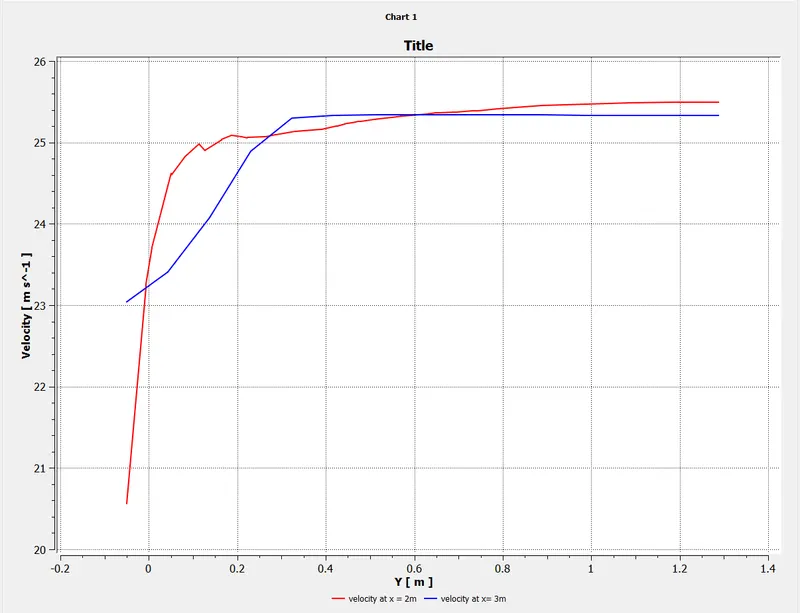
CHART:
GRID DEPENDENCY TEST:
Case 2:
Outer enclosure: 75mm(elemental size)
inner enclosure:4mm(elemental size)
Face sizing for Ahmed body:5mm(elemental size)
inflation for Ahmed body:5layer with a total thickness of 12.4mm
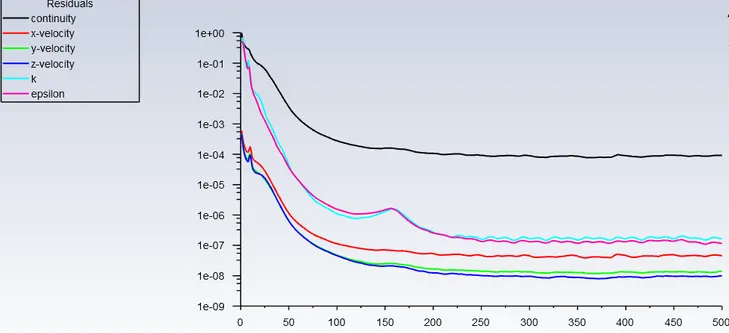
RESIDUAL:
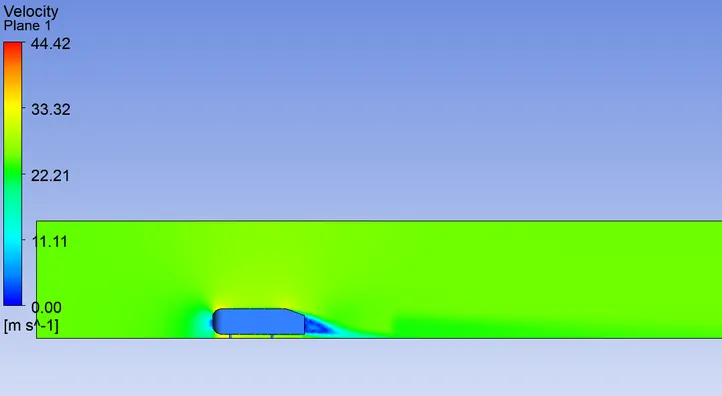
VELOCITY CONTOUR:
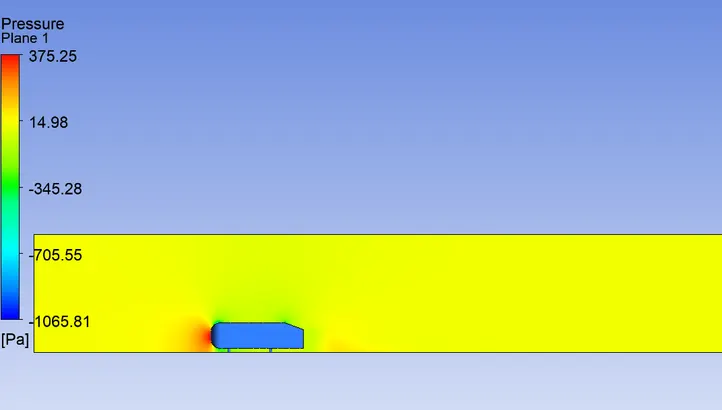
PRESSURE CONTOUR:
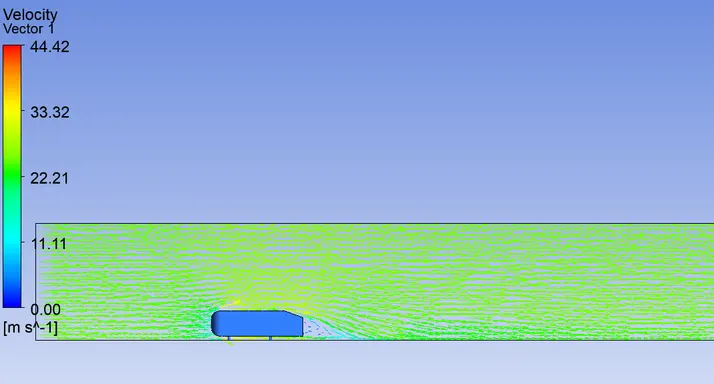
VECTOR PLOT:
DRAG PLOT AND LIFT PLOT:
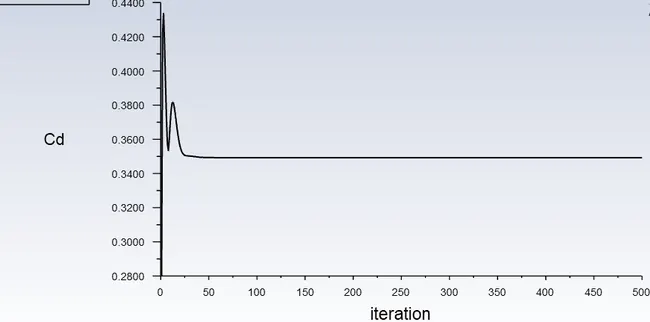
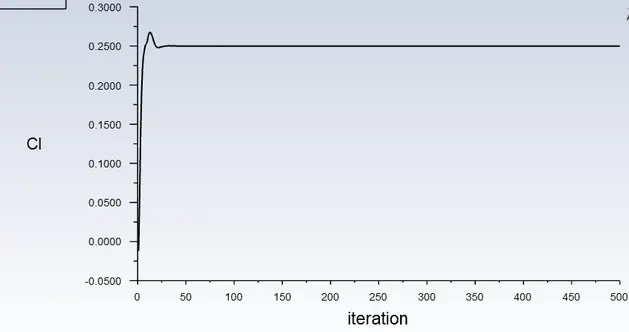
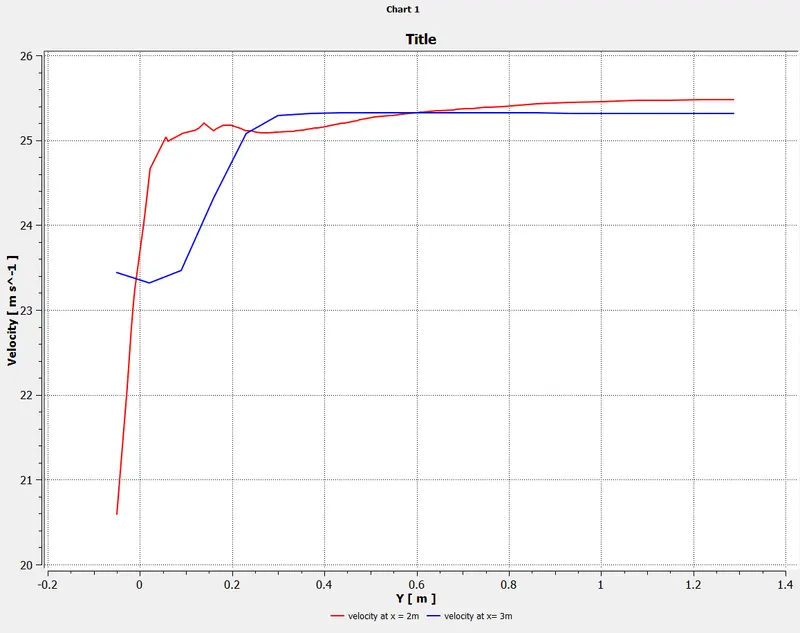
The coefficient of drag value for this case comes out to be 0.34920554 which is much considerable as our aim was to get the value around 0.33. similarly, the coefficient of lift value comes out to be 0.24975126.
CHART:
Case 3:
Outer enclosure: 75mm(elemental size)
inner enclosure:3.5mm(elemental size)
Face sizing for Ahmed body:5mm(elemental size)
inflation for Ahmed body:5layer with a total thickness of 12.4mm
RESIDUAL:
VELOCITY CONTOUR:
PRESSURE CONTOUR:
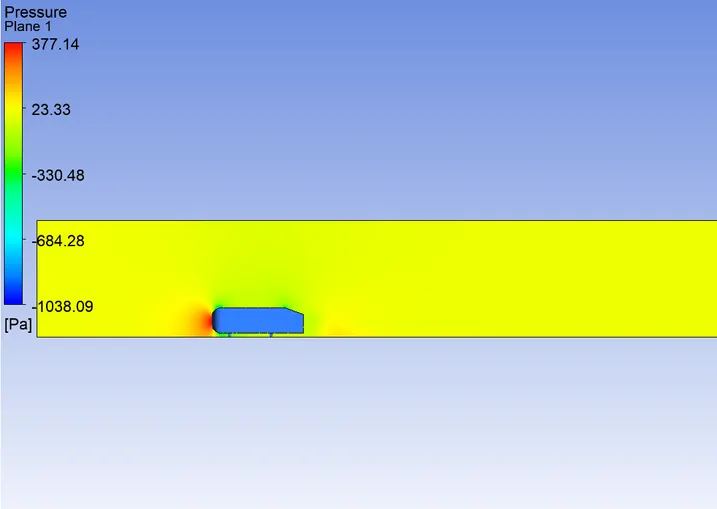
VECTOR PLOT:
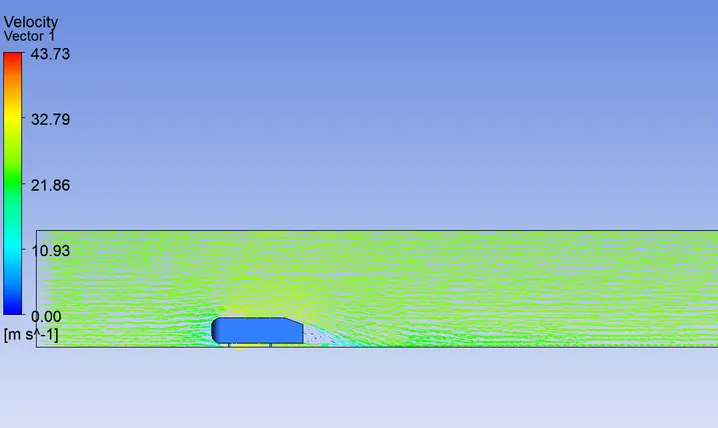
DRAG PLOT:
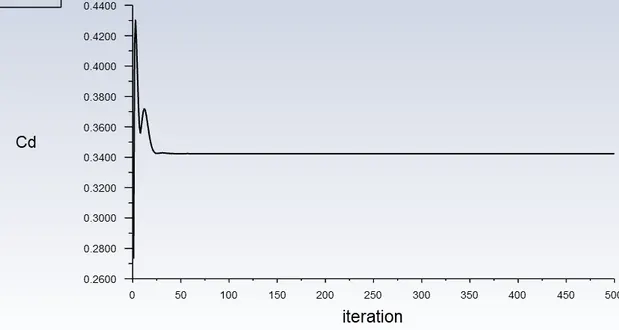
LIFT PLOT:
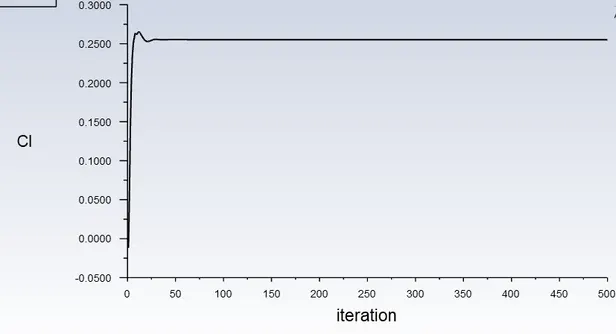
The coefficient of drag value for this case comes out to be 0.34224701 which is much considerable as our aim was to get the value around 0.33. similarly, the coefficient of lift value comes out to be 0.25515115.
CHART:
SUMMARY:
|
Case No: |
MESH SIZE OF OUTER ENCLOSURE |
MESH SIZE OF INNER ENCLOSURE |
DRAG |
LIFT |
|
1 |
100mm |
5mm |
0.36329838 |
0.26910341 |
|
2 |
75mm |
4mm |
0.34920554 |
0.25515115 |
|
3 |
75mm |
3.5mm |
0.34224701 |
0.24975126 |
from the above table, we can say that on decreasing the mesh size the drag and lift both decrease and we get more accurate results however it increases the computational time.
CONCLUSION:
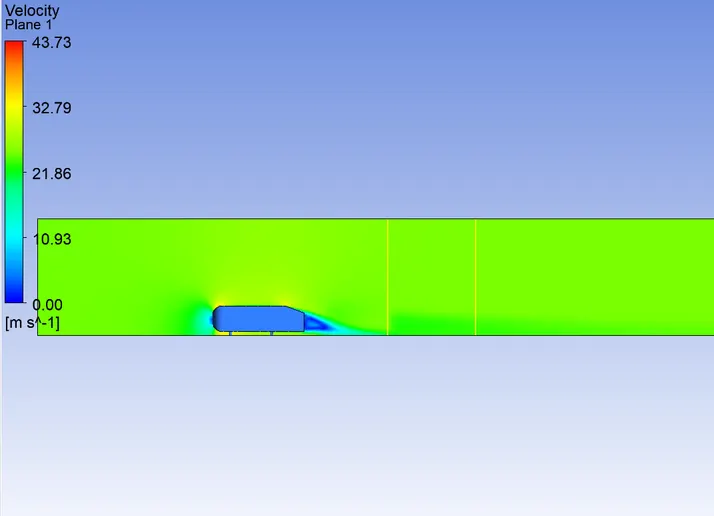
- We observed a wake region established at the rear side of the ahmed body in velocity flow, which has created a vortex flow at the rear side. In that wake region, negative pressure has originated. This is because of the recirculation region that has been developed at the rear side of the Ahmed body.
- Due to flow separation behind the ahmed body, we observe negative pressure in that area. The viscosity and the pressure gradient play a major role in the generation of negative pressure in the wake region.
- We can also see two small recirculation zones at the curve edge of the front and slant edge of the Ahmed body in the pressure profile known as the point of separation. The point of separation occurs due to turbulence in the region and leads to detachment of flow which causes a sudden drop in stream velocity in the wake region.