Week - 3 Drop test Challenge
OBJECTIVE:
To crate a basic solver to simulate a drop test of a Mobile phone and
PROCEDURE:
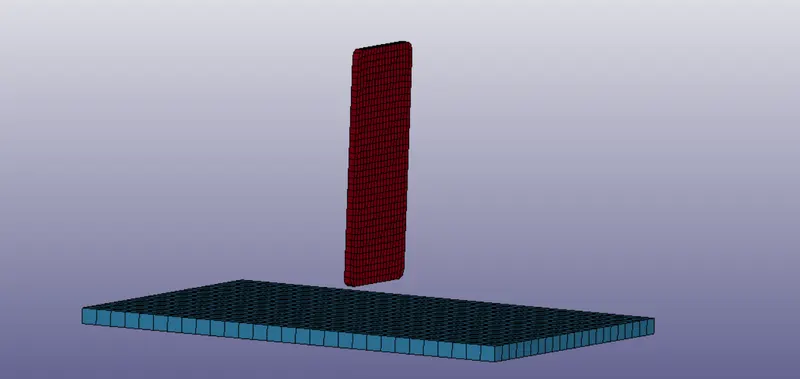
1. Import the k file into LS PrePost. The given k file contains 3 parts, A solid Mobile, A shell plate and a solid Base plate. For simplicity, the extra bottom plate of shell elements was deleted and the rest all parts were modelled with solid elements.
2. The material models were defined for the 2 cases. First a rigid material for Base plate and a linear elastic material(Mat24) for Mobile with appropriate values.
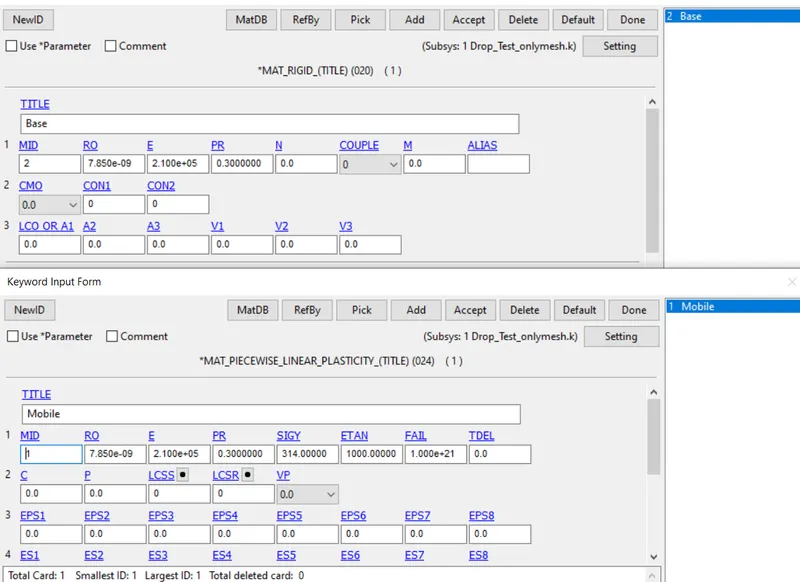
3. Create solid Section with section ID to be used to define the part ID for the above mentioned 2 parts. Then, create 2 part IDs for the Base Plate and the Mobile phone with respective Material IDs using keyword Manager.
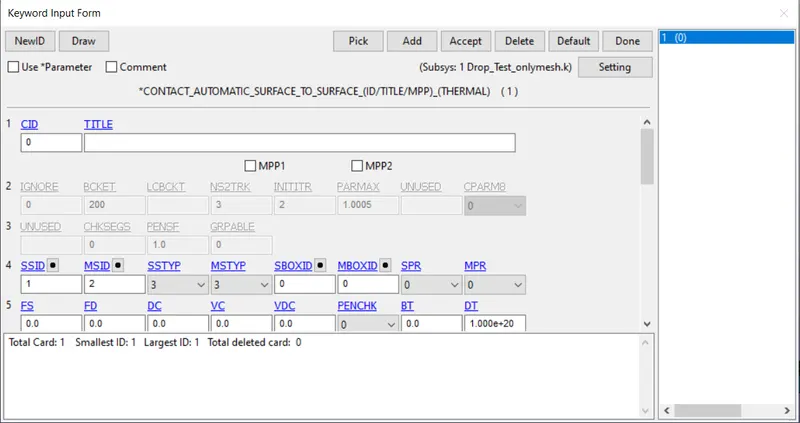
4. Create contact using keyword manager in Automatic Surface to Surface. With the mobile being the slavepart and Base plate being the Master Part.
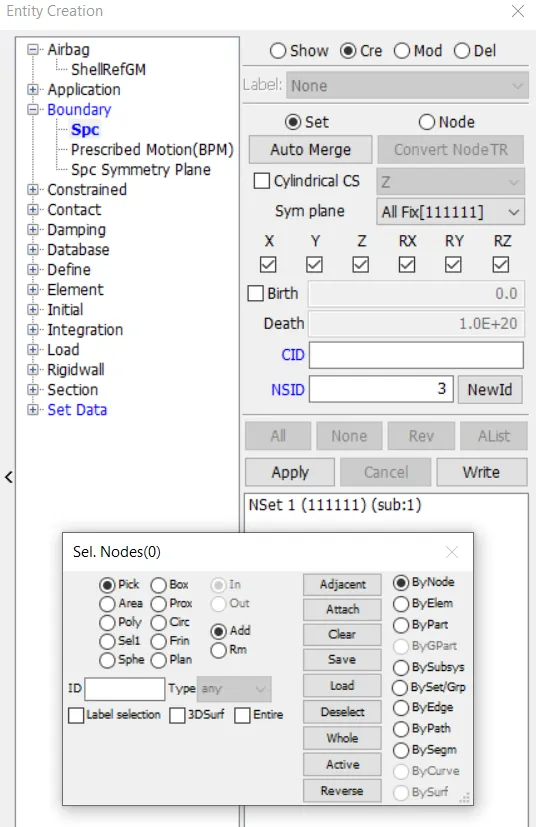
5. Create boundary conditions for the part by fixing all DOFs of the base plate.
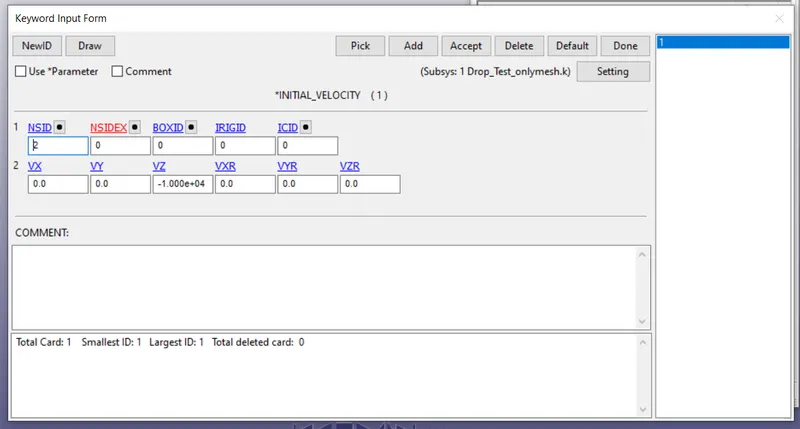
6. Create a set element with the nodes of mobile part and then define velocity for the created set. With velocity being -10000mm/s in the Z direction.
7. Set Control_Termination with DT of 0.005 and also the calculation for HGEN and SLNTn was enabled.
8. For output, d3plot with dt 0.00001 was enabled and in ASCII, GLSAT and MATSUM were activated
9. Model check was done and the simulation was run in LS-Run
RESULTS:
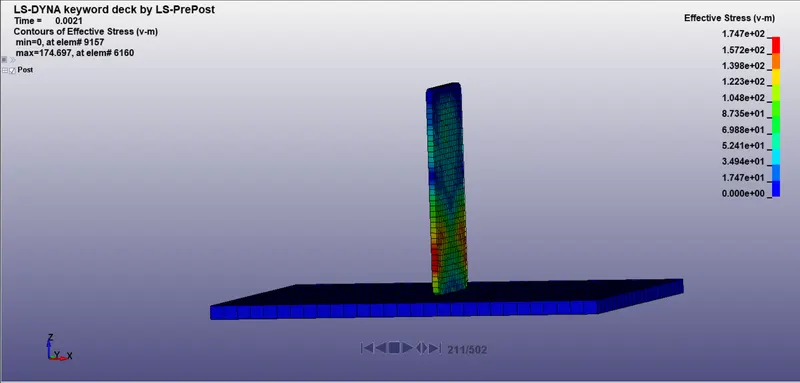
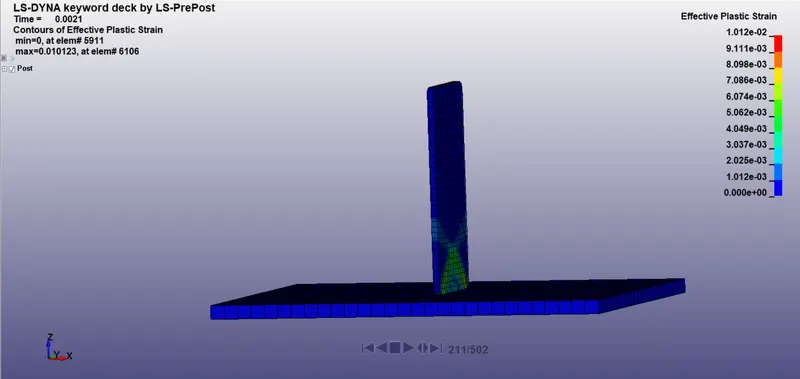
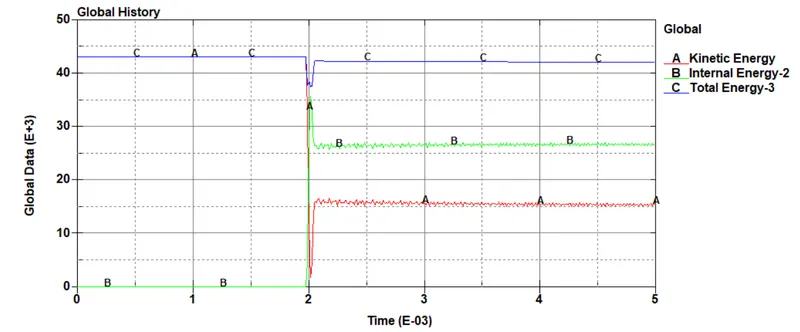
The von mises stress distribution and the Strain distribution for the mobile just after the impact takes place is shown below along with the energy plots.
CONCLUSION:
The results of von mises stresses and strains follow the expected trend. The exact values are not analytically verified but the trend can be verified from experience.
The changes in energies, namely kinetic, internal and total energy show expected behaviour.i.e., There is a rapid decrease in kinetic energy at the point of impact and the internal energy increases at the same time.