Week-3 Challenge: ADVISOR Tool
1. For EV_defaults_in file, if cargo mass is 500 kg with all other default conditions, can the vehicle travel for 45 km with FTP drive cycle? Conclude your observations.
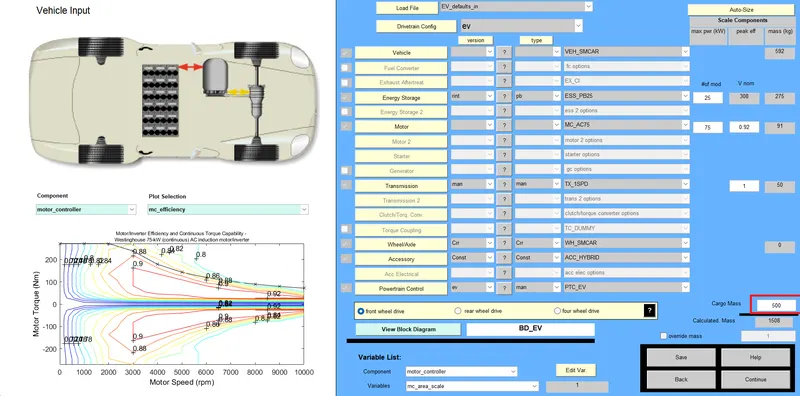
First of al load the ADVISOR tool from MATLAB and load the EV_defaults_in file. The cargo mass is changed to 500kg, so that the total calculated mass becomes 1508kg. The remaining parameter values remain unchanged. By clicking the continue buttton, a new window stimulation parameter will pop up.
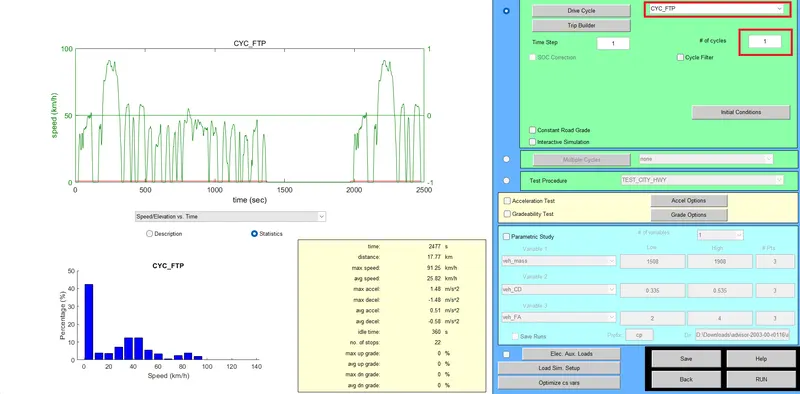
In stimulation parameter window, change drive cycle to CYC_FTP. Below in the # of cycle, we can set our number of drive cycle. First we run with number of cycle to 1.
RESULTS
a. Number of cycles = 1
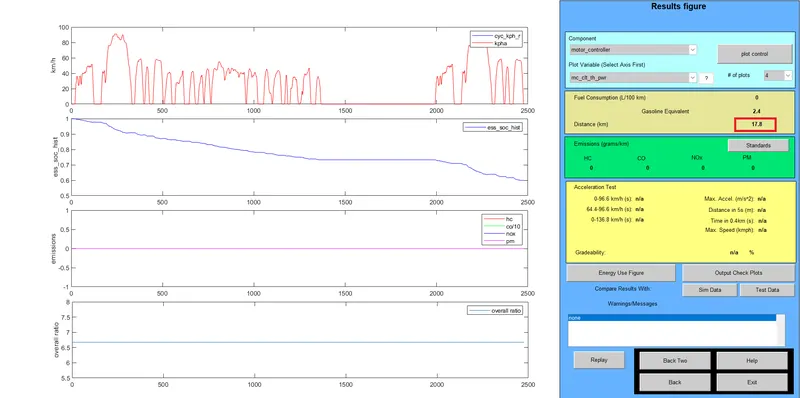
The total distance travelled is 17.8 km, which is less than distance to be travelled (45 km).
b. Number of cycles = 2
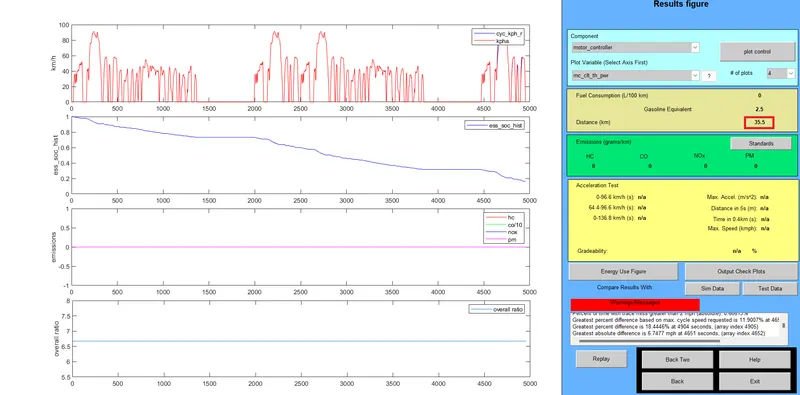
Here, the total distance travelled is 35.5 km, which is also less than distance to be travelled.
c. Number of cycles = 3
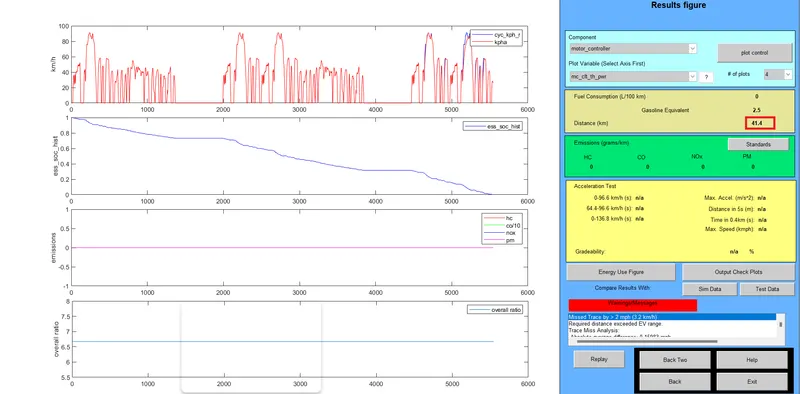
A warning popped up indicating that the required distance exceeds the EV range. The vechicle with 3 driving cycle can only travel to 41.4 km, which is less than total distance to be travelled.
CONCLUSION
For a given 3 number of FTP cycles, the total distance travelled is 41.4 km at given conditions 100% soc, which is less than the total distance to be travelled. The total required distance, 45 km cannot be achived by the vehicle with the current battery capacity and in the given conditions.
2. Changing the battery capacity
In the same model with same cargo mass 500 g, the battery capacity is changed to different values. '# of mod V nom' describes the battery capacity, so we can change the module number of batteries from the first box and there will be changes in voltage and weight of the battery.
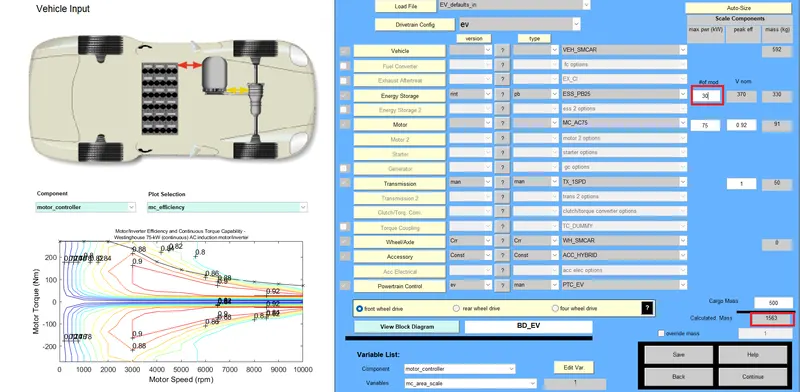
The module is changed to 30, and this change the total mass to 1563 kg. Run the stimulation with different numbers of driving cycles.
RESULT
a. Energy storage system with 30 modules and 2 driving cycles.
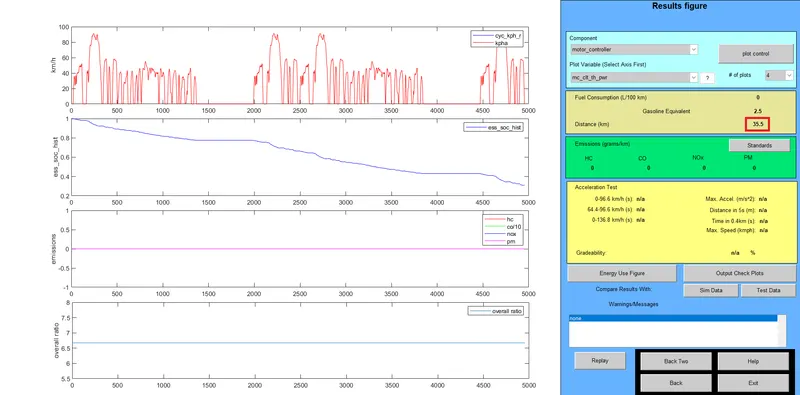
Here. the total distance travelled is 35.5 km, which is less than the distance to be travelled.
b. Energy storage system with 30 modules and 3 driving cycles.
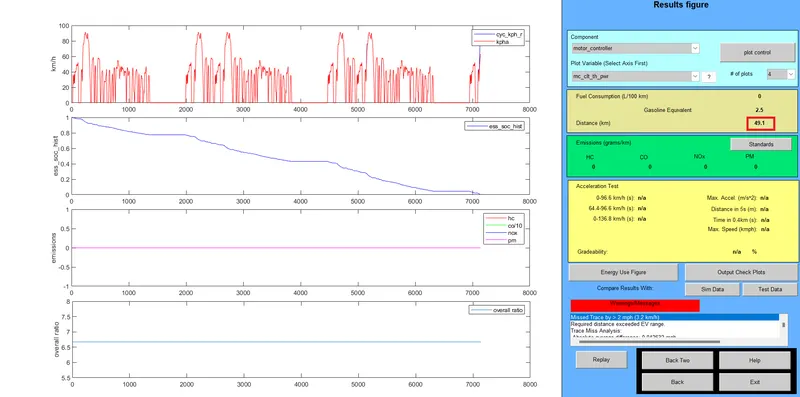
Here, the distance travelled is 49.1 km, which is more than the distance to be travelled.
CONCLUSION
By increasing the vechicle battery capacity, the vechicle model covers the required distance of 45 km. Simillarly if we decrease the batter capacity, the vechicle model travels lesser distance.
3. Perform gradeability test with PRIUS_Jpn_defaults_in file
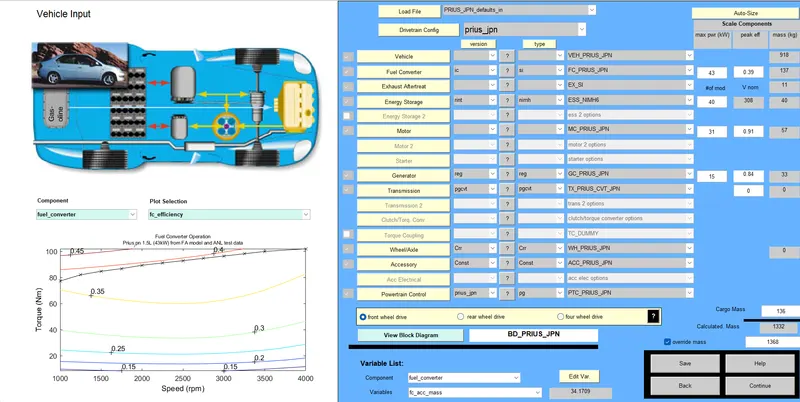
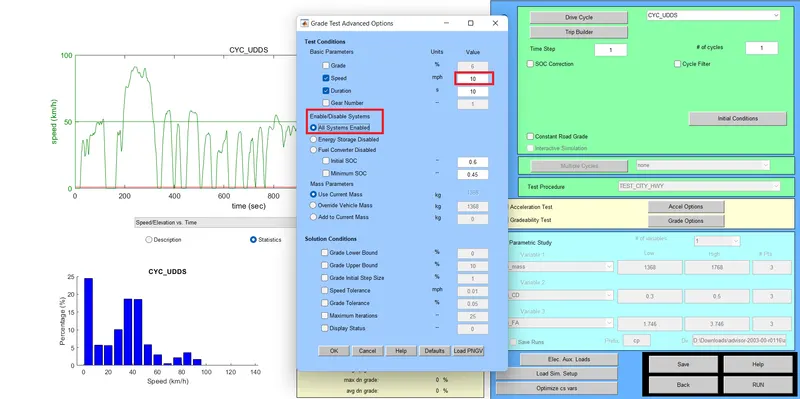
In ADVISOR tools select PRIUS_Jpn_defaults_in as model. Continue to next window. As the gradeability is to be performed, first select the gradeability test and click on the grade option box. A new dialogue box will open. Here, we can change speed or duration with respect to our stimulation. For this stimulation I selected speed from 10m/h to 50m/h for a duration of 10s. To include both fuel and storage system, select All system enabled. Click ok, and run the stimulation.
RESULTS
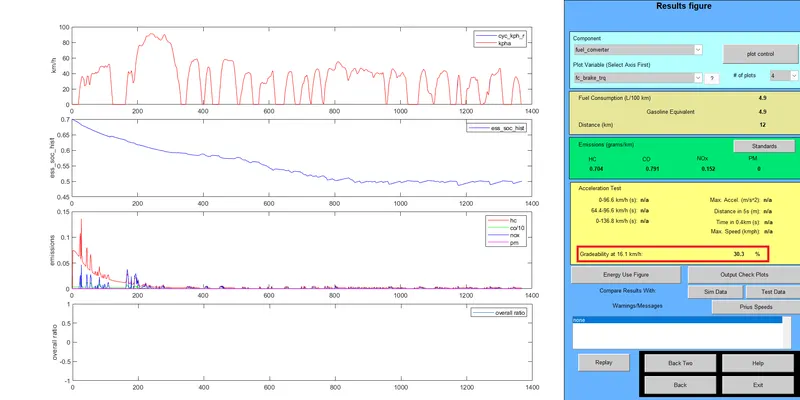
- For speed = 10m/h = 16.09 km/h
Gradeability = 30.3%
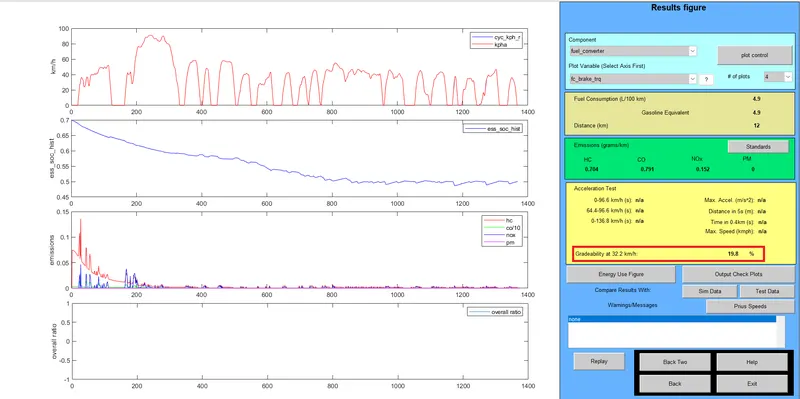
b. For speed = 20m/h = 32.18 km/h
Gradeability = 19.8%
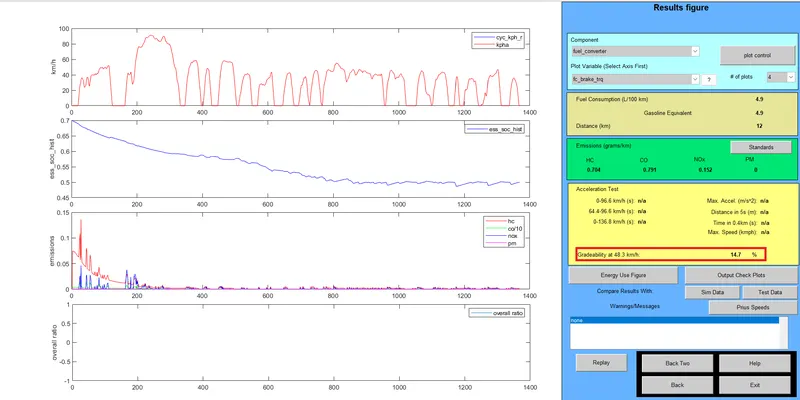
c. For speed = 30 m/h = 48.3 km/h
Gradeability = 14.7%
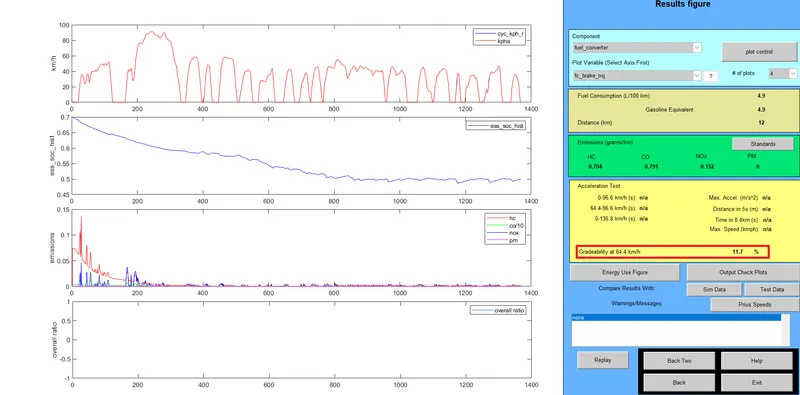
d. For speed = 40 m/h = 64.4 km/h
Gradeability = 11.7%
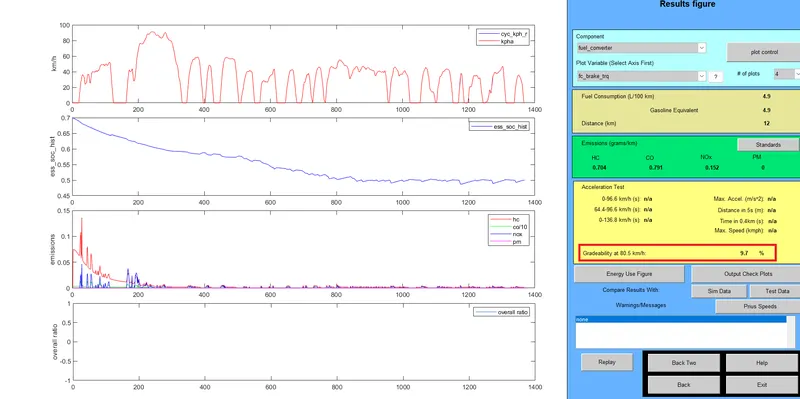
e. For speed = 50m/h = 80.5 km/h
Gradeability = 9.7%
| SI NO. | SPEED(m/h) | SPEED(km/h) | GRADEABILITY(%) |
| 1. | 10 | 16.1 | 30.3 |
| 2. | 20 | 32.2 | 19.8 |
| 3. | 30 | 48.3 | 14.7 |
| 4. | 40 | 64.4 | 11.7 |
| 5. | 50 | 80.5 | 9.7 |
CONCLUSION
From the table, it is clear that, as the vechicle speed increases the gradeability decreases. The gradeability is high in 10m/h and low in 50m/h.