Week-3 Challenge: ADVISOR Tool
- 1) AIM
- With help of advisor tool simulate the following
- a) For EV_defaults_in file and if cargo mass is 500 kg with all other default conditions with the vehicle travel for 45 km with FTP drive cycle?
- b) In the above case, try changing the battery capacity and repeat the simulation
- c) Perform gradeability test with PRIUS_Jpn_defaults_in file
- 2) OBJECTIVE
- a) Understand whether the prius with a cargo mass of 500 kg traveling for a distance of 45km with all other default conditions,operating on a FTP cycle will be able to sustain the distance and understand about the state of charge and other parameters
- b) Improving the battery capacity to check whether the vehicle will be able to cover the distance and understand about the state of charge and other parameters
- c) Understand vehicle performance with all other parameters default under a grade ability test
- 3) METHOD
- a ) 1) Open the default model toyota prius with drive train configuration default
-
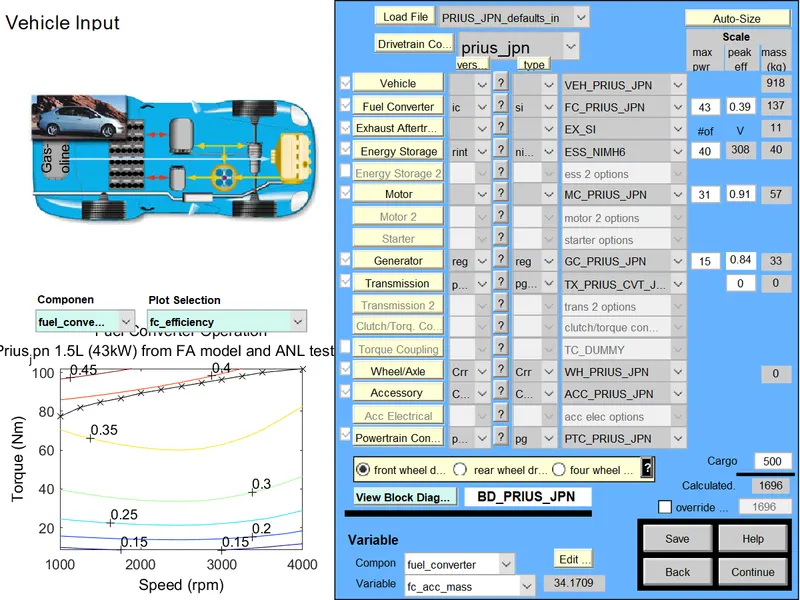
- 2) The cargo mass is changed to 500 kg from default values as, the override mass has to be unchecked else the modified mass calculated will be ignored
- 3) The drive cycle chosen is FTP
-
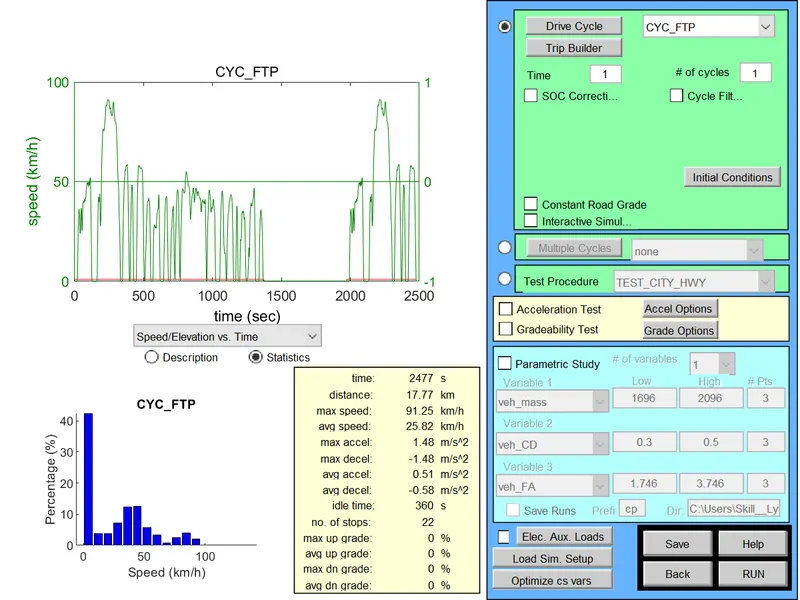
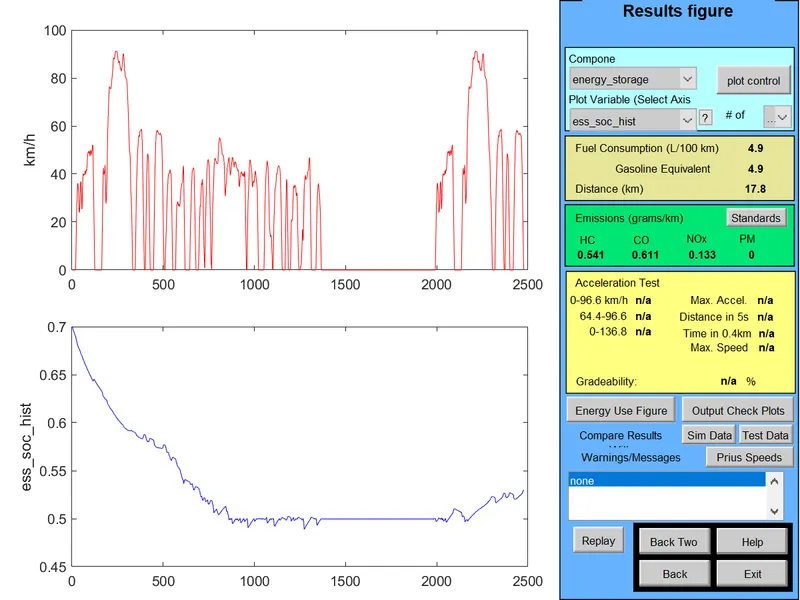
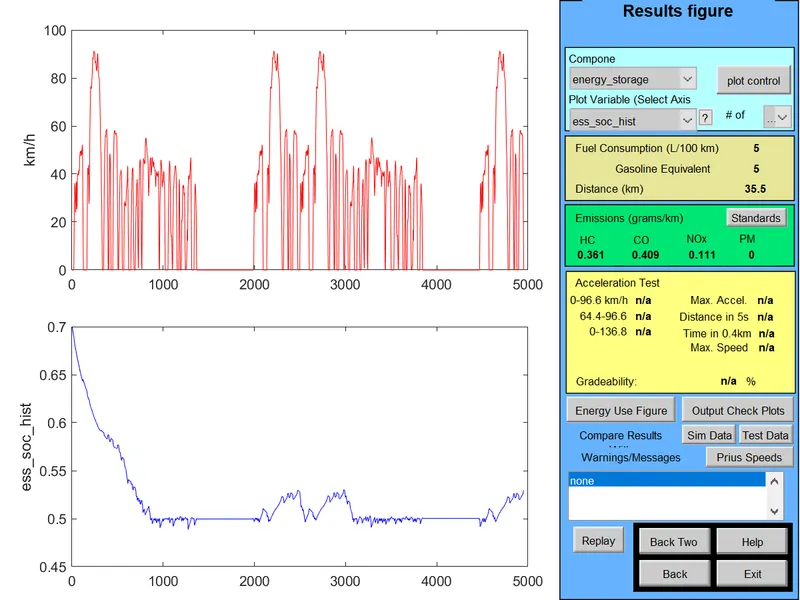
- The distance covered in a cycle is 17.77 km. In the question, it is asked to simulate for 45 km which will be more than 2 cycles. Hence simulation is done for 2 and 3 cycles.
- b) The battery power is changed , change in energy sourage meaning different rating of same type of battery. This is a change in overall mass as well.
- 1) Battery type- nimh , First case name : ESS NIMH6, battery module-40, v-308 V.
- 2) Battery type- nimh , First case name : ESS NIM93, battery module-25, v-356 V.
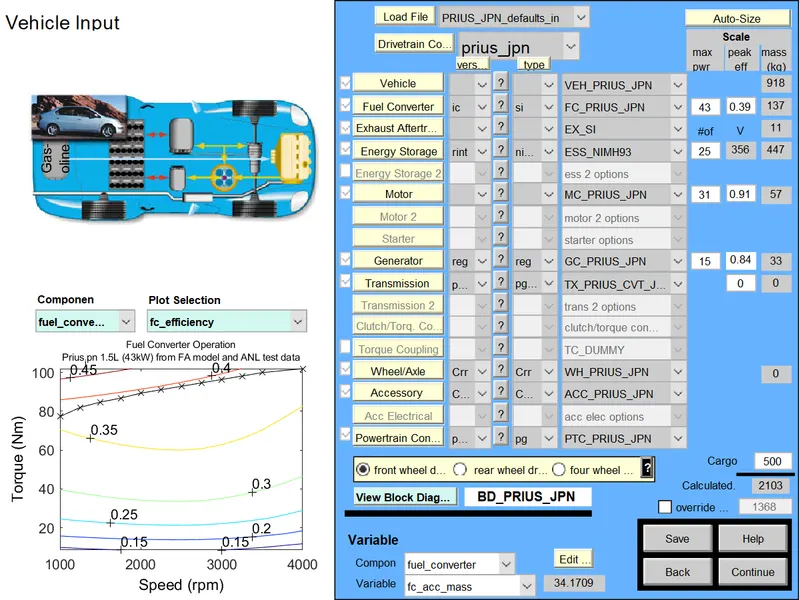
- c) A gradeabilty test is done with default values by enabling gradabiltiy test. The only variation is time - 10s and 20s
- Output
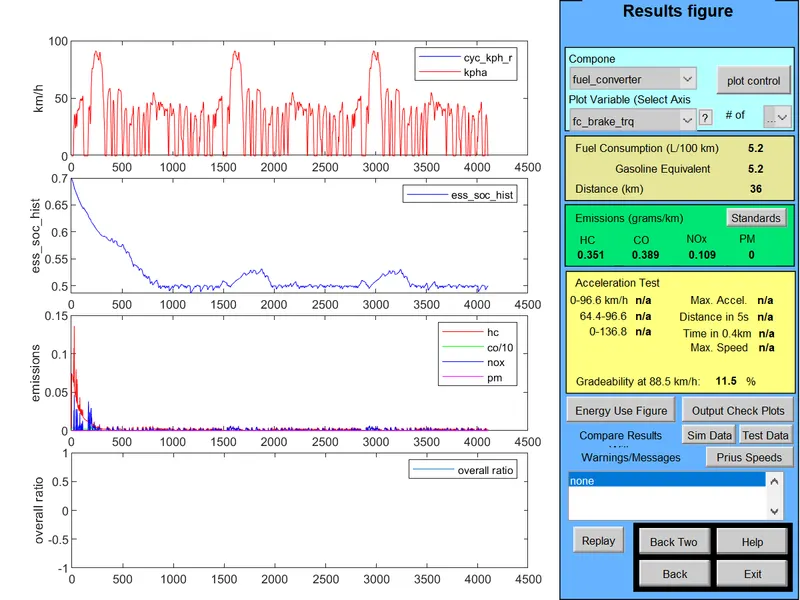
- a) The output plots for 1,2,3 cycles of FTP are below:
- For 1 cycle :
-
- For 2 cycles :
-
- For 3 cycles:
-
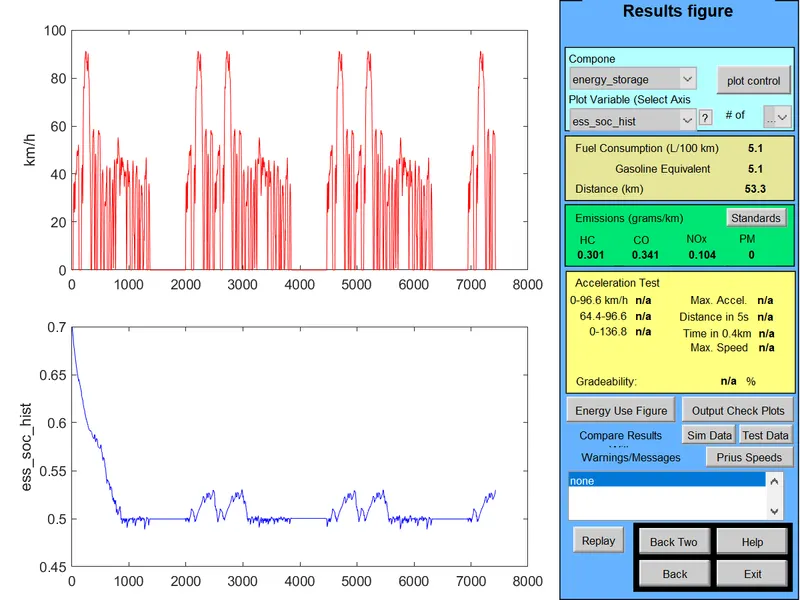
- Even after two cycles the required distance of 45 Km is not covered. For an FTP cycle distance covered in one cycle is 17.8 Km. During each cycle, prius has an initial acceleration post which it is de accelarated and accelarated multiple times. During deceleration, the battery is charged. From the state of charge it can be inferred that battery capacity is sufficient enough to cover the full distance even with an increased cargo mass. Even after the three cycles executed which total amounts to 53.3 Km, the battery does not fall below 52.5 %(approx) which is same state of charge after first and second cycle.
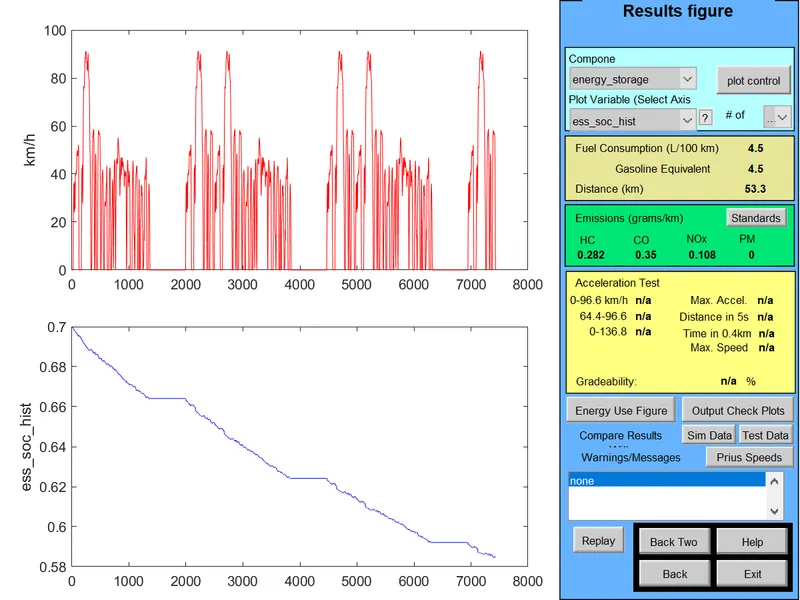
- b) The battery source compared is of same type but has different number of voltage.The second battery pack had more weight as well
- 1) Battery type- nimh , First case name : ESS NIMH6, battery module-40, v-308 V.
- 2) Battery type- nimh , First case name : ESS NIM93, battery module-25, v-356 V.
- In the case of second battery the state of charge after 3 cycles is nearly 60% where as in first it was 52.5% after same distance.
-
- c) Increase in hill climb force will have an impact on state of charge of battery
-
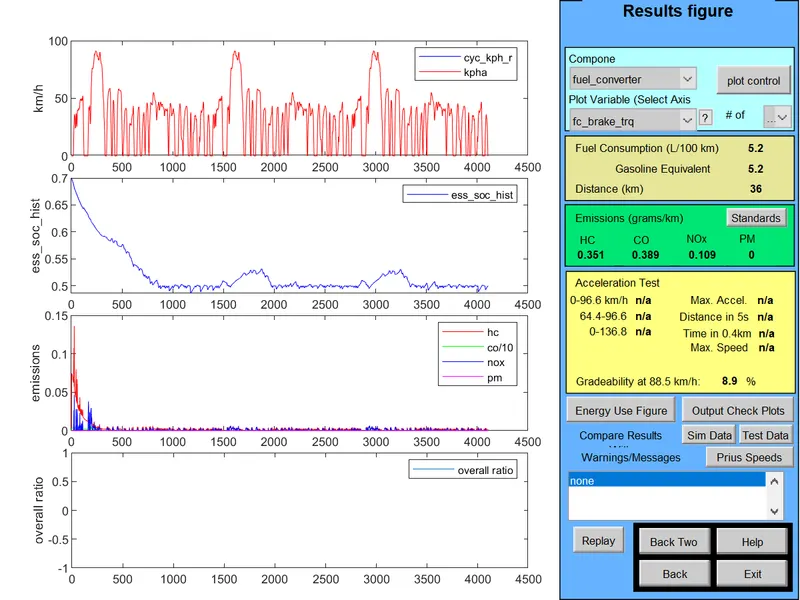
- The state of charge at end of three cycles under a gradability test is 50% when compared to no grade.This means during acceleration to overcome the hill climb force which increases as grade increases more charge is drawn. Since there is no deaccelaration no battery charging is done. The gradability is 8.9% The time with same speed of 88 km/hr is varied . In first case the test is run for 10 sec where as second it is run for 20 sec. As more time more will be gradability. In second case it is 11.5%