Week-3 Challenge: ADVISOR Tool
AIM :-To simulate the given data and condition for an EV using advisor Tool using MATLAB
THEORY:-
WHAT IS ADVISOR TOOL AND ITS BENIFITS:
ADVISOR NREL'S Advance vehicle simulator , is set of model data and script text files for use with matkab and simulink it is designed for rapid analysis of the performance and fuek economy of conventional , electric and hybrid vehicles ADVISOR also provides a backbone for detailed simulation and analysis of user defined drivetrain components.
POINTWISE BENIFITS :-
- estimate the fuel economy of vehicles that have not yet been built
- learn about hoe conventional , hybrid or electric vehicles use (and lose) energy throughout their drivetrains
- compare relative tailpipe emission produced on number of cycle
- evaluate an energy management sratergy for your hybrid vehicles fuel convertor
- optimize the gear ratios in your transmission to minimize fuel use or maximixe performance etc.
Q1-. For EV_defaults_in file, if cargo mass is 500 kg with all other default conditions, can the vehicle travel for 45 km with FTP drive cycle? Conclude your observations
ANS:-
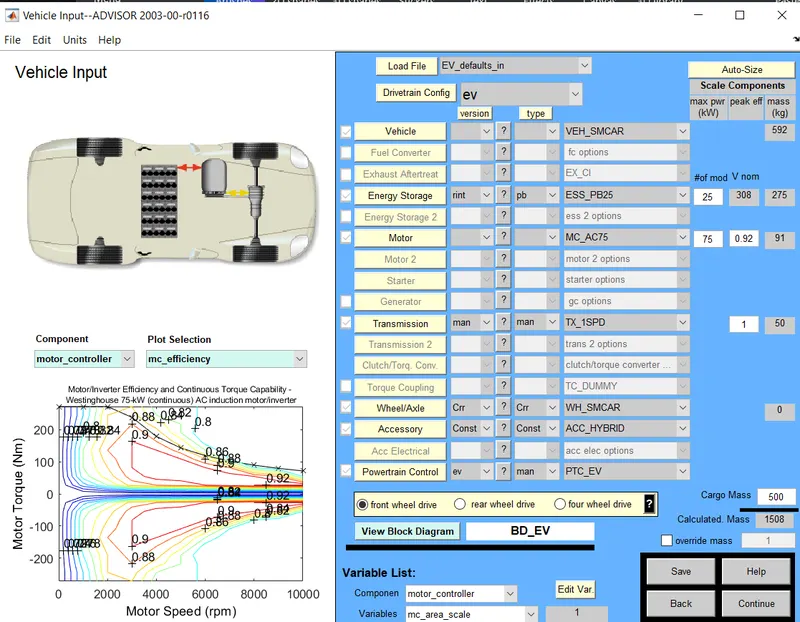
EV_defaults_in loaded and 500 kg cargo mass added
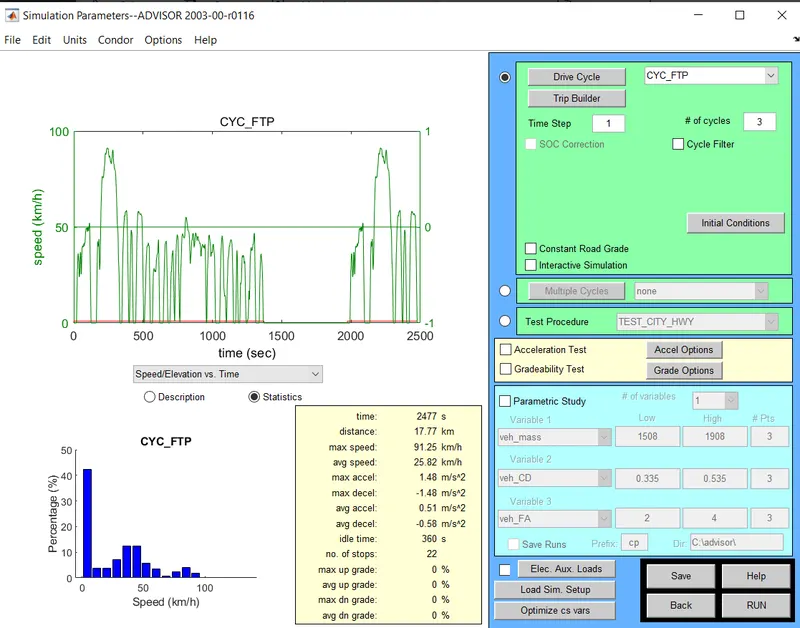
FTP drive cycle selected with 3 number of cycles
with the number of cycled disstance is travelled by 41.4 km as shown below
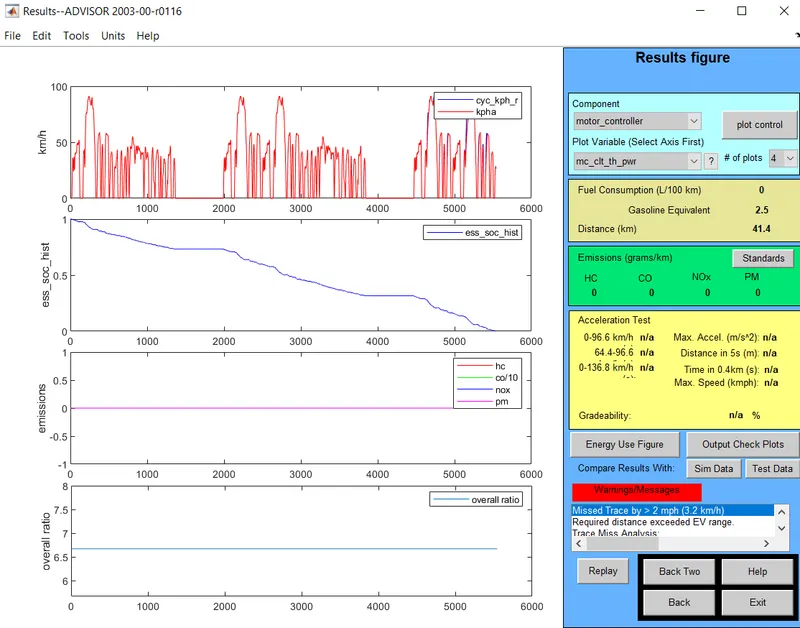
CONCLUSION:- if we increase the no. of cycles then vehicle can travel 45 km with the FTP drive cycle.
Q2. In the above case, try changing the battery capacity and repeat the simulation.
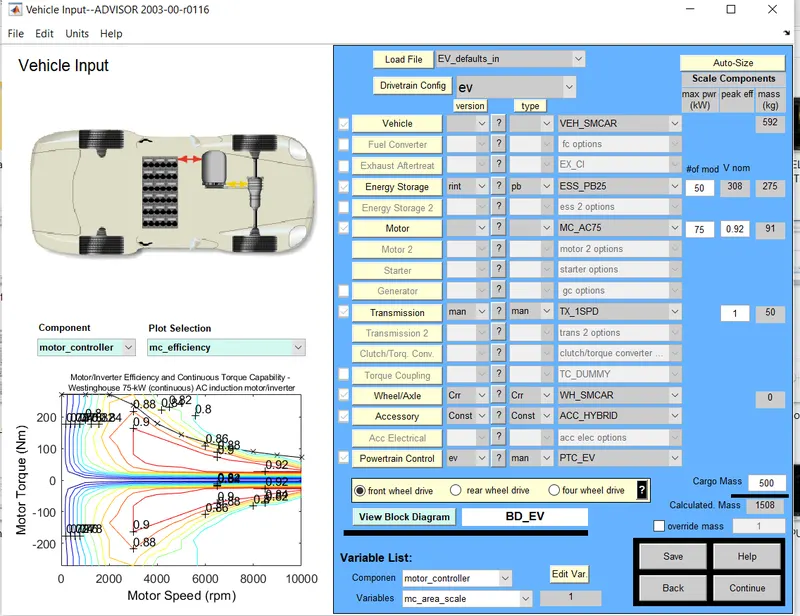
ANS:- Keeping same all parameters capacity of battery incresed from 25 to 50
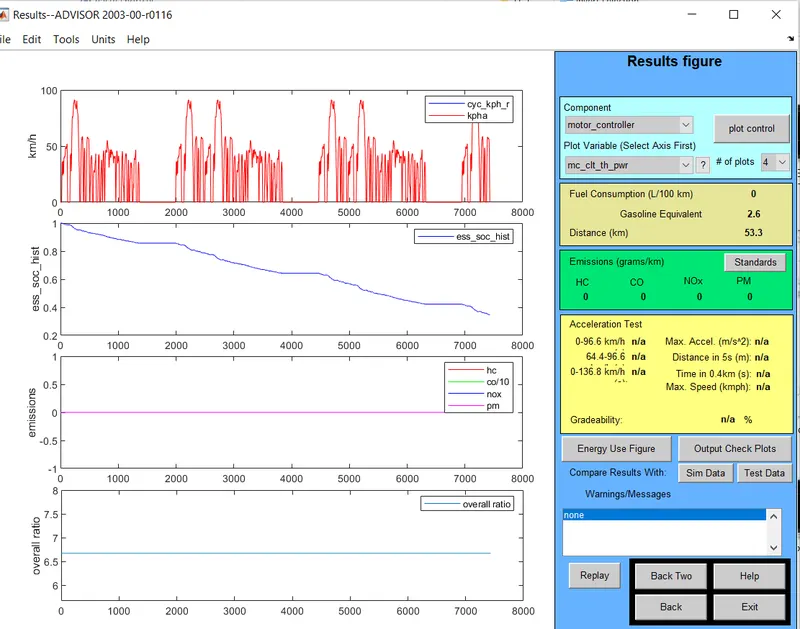
observations:-
- by increasing battery capacity, vehicle can travel more than 53 km with the same drive cycle.
- similarly,the traveling distance of vehicle will be decrease by reducing the capacity of the battery.
Q3. Perform gradeability test with PRIUS_Jpn_defaults_in file
With help of ADVISOR TOOL we have atempted the gradabilty test on PRIUS_jpn model and results are as below:
1) speed is 20 mph and time for 10 seconds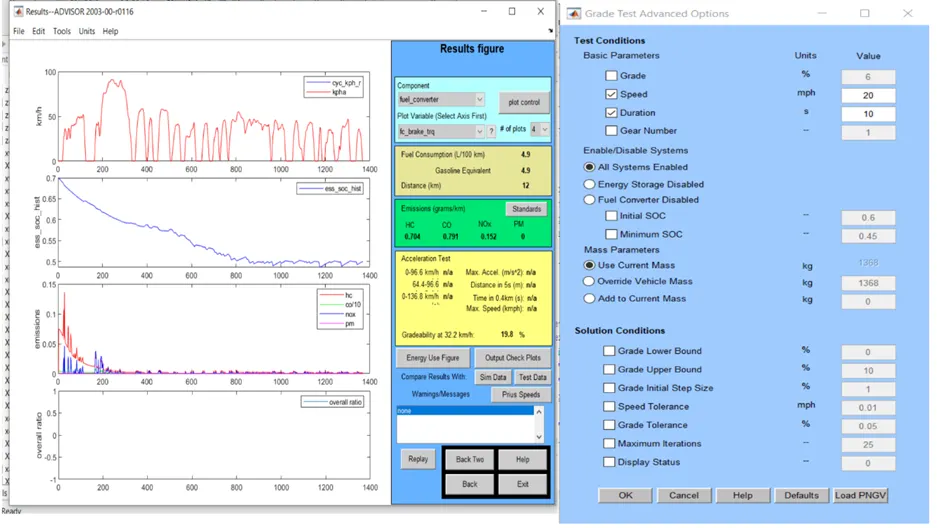
with this above test we observe gradability as 19.8%
2) we have icreased speed is 25 mph & time is same 10 sec.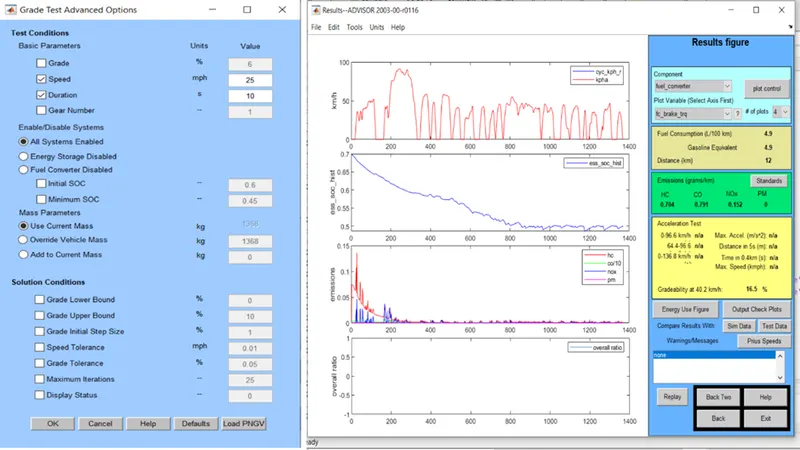
with this above test we observe gradability as 16.5%
3) we have icreased speed is 35mph & time is same 10 sec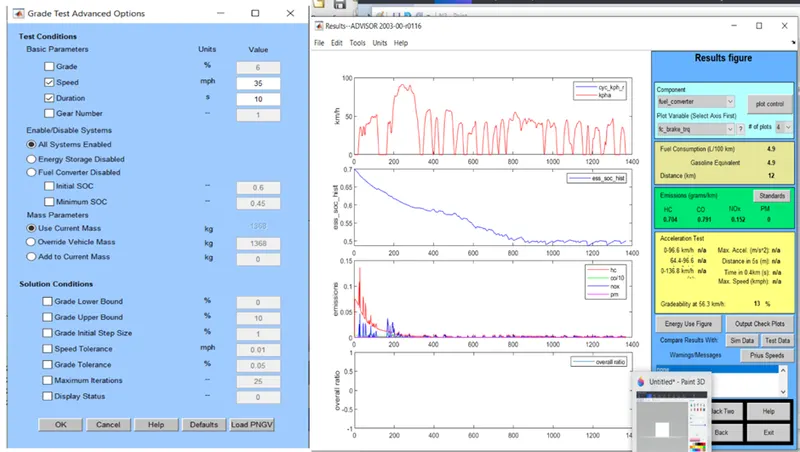
with this above test we observe gradability as 13%
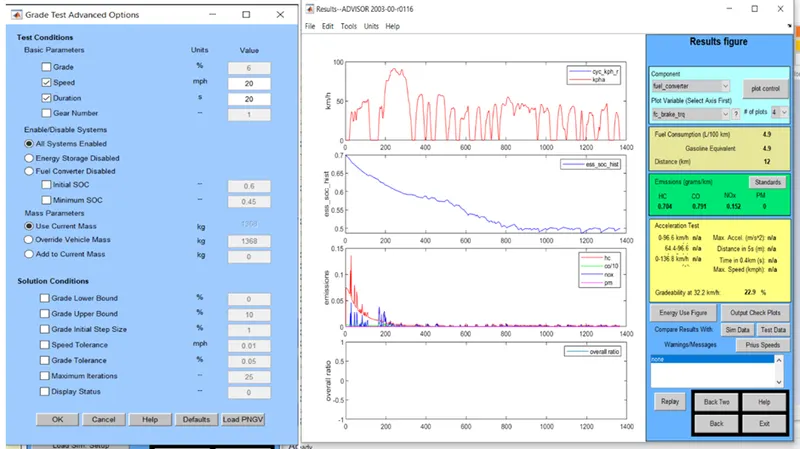
now we have icreased time required is 20 sec and test with the speed 20,25,35 mph respectively as below:..
1) speed=20mph, time= 20sec
gradability is 22.9%
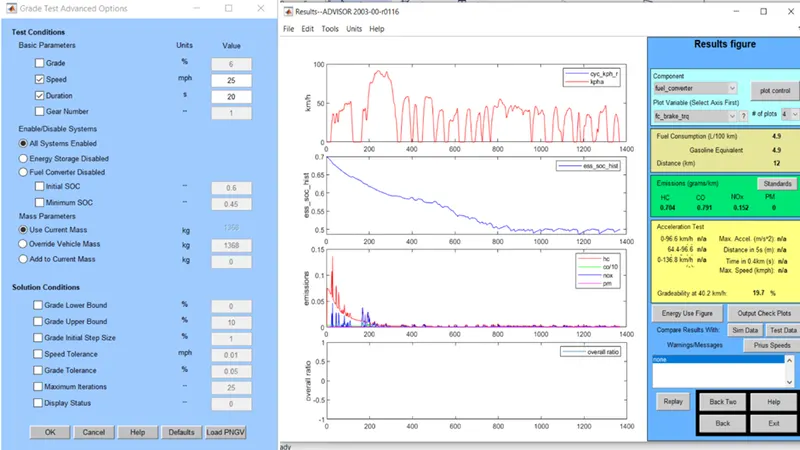
2) speed=25mph, time= 20sec.
gradability is 19.7%
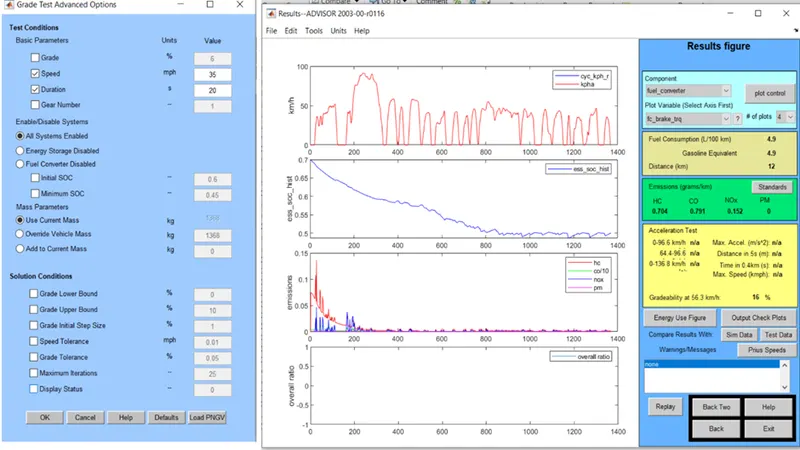
 3) speed=35mph, time= 20sec.
gradability is 16%
conclusion:-
from all above test we coonclud that gradability will be increased with decrease in speed.