Week-3 Challenge: ADVISOR Tool
WEEK-lll CHALLENGE ADVISOR TOOL
Use ADVISOR tool and simulate the following
- AIM1) For EV_defaults_in file, if cargo mass is 500 kg with all other default conditions, can the vehicle travel for 45 km with FTP drive cycle? Conclude your observations.
- AIM2) In the above case, try changing the battery capacity and repeat the simulation.
Solution:
ADVISOR, NREL’s ADvanced Vehicle Simulator, IS a set of model, data, and script text files for use with Matlab and Simulink. It is designed for rapid analysis of the performance and fuel economy of conventional, electric and hybrid electric vehicles.
ADVISOR also provides a backbone for the detailed simulation and analysis of user defined drivetrain components a starting point of verified vehicle data and algorithms from which to take full advantage of the modeling flexibility of Simulink and analytic power of MATLAB
Benefits of ADVISOR model:
- Estimate the fuel economy of vehicles that have not yet been built
- Learn about how conventional, hybrid and electric vehicles use throughout their drive trains
- Compare relative tailpipe emissions produced on a number of drive cycles
ADVISOR tool will answer questions like:
- How much fuel or electric energy is required in the attempt?
- How much state of charge of the batteries fluctuate throughout a cycle
- What were the peak powers delivered by the drive train components
- What was the average efficiency of the transmission
PROCEDURE
Open advisor.m file in Matlab
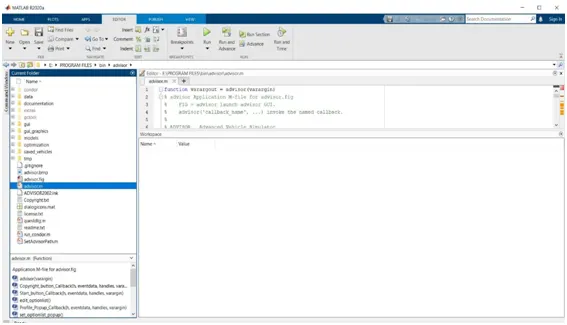
- Typing advisor in the command window starts the advisor tool
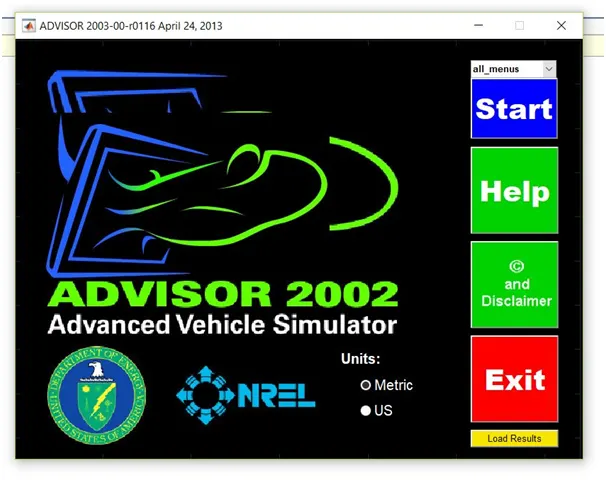
- After that A new window opens as shown in below figure in that select units AS METRIC
- Click on start
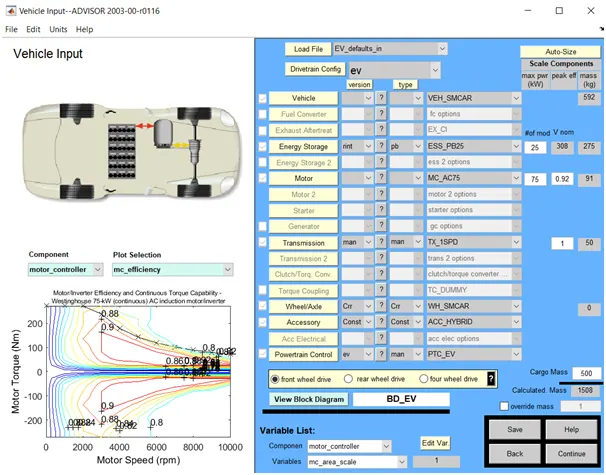
- In the load file, we have different types of car modules we have to select based upon our requirement
- Go to load file select EV_defaults_in and the change the cargo mass to 500 click on continue
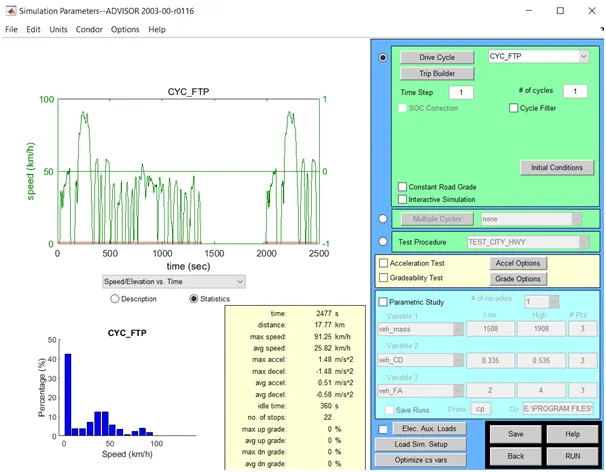
- Next window opens change the drive cycle to CYC_FTP
- Now the Run the Program
- Next window opens change the drive cycle to CYC_FTP
- Now the Run the Program
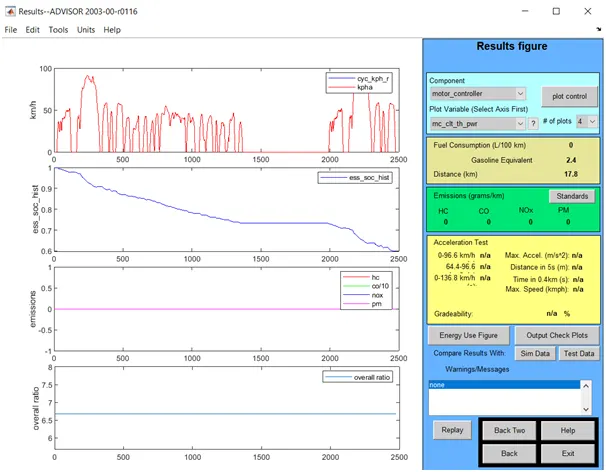
- Now we can see the distance covered is 17.8 km and SOC reaches to ZERO
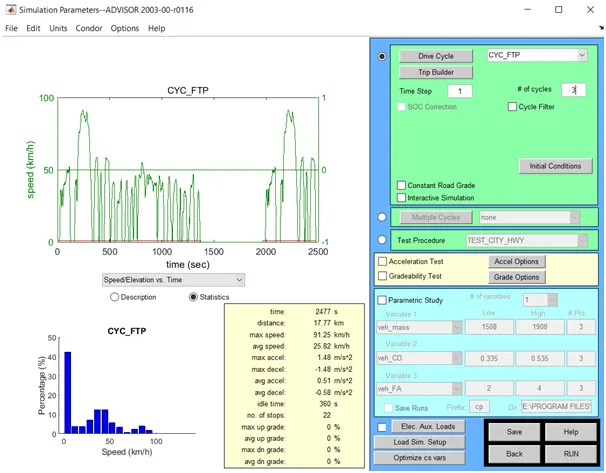
- However, our Aim is run up to 45 km so we have to go back to previous window to change the no of drive cycles to three
- Click on Back
- Change the no of drive cycles to three
- Now run the model
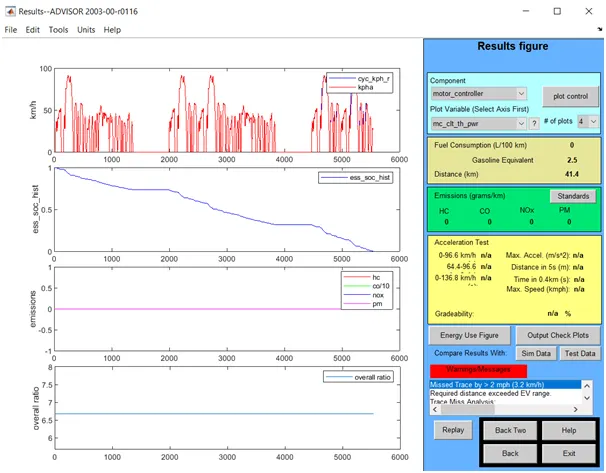
- Now we got results we came to know after changing no of drive cycles to three the vehicle stopped at 41.4 km
- State of charge becomes ZERO
- Again on the right side it is indicating WARNING MESSAGES as battery is got DRAINED
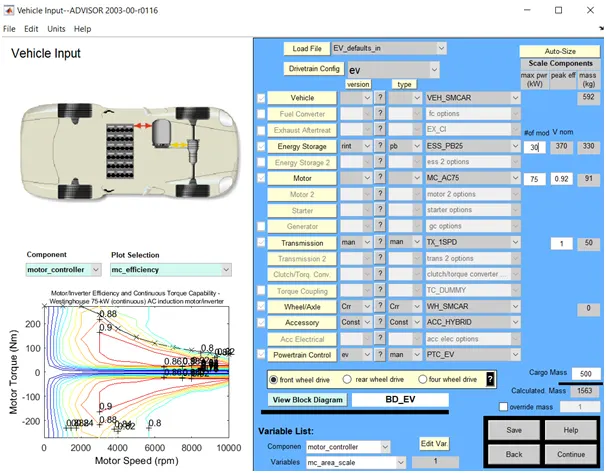
- Now we have to change the battery capacity of vehicle and run the model
- As shown in the below window
- Now run the simulation
Here we notice that the vehicle has run ful1 distance i.e. 53.2 km as per our requirement and we came to know that battery SOC has not reached to ZERO
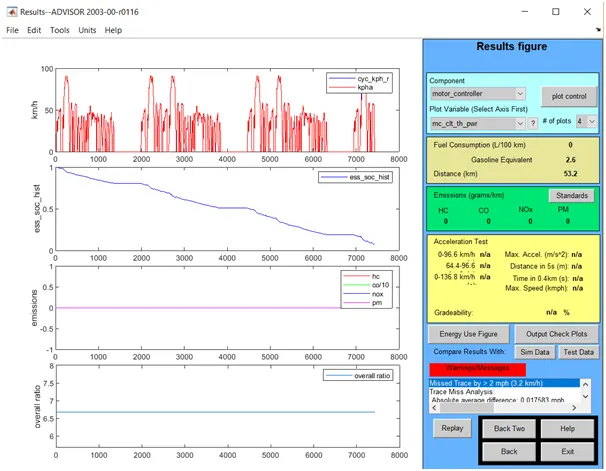
CONCLUSION: IF WE RUN VEHICLE FOR LONGER DURATION WE HAVE TO INCREASE THE CAPACITY OF BATTERY
AIM: 3)
Perform gradability test with PRIUS_Jpn_defaults_in file
Compare your results in a tabular column and conclude
Solution:
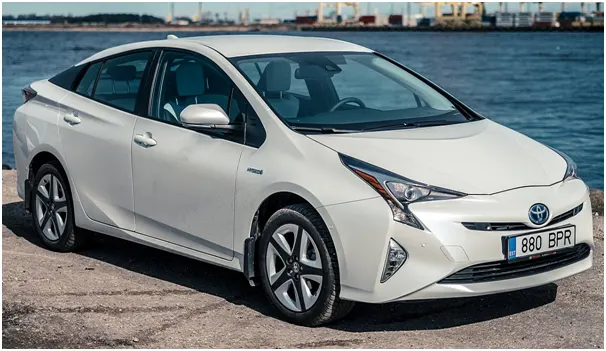
The Toyota Prius is a full hybrid electric vehicle developed and manufactured by Toyota since 1997. Initially offered as a 4-door sedan, it has been produced only as a 5-door fastback hatchback since 2003.
The Prius is a power-split or series-parallel (full) hybrid, sometimes referred to as a combined hybrid, a vehicle that can be propelled by gasoline or electric power or both. Wind resistance is reduced by a drag coefficient of Cd=0.25 (0.29 for 2000 model) with a comeback design to reduce air resistance. Lower rolling-resistance tires are used to reduce road friction. An electric water pump eliminates serpentine belts. in the US and Canada, a vacuum flask is used to store hot coolant when the vehicle is powered off for reuse so as to reduce warm-up time. The Prius engine makes use of the Atkinson cycle.
PROCEDURE
- Load PRIUS_JPN_defaults_in in the Load file
- CLICK on continue
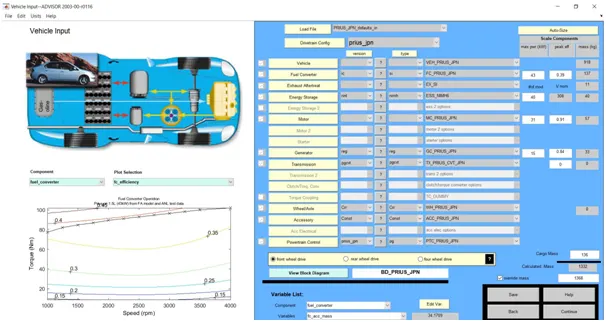
- Then Select Gradeability Test go to Grade options
- Enable all systems
- Give the required input as in speed (mph) without touching the other segments
- Click on Run
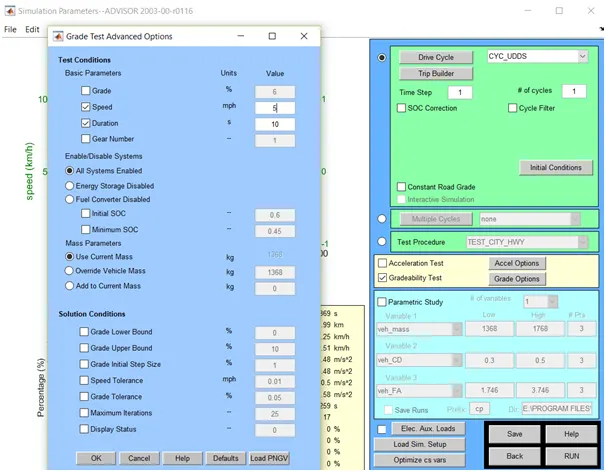
NOW WE TEST GRADEABILITY FOR DIFFERENT SPEEDS
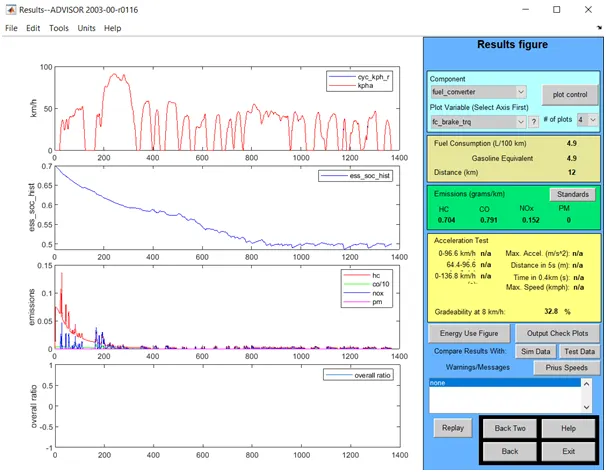
- Test for 05 MPH results in 32.8 gradeability
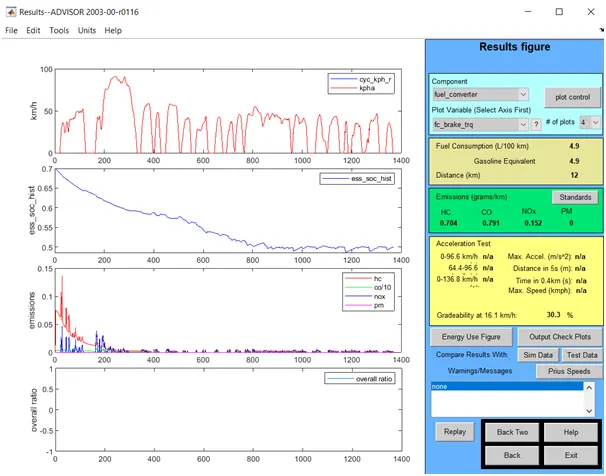
- Test for 10 MPH results in 30.3% gradeability
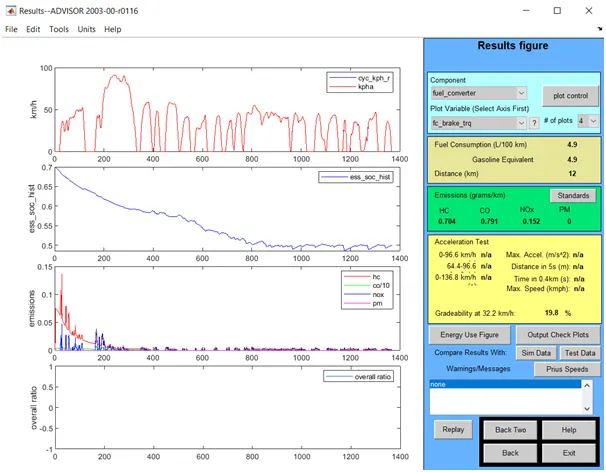
- Test for 20 MPH results in 19.8% gradeability
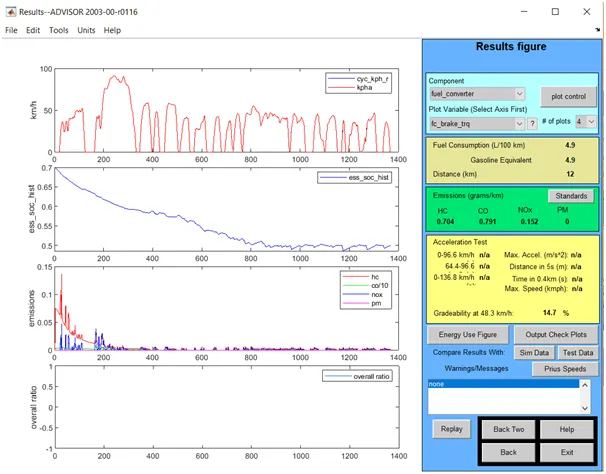
- Test for 30 MPH results in 14.7% gradeability
- Test for 40 MPH results in 11.7% gradeability
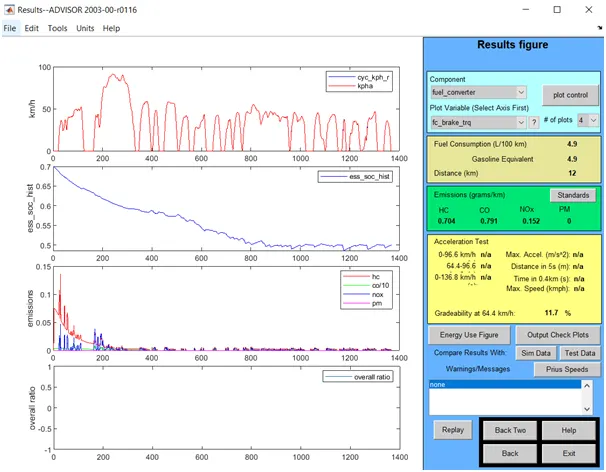
- Test for 50 MPH results in 9.7% gradeability
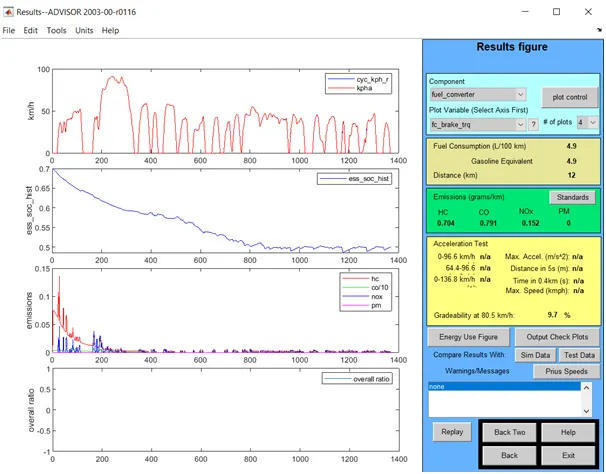
- Test for 60 MPH results in 8.1% gradeability
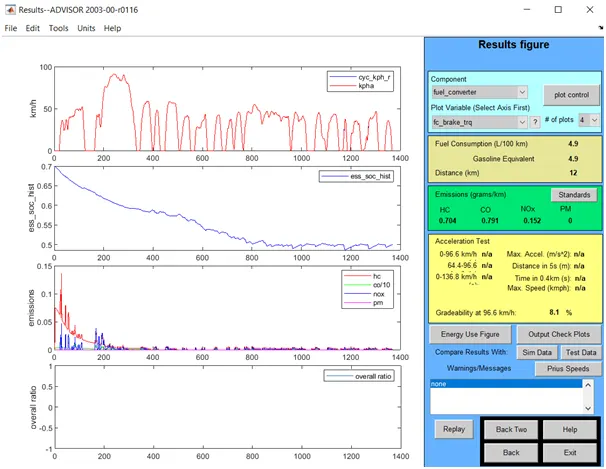
|
SPEED (MPH) |
SPEED (KMPH) |
GRADEABILITY |
|
05 |
8 |
32.8% |
|
10 |
16.1 |
30.3% |
|
20 |
32.2 |
19.8% |
|
30 |
48.3 |
14.7% |
|
40 |
64.4 |
11.7% |
|
50 |
80.5 |
9.7% |
|
60 |
96.6 |
8.1 |
Conclusion:
- From above tabular column, we can observe that gradeability increases with decrease in speed of the vehicle
- The highest gradability for TOYOTO PRIUS is at 05 MPH i.e. 32.8%