Week-3 Challenge: ADVISOR Tool
AIM:
Utilize the ADVISOR tool to assess the feasibility of the EV_defaults_in running for a 45 km distance with a 500 kg cargo mass, maintaining default conditions. Additionally, run simulations with varied battery capacities and conduct a gradeability test using the PRIUS_Jpn_defaults_in file.
PROCEDURE:
Study 1 - Basic Simulation
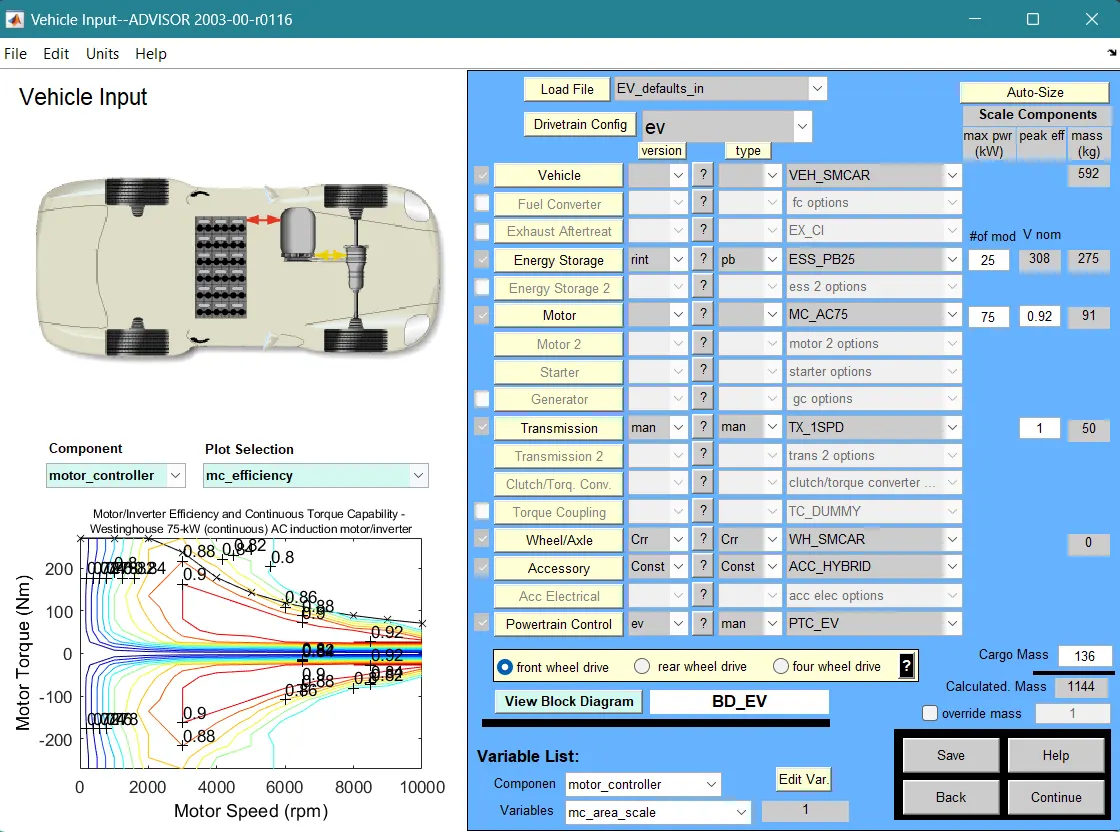
The ADVISOR tool is executed in MATLAB with the appropriate directory path, employing the Metric unit system. The EV_defaults_in file is loaded, representing a basic Battery Electric Vehicle (BEV) model with front-wheel drive. The electric motor draws power from the battery, propelling the wheel axle.
Block Diagram:
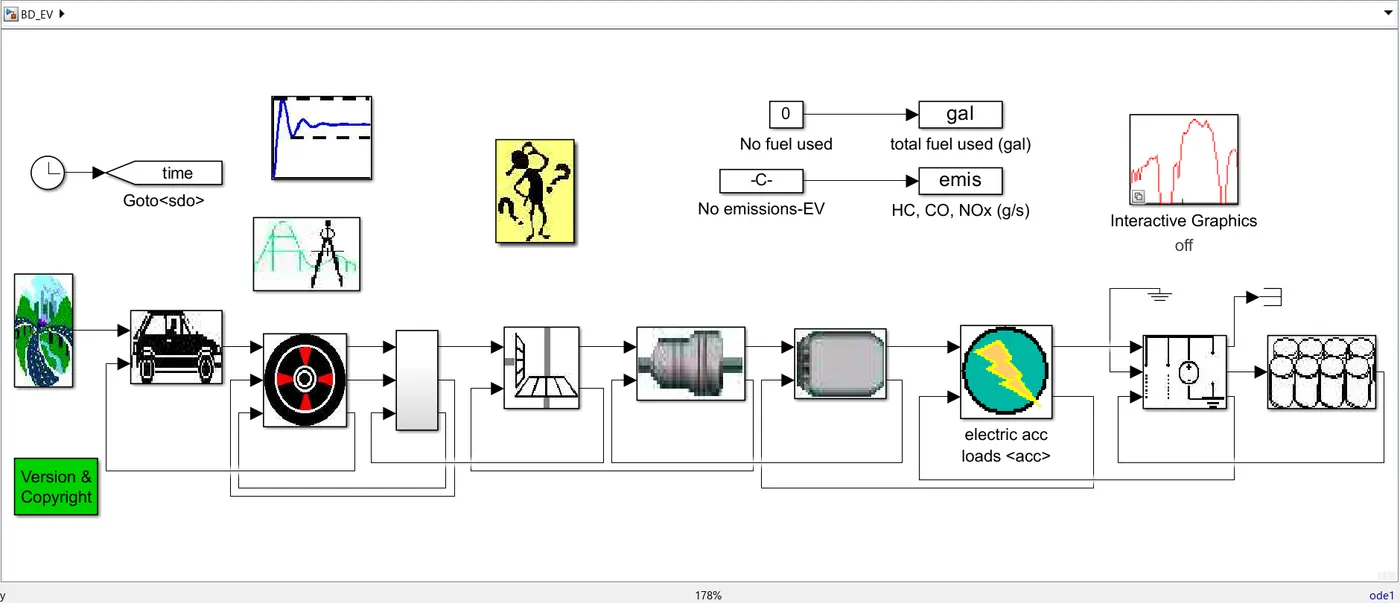
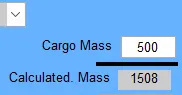
The simulation involves a simple backward simulation starting from Drive cycle data, analyzing battery performance. A cargo mass of 500 kg is added, with other vehicle parameters maintained at default values.
Select CYC_FTP as the driving cycle.
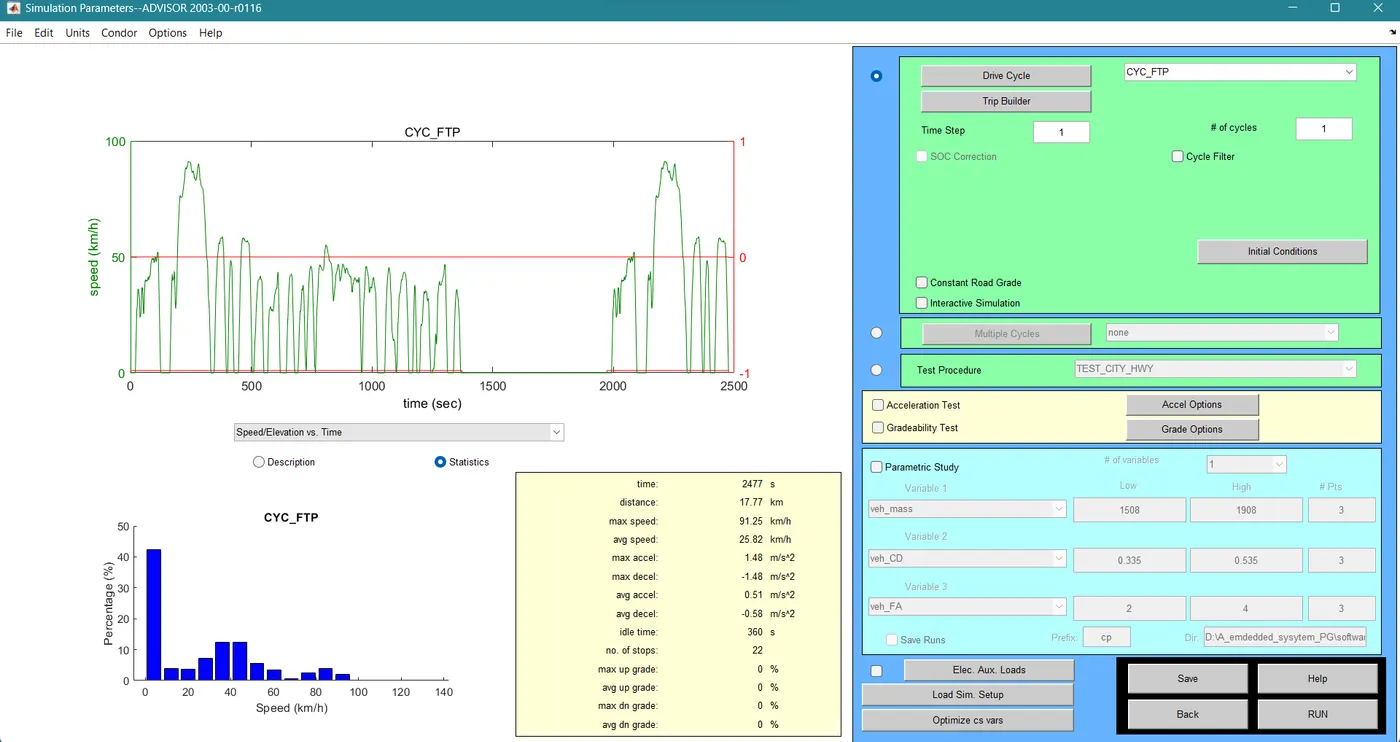
Set the number of cycles to 1, keeping other parameters at default values.
Run the simulation.
Results:
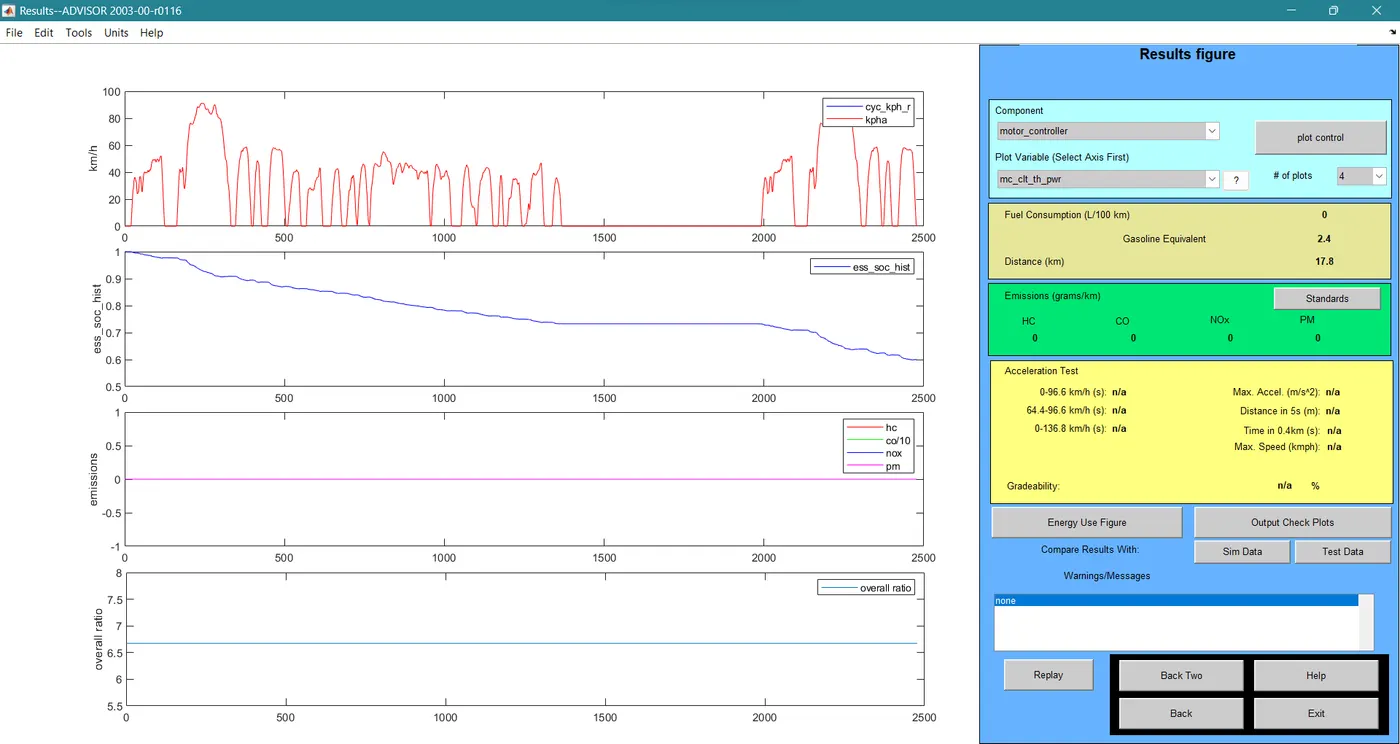
The vehicle covers 17.8 km in one cycle, indicating the battery is not fully drained.
No on-road emissions observed in the BEV.
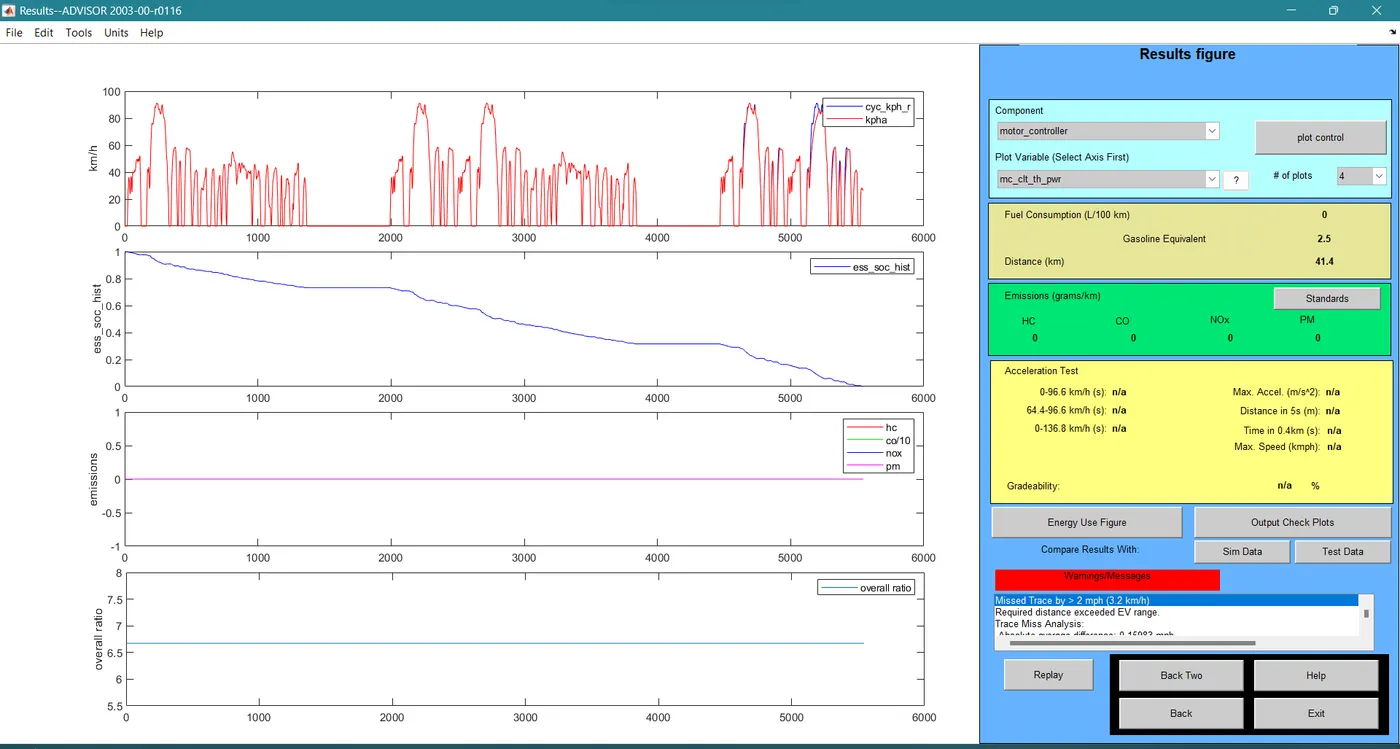
Extending the simulation to three cycles reveals the battery drains after covering 41.4 km, short of the 45 km target.
Study 2 - Battery Capacity Variation
Change the battery model from ESS_PB25 to ESS_PB85 with 46 modules (1145 kg). Maintain other parameters from the previous simulation.
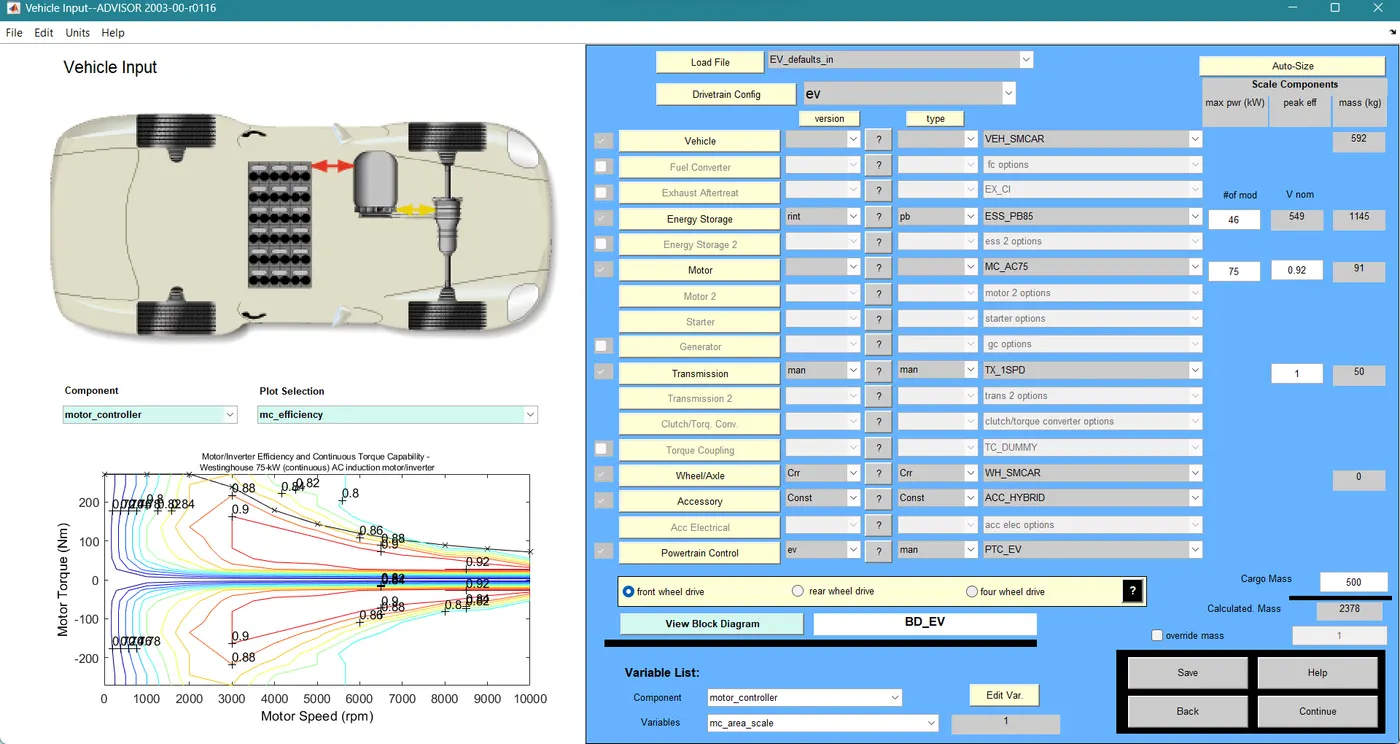
Run the simulation with CYC_FTP and three cycles.
Results:
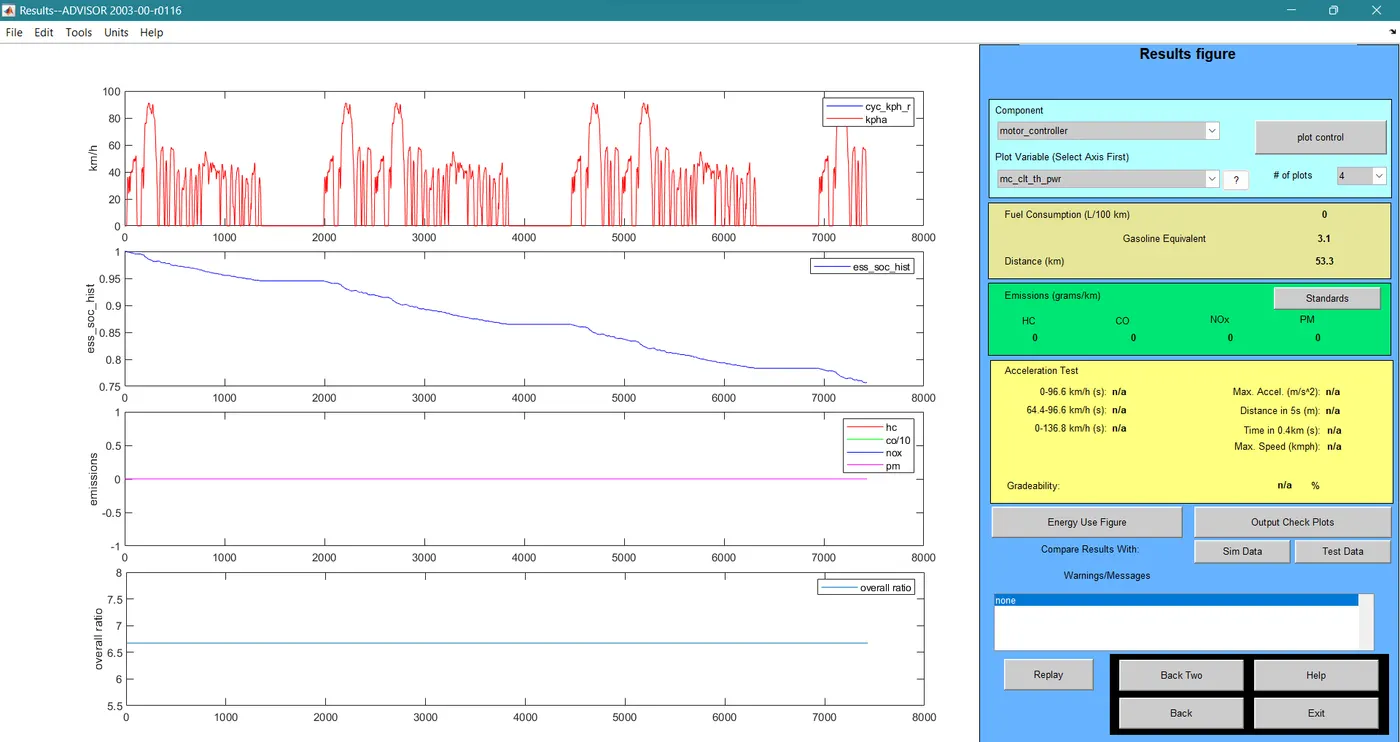
The vehicle covers 53.3 km with SOC not reaching 0, demonstrating improved range.
Conclusively, selecting an appropriate battery is crucial, considering weight and capacity.
Study 3 - Gradeability Test
Load PRIUS_Jpn_defaults_in for the Prius Jpn Hybrid Electric vehicle.
Keep all vehicle parameters at default values.
Enable the 'Gradeability Test' option.
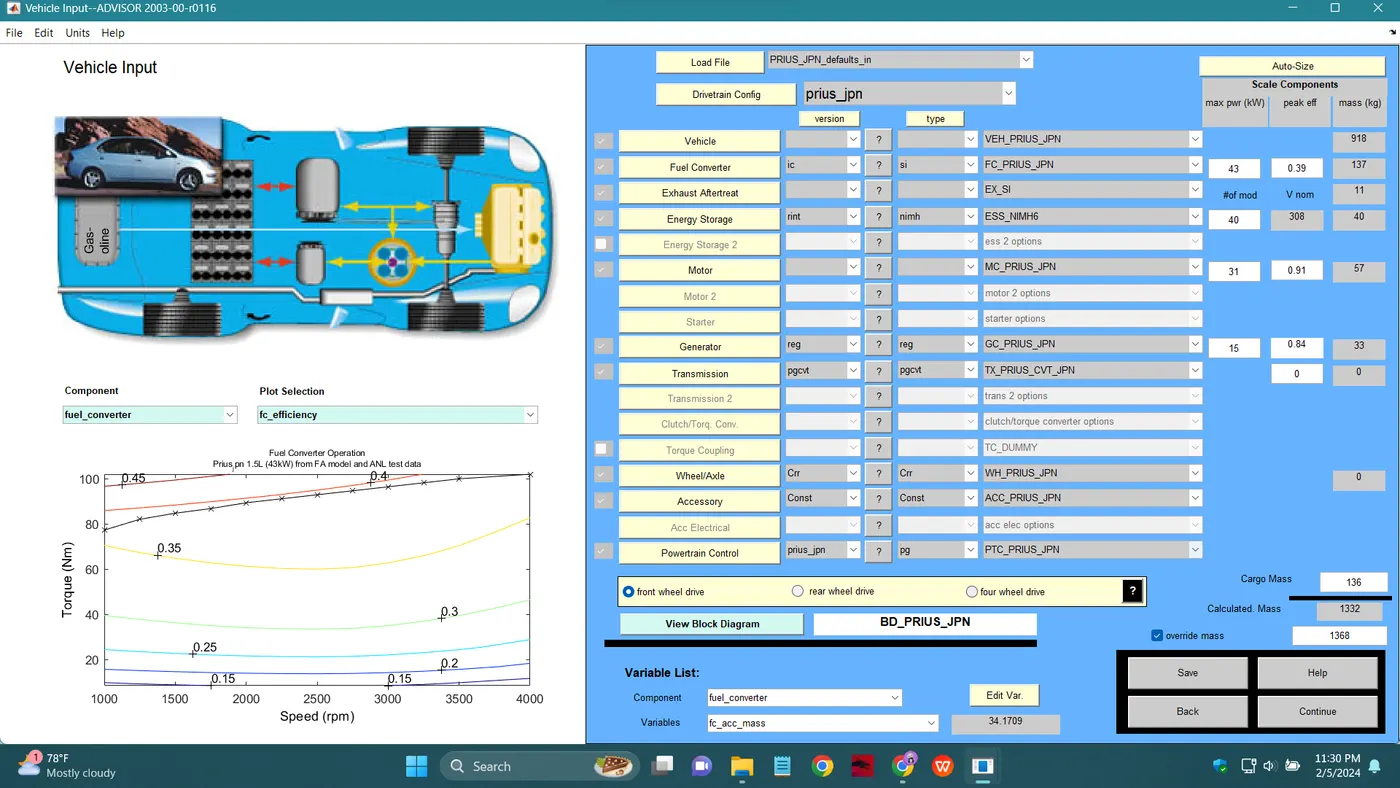
Conduct three gradeability tests at 55 mph with different configurations:
a. Energy storage disabled.
b. Fuel converter disabled, only battery running.
c. Both systems enabled.
Repeat tests at 45 mph.
Results:
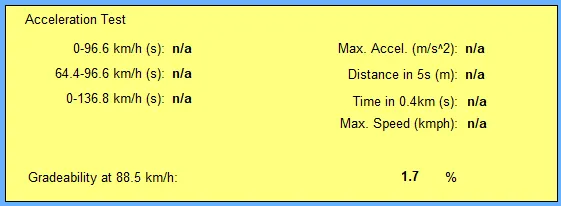
Gradeability at 55 mph:
a. Energy storage disabled: 1.7%
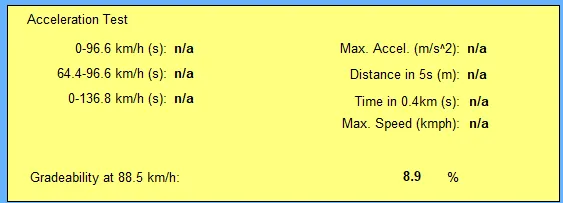
b. Fuel converter disabled: 8.9%
c. Both systems enabled: 8.9%
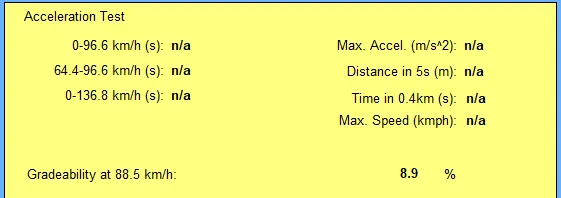
Similar tests at 45 mph yield respective results.
Conclusion:
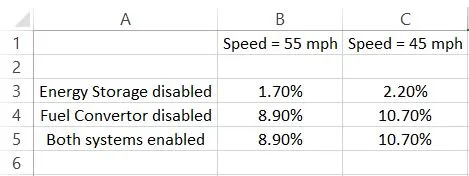
Energy storage disabled results in low gradeability.
Enabling energy storage significantly improves gradeability, emphasizing its importance.
Key Learnings from the Project:
1. Battery Range Consideration:
l The default BEV model (EV_defaults_in) cannot cover the required 45 km distance in a single charge, as evidenced by simulations.
l Selecting an appropriate battery capacity is crucial for achieving the desired range.
2. Battery Impact on Range:
l Changing the battery model to ESS_PB85 with more modules significantly improves the vehicle's range, allowing it to cover 53.3 km.
l The weight and capacity of the battery have a substantial impact on the overall performance and range of the electric vehicle.
3. Gradeability Significance:
l Gradeability tests demonstrate the importance of energy storage (battery) in enhancing the vehicle's performance on inclines.
l With energy storage disabled, the gradeability is significantly lower, emphasizing the role of the battery in providing additional power.
4. Simulation Tool Insight:
l The ADVISOR tool, coupled with MATLAB, offers a valuable platform for simulating and analyzing the performance of electric vehicles under various conditions.
l Backward simulation starting from drive cycle data allows for a comprehensive assessment of battery performance.
5. Systematic Testing Approach:
l The project follows a systematic approach with distinct studies, ensuring a comprehensive evaluation of the BEV model under different scenarios.
l Gradeability tests at varying speeds and configurations provide a well-rounded understanding of the vehicle's capabilities.
6. Visualization Importance:
l Plots and visualizations, such as SOC plots, are instrumental in interpreting simulation results.
l Graphical representations aid in quickly comprehending key performance indicators and making informed decisions.