Week 3 Challenge
Ans-01.01:-
Primary Load cases:-
- Dead Load
- Live Load
- Wind Load
- Sesimec Load
- Snow Load
Ans-01.02:-
One way Slab:-
- Slab load will transfer in only one direction of slab.
- Ly/Lx grater than or equal to 2 , Consider as a one way slab.
Ans-01.03:-
Unit weignt of structural steel = 7850 Kg/m3.
Well graded sand & Gravel soil = 21 to 23 kn/m3
Ans-01.04:-
Name of the section:-
- Circle
- Rectangle
- Tee
- Trapezoidal
- General
- Tapered I
- Tapered Tube
- Assign Profile
Ans-01.05:-
Primary Beams:-
- The primary beams are directly connected to the columns.
- Slab loads are transfer to the columns by primary beams.
Ans-02.01:-
Factors & Parameters:-
- Probability factor (Risk coefficient)
- Terrain
- Building Height and Structure size.
Ans-02.02:-
Load Transfer process:-
- From slab to Secondary beam
- Secondary beam to Primary beam
- Primary beam to Columns
- Columns to Foundations
- Fondations to Hard soil statra
Ans-03.01:-
One way slab:-
- One way slab transfer load in only one direction.
- Ly/Lx grater than or equal to 2 consider as a one way slab.
- Main reinforcement rebars in shorter span only.
Two way slab:-
- Two way slab tranfer load in two directions Longitutinal & Transverse directions
- Ly/Lx Less than 2 Consider as a Two way slab.
- Main reinforcement rebars in longer & Shorter directions.
Ans-03.02:-
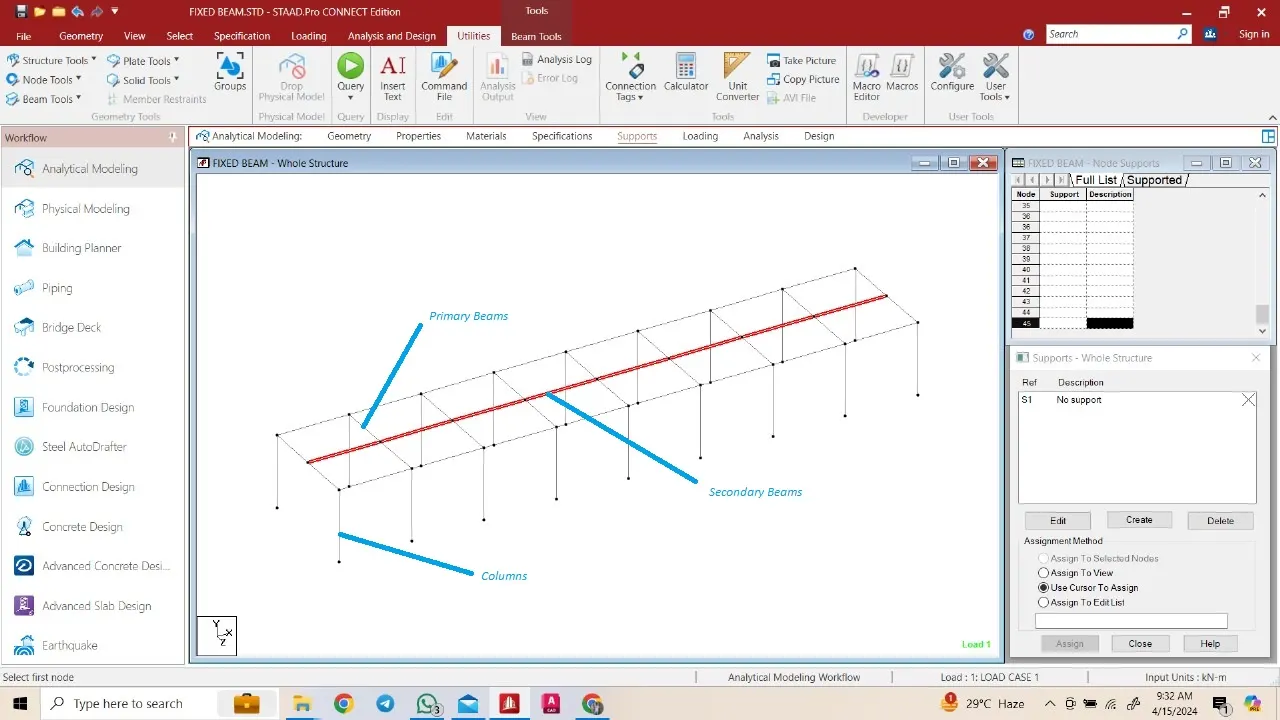
- The secondary beams rest on the other beams.
- Some of Slab loads transfered to the secondary beams and from the secondary beam to load tranfered to the primary beams rest on the columns.
Ans-03.03:-
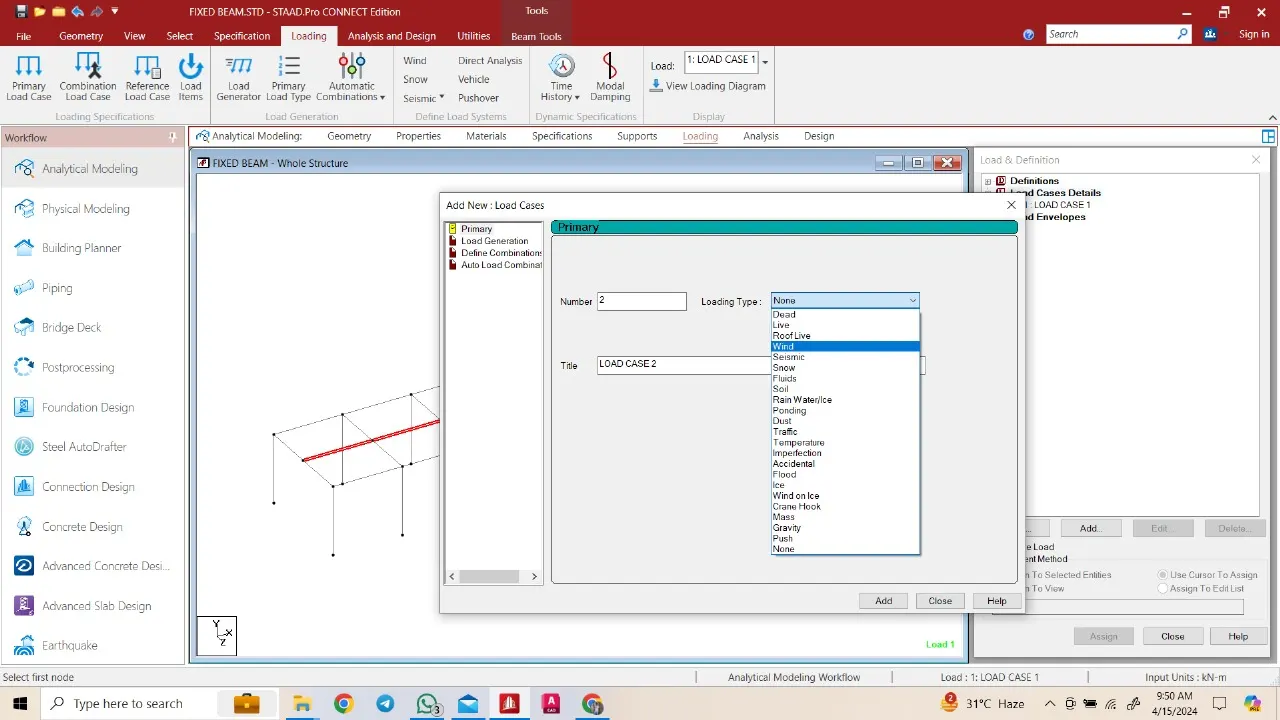
Primary Load cases:-
- Dead load
- Live load
- Roof live load
- Wind Load
- Seismic load
- Snow load
- Fluids load
- Soil load
- Rain Water/ICE load
- Ponding Load
- Dust Load
- Traffic Load
- Temperature Load
- Imperfection Load
- Accidental Load
- Flood Load
- Ice Load
- Wind on Ice Load
- Crane Hook Load
- Mass Load
- Gravity Load
- Push Load
A) Indian Standards Load cases:-
- IS 875 (Part-01) Dead Loads
- IS 875 (Part-02) Live Loads or Imposed Loads
- IS 875 (Part-03) Wind Loads
- IS 875 (Part-04) Snow Loads
- IS 875 (Part-04) Special Loads
- IS 4326, 1993 Earthquake Loads
B) Parameters of Load cases:-
- Self weight
- Area of the structure
- Type of structure
- Type of Building Usage
- Volume of section
C) Berif of Each Load cases:-
Dead Loads:-
- Dead load are structural loads of a constant magnitude over time.
- They include the self weight of structural members, Such as walls, Plasters, Ceilings, Floor, Beams, Column, and roofs.
- Dead load also include the loads of fixture that are permanently attached to the structure.
- The unit weight/Mass of the material that are likely to be stored in a building are also specicified for the pupose of load.
- Unit weight of materials
Cement concrete - 23.5 KN/M3
Reinforced concrete -22.75 to 26.5 KN/M3
Cement Mortar - 20.4 KN/M3
Cement Plaster - 20.4 KN/M3
Coarse Aggregate -15.7 to 21.95 KN/M3
Fine Aggregate - 15.10 to 19.6 KN/M3
Live Load:-
- Live load is what is produced during the use of the structure.
- it is also called imposed load or probabilistic load since its calculation is based on projections and not real data.
- This term encompasses people, Furniture, Vehicle, traffic, various equipment.
Wind Load:-
- Wind load is essentially the wind pressure or wine force, in pounds per square foot, Exerted on a building.
- There can be uplift wind load, Shear wind load and lateral wind load.
Seismic Load:-
- Seismic loading is one of the basic concepts of earthquake engineering which means application of seismic oscillation to a structure
- It happens at contant surfaces of a structure either with the ground or with adjacent structure.
Ans-03.04:-
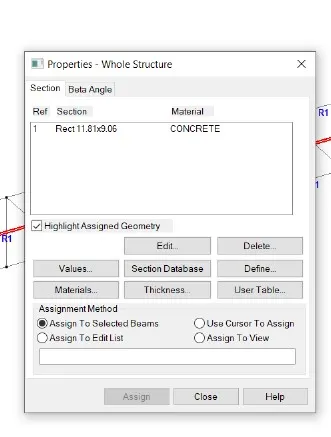
Steps involved in Assigning Properties:-
- By using Geometry create model as required.
- Select Properties tap
- In properties menu
- Select Define properties/Shape/Size based on requirement
- Select the particular property and Select assign to selected beam option
- Assign the properties to the beams.
Steps involved in Assigning Supports:-
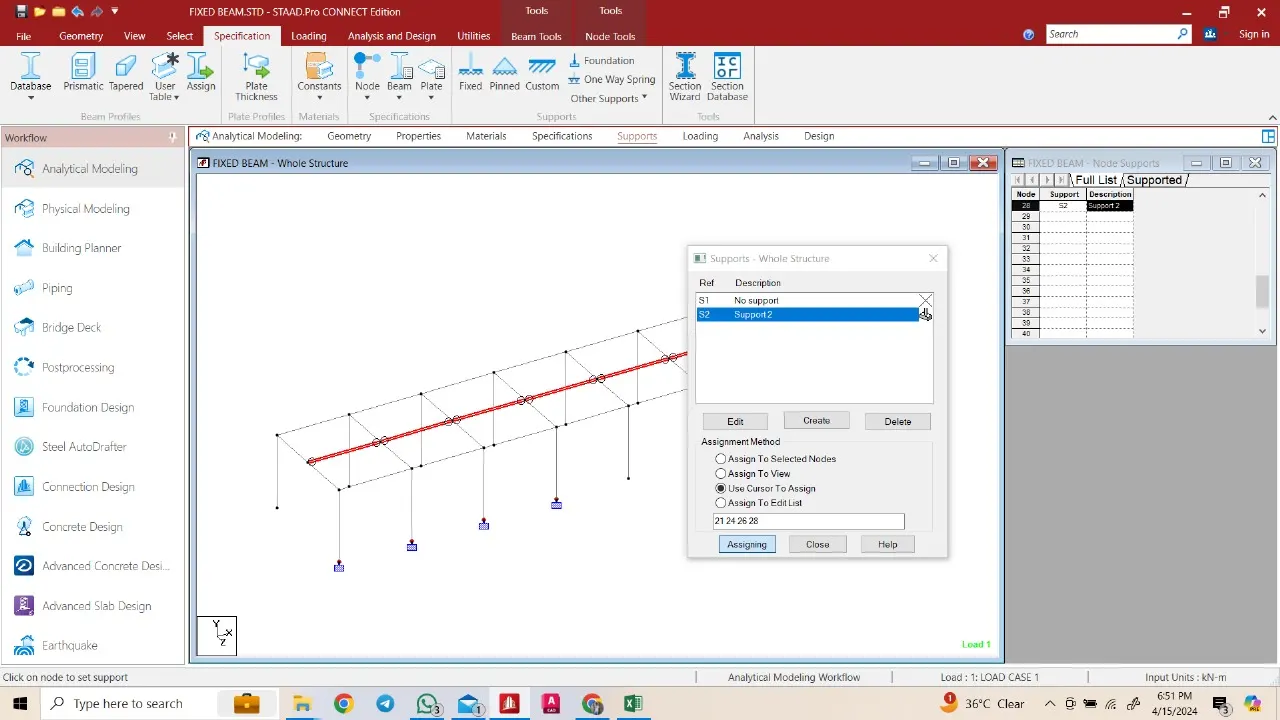
- Select support menu
- Create supports as required
- Select particular supprots want assign
- Use Node cursor select support node
- Assign the support to the node by using selected nodes
Ans-03.05:-
Steps involved in create and assign secondary beam:-
- By using geometry create primary beams and colums
- In between the primary beams nodes needs to be created the nodes joined by using add beams options.
- Select specification tap, created beams needs to be mensined as seconadary beam.
- In the secondary beam end and start point suppots need to be defined as a secondary beams. (Releases needs to be defined)
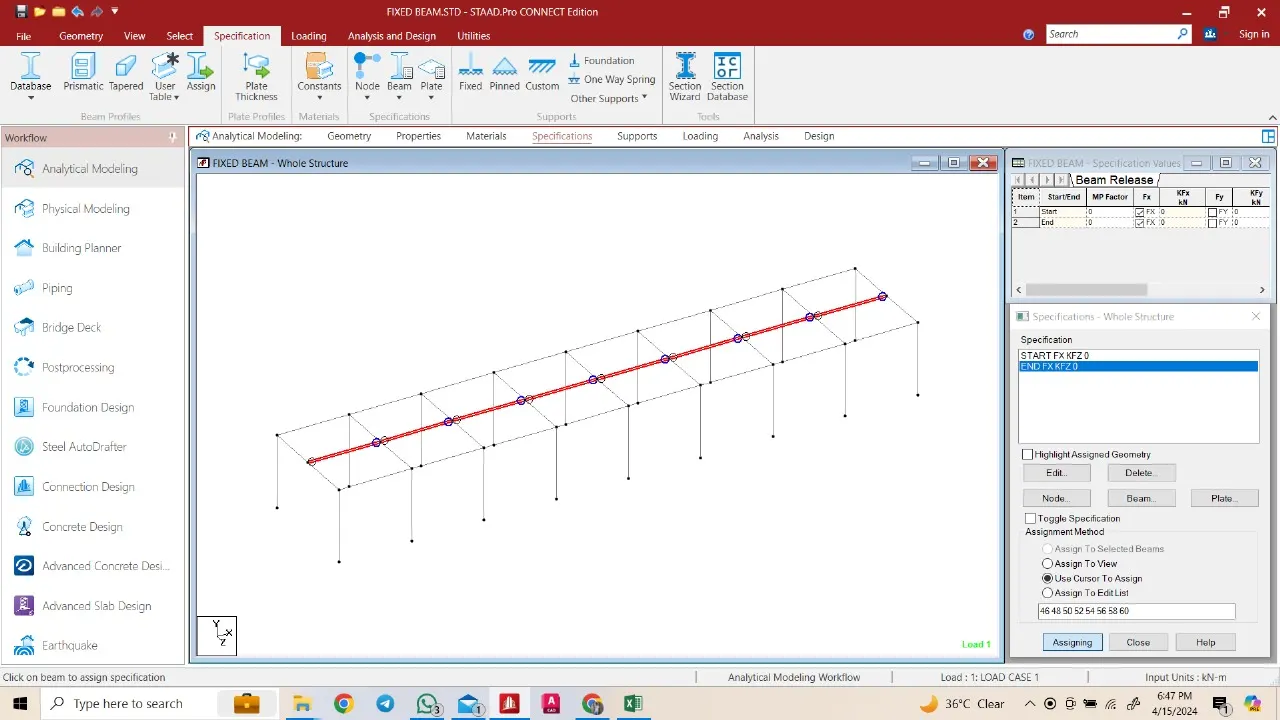
Practical:-
Calculation of Wind Pressure:-
- For Darjeeling vb - 47 m/s
- K1 - 1.07
- K2 - Catogary -04 & Class -B - 0.76
- K3 - 1.0
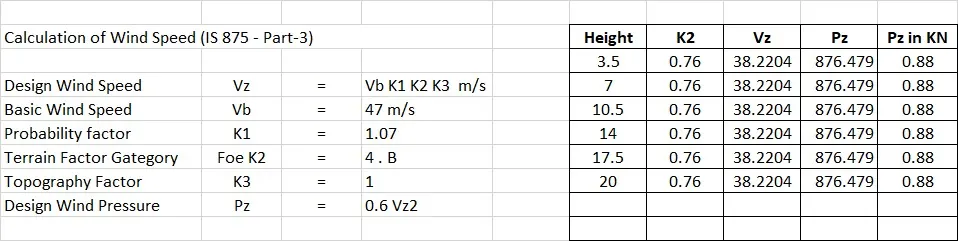
Calculation of Dead Load & Live load:-
Dead Loads for Hospitals Building:-
- 230mm Wall External wall loads - (0.23 x 3 x 20Kn/m3) = 13.8 Kn/m
- 115mm wall Internal wall loads - (0.115 x 3 x 20Kn/m3) = 6.9 Kn/m
- 100mm Thk Floor Finish loads - (0.1 x 22 Kn/m3) = 2.2 Kn/m2
- MEP services loads below slab - 0.5 Kn/m2
- Miscellanoues loads - 0.5 Kn/m2
- Total SDL loads - 3.2 Kn/m2
Live Loads Hospital building:-
- Bed Rooms, Waeds,Dressing rooms, Dormitories and Lounges - 2 Kn/m2
- Kitchen, Laundries and Laboratories - 3 Kn/m2
- Dining rooms, Cafeterias and restaurants -3 Kn/m2 & 2.7 KN
- Toilets and Batjhrooms - 2 Kn/m2
- X ray rooms, Operating rooms, General storage areas to be calculated but not less than - 3 Kn/m2 & 4.5 KN
- Office rooms and OPD rooms - 2.5 Kn/m2 & 2.7 KN
- Corridors, Passages, Lobbies and staircase including fire escapes as per floor serviced but not less than - 4Kn/m2 & 4.5 KN
- Boilers rooms, and plant rooms to be calculated but not less than 5 Kn/m2 & 4.5