Week 3 Challenge
Given Data:
1. Width of Bridge Deck = 26m
2. Span of Bridge = 25m
3. Height of Pier = 10m
4. Width of Pier = 2.3m dia
5. Thickness of Deck slab = 300mm (Assumed)
In Fig it is shown that on one side of deck slab two trains are moving at same direction and in another side of deck two trains are moving in opposite direction. So total 4 trains are moving on the whole deck slab.
IRS Live Load Calculation in Staad Pro.
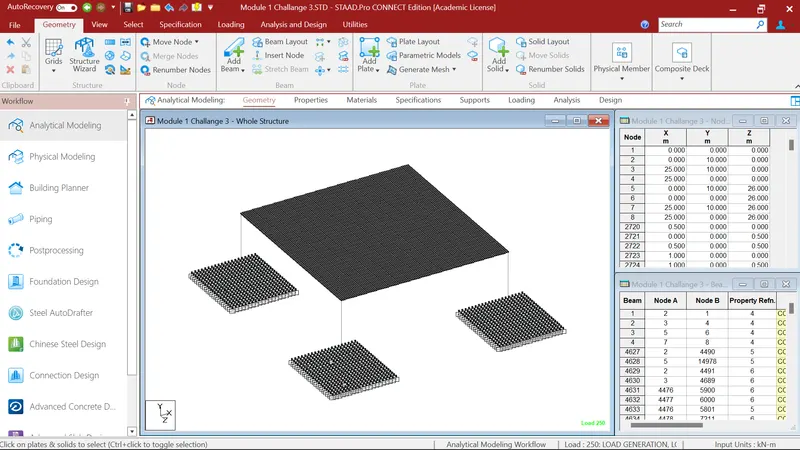
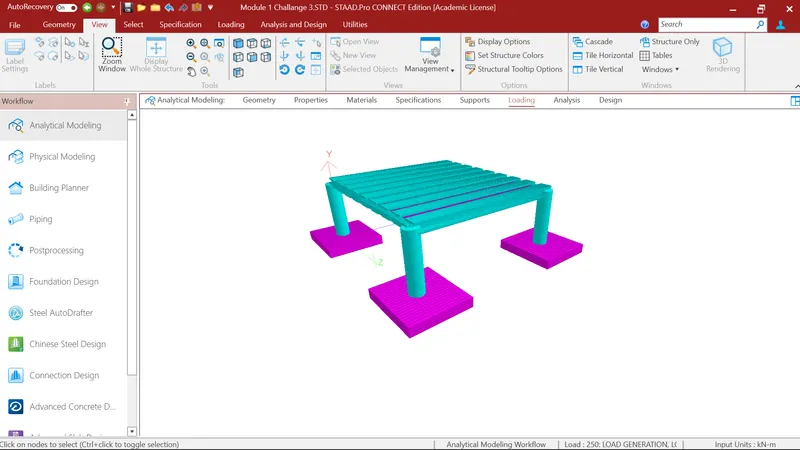
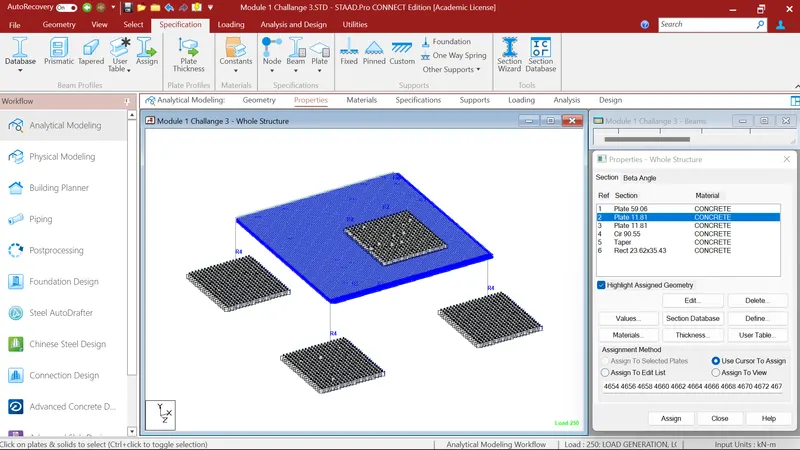
1. First I created Staad Model as per given data. In which height of pier is 10m and 2.3m of dia, span of bridge 25m, creating nine numbers of longitudinal girders and two cross girder, bridge deck slab having depth of 300mm. Then I created the raft foundation of 1.5m depth. After that I created the support to foundation by giving subgrade modulus 12500kN/m2 and assigned it to the raft.
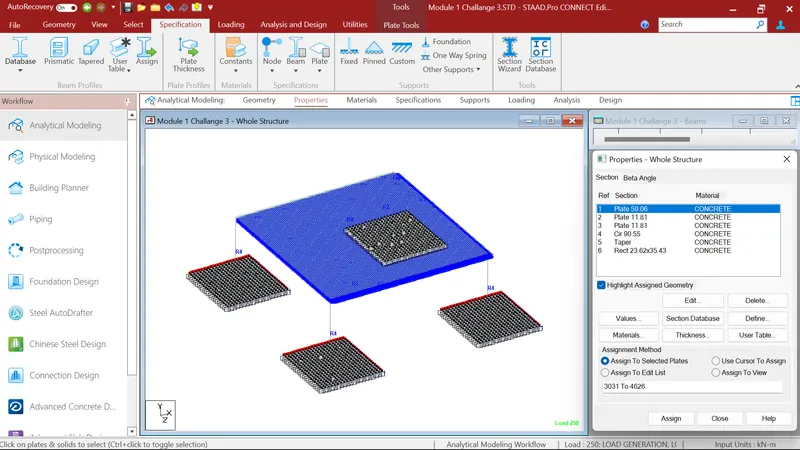
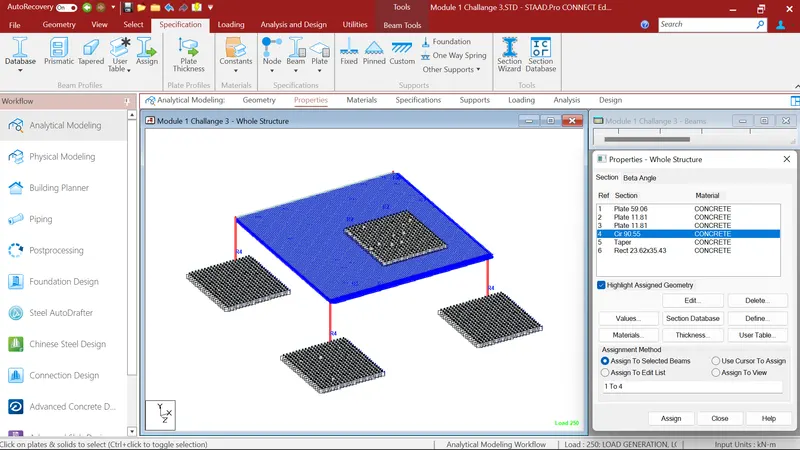
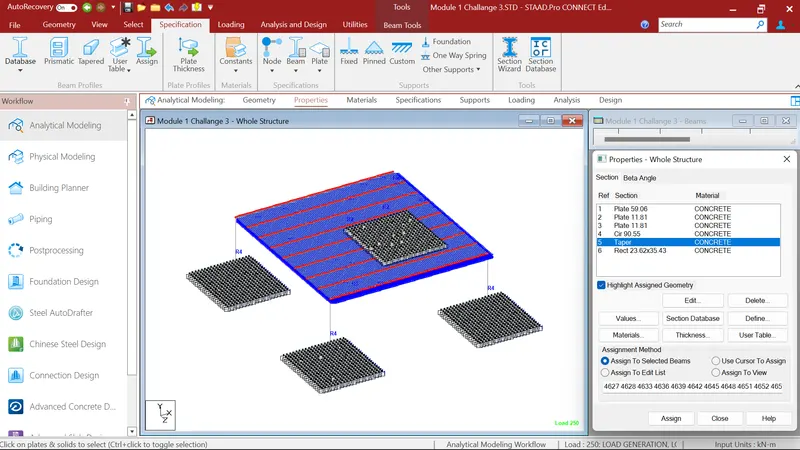
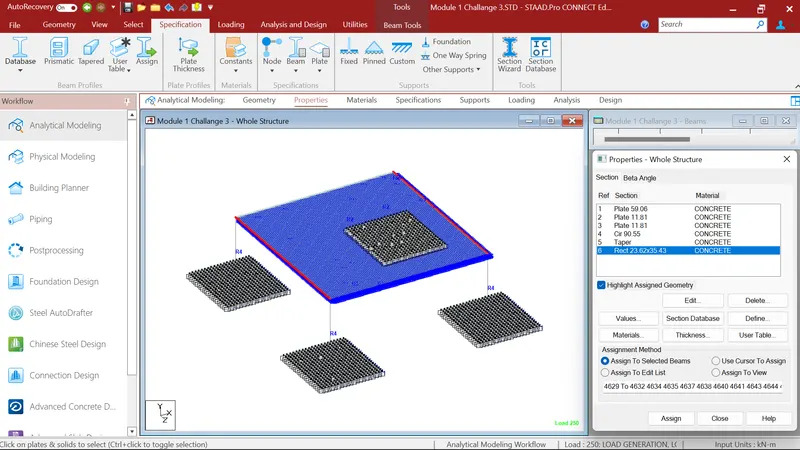
Step: 2
As per IRS Live load I gave Metro Live Loading, Electric Train Loading, Gauge A Loading.
As per IRS Metro Live Loading have total 540kN of axle load. In the first axle there is 170kN load at a distance of 2.2m as shown in picture and so on. Metro Train having 1.8m of width. So, in my Staad model I goes to the loading definitons, In loading definitions I choose Vehicle definition. Firstly I gave 1.8m Metro Train width then I gave laod and distance as per IRS.
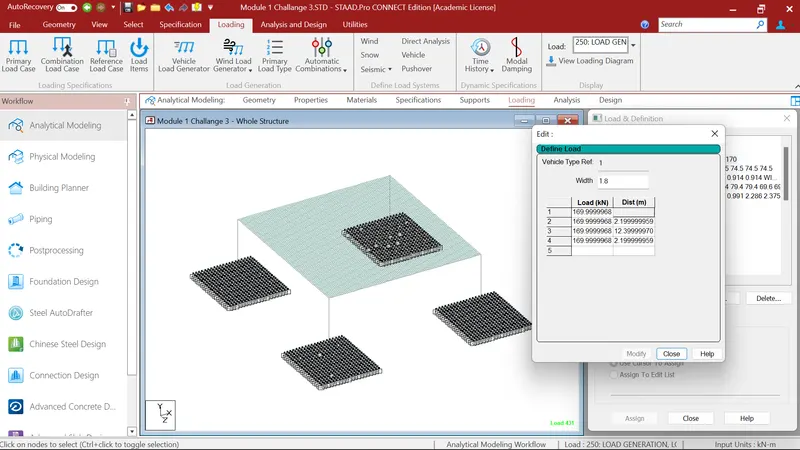
As per IRS Electric Train Loading have total 447kN of axle load. In the first axle there is 74.5kN load at a distance of 0.914m as shown in picture and so on. Electric Train having 1.0m of width. So, in my Staad model I goes to the loading definitons, In loading definitions I choose Vehicle definition. Firstly I gave 1.0m Electric Train width then I gave laod and distance as per IRS.
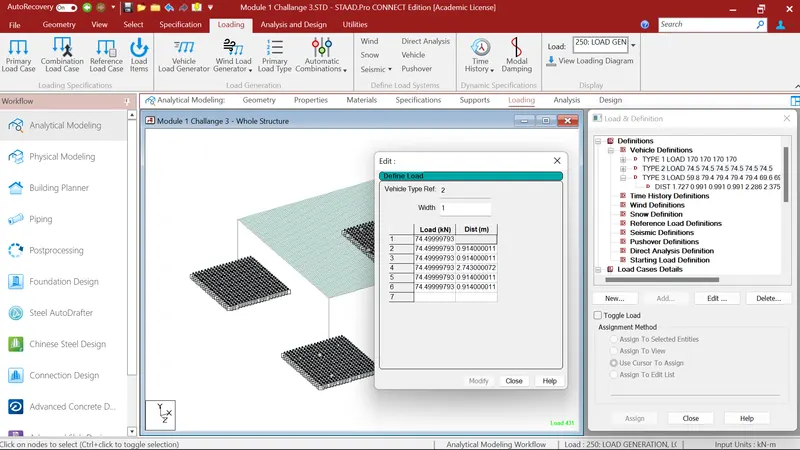
As per IRS Gauge A Train Loading have total 795kN of axle load. In the first axle there is 59.8kN load at a distance of 1.72m as shown in picture and so on. Gauge A Train having 1.7m of width. So, in my Staad model I goes to the loading definitons, In loading definitions I choose Vehicle definition. Firstly I gave 1.7m Gauge A Train width then I gave laod and distance as per IRS.
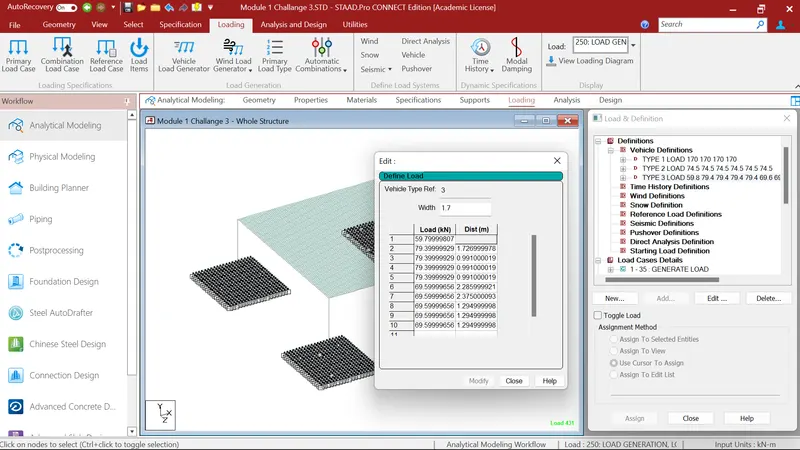
Step: 3
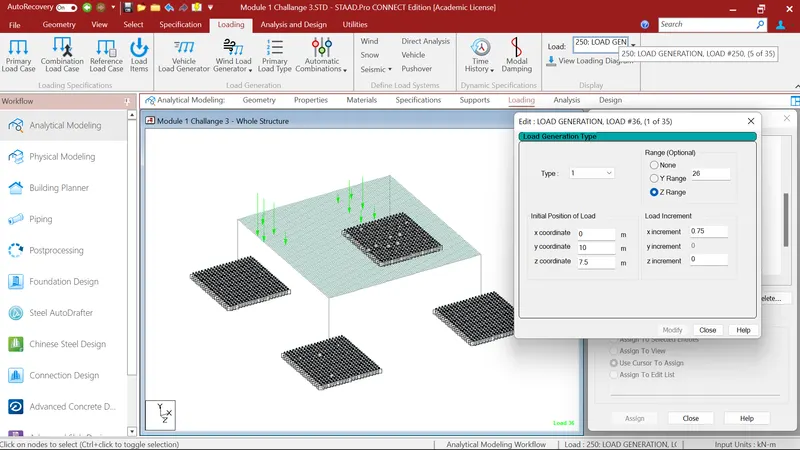
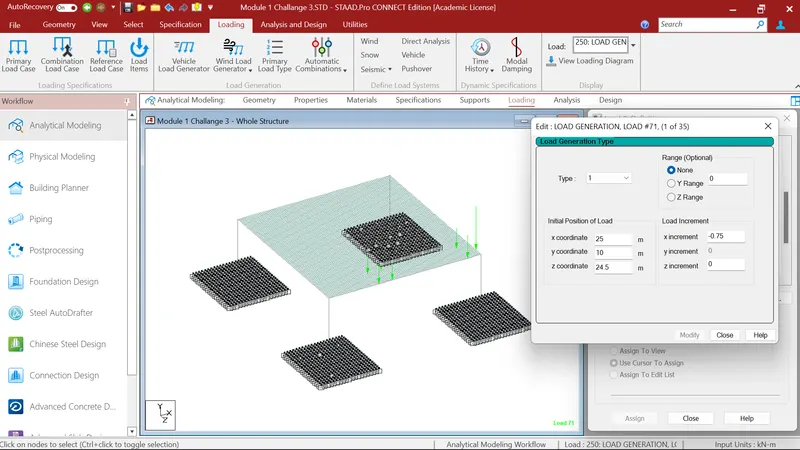
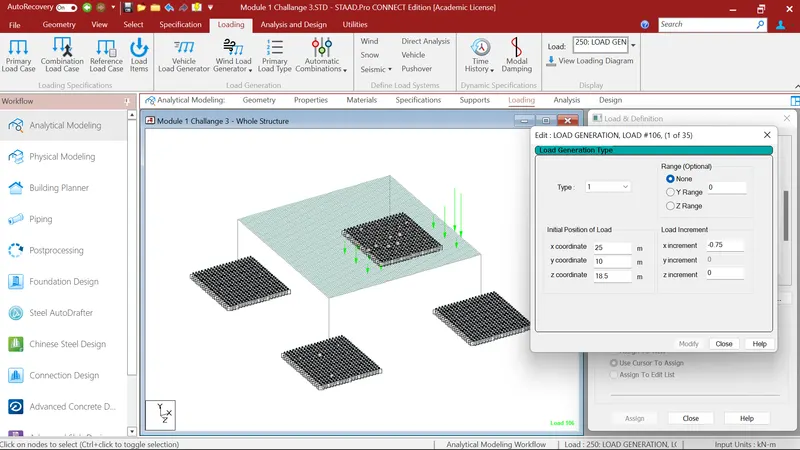
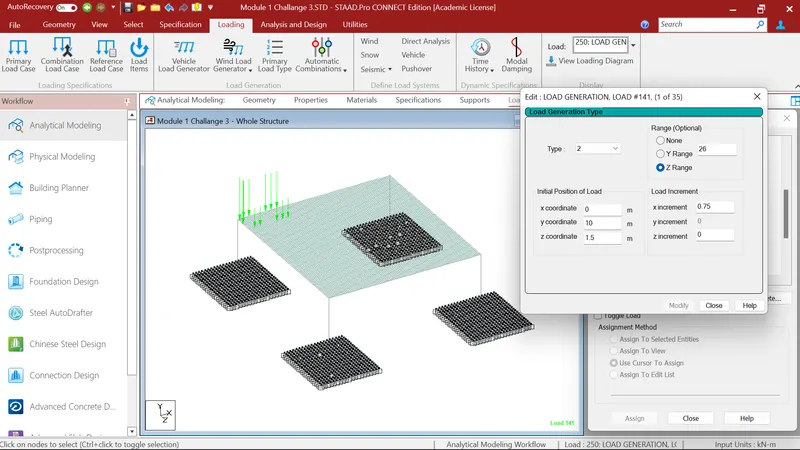
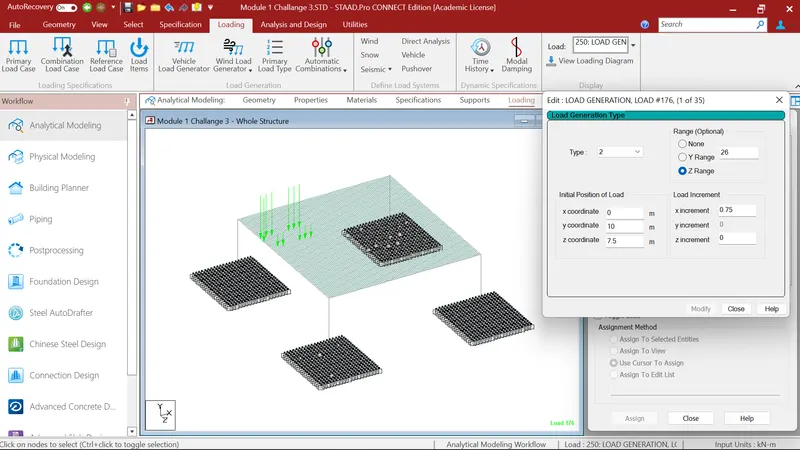
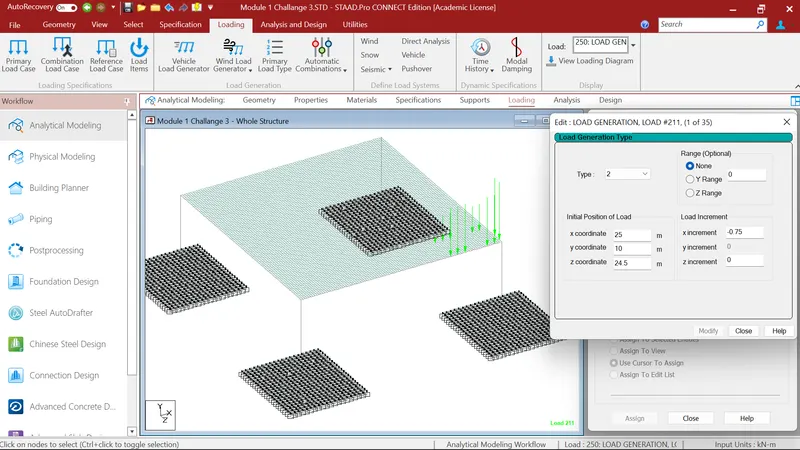
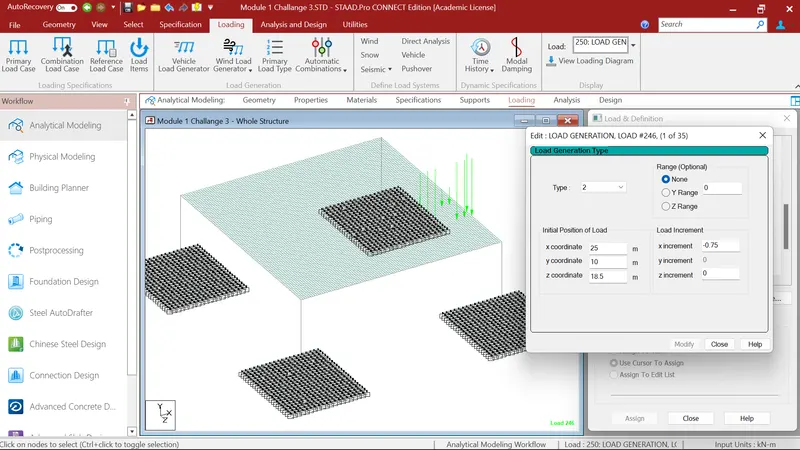
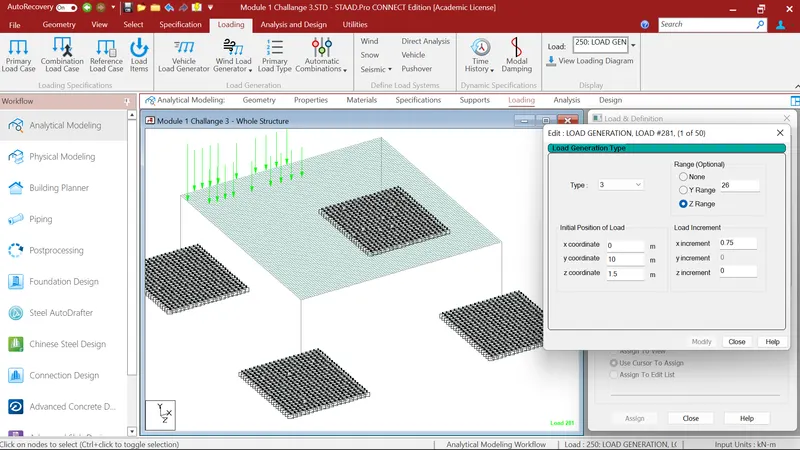
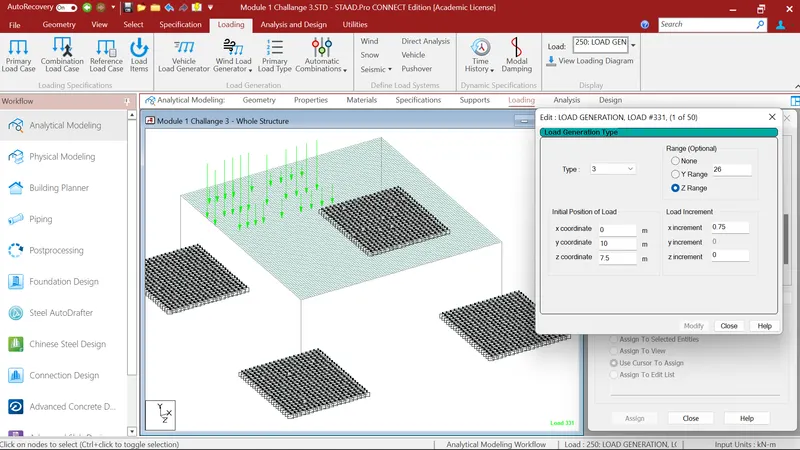
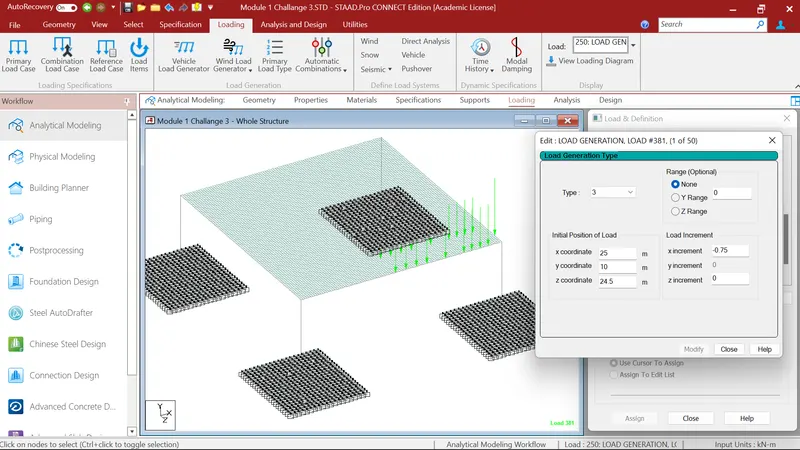
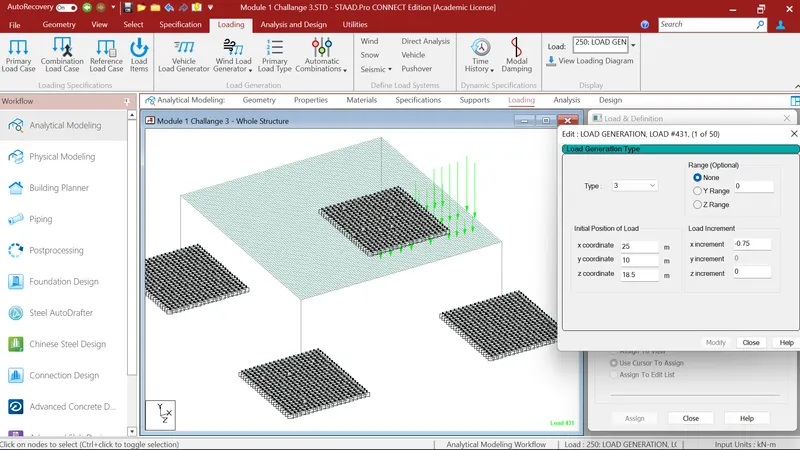
In step 3 I created load case details, where I generated 1-140 combination fo type 1 i.e. Metro Train Loading , 141-280 combination fo type 2 i.e. Electric Train Loading and 281-480 combination fo type 3 i.e. Gauage A Loading. In one side of bridge deck slab there are two trains are moving and another side of bridge deck another two trains are moving in opposite direction, so for one side at a distance of 1.5m I generated 1-35 load combination, for 2nd train I generated again 35-70 load combination at 7.5m distance, for another side of bridge deck in opossite direction at a distance of 1.5m (i.e. coordinates X=25m, Y= 10m, Z= 24.5m) I generated 71-105 load combination, for 4th train I generated again 106-140 load combination at 7.5m distance and same for type 2 and type train. I choose 35 combinations for type 1, type 2 loading because of my train can pass through the span of bridge completly and for type 3 loading I generated 50 combinations. Then I provided Z Range of 26m because my carraigeway width of bridge is 26m. Then I run my train loading from the start point of bridge deck by providing x,y,z coordinates and my vehicle is moving in x direction so I gave x increment 0.75 for accurate results in BM & SF.
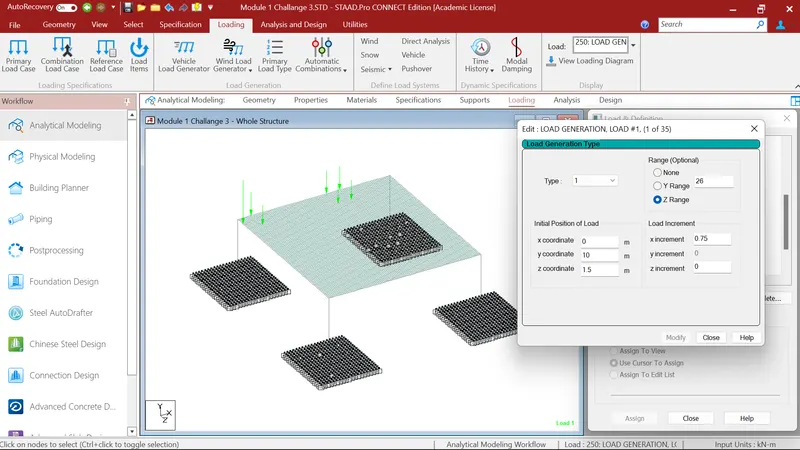
Step- 4
After that I gave the analysis command and run the structure to the Postprocessing menu.
Where i firstely select the deck slab then goes to reports and select plate stresses and checked for the Maximum Bending Moment in MY and select 1-140 Load combinations for Type 1 Loading. Where I got the maximum bendig moment of 97.306kN-m in MY.
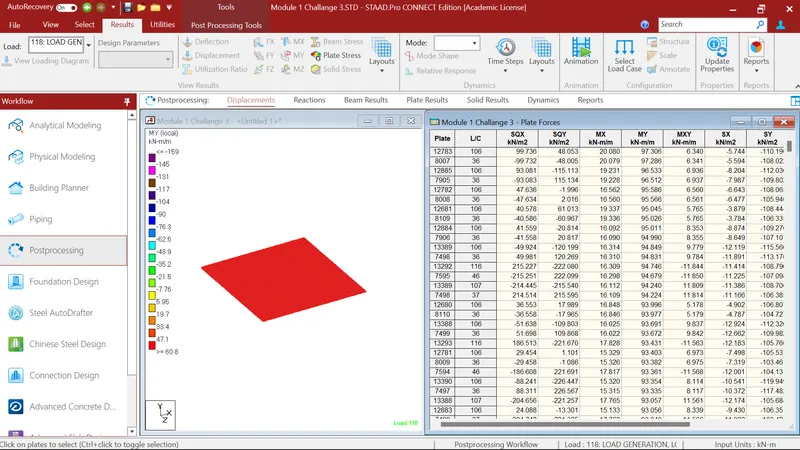
After that I again select the plate stresses and checked for the Maximum Bending Moment in MY and select 141-280 Load combinations for Type 2 Loading. Where I got the maximum bendig moment of 98.522kN-m in MY.
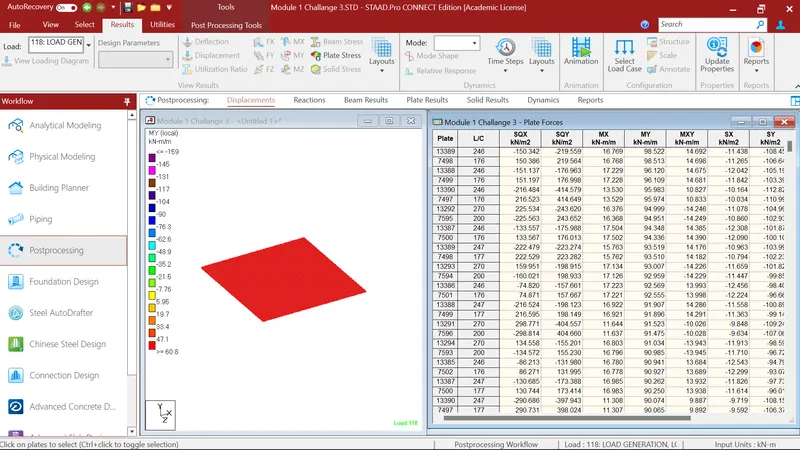
After that I again select the plate stresses and checked for the Maximum Bending Moment in MY and select 281-480 Load combinations for Type 3 Loading. Where I got the maximum bendig moment of 114.746kN-m in MY.
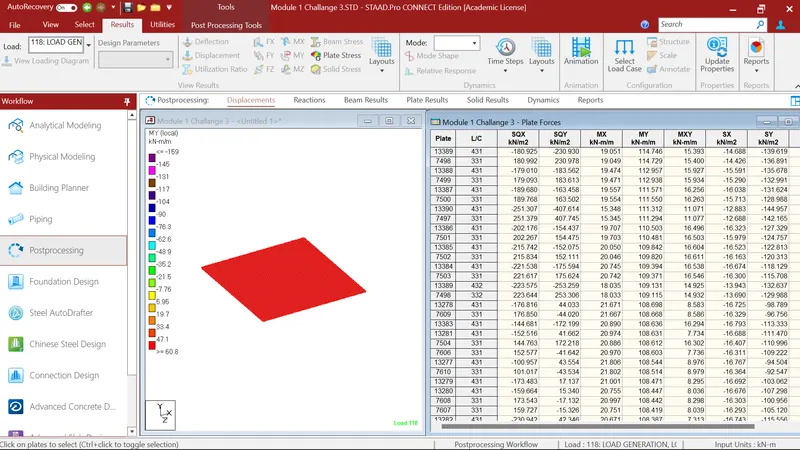
After that I again select the deck slab then goes to reports and select plate stresses and checked for the Maximum Bending Moment in MX and select 1-140 Load combinations for Type 1 Loading. Where I got the maximum bendig moment of 20.080kN-m in MX.
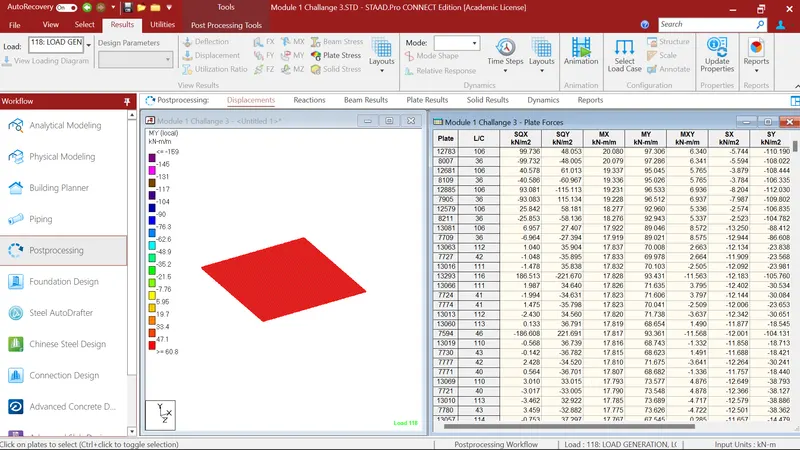
After that I again select the deck slab then goes to reports and select plate stresses and checked for the Maximum Bending Moment in MX and select 141-280 Load combinations for Type 2 Loading. Where I got the maximum bending moment of 18.404kN-m in MX.
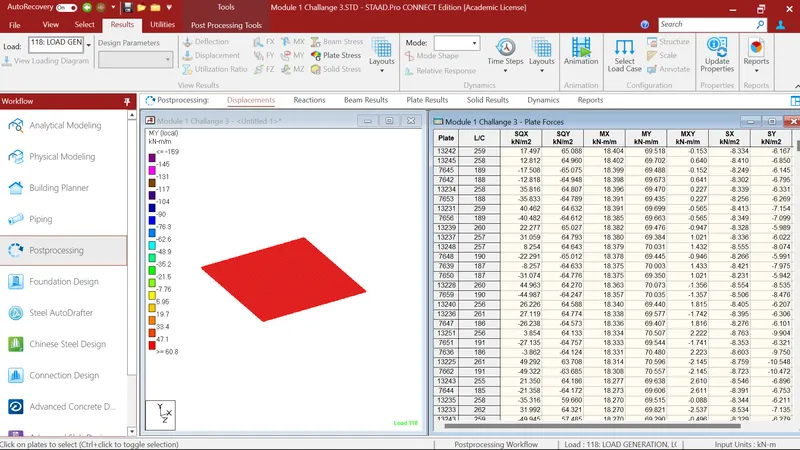
After that I again select the deck slab then goes to reports and select plate stresses and checked for the Maximum Bending Moment in MX and select 281-480 Load combinations for Type 3 Loading. Where I got the maximum bending moment of 23.292kN-m in MX.
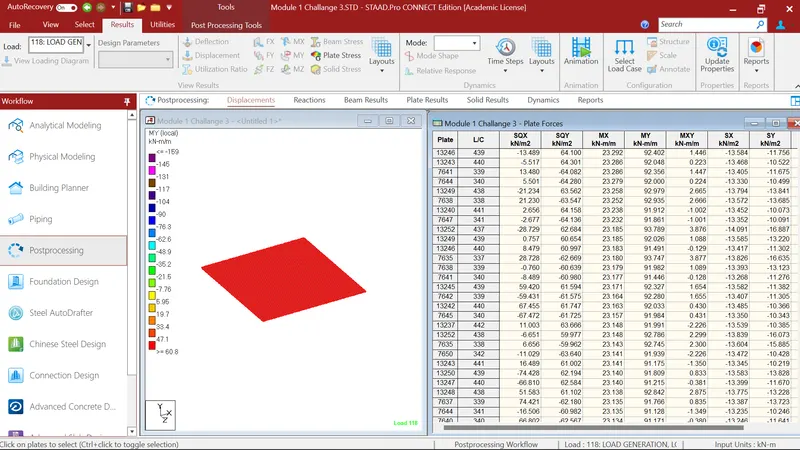
After that I again select the deck slab then goes to reports and select plate stresses and checked for the Maximum Shear Force in SQX and select 1-140 Load combinations for Type 1 Loading. Where I got the Shear Force moment of 516.204kN/m2 in SQX.
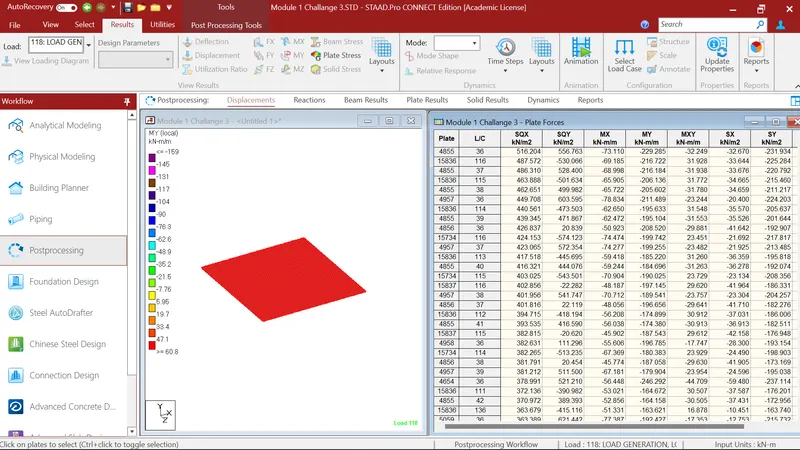
After that I again select the deck slab then goes to reports and select plate stresses and checked for the Maximum Shear Force in SQX and select 141-280 Load combinations for Type 2 Loading. Where I got the Shear Force moment of 619.721kN/m2 in SQX.
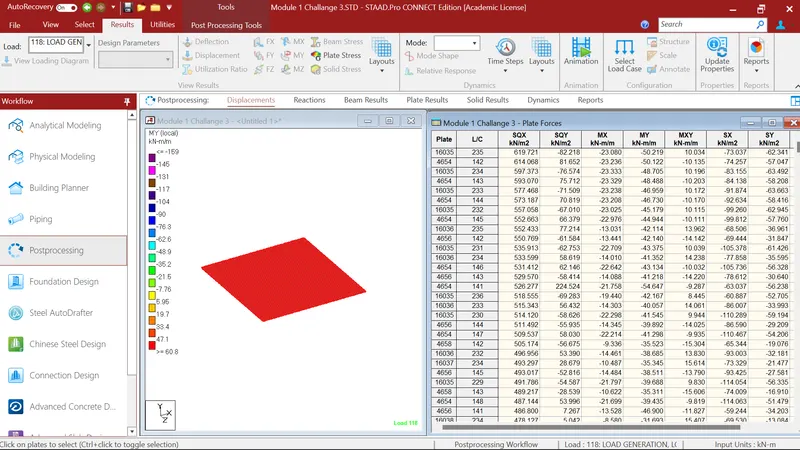
After that I again select the deck slab then goes to reports and select plate stresses and checked for the Maximum Shear Force in SQX and select 281-480 Load combinations for Type 3 Loading. Where I got the Shear Force moment of 605.740kN/m2 in SQX.
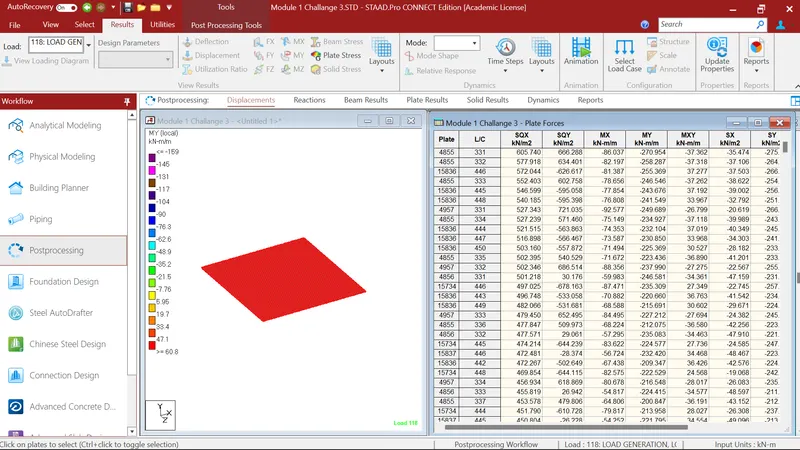
After that I again select the deck slab then goes to reports and select plate stresses and checked for the Maximum Shear Force in SQY and select 1-140 Load combinations for Type 1 Loading. Where I got the Shear Force moment of 679.081kN/m2 in SQY.
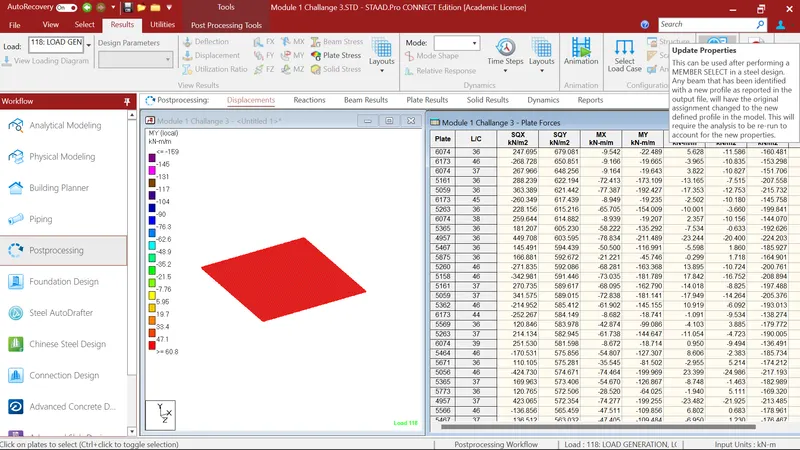
After that I again select the deck slab then goes to reports and select plate stresses and checked for the Maximum Shear Force in SQY and select 141-280 Load combinations for Type 2 Loading. Where I got the Shear Force moment of 600.955kN/m2 in SQY.
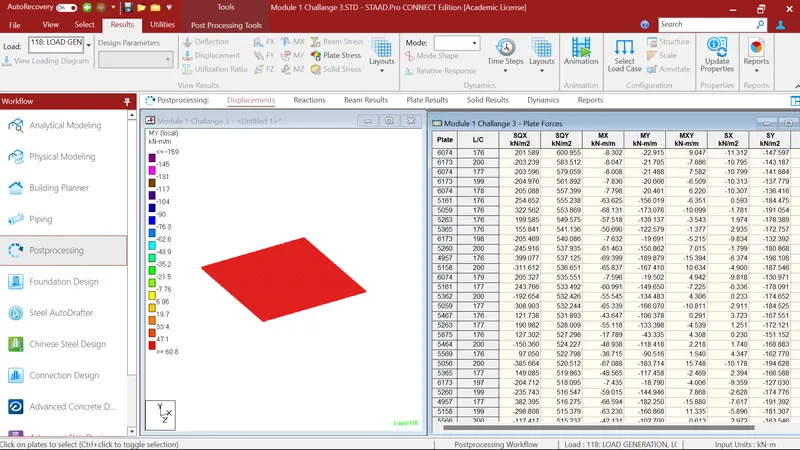
After that I again select the deck slab then goes to reports and select plate stresses and checked for the Maximum Shear Force in SQY and select 281-480 Load combinations for Type 3 Loading. Where I got the Shear Force moment of 815.591kN/m2 in SQY.
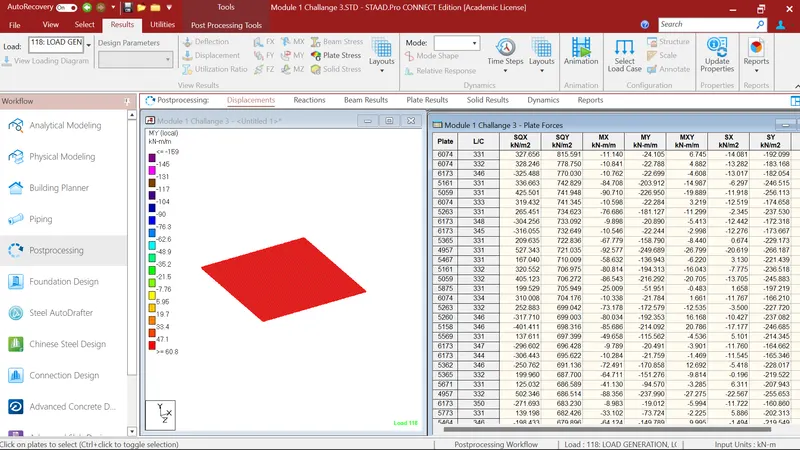
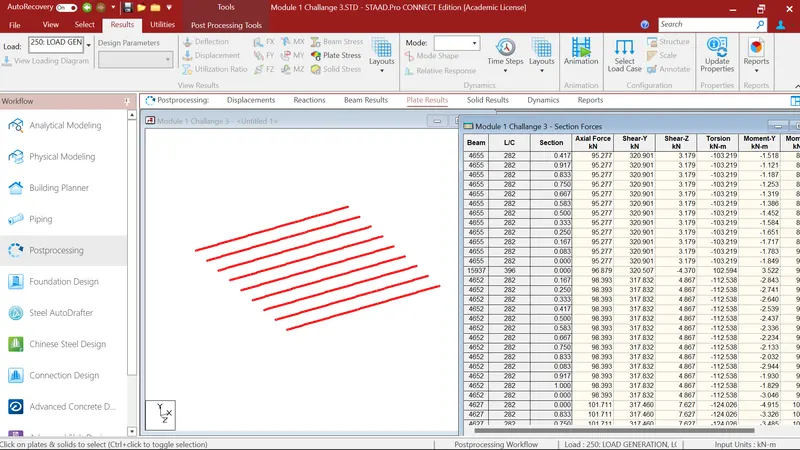
After that I select the Longitudinal girder then goes to reports and select section forces and checked for the Maximum Bending Moment in MZ and select 1-140 Load combinations for Type 1 Loading. Where I got the Maximum Bending Moment of 845.198kNm in MZ.
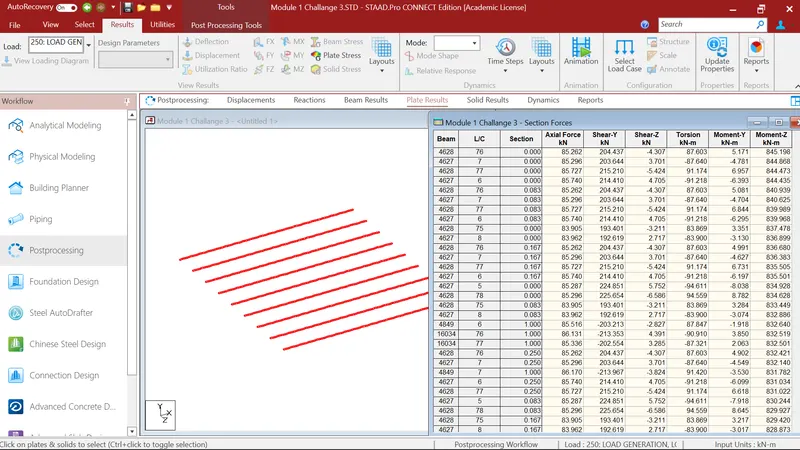
After that I select the Longitudinal girder then goes to reports and select section forces and checked for the Maximum Bending Moment in MZ and select 141-280 Load combinations for Type 2 Loading. Where I got the Maximum Bending Moment of 1853.047kNm in MZ.
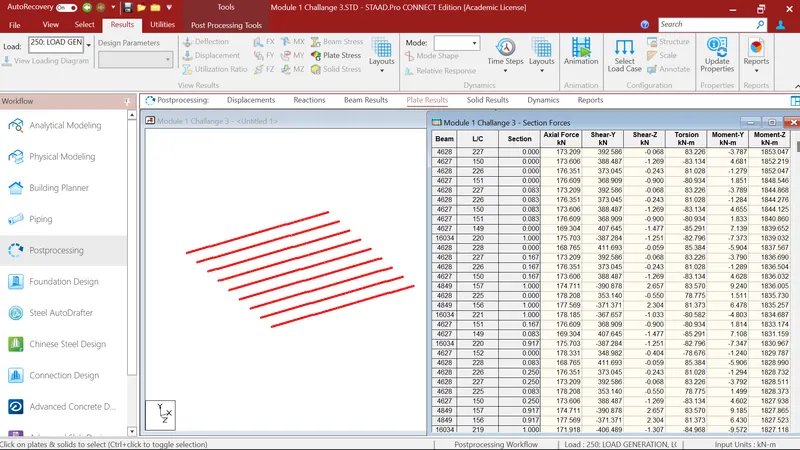
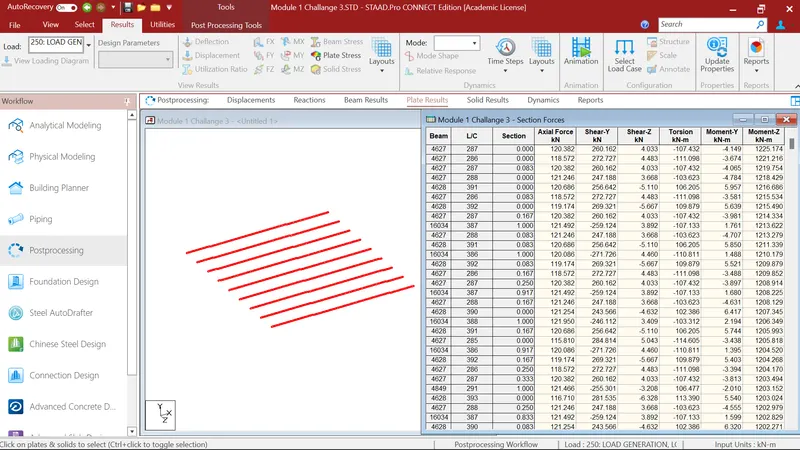
After that I select the Longitudinal girder then goes to reports and select section forces and checked for the Maximum Bending Moment in MZ and select 281-480 Load combinations for Type 3 Loading. Where I got the Maximum Bending Moment of 1225.174kNm in MZ.
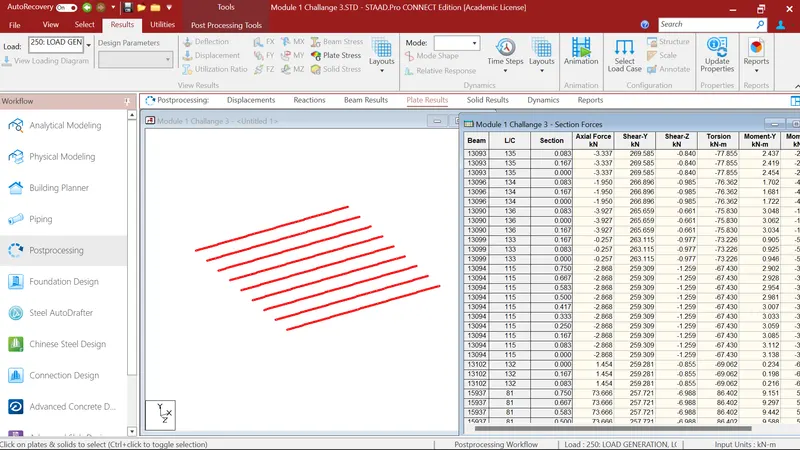
After that I select the Longitudinal girder then goes to reports and select section forces and checked for the Maximum Shear Force in FY and select 1-140 Load combinations for Type 1 Loading. Where I got the Maximum Shear Force of 269.585kN in FY.
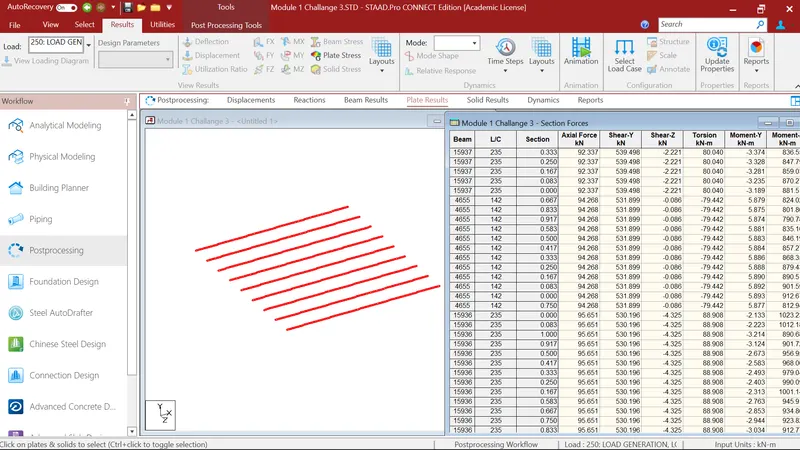
After that I select the Longitudinal girder then goes to reports and select section forces and checked for the Maximum Shear Force in FY and select 141-280 Load combinations for Type 2 Loading. Where I got the Maximum Shear Force of 539.498kN in FY.
After that I select the Longitudinal girder then goes to reports and select section forces and checked for the Maximum Shear Force in FY and select 281-480 Load combinations for Type 3 Loading. Where I got the Maximum Shear Force of 320.901kN in FY.