Week 3:- BiW Fixture Design Methodologies Challenges
- What is Design Methodology?
Design methodologies are one of the pre-design processes which is the steps followed during the concept designing phases in fixture design.
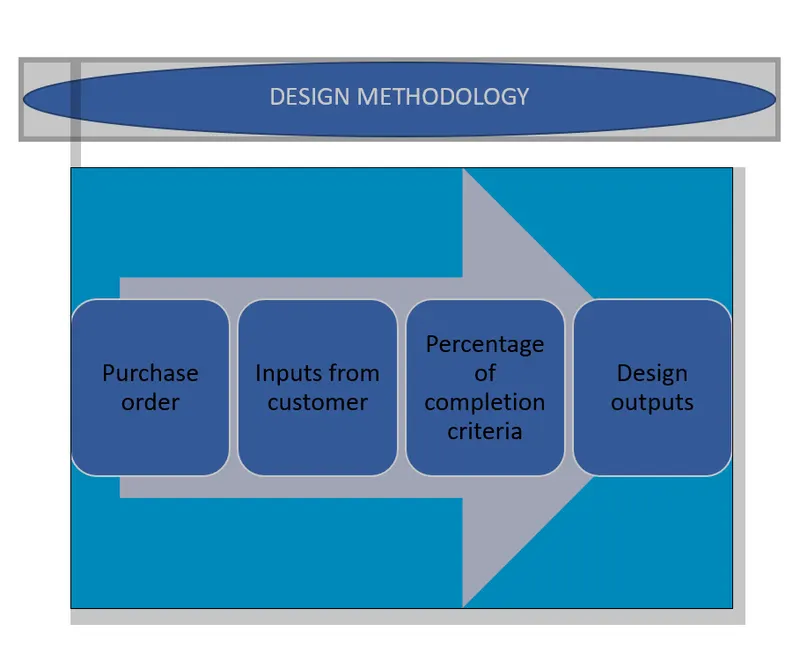
- What are the inputs required from the customer to start designing a Fixture?
The purpose or the function of the fixture will be given as inputs from the customers like what are the process the fixture is going to do i.e welding (spot or seam weld), gluing, riveting, hemming or whether it is a checking fixture or a storage racks etc. It is one of the basic requirements to get from the customer to start designing a fixture.
- What is the input we get from "Car Products"?
The inputs that we get from the care products are as follows:
- GD&T
- Part Lists
- CAD Files
- Clamp Plan
- Product Assembly Process Sheet
- What is the Clamp plan?
A Clamp is a device that is used to hold the part tightly, yet, firmly in the assembly, The clamp prevents any sought of movement of the assembly in the fixture and ensures proper operation on the part without any distortion. The clamp must be placed in such a way that it does not interpret the operation. The clamp plan is the data provided by the customer. The clamp plan provides information on the location of pins, rest units, Clamp units, Dumps, etc.
- What is the purpose of a Layout?
The primary objective of a layout is to demark the entire shop floor area as per the tasks which are done there. The layout provides information about the flow of the product, assembly sequence, the position of robots, sub-assembly links, accessories like tool changer and tip dresser, platform height.
- What is Ergo data?
Ergonomics is the science of refining the design of products to optimize them for human use. Human characteristics, such as height, weight, and proportions are considered, as well as information about human hearing, sight, temperature preferences, and so on. Ergonomics is sometimes known as human factor engineering.
- What do you understand by Weld study?
Weld study is important information collected from the customer. The Weld study gives information about the Weld gun, Weld matrix, and weld points. The weld point is the points the weld is going to happen. The weld points are very important data and changing those points would result in the improper assembly of the part in the Fixture. Also, it gives information about the number of geo weld spots as well as the number of Re-spot welds. These spots will be indicated using red and green spheres respectively. Geo Weld points are those which are welded in a geo fixture. These points are important as they make sure the assembly is not distorted while taking to a respot fixture. The respot weld is done after the geo weld. These welds add strength to the assembly before it is being married with other panels Weld study is important in the automotive industry as the BIW of any car will minimum have at least 5000 weld spots.
- What are the criteria for percentage completion in the designing stage? Explain it in detail
t is used in the design and dispatch stages of the welding fixture. It shows the number of tasks completed in the project and we can make sure whether the work is being done as per the planned schedule. Different stages in a project have a different percentage as follows
- Input and concept design 0-25%
- Concept approval and Simulation check 25-40%
- Design Freezing and detailing 40-80% 4. Check and Final Dispatch 80-100%
- Brief about "Output" in design?
The output is 3D models and 2D drawings of the tool. The output tools are of two types
- Unitised tools
- Non-unitized tools
- What do you understand by structuring a design tree? How does it reduce errors during the design process?
Structuring a design tree implies a process where all the assemblies and parts are named in a specific standard. Every customer will have their own set of standards to structure the design tree. It is an important process that helps us to identify the specific part or assembly as to which project, tool/unit it belongs to. This helps us to avoid errors during design study, manufacturing, assembly, inspection. If the parts are the assemblies are not named properly or the design tree is not structured properly, it will create confusion to understand the design and may create major possibilities of making an error. The naming of a fixture or a unit or a part gives the information as to which project, tool or unit, it belongs to It can help us identify the number of items of the same type or different type that are being used in an assembly. Two or more components which have similar design are given the same name such that one component is taken as a reference during manufacturing. In a design tree, the parts which are designed by us should be placed in the top.
- What are Units? Mention 5 types of units.
The fixture is the assembly of different units. Some of the units used in fixture assembly are the Base unit, Pin unit, Clamp unit, etc. Unit is used to perform a specific function in the fixture. Units are part of the unitized tool. Units are of two types as follows 1. Simple unit 2. Complex unit
Simple unit The simple unit as the name suggests has a simple design, the design process and manufacturing is also simple. The simple units are further classified as below: 1. Rest unit 2. Fixed pin unit 3. Retract pin unit 4. Rough locator unit 5. Sensor unit 6. Base unit Complex Unit As opposed to the simple unit, the complex unit has a complex design process and manufacturing process. They are classified as follows 1. Slide unit. 2. Dump unit.
- Describe Fixed Pin units & their purpose?
Fixed pin units are used in a fixture to locate the car panel during any operation. Pin, Pin retainer, Shims, blade, riser are the parts of the fixed pin unit. Pin retainer is used to mount the pin. The pin retainer block has two-way shims. Shims are very important in designing a pin unit as it helps to avoid the stack up tolerances during the assembly process.
- What are the different parts of a fixed unit?
The different parts of a fixed pin unit are as follows Pin Pin Retainer Shims Blade Riser
- What is the purpose of making a Rest unit & describe its parts?
The rest units are designed to support the car panels using Mylar. The primary purpose of the Rest unit is to rest the car panel. The parts of the rest units are as follows 1. Mylar 2. Blade 3. Riser
- What are the basic fundamentals to design a Sensor unit?
A sensor unit is used to sense whether the car panel is placed in the fixture or not. The sensors will send the signals to PLC systems and so the next process will be executed by this signal. The number of sensors used in a fixture will depend upon the number of parts used for the assembly. Every panel should by one or two panels depending on the size of the part and in such case they are placed in the opposite direction. The mounting of the sensors should be in such a way that they are adjustable in three directions. Some of the major sensor manufacturers are IFM, SICK, OMRON, etc The types of sensors used are as follows 1. Proximity Sensor. The proximity sensor is a sensor able to detect the presence of nearby objects without any physical contact. A proximity sensor often emits an electromagnetic field or a beam of electromagnetic radiation (infrared, for instance), and looks for changes in the field or return signal.
LASER sensor A laser sensor is a kind of sensor that uses laser technology to measure. It is generally composed of laser, optical parts, and photoelectric devices. It can convert the measured physical parameters (such as length, flow, speed, etc.) into optical signals, and then use a photoelectric converter to convert the optical signals into electrical signals
- What is a Rough locator unit & what are the basic fundamentals to consider while designing it?
Rough locators are majorly used in manual fixtures. The rough locators will guide the operators to place the part in the correct position and orientation. The rough locator can be a standard part or make part.
The fundamentals of rough locators are as follows Rough locators have to be placed at the edge of the car panel in order to guide them. There must a gap of 2-5 mm between the rough locator and the car panel in order to avoid damage during loading and unloading. Rough locators have to be placed at the same angle as the car panel. Rough locators should guide the panel in pin arresting direction. Rough locators should start guiding the panels 10-15mm before the pin engagement Rough locators should be designed with an entry angle for the car panel which is around 35-40 degrees. Rough locators should be designed with two slots to mount for easy adjustments. The slots should be in direction of the car part guiding.
- What is a Base unit and describe it's parts?
The base unit is designed to mount all the other units like clamp unit, pin unit, rest unit, etc of the tool, also other parts like pneumatic valve box, trunking cable path will also be mounted on the base unit. The parts of the base unit are as follows: Valve box Trunking Channel Measuring hole cover Eyebolt Pedestal Floorplates
- What is a Dump Unit and what are its functions?
Dump unit is found in complex fixture A dump unit is used when there are geometrical constraints while placing a panel. It consists of a dump cylinder to perform clamping and unclamping operation.
- What is a Slide unit? Mention where Slide units are commonly used.
Sliding units are used in a fixture when there are a lot of space constraints, where usage of different units is very difficult in order to design the assembly. The sliding unit consists of a sliding cylinder to which a panel is attached The panel moves on the guide rails provided and this motion is due to the reciprocating motion of the cylinder The position locking units are used to lock the position of the panels on the guide rails Sensor units are used to detect the position of the sliding plate, whether it has reached the desired position or not. A stopper block is used to control the motion of the sliding plate.