Specifications of Lithium Ion Cell
Question
Read a lithium ion cell datasheet. Comment on the following:
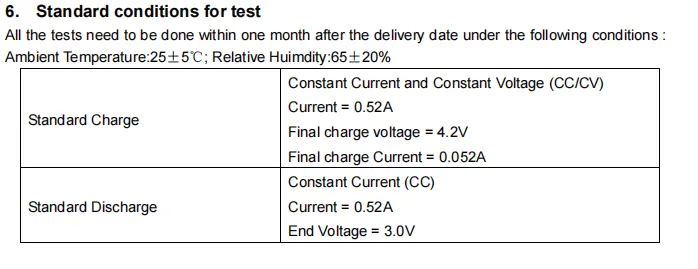
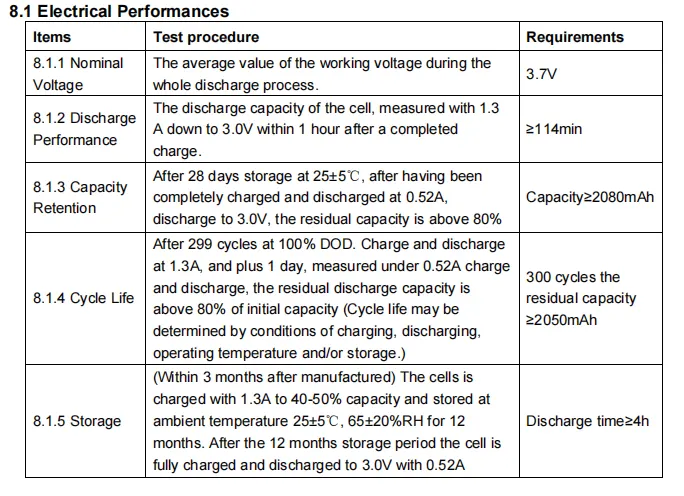
- What is the difference between nominal voltage and maximum voltage?
- Under which situation we observe the changes in dimensions and weight of a cell.
- List out various mechanical testing and standards.
- What is the discard procedure suggested generally for used Li ion+ batteries?
Your Answers
Read a lithium ion cell datasheet. Comment on the following:
- What is the difference between nominal voltage and maximum voltage?
- Under which situation we observe the changes in dimensions and weight of a cell.
- List out various mechanical testing and standards.
- What is the discard procedure suggested generally for used Li ion+ batteries?
Reference to LIR18650 Datasheet Li-ion Battery Edition: NOV. 2010.
- What is the difference between nominal voltage and maximum voltage?
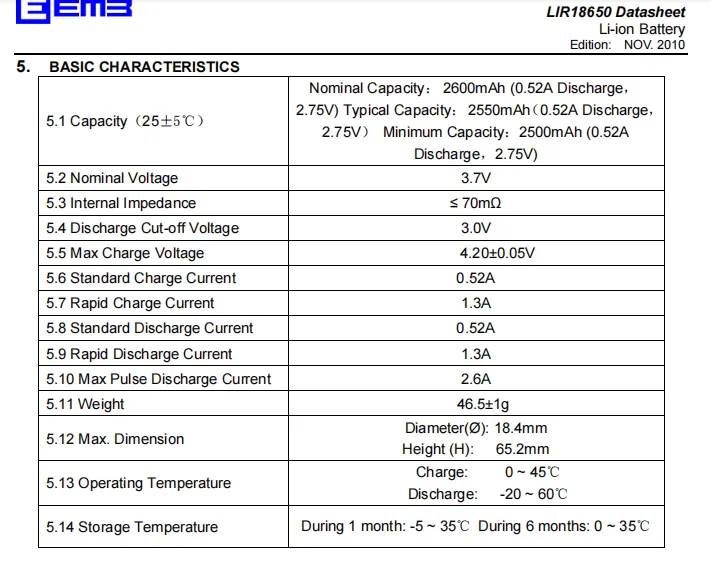
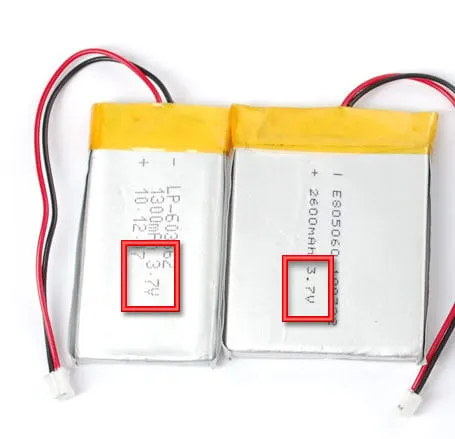
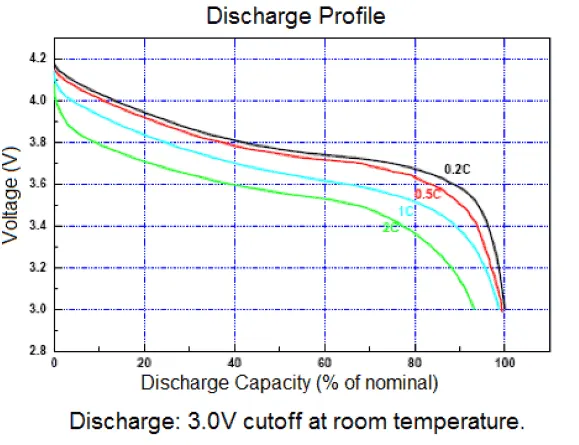
- Under which situation we observe the changes in dimensions and weight of a cell.
Most primary lithium cells have a warning printed on the label that cautions against the
following conditions:
- Short-circuit
- Charging
- Forced over-discharge
- Excessive heat or incineration
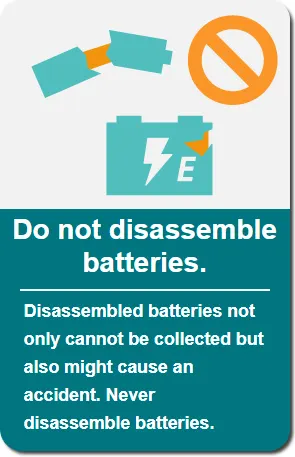
- Crush, puncture, or disassembly
Not guarding against these conditions may result in a hot cell or a battery pack that could vent
or explode. With Electrochem cells, the ensuing hazards associated with a hot cell typically will
not occur the instant the cell is abused. Rather, the cell will heat up over a period of time. This
can take place in a matter of seconds or hours. Subsequently, the end result has the potential
to result in a cell vent or explosion once the critical temperature is reached.
primary cells and batteries are labeled with their maximum operating temperature, indicated in
degrees Celsius. This temperature should not be exceeded.
- List out various mechanical testing and standards.
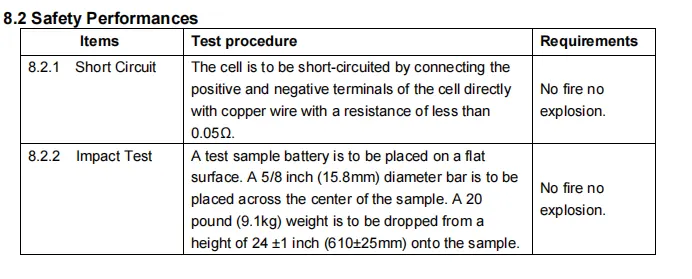
1 Short Circuit :-The cell is to be short-circuited by connecting the positive and negative terminals of the cell directly with copper wire with a resistance of less than 0.05Ω.
2 Impact Test:- A test sample battery is to be placed on a flat surface. A 5/8 inch (15.8mm) diameter bar is to be placed across the center of the sample. A 20 pound (9.1kg) weight is to be dropped from a height of 24 ±1 inch (610±25mm) onto the sample.
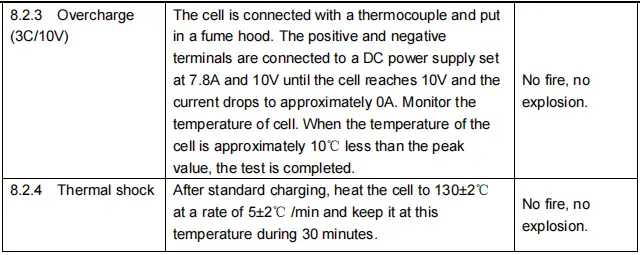
3 Overcharge(3C/10V):- The cell is connected with a thermocouple and putin a fume hood. The positive and negative terminals are connected to a DC power supply set at 7.8A and 10V until the cell reaches 10V and the current drops to approximately 0A. Monitor thetemperature of cell. When the temperature of the cell is approximately 10 less than the peak value, the test is completed.
4 Thermal shock:- After standard charging, heat the cell to 130±2 at a rate of 5±2 /min and keep it at this temperature during 30 minutes.
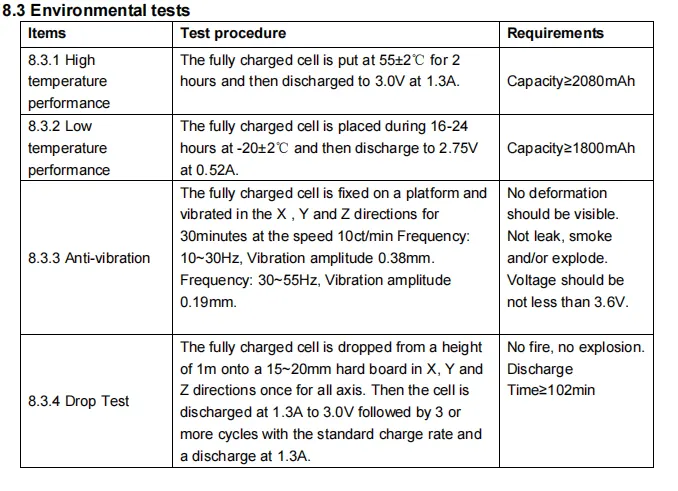
1 High temperature performance:- The fully charged cell is put at 55±2 for 2℃ hours and then discharged to 3.0V at 1.3A
2 Low temperature performance:- The fully charged cell is placed during 16-24 hours at -20±2 and then discharge to 2.75V ℃ at 0.52A
3 Anti-vibration:- The fully charged cell is fixed on a platform and vibrated in the X , Y and Z directions for 30minutes at the speed 10ct/min Frequency: 10~30Hz, Vibration amplitude 0.38mm. Frequency: 30~55Hz, Vibration amplitude 0.19mm.
4 Drop Test:- The fully charged cell is dropped from a height of 1m onto a 15~20mm hard board in X, Y and Z directions once for all axis. Then the cell is discharged at 1.3A to 3.0V followed by 3 or more cycles with the standard charge rate and a discharge at 1.3A.
- What is the discard procedure suggested generally for used Li ion+ batteries?
How should I dispose of lithium-ion batteries?

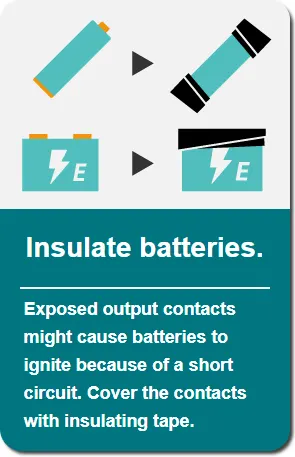
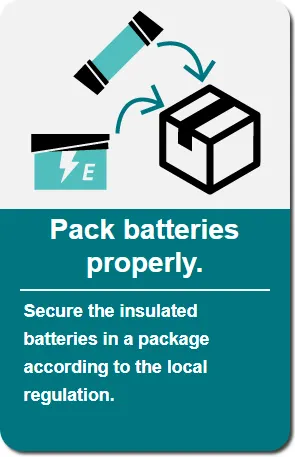
In the case of small lithium-ion batteries used in PCs, smartphones, digital cameras, and other mobile devices, remove the battery from its compartment, cover its contacts with plastic or insulating tape, and take it to any store that cooperates with the disposal of industrial waste such as an electrical appliance store or a home center.
If you discard lithium-ion batteries together with regular flammable or plastic trash, they might ignite in a garbage truck or an incinerator, causing fire hazards.
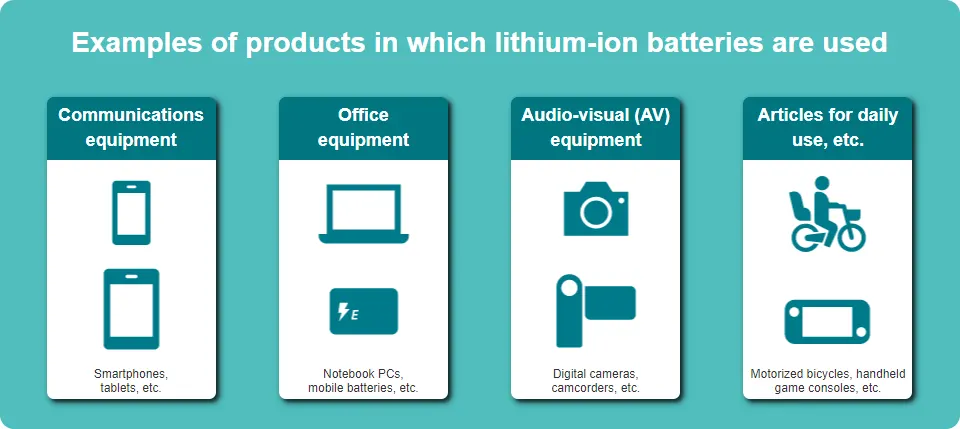
Lithium-ion batteries are used in products for daily use.
Check if the product contains any lithium-ion batteries before discarding them!


Got it! Just like nonburnable garbage and plastic bottles,
I will separate lithium-ion batteries from other types of garbage.

How should I dispose of industrial or large lithium-ion batteries?
You should properly dispose of industrial lithium-ion batteries used in automated guided vehicles (AGVs), storage battery systems, etc. as industrial waste.
The disposal method differs from manufacturer to manufacturer. Contact the manufacturer when you need to dispose of lithium-ion batteries. Some manufacturers will introduce a reliable industrial waste collector to you.
Each country or region has its own regulation for the disposal of batteries.
Oh, I have to learn how I can dispose the lithium-ion battery
in my country before throw it away.
What are the key considerations for disposing of lithium-ion batteries safely?
The following considerations apply when disposing of lithium-ion batteries: