Week 2 Session 7
Week 2 Session 7
Compare the different architectures of HEV. Discuss the pro's and con's
Architecture of HEV. The key components in an HEV consist of an electric motor (EM), battery, convertor, ICE, fuel tank and control board. These components can be categorized into three groups: 1. Drivetrains—physically integrate the ICE power source and electric drive.
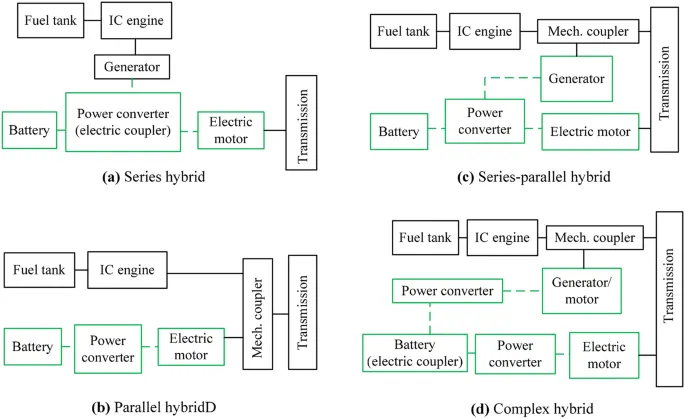
the 3 combination are mostly used in EV architecture
series hybrid
eries drivetrains are the simplest hybrid configuration. In a series hybrid, the electric motor is the only means of providing power to the wheels. The motor receives electric power from either the battery pack or from a generator run by a gasoline engine.
Hybrids have better fuel efficiency and conserve more energy, thus emitting fewer carbon emissions. Less Fossil Fuel Dependency: Since hybrid vehicles are able to utilize the high voltage battery pack and electric motor(s) for propulsion, they don't rely on fossil fuels as much as standard gas cars.
- Higher Purchasing Cost And Complex Hybrid Tech. ...
- Performance. ...
- Fuel Economy On The Open Roads Or Highway. ...
- Higher Insurance Rates. ...
- Diminished Hybrid Fuel Efficiency In Cold Weather.
parallel hybrid
n vehicles with parallel hybrid drivetrains, the engine and electric motor work in tandem to generate the power that drives the wheels. Parallel hybrids tend to use a smaller battery pack than series drivetrains, relying on regenerative braking to keep it recharged.
The benefits of parallel hybrids are increased fuel economy, reduced emissions, and low engine noise.
The drawbacks of parallel hybrids is additional weight and costs when compared to ICE vehicles
Some of the advantages of the parallel mode operation include a reduced traction motor size, no need for a generator, and the elimination of efficiency losses in multiple power conversion processes between the electric machines and the batterY.
series parallel hybrid
In hybrids with parallel drivetrains, the electric motor and internal combustion engine can provide mechanical power simultaneously. Series/parallel drivetrains enable the engine and electric motor to provide power independently or in conjunction with one another.
An advantage of a series hybrid is that the engine operates at its maximum efficiency point(s) thanks to the buffering of excess power; however, one disadvantage is the relatively low transmission efficiency at relatively high vehicle loads compared to other hybrid configurations.