Week 2 Railwheel and Track
REPORT
OBJECTIVE
To perform static structural analysis on a rail wheel and track.
Case1 is to compare total deformation, equivalent stress and life under the loads 100000N and 500000N.
Case 2 is to check the inbuilt total deformation is same as the user defined total deformation under 100000N.
PROCEDURE
SETUP 1
Open static structural in ANSYS and import the model to mechanical software.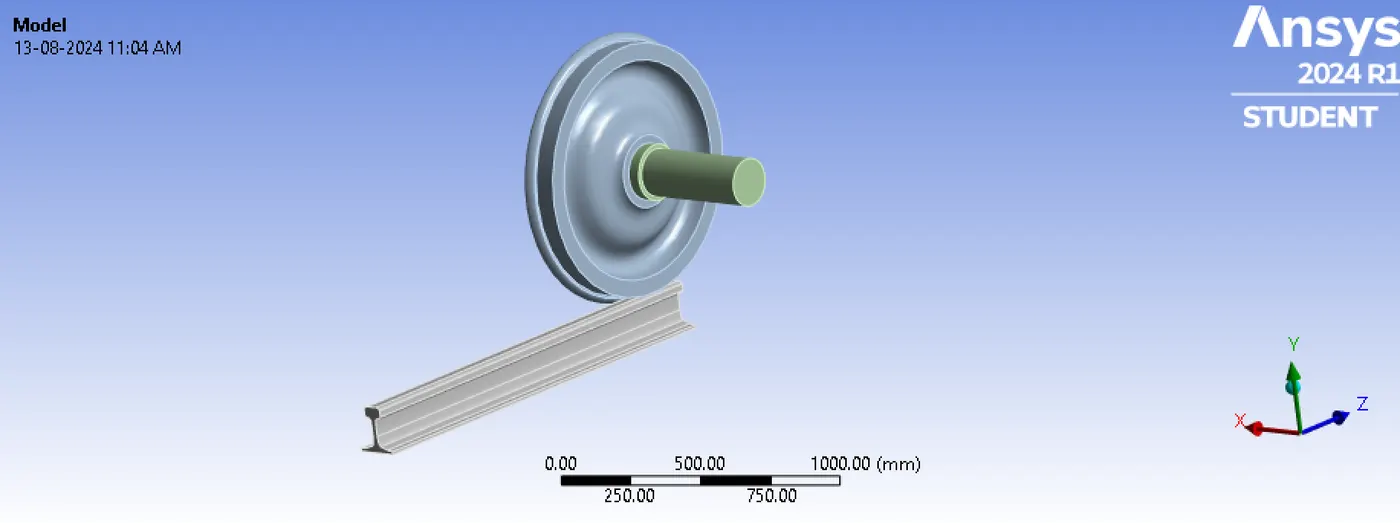
Structural steel is assigned as material, the properties of the material is below,
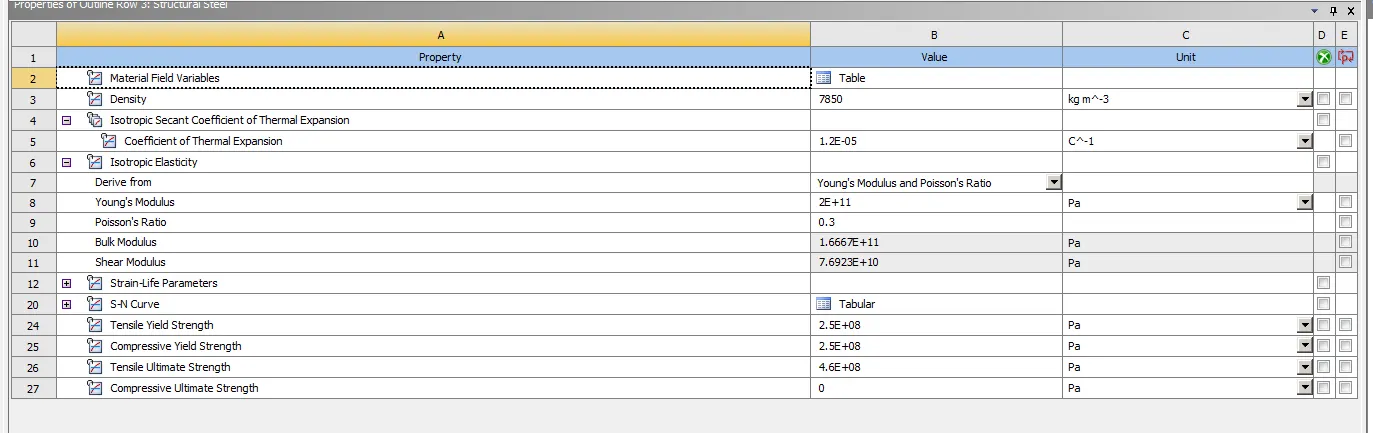
Then in contacts- rename based on definitions. The contact between wheel and track is frictional and give frictional coefficient as 0.3. The contact between wheel and shaft is frictionless.
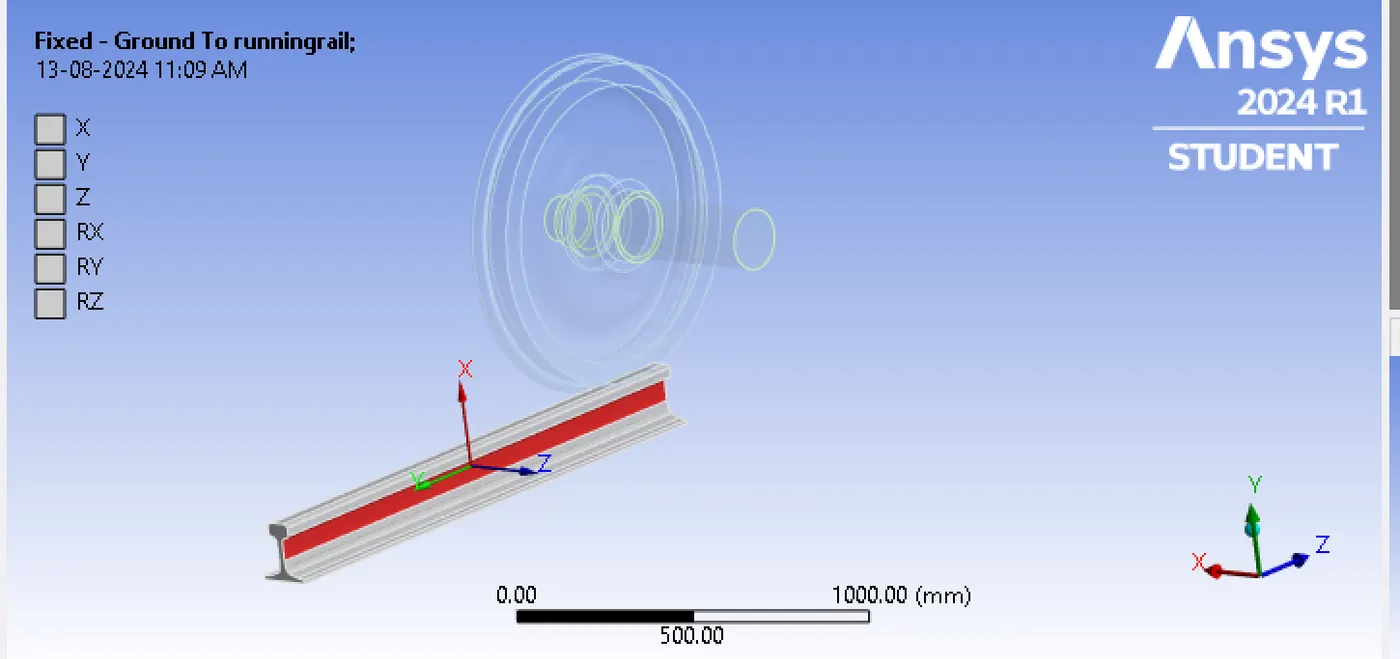
Give fixed joint to the track.
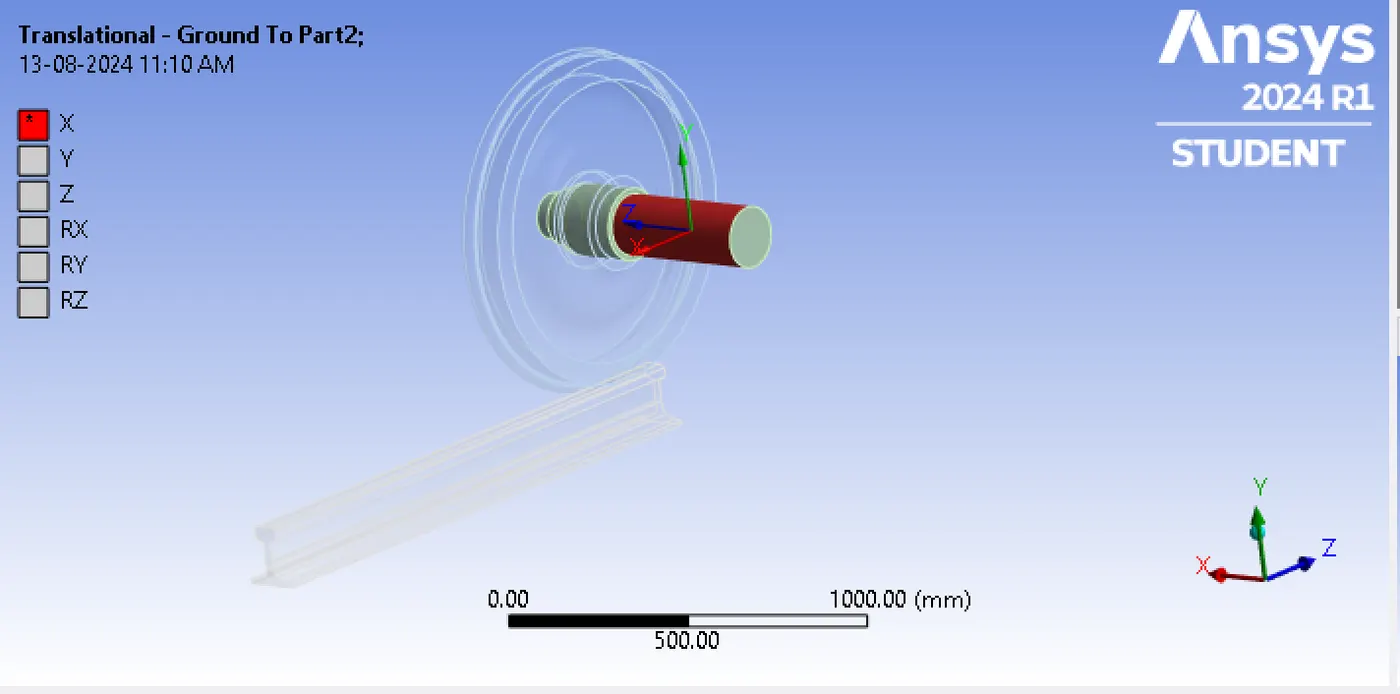
Give translational joint to shaft and the displacement is in X direction.
 Give planar joint to wheel.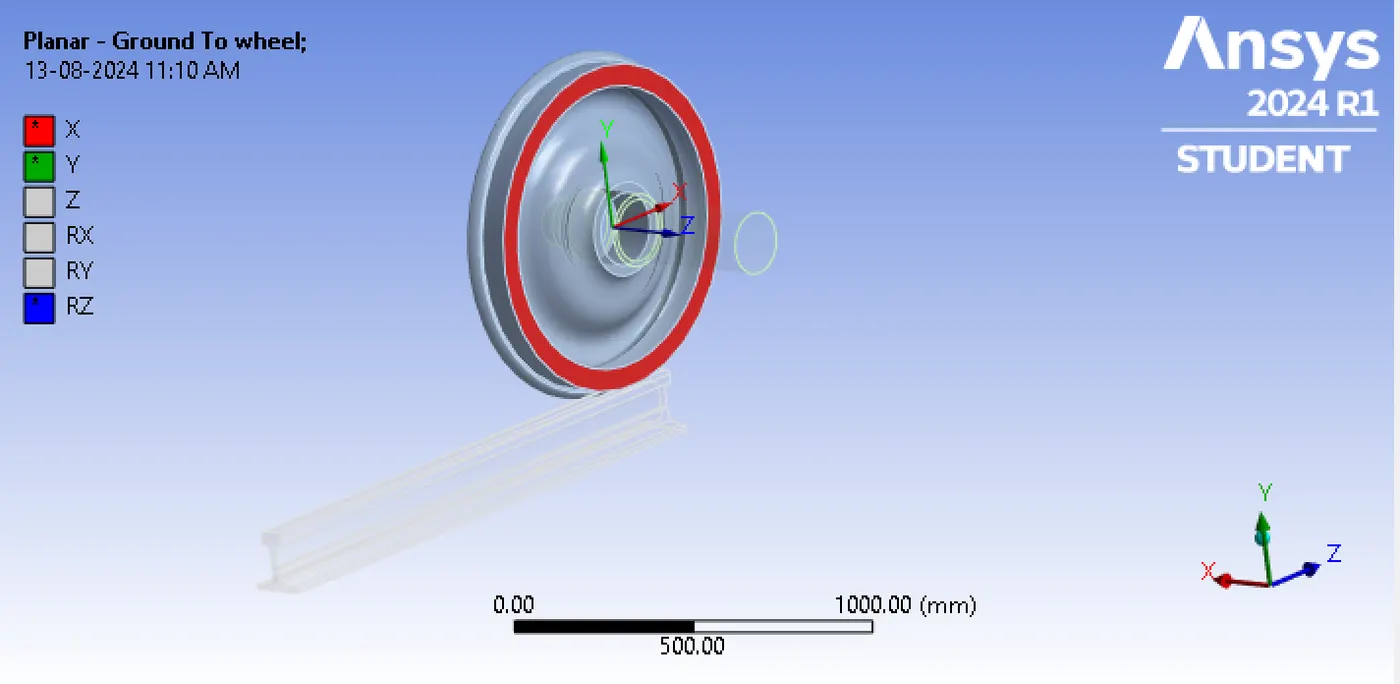
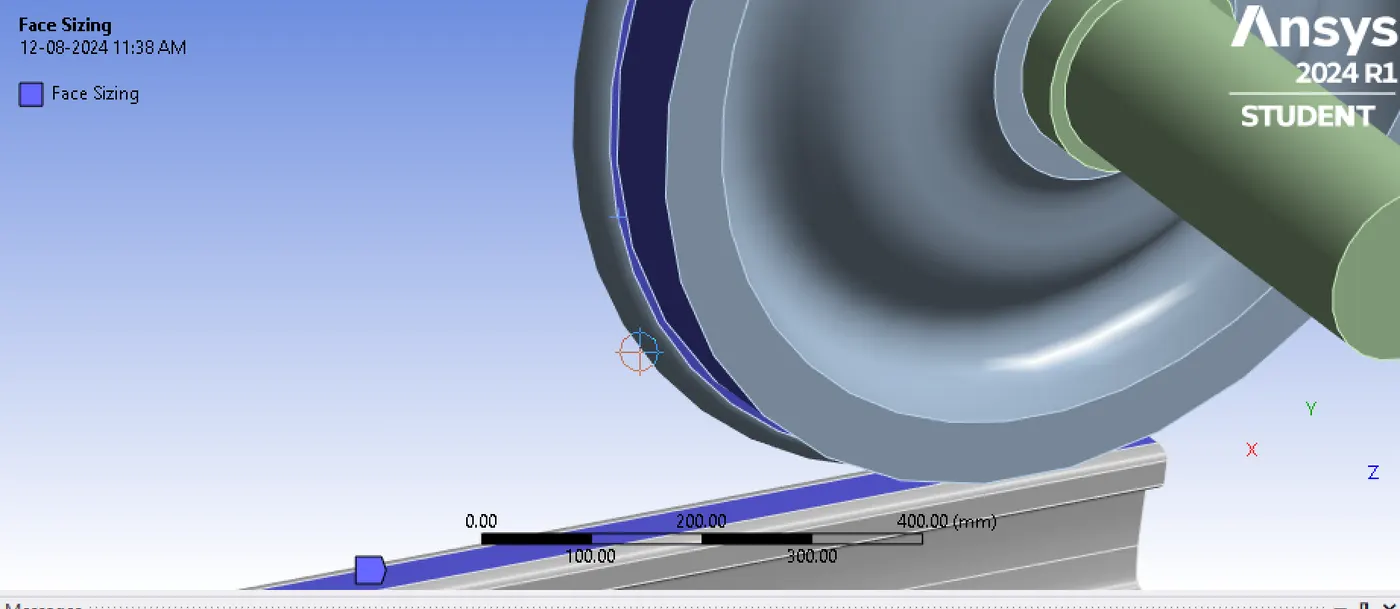
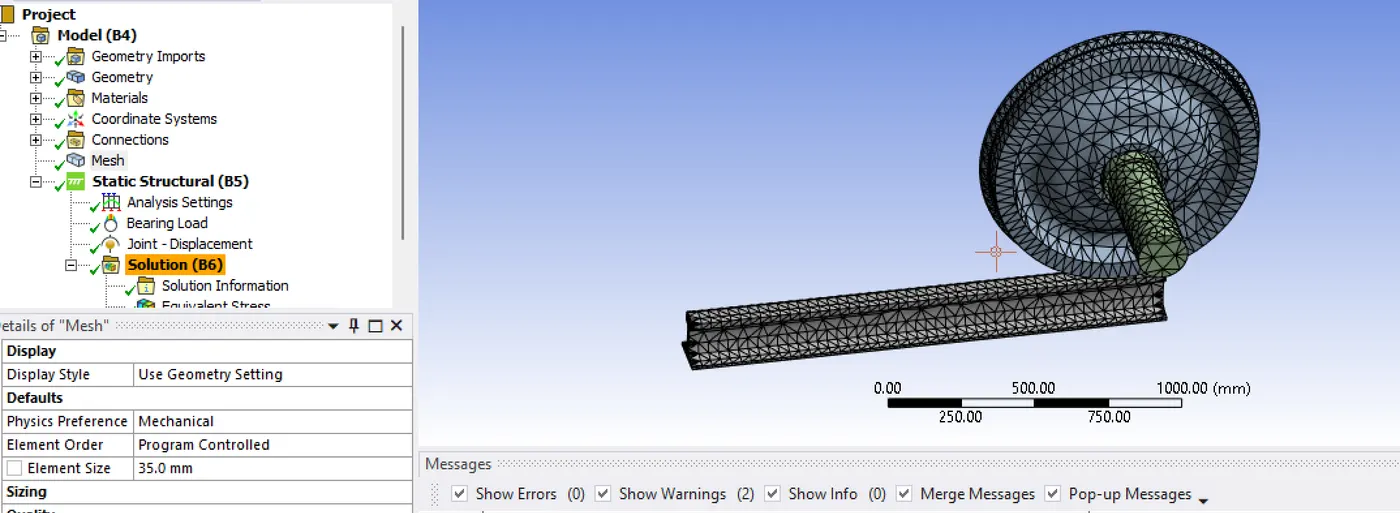
Mesh size of 50mm is applied except for the frictional contact region. There 35mm mesh is given using face sizing as shown below.
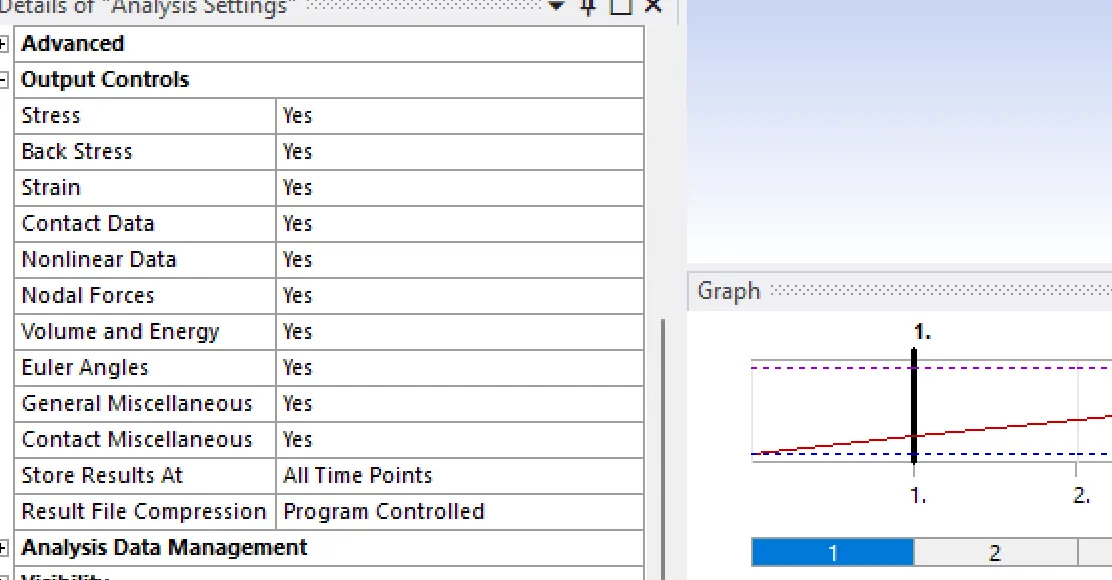
Analysis setting
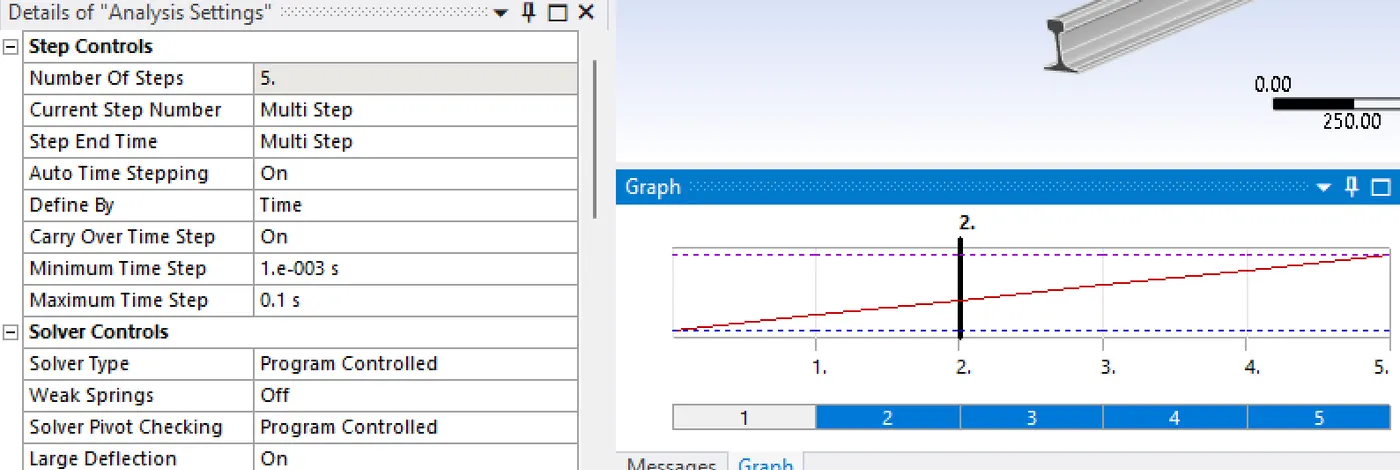
Shaft is translating 500mm through 5 steps.
In Step 1 parameters are set as
Solver type Programme controlled
Large Deflection ON
Force convergence ON
Step 2 to 5,
Static structural
Given 500mm displacement to translational joint through 5 steps from 100mm to 500mm by a increment of 100mm in each step.
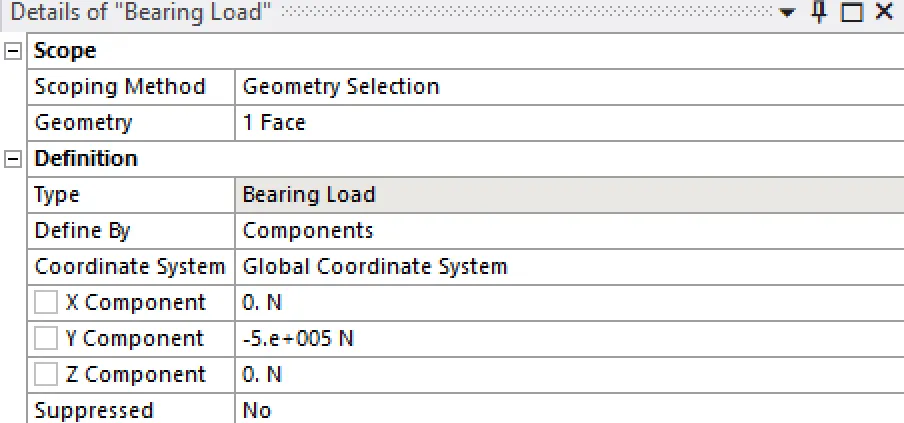
A varying load of 100000N is applied on the wheel in negative Y direction as shown below,
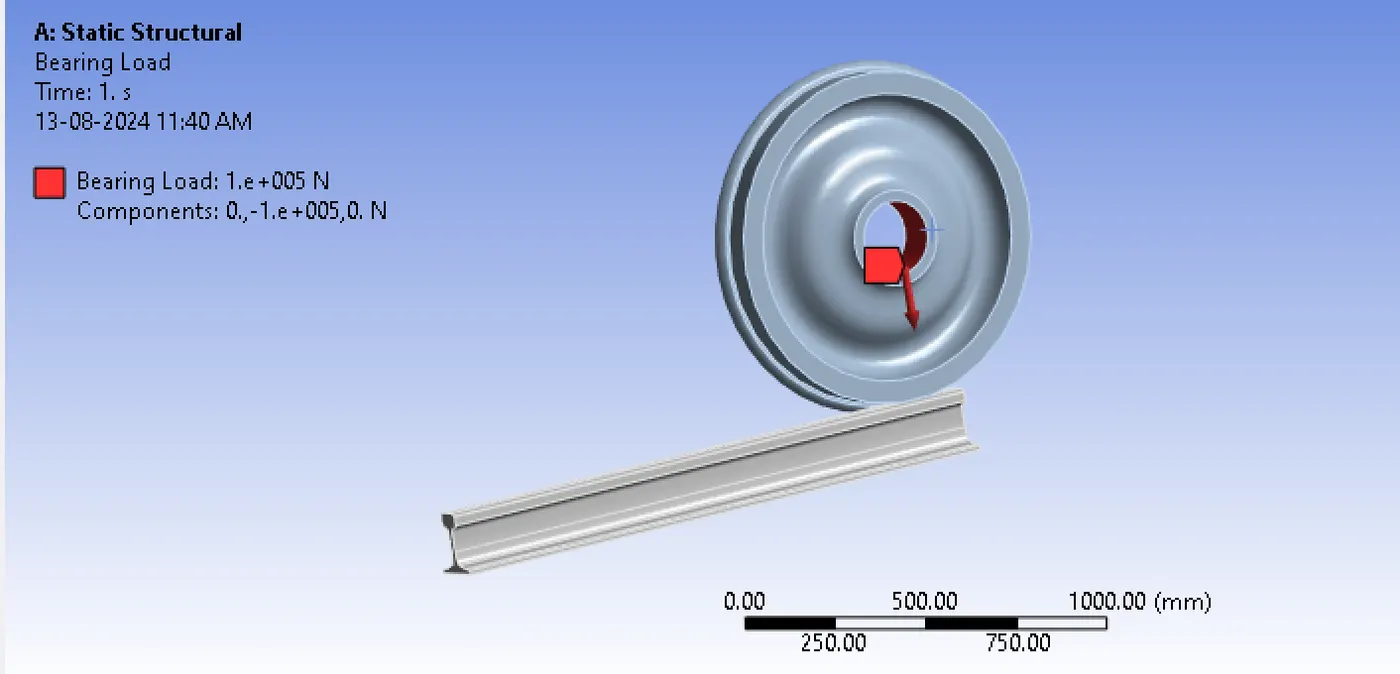
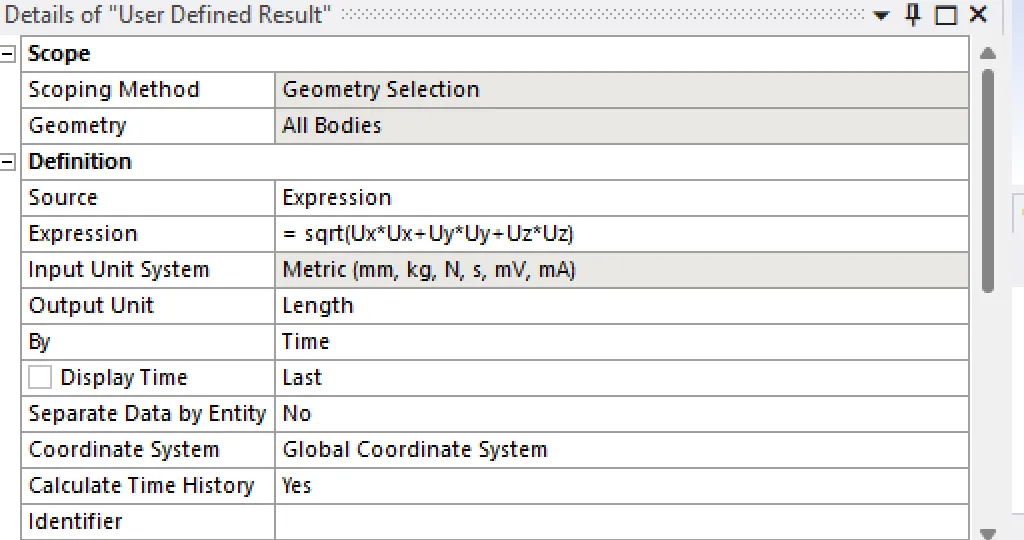
As results, requested for equivalent stress, total deformation, fatigue tool-life and user defined total deformation.
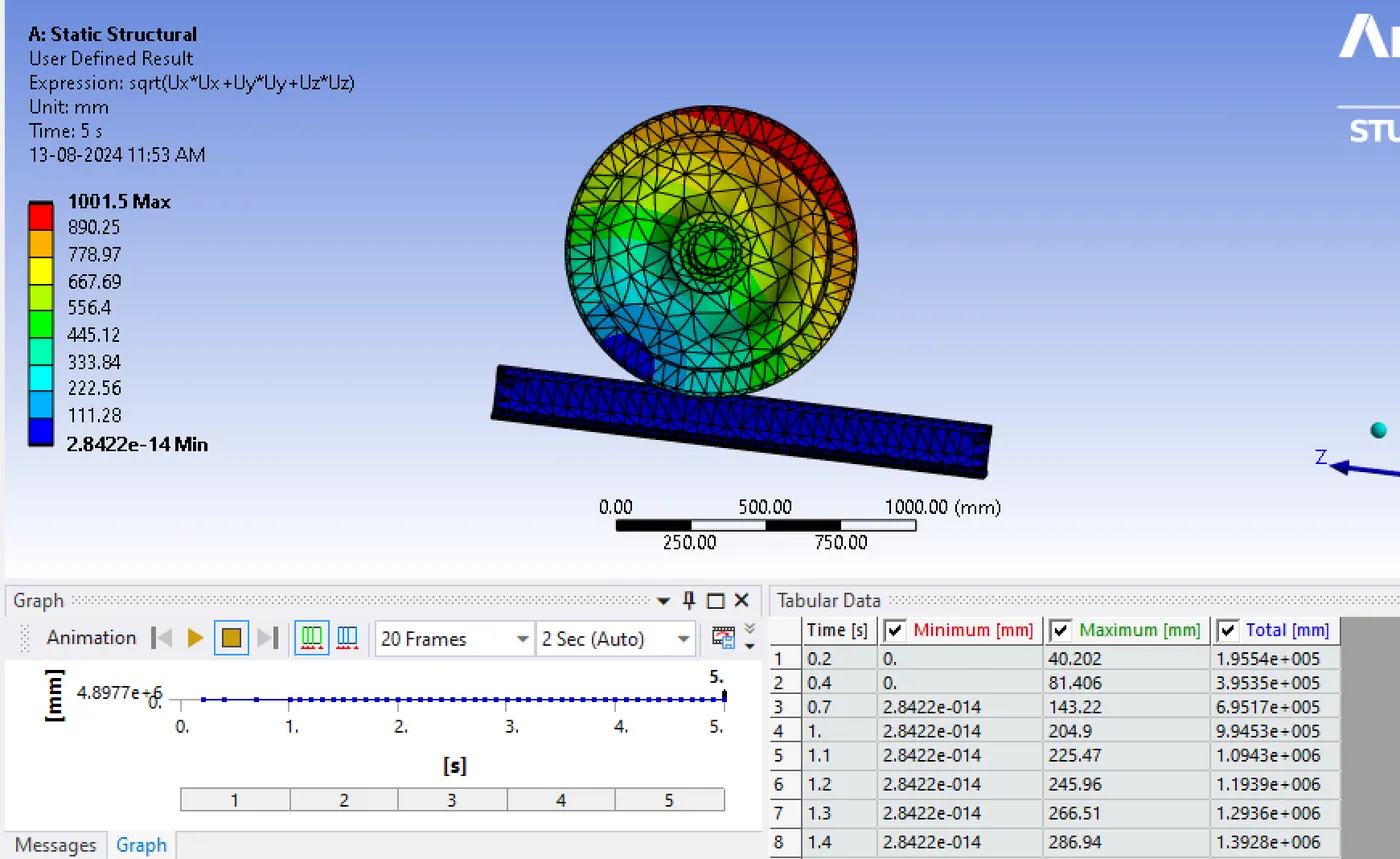
Expression for total deformation is sqrt(Ux*Ux+Uy*Uy+Uz*Uz)
RESULTS
MODEL 1
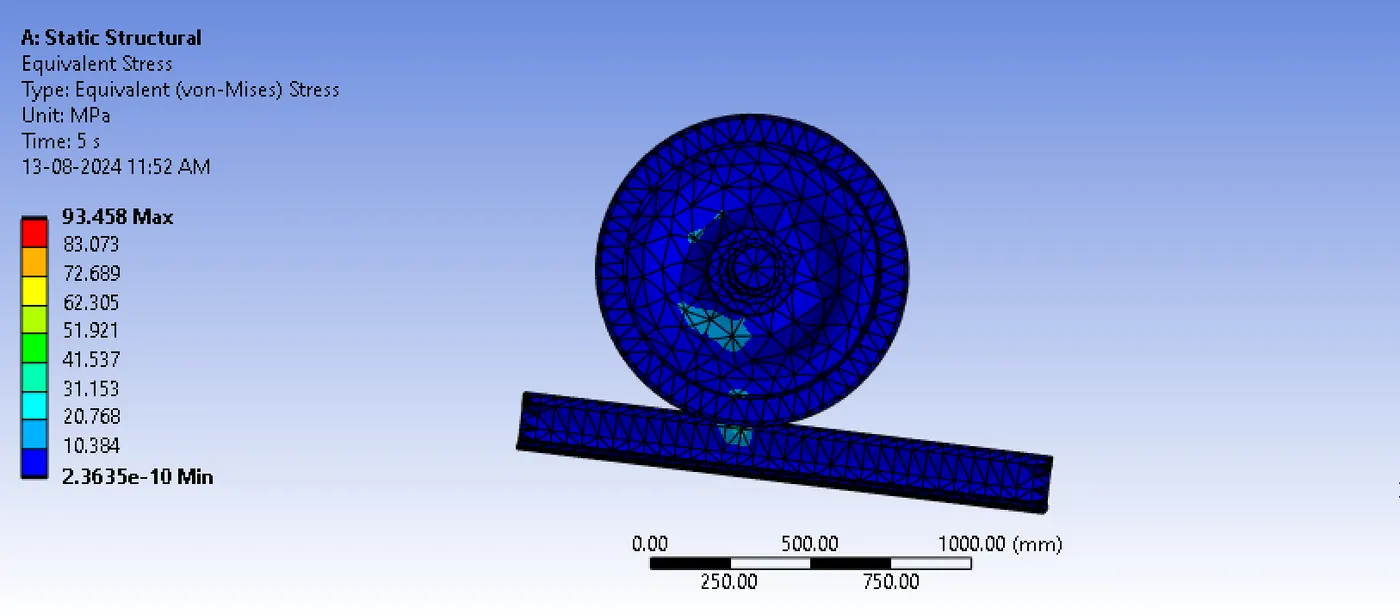
Equivalent stress
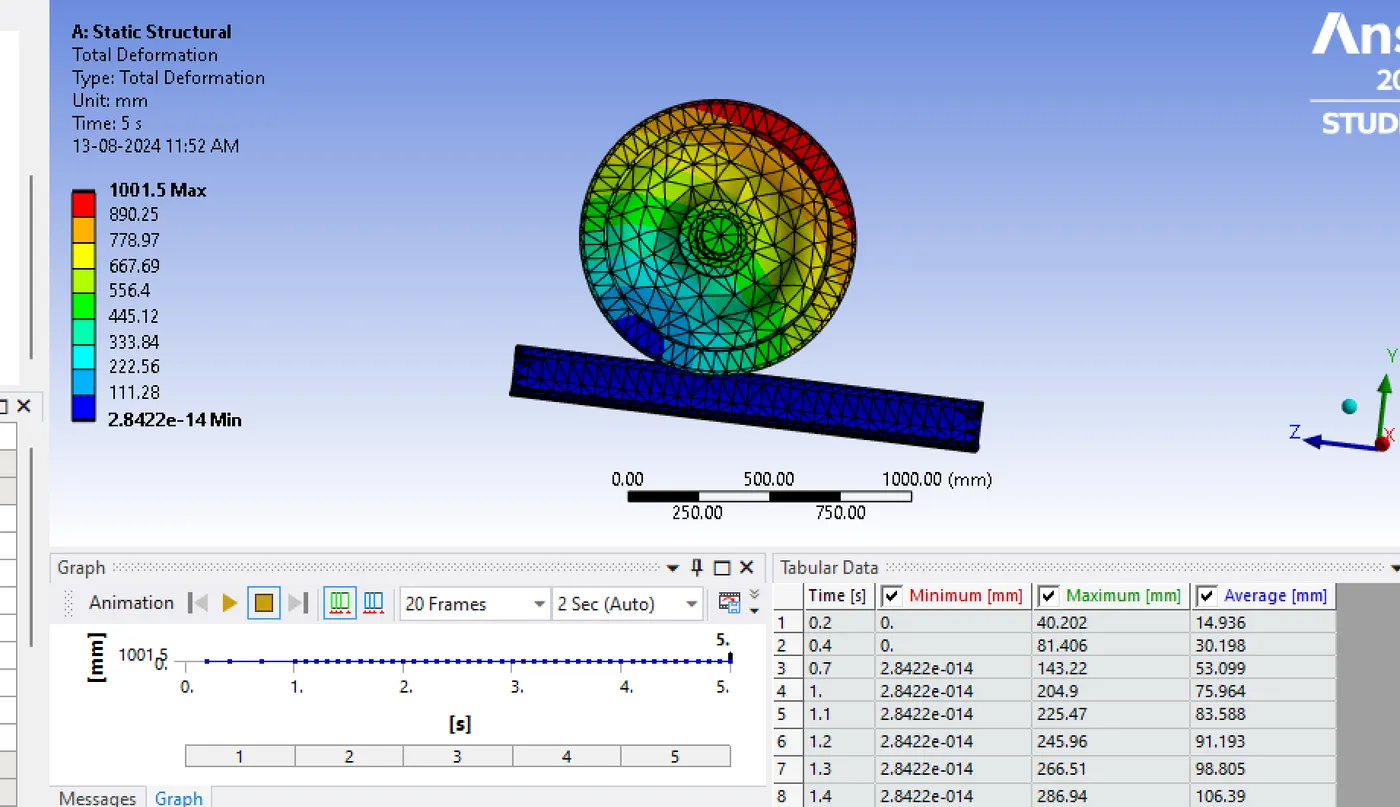
 Total deformation
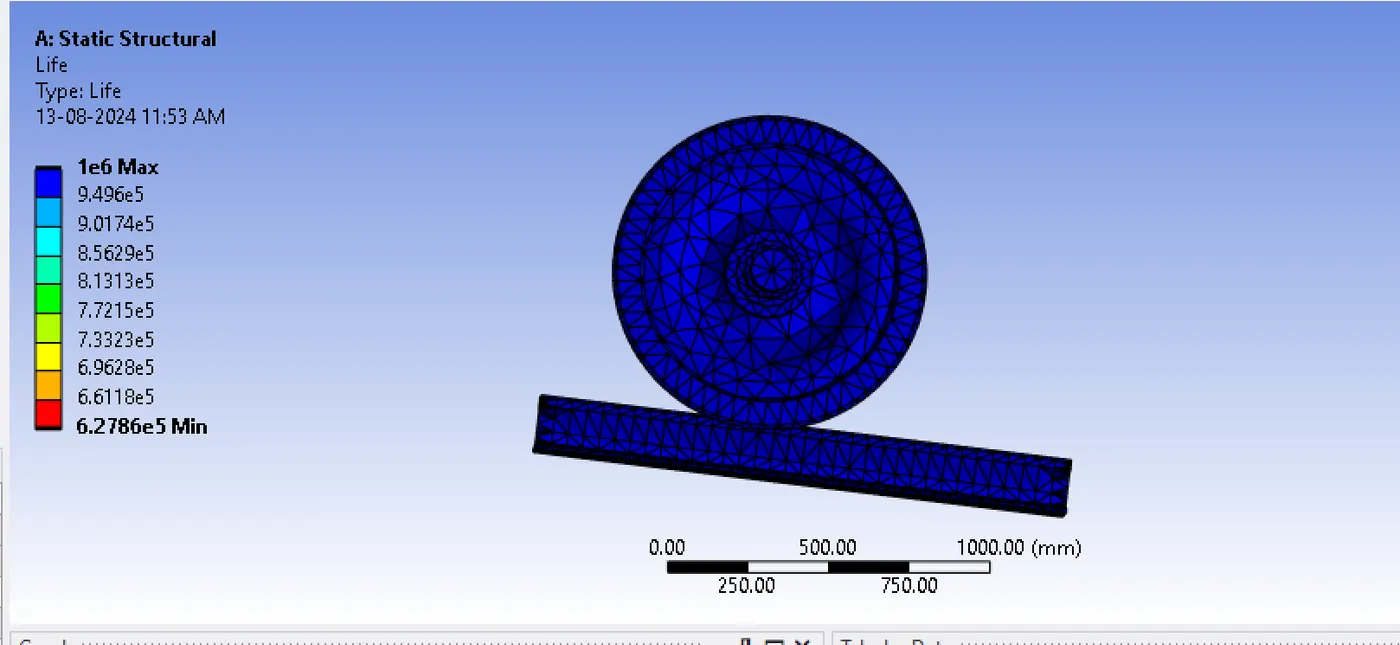
 Life
Life
User defined Total deformation
SETUP 2
Just a few changes applied in this setup.
The bearing load is increased to 5 times than setup 1.
Here the mesh size is given as 35mm and face sizing is not given because the solver engine was unable to solve. Changing analysis setting and mesh size won't help.
This is where the both setup will work, so I had to go for this.
All other procedures were same as setup 1.
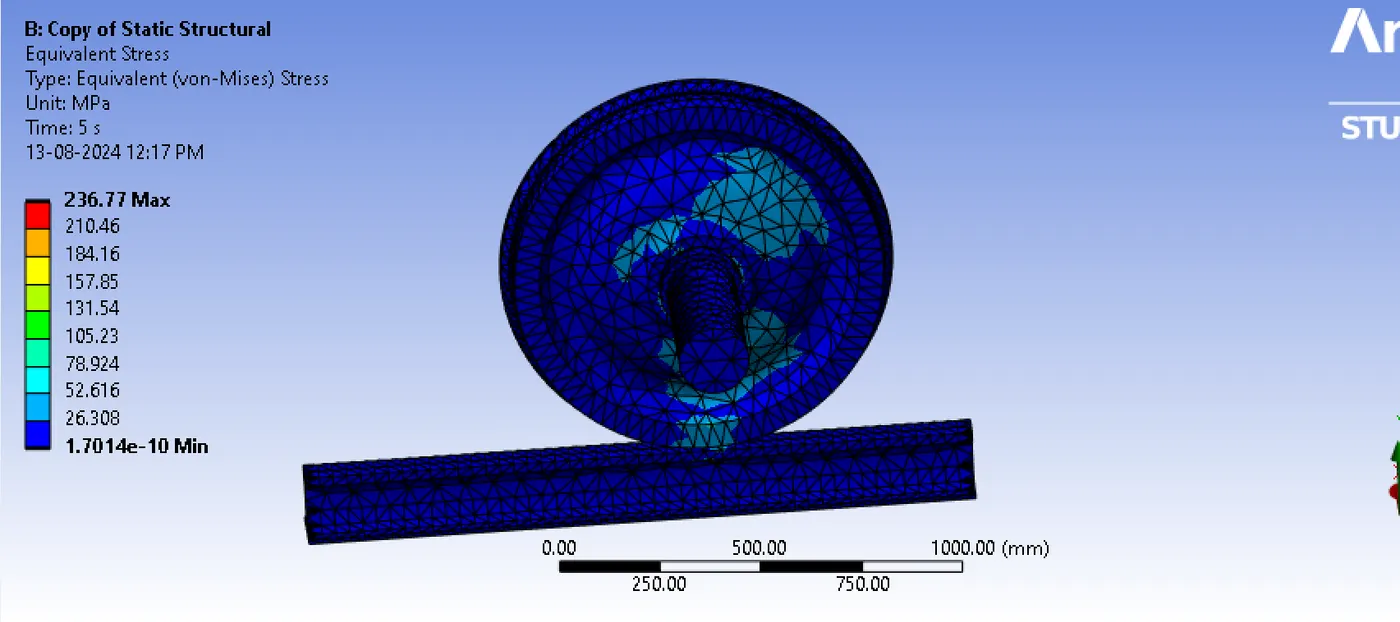
Equivalent stress of setup 2
Total deformation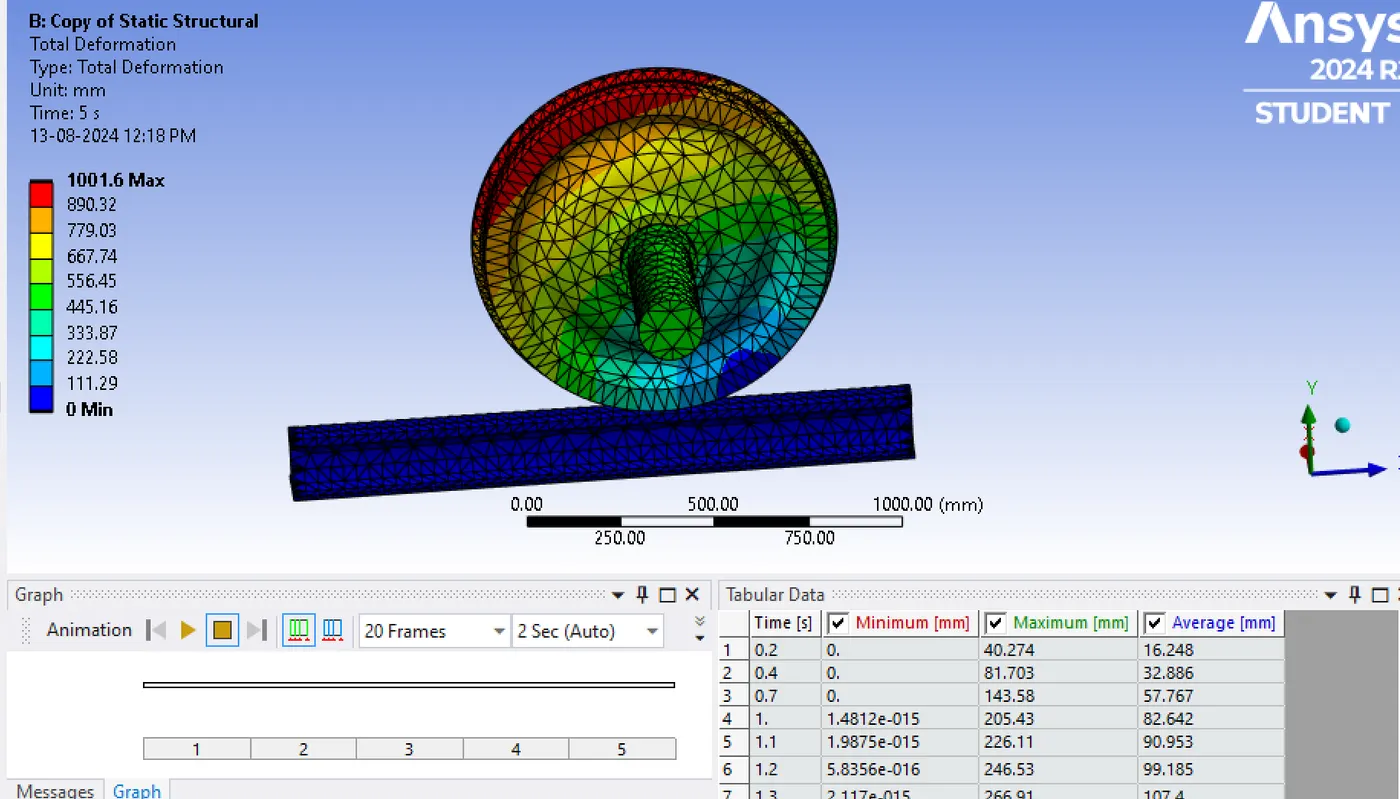
Life
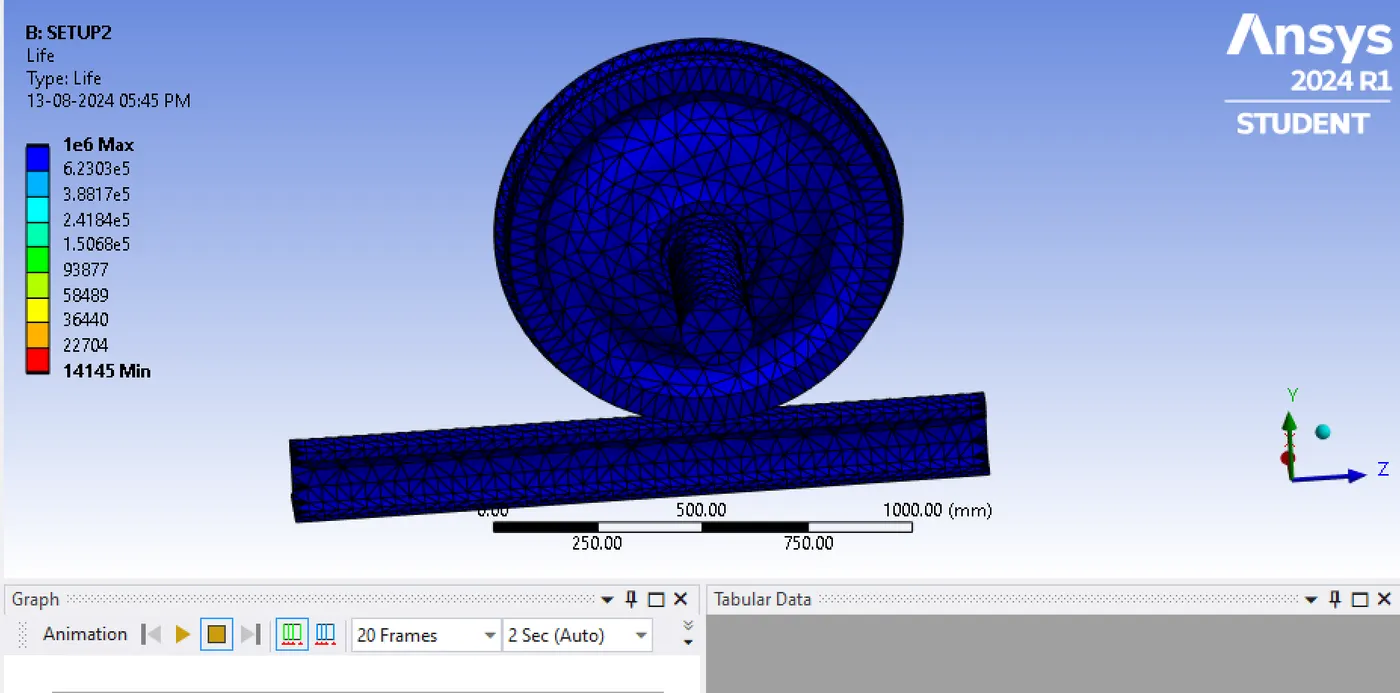
CONCLUSION
The results obtained in 2 setups are tabulated below,
Setup 1 2
Maximum 93.458MPa 236.77MPa equivalent stress
Total deformation 1001.5mm 1001.6mm
Max Life 1e6 cycles 1e6 cycles
The user defined Total deformation in setup 1 is 1001.5 that is same as inbuilt total deformation.
Comparing the results we can see high increase in stress when the load is increased to 5 times. But the total deformation is almost same.
User defined results are same as inbuilt results.
As per results, the minimum fatigue life in load 100000N is6.278e5 cycles an for 500000N load is only 14145 cycles.
So we should avoid higher loads for safety purposes.
The animations of equivalent stress of 2 load conditions are uploaded.
Due to the large size if the file, drive link to the model is given below.
https://drive.google.com/file/d/1c6t8rp_OMbNh4KNux_xNFUY1HF4_tZRG/view?usp=sharing