Week 2 - Flow over a Cylinder.
FLOW OVER A CYLINDER
Aim:
To Simulate the flow over a cylinder and explain the phenomenon of Karman vortex street.
Objective:
<!-- [if !supportLists]-->· <!--[endif]-->Calculate the drag and lift coefficient over a cylinder by setting the Reynolds number to 10,100,1000,10000 & 100000. (Run with steady solver)
<!-- [if !supportLists]-->· <!--[endif]-->Simulate the flow with the steady and unsteady case and calculate the Strouhal Number for Re= 100.
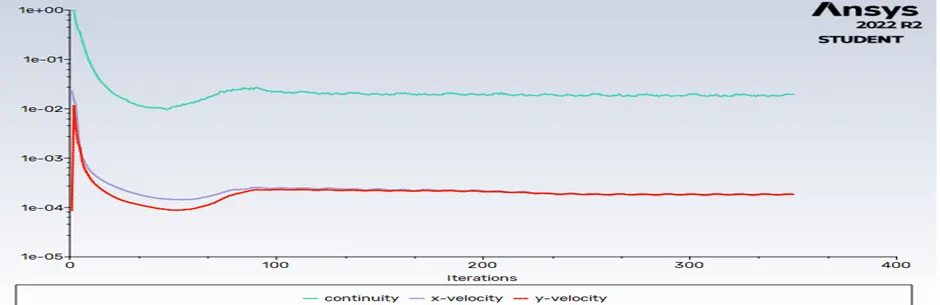
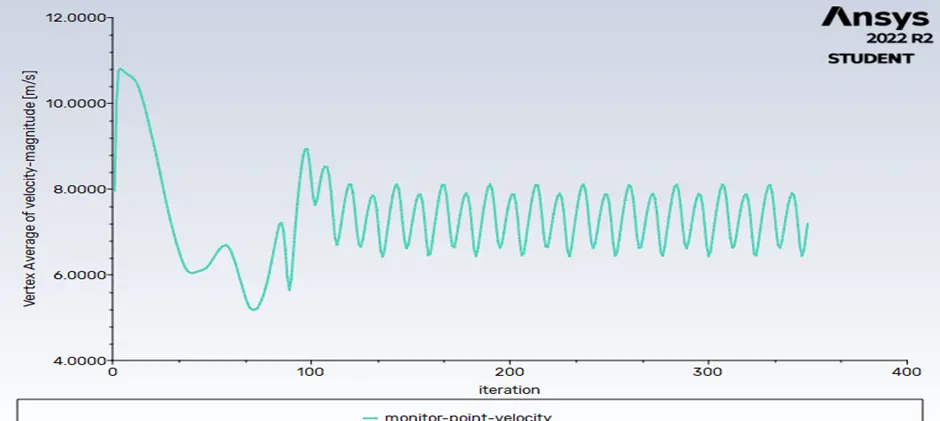
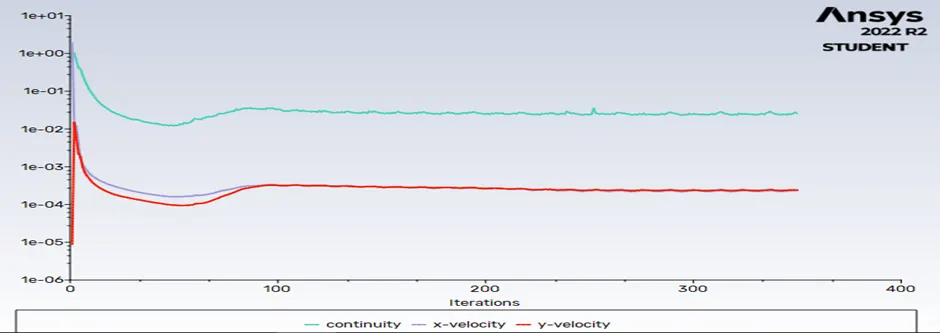
<!-- [if !supportLists]-->· <!--[endif]-->Discuss the effect of the Reynolds number on the coefficient of drag. In both approaches, show that the flow has converged. That is, what quantities or plots need to be looked at to determine that the flow has converged?
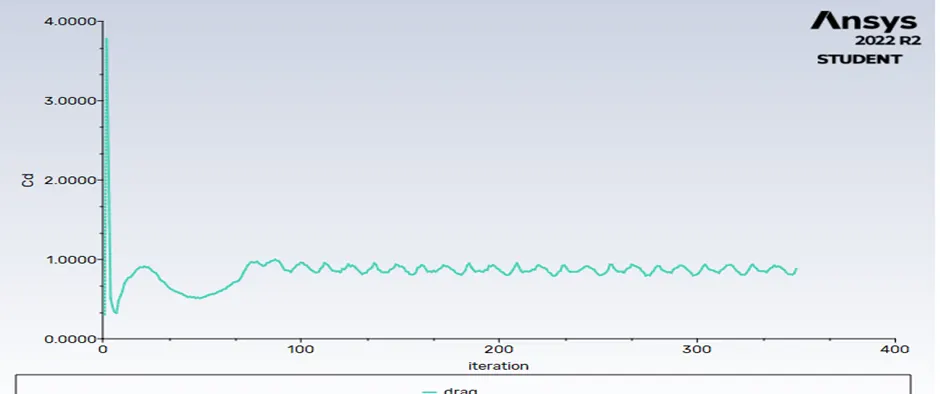
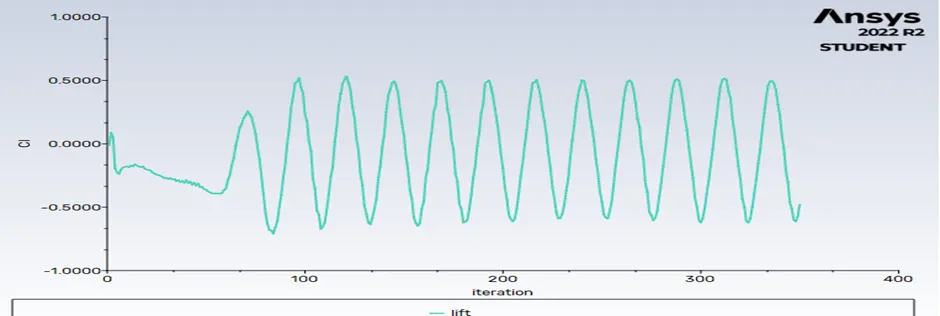
<!-- [if !supportLists]-->· <!--[endif]-->Plots of the coefficient of drag and lift.
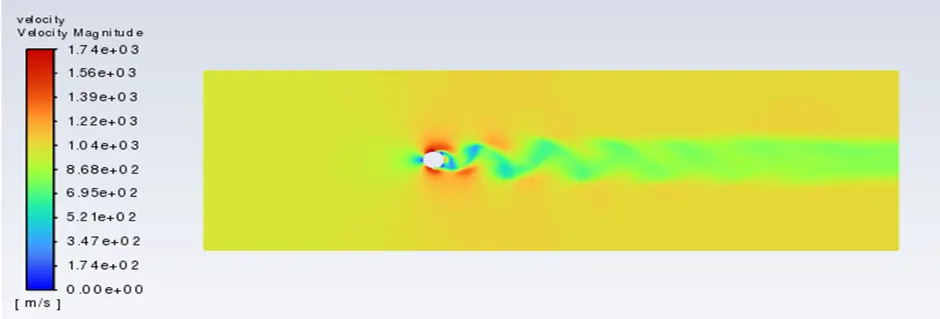
<!-- [if !supportLists]-->· <!--[endif]-->Plots to show vortex shedding behind the cylinder.
Theory
Flow through a cylinder: - Even after nearly a century of rigorous experimental and numerical research, flow around a cylinder is still a difficult subject in fluid mechanics. In-depth studies are still being conducted to comprehend the intricate unsteady dynamics of the cylinder wake flow. In a stationary circular cylinder, cross-flow is normal to the axis and the related issues with heat and mass transmission are present.
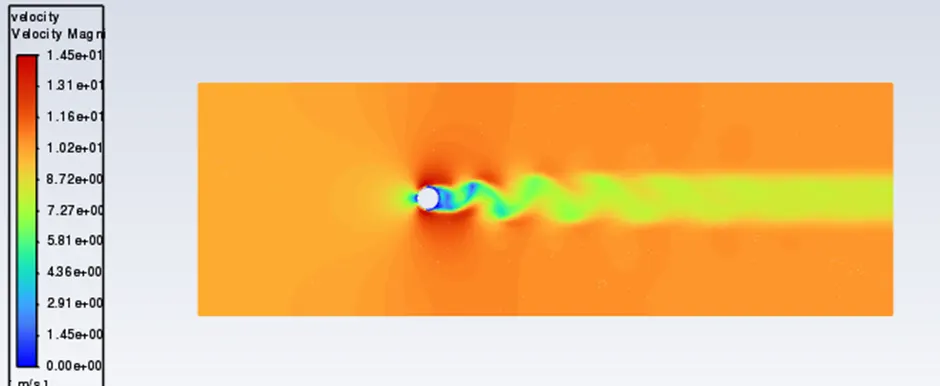
Beyond a critical Reynolds number, experimental measurements and numerical calculations have both supported the onset of instability of the wake flow behind a cylinder, eventually leading to a type of periodic flow identified by distinct frequencies, popularly known as the Von Karman vortex street in the literature.
2. Strouhal number:-
In dimensional analysis, the Strouhal number is a dimensionless number describing oscillating flow mechanisms.
For large Strouhal numbers (order of 1), viscosity dominates fluid flow, resulting in a collective oscillating movement of the fluid "plug". For low Strouhal numbers (order of 10−4 and below), the high-speed, quasi-steady-state portion of the movement dominates the oscillation. Oscillation at intermediate Strouhal numbers is characterized by the buildup and rapidly subsequent shedding of vortices.
The Strouhal number is often given as
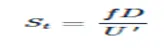
Where,
f= frequency of vortex shedding
D= characteristic diameter of the cylinder
U'= fluid flow velocity
3. Co-efficient of drag:-
`n fluid dynamics, the drag coefficient (Cd)">(Cd) is a dimensionless quantity that is used to quantify the drag or resistance of an object in a fluid environment, such as air or water. It is used in the drag equation in which a lower drag coefficient indicates the object will have a less aerodynamic or hydrodynamic drag. The drag coefficient is always associated with a particular surface area`
`he drag coefficient of any object comprises the effects of the two basic contributors to fluid dynamic drag: skin friction and form drag. The drag coefficient of a lifting airfoil or hydrofoil also includes the effects of lift-induced drag. The drag coefficient of a complete structure such as an aircraft also includes the effects of interference dra`.
The drag coefficient Cd">Cd is defined as
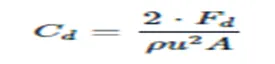
where,
Fd">Fd is the drag force, which is by definition the force component in the direction of the flow velocity,
ρ">ρ is the mass density of the fluid,
u">uis the flow speed of the object relative to the fluid,
A">A is the reference area.
4. Co-efficient of lift:-
The lift coefficient (CL">CL) is a dimensionless coefficient that relates the lift generated by a lifting body to the fluid density around the body, the fluid velocity, and an associated reference area. A lifting body is a foil or a complete foil-bearing body such as a fixed-wing aircraft.
CL is a function of the angle of the body to the flow, its Reynolds number, and its Mach number. The section lift coefficient cl refers to the dynamic lift characteristics of a two-dimensional foil section, with the reference area replaced by the foil chord.
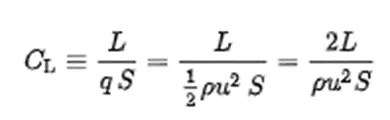 <!--[endif]-->
where
L is the lift force,
S is the relevant surface area and
q is the fluid dynamic pressure, in turn, linked to the fluid density, and to the flow speed.
Procedure
MODELLING APPROACH:
1. Geometry: -
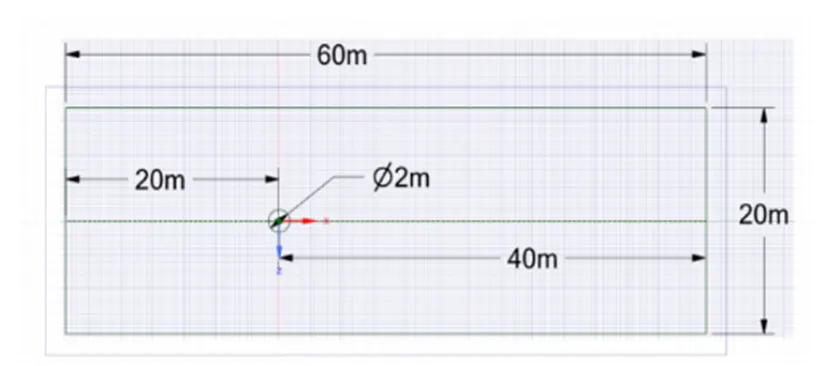
A plate with the dimension of 20*60m is created using SpaceClaim.
 <!--[endif]-->
Now, we want to simulate the effect of fluid flow over the cylinder, select the circle and delete it.
Meshing:-
1. select the edges of geometry and named them as inlet,outlet,wall, and symmetry.
2. Now select the body and go to mesh and click on generate mesh with mesh size 0.25 m.To ensure triangular mesh, go to mesh > insert > select triangular mesh type.
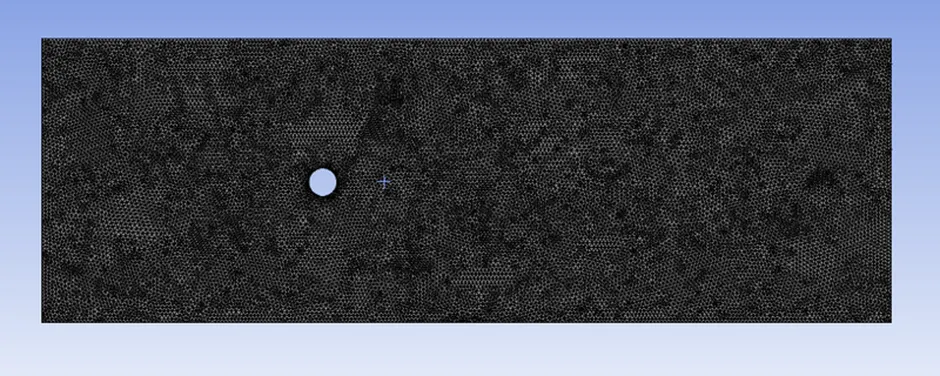
<!--[endif]-->
3. After generating the mesh, it is seen that size of circle looks distorted.
go to mesh > sizing > select circular edge > definition >type > no, of divisions >36.
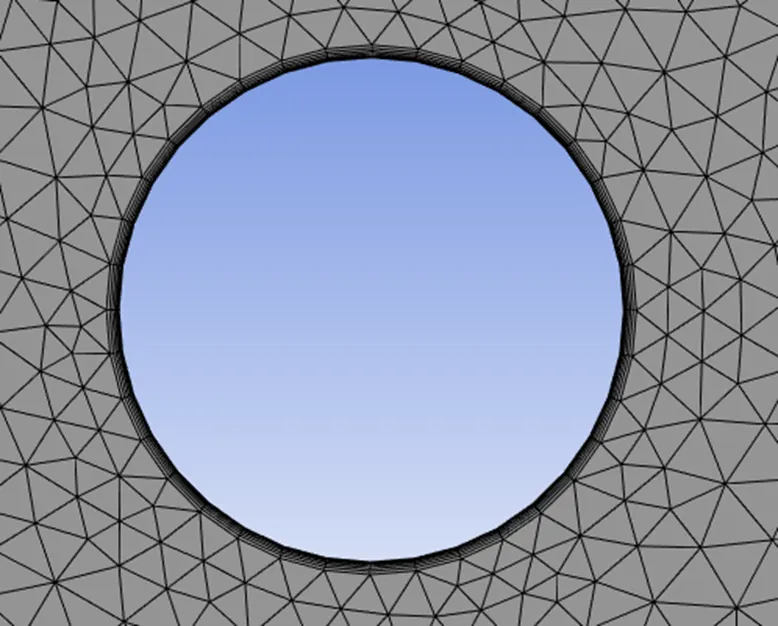
<!--[endif]-->
4.To capture better results near cylinder wall, go to mesh > inflation > select the body and edge > inflation option : 1st layer thickness >1 st layer height :5e-3 m >maximum layer :6
<!--[endif]-->
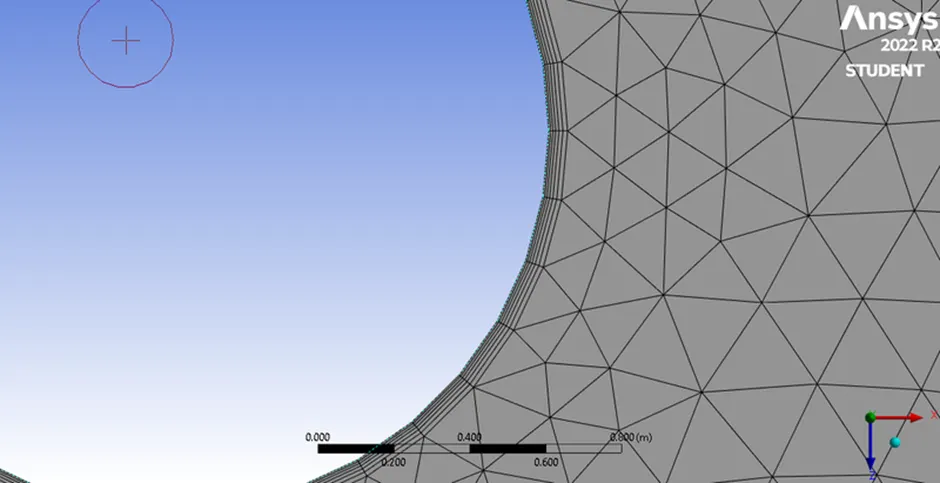
Solving :
1. select laminar flow inside the viscous model.
2.As we wanted to customimize material property for simulation, go to materials > fluent database > select the material (air) > copy it> rename the name of material
Boundary Condition:
Outlet : gauge pressure = 0 Pa.
wall : no slip condition.
Refference values:-
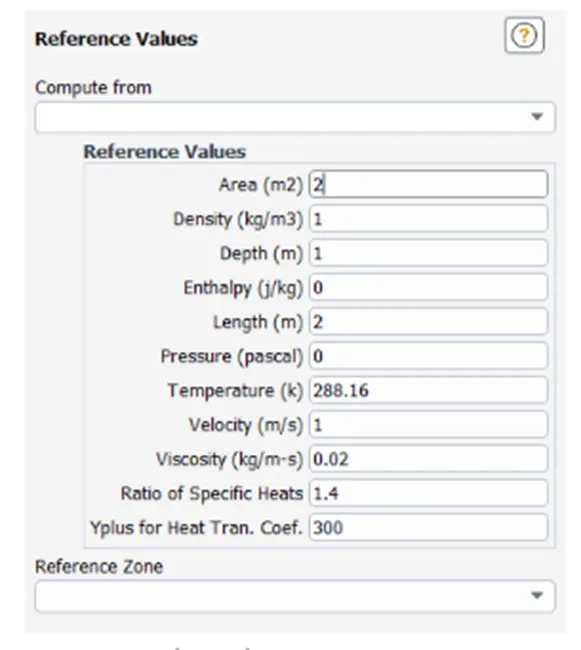
<!--[endif]-->
1.Reynolds number = 10.
velocity = 1
density = 1 kg/m3.
viscosity = 0.02 Pa-s.
Residual plot: -<!--[endif]-->
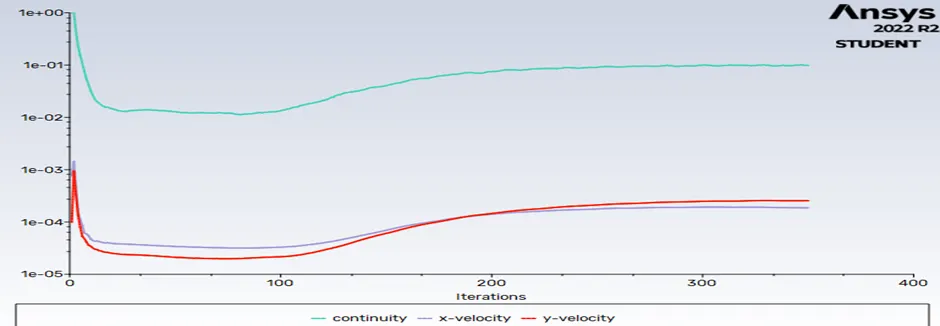
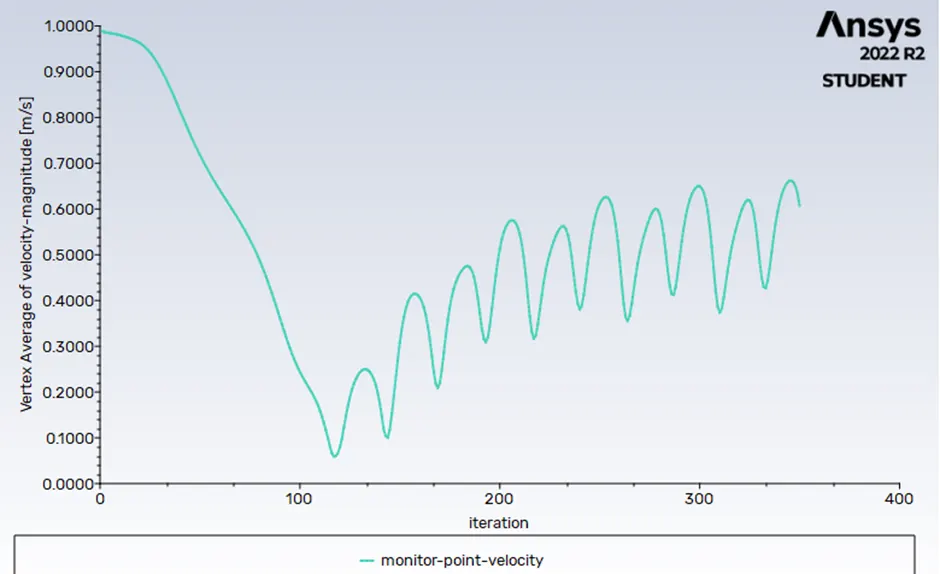
Monitor point velocity: -
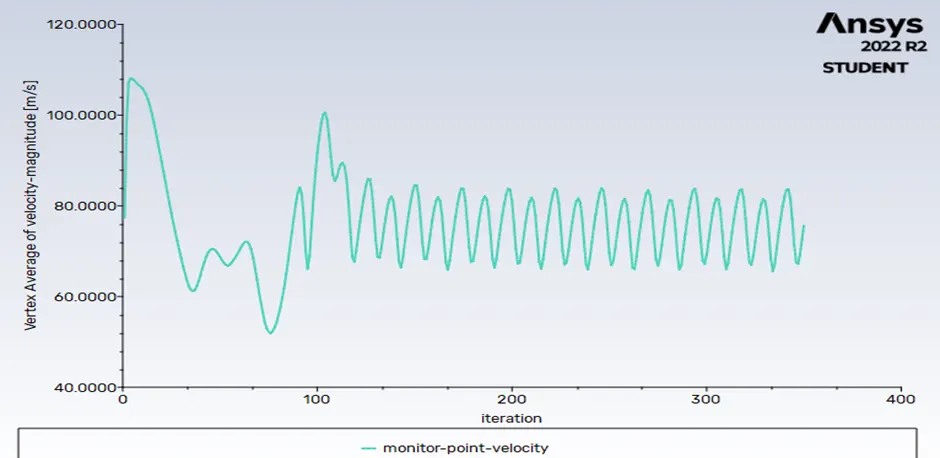
monitor point: A point is created at 8 m in x direction from the axis of cylinder to check velocity.
<!--[endif]-->
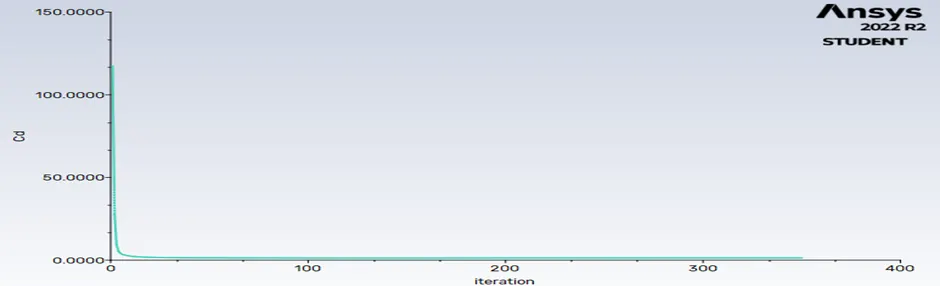
Coefficient of Drag
<!--[endif]-->
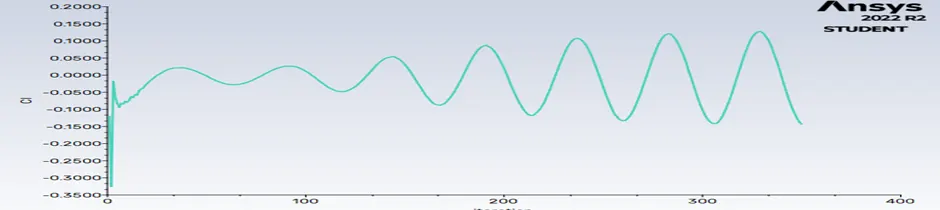
Lift Coefficient
<!--[endif]-->
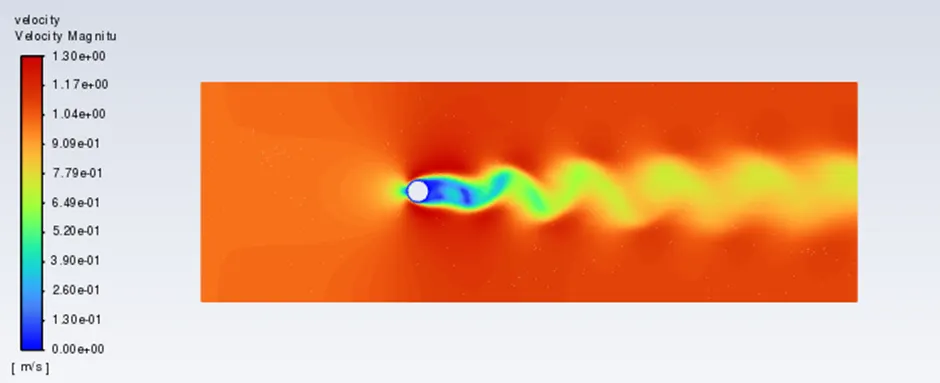
Velocity Contour
<!--[endif]-->
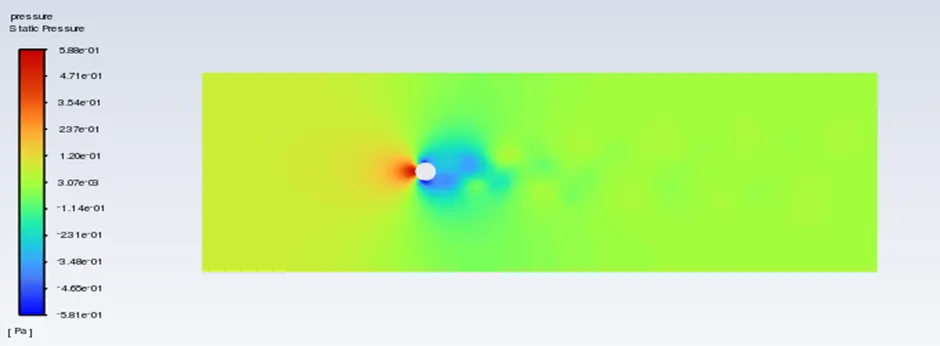
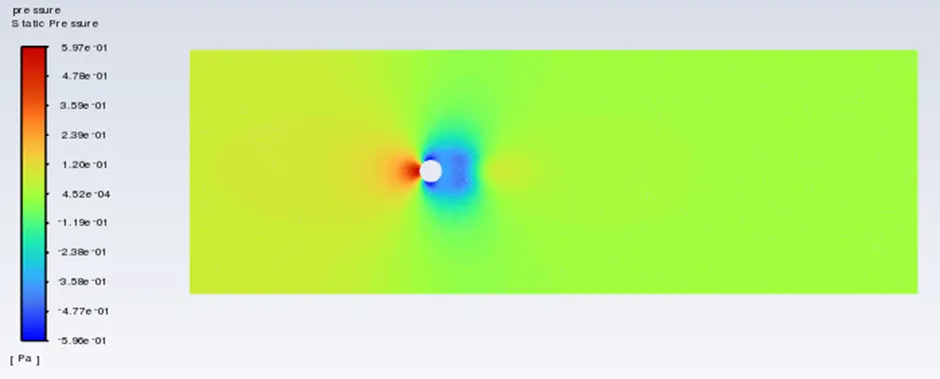
Pressure Contour
<!--[endif]-->
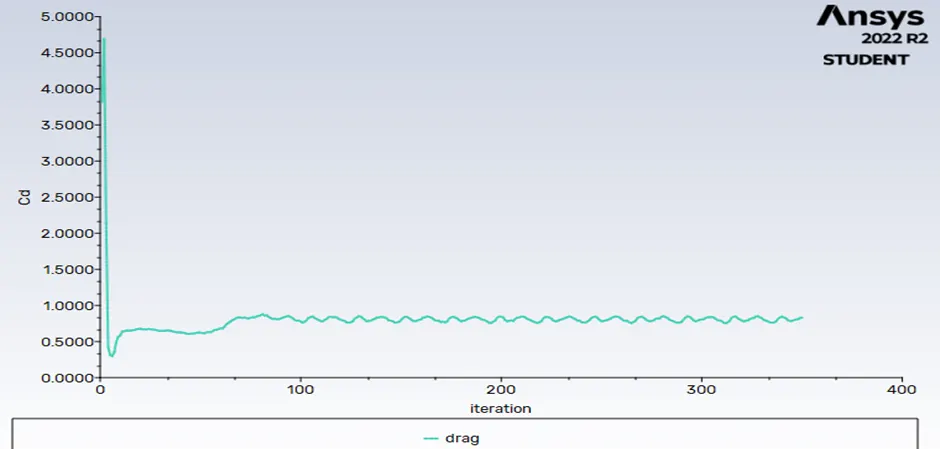
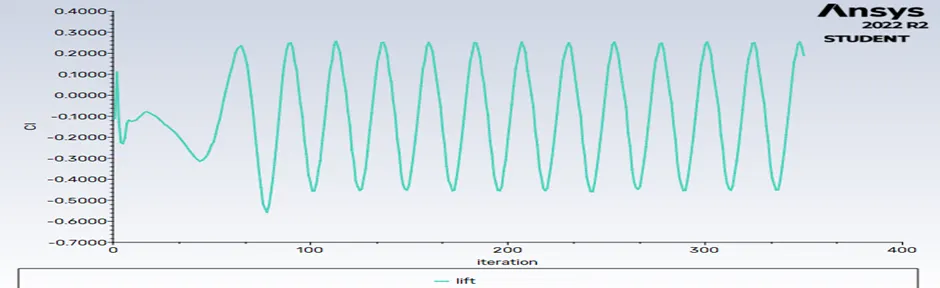
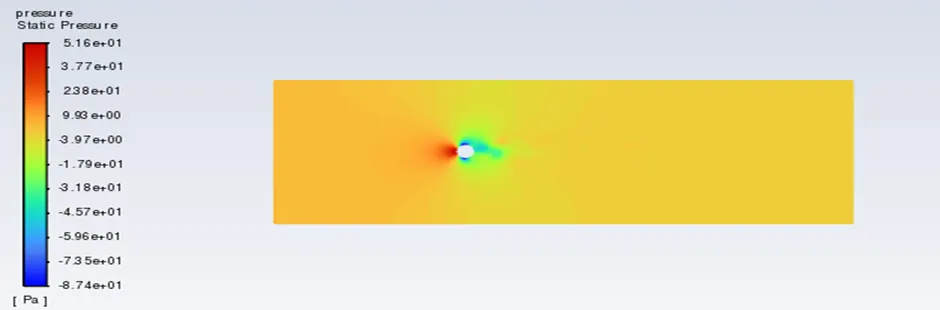
2.Reynolds number = 100.
velocity = 10 m/s.
density = 1 kg/m3.
viscosity = 0.02 Pa-s.
Residual plot
<!--[endif]-->
Monitor velocity
<!--[endif]-->
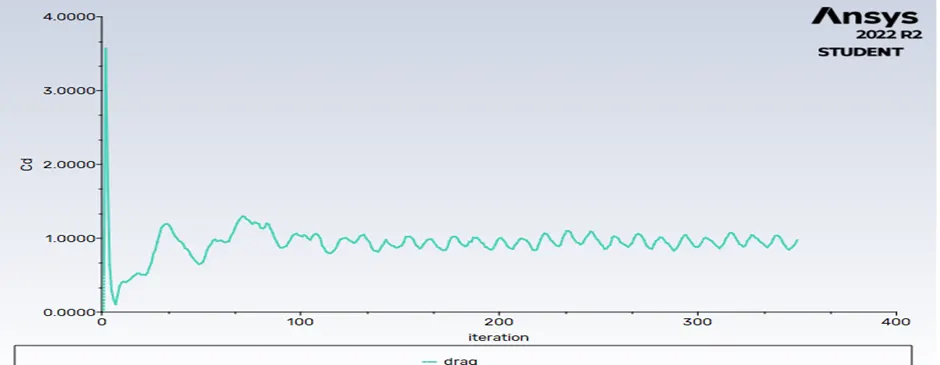
Drag Coefficient
<!--[endif]-->
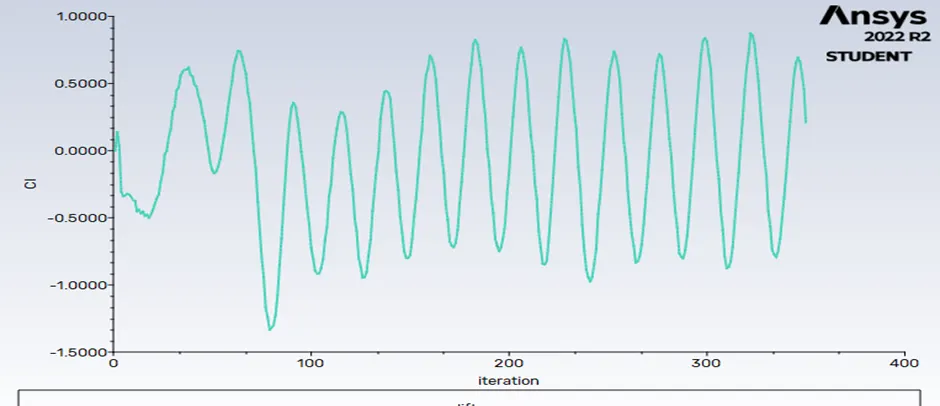
Lift Coefficient
<!--[endif]-->
Velocity Contour
<!--[endif]-->
Pressure Contour
<!--[endif]-->
3.Reynolds number = 1000.
velocity = 100 m/s.
density = 1 kg/m3.
viscosity = 0.02 Pa-s.
Residual plot
<!--[endif]-->
Monitor point velocity
<!--[endif]-->
Drag coefficient
<!--[endif]-->
Lift Coefficient
<!--[endif]-->
Velocity
<!--[endif]-->
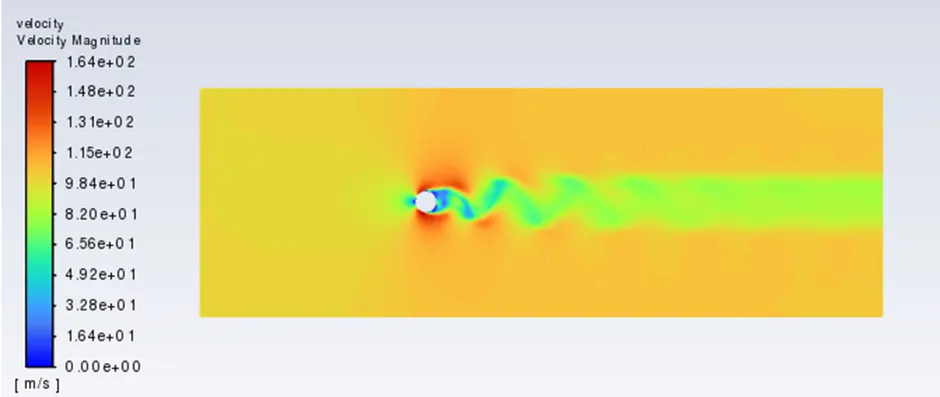
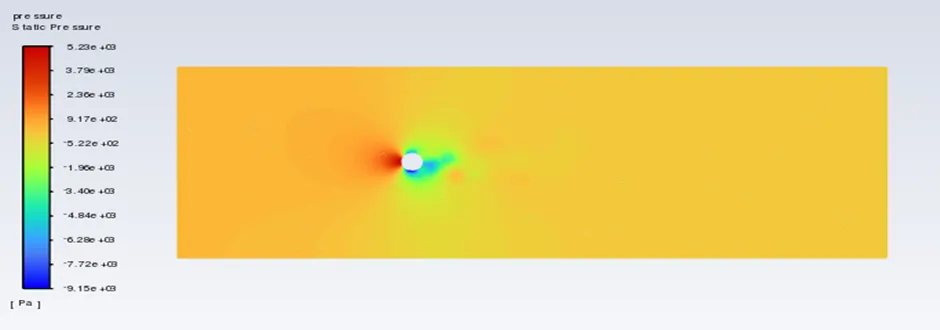
Pressure Contour
<!--[endif]-->
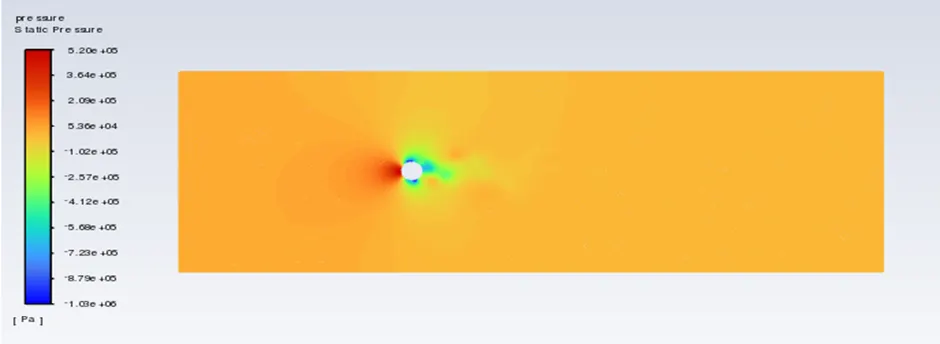
4.Reynolds number = 10000.
velocity = 1000 m/s.
density = 1 kg/m3.
viscosity = 0.02 Pa-s.
<!--[endif]-->
‘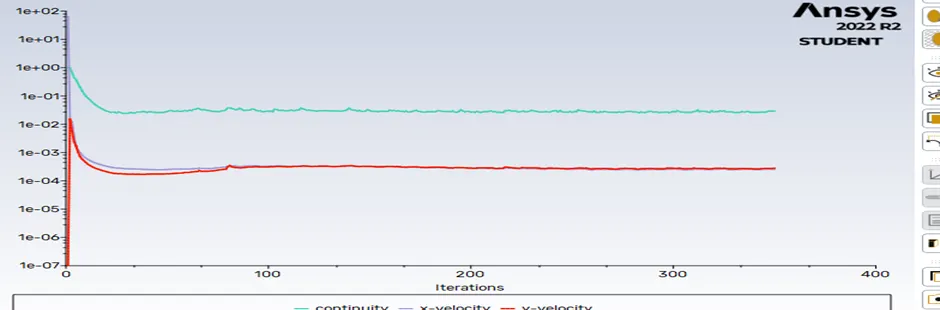 <!--[endif]-->
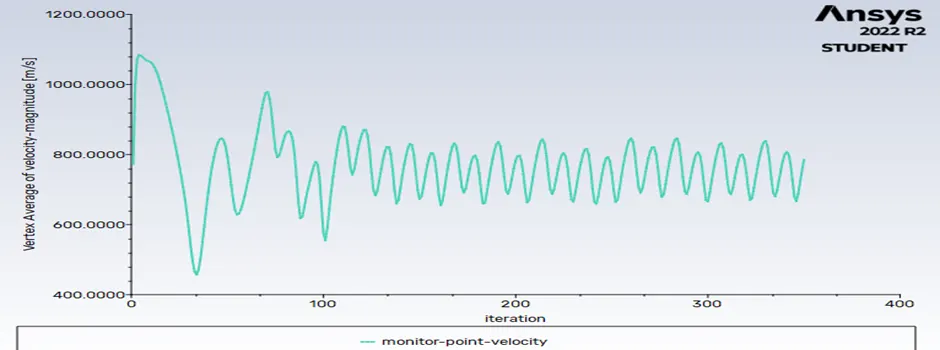
<!--[endif]-->
<!--[endif]-->
<!--[endif]-->
<!--[endif]-->
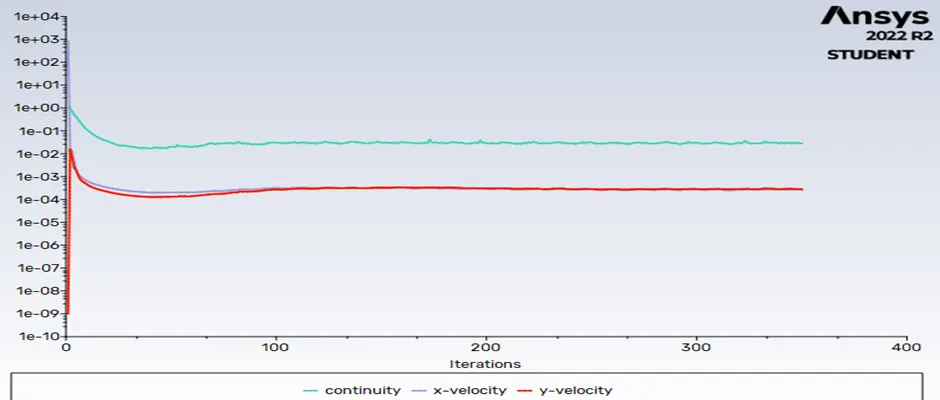
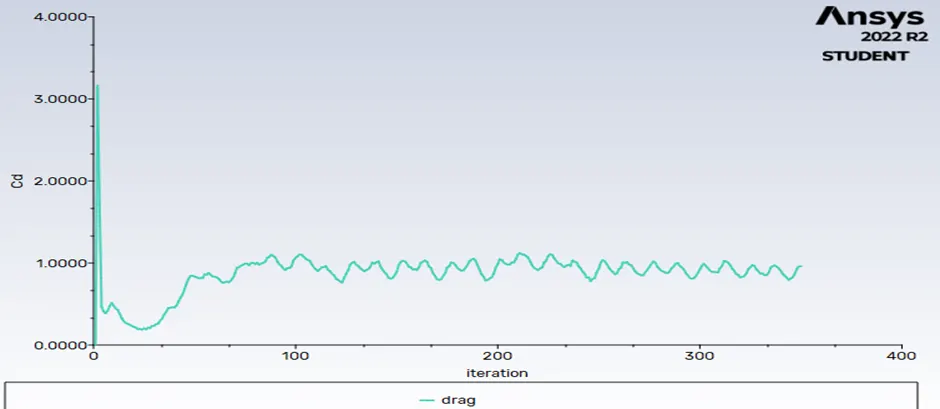
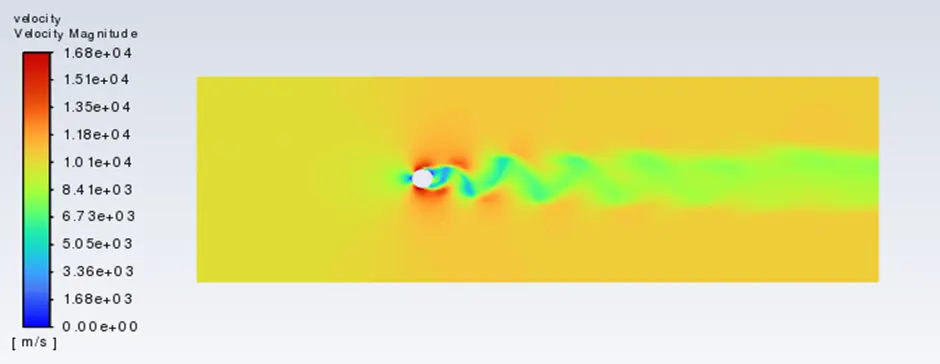
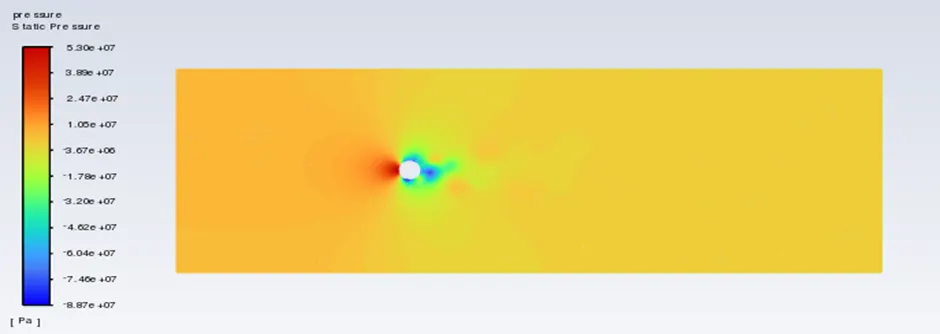
5.Reynolds number = 100000.
velocity = 10000 m/s.
density = 1 kg/m3.
viscosity = 0.02 Pa-s.
<!--[endif]-->
Residual plot
<!--[endif]-->
<!--[endif]-->
<!--[endif]-->
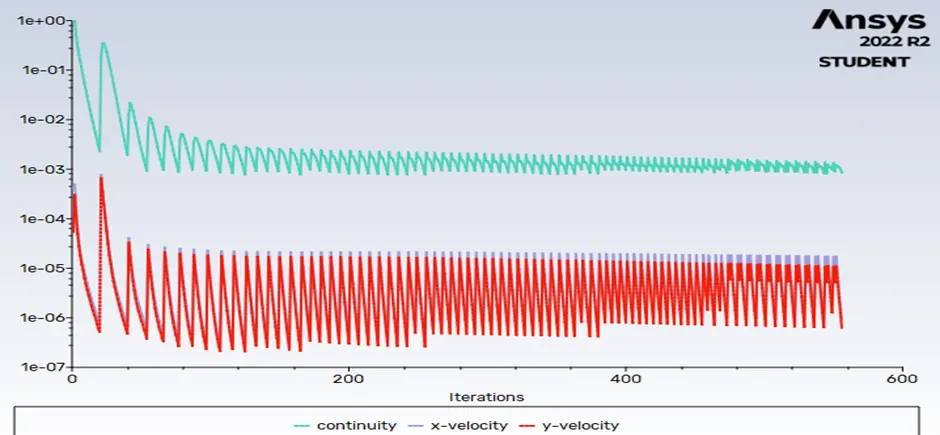
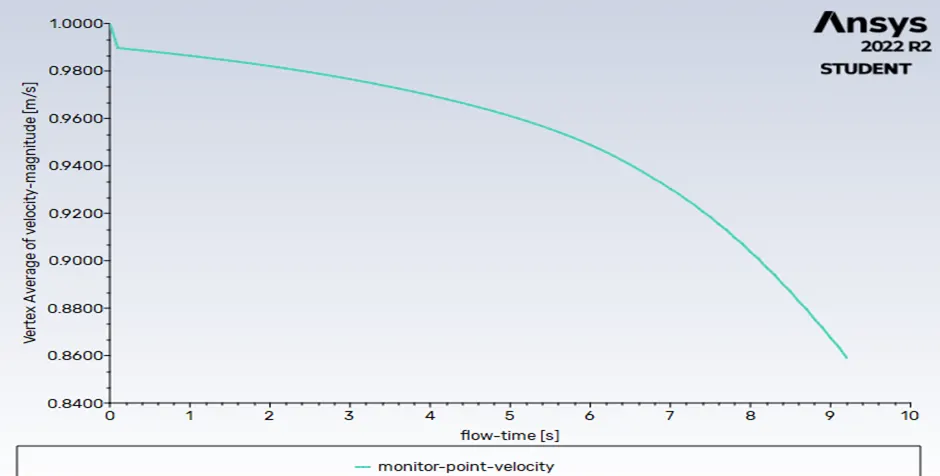
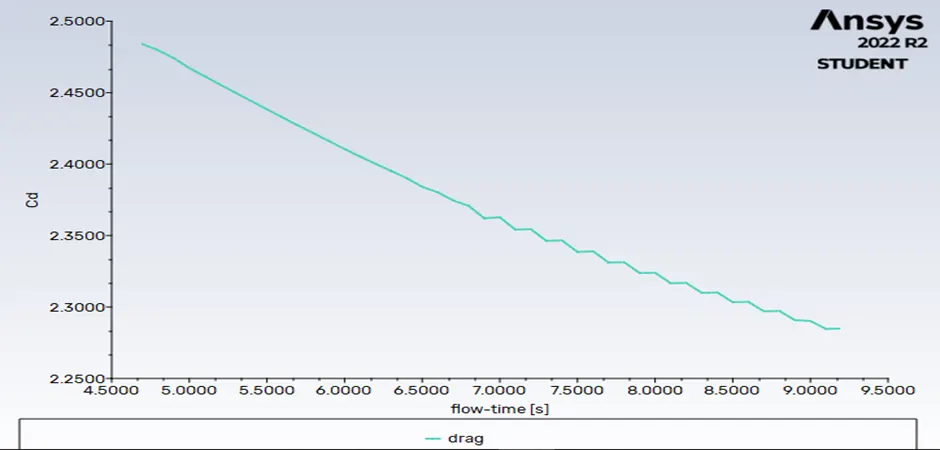
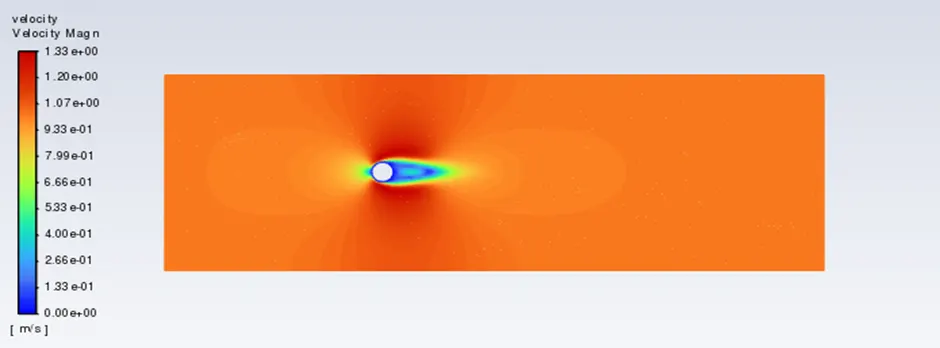
Unsteady state solver:-
Reynolds number = 100.
velocity = 10 m/s. density = 1 kg/m3. viscosity = 0.02 Pa-s.
<!--[endif]-->
<!--[endif]-->
<!--[endif]-->
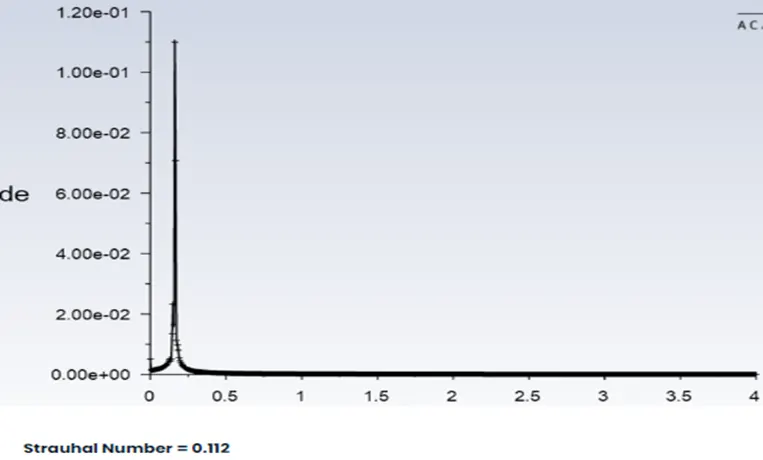
Here, we have calculated Strouhal no. using ansys fluent.
1.Go to fluent solver > results > fft analyser > load lift coefficient file > select plot FFT
Here, x axis denotes the strauhal number and y axis denotes magnitude.
2. To get the magnitude of Strouhal number,
go to results > fft analyzer> click on write fft to file > click on write fft.
open the file in excel and 1st column denotes the frequency and 2nd column denotes strauhal number.use the command max and select 2nd row and find the magnitude of strauhal number.
<!--[endif]-->
Result: -
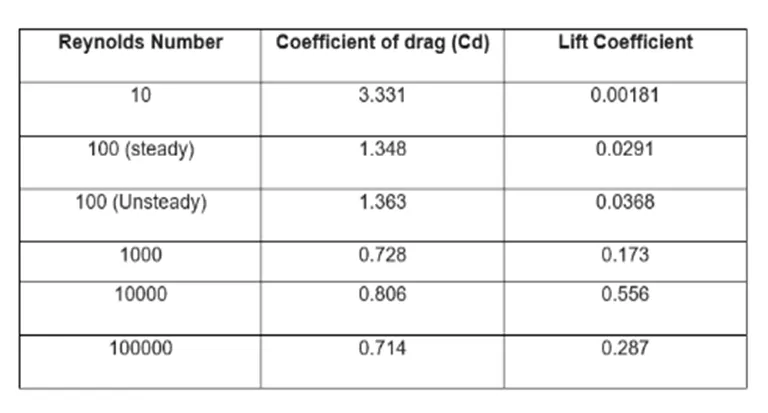
Values of the coefficient of drag and lift coefficient for respective Reynolds number is tabulated as follows: -
<!--[endif]-->
Conclusion: -
<!-- [if !supportLists]-->· <!--[endif]-->When fluid flows through a cylinder, a wake region forms close to the cylinder as a result of a drop in pressure, recirculation of the flow, and flow separation.
<!-- [if !supportLists]-->· <!--[endif]-->Because flow across a cylinder is a transitory, time-dependent phenomenon, flow separation is impossible to see at low Reynolds numbers, such as 50.
<!-- [if !supportLists]-->· <!--[endif]-->In this assignment, all parameters were held constant; only the velocity was changed to alter the Reynolds number. Therefore, the coefficient of drag reduces as the Reynolds number rises. Reynolds number = 4000 causes turbulent flow, which lowers the coefficient of drag.
<!-- [if !supportLists]-->· <!--[endif]-->Strauhal number is 0.112 for an unsteady condition with a Reynolds number equal to 100.