Week 2 - Flow over a Cylinder.
Aim =
Simulate the flow over a cylinder and explain the phenomenon of Karman vortex street.
Objective=
1.Simulate the flow for steady state and Unsteady state simulation use Re=100 and calculate Strouhal Number
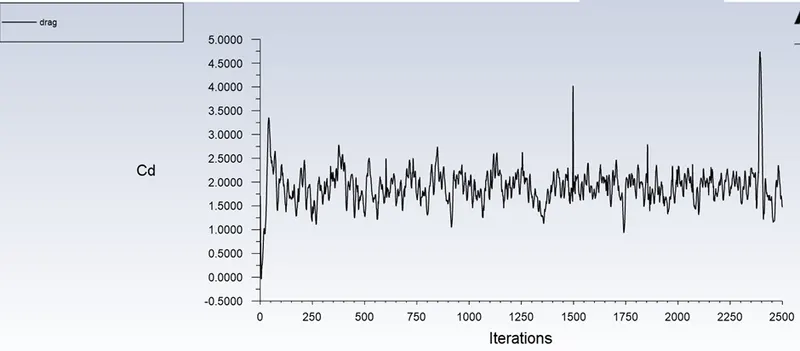
2.Calculate the coefficient of drag and lift over a cylinder by setting the Reynolds number to 10,100,1000,10000 & 100000
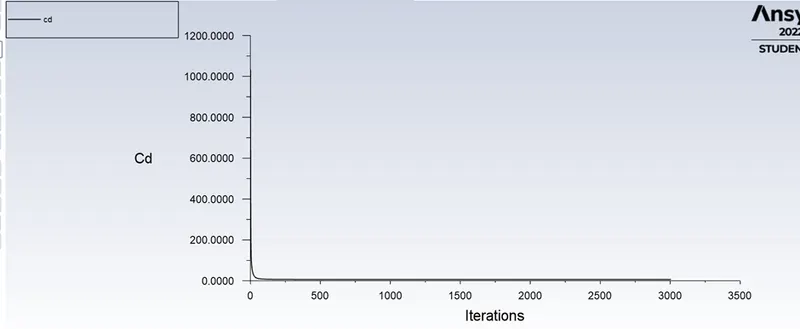
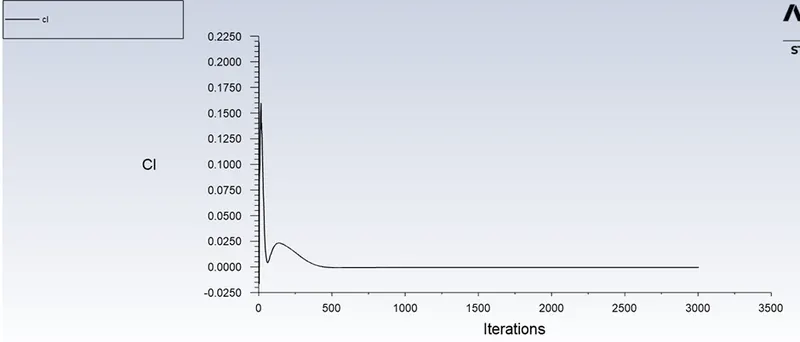
3.Plots of the coefficient of drag and lift.
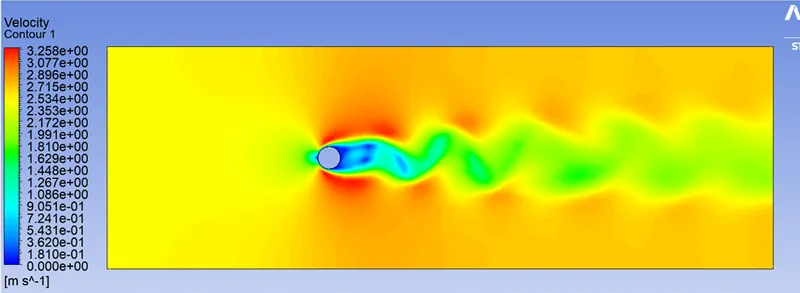
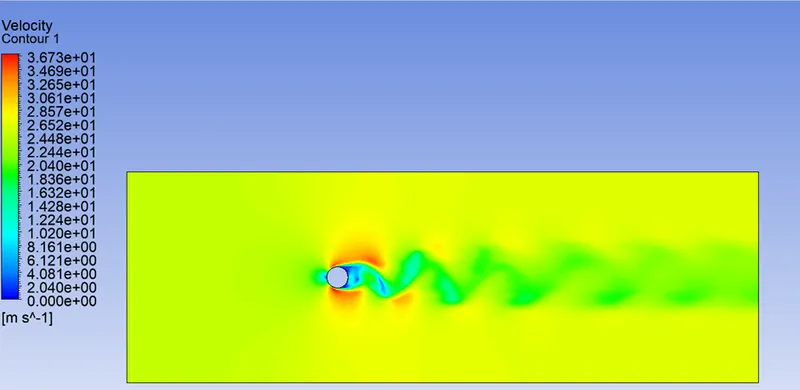
4.Plots to show vortex shedding behind the cylinder.
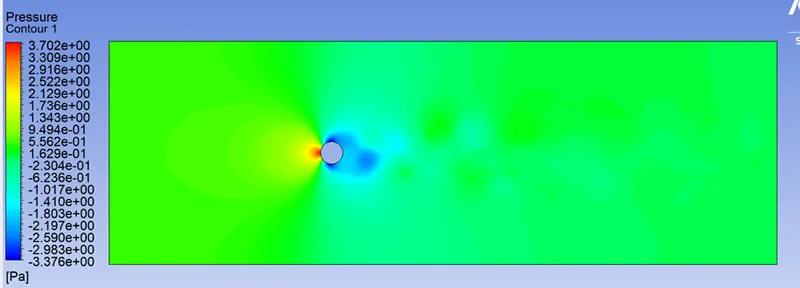
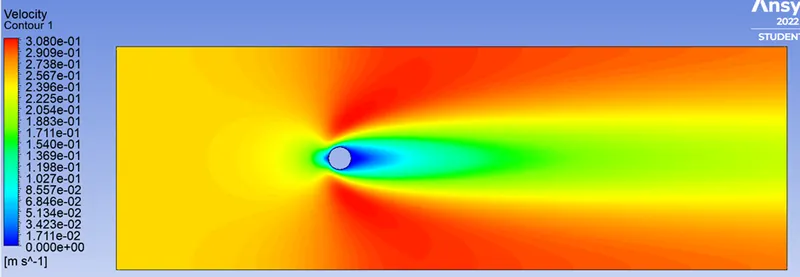
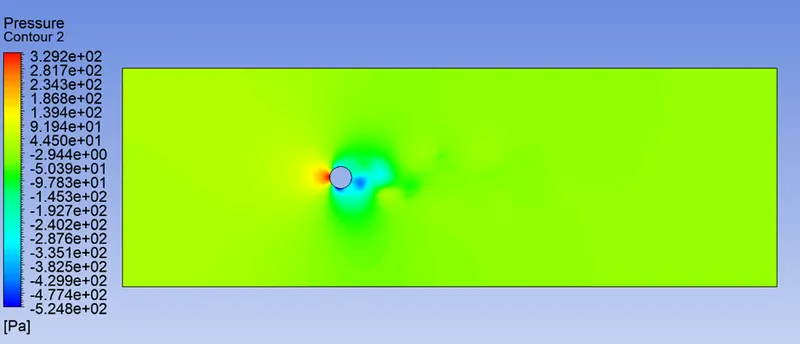
5.Use countor of Velocity and preesure n show result
Introduction
1.Numerical Study of Unsteady Flow around a Square Cylinder in Compare with Circular Cylinder
2.Flow over a cylinder is important in many industrial application like cooling of iron or cylindrical pipe
3.Circular pipes have more application in heat exchanger. High temperature flue gases flow over a circular cylinder in a cross flow.
4.Depending on flow rate, fluid properties and size of cylinder, the flow can be laminar, transition and turbulent
5.Larger vortexes are found at lower Reynolds number.
Strouhal number=
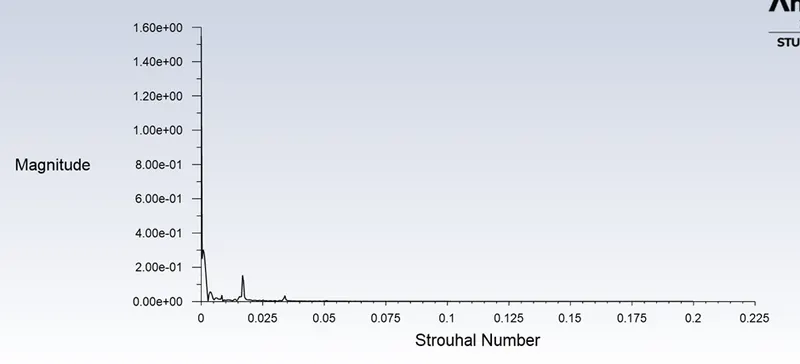
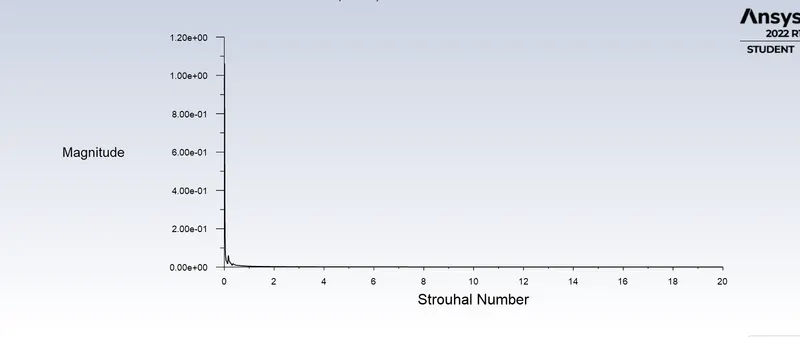
The Strouhal number is defined as St = fstD/U, where fst is the vortex shedding frequency (or the Strouhal frequency) of a body at rest, D is the diameter of the circular cylinder and U is the velocity of the ambient flow.
Steps pre-prosessing
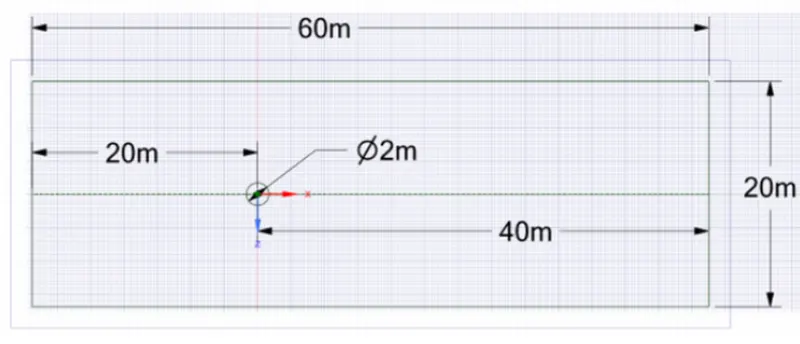
As per given we construct the cylinder and outer side.
Geometry
Meshing
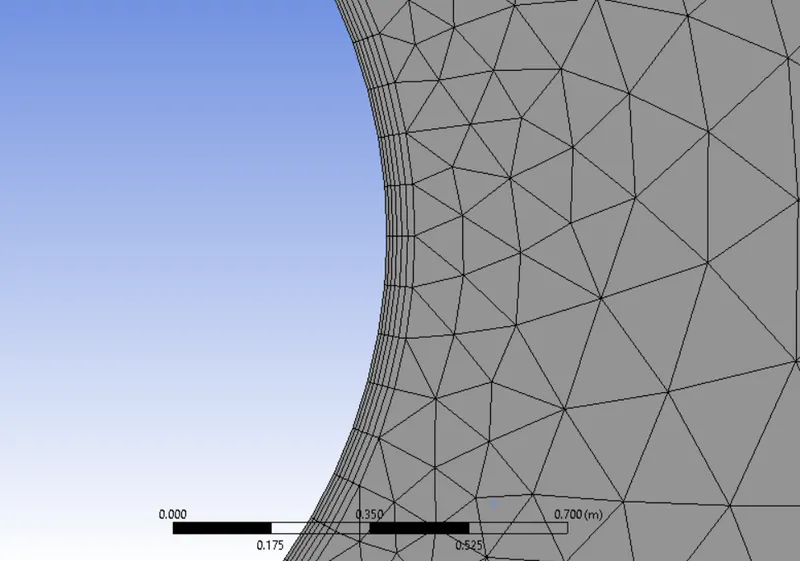
For this model 0.19 mesh size is use.for specific cylinder the inflation layer is use.
Trangluer mesh sizing and for cylinder accuracy 72 rotating divisions are used
for specific cylinder the inflation ayer 6 no of division and 5e-3 value are taken. 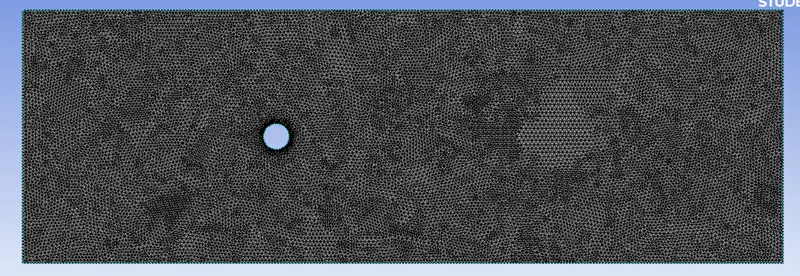
General Calcultion and Material properties'
For given Re no we find the velocity
Re = (ρ V D)/μ
ρ = Density = 1 kg/m^3
D = 2 m
μ = Dynamic viscosity=0.05 Pa s
Re = 10,100,1000,10000,100000
We found the solution
| Velocity m/s | Re |
| 0.25 | 10 |
| 2.5 | 100 |
| 25 | 1000 |
| 250 | 10000 |
| 2500 | 100000 |
Case 1
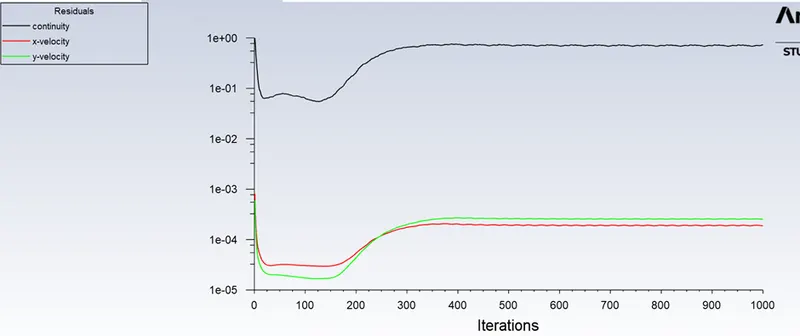
Re No 100 steady
Case 1
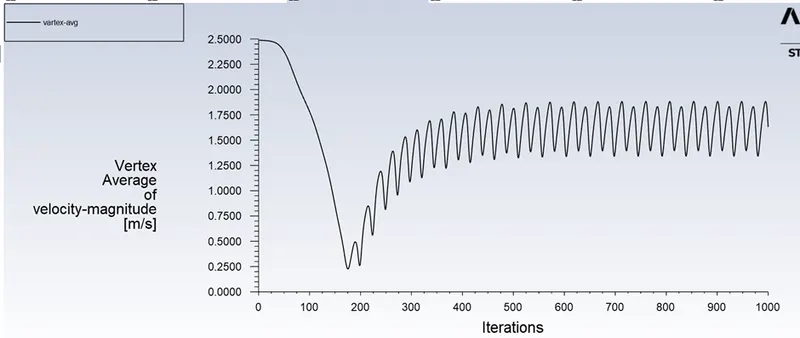
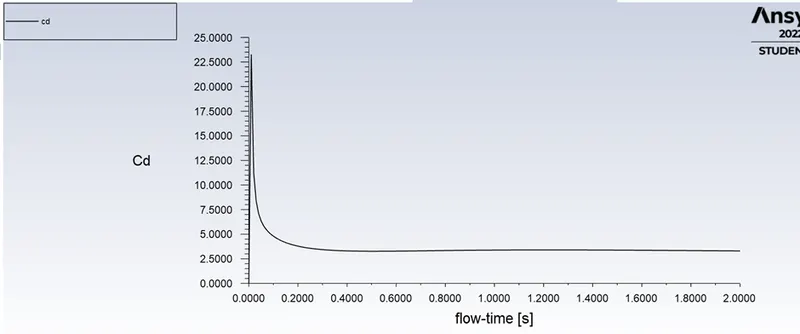
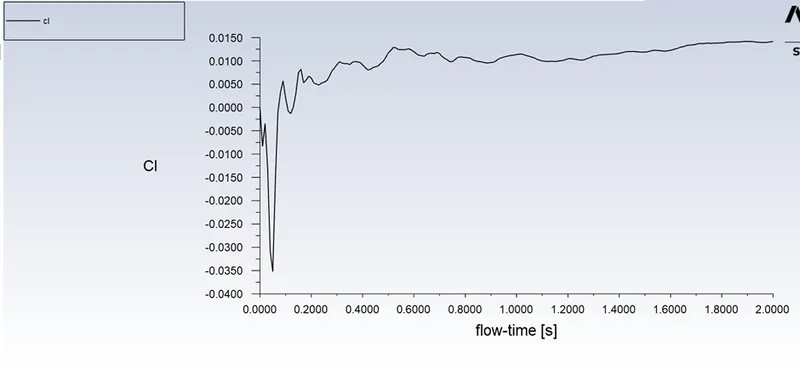
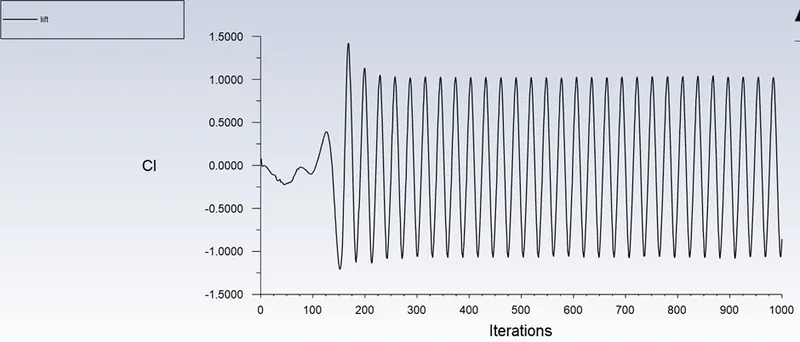
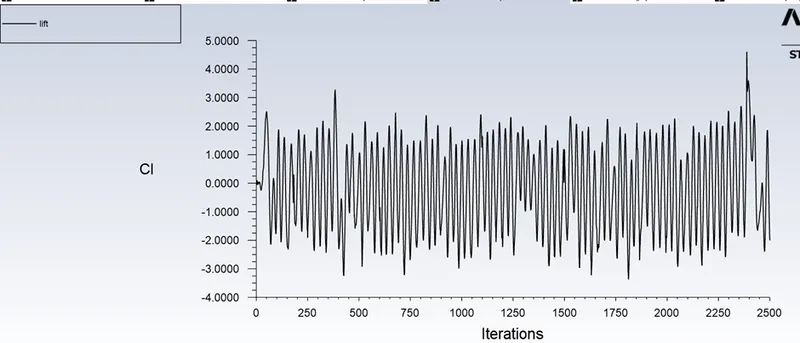
Re No 100 Unsteady
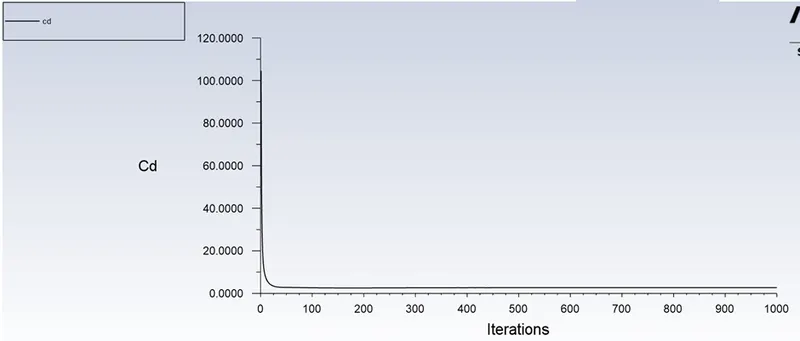
cd = 2.960818
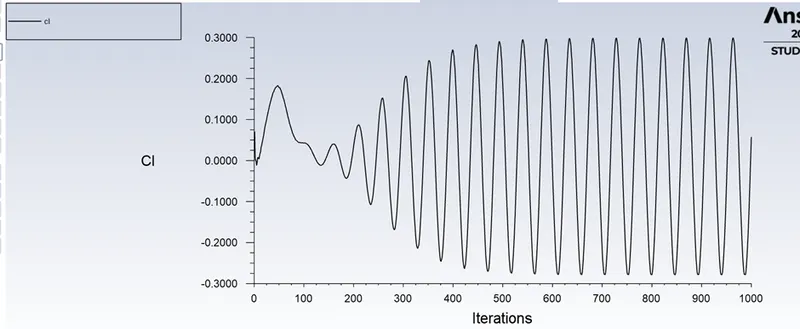
cl= 0.2139937
Case 2
Reynolds No 10
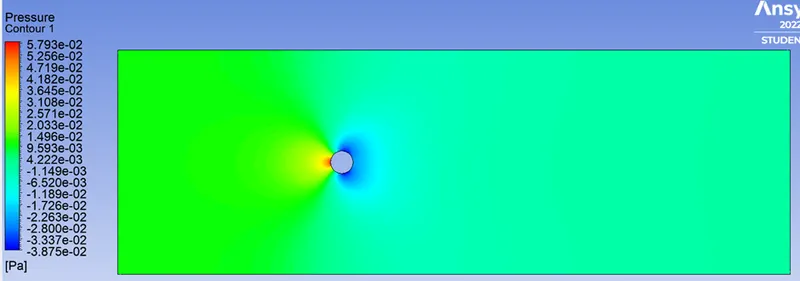
Reynolds No 1000
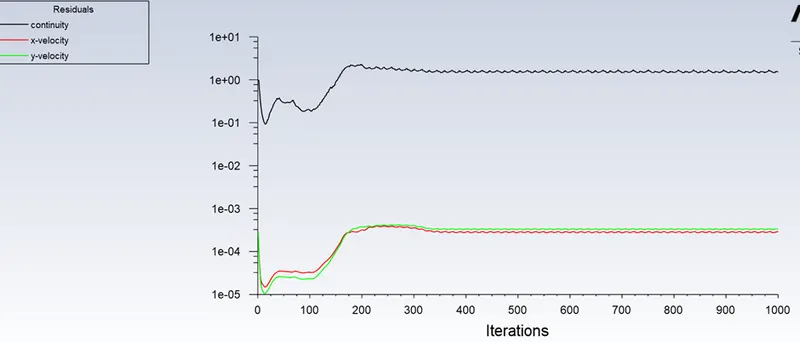
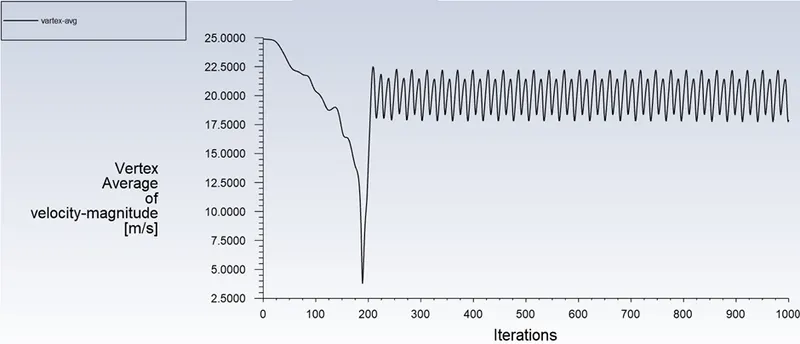
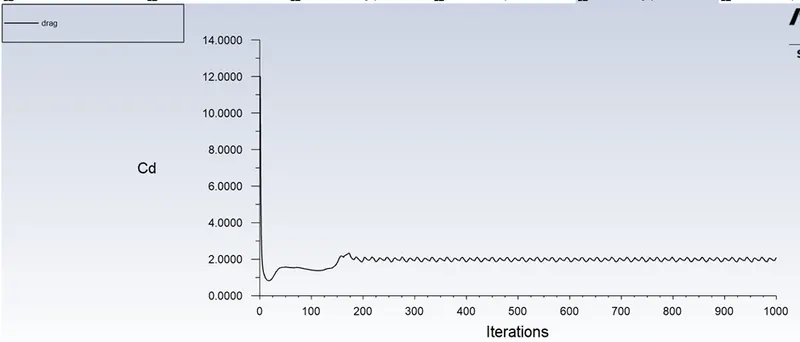
Reynolds No 10000
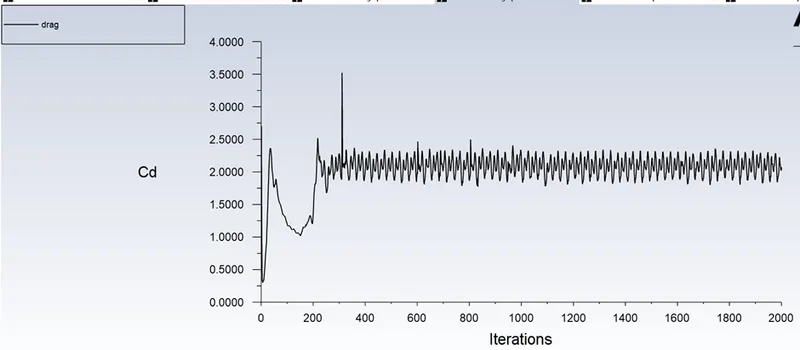
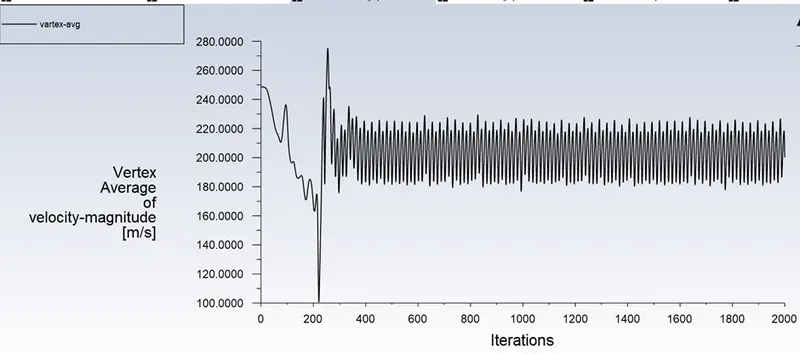
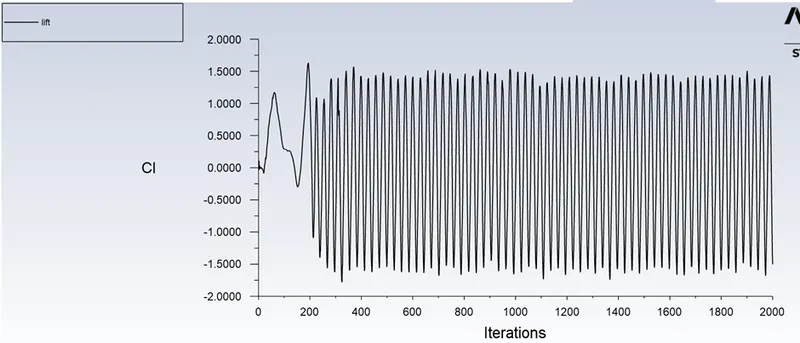
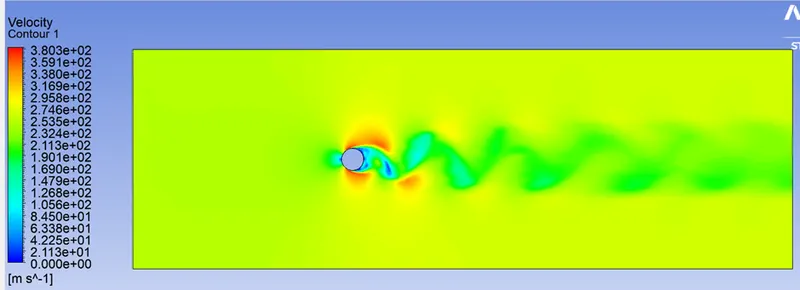
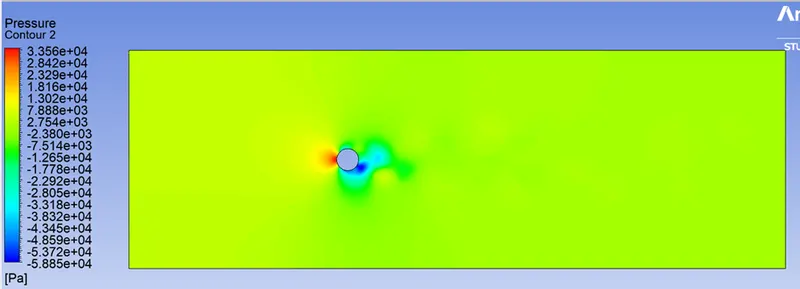
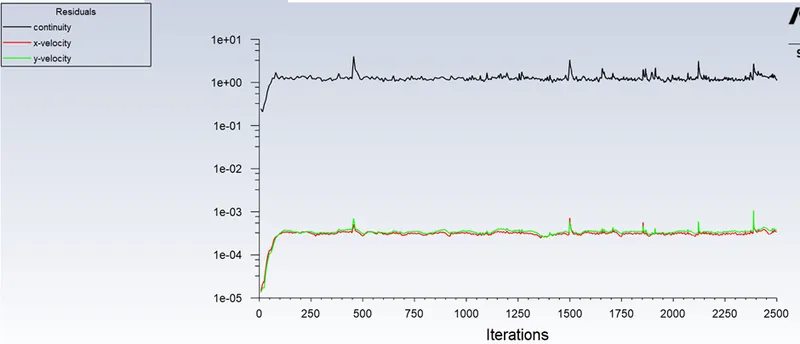
Reynolds No 100000
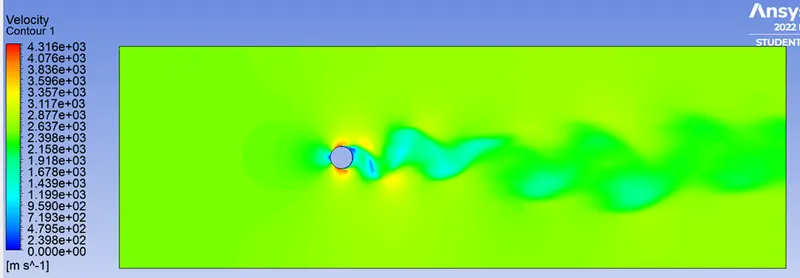
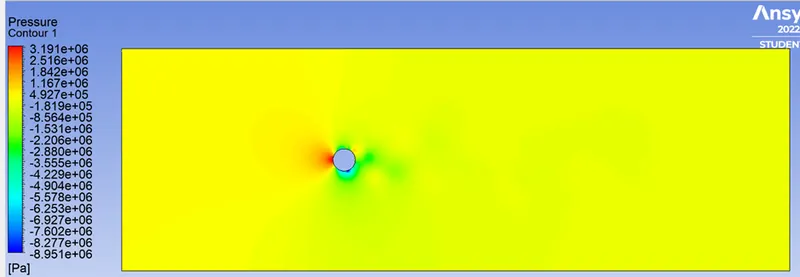
Result
| Re | CD | CL |
| 10 | 6.6664154 | 0.000528009 |
| 100 | 2.6966473 | 0.057463113 |
| 1000 | 2.0967932 | -0.85541208 |
| 10000 | 2.0712713 | -1.5045295 |
| 100000 | 1.4740478 | -2.0058169 |
Validation =
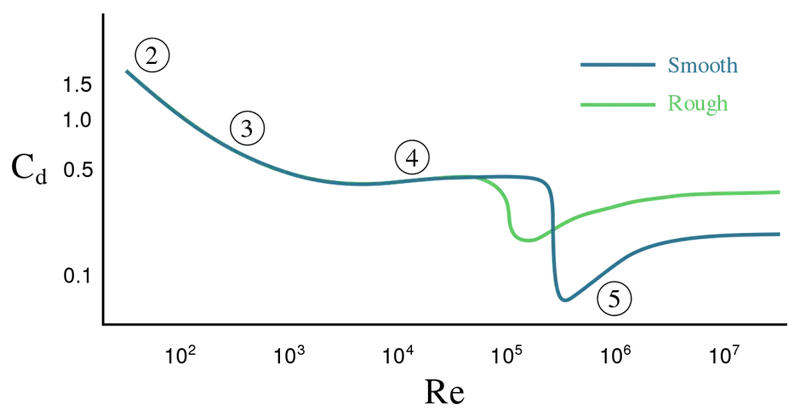
value for Re = 100 area consider is 1m^2, v = 2.5m/s, cd = 2.69, density =1kg/m^3, viscocity=0.05
Thern from above graph for Re 100 num value is 1.8 and from simulation 2.6
so % error =(2.6-1.8)/1.8*100 = 44.44% error
Conclusion.
1.From above table it is shows that as Reynolds number is increasing the coefficient of Drag is decreasing and coefficient of lift is increasing.
2.From above result steady state solver are more time friendly as compared with transient but transient give you much better result in real time.
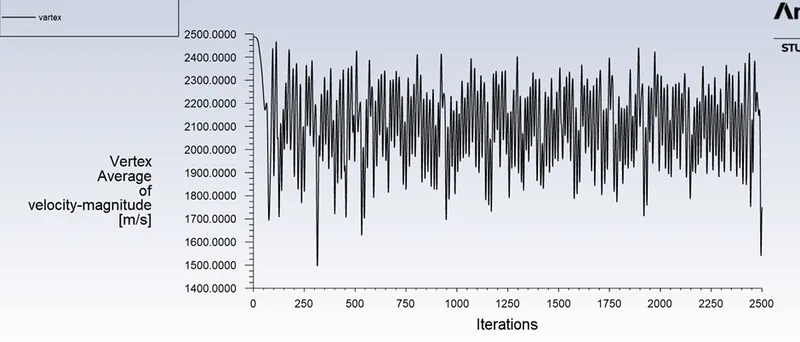
3.The Strouhal number is near about 0.15 is shown in above usteady flow simulation.
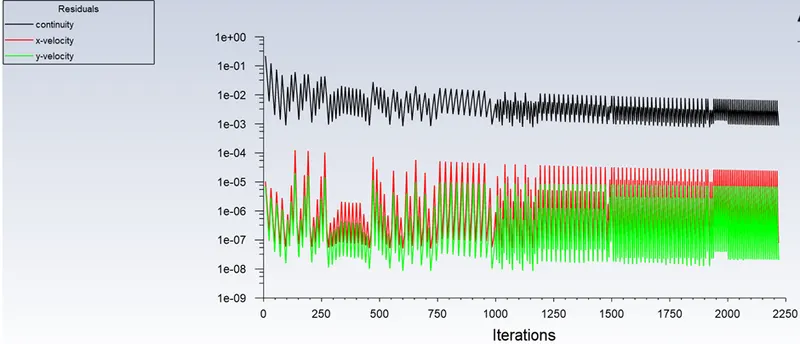
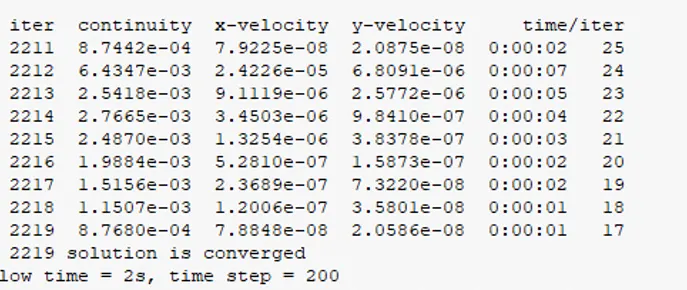
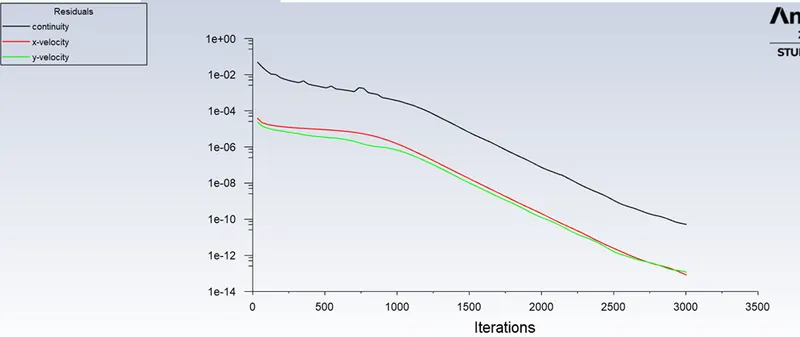
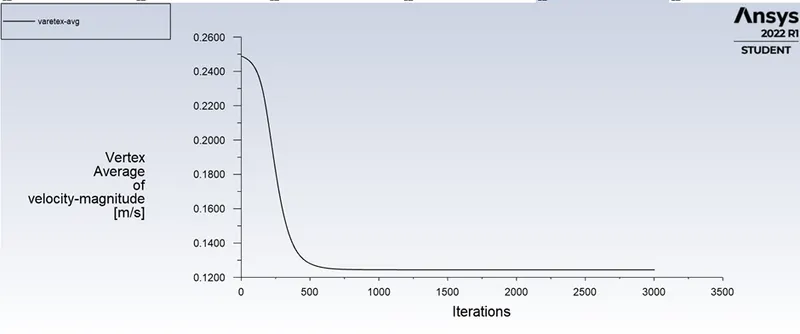
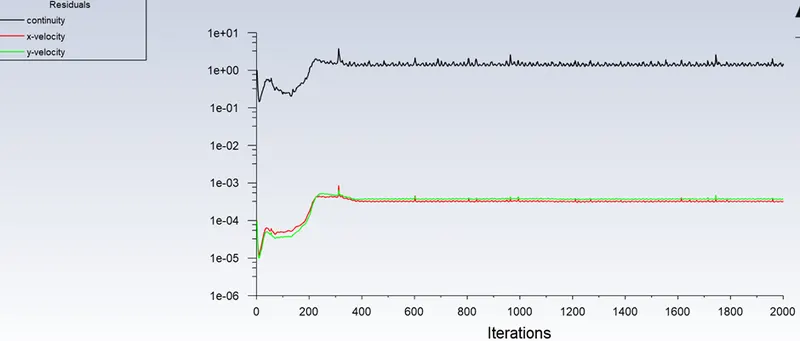
4.if required solution is convergence steady state give it in very less iterations less than 1000 but for unstedy it will take more iterations and time . From vertex avg flot we will decide for transient the solution is converge or not.
Reference=
Numerical Study of Unsteady Flow around a Square Cylinder in Compare with Circular Cylinder