Week 2 - Flow over a Cylinder.
Flow Over a cylinder
Objective:
Simulate the flow over a cylinder and explain the phenomenon of Karman vortex street.
PART-I
Simulate the flow with the steady and unsteady case and calculate the Strouhal Number for Re= 100.
PART-II
Calculate the coefficient of drag and lift over a cylinder by setting the Reynolds number to 10,100,1000,10000 & 100000. (Run with steady solver)
Discuss the effect of Reynolds number on the coefficient of drag.
Introduction:
In fluid dynamics, vortex shedding is an oscillating flow that takes place when a fluid such as air or water flows past a bluff (as opposed to streamlined) body at certain velocities, depending on the size and shape of the body. In this flow, vortices are created at the back of the body and detach periodically from either side of the body forming a Von Kármán vortex street. The fluid flow past the object creates alternating low-pressure vortices on the downstream side of the object. The object will tend to move toward the low-pressure zone.
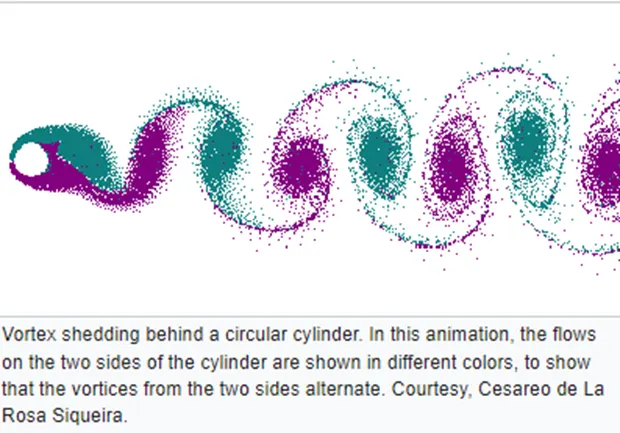
If the bluff structure is not mounted rigidly and the frequency of vortex shedding matches the resonance frequency of the structure, then the structure can begin to resonate, vibrating with harmonic oscillations driven by the energy of the flow. This vibration is the cause for overhead power line wires humming in the wind,[1] and for the fluttering of automobile whip radio antennas at some speeds. Tall chimneys constructed of thin-walled steel tubes can be sufficiently flexible that, in air flow with a speed in the critical range, vortex shedding can drive the chimney into violent oscillations that can damage or destroy the chimney.
Vortex shedding was one of the causes proposed for the failure of the original Tacoma Narrows Bridge (Galloping Gertie) in 1940, but was rejected because the frequency of the vortex shedding did not match that of the bridge. The bridge actually failed by aeroelastic flutter.[2]
A thrill ride, "VertiGo" at Cedar Point in Sandusky, Ohio suffered vortex shedding during the winter of 2001, causing one of the three towers to collapse. The ride was closed for the winter at the time.[3] In northeastern Iran, the Hashemi-Nejad natural gas refinery's flare stacks suffered vortex shedding seven times from 1975 to 2003. Some simulation and analyses were done, which revealed that the main cause was the interaction of the pilot flame and flare stack
Strouhal number:
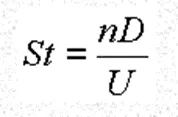
The Strouhal number St is a function of the Reynolds number Re (although a sufficiently varying one that it may be said that it is typically equal to 0.2, e.g. see figure below) and is proportional to the reciprocal of vortex spacing expressed as a number of obstacle diameter. It is used in the momentum transfer in general, and in both Von Karmann vortex streets and unsteady flow calculations in particular. It is normally defined in the following form.
Where,
n- Is the frequency of the observed phenomenon
d- Is the characteristic length (which is the diameter of the cylinder in the of vortex streets).
U- Is the velocity of the fluids.
Reynolds Number:
The Reynolds number (Re) is a dimensionless number, named after the Osborne Reynolds, defined as the ratio of inertial forces to viscous forces. That is, the Reynolds number is given as.
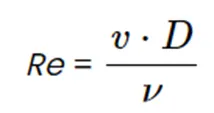
Where, D is the diameter of the tube (m).
v is the velocity of the fluid (m/s).
V is the kinematic viscosity of the fluid (m2/s).
Drag coefficient:
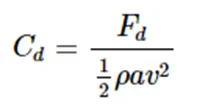
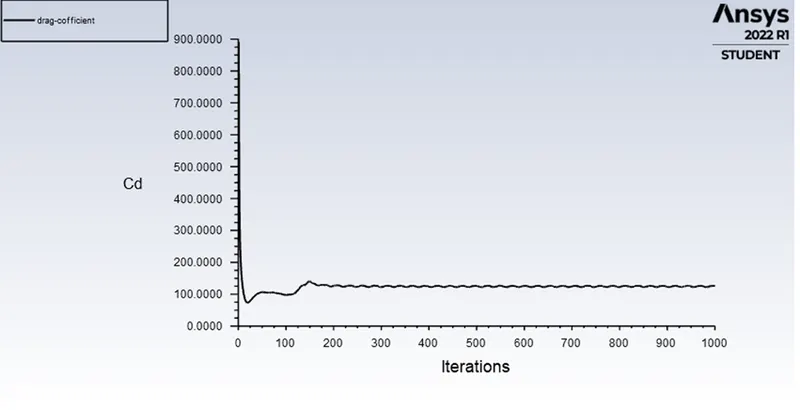
The drag coefficient (Cd) is a dimensionless quantity that is used to determine the drag or resistance of an object in a fluid environment, such as air or water. The drag coefficient is given as.
Where, Cd is the coefficient of drag.
Fd is the drag force.
ρ is the density of the fluid.
A is the project area of the object w.r.t which drag force is calculated.
v2 is the flow velocity.
Lift coefficient:
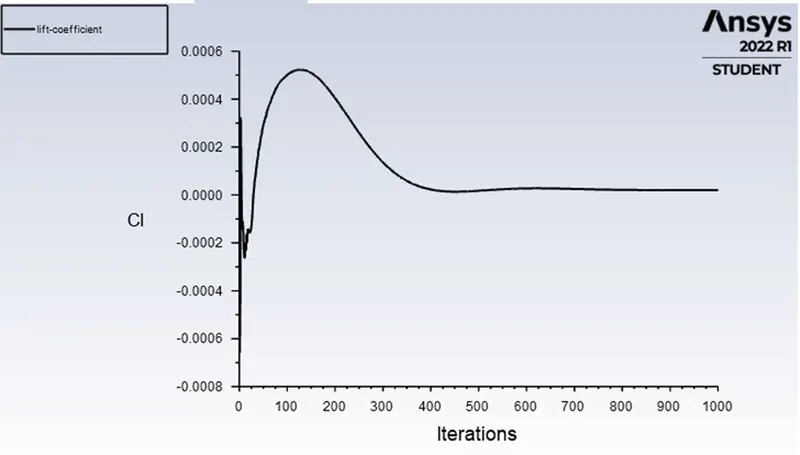
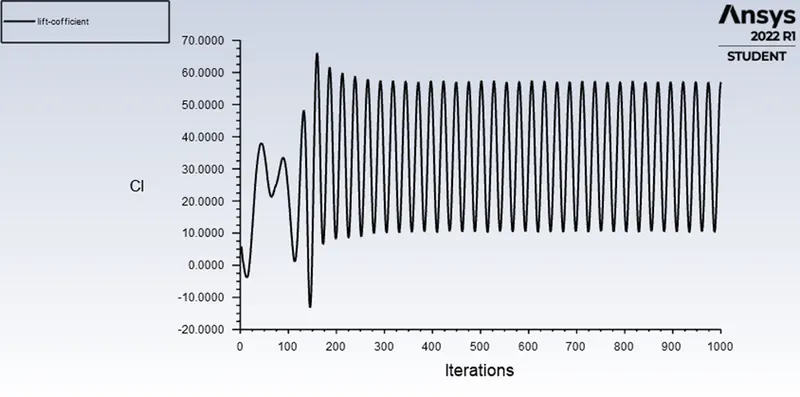
The lift coefficient (Ct) is a dimensionless quantity that is used to determine the lift of an object in a fluid environment. The lift coefficient is given as.
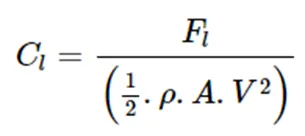
Where, Cd is the coefficient of drag.
Fl is the drag force.
ρ is the density of the fluid
a is the projected area of the object w.r.t which drag force is calculated
v2 is the flow velocity.
Procedure:
- For modelling the approach we are starting with the creation of geometry. First we get into geometry section where we create the geometry using the space claim.
- First we select the unit in meters as required dimensions are given we create the geometry using the tools.
- We remove the extra edges using the deleting construction lines.
- We use pull command to make it a surface.
- And we remove the circular area to create the cylinder.
Meshing:
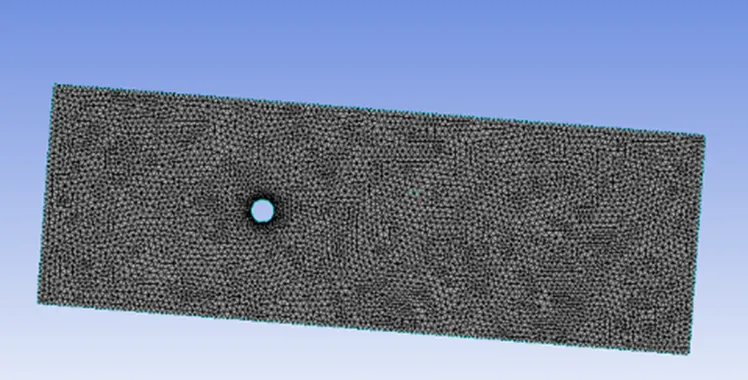
- We use a meshing tool to mesh the geometry.
- First we create the mesh by giving the elemental size 0.27m.
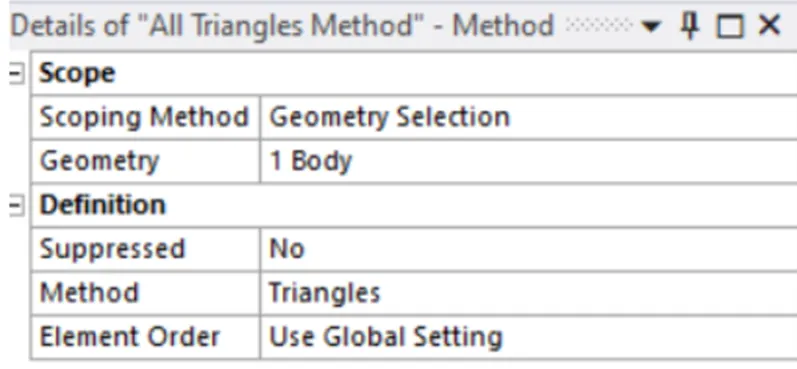
- And we convert the quad dominated mesh into triangle dominated mesh.
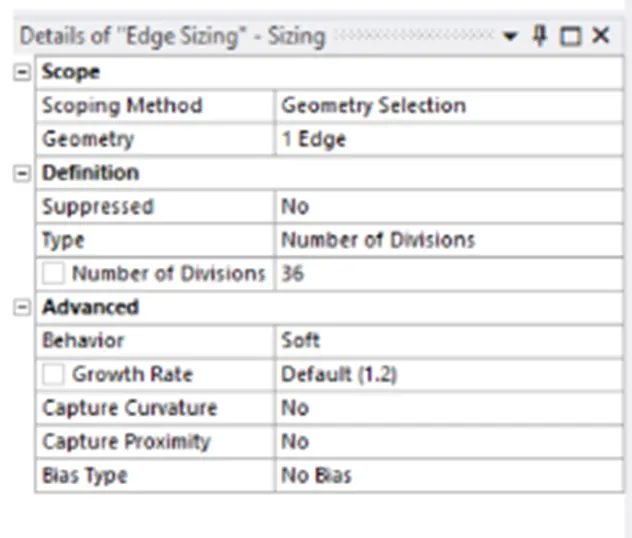
- We have to capture the physics at the circumference of the cylinder is perfectly so we divide circle into 36 parts.
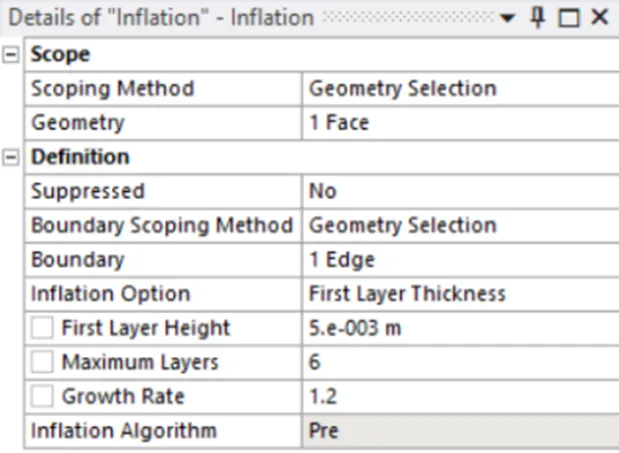
- And then to create body fitted mesh we are adding the inflation layers to capture the physics more clearly.
- If we are not getting the correct results for this element size, again we change the mesh size to capture solution correctly.
- After meshing we create the named selection of boundary.
- We gave the name to each of the faces of the boundaries.
Setup:
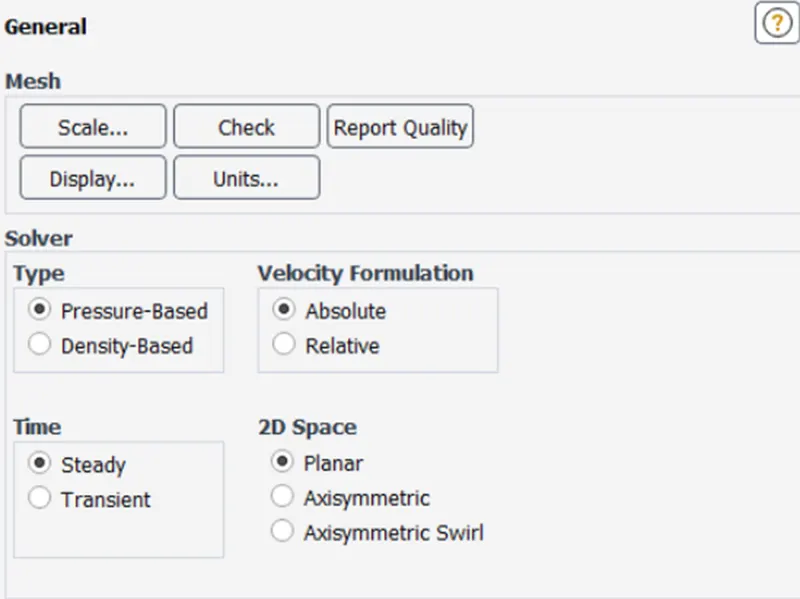
- We are using the pressure based solver because the Mach number is less than 0.8.
- And steady state because are not solving the time derivative.
- We only solve time derivate when we want time accurate solution.
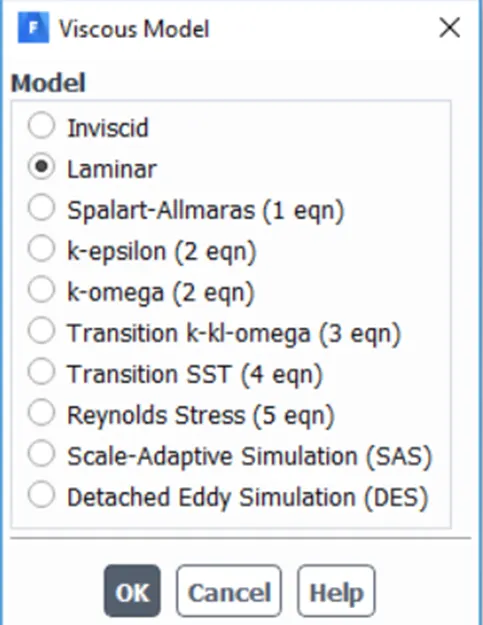
- We are using the viscous laminar model because flow is laminar Reynolds number is less.
- We create the user defined material which has viscosity of 0.02 m2/s. and density of 1kg/m3 because we have to see how vortex shedding is happening.
- Then we apply the required boundary conditions as the problem.
- Then we create the plots or reports using the option definitions as the required plots we want.
- We are using the hybrid initialization because the initials guess value are taking according to the solver.
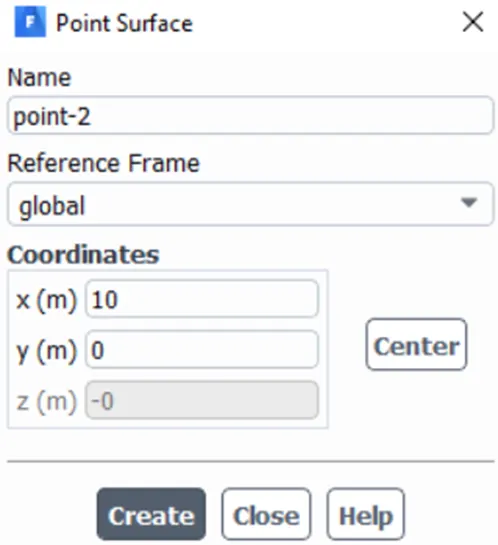
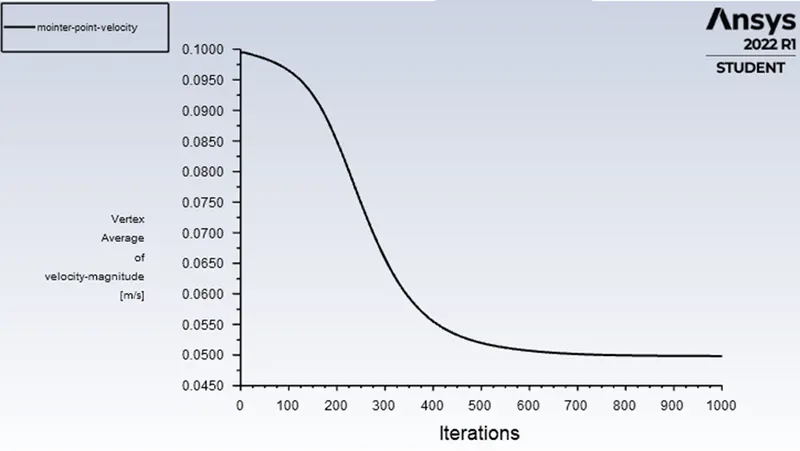
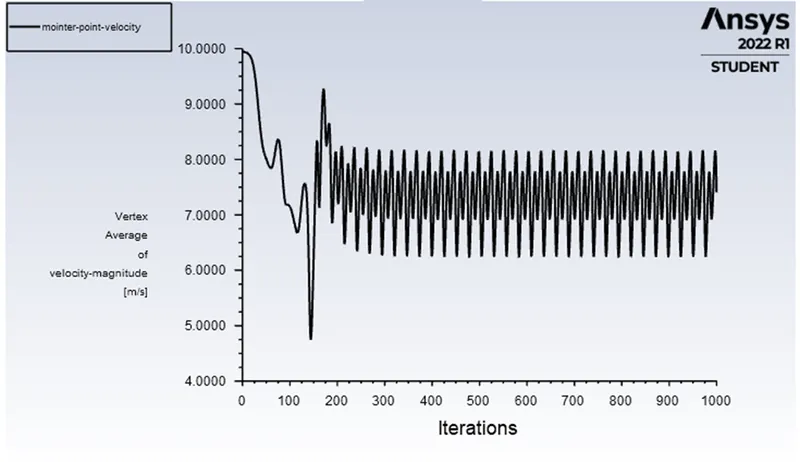
- For getting the graph of the vortex velocity we grated the monitor point using the create>points>at a distance of 10m we create point you can give any name to the point.
- And we can get to know about the distance there vortex shedding happening is by trial and error method.
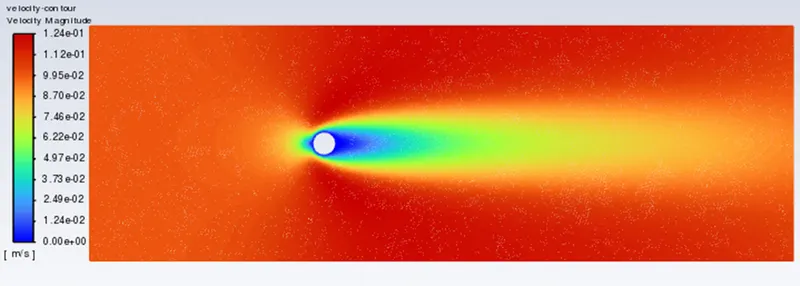
- We can create contour of the velocity and the pressure using the contour option.
Case 1:
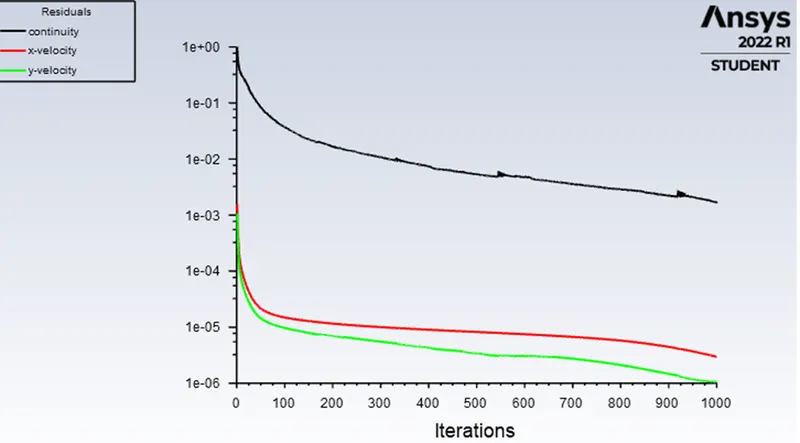
Reynolds number = 10.
Viscosity = 0.02.
Velocity = 0.1.
Iterations = 1000.
Residual:
Monitor point velocity:
Drag coefficient:
Lift coefficient:
Velocity contour:
Pressure contour:
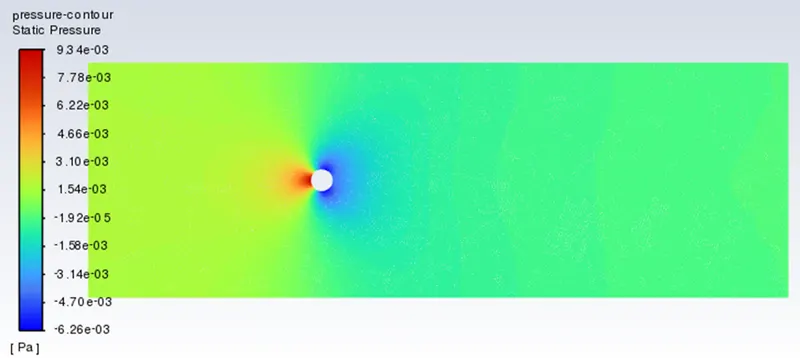
Case 2:
Reynolds number = 100.
Viscosity = 0.02.
Velocity = 1.
Iterations = 1000.
Residual plot:
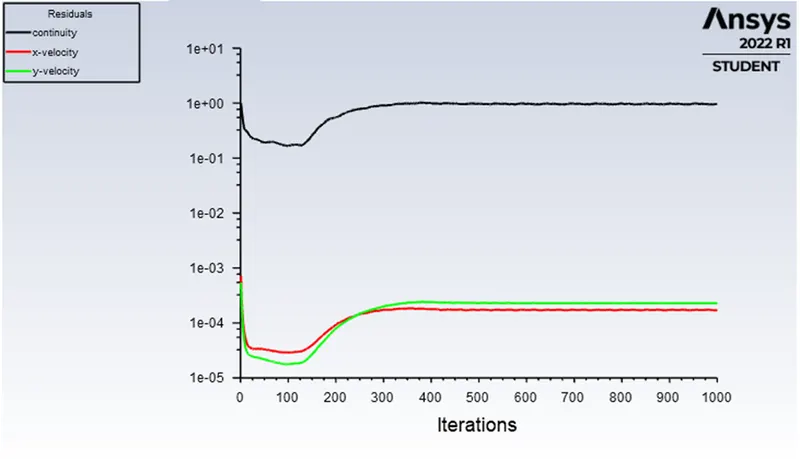
Monitor point velocity:
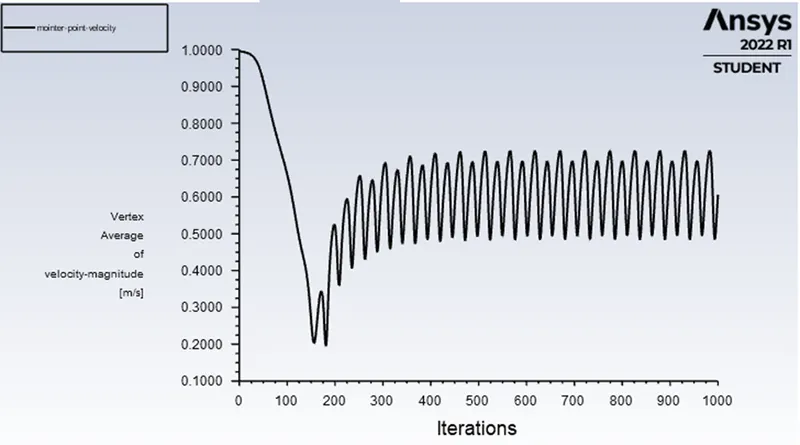
Drag coefficient:
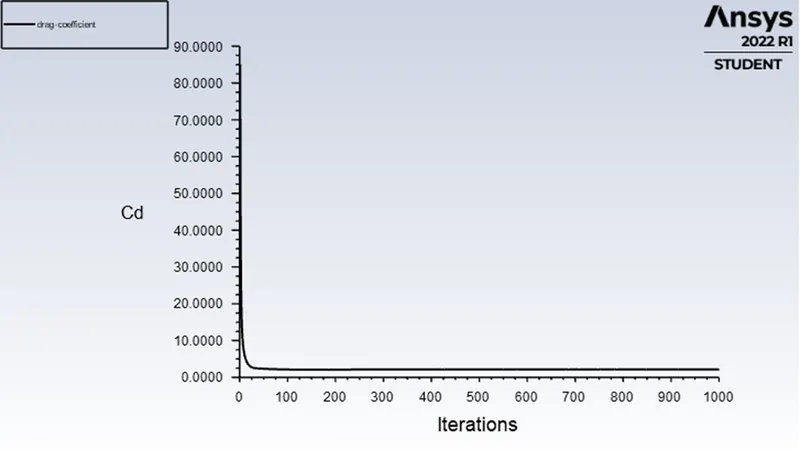
Lift coefficient:
Velocity contour:
Velocity streamline:
Pressure:
Case 3:
Reynolds number = 1000.
Viscosity = 0.02.
Velocity = 10.
Iterations = 1000.
Residual plot:
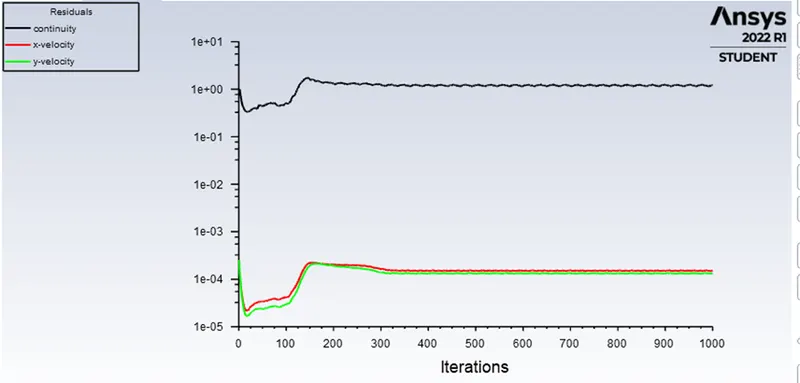
Monitor point velocity:
Drag coefficient:
Lift coefficient
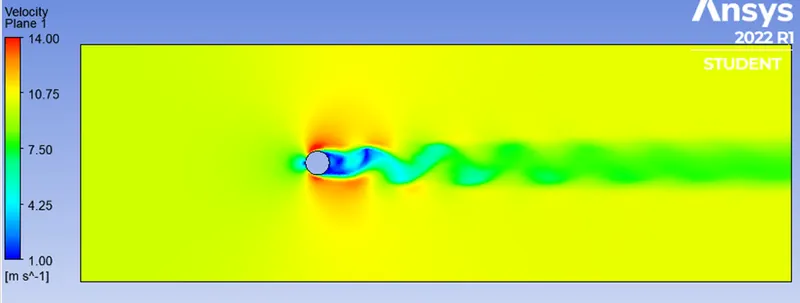
Velocity contour:
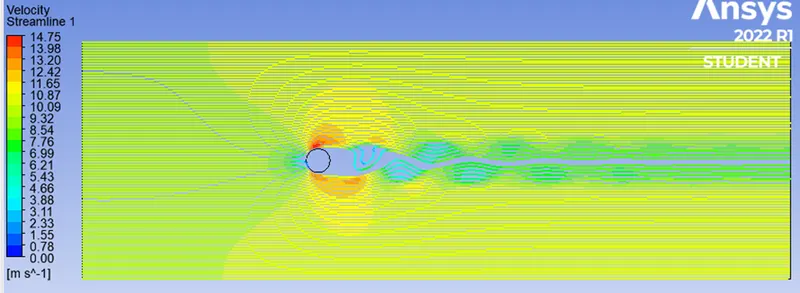
Velocity streamline:
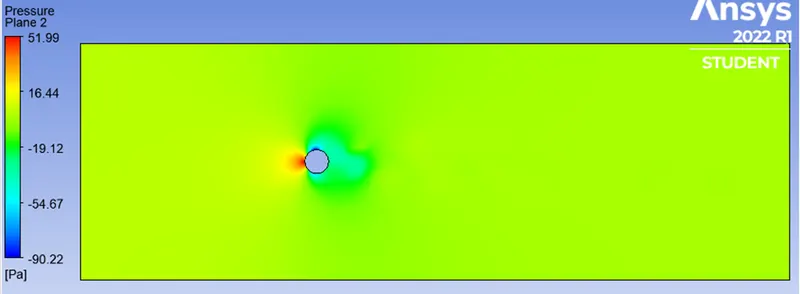
Pressure contour:
Case 4:
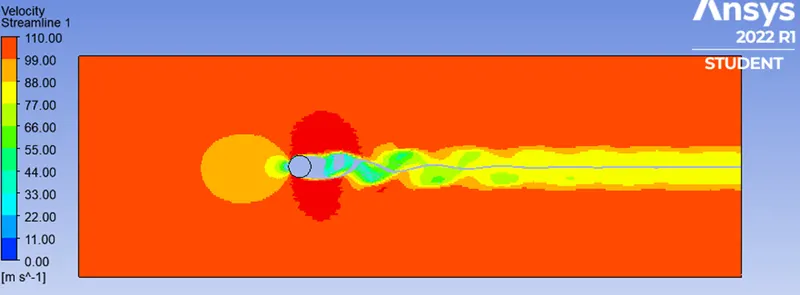
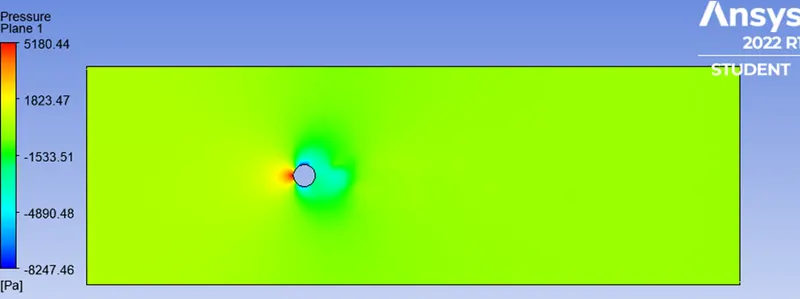
Reynolds number = 10000.
Viscosity = 0.02.
Velocity = 100.
Iterations = 1000.
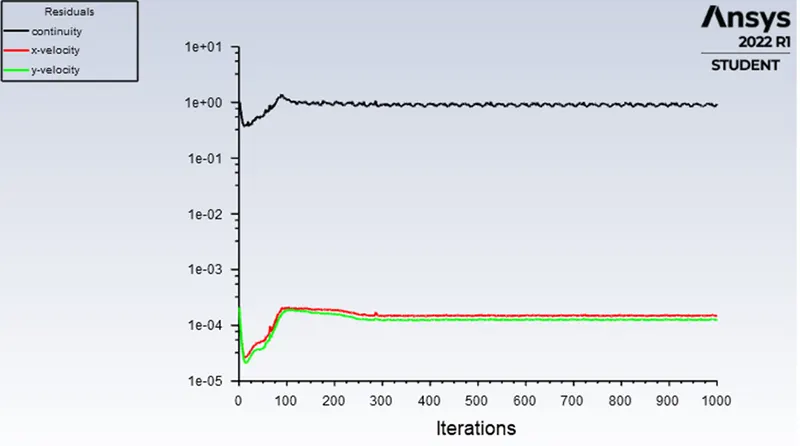
Residual plot:
Monitor point velocity:
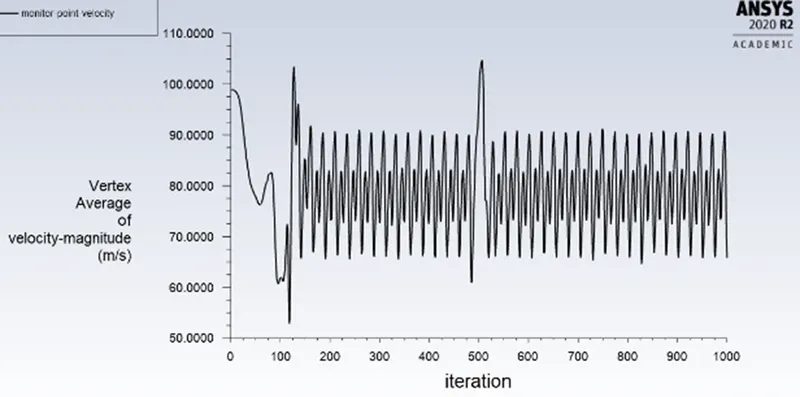
Drag coefficient:
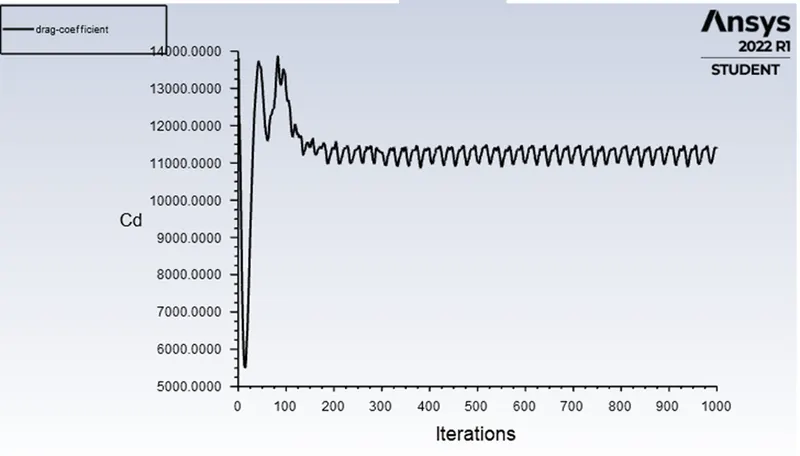
Lift coefficient:
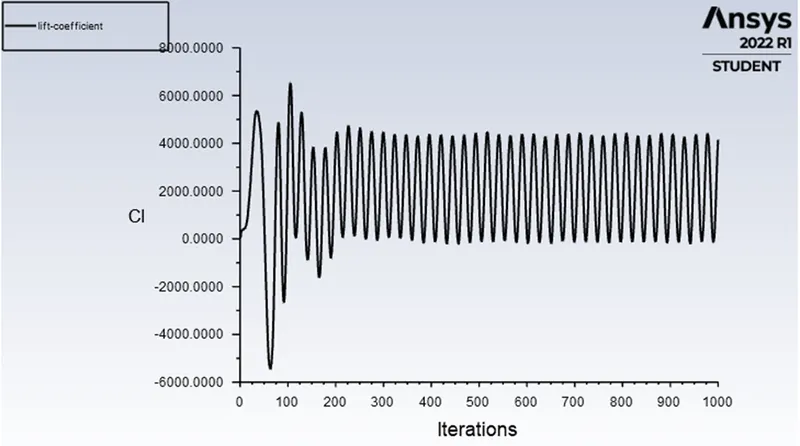
Velocity contour:
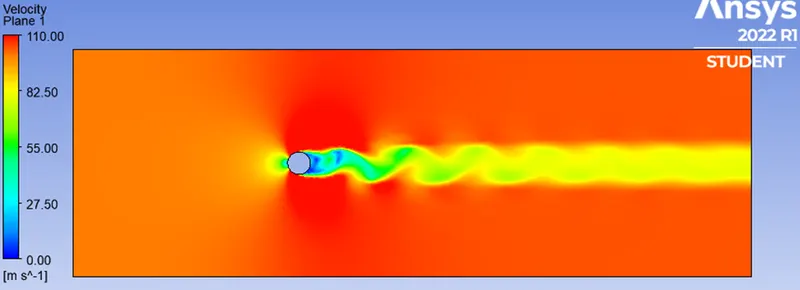
Velocity streamline:
Pressure:
Case 5:
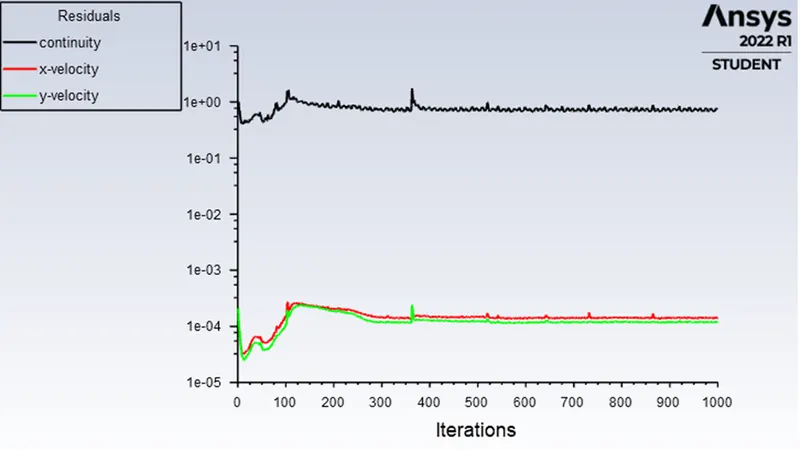
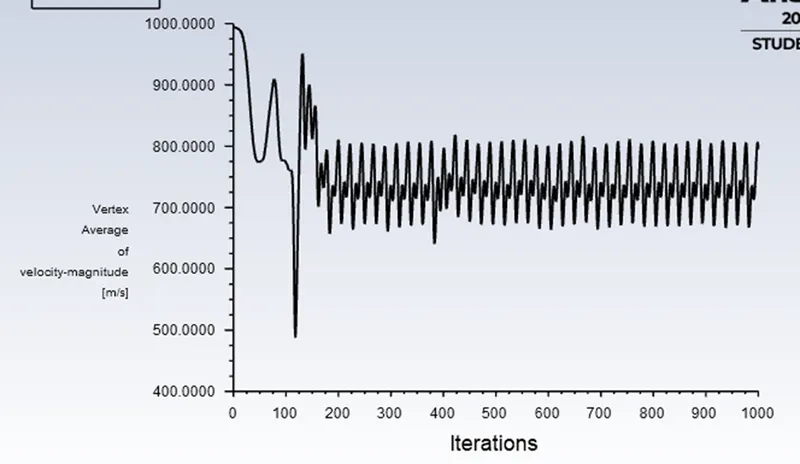
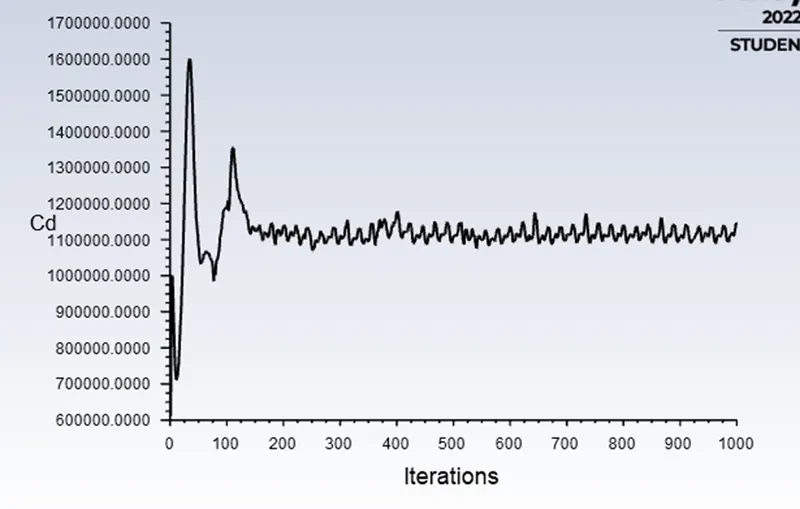
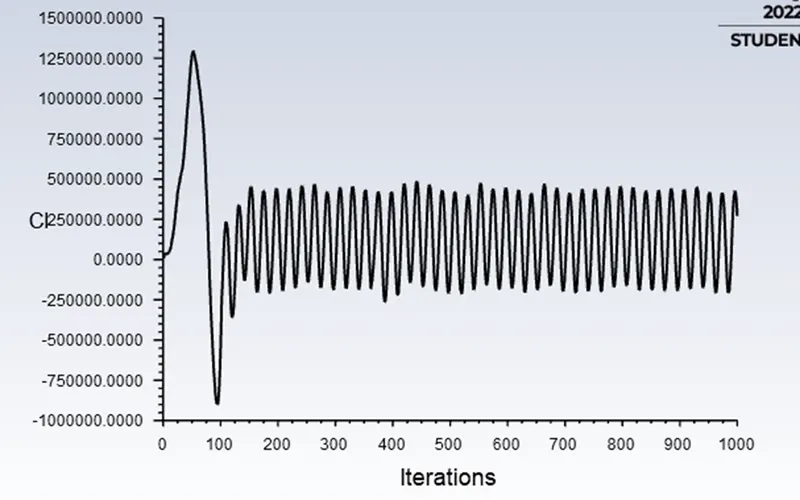
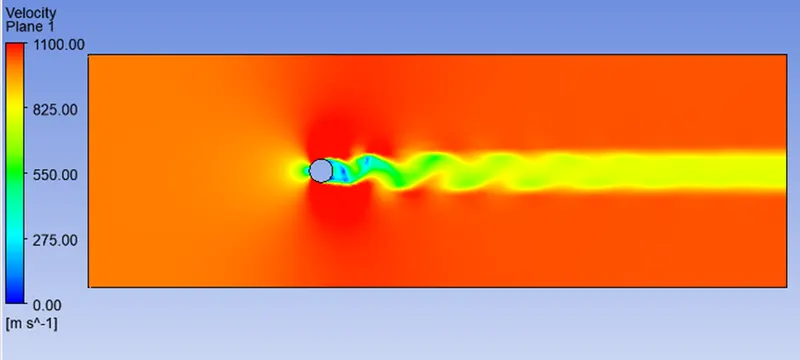
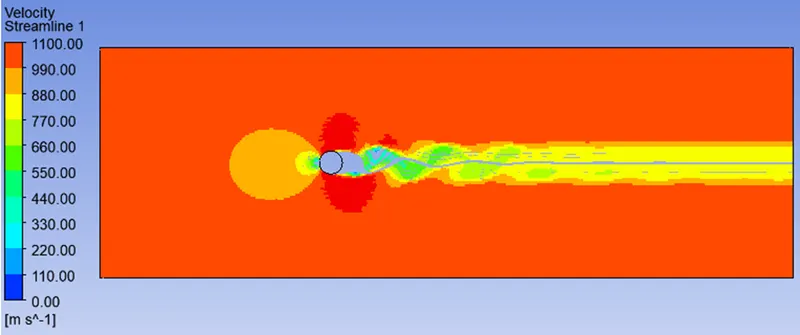
Reynolds number = 100000.
Viscosity = 0.02.
Velocity = 1000.
Iterations = 1000.
Residual:
Monitor point velocity:
Drag coefficient:
Lift coefficient:
Velocity contour:
Velocity streamline:
Pressure:
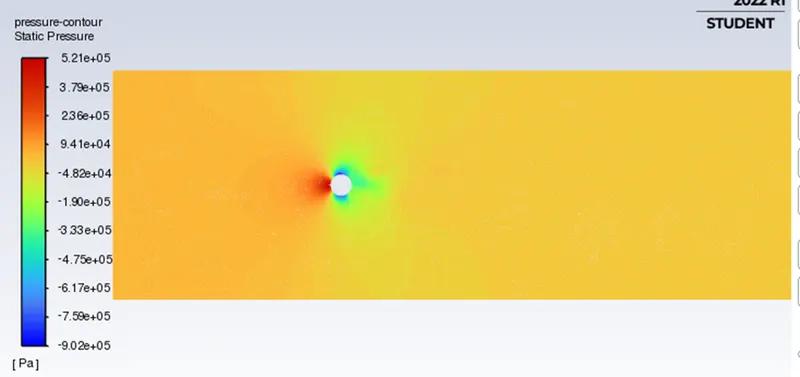
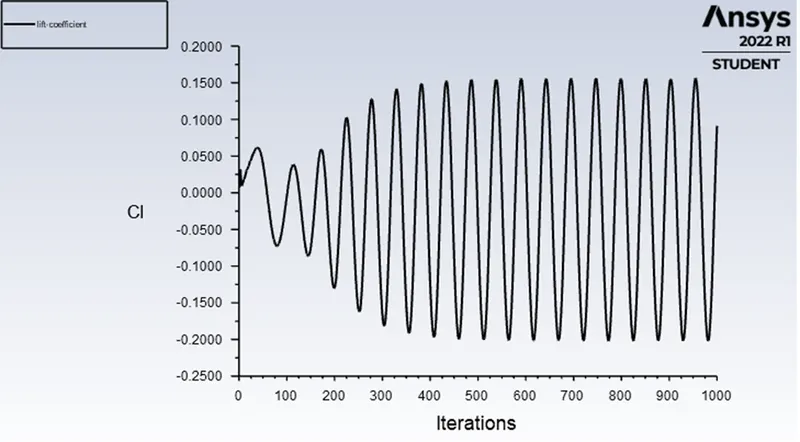
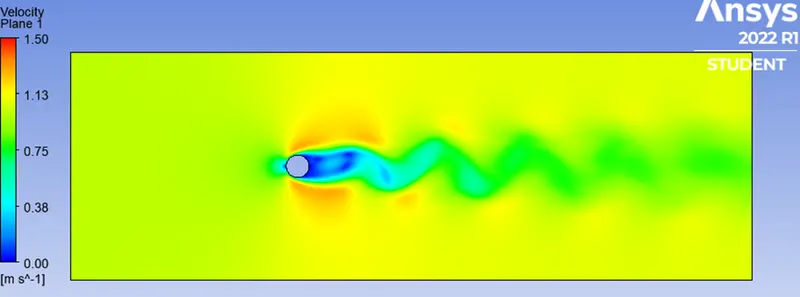
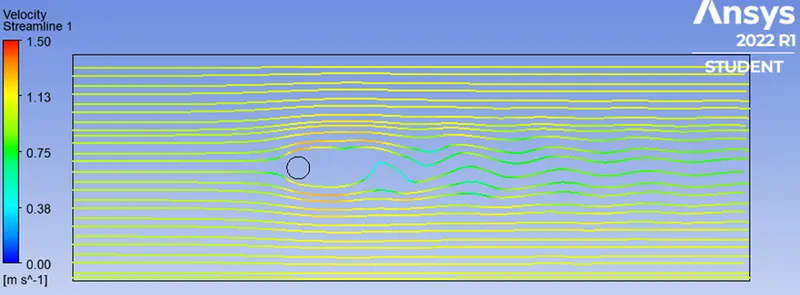
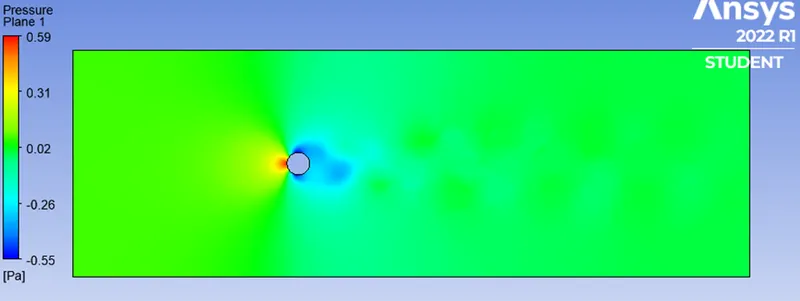
Unsteady state:
Reynolds number = 100.
Viscosity = 0.02.
Velocity = 1.
Iterations = 1000.
Residuals: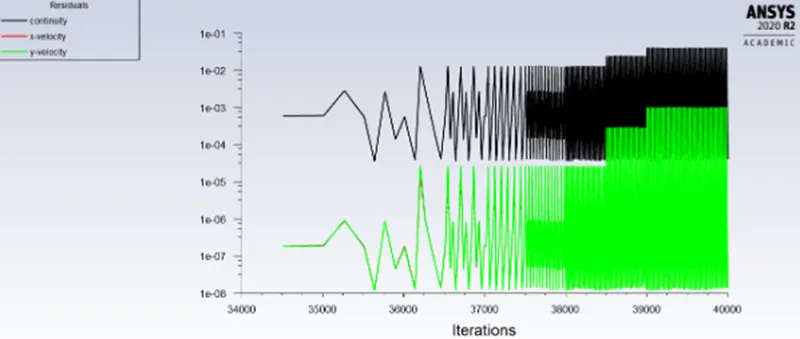
monitor point velocity:
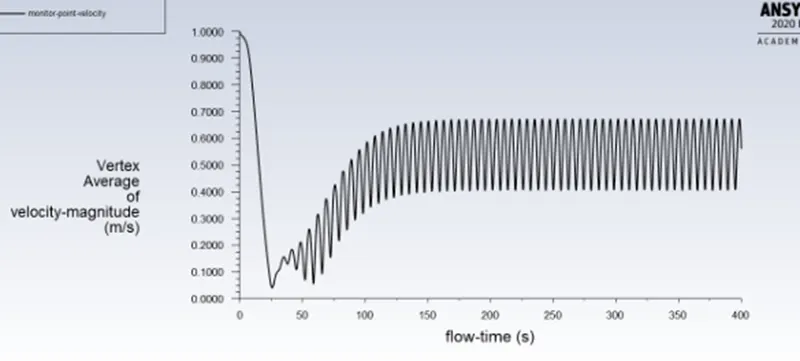
Drag coefficient:
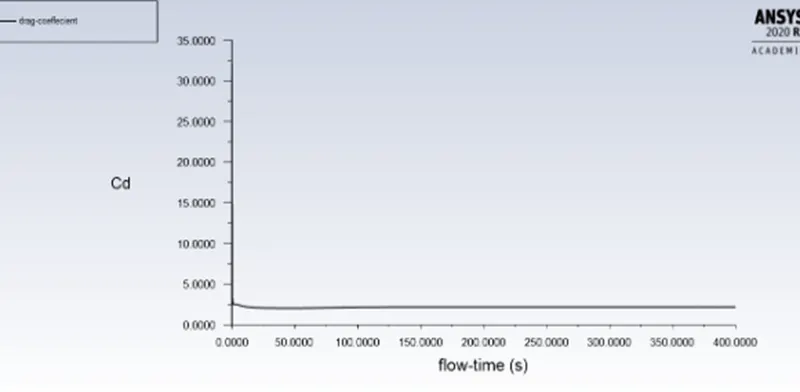
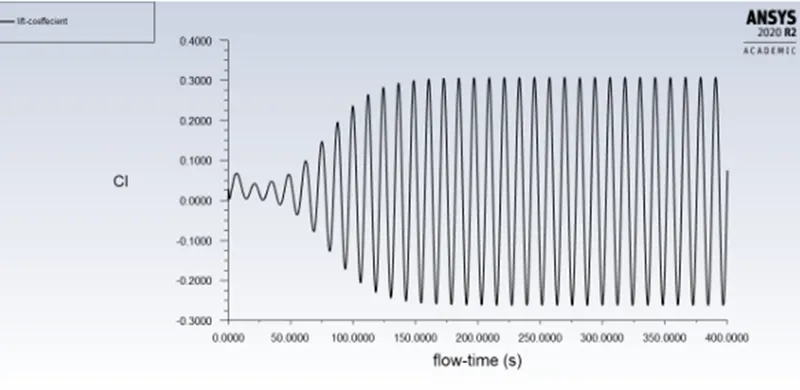
Lift coefficient:
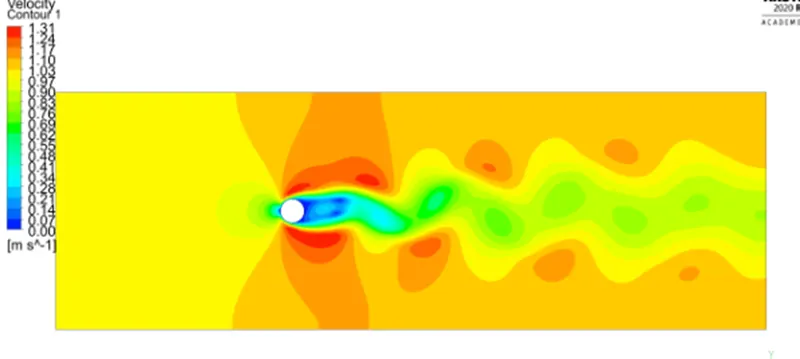
Velocity contour:
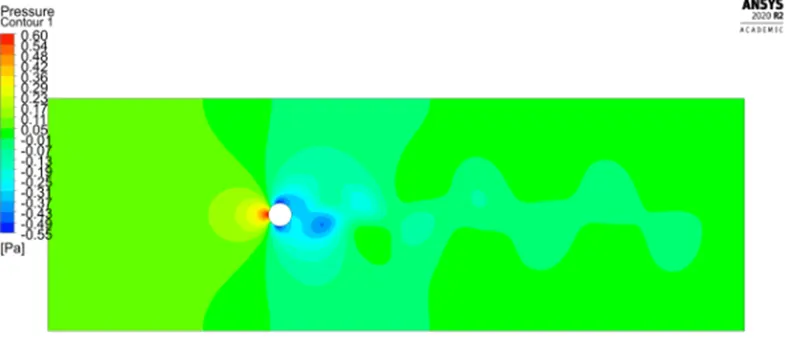
Pressure contour:
|
Reynolds number |
Drag coefficient |
Lift coefficient |
|
10 |
3.3273 |
0.001735 |
|
100 |
1.3321 |
0.028470 |
|
1000 |
0.7209 |
0.16451 |
|
10000 |
0.7857 |
0.57162 |
|
100000 |
0.7184 |
0.278624 |
|
100(unsteady state) |
1.3485 |
0.035682 |
References papers: