Week 2 - Flow over a Cylinder.
Objective:- Simulate the flow over a cylinder and explain the phenomenon of Karman vortex street.
PART-I
- Simulate the flow with the steady and unsteady case and calculate the Strouhal Number for Re= 100.
PART-II
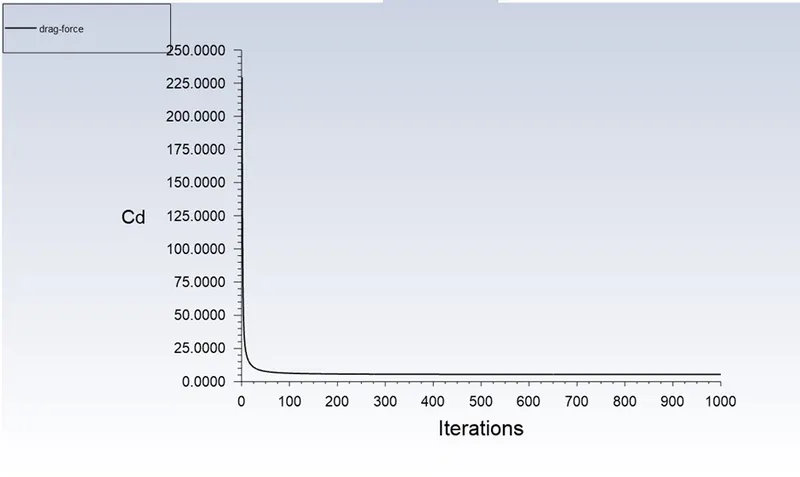
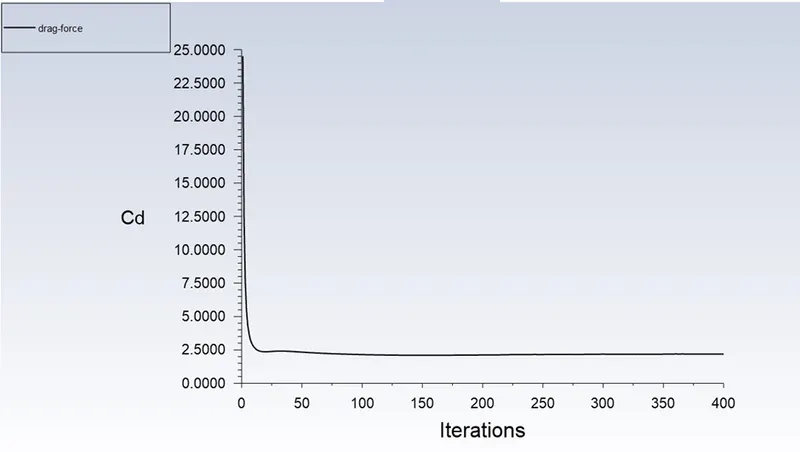
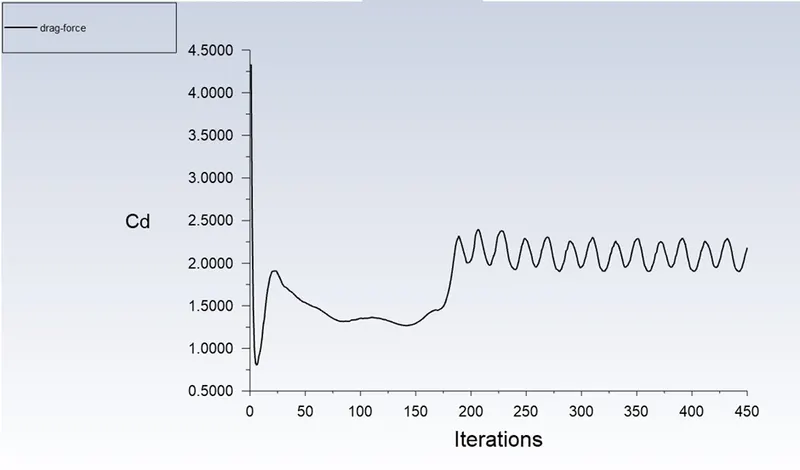
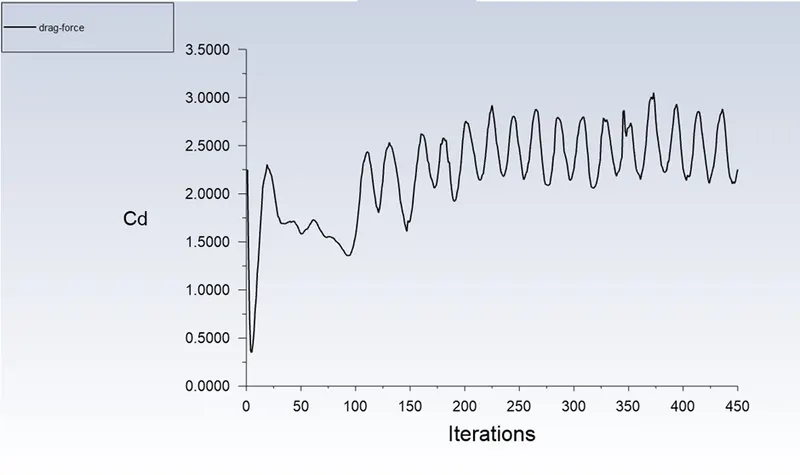
- Calculate the coefficient of drag and lift over a cylinder by setting the Reynolds number to 10,100,1000,10000 & 100000. (Run with steady solver)
- Discuss the effect of Reynolds number on the coefficient of drag. [ Results should be validated with any standard literature and error should be within 5 %]
Theory:- When a fluid flows past an object, it exerts a force on the object. We can split the force into two components i.e one acting in the same direction as the fluid flow which is called Drag, and one acting perpendicular to the fluid flow which is called lift.
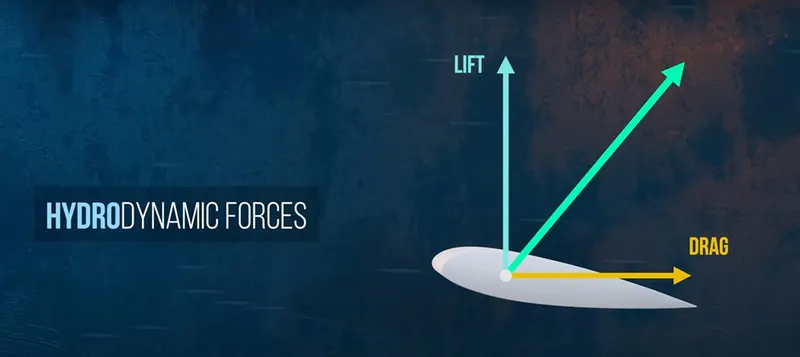
If the fluid is a gas, then the forces are called as Aerodynamic Forces and if it is water then it is called Hydrodynamic Forces.
Drag Forces are caused by two types of stresses which act on the surface of an object
First is the wall shear stresses, which acts tangentially to the object’s surface and are caused by Frictional Forces that are caused by fluid’s Viscosity. Second is the pressure stresses which acts perpendicular to the object’s surface and are caused by how the pressure is distributed around the object.
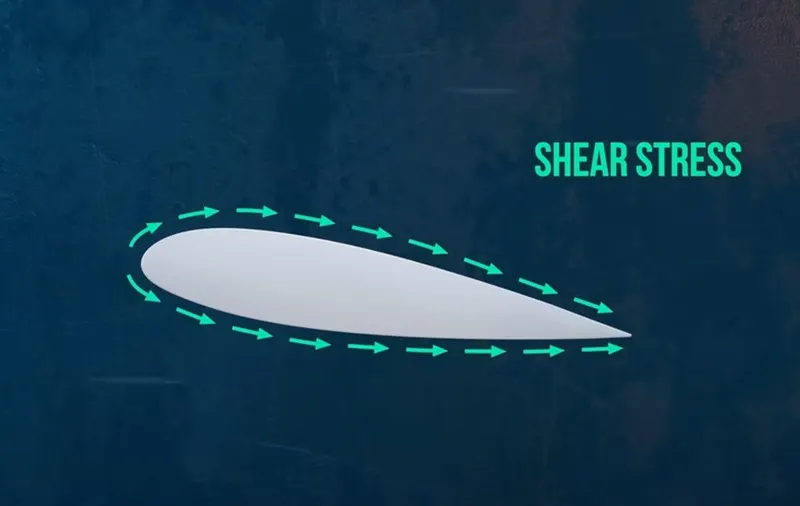
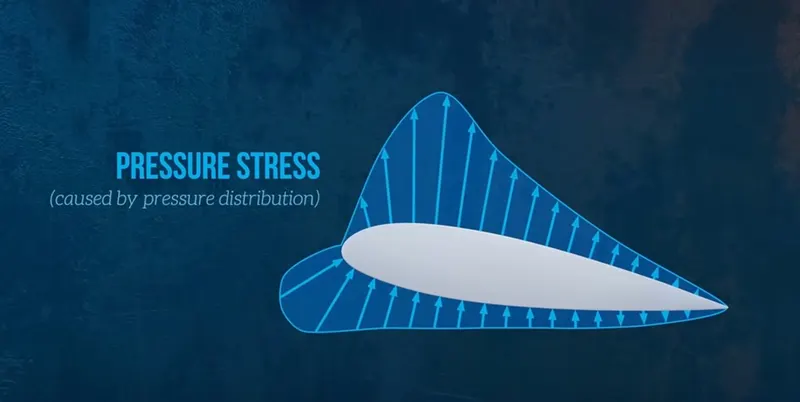
The Drag Force is the resultant of these two stresses in the direction of flow. So if we know how the stresses are distributed around the object, we can integrate it to calculate the total Drag Force
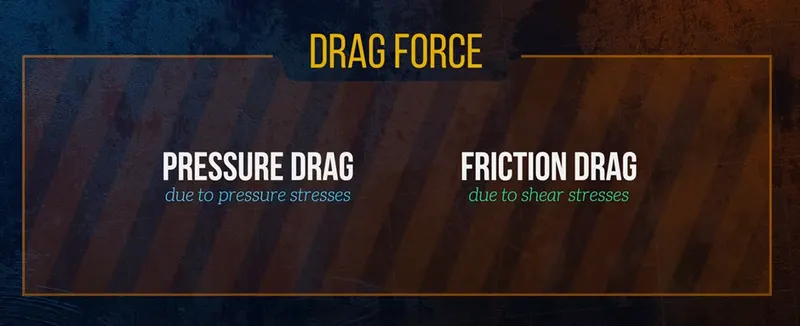
The Component of Drag caused by Shear stresses is known as Friction Drag and the component of drag caused by Pressure stresses is known as Pressure Drag
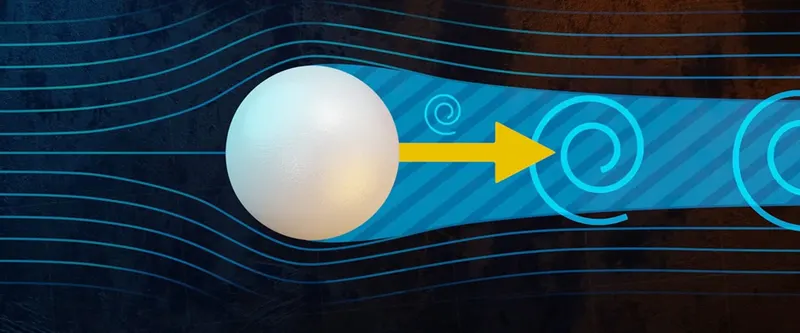
Pressure Drag is most significant in case of blunt bodies i.e sphere. It is essentially caused by a difference in pressure in the front and the rear part of the body. Pressure drag increases significantly if flow separation occurs, which is when a fluid boundary layer detaches from the body, creating a wake of recirculating flow. This creates an area of low pressure behind the body, called the separation region, and results in a large drag force.
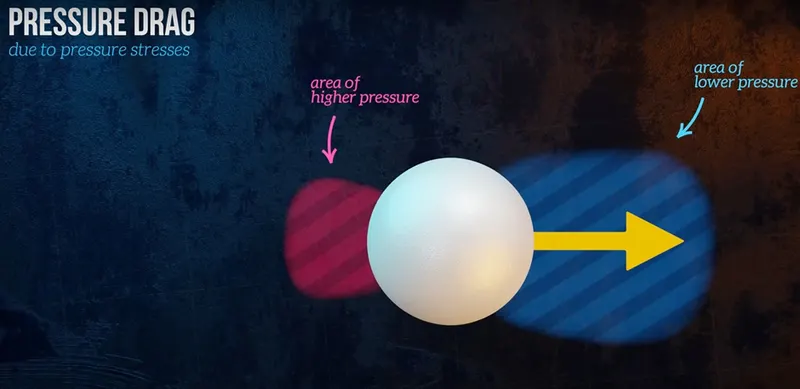
If we are trying to reduce drag force we’ll want to minimise flow separation at all costs. Flow Separation can also cause Vortex Shedding, which can generate unwanted vibrations and instability.
Setting the Model
Geometry creation
An infinitely long circular cylinder of Diameter D=2m is placed in a uniform crossflow. The inlet od the stream and the outlet are placed at 10D and 20D from the centre of the cylinder respectively.
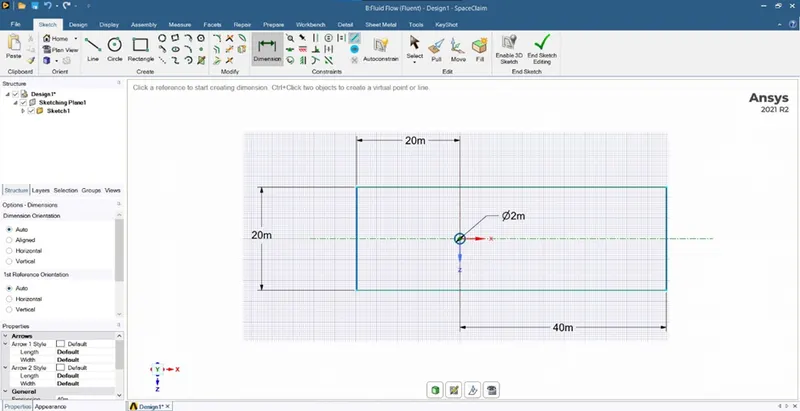
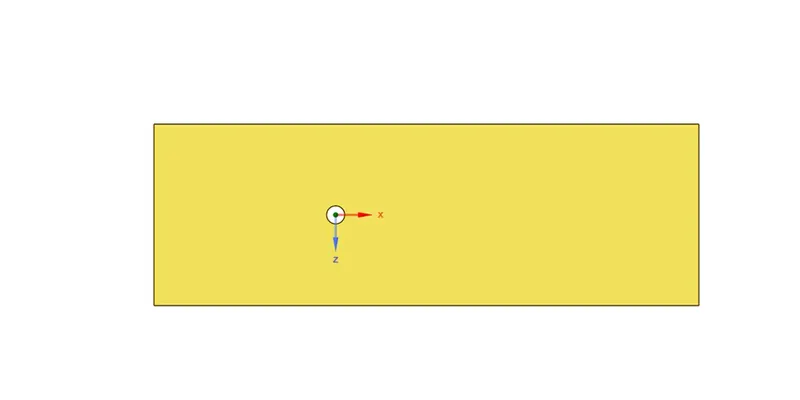
Converting the geometry into the surface by using command pull and select. Also we will delete the inside circle to carry out the simulation
Meshing
Mesh type
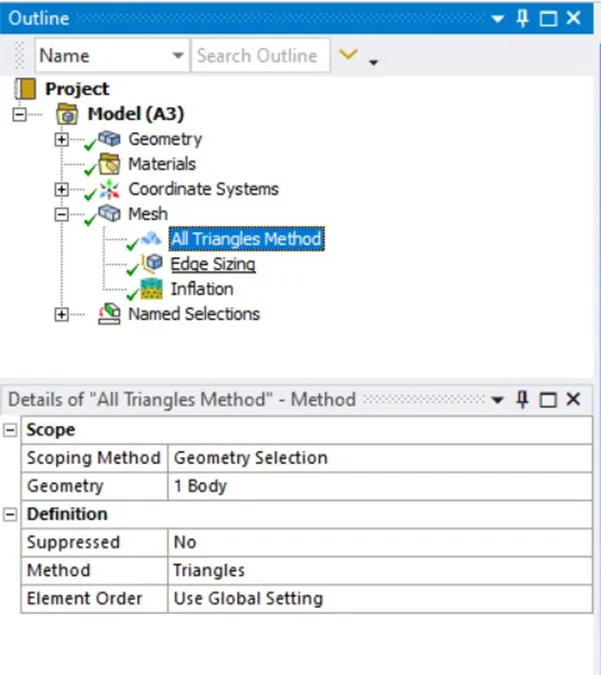
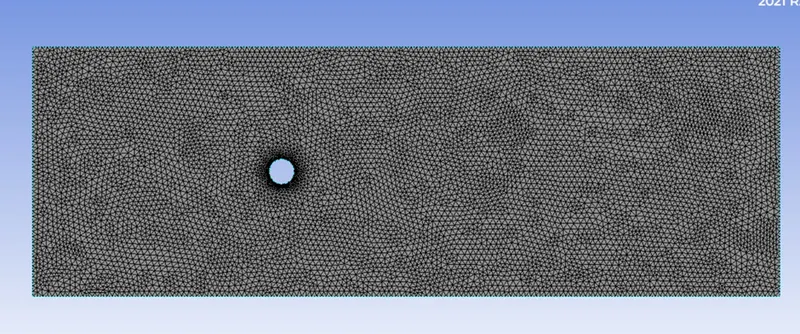
Change the quad mesh which was autogenerated to triangular mesh.
Edge sizing
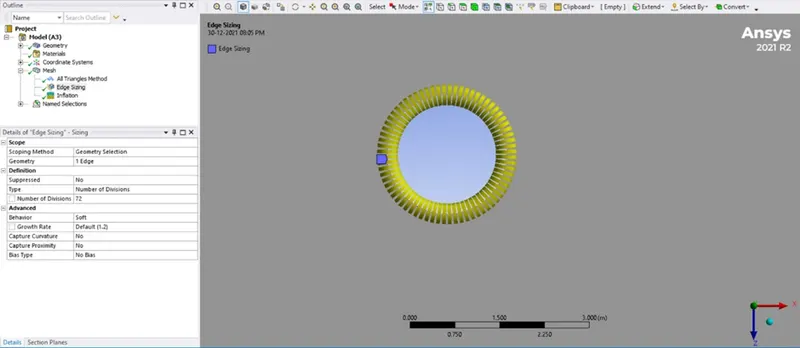
Body fitted mesh is generated. Select the ‘Type’ as ‘Number of Divisions’ and give an appropriate value.
Inflation Layer
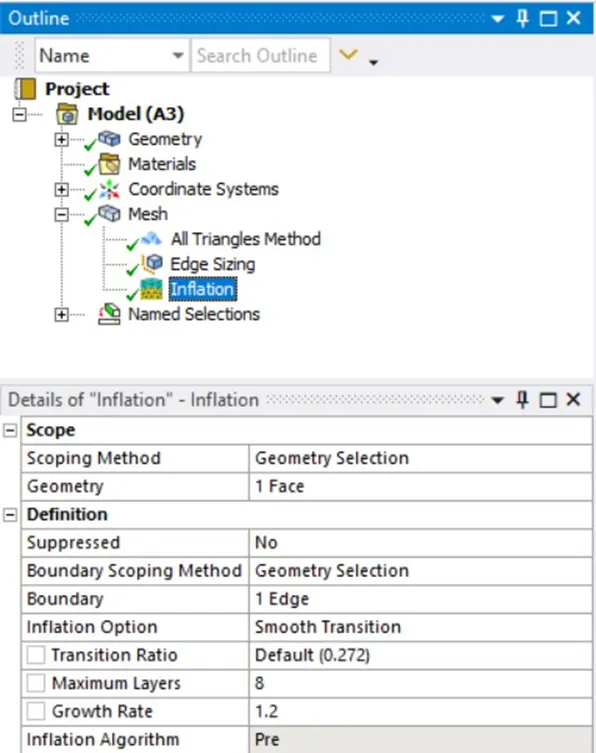
Inflation layer is used to capture better results near the cylinder wall. After this step now we will generate the mesh
Naming the sections
Generated Mesh
Setting Physics, Boundary conditions and creating Report
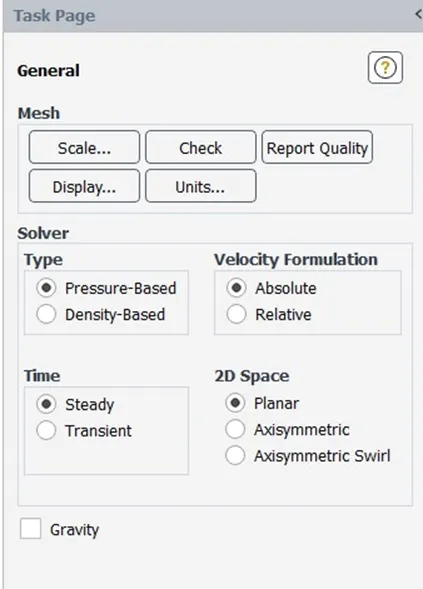
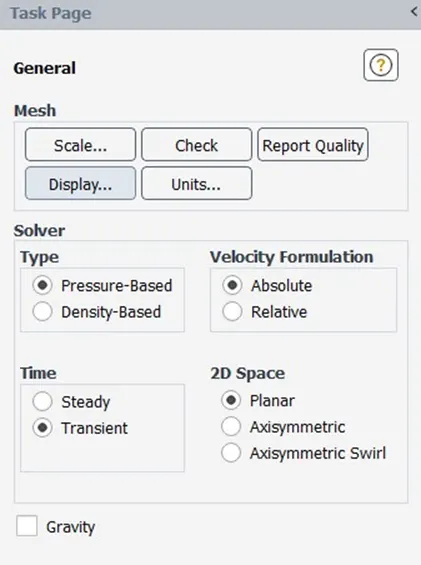
Solver Type
Steady State
Unsteady State
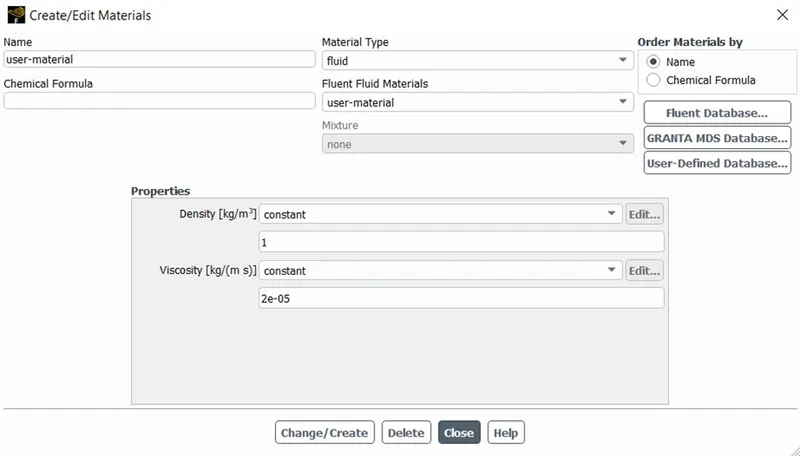
Creating User Defined Material
Creating Boundary conditions
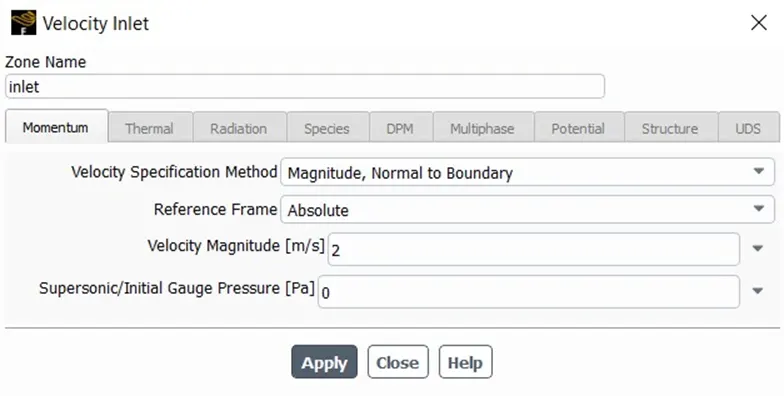
Inlet Boundary
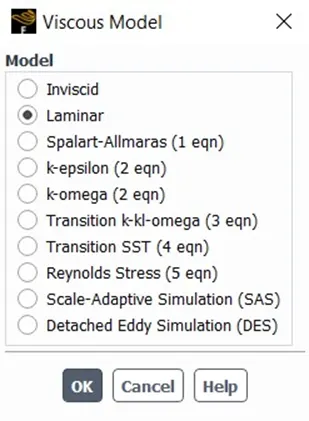
Viscous Model
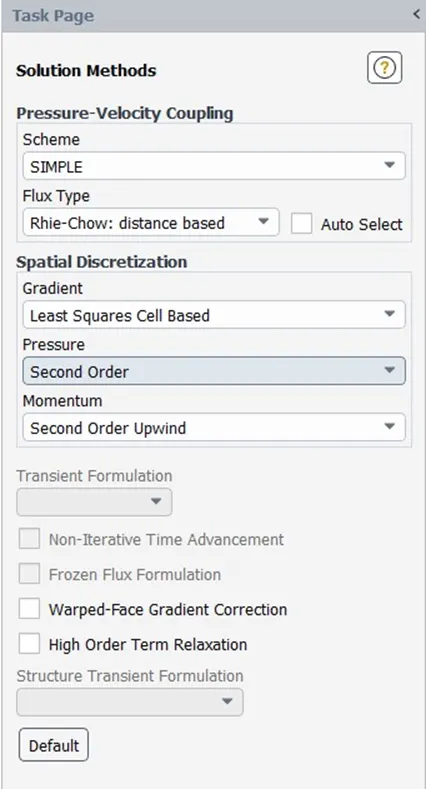
Solver Method
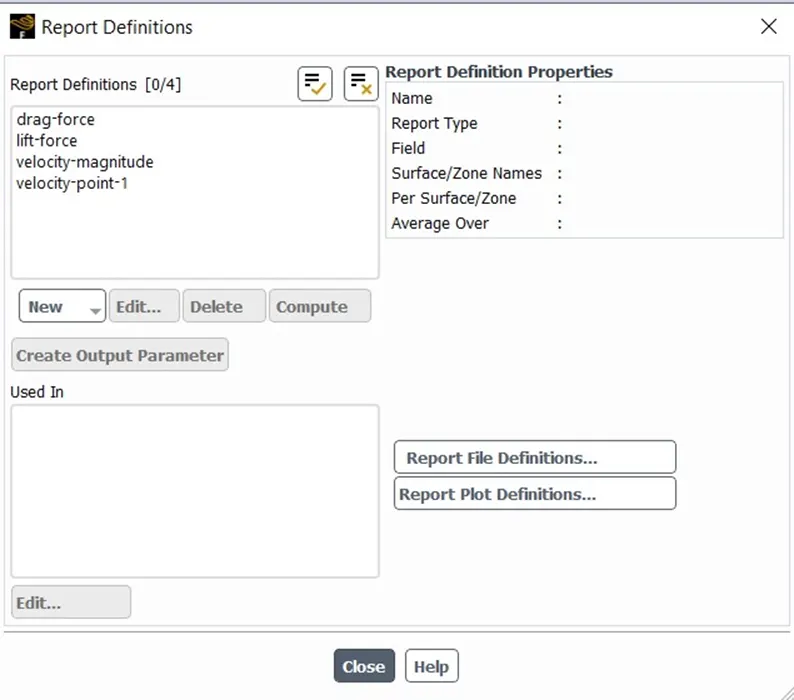
Reports
Initialization
Strouhal Number
In dimensional analysis, the Strouhal number (St, or sometimes Sr to avoid the conflict with the Stanton number) is a dimensionless number describing oscillating flow mechanisms. The parameter is named after Vincenc Strouhal, a Czech physicist who experimented in 1878 with wires experiencing vortex shedding and singing in the wind. The Strouhal number is an integral part of the fundamentals of fluid mechanics.
The Strouhal number is often given as
`St = (f*L)/U`
where f is the frequency of vortex shedding, L is the characteristic length (for example, hydraulic diameter or the airfoil thickness) and U is the flow velocity. In certain cases, like heaving (plunging) flight, this characteristic length is the amplitude of oscillation
For large Strouhal numbers (order of 1), viscosity dominates fluid flow, resulting in a collective oscillating movement of the fluid "plug". For low Strouhal numbers (order of 10−4 and below), the high-speed, quasi-steady-state portion of the movement dominates the oscillation. Oscillation at intermediate Strouhal numbers is characterized by the build up and rapidly subsequent shedding of vortices
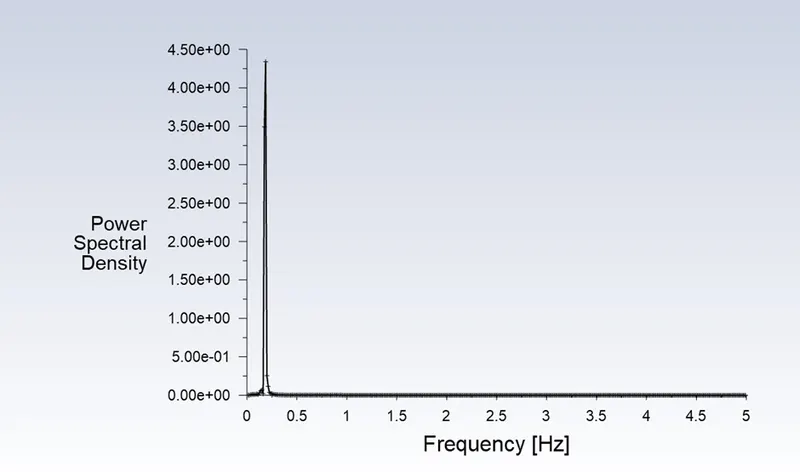
From the above graph it can be seen that for a frequency value of 0.18726592, the Power spectral Density has a maximum value of 4.3395705
Frequency = f = 0.18726592
Strouhal number = f*D/V
Where, f = frequency
D = Characteristic length
V = velocity
Therefore,
Strouhal number = (0.18726592*2)/2
Strouhal number = 0.18726592
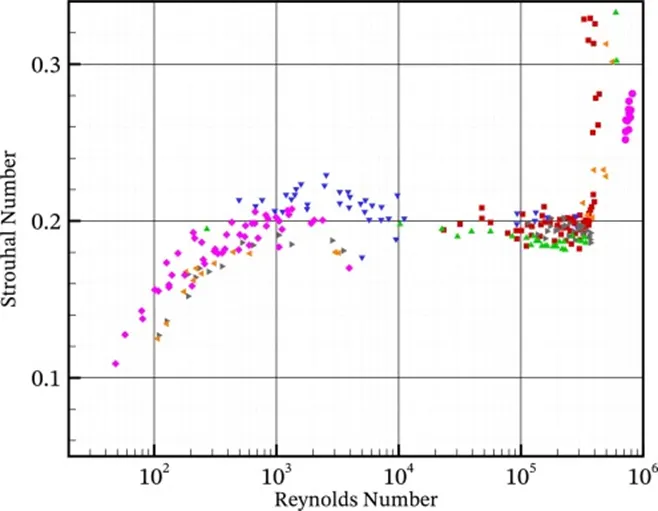
In the experimental data of Strouhal number vs Reynolds number shown below we can verify the above result
Unsteady Flow (Re = 100)
Residuals
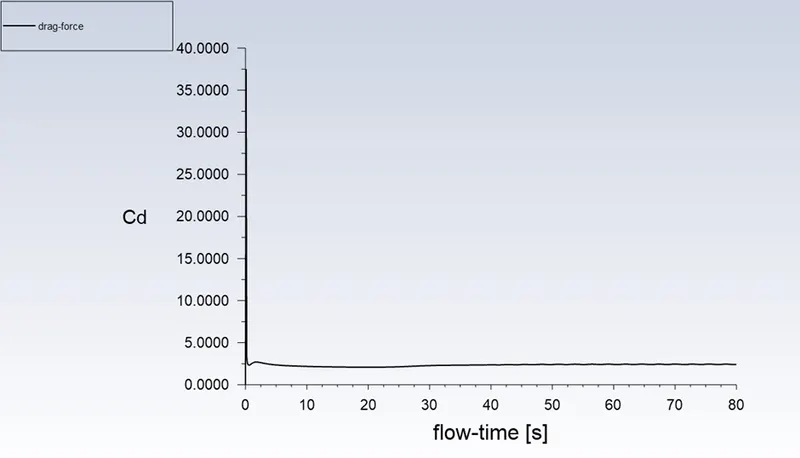
Drag Force
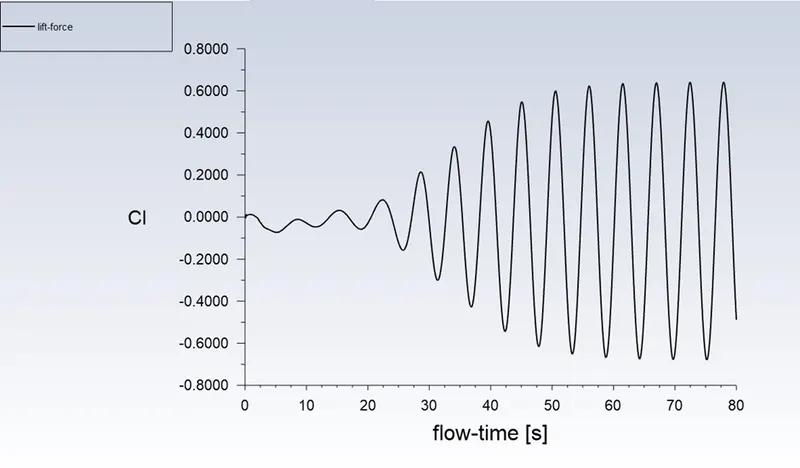
Lift Force
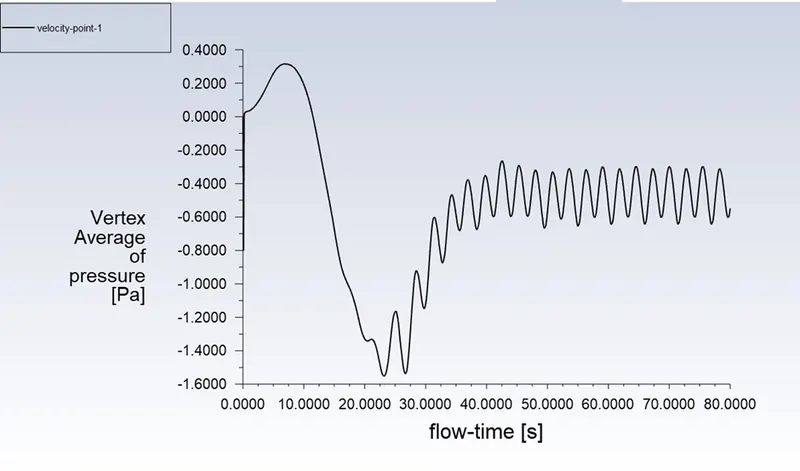
Velocity Magnitude
Steady Flow
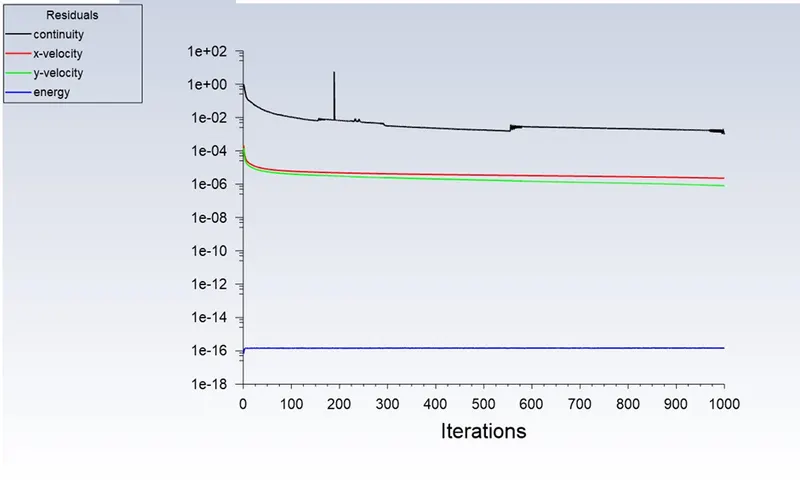
Residuals
Re = 10
Re = 100
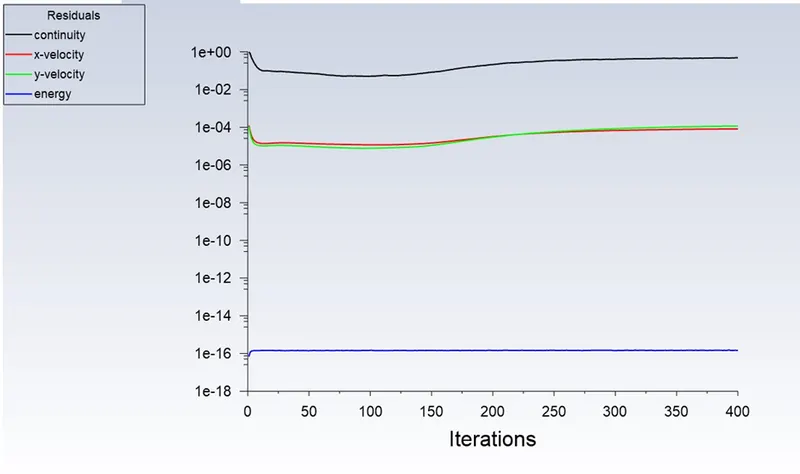
Re = 1000
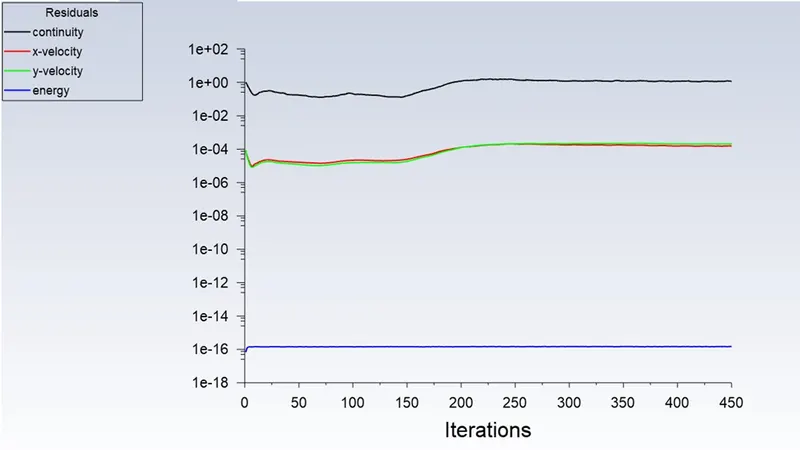
Re = 10000
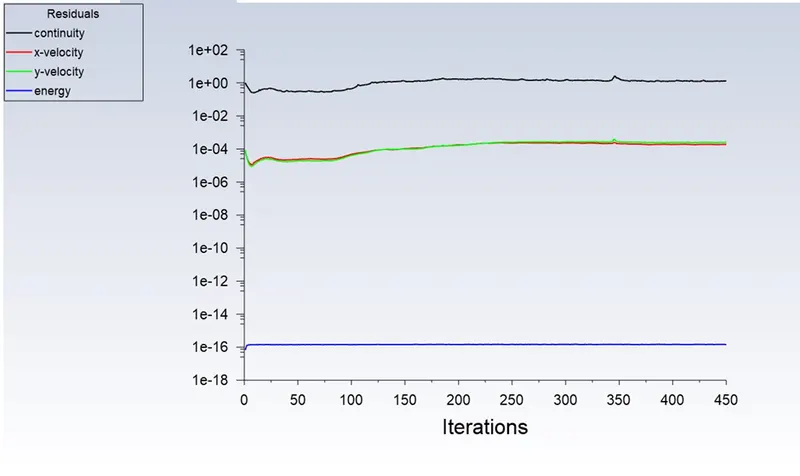
Re = 100000
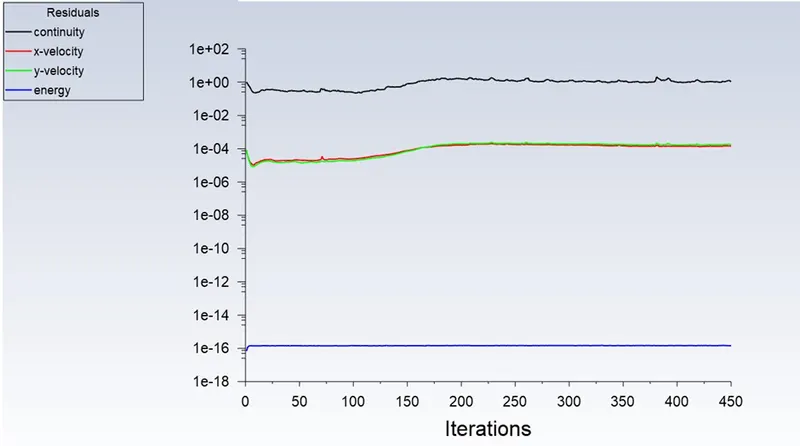
Drag Force
Re = 10
Re = 100
Re = 1000
Re = 10000
Re = 100000
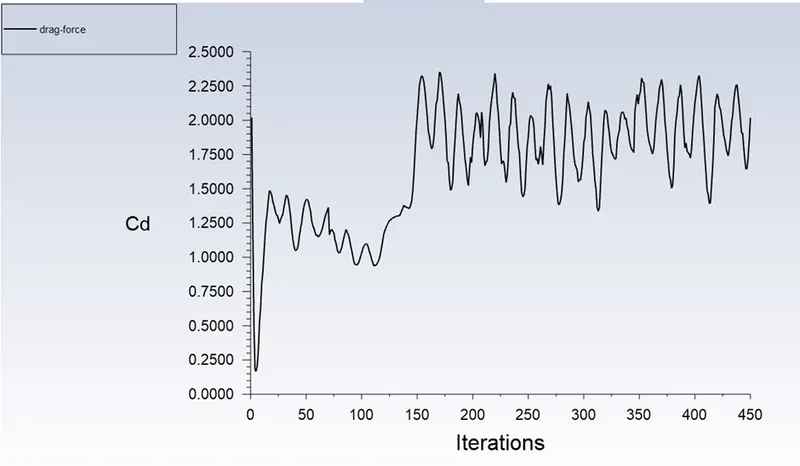
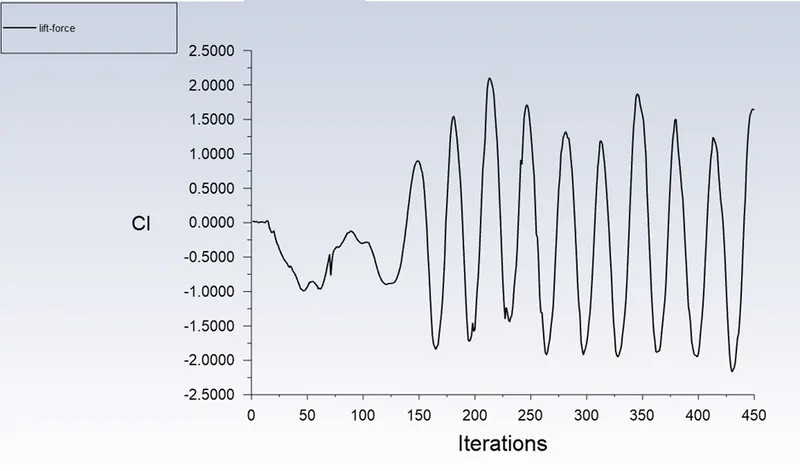
Lift Force
Re = 10
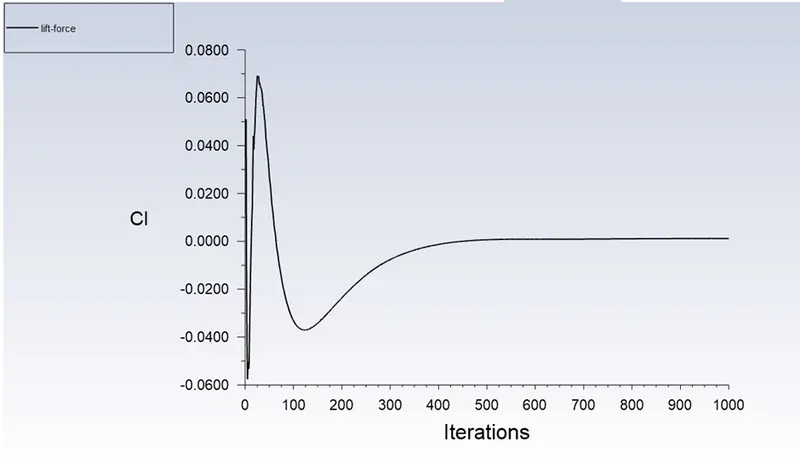
Re = 100
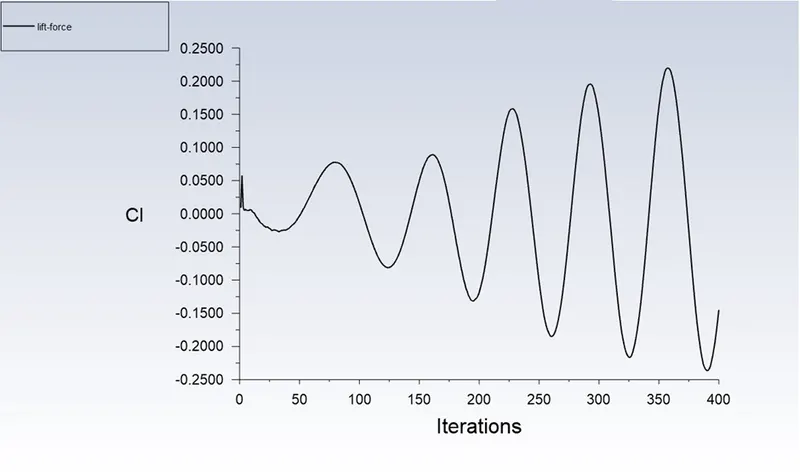
Re = 1000
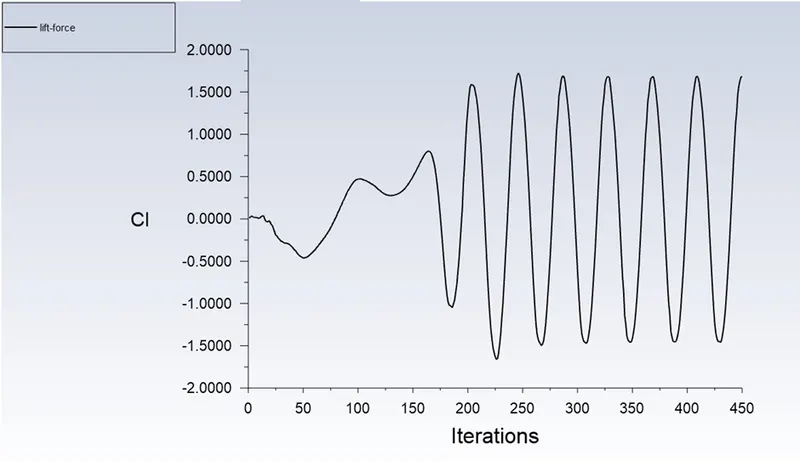
Re = 10000
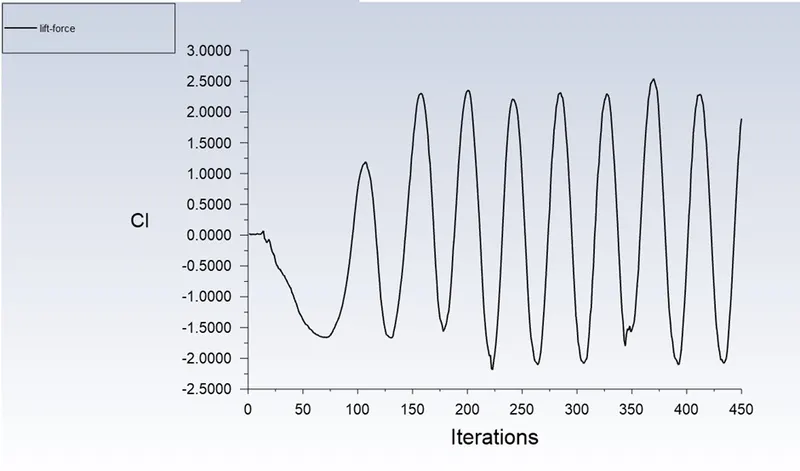
Re = 100000
Velocity magnitude
Re = 10
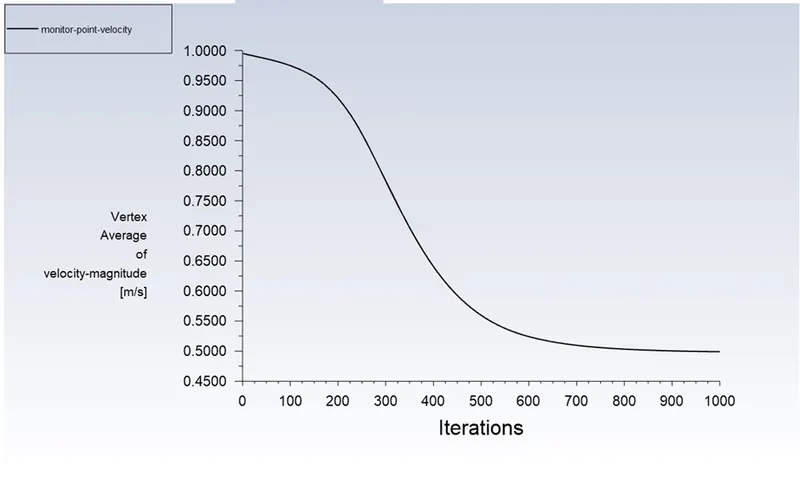
Re = 100
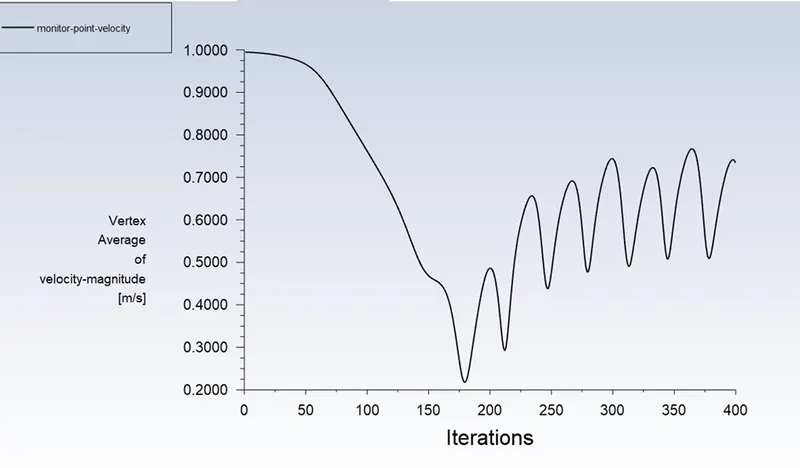
Re = 1000
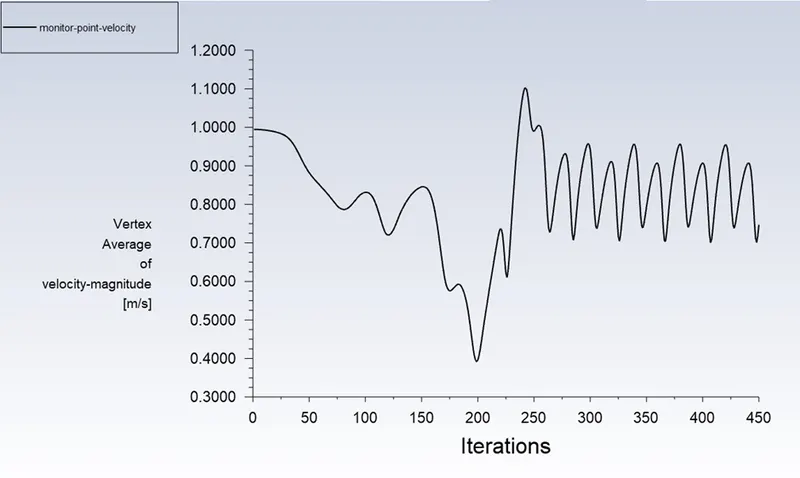
Re = 10000
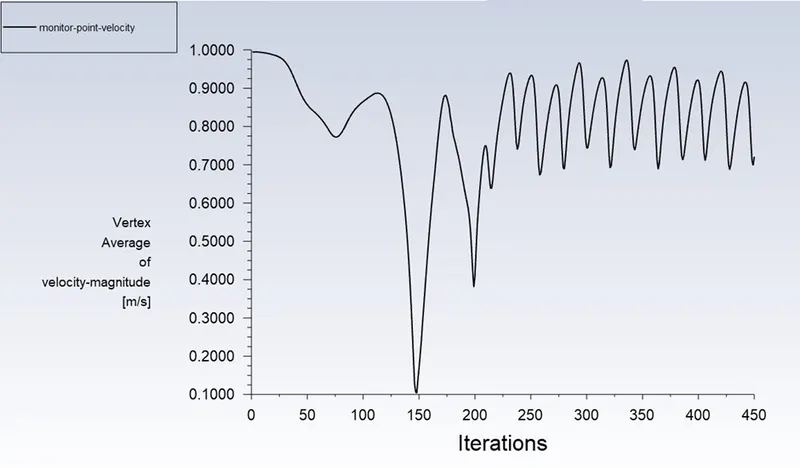
Re = 100000
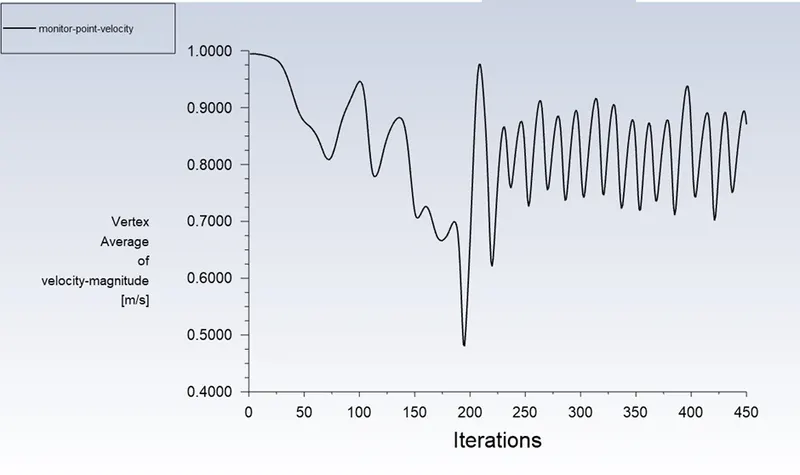
Animations
Re = 10
Re = 100
Re = 1000
Re = 10000
Re = 100000
Effect of Reynolds Number on Coefficient’s of Drag and Lift
The coefficient of drag decreases with Reynolds number, but drag increases with Reynolds number because of U^2
Since, Drag = `½*C_d*rho*U^2*A`
Reynolds number | Coefficient of drag | Coefficient of lift |
10 | 4.701 | -0.0032 |
100 | 2.351 | -0.2406 |
1000 | 1.908 | -0.8314 |
10000 | 2.3299 | 0.56302 |
100000 | 1.5841 | -1.6826 |