Week 2 - Converging diverging nozzle
Report for C-D Nozzle:
AIM:To do the CFD Analysis for finding the variation of Mach number across the domain and at what distance from the inlet does the flow become supersonic in Convergent Divergent nozzle.
HARDWARE REQUIRED:Desktop, Keyboard, Mouse and CPU.
SOFTWARE REQUIRED:ANsys-Fluent v2022/R2
THEORY/DESCRIPTION:
Mach number is a dimensionless parameter that describes the speed of an object relative to the speed of sound in the surrounding medium. It is defined as the ratio of the object's velocity to the speed of sound.
In the context of CD nozzles, the Mach number is an important parameter that describes the flow of gases through the nozzle. A CD nozzle is a type of convergent-divergent nozzle used in rocket engines and other high-speed gas flow applications.
In a CD nozzle, the gas flow is initially compressed in the convergent section of the nozzle and then expands rapidly in the divergent section, creating a supersonic flow. The Mach number is critical in determining the performance of the nozzle, as it affects the efficiency and thrust of the engine.
One important relation related to the Mach number in a CD nozzle is the area ratio. The area ratio is the ratio of the cross-sectional area of the divergent section to the convergent section. It is a critical parameter that determines the Mach number of the gas flow in the nozzle.
For a given pressure ratio across the nozzle, there is a corresponding area ratio that will result in the desired Mach number in the divergent section. The optimal area ratio depends on the specific design of the nozzle and the desired performance parameters of the engine.
Another important relation related to the Mach number in a CD nozzle is the throat area. The throat is the narrowest point in the nozzle, where the gas velocity reaches its maximum value and the Mach number is equal to one. The throat area is an important design parameter that determines the flow rate of gas through the nozzle.
In summary, the Mach number is a critical parameter in the design and performance of CD nozzles. It is related to the area ratio and throat area, which are important design parameters that determine the gas flow velocity and performance of the nozzle.
PROCEDURE:
Geometry:
1.Open the Ansys Fluent Module.
2.Open the Spaceclaim.
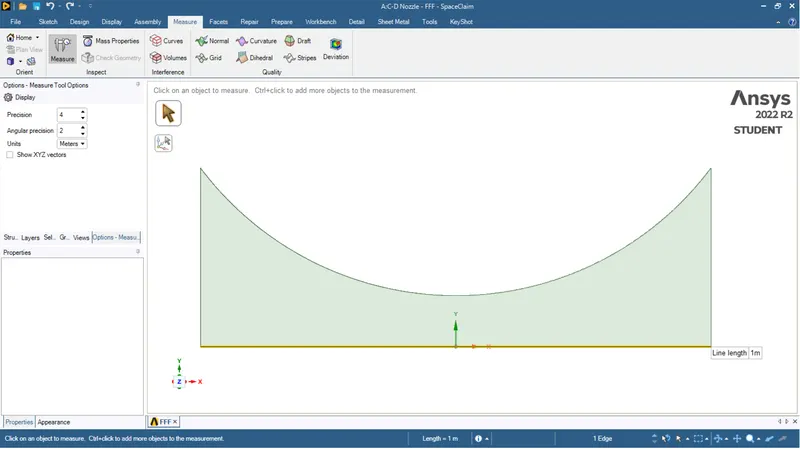
3.Now draw a line of length 1m. Then draw a 90-degree line on the both sides at the end of the base line with the length of 0.35m.
4.After that select the three-point arc and draw an arc by joining both side perpendicular lines.
5.Then make it as a surface.
Meshing:
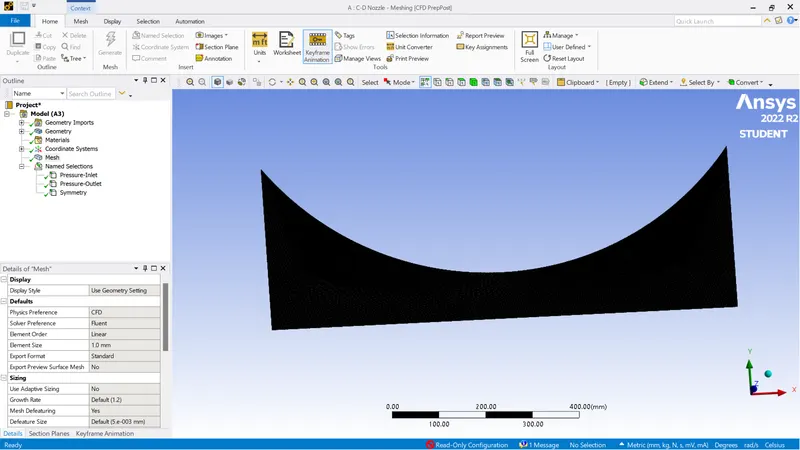
1.Open the meshing and generate default mesh.
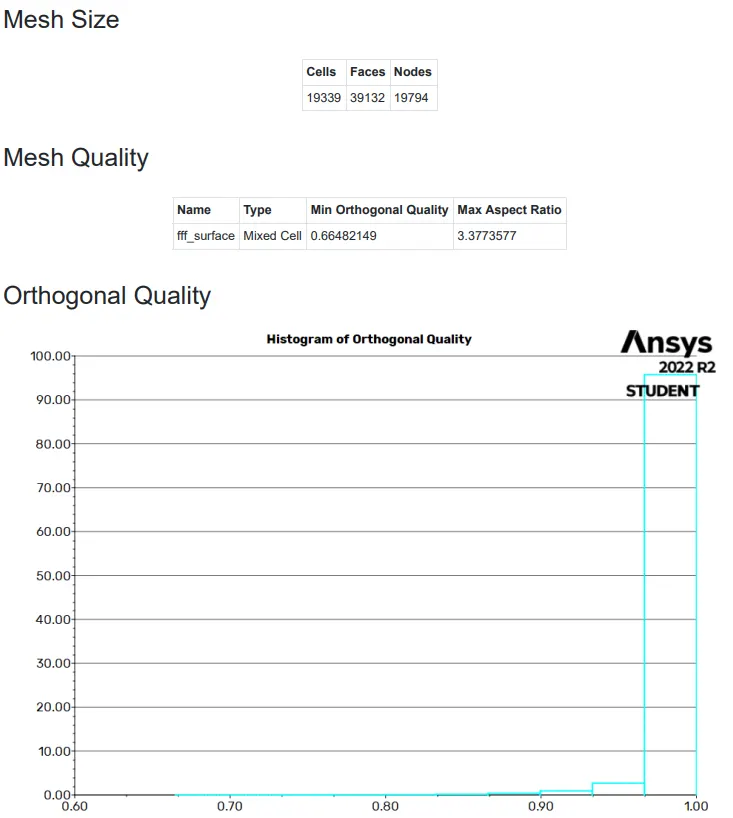
2.Set the mesh size to 3mm and change capture curvature to 5-degree and then update the mesh.
3.Now set or create the names to all the domains of the geometry with inlet as pressure inlet, outlet as pressure outlet and the walls with the symmetry and then update and close meshing.
Set-Up and Solving:
1.Open the set-Up by choosing the requirements of your laptop for the solving process.
2.Open the materials manager and change air density to compressible and viscosity to Sutherland.
3.Set the energy equation on and open the boundary conditions and change inlet pressure with 1atm and temperature with 300K and the outlet pressure with 0.027atm.
4.Change the operating conditions to zero.
5.Now open the solution and standard initialize from inlet.
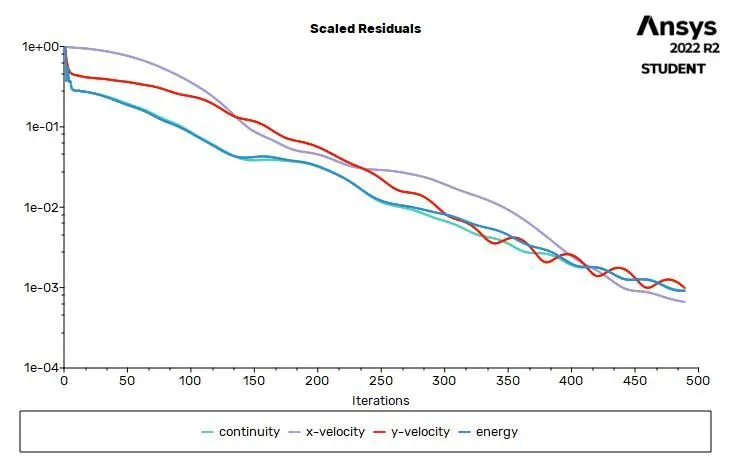
6.Now create the report definition for Mach number and required contours and give the number of iterations and hit calculate.
7.Save the project and exit workbench after post-processing.
OBSERVATIONS:
Geometry:
Mesh Details:
Material Settings:
- Fluid-Air(Under compressible condions)
Viscous Model Settings:
- Laminar Model
Boundary Conditions:
- Inlet-Pressure Inlet=1bar
- Outlet-Pressure Outlet=0.027bar
Solution Status:
Plots:
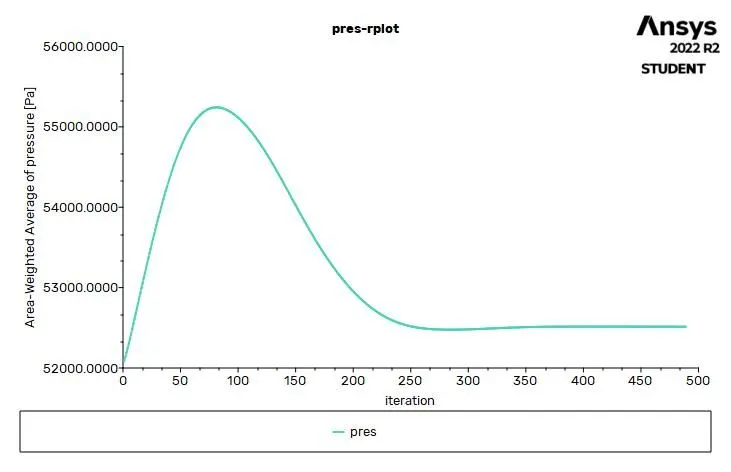
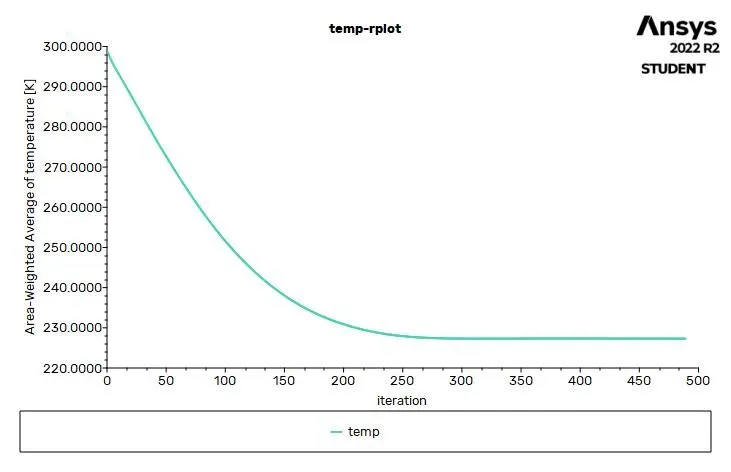
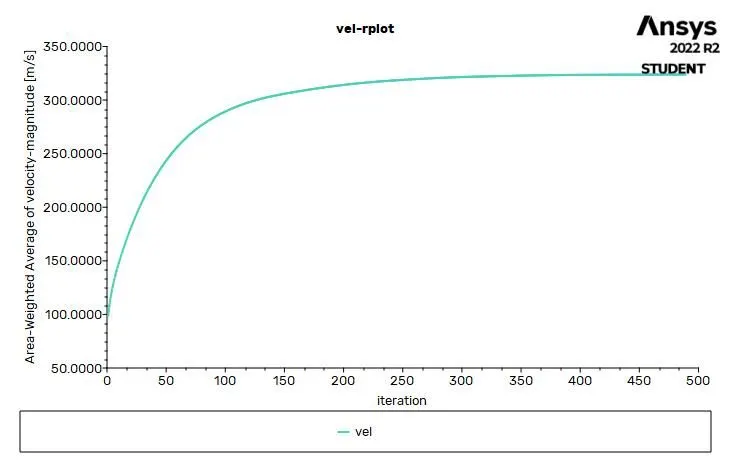
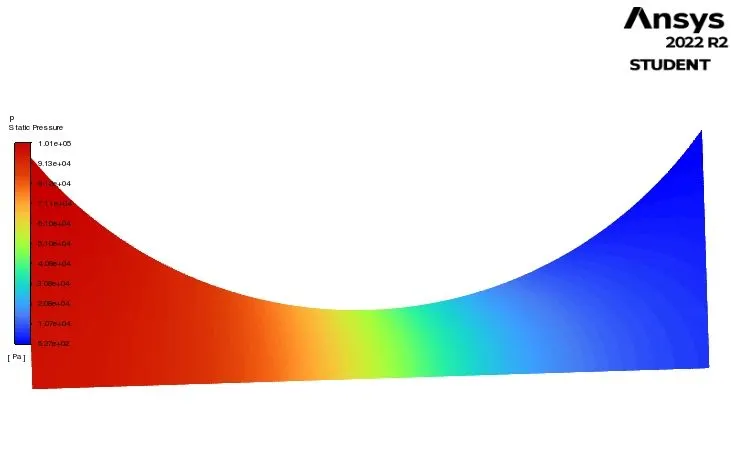
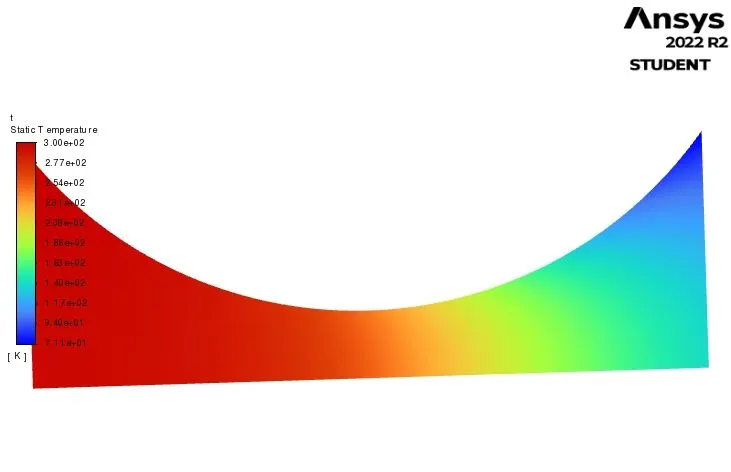
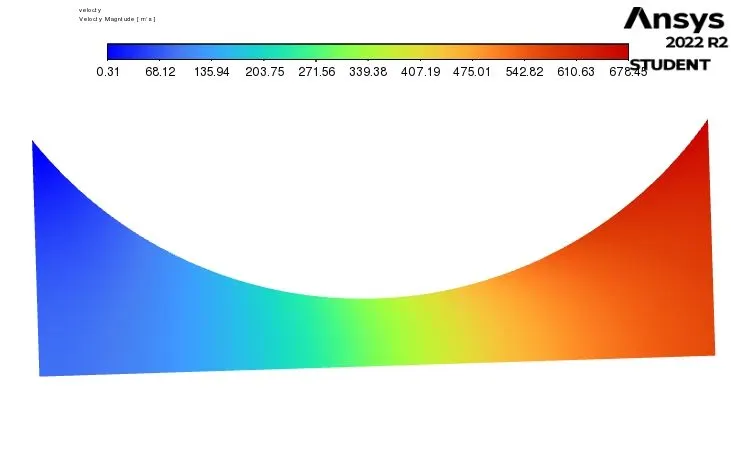
Contours:
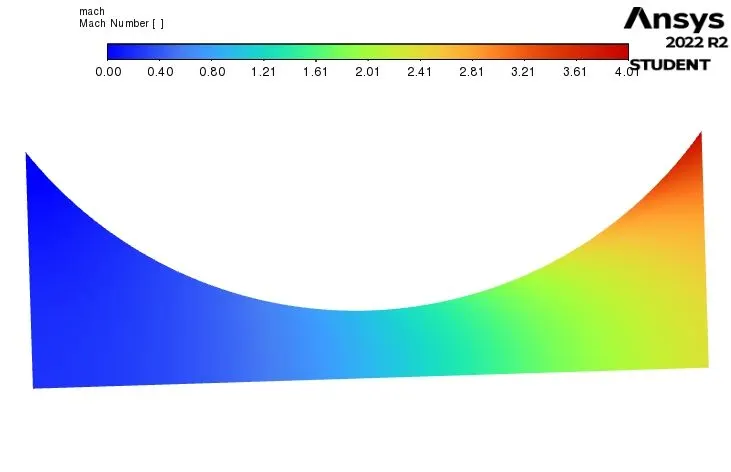
PRECAUTIONS:
1.Carefully solve the problem.
2.Choose the suitable methods carefully for to get the desired results.
3.Note the coordinates carefully.
RESULT:
The Mach number is an important parameter that describes the speed of the gas flow relative to the speed of sound in the surrounding medium. In a CD nozzle, the Mach number changes significantly as the gas flows through the convergent and divergent sections. The Mach number initially increases in the convergent section as the gas is compressed and its velocity increases. At the throat, the Mach number reaches one, indicating that the gas flow is at sonic velocity. Beyond the throat, the Mach number increases rapidly as the gas expands in the divergent section and reaches supersonic velocities. The optimal design of the nozzle, including the area ratio and throat area, is critical in controlling the Mach number and optimizing the performance and efficiency of the engine.
The area and Mach relation in a CD nozzle is that the area of the divergent section should increase as the Mach number of the gas flow increases to ensure optimal nozzle performance. This relationship is governed by the area ratio, which is the ratio of the cross-sectional area of the divergent section to the convergent section.
CONCLUSION:
In conclusion, the Mach number is a critical parameter in the design and performance of CD nozzles. The Mach number changes significantly across the nozzle as the gas flow is compressed and expanded in the convergent and divergent sections, respectively. The Mach number initially increases in the convergent section, reaches sonic velocity at the throat, and then increases rapidly in the divergent section. The optimal design of the nozzle, including the area ratio and throat area, is crucial in controlling the Mach number and optimizing the performance and efficiency of the engine.
The important relation related to the Mach number in a CD nozzle is the area ratio. The area ratio is the ratio of the cross-sectional area of the divergent section to the convergent section. It is a critical parameter that determines the Mach number of the gas flow in the nozzle.
For a given pressure ratio across the nozzle, there is a corresponding area ratio that will result in the desired Mach number in the divergent section. The optimal area ratio depends on the specific design of the nozzle and the desired performance parameters of the engine.
The changes in Mach number across the nozzle affect the performance of the engine by influencing the thrust, efficiency, and stability of the flow. It is essential to design the nozzle to achieve the desired Mach number in the divergent section, as this affects the expansion and acceleration of the gas flow. The Mach number is also related to other critical parameters, such as pressure, temperature, and density, which determine the performance and efficiency of the engine. Therefore, a thorough understanding of the Mach number and its relation to other design parameters is necessary to optimize the performance of CD nozzles and ensure efficient and reliable engine operation.