Week 2 - Converging diverging nozzle
Aim:
To simulate flow inside converging diverging nozzle
Objective:
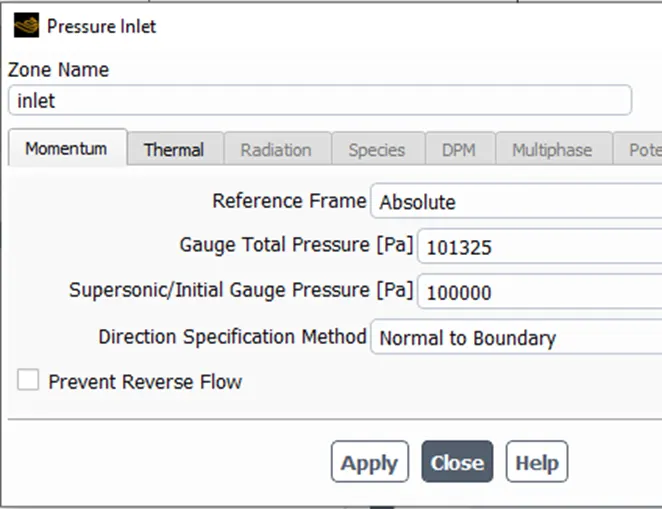
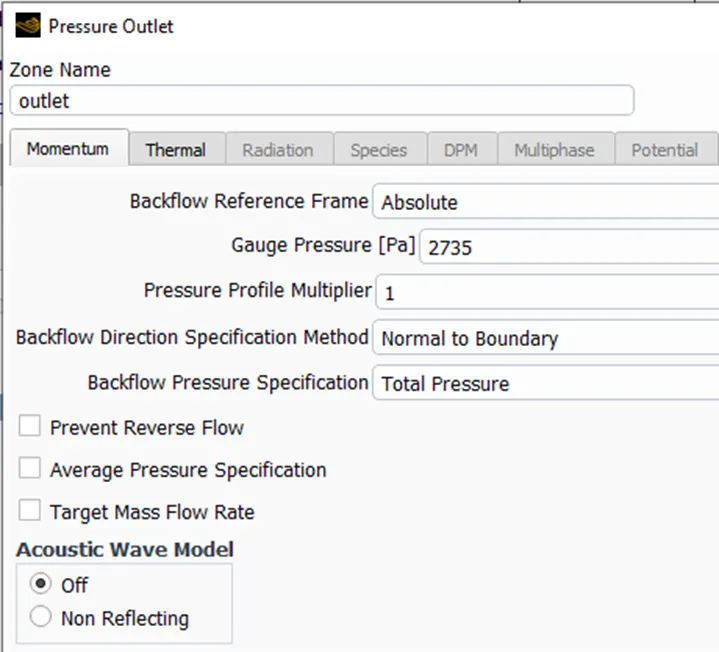
- At Inlet, Pressure = 1atm and Temperature = 300K. The outlet pressure= 0.027 atm.
- In the operating conditions, consider the reference pressure to be zero.
Theory:
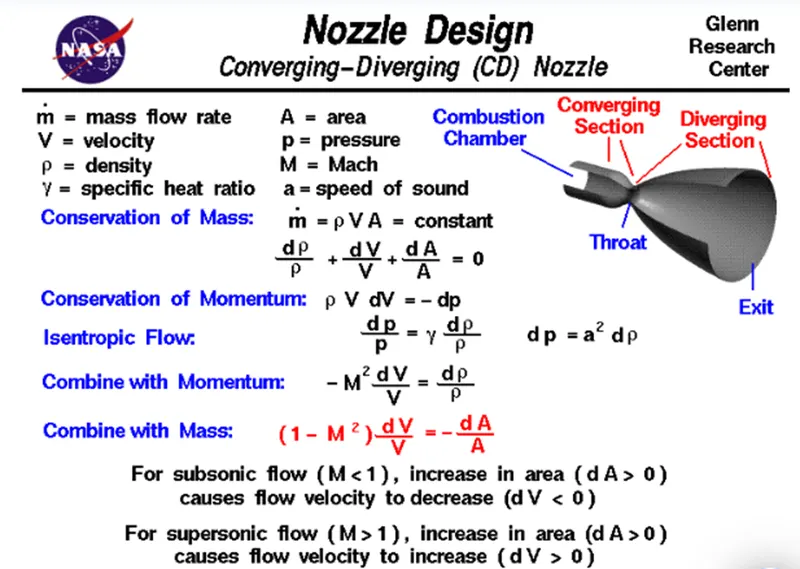
A convergent-divergent nozzle is a used to accelerate a compressible fluid to supersonic speeds in the axial (thrust) direction, by converting the thermal energy of the flow into kinetic energy. It is widely used in some types of steam turbine and rocket engine nozzles. It also sees use in supersonic jet engines.
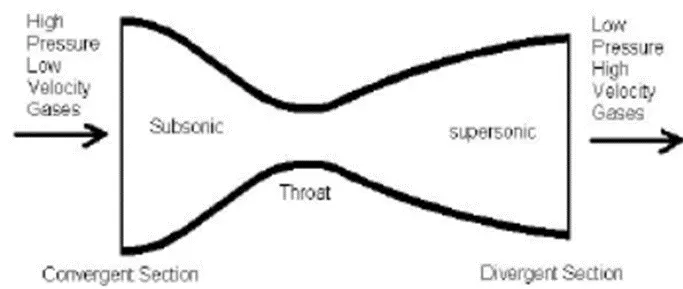
It consist of converging, diverging and throat section as shown below.
In converging section Mach no (M)<1, at throat M=1 and in diverging section M>1.
A convergent nozzle is a nozzle that starts big and gets smaller-a decrease in cross-sectional area. As a fluid enters the smaller cross-section, it has to speed up due to the conservation of mass. To maintain a constant amount of fluid moving through the restricted portion of the nozzle, the fluid must move faster.
Geometry:
To create geometry using ANSYS spaceClaim.
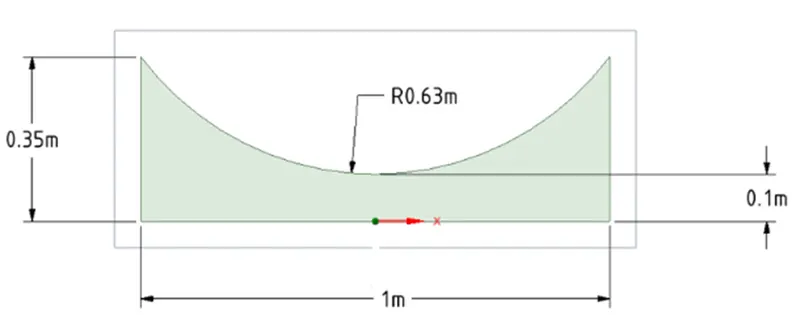
Mesh:
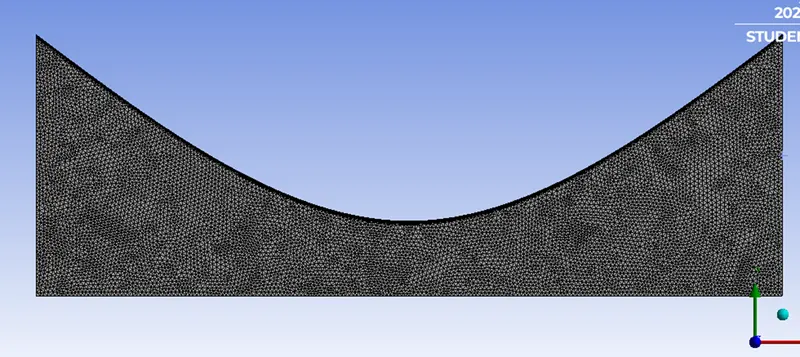
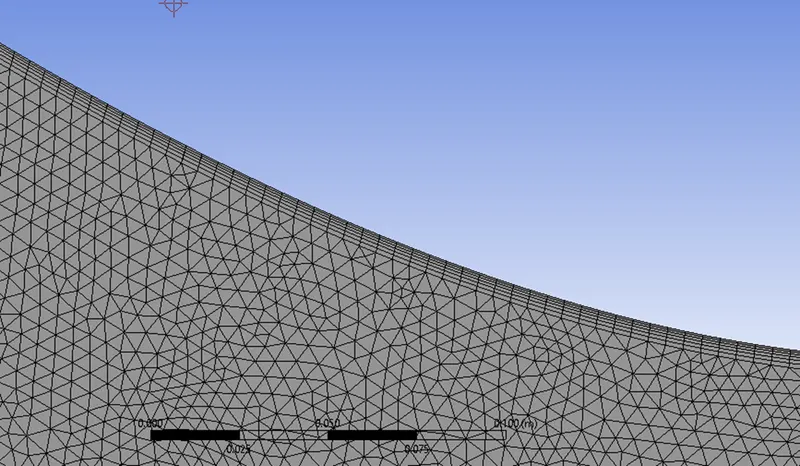
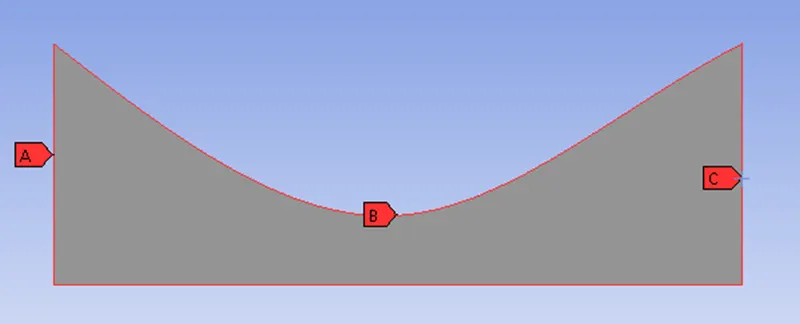
Total Elements = 17231.
Case Setup:
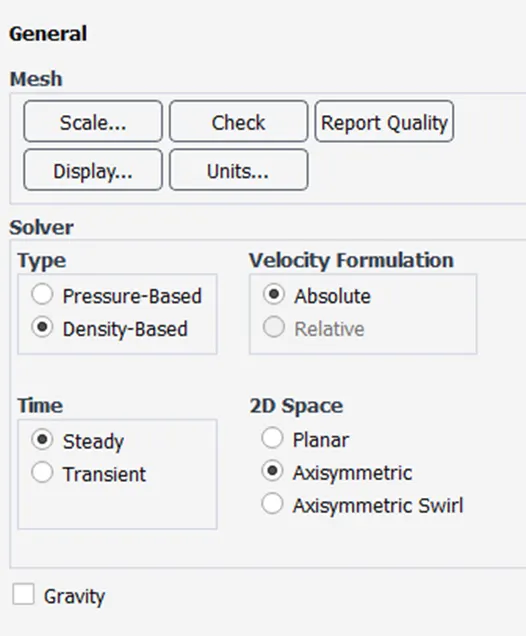
Solver setup:
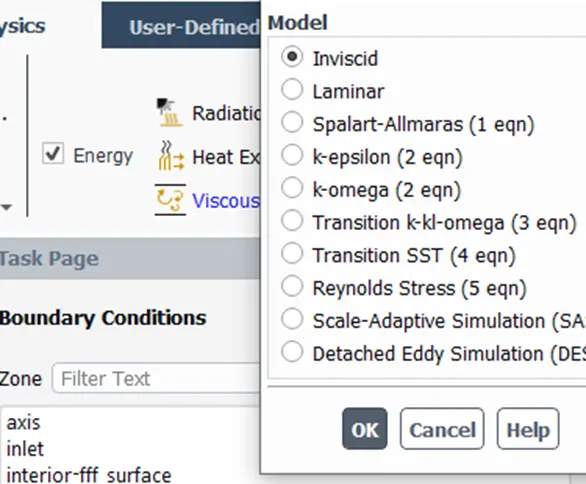
Viscous model:
Boundary condition:
Results:
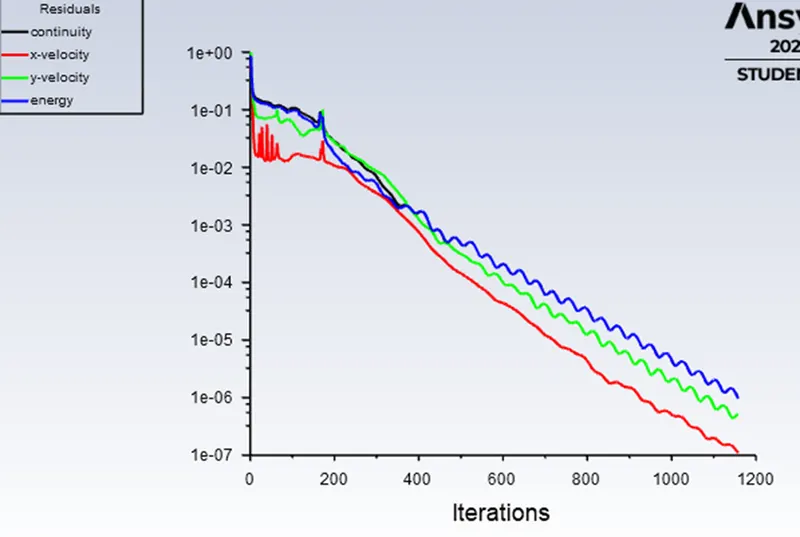
Residuals plots:
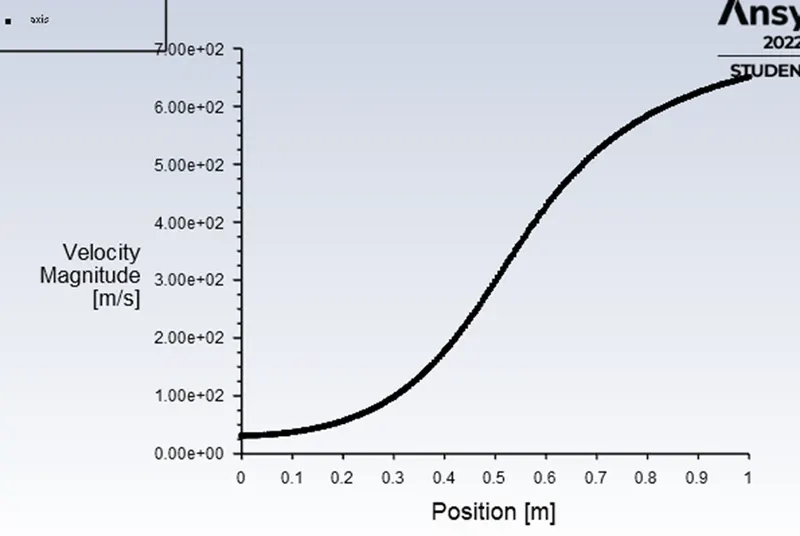
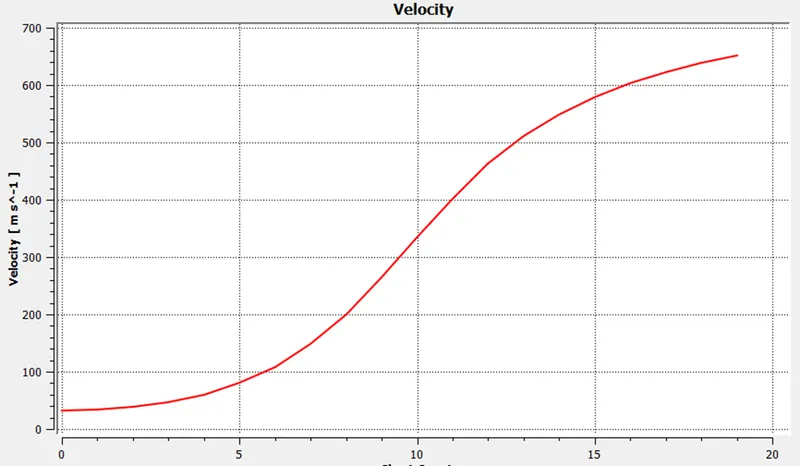
Velocity:
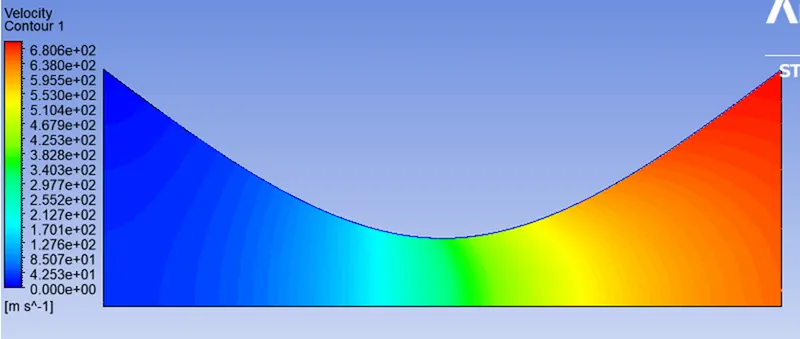
Contour:
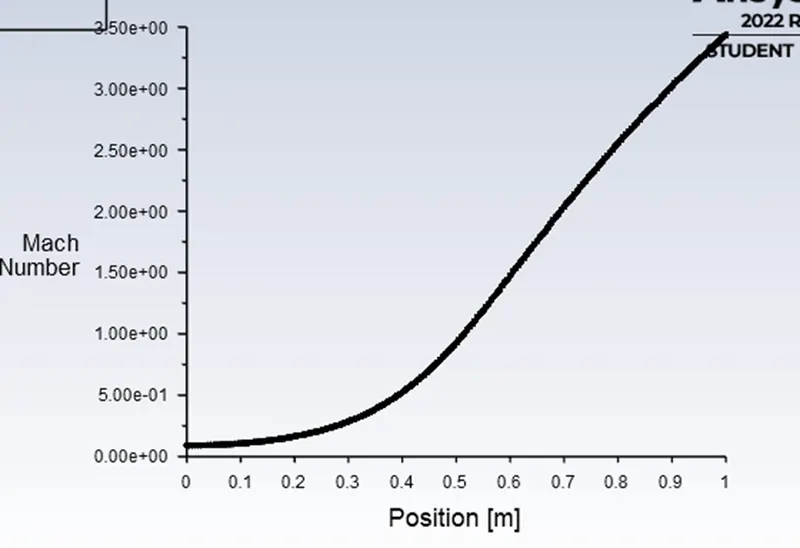
Plots:
Temperature:
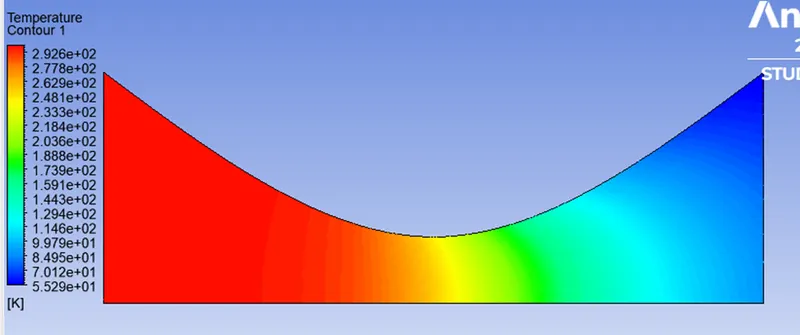
Contour:
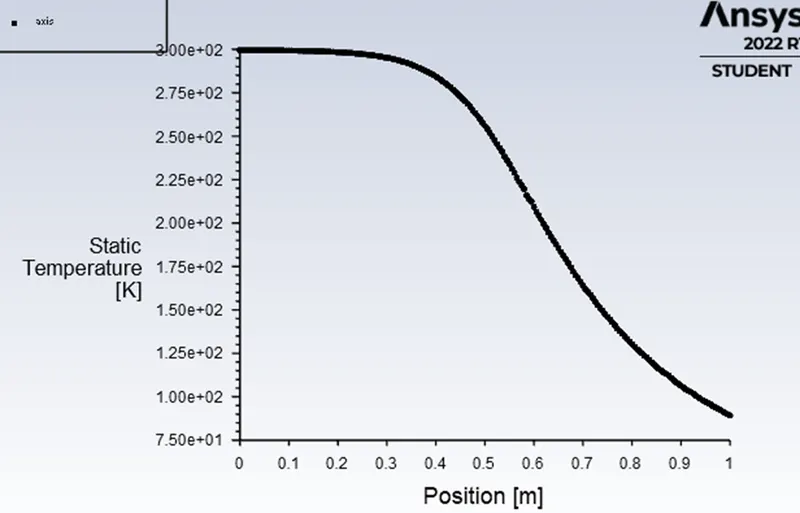
Plots:
Pressure:
Contour:
Plots:
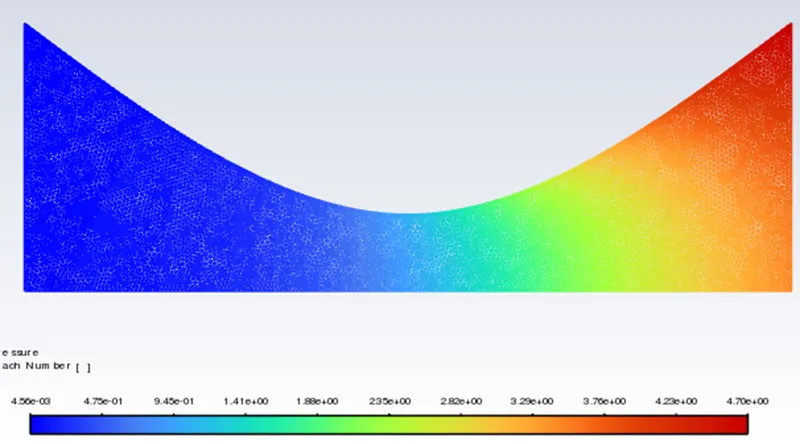
Mach number:
Contour:
Plots:
Conclusion:
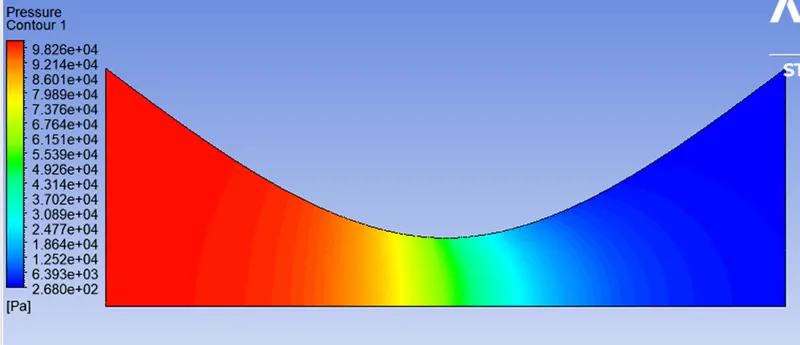
As seen from the contours the velocity gets increased along the length of nozzle
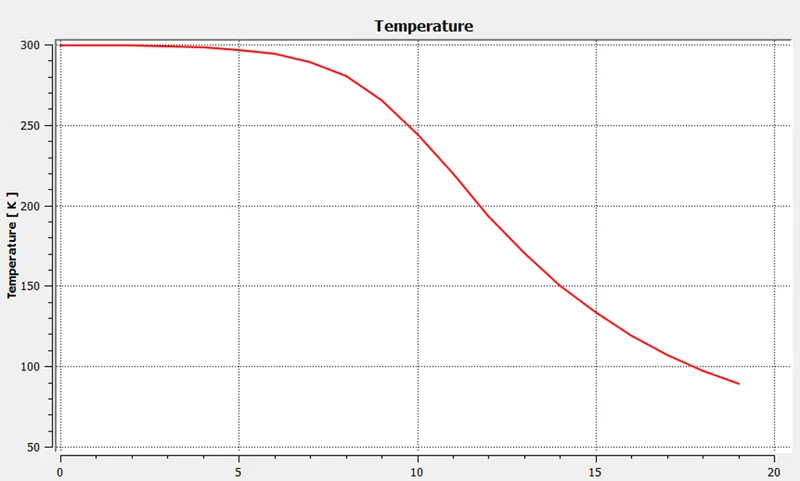
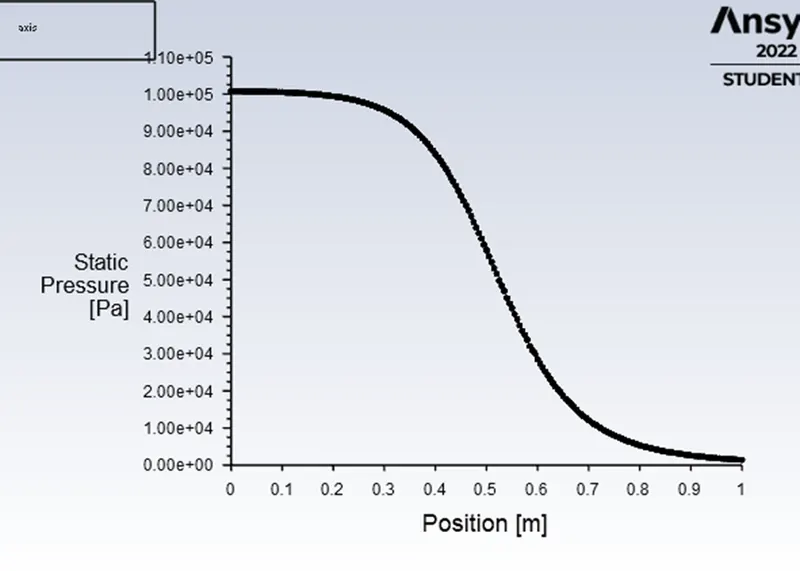
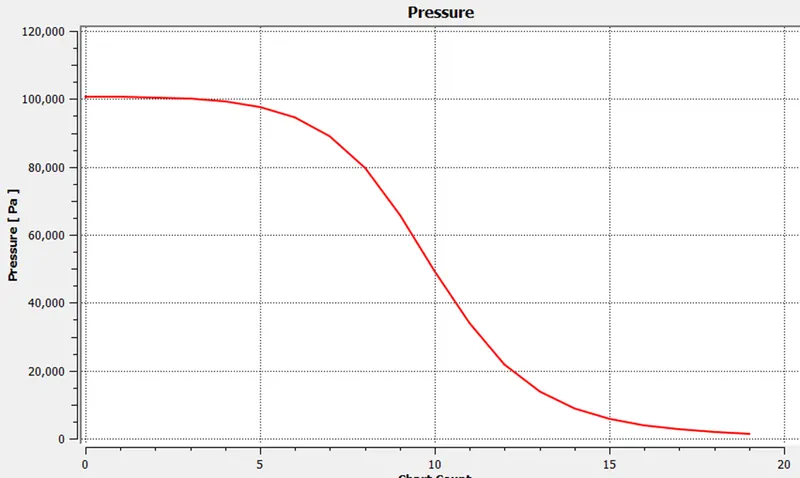
Temperature and pressure is higher at inlet.
As mentioned in introduction, flow becomes supersonic at distance of 500 mm from Mach number as 0.5 to 1m from inlet
Run a steady state simulation on converging diverging nozzle.
Extracted necessary contours and plotted the variation of flow characteristics like pressure, temperature, velocity and Mach number.