Week 2 - Converging diverging nozzle
Convergent Divergent Nozzle:
Consider the converging-diverging nozzle below with the dimensions. The throat radius of the nozzle is 0.1mm.
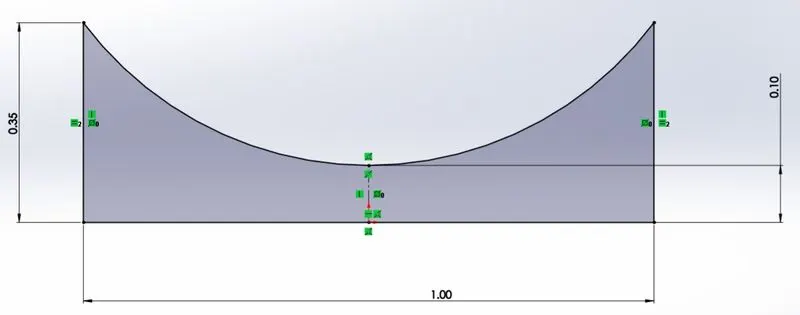
For the following boundary conditions,
- At Inlet, Pressure = 1atm and Temperature = 300K. The outlet pressure= 0.027 atm.
- In the operating conditions, consider the reference pressure to be zero.
We have to Plot:
- The pressure, velocity, and temperature variations across the domain
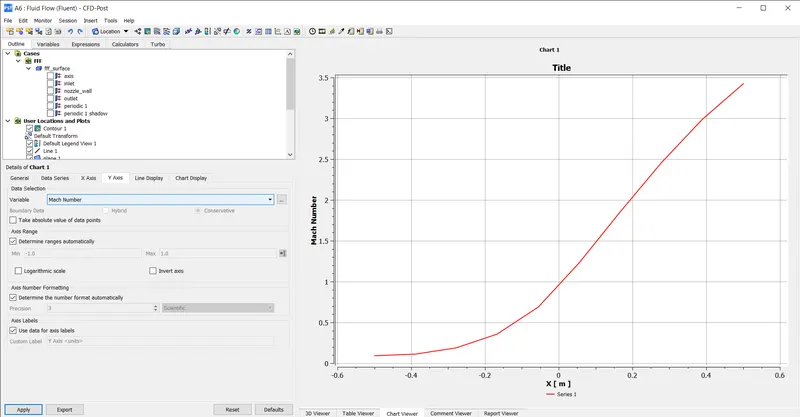
- The variation of Mach number across the domain and at what distance from the inlet does the flow become supersonic.
From the above-derived variation, explain the variation of change in the area on mach number on the given geometry in a few words.
SOLUTION 1: Simulation
Step1: (creating and importing geometry)
- Create the geometry using design software for the above-mentioned dimensions.
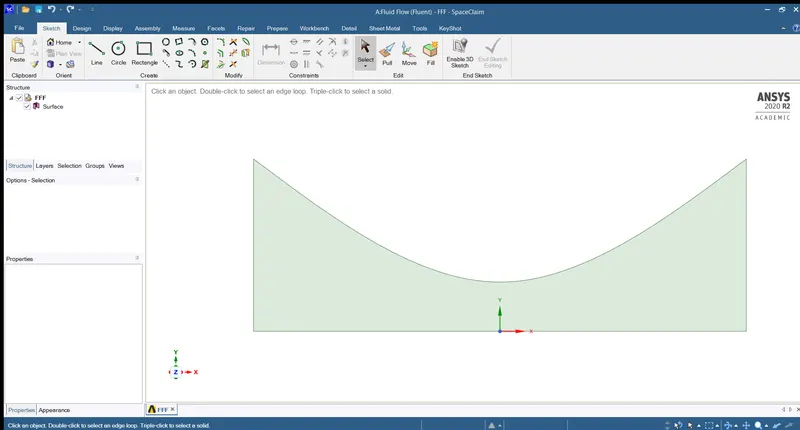
- And import the geometry to Ansys-Spaceclaim as shown below,
Step2: (Meshing)
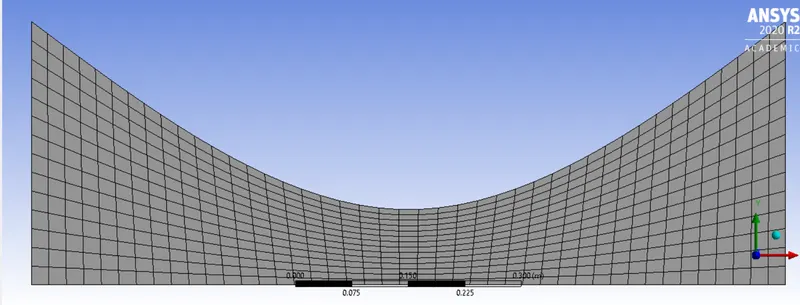
- Open meshing in the Ansys workbench and apply the suitable element size to deploy the mesh.
- The mesh we created is shown below,
Step3: (Setting up the simulations)
- Start the fluent simulation setup using 2D.
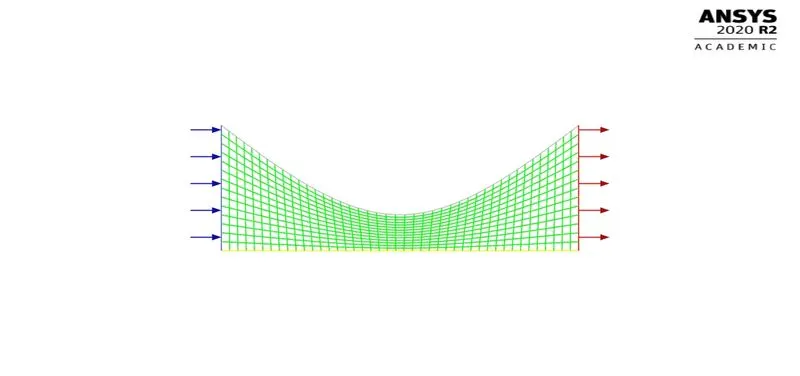
- Apply the boundary conditions for To the suitable boundaries as shown below.
- And run the calculation, for this case we get a converged solution at 73rd iterations.
Initial Setup
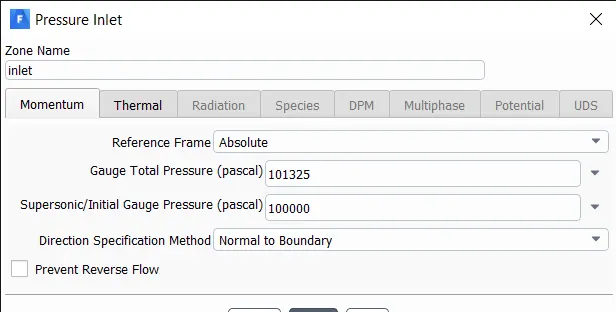
Boundary Conditions
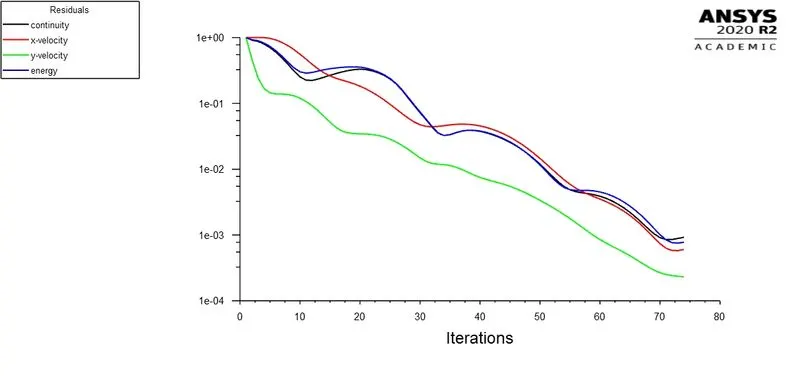
Residuals plot after running the simulation
Step4: Post Processing the Results
- Here comes the main process of the entire project.
- We are going to analyze the results obtained from the simulations such as pressure, temperature, and mach number.
- Create a chart in the CFD-post processor as shown below, and various factors for the y-axis can be changed according to requirement.
- Variation of pressure across the Nozzle Domain:
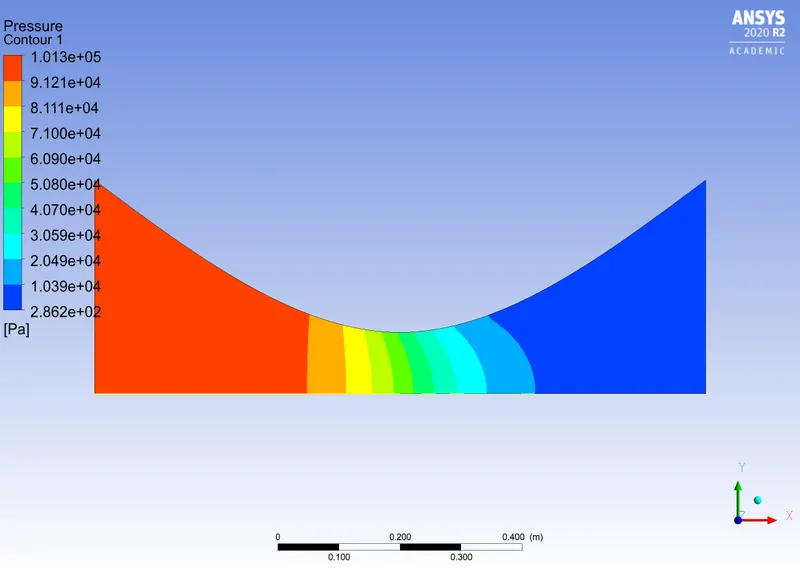
pressure contour
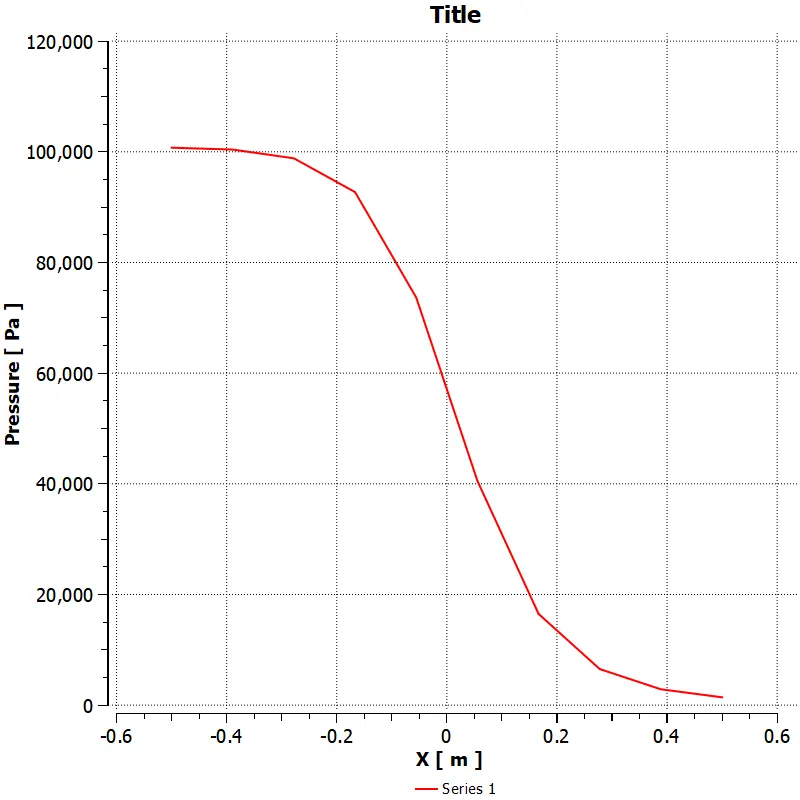
pressure plot
ii. Variation of temperature across the nozzle domain:
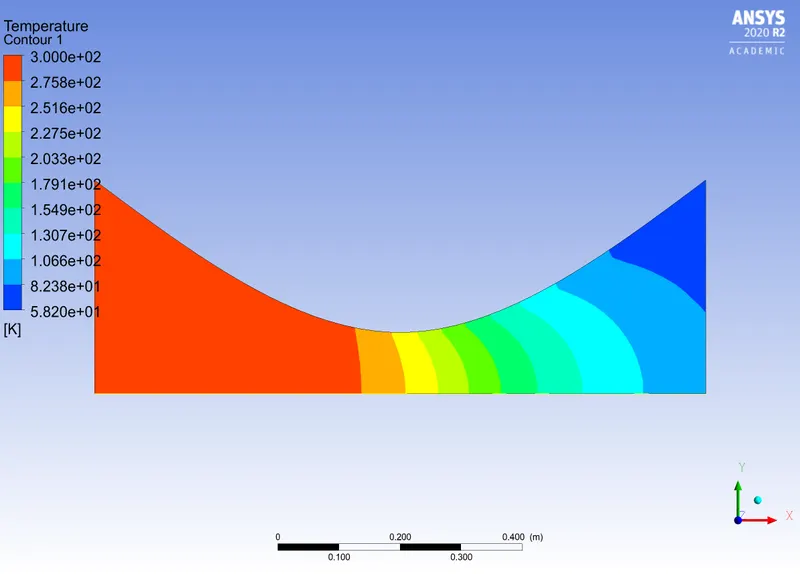
Temperature Contour
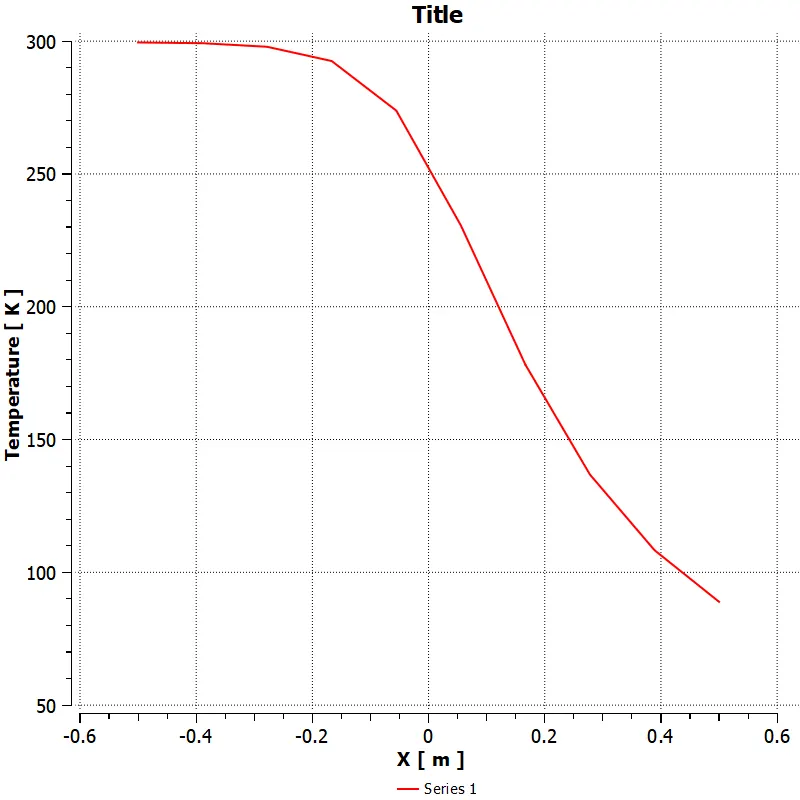
temperature plot
iii. Variation of velocity across the nozzle domain:
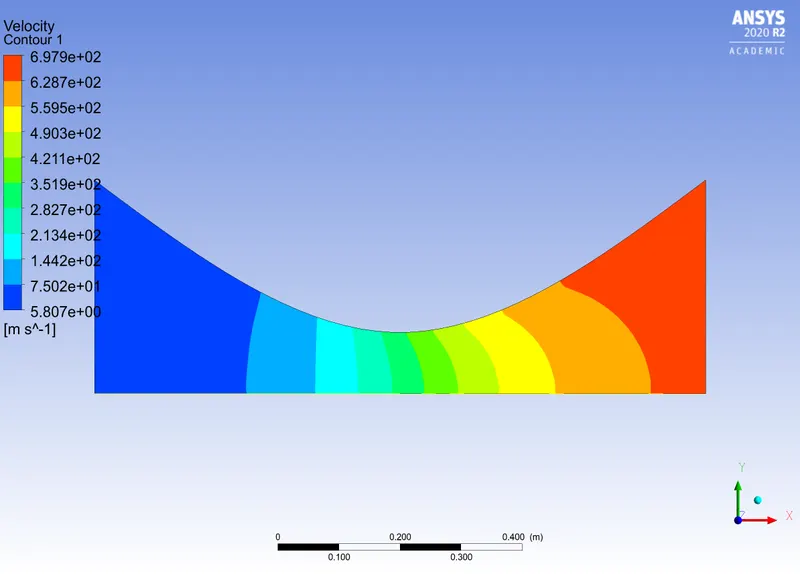
Velocity Contour
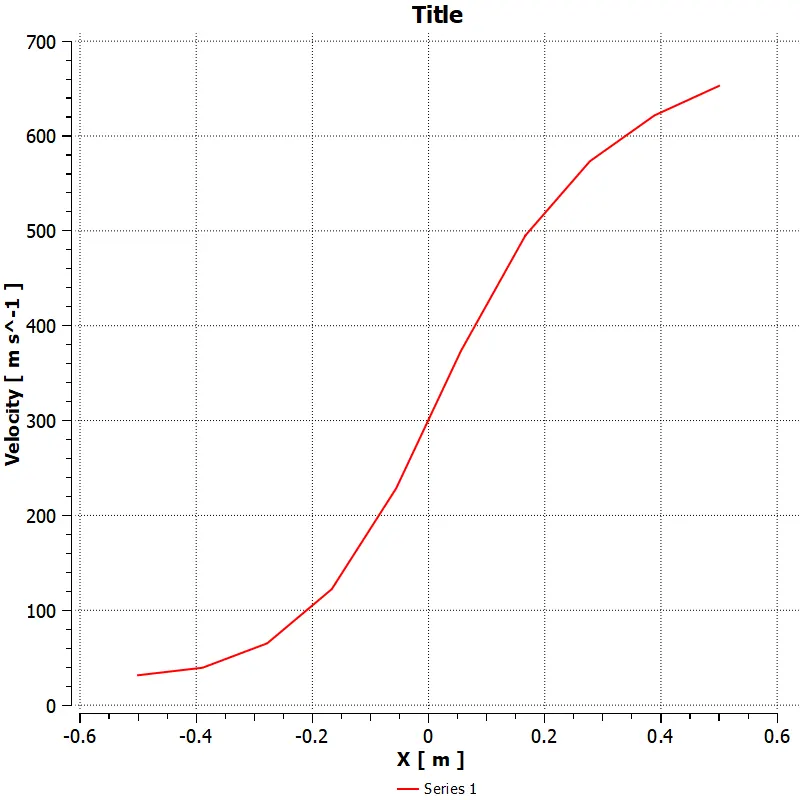
Velocity Plot
iv. Variation of mach number across the nozzle domain:
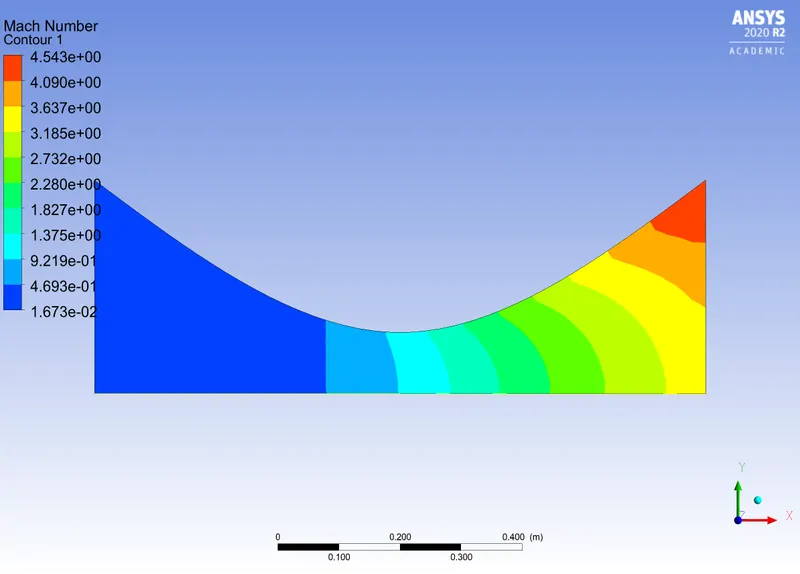
Mach number contour
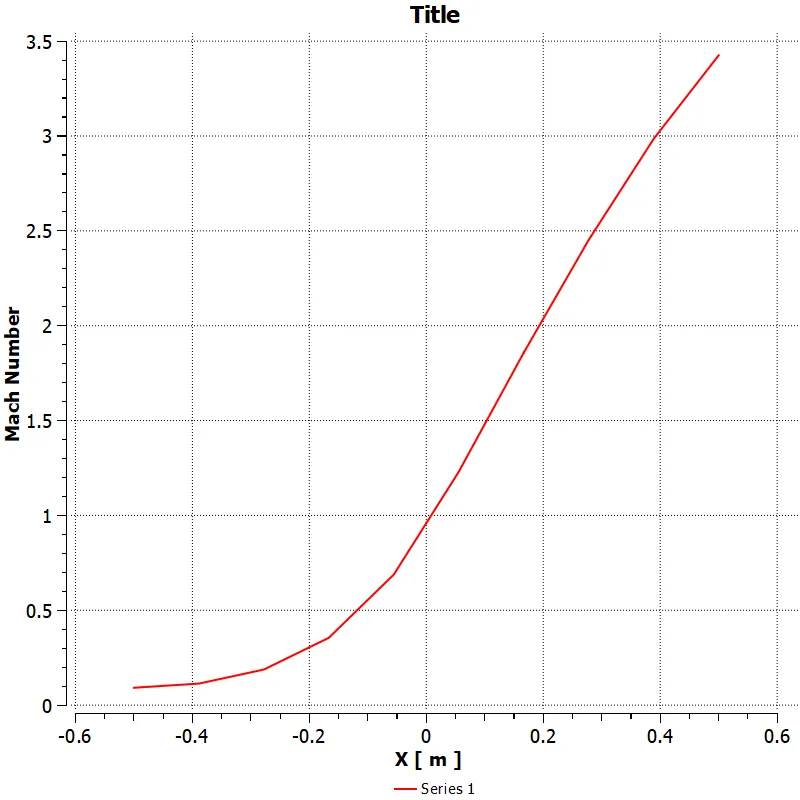
Mach number Chart
SOLUTION 2: EXPERIMENTAL
- In this section we can able to find the experimental values of pressure, temperature and mach number variations for the C-D nozzle, which is available in the open sources.
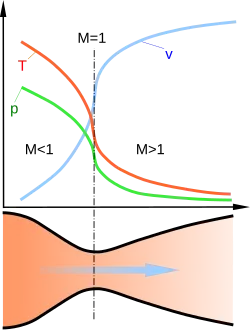
- As we can see from the above graph the various factors like temperature, pressure, and velocity variations through the nozzle domain, will be taken as a reference for the comparison of simulation and analytical data which we are going to see in the next part.
SOLUTION 3: ANALYTICAL
- Variation of fluid velocity with the flow area of the nozzle is given below,
- `(dA)/A=-(Dv)/V(1-M^2)`
CONDITION 1
- Consider the first half of the nozzle (converging zone), the flow is isentropic
- `(dA)/(dV)=(A_2-A_1)/(V_2-V_1)`
- `(dA)/(dV)=(-_(ve))/(+_(ve))`
- So, `(dA)/(dV)=-_(ve)`
Since the `A_2 < A_1 and V_2>V_1`
- So if the above conditions are applied in the nozzle equation we will get dA/dV<0 and Mach number M<1.
- Hence it comes under subsonic flow.
CONDITION 2
- Consider the second half of the nozzle (diverging zone), the flow is isentropic
- `(dA)/(dV)=(A_2-A_1)/(V_2-V_1)`
- `(dA)/(dV)=(-_(ve))/(+_(ve))`
- So` `(dA)/(dV)=+_(ve)`
Since the `A_2 < A_1 and V_2>V_1`
- So if the above conditions are applied in the nozzle equation we will get dA/dV>0 and Mach number M>1.
- Hence it comes under supersonic flow.
CONDITION 3
- Consider the middel part of the nozzle (Throat zone), the flow is isentropic
- `(dA)/(dV)=(A_2-A_1)/(V_2-V_1)`
- `(dA)/(dV)=(0)/(0)`
- So,` `(dA)/(dV)=0`
Since the `A_2 = A_1 and V_2 = V_1`
- So if the above conditions are applied in the nozzle equation we will get dA/dV=0 and Mach number M=1.
- Hence it comes under sonic flow.
CONCLUSION:
- Hence, we plotted the various factors for the nozzle domain.
- And, also we have seen the effects on mach number on changing the area of the nozzles.
- Also we got the same solutions from the three different methods.