Week 2 - Converging diverging nozzle
Objective:
To investigate the variation of Mach number at different heights, as well as the variation of Mach number throughout the domain, to determine at what distance from the intake the flow becomes supersonic, and to compare the analytical results with the experimental results.
Introduction :
A convergent-divergent nozzle, also known as a CD nozzle or con-di nozzle, is a tube that has been pinched in the center to form an asymmetric hourglass shape. By transforming the heat energy of the flow into kinetic energy, it is utilized to accelerate a hot, pressured gas moving through it to a greater supersonic speed in the axial (thrust) direction. The nozzle is commonly utilized in several types of steam turbines and rocket engine nozzles as a result of this. It's used in supersonic jet engines as well. Working Its functioning is based on the physics of subsonic, sonic, and supersonic gases moving at varying speeds. Because the mass flow rate is constant, the speed of a subsonic gas flow will rise as the pipe carrying it narrows.
The flow of gas via a de Laval nozzle is isentropic (the entropy of the gas is essentially constant). Sound will travel through the gas in a subsonic flow. The gas velocity reaches sonic (Mach number = 1.0) near the "throat," where the cross-sectional area is at its smallest, a phenomenon known as choked flow. The gas expands as the nozzle cross-sectional area grows, and the gas flow accelerates to supersonic speeds, where a sound wave cannot travel backward through the gas in the nozzle's frame of reference (Mach number > 1.0).
As the gas leaves the throat, the increased surface area allows it to undergo a Joule-Thompson expansion, in which the gas expands at supersonic rates from high to low pressure, driving the mass flow's velocity beyond sonic. When comparing the general geometric shape of the nozzle between the rocket and the jet engine, it only appears to be different at first glance, when in fact the same essential facts are visible on the same geometric cross-sections - that the combustion chamber in the jet engine must have the same "throat" (narrowing) in the direction of the gas jet outlet so that the turbine wheel of the first stage of the jet turbine is always positioned immediately behind the gas jet outlet. While any on the later stages of the turbine is placed at the bigger outlet cross-section of the nozzle, where the flow accelerates, any on the later stages of the turbine is positioned at the smaller outlet cross-section of the nozzle, where the flow accelerates.
Procedure :
Step 1:
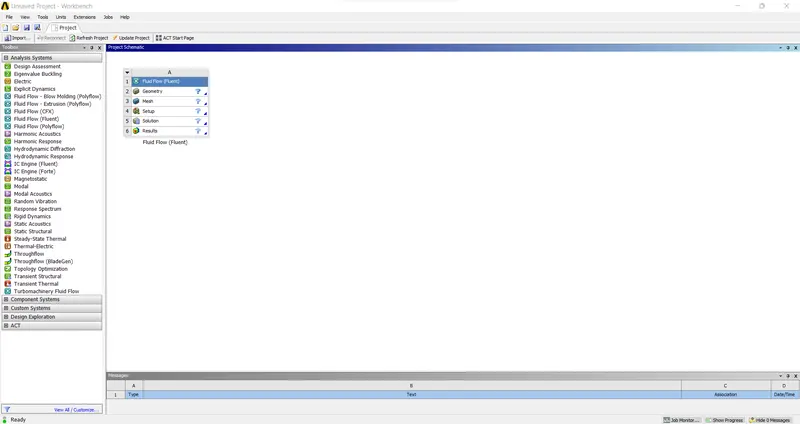
Design of Nozzle: Open Ansys and drag Fluid flow (Fluent ) to the project schematic
Open Design Module and design the Given nozzle using simple lines
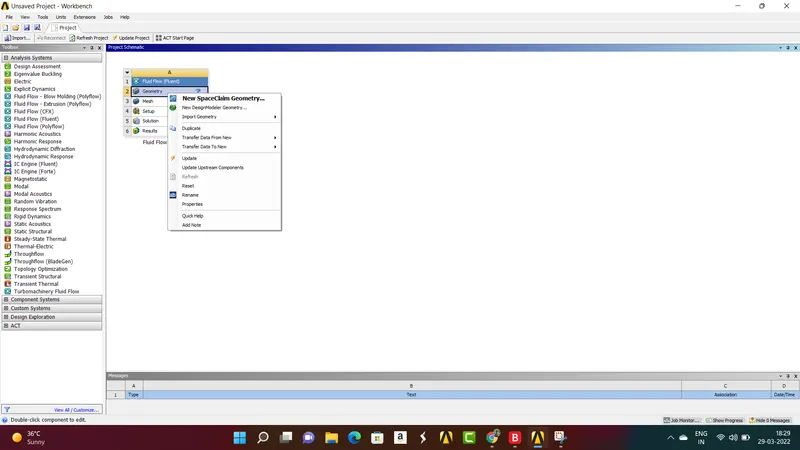
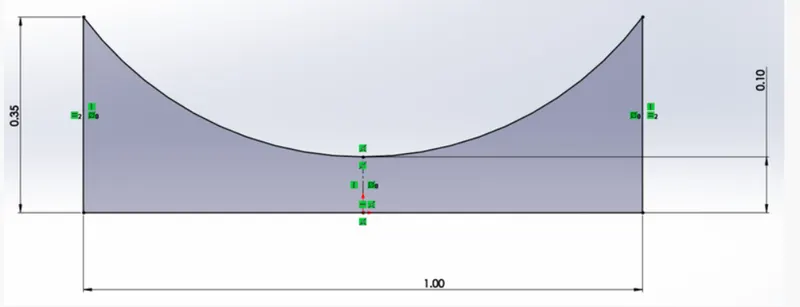
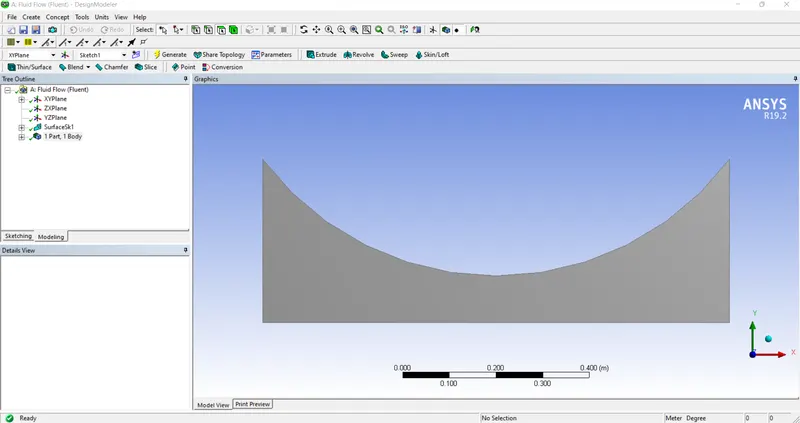
Note: After Creating the 2d sketch click on concepts and then click on surfaces from skecth for adding material to the 2d sketch
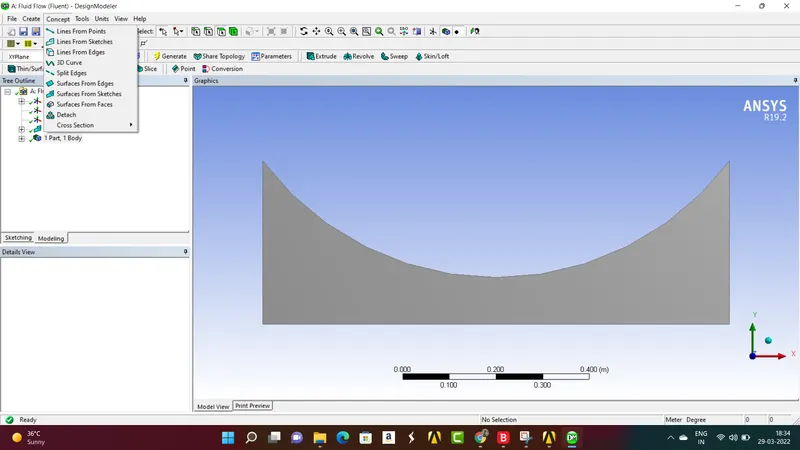
Step 2 : Meshing :
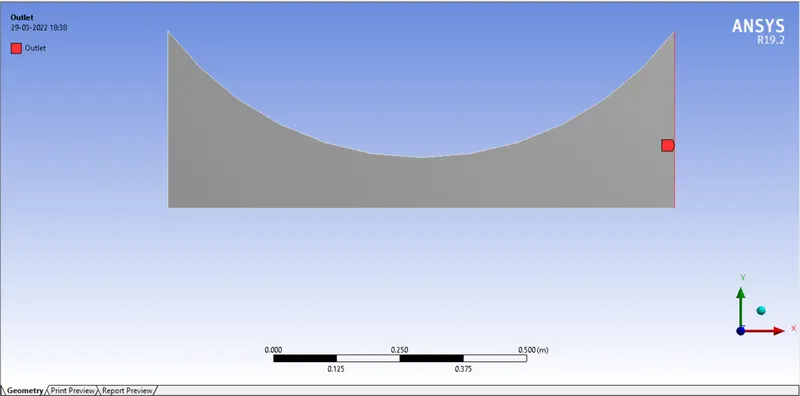
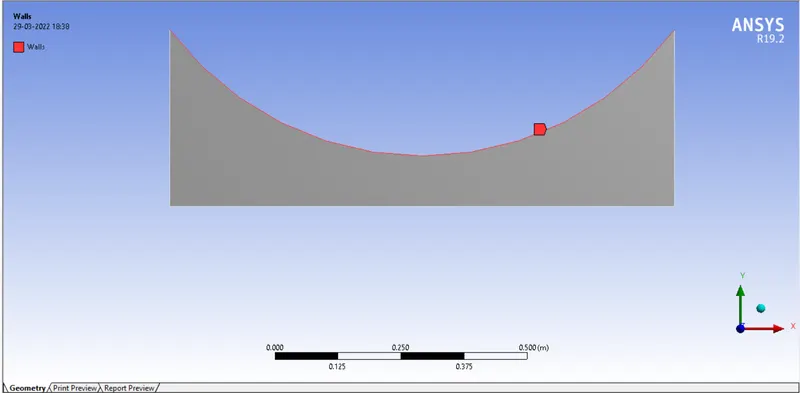
First name the respective sections
1. Inlet
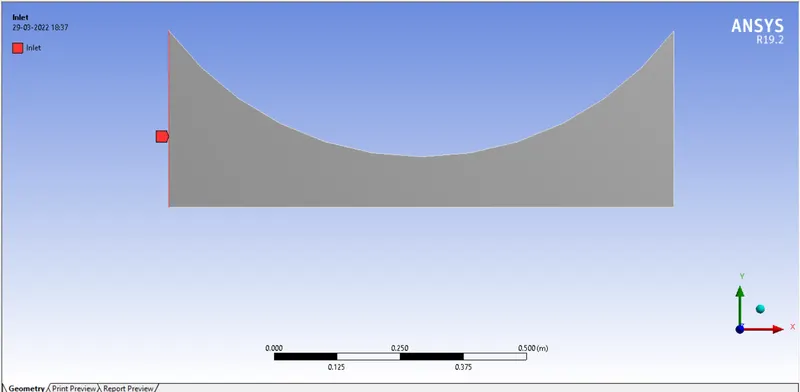
2. Outlet :
3. Walls :
4. Axis :
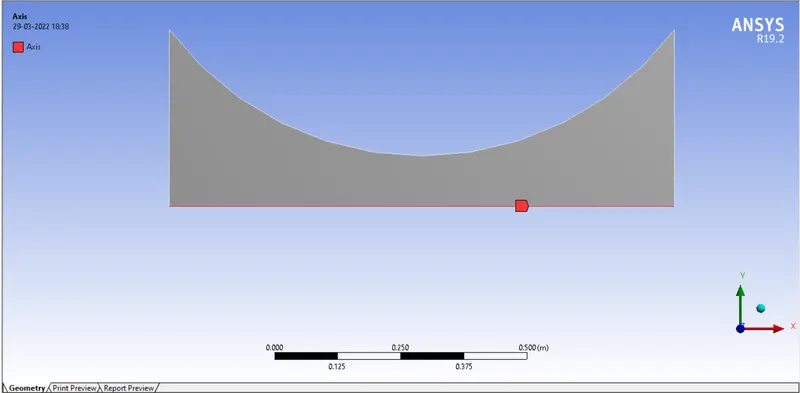
Now Right-click on the Mesh And click on a method and click on sizing select
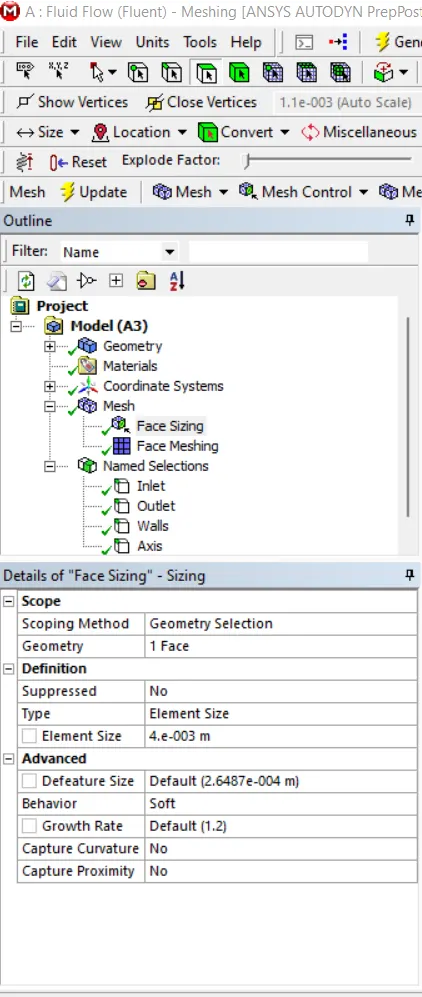
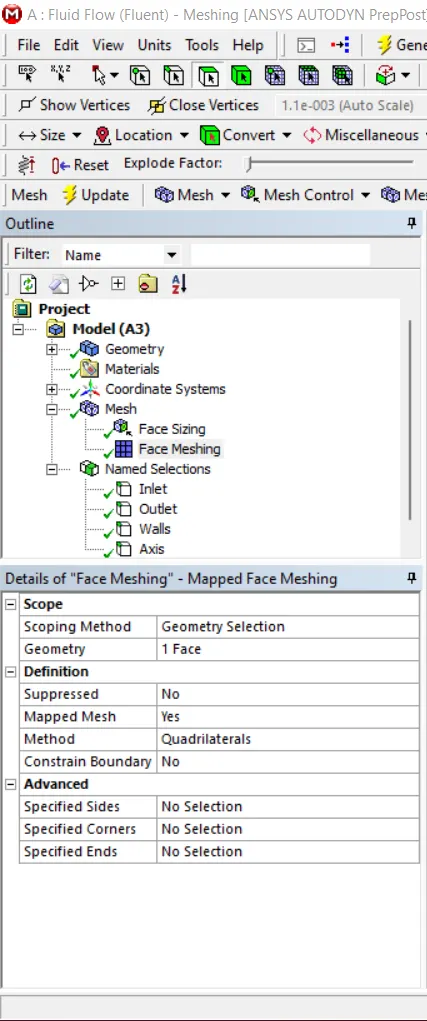
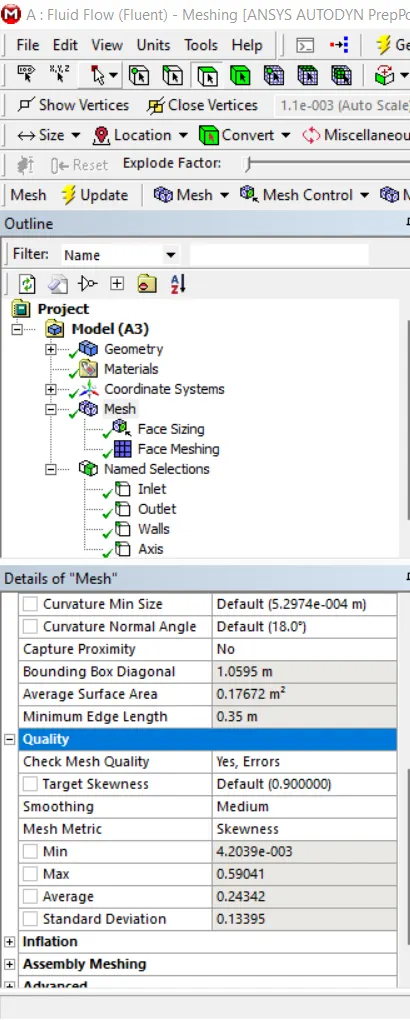
Then click Generate Mesh
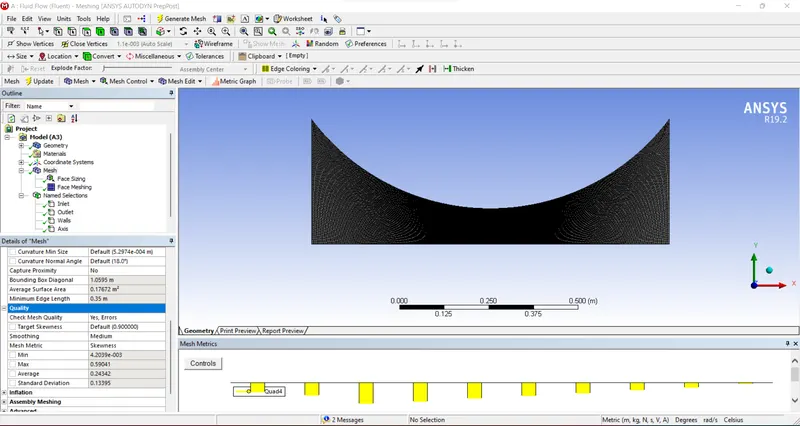
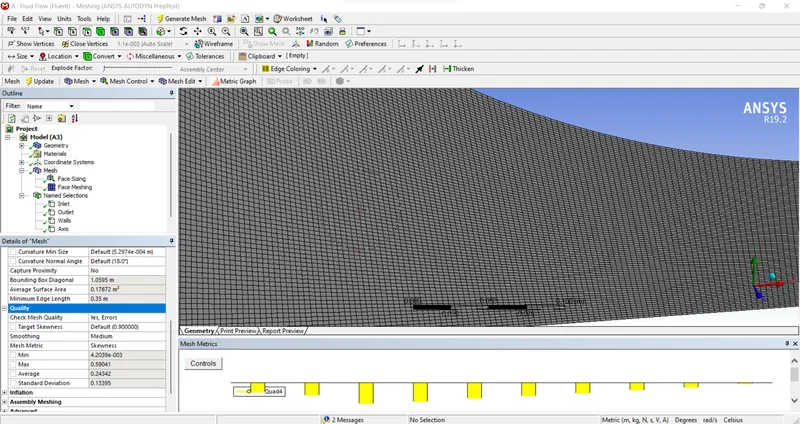
Step 3: Setup
Mesh size 4mm
Models used
Solver - Density-based (It is used because the flow is compressible)
Velocity formulation - Absolute
Time - Steady
2D space - Axisymmetric
Energy - On (Because we need to calculate temperature across the domain)
Viscous - Invisid (Due to high Mach Number)
Boundary conditions
Inlet - Pressure Inlet (Press - 101325 pa & Temp - 300K)
Outlet - Pressure Outlet (Press - 2735.775 pa)
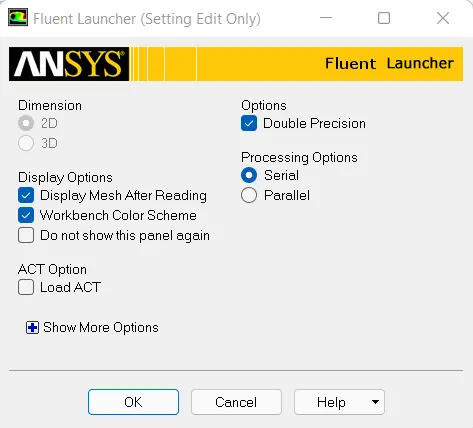
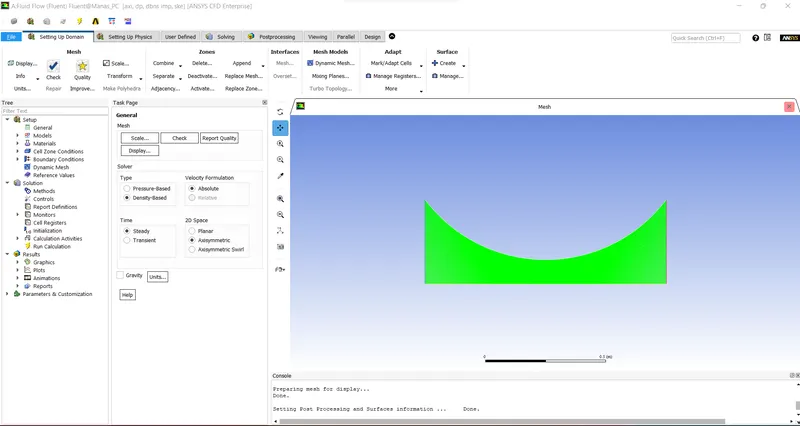
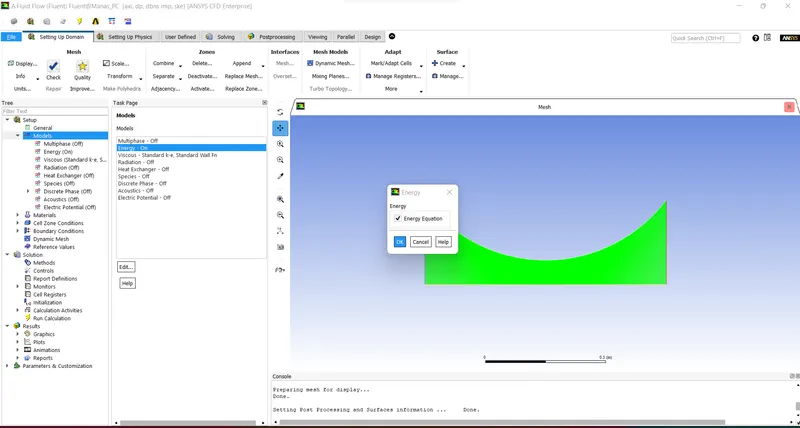
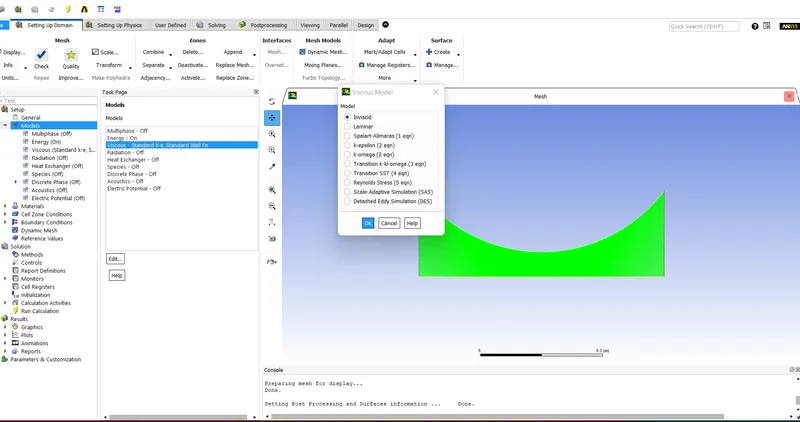
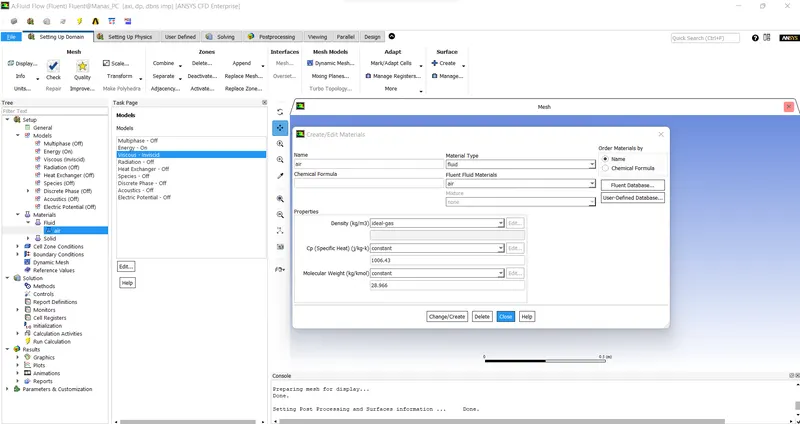
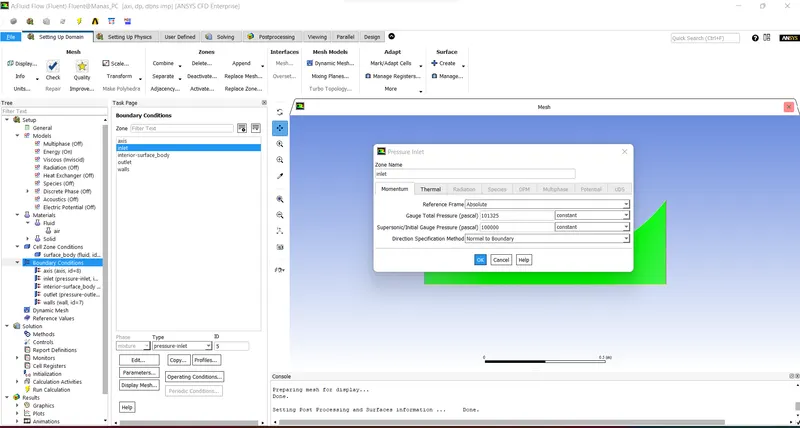
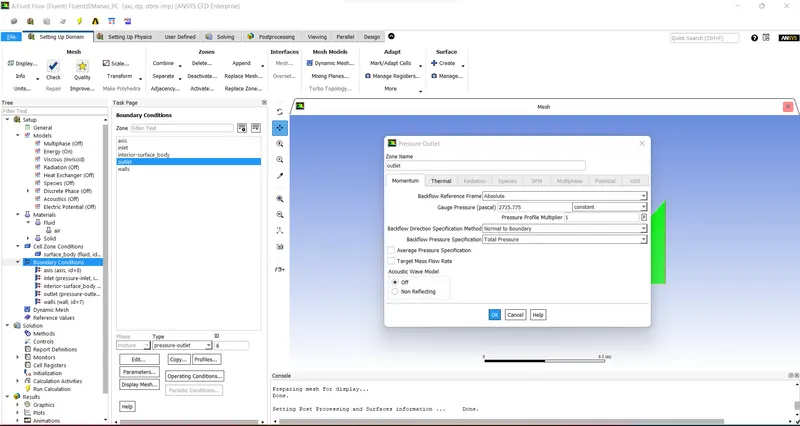
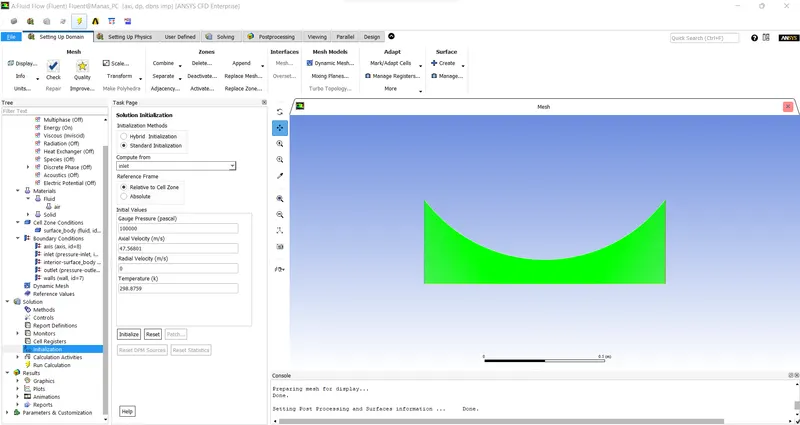
Then Click Run Calculation
Results :
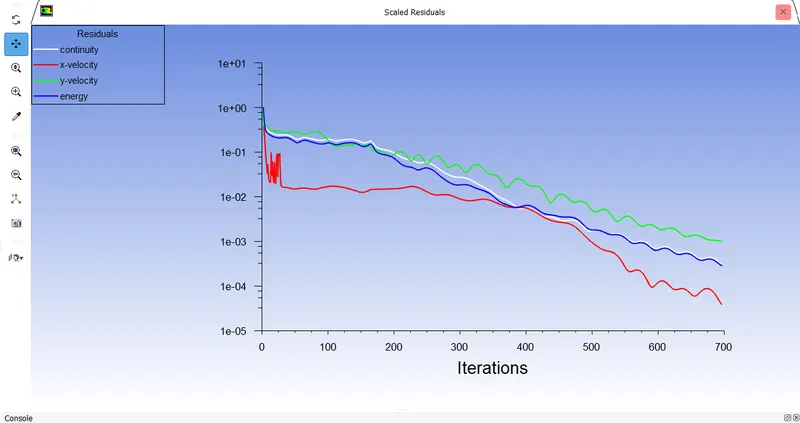
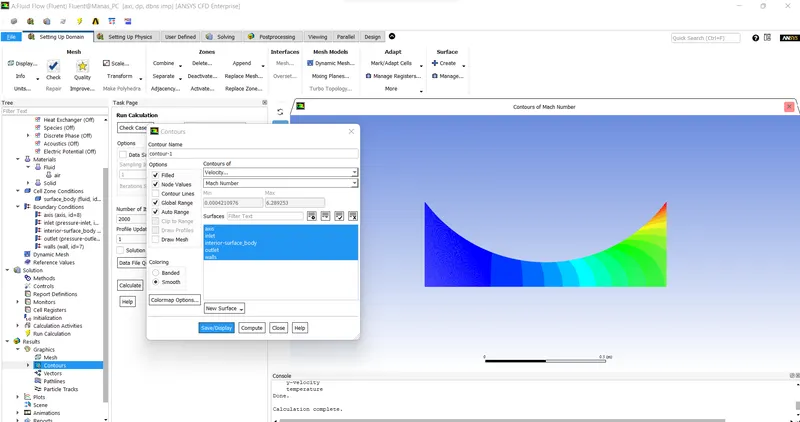
Click on the Results tab and use contours and chart options for plotting the results
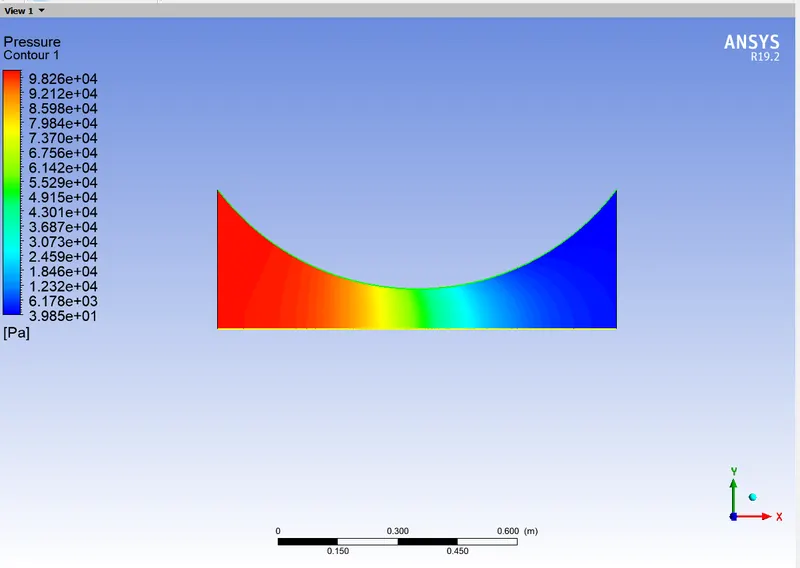
Pressure contours
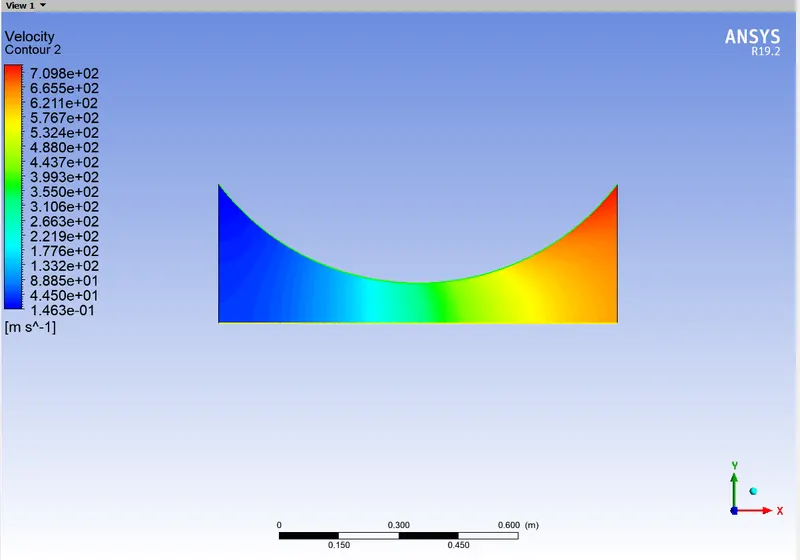
Velocity contours
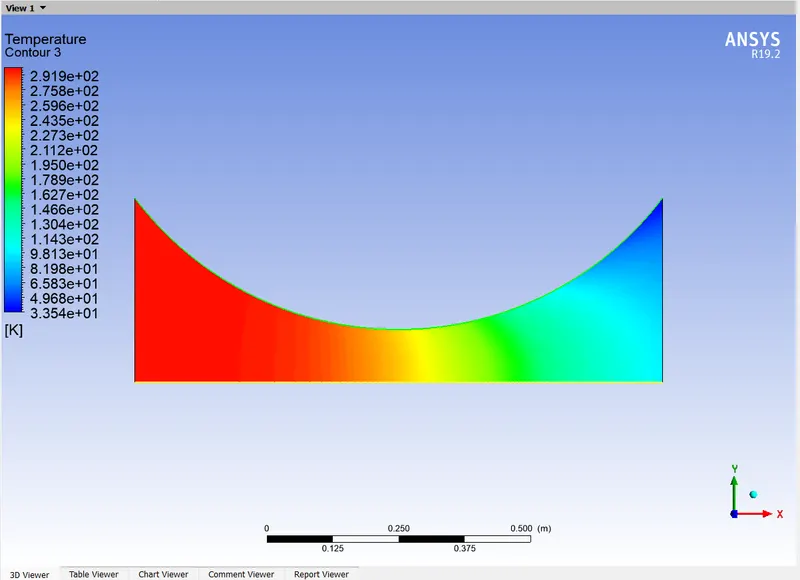
Temperature contours
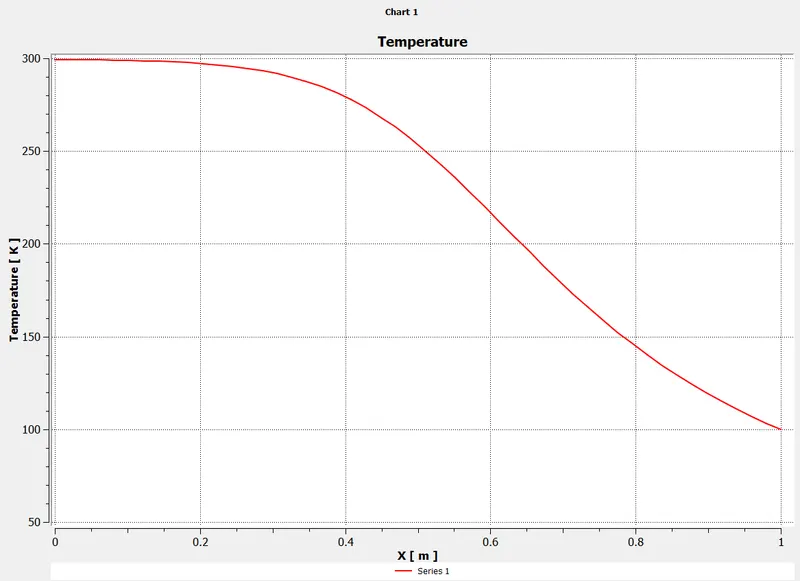
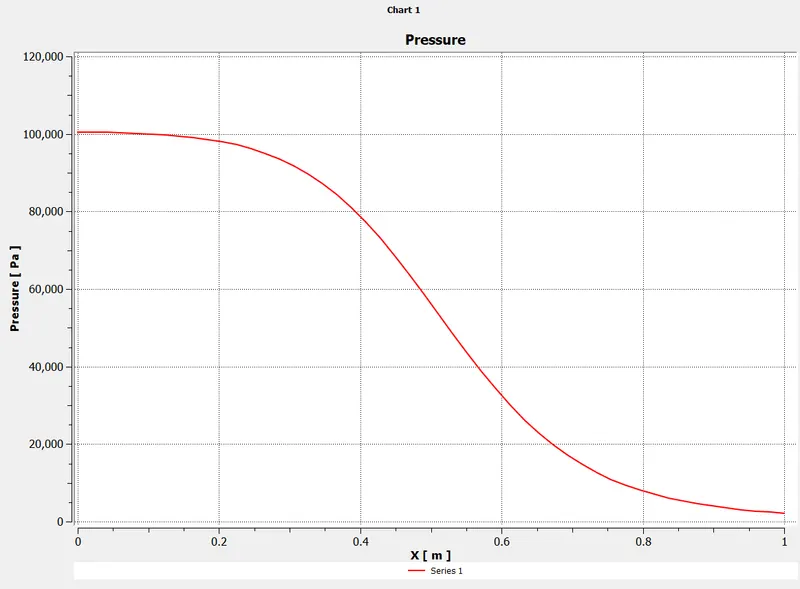
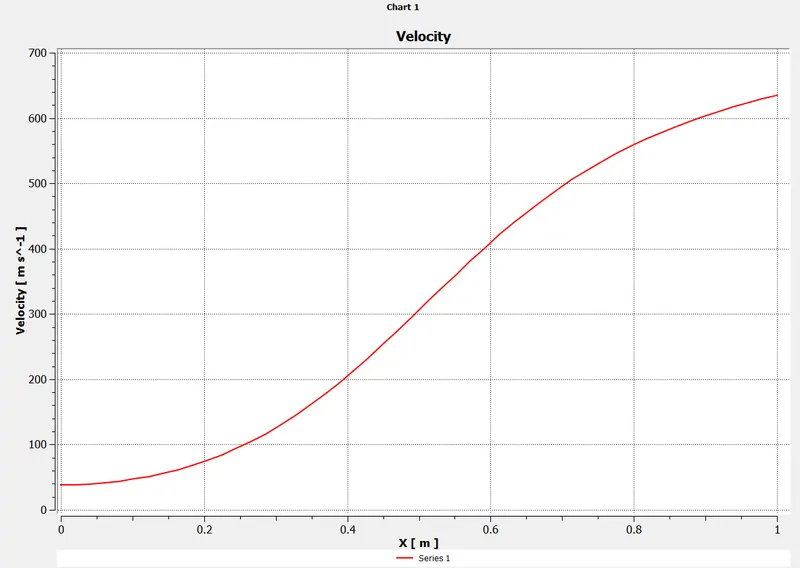
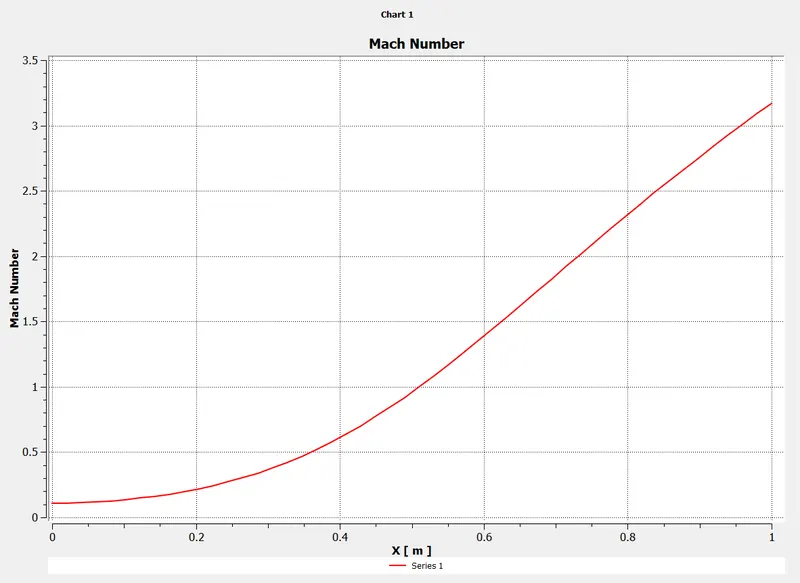
The Mach number at the intake is less than 1, indicating that the flow is subsonic. At a particular distance from the inlet, the flow transitions from subsonic to supersonic. When the Mach number is more than 1.2 but less than 6, the flow is supersonic. At a distance of 0.5 meters from the intake, the Mach number in the aforementioned pit approaches 1.
Conclusion :
As a result, we displayed the nozzle domain's numerous components. We've also seen how adjusting the area of the nozzles affects the Mach number. Also, the three distinct procedures yielded the same results.