Week 2 Challenge : Surface meshing on a Pressure valve
Objective:- For the given model, check for the geometrical errors and perform Topology clean up accordingly. Set three different target lengths as three different cases and mesh the model.
- Target length = 1mm, 3 mm and 5 mm (i.e. 3 cases)
- Element type = Tria
Apply any one target length from the above at a time for the entire model as One case. Submit 3 different models for 3 cases.
Write a detailed report on your meshing process and also mention which case is giving good results along with the reason.
Procedure:-
Importing the given Geometry
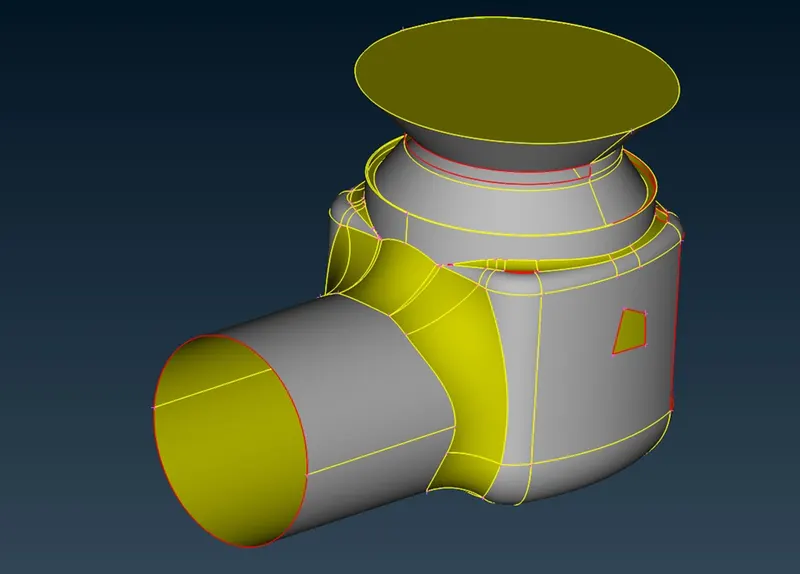
Enabling wire frame mode and selecting only single cons. Here we can see the number of missing surface that needs to be created.
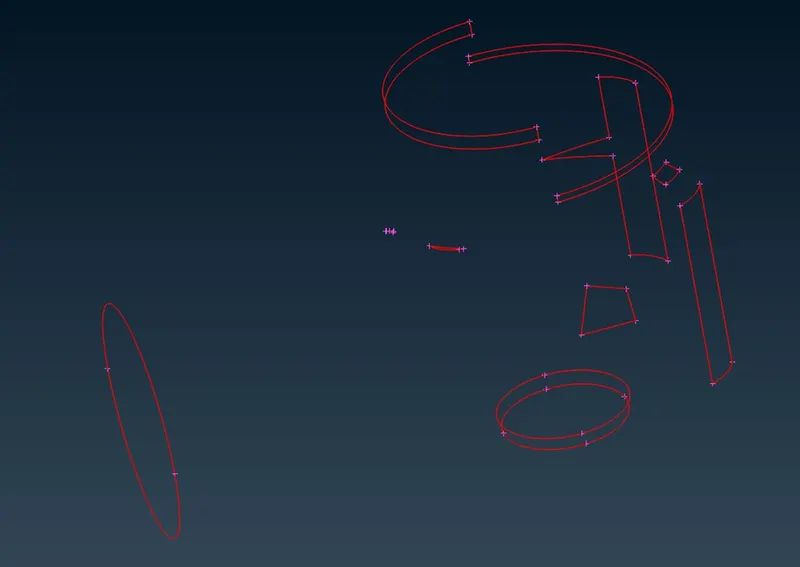
As we can see that we have to perform Topology clean up in the given geometry as some of the surfaces are missing
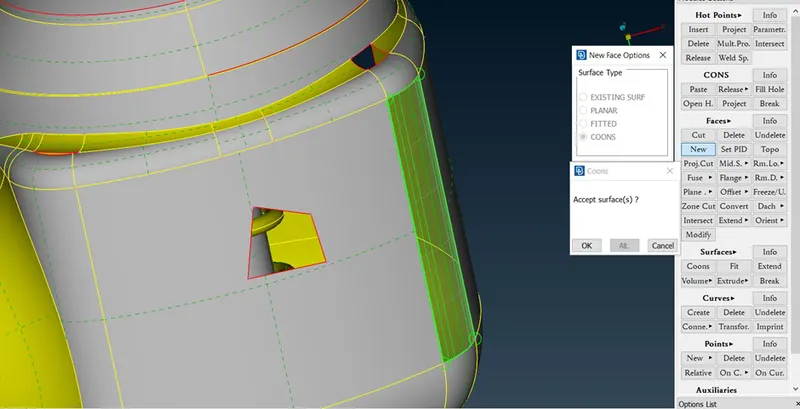
To create surfaces use
Faces `->` New
Under New we can select any of the appropriate option to create a new surface
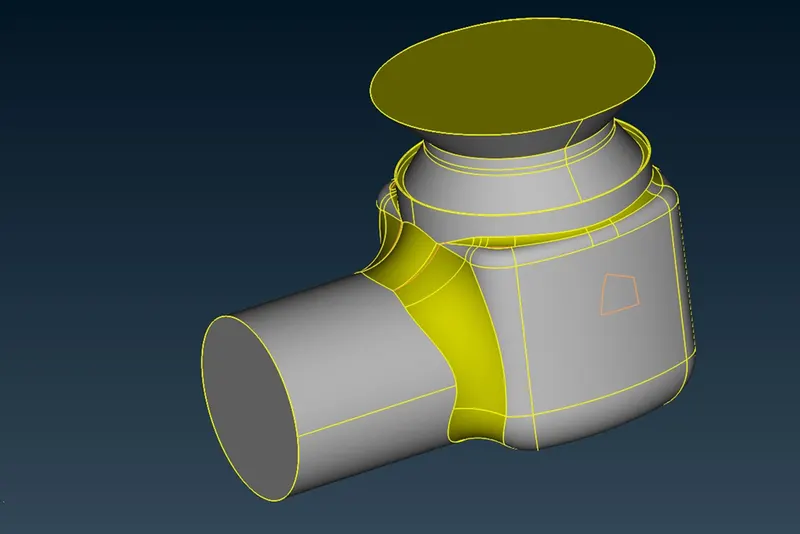
After creating all the missing surface, the model will look as shown below
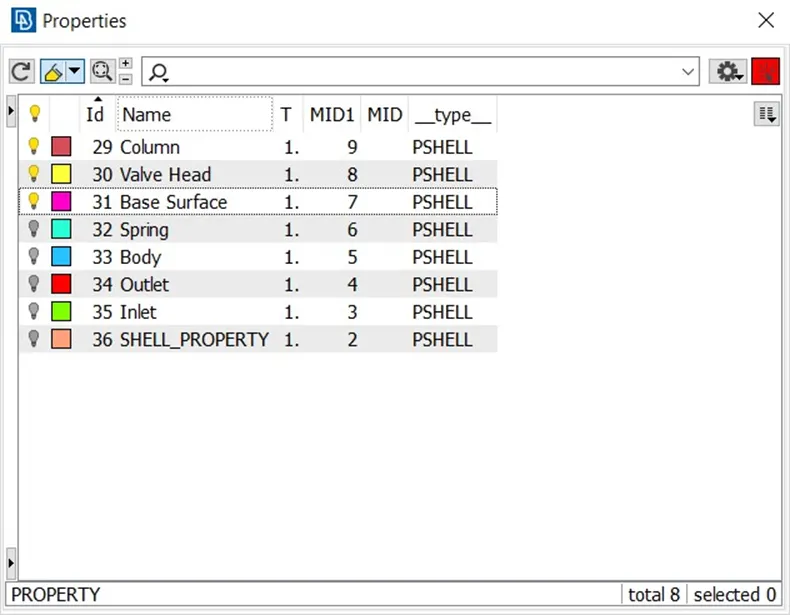
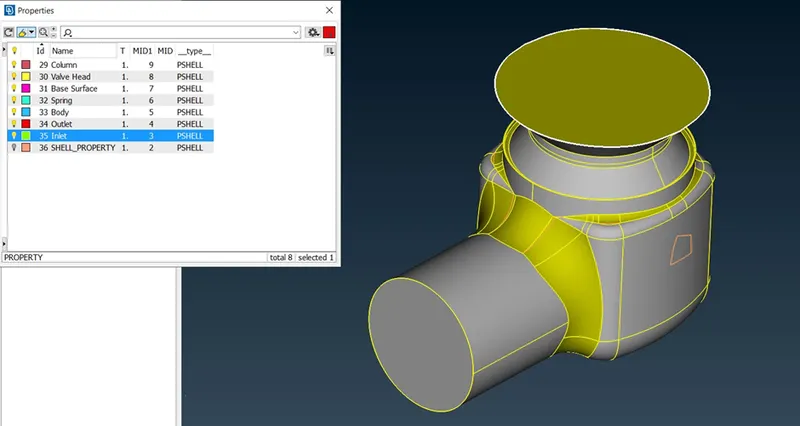
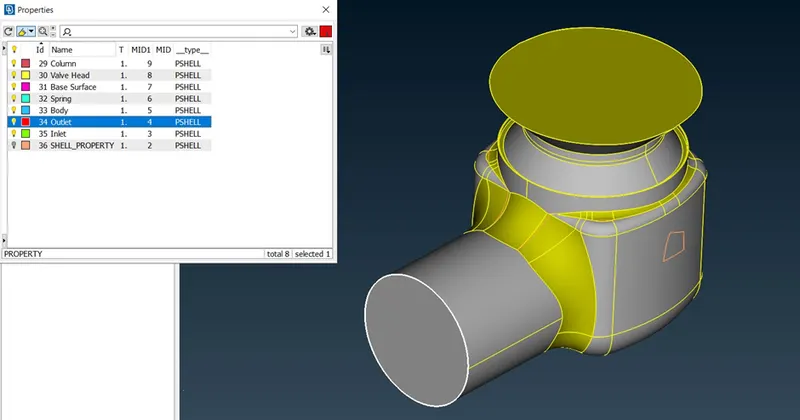
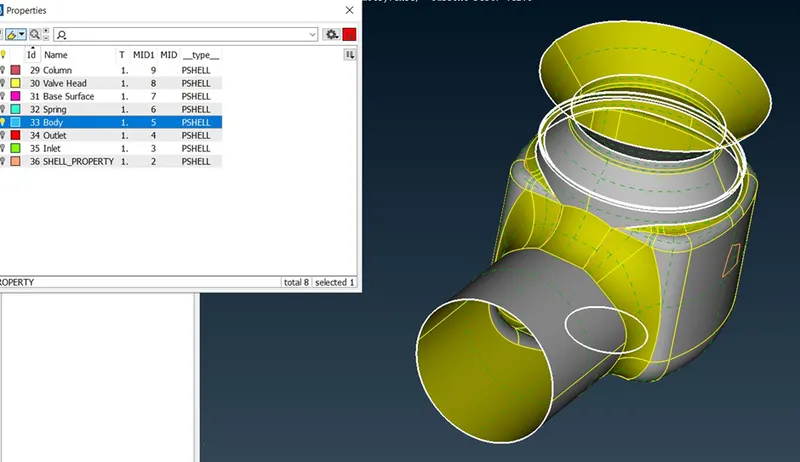
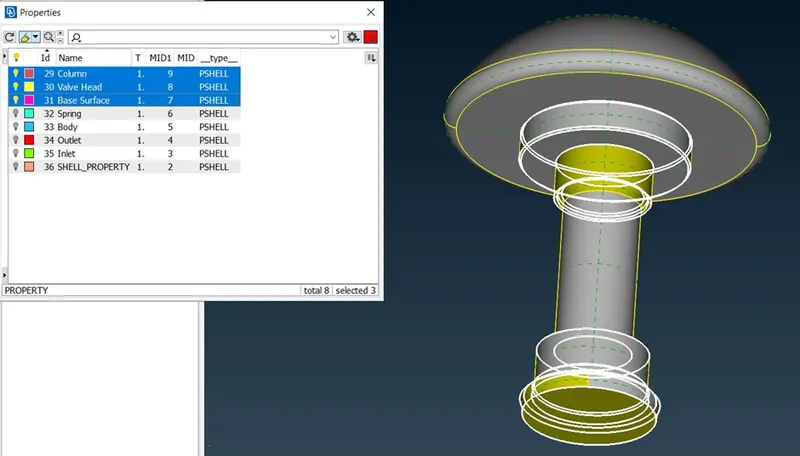
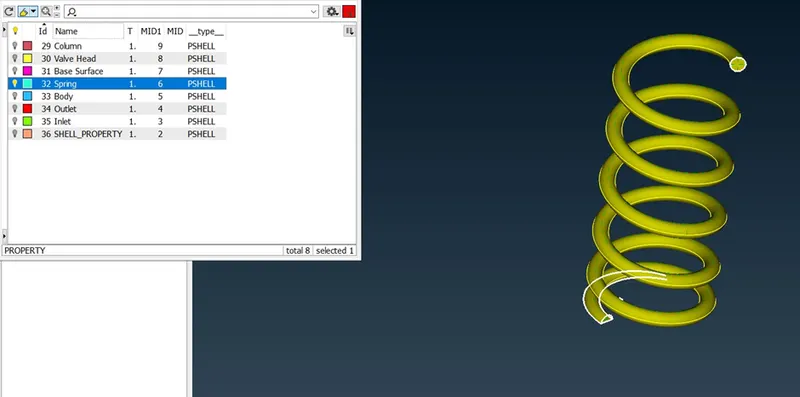
After creating the missing surfaces, now creating and assigning PID’s to different parts of the geometry
Inlet
Outlet
Body
Base Surface, Valve Head and Column
Spring
Meshing:- To mesh the given geometry we will provide the target length as 1mm, 3mm & 5mm one by one in each of the following cases below
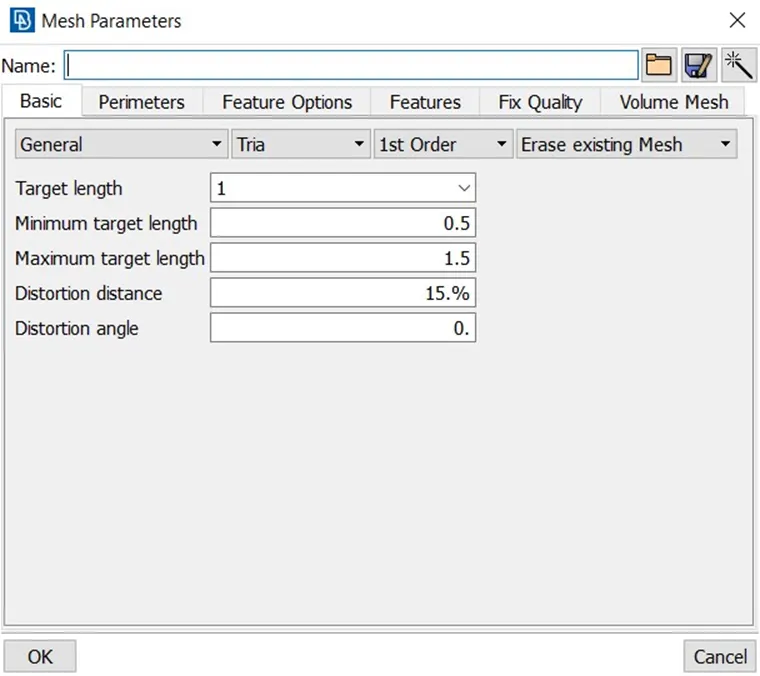
Providing the Target length as 1mm, Minimum Target Length as 0.5 & Maximum Target Length as 1.5 in the Mesh Parameter for the first case and also providing the Element type as ‘Tria’
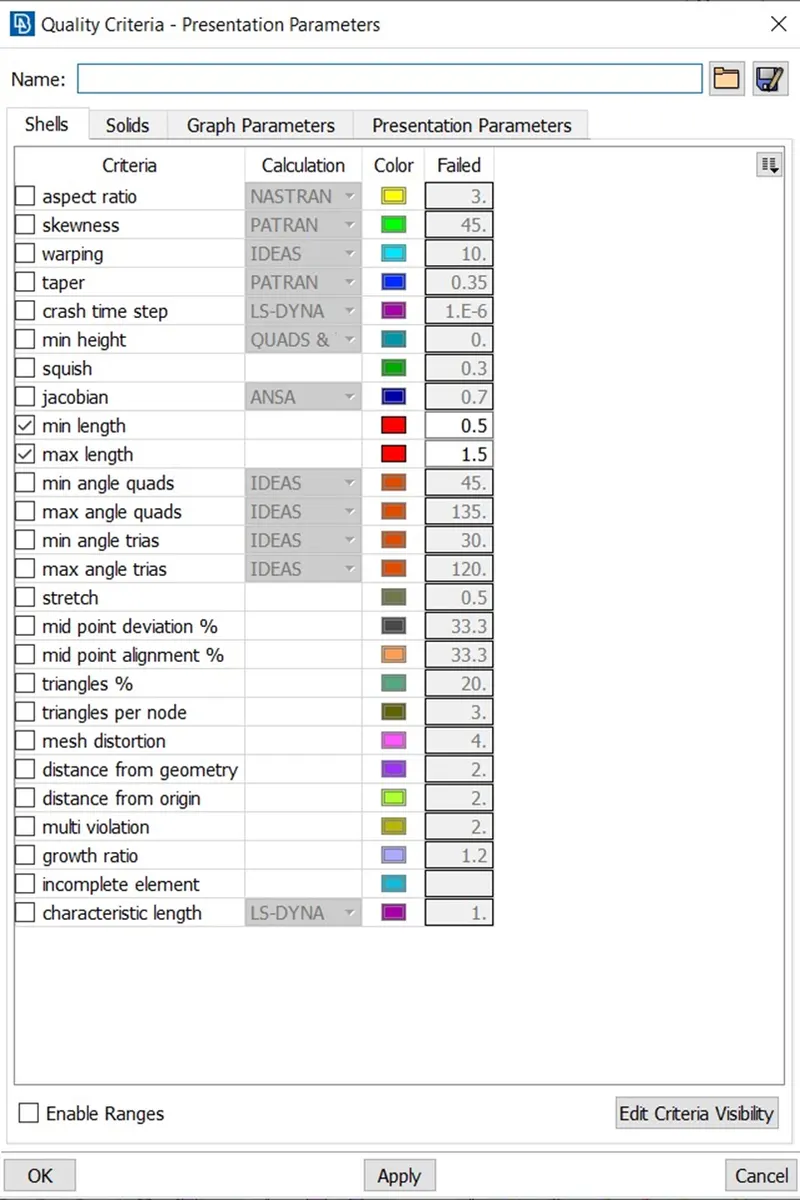
After this provide the same Minimum and Maximum Target Length in Quality Criteria also.
Once filling the given criteria, we will start meshing the given geometry.
To do this select,
Perimeters `->` Length
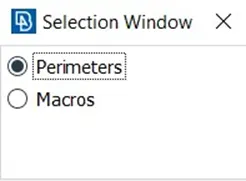
First we will assign the Length to Perimeters and then the Macros as 1mm by selecting the whole body.
After assigning the target length, select,
Mesh Generation `->` Spot Mesh
And then mesh either the whole body at once or we can mesh one by one every part which has been assigned a PID.
Result:-
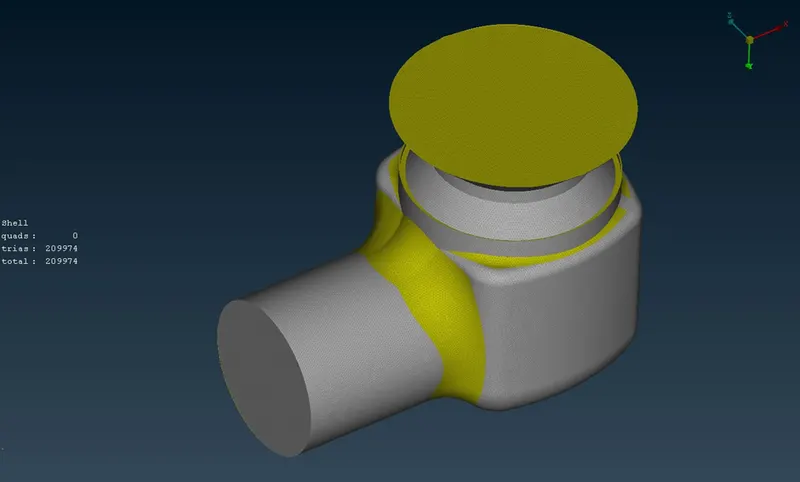
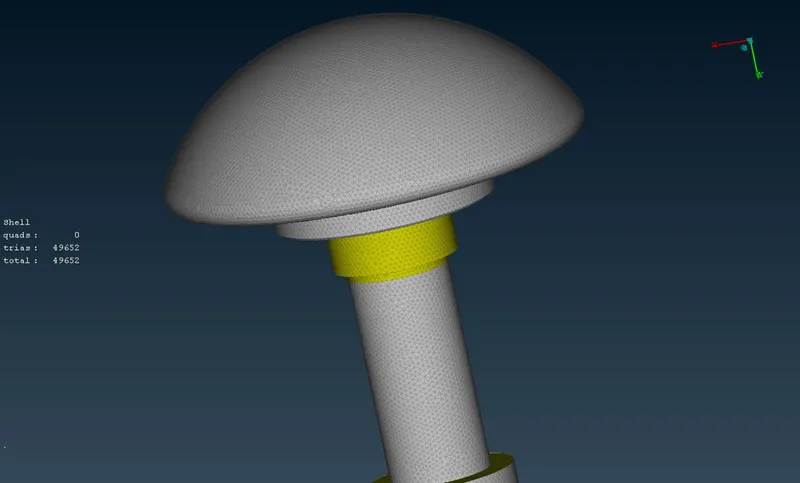
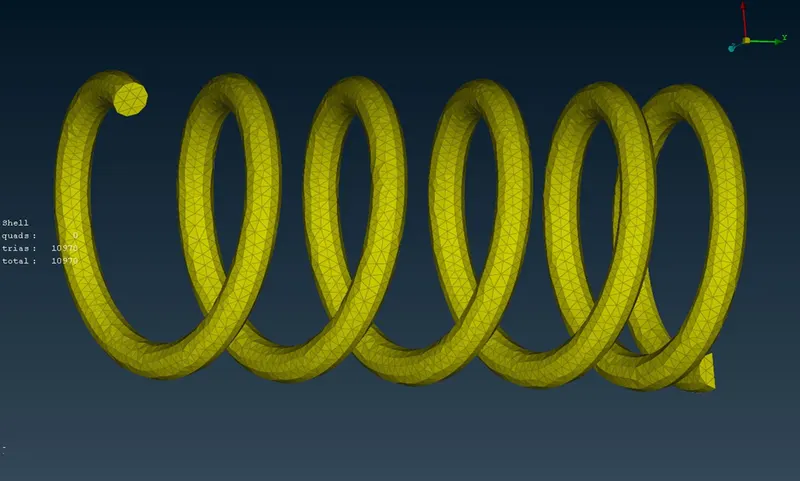
CASE 1:- Target element length = 1mm
Inlet, Outlet and Body
Valve Head, Column & Base surface
Spring
Here we can see that the mesh has almost fully captured the geometry of the whole body. The curvature of the valve head has also been captured.
The mesh tried to capture almost most of the curvature of the spring. To efficiently mesh the spring a mesh size smaller than 1mm would be needed.
CASE 2:- Target element length = 3mm
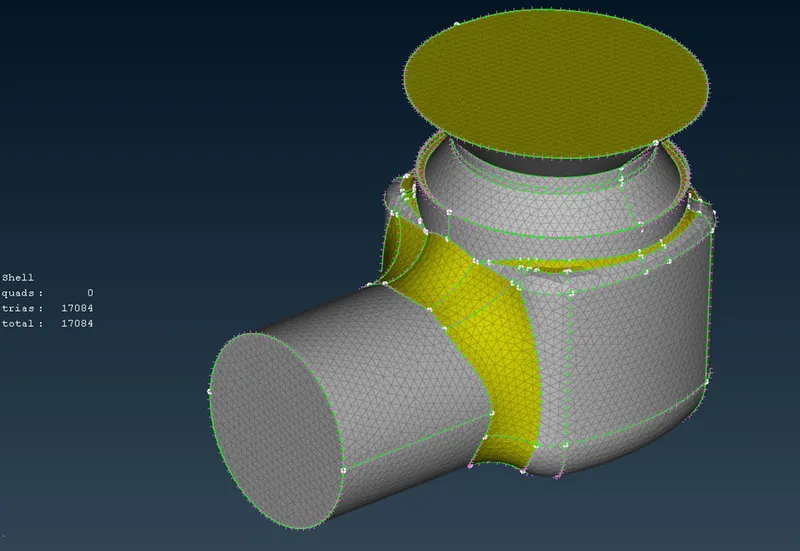
Inlet, Outlet and Body
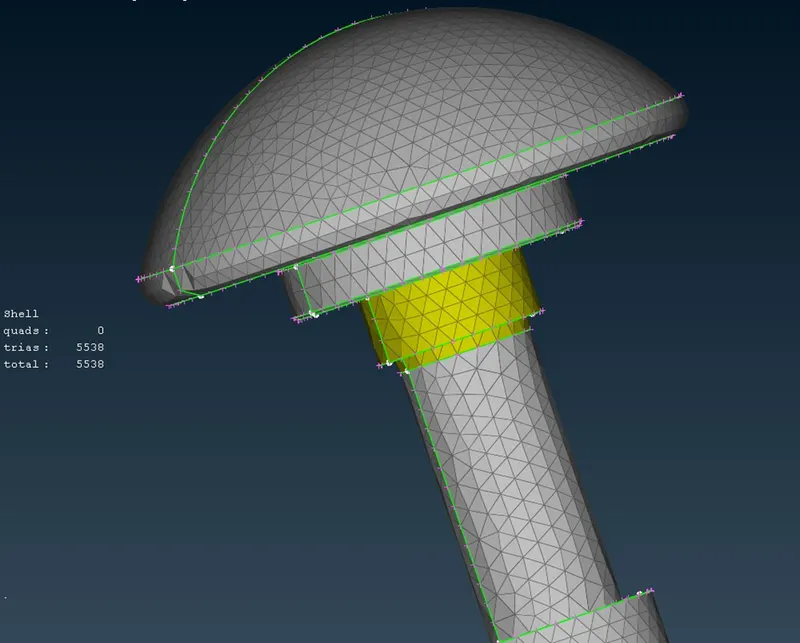
Valve Head, Column & Base surface
Spring
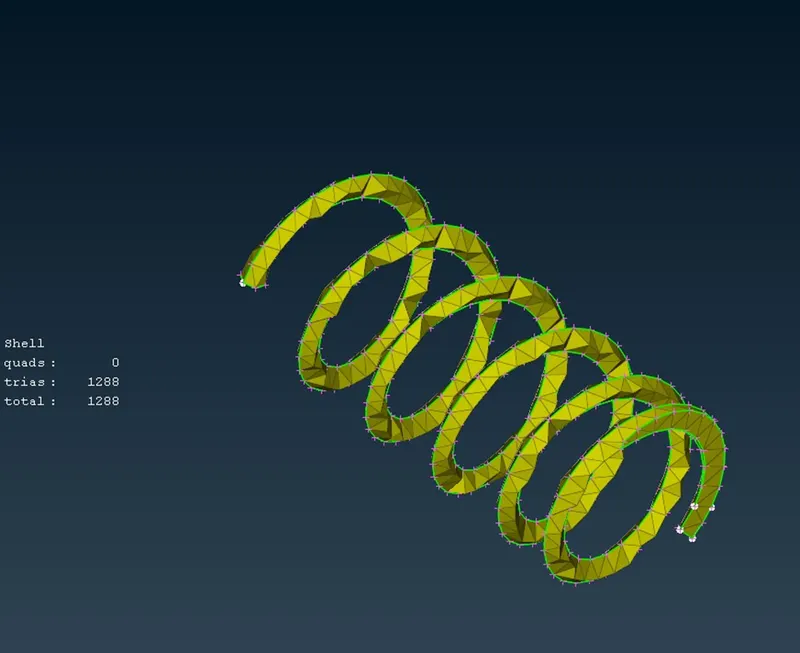
In the above case it can be seen that there is good meshing of Body and Valve Head, but the quality of mesh of spring is not good as that of the body. Since the element length assigned would be greater than that of the spring dimensions, therefore the mesh is unable to capture the curvature of the spring. The mesh has almost captured the curvature of wall head, but the quality of the mesh is not as good as that of the previous case at Valve head as well as the column.
CASE 3:- Target element length = 5mm
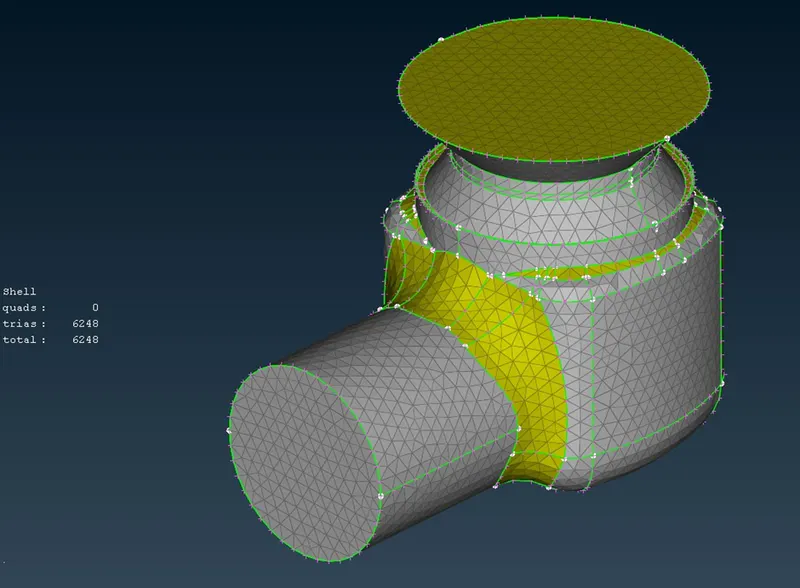
Inlet, Outlet and Body
Valve Head, Column & Base surface
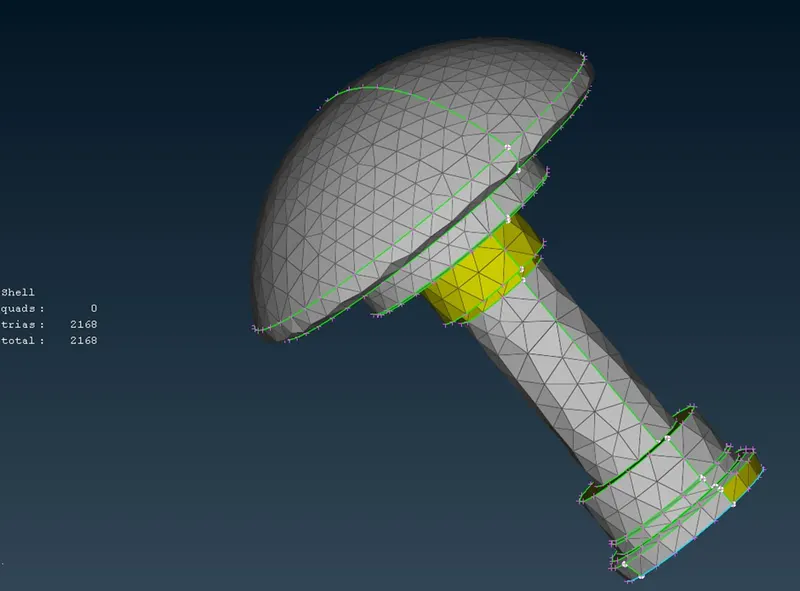
Spring
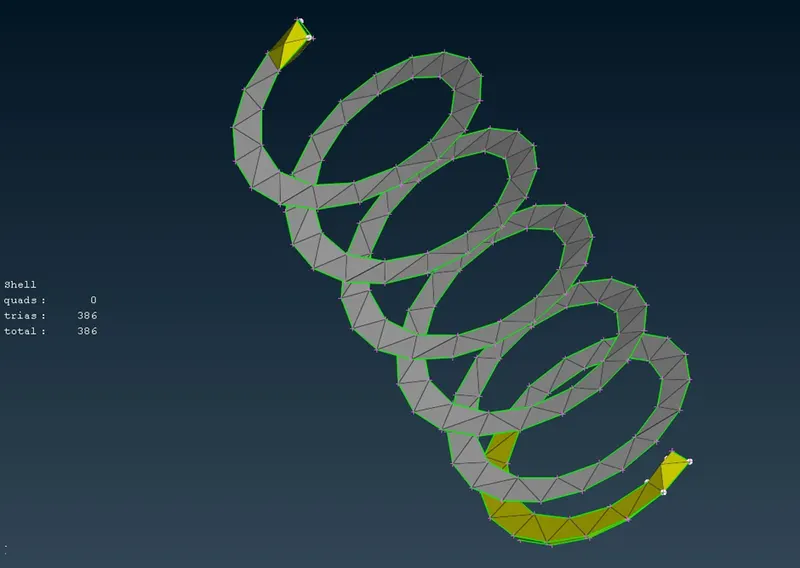
In the above case we can see that quality of the mesh is not good as well, but it has managed to capture the geometry of the body and Valve head. The spring is fully destroyed. As the element size is much greater than the dimensions of the spring, the mesh is unable to capture the surface of the spring
Conclusion:-
It is concluded that as the target mesh length increases the quality of the mesh becomes worse. Therefore it is recommended to use different mesh length for different parts of the geometry.
- In this case to mesh the Body, a mesh length of 5mm would also do the work.
- To mesh the Valve Head & Column, mesh length of 3-5mm would be okay. But the 3mm mesh size captures the curvature more efficiently.
- To mesh the spring it is highly recommended to use a mesh length of 1mm, since the other mesh size is unable to capture its surface and curvature.