Topological cleanup and surface mesh generation on the valve assembly using ANSA
Aim:
To check for the geometrical errors and perform topology cleanup on the given geometry using ANSA, and then mesh it for different target lengths and draw suitable conclusions from the results obtained in each case.
Problem statement:
1. Check the geometrical errors and perform topology cleanup on the given geometry using ANSA.
2. To mesh the given geometry using the 'triad' element type for the following target lengths and compare the output and draw suitable conclusions for the same.
a. Case1: target length= 1mm
b. Case2: target length= 3mm
c. Case3: target length= 5mm
Geometry cleanup:
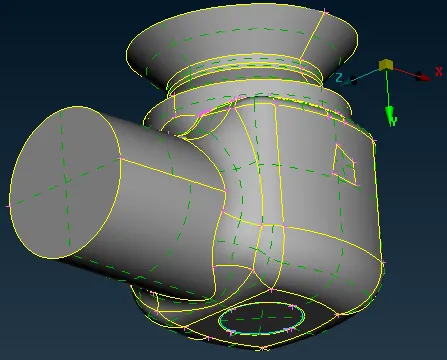
The valve geometry that was imported into ANSA had several holes over the body. These holes along the were filled so as to complete the geometry. Also, the inlet, outlet, and base holes were filled so that a closed model is obtained and the surface mesh be deployed effectively. TOPO> faces> new, OR, TOPO> cons> fill-hole
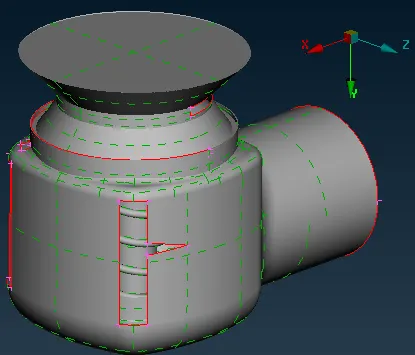
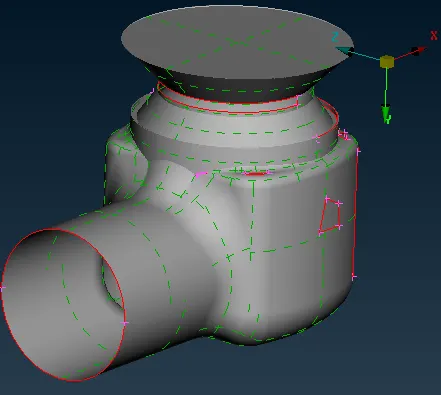
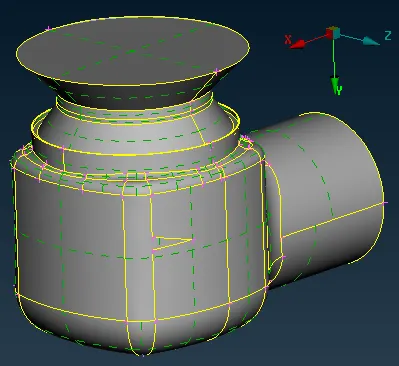
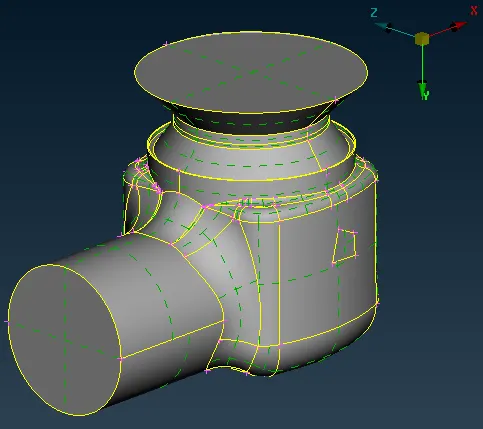
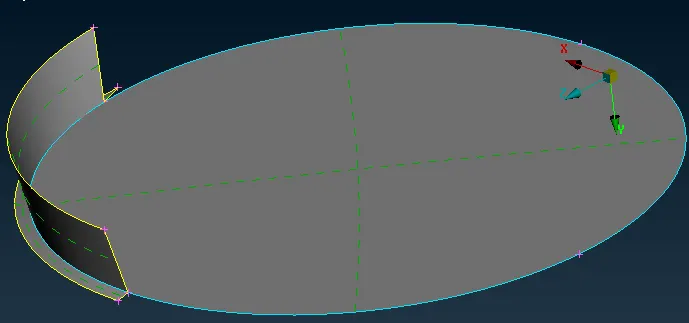
As we fill the base hole, a triple con is created. Usually, in ANSA, a triple con means an error, but that is not the case in this scenario. This is because the triple con is created as a result of 3 faces from different planes joining a con and any of the faces are not seen as overlapping each other.
Boundary flagging:
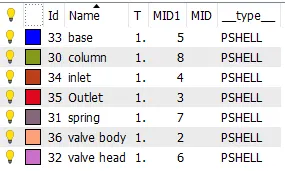
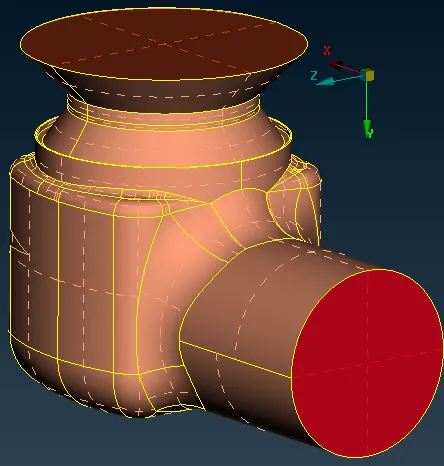
The boundary flagging was done on the given geometry as follows.
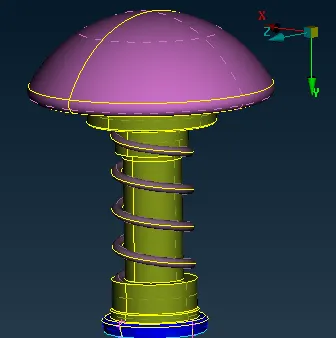
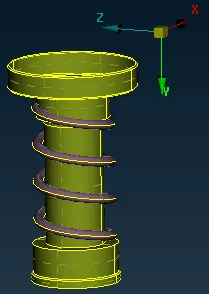
Case1: target length= 1mm
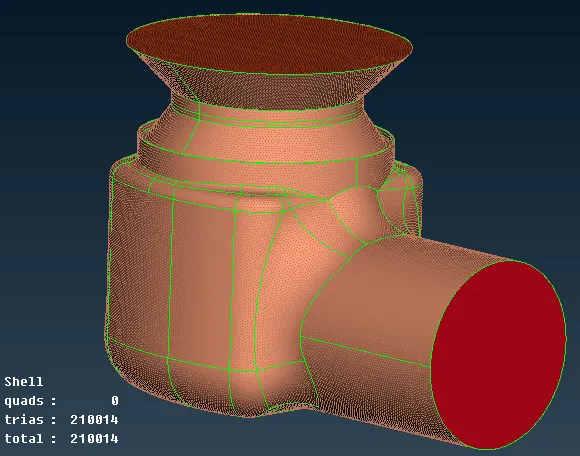
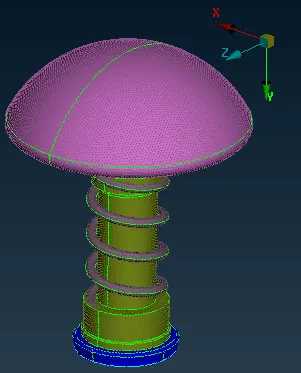
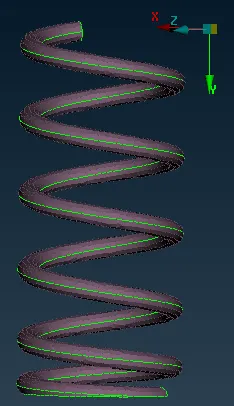
The geometry meshed with a target length of 1mm showed very less defeaturing even on the parts which are smaller in comparison to the other components. A total of 210014 mesh elements were generated.
Case2: target length= 3mm
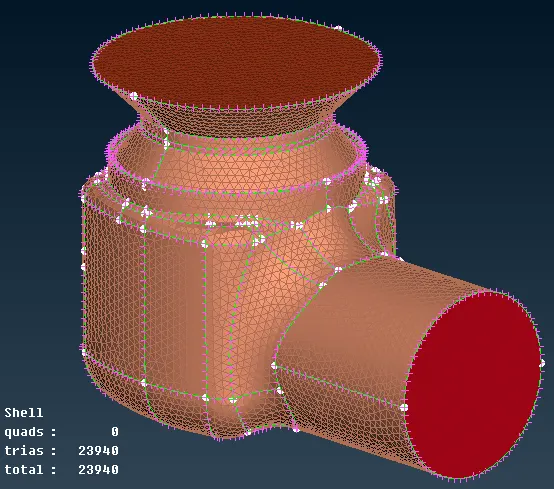
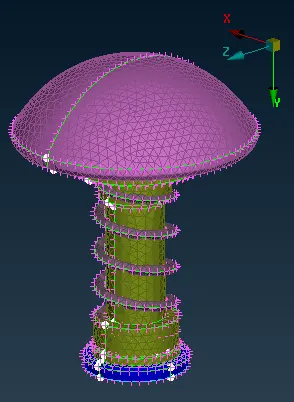
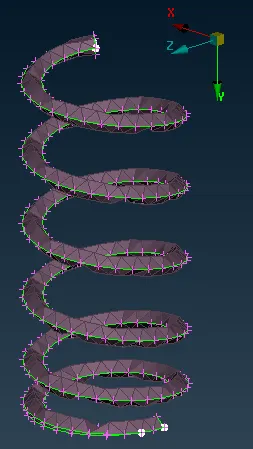
The geometry meshed with a target length of 3mm showed a fair amount of defeaturing on the smaller parts of the geometry. A total of 23940 mesh elements were generated.
Case: target length= 5mm
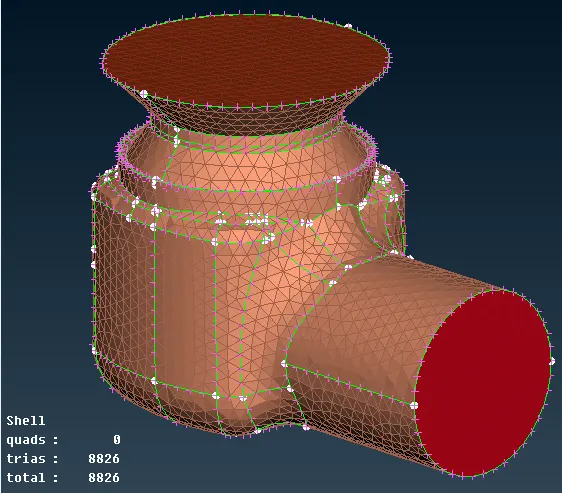
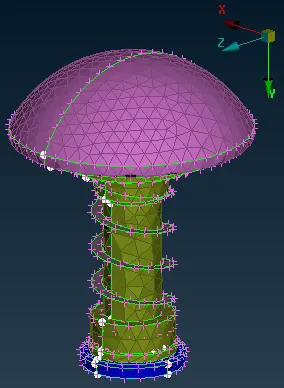
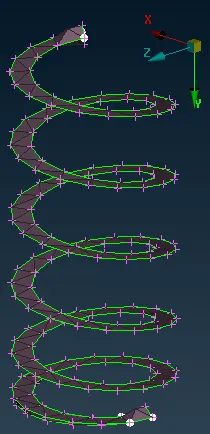
The geometry meshed with a target length of 5mm showed very high defeaturing on the smaller parts especially the spring. Also, the defeaturing of the model can be seen clearly near the curves as well. A total of 8826 mesh elements were generated.
Comparison of results:
| Target length (mm) | Total number of mesh elements generated |
| 1 | 210014 |
| 3 | 23940 |
| 5 | 8826 |
Conclusions:
- From the above comparisons, we can see that there is a substantial decrease in the number of mesh elements generated with an increase in the target length.
- We know that the accuracy of the solution increases with a higher number of mesh elements (ie, smaller mesh sizes), but a higher number of mesh elements require more computational power and resources.
- Also, when the mesh element size is increased substantially, excessive defeaturing of the geometry may take place (especially the smaller components). Hence the results obtained in this case will be useless because of excessive defeaturing.
- Therefore, based on the computational power and resources available, and the geometry specification the mesh size (target length) may be decided. Also, the smaller components of the geometry may be assigned smaller mesh sizes compared to the larger components so as to reduce computational power and not compromising much on the solution accuracy.