Week 2:- BiW Fixture Basics Challenge
- Project activities
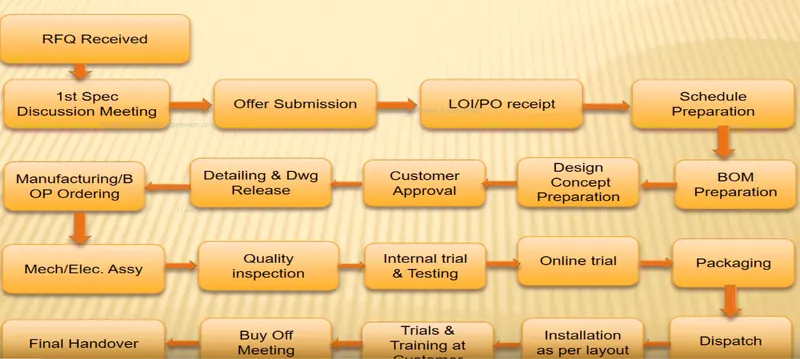
- RFQ is a method by which a firm requests selected suppliers and contractors to submit price proposals and bids for the opportunity to complete specific activities or projects.
- 1st spec discussion meeting is where the company have a meeting and discussion about the specification and what the company can offer
- Offer submission is where the company submits its offer to the client.
- LOI/PO receipt is the document declaring agreement to work with the company
- Schedule Preparation is where the company prepares a Gantt chart for the entire project.
- BOM preparation is where the company prepare a list of material regarding the project
- Design concept preparation is where the company prepares the early design for the customer.
- Customer approval is where the client agreed with the design.
- Detailing & DWG release is where the designing team gives the final design and drawing to the manufacturing department.
- Manufacturing/BOP ordering is information about the processes and sequence to produce the parts
- Mech/elec. Assy is where the manufacturing team assemble all the electrical and the mechanical parts
- Quality inspection is where the QC team checks the product according to the specification that the customer and the company agreed on.
- Internal trial & testing is where the company testing all the functions of the product.
- An online trial is where the company do a trial of the product on the assembly line
- Packaging where the company packaging the product to prevent any damage in the delivery process
- Dispatch is where the company sent the product to the customer
- Installation per layout where the company install the product at the customer factory
- Trial & Training is where the company test the product and train the customer`s staff
- Buy off meeting where the customer checks the product for any error or need any additional features to a product
- Final handover where the company fully gives the product to the customer.
- There 2 types of joining processes which consist of metallurgy and mechanical joining.
- The metallurgy is consisting of resistance weld where Metals are bonded by applying pressure and flowing current through the metal region for a period, for example, spot weld, seam weld, and projection weld. The second is Fusion welding is a process that involves heating two or more materials to their melting point in order to join or fuse them together. The filler material may or may not be required for the process. Fusion welding processes do not require the use of external pressure. For example, arc weld, TIG, MIG, and SMAW.
- Mechanical joining consisting of a fastener was to hold two parts together mechanically for permanently or temporary for example nuts, bolts, and rivets. Secondly, an adhesive is where a substance is used to bond two parts mechanically. For example, glue and epoxy.
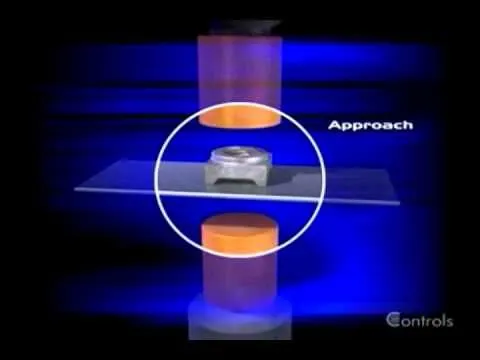
- Resistance welding is a process that applying pressure and carrying a high electric current through a metal that combines and heat up until melting the metals and bonding them together. Below is the application for the automotive industry.
|
Resistance welding |
Application |
|
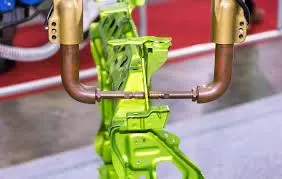
Resistance spot weld · Typically use to merge two sheetmetal together. |
 |
|
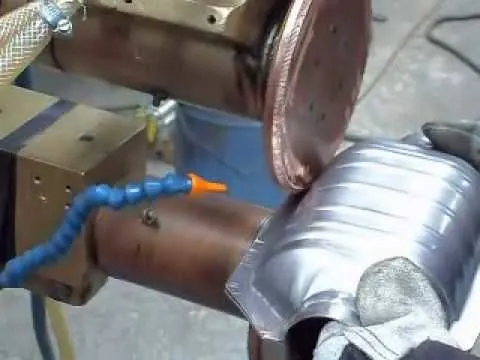
Resistance seam weld · Typically use to merge two sheetmetal together without any liquid leaking. |
 |
|
Projection weld · Is the same as spot welding but for thicker material |
 |
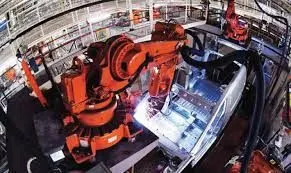
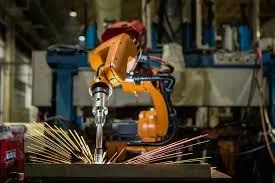
- Fusion Welding is a joining method where mixing or fuse two or more materials by heating to a melting point, it may or may not include the use of filler material. There are different types of fusion and it depends on what material needs to combine.
|
Type of Fusion welding |
Application |
|
Tungsten inert gas (TIG) · metal is deposited from the melting electrode · usually for thin material · can be manual and automation |
 |
|
Metal Inert Gas (MIG) · The two base materials are joined using a continuous solid wire electrode supplied through a welding gun and into the weld pool. · Usually for thick material |
 |
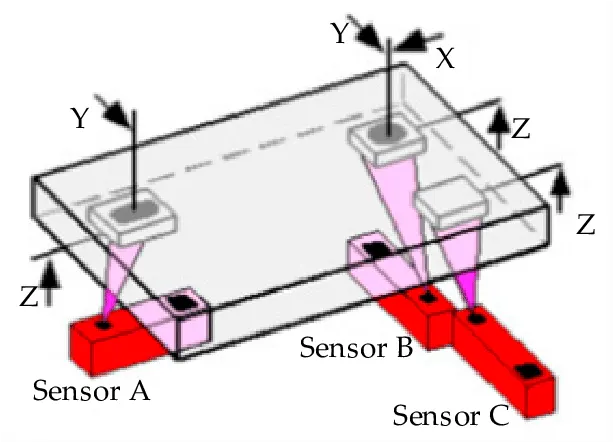
- 3-2-1 is a principle used when designing a fixture for panels. 3 indicates that three degrees of freedom are restricted, namely the z-axis, y-axis, and x rotational axis, as in the case of clamping the panel. The 2 indicates two degrees of freedom, which are the x and y axes, respectively, as in the first pin in the fixture. Finally, the number 1 indicates the final degree of freedom, which is rotational in the Z-axis, such as the second pin. The major purpose of this is to keep the workpieces from distorting.
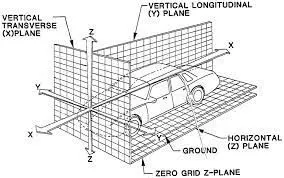
- A body coordinate system is a reference system consisting of a collection of points, lines, and surfaces that can define the location of points in space in 3D and 2D. Body Coordinate System is also known as vehicle line or body line in general.
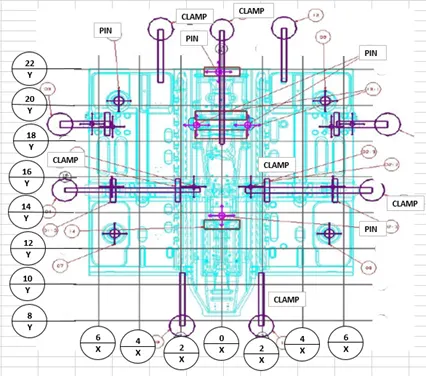
- Body planes are three imaginary planes that are perpendicular to each other. These are the reference planes in a vehicle. In the automotive sector, they are utilized to describe the GD and T of all parts. Below are the reasons why body planes are important in the automotive industry.
- It specifies the precise location of each item in the car.
- Ensure the design are easier for the assembly
- The designs are all actually linked to the bodyline.
- Assist in the simple identification of various parts of the car.
- Standardized the drawing system
- Assist with quality insurance