Week 2:- BiW Fixture Basics Challenge
1. Process of Project Execution Activity:
Project execution involves the implementation of project plans and the completion of project deliverables. Here's a general outline of the process:
- Initiation: Start the project by defining objectives, scope, and resources.
- Planning: Develop a detailed project plan, including schedules, budgets, and resource allocation.
- Execution: Carry out the project plan, coordinate resources, and manage stakeholders.
- Monitoring and Controlling: Track project progress, identify and address issues, and make necessary adjustments.
- Closing: Finalize all project activities, deliver the project outputs, and obtain stakeholder acceptance.
2. Types of Joining Processes:
Joining processes are methods used to connect two or more workpieces together. Some common types include:
- Welding: Fusion of materials to form a strong joint.
- Brazing: Joining metals using a filler material with a lower melting point than the base metals.
- Soldering: Similar to brazing but at even lower temperatures, typically using a non-ferrous filler material.
- Adhesive Bonding: Using adhesives to bond materials together.
- Mechanical Fastening: Joining materials using mechanical means such as bolts, screws, or rivets.
3. Resistance Welding and Its Application in the Automotive Sector:
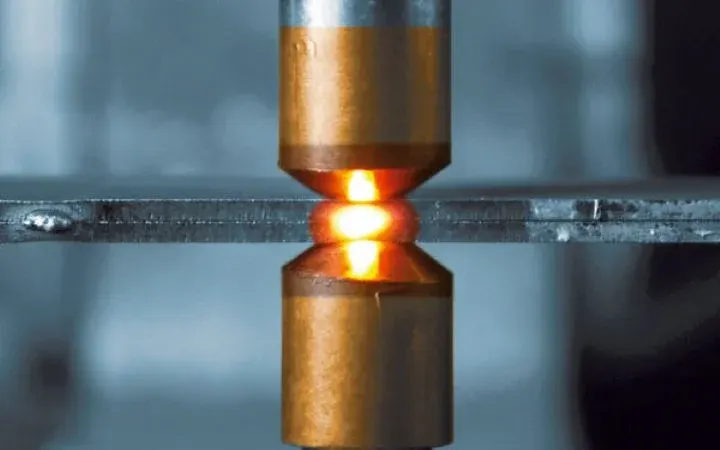
Resistance welding is a welding process where heat is generated by the resistance of the workpieces to the flow of electrical current. In the automotive sector, it's commonly used for:
- Spot Welding: Joining sheet metal components, such as in car body assembly.
- Projection Welding: Joining studs, nuts, or other components to sheet metal.
- Seam Welding: Creating continuous joints, such as in fuel tanks or exhaust systems.
4. Fusion Welding and Types with Application in the Automotive Sector:
Fusion welding involves melting and joining materials to form a joint. Common types of fusion welding used in the automotive sector include:
- Gas Metal Arc Welding (GMAW/MIG): Used for welding thin to thick materials in various automotive components.
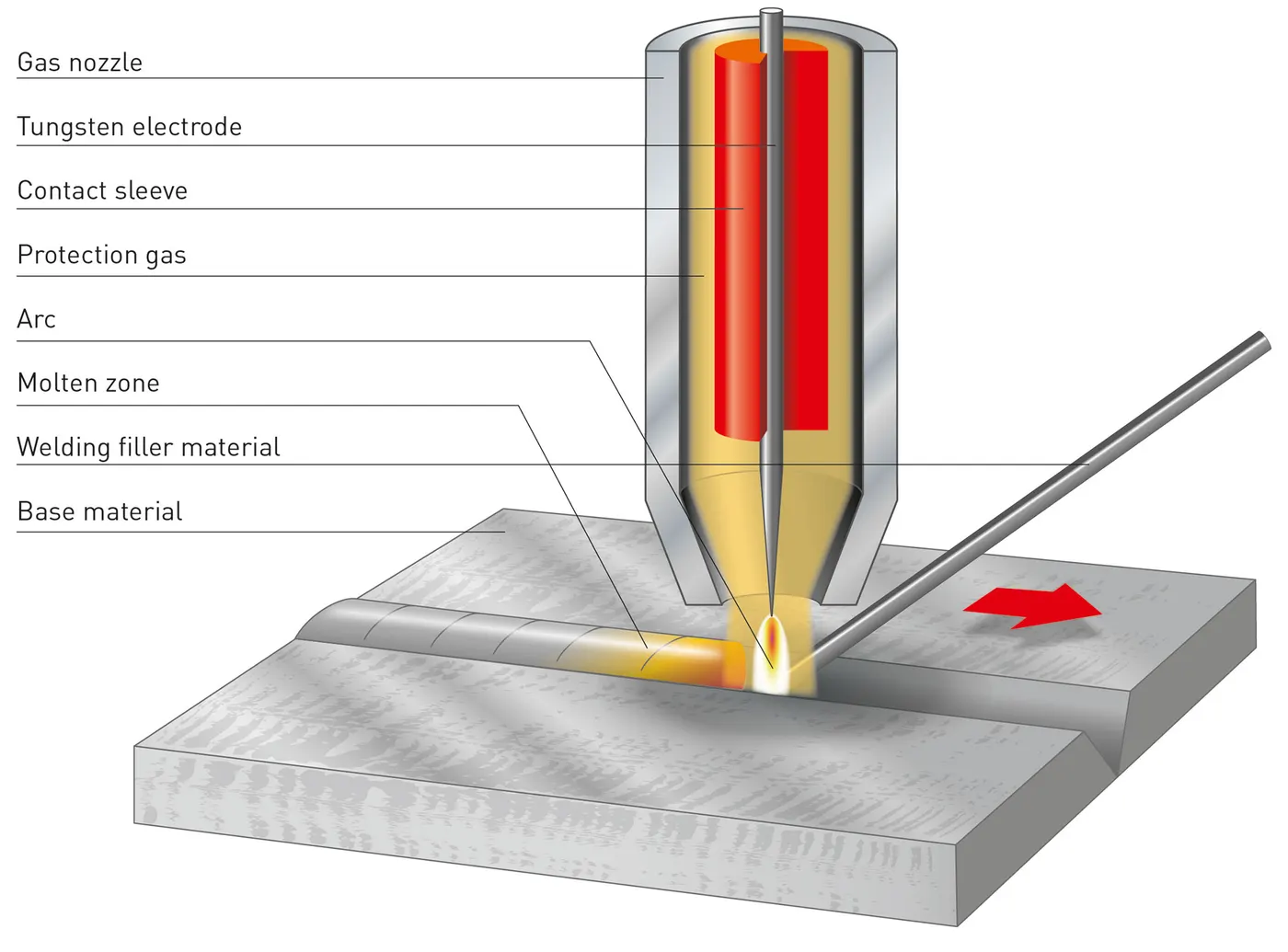
- Gas Tungsten Arc Welding (GTAW/TIG): Suitable for welding thin materials, particularly aluminum components in automotive fabrication.
- Shielded Metal Arc Welding (SMAW/Stick): Used for structural welding and repairs in automotive applications.
5. 3-2-1 Principle:
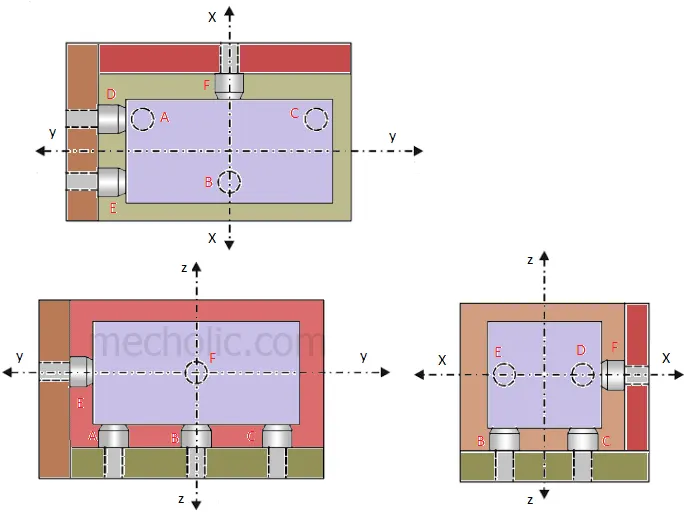
The 3-2-1 principle is a fixture design technique used to ensure proper alignment and stability during machining or assembly processes. It involves:
- Three Points: Provide spatial orientation and prevent rotation about three axes.
- Two Points: Restrict translation in two directions.
- One Point: Acts as a reference for positioning the workpiece accurately.
6. Body Coordinate System:
A body coordinate system is a reference framework used to define the position and orientation of objects or components within a body or assembly. It typically consists of:
- Origin: A fixed point from which coordinates are measured.
- Axes: Three mutually perpendicular lines (X, Y, and Z) defining directions in space.
- Orientation: Described using conventions such as right-hand rule or Euler angles.
7. Body Plane System & Its Essentials:
A body plane system defines planes within a body or assembly to facilitate measurement, analysis, and design. Essentials include:
- Principal Planes: Defined by cutting the body with planes perpendicular to the principal axes.
- Orthogonal Planes: Perpendicular to each other and aligned with the principal axes.
- Intersection Lines: Lines where planes intersect, providing key reference points for analysis and design.