Week 2:- BiW Fixture Basics Challenge
1. What is the process of project execution activity?
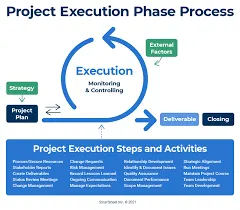
The process of project execution activity refers to the phase in project management where the plans and strategies developed during the planning phase are put into action to achieve the project's goals and deliverables. It involves coordinating resources, tasks, and activities to complete the project within the defined scope, budget, and schedule. Here's an overview of the typical steps involved in project execution:
-
Resource Allocation and Mobilization: Assign the necessary resources (human, financial, equipment, etc.) to the project team. Ensure that team members understand their roles, responsibilities, and reporting structure.
-
Task Implementation: Execute the project tasks according to the project plan. This involves coordinating the work of various team members and stakeholders to complete the planned activities.
-
Time Management: Monitor and manage the project schedule to ensure that tasks are completed on time. Adjustments may be necessary if any delays or changes occur.
-
Scope Management: Ensure that the project stays within the defined scope. Manage scope changes through a formal change control process to prevent scope creep.
-
Quality Assurance: Implement quality control processes to ensure that project deliverables meet the defined quality standards. This may involve regular inspections, testing, and verification.
-
Communication: Maintain effective communication among team members, stakeholders, and project sponsors. Regular status updates, progress reports, and meetings help keep everyone informed and aligned.
-
Risk Management: Continuously monitor and assess potential risks to the project's success. Implement risk mitigation strategies and contingency plans as needed.
-
Issue Resolution: Address any issues or roadblocks that arise during project execution promptly. Collaborate with the team to identify solutions and minimize disruptions.
-
Vendor and Procurement Management: If the project involves external vendors or suppliers, ensure that their work aligns with the project's goals and specifications.
-
Change Management: Manage any changes to the project plan or requirements using a formal change management process. Assess the impact of changes on the project's scope, schedule, and budget.
-
Performance Tracking: Monitor and measure project performance against established metrics and key performance indicators (KPIs). Use these measurements to assess progress and make informed decisions.
-
Documentation: Maintain accurate and up-to-date project documentation, including progress reports, task lists, and any changes made during the execution phase.
-
Stakeholder Engagement: Keep stakeholders informed and engaged throughout the project's execution. Address their concerns and provide updates on project status and milestones.
-
Adaptation and Flexibility: Be prepared to adapt to unexpected changes or challenges that may arise during project execution. Flexibility and proactive problem-solving are essential.
-
Closure Planning: As the project nears completion, start planning for the transition to the closing phase. Prepare for final deliverable hand-off, project closure activities, and post-project evaluations.
Effective project execution requires strong leadership, coordination, and communication skills. It involves a continuous cycle of monitoring, adjusting, and ensuring that the project remains on track to achieve its objectives.
2. What are the types of joining processces?
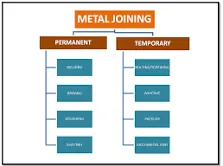
Joining processes refer to various methods used to connect or join two or more pieces of material together. These processes are essential in manufacturing and construction industries to create complex products. There are several types of joining processes, each with its own characteristics, applications, and advantages. Here are some common types of joining processes:
-
Welding:
- Arc Welding (e.g., Shielded Metal Arc Welding - SMAW, Gas Metal Arc Welding - GMAW, Gas Tungsten Arc Welding - GTAW)
- Resistance Welding (e.g., Spot Welding, Seam Welding)
- Laser Welding
- Electron Beam Welding
- Friction Welding
- Ultrasonic Welding
-
Brazing and Soldering:
- Brazing
- Soldering
-
Adhesive Bonding:
- Structural Adhesives
- Cyanoacrylate Adhesives (Super Glue)
- Epoxy Adhesives
- Polyurethane Adhesives
-
Mechanical Fastening:
- Bolting
- Riveting
- Nailing
- Screwing
-
Mechanical Interlocking:
- Snap-Fit Joints
- Press-Fit Joints
- Threaded Joints
-
Thermal Joining:
- Induction Heating
- Hot Plate Welding
-
Solvent Welding:
- Solvent Cementing (common in plastic materials)
-
Explosive Welding:
- Also known as explosive bonding, it uses explosive forces to join two materials.
-
Diffusion Bonding:
- This process involves high temperatures and pressure to create a solid-state bond between materials.
-
Roll Bonding:
- Used to bond sheets of metal together by passing them through a set of rollers.
-
Adhesive Tape Bonding:
- Double-sided adhesive tapes can be used for joining materials temporarily or permanently.
-
Fusion Welding:
- Processes like electron beam and laser welding use heat to melt and fuse materials.
-
Cold Welding:
- Suitable for materials like certain metals and plastics, where pressure is used to create a bond at room temperature.
The choice of joining process depends on factors such as the materials being joined, the required strength of the joint, the intended application, cost considerations, and the desired production efficiency. Different processes have different levels of complexity, energy requirements, and post-joining treatment needs.
3. What is Resistance welding & its application in the automotive sector?
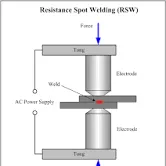
Resistance welding is a joining process that involves the use of electric current and pressure to create a weld between two pieces of metal. This process is particularly well-suited for joining metals with high electrical resistance, such as steel and stainless steel. In resistance welding, heat is generated by the resistance of the materials to the electric current passing through them, causing them to melt and fuse together. The pressure applied during the process ensures a strong and reliable bond between the metal pieces.
There are several types of resistance welding techniques, including:
-
Spot Welding: This is the most common form of resistance welding. It involves joining two or more metal sheets by creating a series of welds (spots) at specific points. Spot welding is widely used for assembling sheet metal components in the automotive industry, such as in the construction of car bodies.
-
Projection Welding: This technique is used to join metal components with raised or embossed features, known as projections or embossments. It's commonly used for welding nuts, bolts, and other fasteners to metal parts.
-
Seam Welding: Seam welding creates a continuous weld along the length of overlapping metal sheets. It is often used for manufacturing fuel tanks, exhaust systems, and other cylindrical or tubular components in the automotive sector.
-
Flash Butt Welding: In this process, the ends of two metal pieces are pressed together and an electric current is passed through them, causing them to heat up and then be joined by applying pressure.
Resistance welding has various applications in the automotive sector due to its advantages:
-
Manufacturing of Car Bodies: Resistance welding is extensively used for joining sheet metal components to create car bodies. It provides strong and reliable bonds between metal sheets, contributing to the structural integrity of the vehicle.
-
Exhaust Systems: Seam welding is commonly employed in the manufacturing of exhaust systems, ensuring airtight and durable connections.
-
Frame and Chassis Assembly: Spot welding is used to join various parts of a vehicle's frame and chassis, ensuring strength and rigidity.
-
Battery Packs: With the rise of electric vehicles, resistance welding is used to assemble battery packs, ensuring secure connections between battery cells and other components.
-
Fastener Attachment: Projection welding is utilized to attach nuts, bolts, and other fasteners to metal parts, aiding in the assembly of various automotive components.
-
Cooling Systems: Resistance welding is applied in the fabrication of components for cooling systems, such as radiators and heat exchangers.
Overall, resistance welding is a crucial process in the automotive industry, playing a significant role in ensuring the structural integrity, durability, and functionality of various vehicle components and systems.
4. What is fusion welding & types of fusion welding with it application in the automotive sector?
Fusion welding is a category of welding processes that involve melting and fusing two or more materials together to form a strong and continuous joint. In fusion welding, heat is applied to the materials to be joined until they reach their melting point, and then they are allowed to solidify and cool, forming a solid bond. This process is commonly used in various industries, including the automotive sector, to join metal components together.
There are several types of fusion welding processes, each with its own characteristics and applications in the automotive sector:
-
Gas Metal Arc Welding (GMAW): Also known as MIG (Metal Inert Gas) welding, GMAW uses a consumable wire electrode and a shielding gas to protect the weld area from atmospheric contamination. It is commonly used in the automotive industry for welding body panels, frames, and structural components.
-
Gas Tungsten Arc Welding (GTAW): Also known as TIG (Tungsten Inert Gas) welding, GTAW uses a non-consumable tungsten electrode and a shielding gas to produce high-quality welds. It is used in the automotive sector for welding thin materials, stainless steel exhaust systems, and precision components.
-
Shielded Metal Arc Welding (SMAW): Commonly referred to as stick welding, SMAW uses a consumable electrode coated in flux to generate heat and produce the weld. While it's not as commonly used in automotive assembly, it can still find applications in repair and maintenance of automotive parts.
-
Flux-Cored Arc Welding (FCAW): FCAW is similar to GMAW, but it uses a tubular wire filled with flux instead of a solid wire and external shielding gas. It is used for heavy-duty welding applications in the automotive sector, such as welding chassis components and heavy structural parts.
-
Submerged Arc Welding (SAW): SAW involves melting the welding electrode and the workpiece under a layer of granular flux, which shields the arc and provides better penetration. It is suitable for welding thicker automotive components, such as axles and suspension parts.
-
Electron Beam Welding (EBW): EBW uses a focused beam of high-energy electrons to melt and join materials together. It is used for precision welding of automotive components that require minimal heat-affected zones, such as fuel injection nozzles and sensors.
-
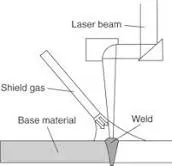
Laser Beam Welding (LBW): LBW employs a highly focused laser beam to melt and join materials. It is used in the automotive industry for welding complex and intricate components, as well as for joining dissimilar materials.
These fusion welding processes play a vital role in the automotive sector, enabling the fabrication and assembly of various components, from body panels and chassis parts to exhaust systems and engine components. The choice of welding process depends on factors such as material type, thickness, joint design, and desired weld quality.
5. What is the 3-2-1 principle?
The 3-2-1 principle is a widely recommended strategy for data backup and disaster recovery. It emphasizes creating multiple copies of important data and storing them in different locations to ensure data resilience and availability, especially in case of data loss, hardware failures, or other unforeseen events. The principle can be summarized as follows:
3: Maintain three copies of your data. This means you have the original data plus two additional copies.
2: Store the copies on two different types of media. For example, you could have one copy on your primary storage device (like a hard drive or server) and another on external media like an external hard drive, tape drive, or cloud storage.
1: Keep one copy offsite. This ensures that even if a physical disaster affects your primary location (such as fire, flood, or theft), you still have access to your data from a different location.
By following the 3-2-1 principle, you create a robust backup strategy that minimizes the risk of data loss and increases the chances of recovering your data in case of unexpected events. This principle is commonly used in various industries, including IT, business continuity planning, and personal data management.
6. Define Body coordinate system?
A body coordinate system, also known as a local coordinate system, is a reference framework used to describe the spatial orientation and position of objects or points within a specific body or object. It is typically defined relative to the intrinsic characteristics of the object itself, allowing for a consistent and convenient way to specify locations and directions within that object.
In a body coordinate system, three orthogonal axes are typically established:
-
X-axis: This axis represents a specific direction within the object. It is usually defined as a line that goes from one side of the object to the opposite side in a chosen direction. The positive direction along the X-axis is indicated as right or left, depending on the convention chosen.
-
Y-axis: This axis is orthogonal to the X-axis and also goes from one side of the object to the opposite side, typically intersecting the X-axis at a right angle. The positive direction along the Y-axis is indicated as up or down.
-
Z-axis: The Z-axis is the final axis and is perpendicular to both the X-axis and Y-axis. It completes the three-dimensional coordinate system. The positive direction along the Z-axis is usually specified as front or back.
Using these three axes, any point within the object can be uniquely located by specifying its coordinates along the X, Y, and Z axes, which describe its position in three-dimensional space relative to the object's intrinsic orientation. The origin of the body coordinate system is usually placed at a specific reference point within the object, and the measurements along the axes are often expressed in units relevant to the object's scale or context.
Body coordinate systems are commonly used in various fields such as engineering, computer graphics, biomechanics, and robotics to describe the orientation and movement of objects, joints, or body parts relative to their own local frames of reference.
7. Elaborate Body Plane system & its essentials.
It seems like you might be referring to anatomical planes and directional terms used in the study of human anatomy. Anatomical planes are imaginary flat surfaces that are used as reference points to describe the three-dimensional structure of the human body. These planes are crucial for understanding the relative positions of organs, structures, and movements within the body. Let's delve into the essentials of the anatomical plane system:
1. Sagittal Plane: The sagittal plane divides the body into left and right halves. If the plane passes through the midline of the body, it is called the median or midsagittal plane. If it divides the body into unequal left and right portions, it is referred to as a parasagittal plane.
2. Frontal (Coronal) Plane: The frontal plane divides the body into front (anterior) and back (posterior) portions. Movements in this plane include abduction (moving away from the midline) and adduction (moving toward the midline).
3. Transverse (Horizontal) Plane: The transverse plane divides the body into upper (superior) and lower (inferior) sections. This plane is perpendicular to the sagittal and frontal planes and is commonly used for imagining cross-sectional views of structures.
Directional Terms: In addition to the planes, anatomists use specific directional terms to describe the relationships between body structures and their positions:
- Superior (Cranial): Toward the head or upper part of the body.
- Inferior (Caudal): Away from the head, toward the lower part of the body.
- Anterior (Ventral): Toward the front of the body.
- Posterior (Dorsal): Toward the back of the body.
- Medial: Toward the midline of the body.
- Lateral: Away from the midline of the body.
- Proximal: Closer to the point of attachment or the trunk of the body.
- Distal: Farther away from the point of attachment or the trunk of the body.
- Superficial: Near the surface of the body.
- Deep: Further away from the surface of the body.
Importance: Understanding anatomical planes and directional terms is essential for several reasons:
-
Communication: Medical professionals, researchers, and anatomists use standardized terminology to accurately communicate about anatomical structures and their relationships.
-
Diagnosis: Accurate descriptions of anatomical locations are crucial for diagnosing and treating medical conditions and performing surgeries.
-
Research: Anatomical knowledge is fundamental to medical research, allowing scientists to study the structure and function of organs and tissues.
-
Education: Medical students and healthcare practitioners need a strong understanding of anatomical planes and terms to effectively learn and practice medicine.
Overall, the anatomical plane system and directional terms provide a consistent framework for describing and understanding the complex structure of the human body.