Week 2:- BiW Fixture Basics Challenge
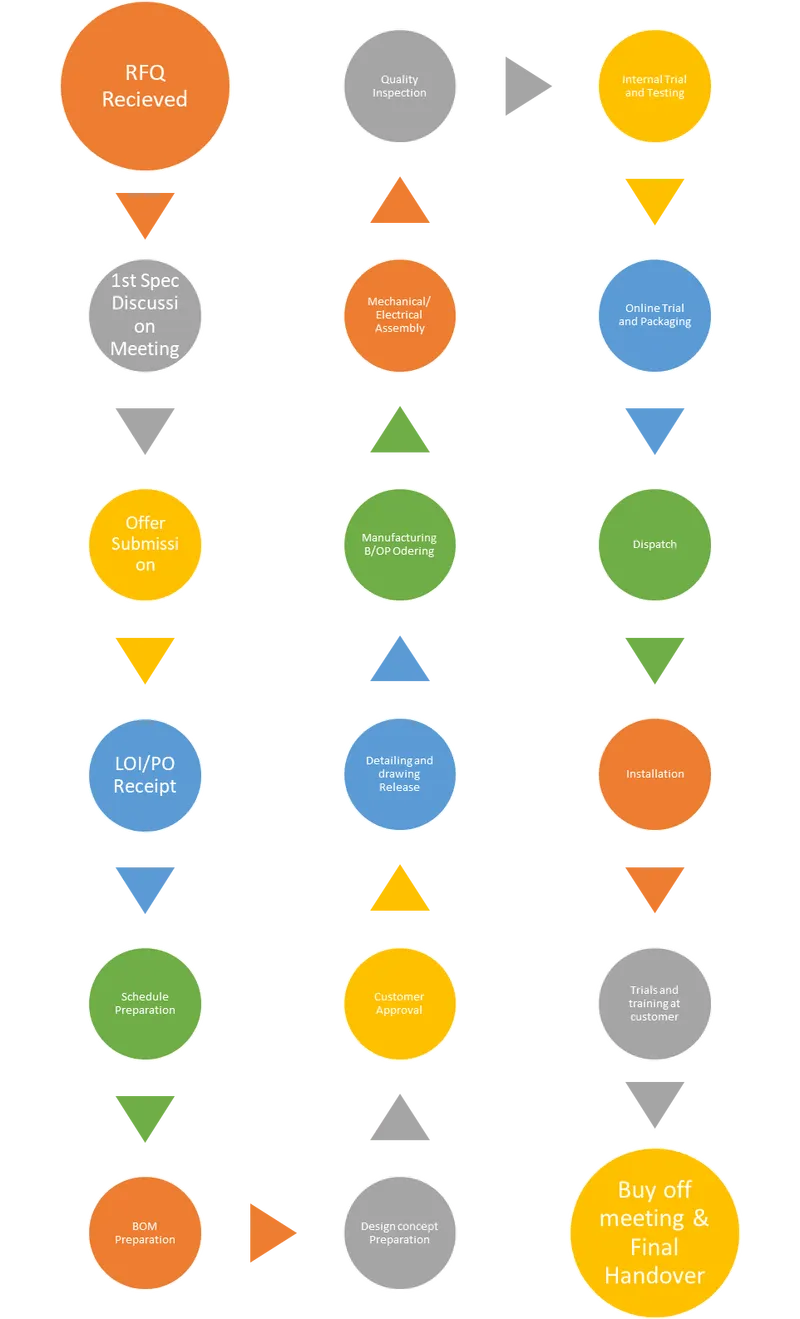
1. Process of Project Execution Activity:
2. Different types of Joining processes are as follows:
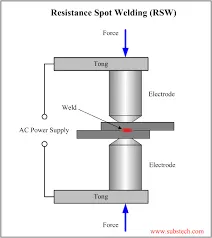
(a)Resistance Welding: Resistance welding is the joining of metals by applying pressure and passing current for a length of time through the metal area which is to be joined.
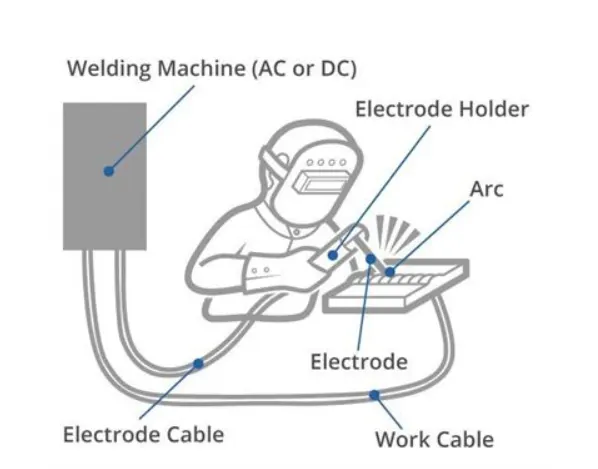
(b)Arc Welding: Arc welding is a type of welding process using an electric arc to create heat to melt and join metals. A power supply creates an electric arc between a consumable or non-consumable electrode and the base material using either direct (DC) or alternating (AC) currents.
(c)Mechanical fastening: Mechanical fastening is the most common method of joining many materials within industry. Originally used for metal joining, it is also well established for joining plastics to themselves and to other materials. 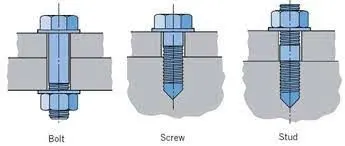
(d)Hemming and Seaming: Hemming is the process in which the edge is rolled flush to itself, whereas a seam joins the edges of two materials.
(e)Adhesive Bonding: Adhesive Bonding is the process of joining two surfaces together, usually with the creation of a smooth bond. This may involve the use of glue, epoxy, or one of a wide range of plastic agents which bond either through the evaporation of a solvent or through curing via heat, time, or pressure.
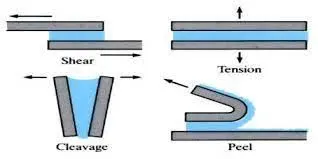
3. Resistance Welding: Resistance welding involves joining two metals by applying pressure and passing an electric current through them. The process is conducted for a specified period to heat the metals’ interface to the melting point. During the heating process, a clamping force is applied to hold the metals in place until the nugget solidifies. One of this method’s key advantages is that no filler material is needed to create the bond.
Types of Resistance welding are:
- Resistance Spot Welding:
Spot welding process is used primarily for welding two or more metal sheets together by applying pressure and heat from an electric current to the weld area.It works by contacting copper alloy electrodes to the sheet surfaces, whereby pressure and electric current are applied and heat is generated by the passage of current through resistive materials such as low carbon steels.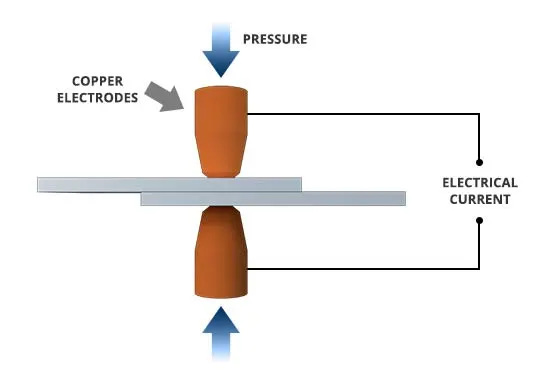
- Resistance Seam Welding:
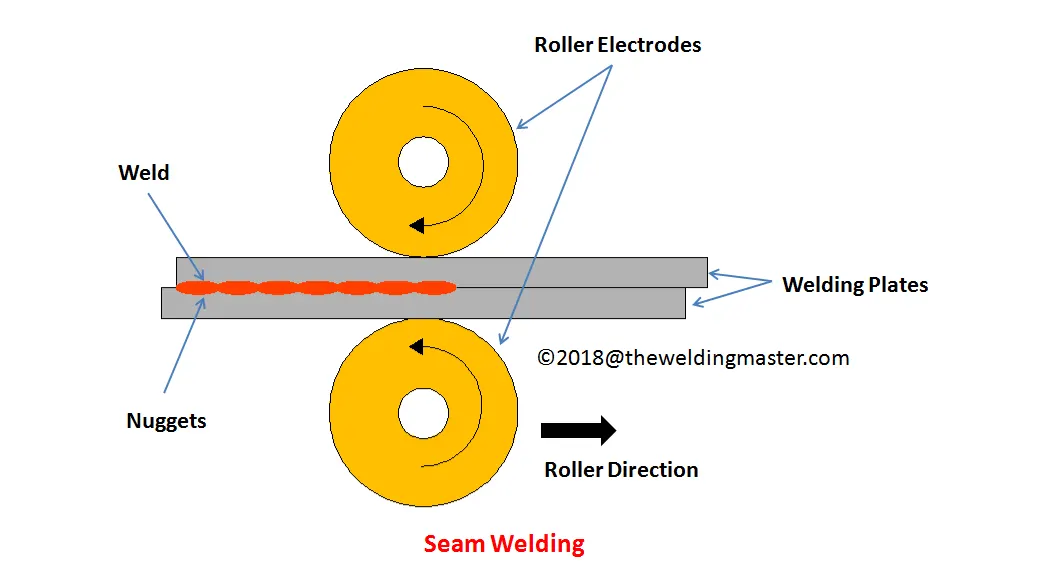 Resistance Seam Welding is a variation of resistance spot welding with the main difference being that the welding electrodes are motor driven wheels rather than stationary rods. Ideal for sheet metal fabrication, this welding method passes an electric current through the sheets of metals to be joined while they are held together by a mechanical force in a lap configuration between shaped copper electrodes. As with other types of resistance welding, fusion is produced where the sheet surfaces come into contact due to this being the point of highest electrical resistance and thereby the place where heat generation is at its greatest.
 - Resistance Projection Welding:
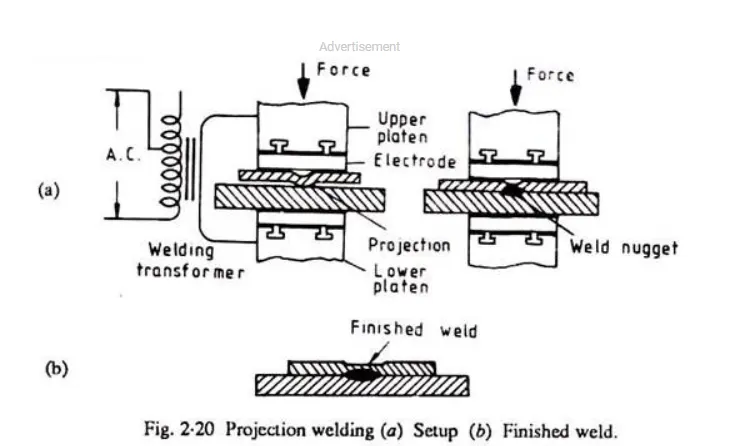 Projection is a type of resistance welding. It is named so because different projections are formed on the workpiece for effective welding.
In this welding process, the design or shape of the part is used to make discreet individual contact to concentrate the current during the welding process.
#Applications of Seam Welding:
It is used extensively in the automobile industry. From cars’ bodies to different car parts, spot welding plays an important role in car manufacturing. On assembly lines, automatic machines or robots are preferred over manual welds due to safety purposes.
#Applications of Seam Welding:
Due to the ability to make gas or liquid-tight joins, this process is well suited for creating items such as steel fuel tanks for vehicles, as well as tin cans, radiators or steel drums. Resistance seam welds can also be found on many types of barrel and exhaust systems.
Widely used for joining aircraft tanks, refrigerators and oil transformers, this process can be used for welding stainless steel, nickel alloys, and magnesium alloys.
#Applications of Projection Welding:
Projection Welding is most commonly used when special nuts, small fasteners, special bolts, studs and similar parts are used as projection on the portion of the part to be welded.
Projection Welding is also used for welding parts of refrigerator, condensers, refrigerator racks, grills, etc
Apart from that, projection welding is used in automobile workshops, ship building works and sheet metalworking.
4. Fusion Welding: Fusion welding is a process that uses heat to join or fuse two or more materials by heating them to melting point. The process may or may not require the use a filler material. External application of pressure is not required for fusion welding processes, except for resistance welding, where substantial contact pressure is required during welding for sound joining.
(a) Arc Welding Processes :
- Shielded Metal Arc Welding (SMAW), also known as manual metal arc welding (MMA or MMAW), flux shielded arc welding or stick welding. Suitable for welding ferrous and non-ferrous materials in all positions.
- Metal Inert Gas Welding (MIG) and Metal Active Gas Welding (MAG), also known as Gas Metal Arc Welding (GMAW). MIG and MAG welding are the most common arc welding processes, in which an electric arc forms between a consumable wire electrode and the workpiece leading them to melt and join. Both use a shielding gas to protect the weld from airborne contaminants, or oxidation in the case of MIG welding.
- Tungsten Inert Gas Welding (TIG), also known as Gas Tungsten Arc Welding (GTAW). This arc process uses a non-consumable tungsten electrode to create the arc between the electrode and the base plate. An inert shielding gas is used to protect from oxidation or other atmospheric contamination. This process can be used autogenously on thin parts, but will require the addition of a wire, rod, or consumable to be added for thicker parts.
- Plasma Arc Welding (PAW). This process uses an electric arc created between an electrode and the torch nozzle. The electric arc ionises the gas (usually argon) in the chamber creating what is called a 'plasma.' It is then forced through a fine bore copper nozzle that constricts the arc and directs it to the workpiece, allowing the plasma arc to be separated from the shielding gas (which is usually made from a mixture of argon and hydrogen).
- Submerged Arc Welding (SAW). This frequently-used arc welding process uses a continuously-fed consumable electrode and a blanket of fusible flux which becomes conductive when molten and provides a current path between the workpiece and the electrode. The flux also prevents spatter and sparks while suppressing ultraviolet radiation and fumes.
- Flux Cored Arc Welding (FCAW). Developed as an alternative to SMAW, this process uses a continuously fed consumable electrode with a flux and a constant voltage or constant current power supply. Sometimes using a shielding gas this process can also just use the flux to provide protection from the atmosphere.
(b) Gas Welding Processes :
- Oxy-Fuel Welding, also known as Oxyacetylene Welding but commonly called gas welding, this process uses a hand-held torch or blow pipe and a mixture of oxygen and acetylene which combusts to create a flame.
(c) Resistance Welding Processes
- Resistance Spot Welding. This fast welding process delivers heat between two electrodes according to the material properties and thickness of the workpieces. The welding current is concentrated to a small spot as the workpieces are simultaneously clamped together.
- Resistance Seam Welding. This variant of spot welding produces a series of overlapping nuggets of a continuous joint by replacing conventional spot welding electrodes with wheels which rotate as the workpieces are fed between them.
(d) High Energy Welding Processes :
- Electron Beam Welding (EBW). This fusion process is performed under vacuum conditions, using a beam of high velocity electrons to melt the workpieces as the electrons generate heat upon penetration into the material. Welds are often deep and narrow.
- Laser Beam Welding (LBW). Often used in high volume applications, LBW uses a laser beam to provide a concentrated heat source with high levels of accuracy which can be used to join metal and polymers.
#Applications of Fusion welding:
Fusion welding has been a key factor of in the creation of modern civilization due to its key role in construction practices. Besides bolts and rivets, there are no other practical method for joining pieces of metal securely.The Fusion welding is used in the manufacture of many everyday items including airplanes, cars, and structures. A large community uses both arc and flame contact welding to create artwork.
5. The 3-2-1 Principle of Fixture design
The 3-2-1 principle states, ''the six locators are sufficient to restrict the required degree of freedom of any workpiece. In this, motion is restricted using clamps and locators. A three-pin base can restrict five motions and six pins restrict nine motions''.
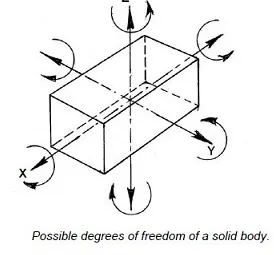
- Consider XY plane as our 1st datum plane, Rotation along x-axis and y-axis is restricted i.e. 2 rotations and translation along z direction i.e. 1 Traslation, which adds up to 3 restricted motions.
- Now consider YZ plane as our 2nd datum plane, Rotation along the z-axis and translation along x axis gets restricted, which adds upto 2 restricted motions.
- Finally, XZ plane is considered as the 3rd datum plane, Translation along y-axis is restricted i.e. 1 restricted motion.
- Hence, 6 Locators have completely restricted the degrees of freedom of workpiece.
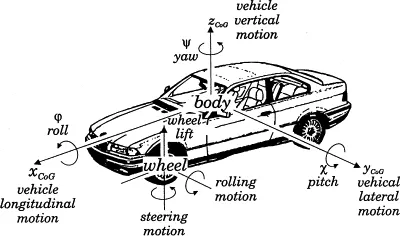
6. Body Coordinate System: It is a reference sytem consisting of set of points, lines, and surfaces used to define the position of a particular point in space in eiter 2D or 3D. BCS is also commonly called as car line.
7.Body Planes: These are the Reference planes which are mutually perpendicular to each other in automotives.They are used to define the GD&T of all car parts.
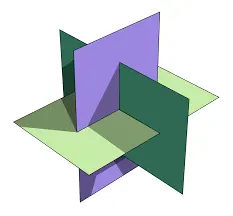
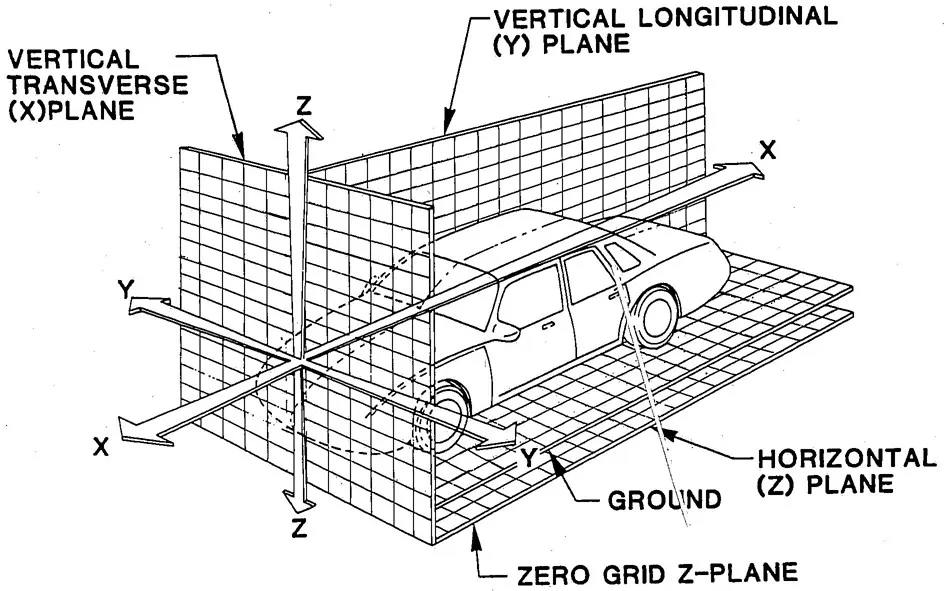
Body Line Dimensions are essential for the following reasons:
- It ensures Assembly's Flawless Design.
- It assists in easy location of different parts in vehicle.
- It aims in creating a standardized system.
- It assists in QC.
- While designing lines, all the designsare carried out relative to the body line.