Week 2 Bevel Gear Challenge
Objective:-
To perform grid dependency test on bevel gear with base mesh size of 6,5 and 4mm.
Theory:-
Grid independent is a very important issue in numeriacal simulation. Grid-independent means calculational results change so little along with a denser or looser grid that the fruncation error can be ignored in numerical simulation.
Basically a mesh convergence test should mean computing the solution on successively finer grids. The difference between two refinements is usually taken as a measure of the accurancy of the coarser of the two. Usually a calculation should approach the correct answer as the mesh becomes finer, hence the term grid convergence.
It is also known as mesh convergence test.
Geometry:-
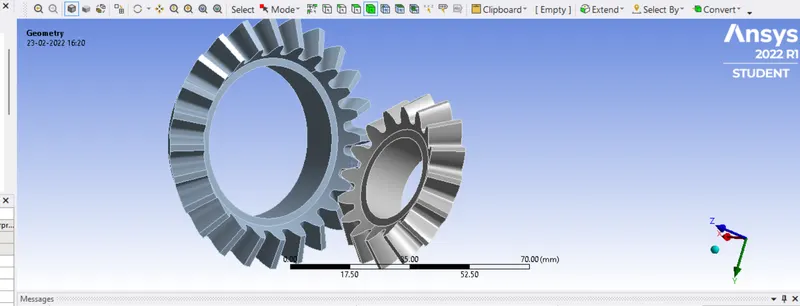
Pre meshed geometry was used which was provided with the problem statement.
Material:-
Pre processing:-
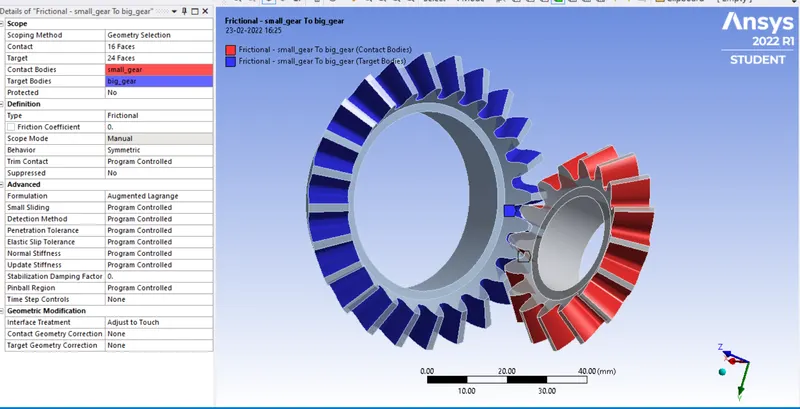
Type:Frictional
Formulation: Augmented lagarange
Interface treatment: Adjust to touch
Joints:-
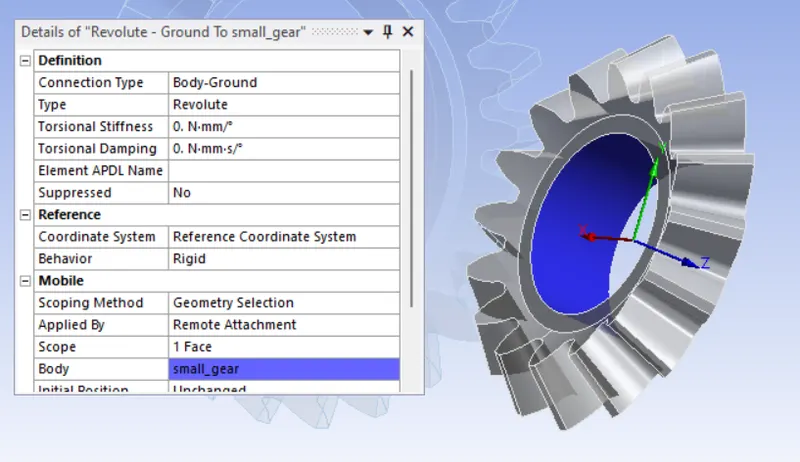
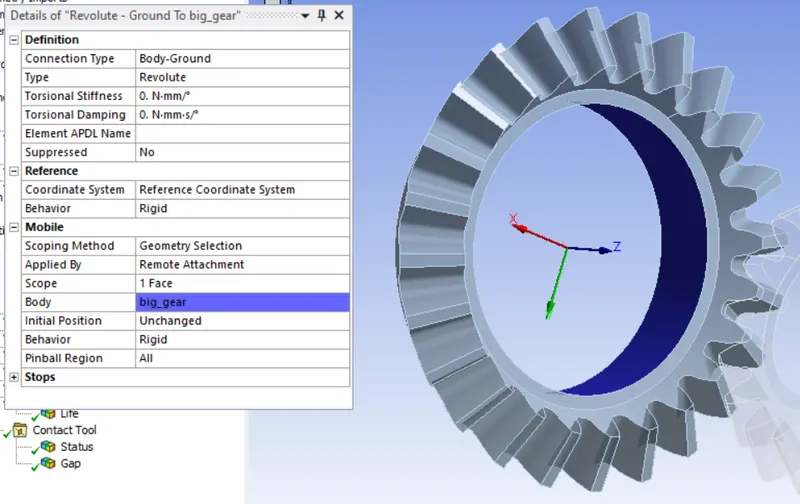
Revolute:
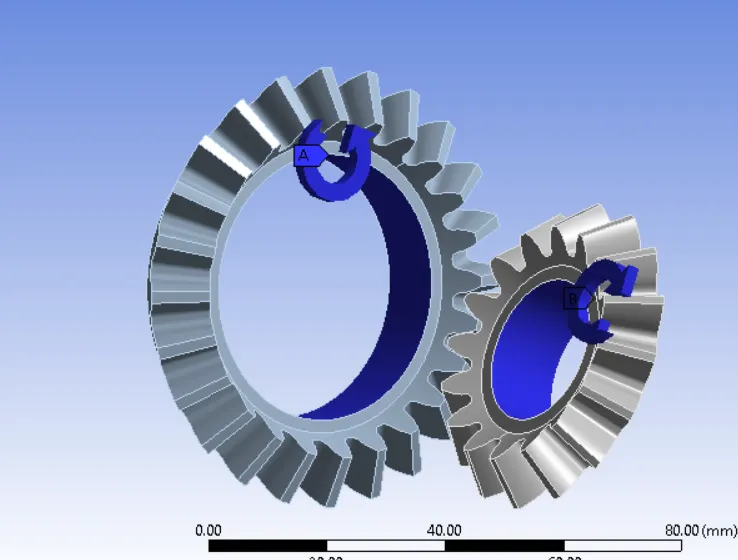
Small gear:-
Big gear:-
Meshing:-
case 1:- Base mesh 6mm and face meshing as 1.75mm
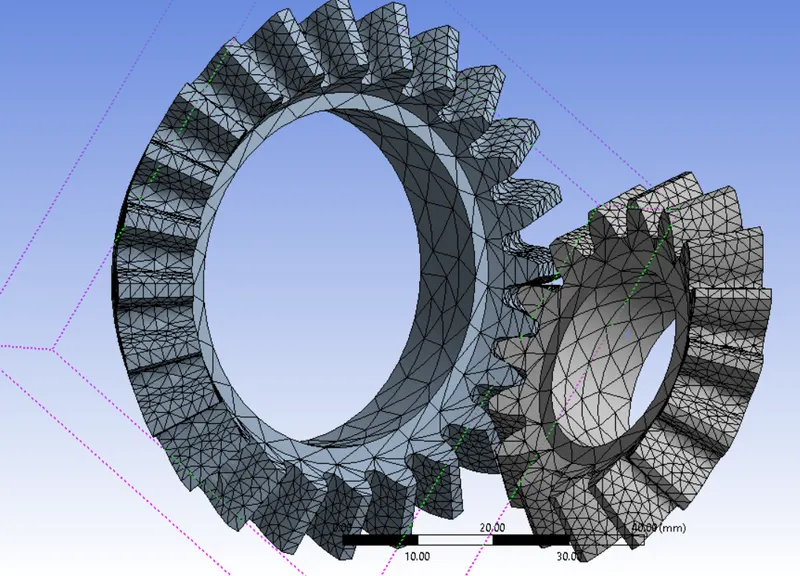
Element size: 6mm
Face sizing: 1.75
No of elements: 14127
No of nodes: 25738
Case 2: Base mesh 5mm and face meshing as 1.75mm
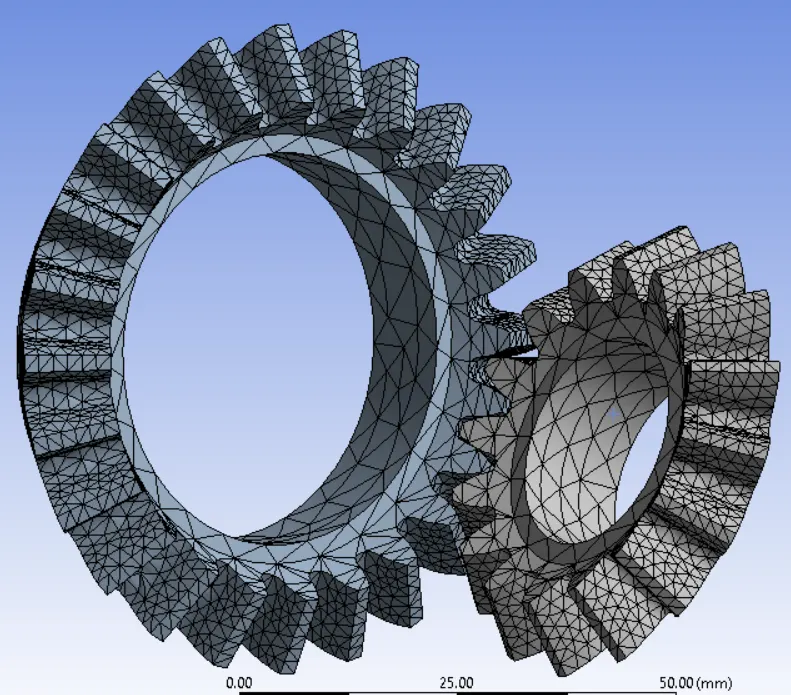
Element size:5mm
Face sizing: 1.75mm
No of elements: 14168
No of nodes: 25821
Case 3: Base mesh 4mm and face meshing as 1.75mm
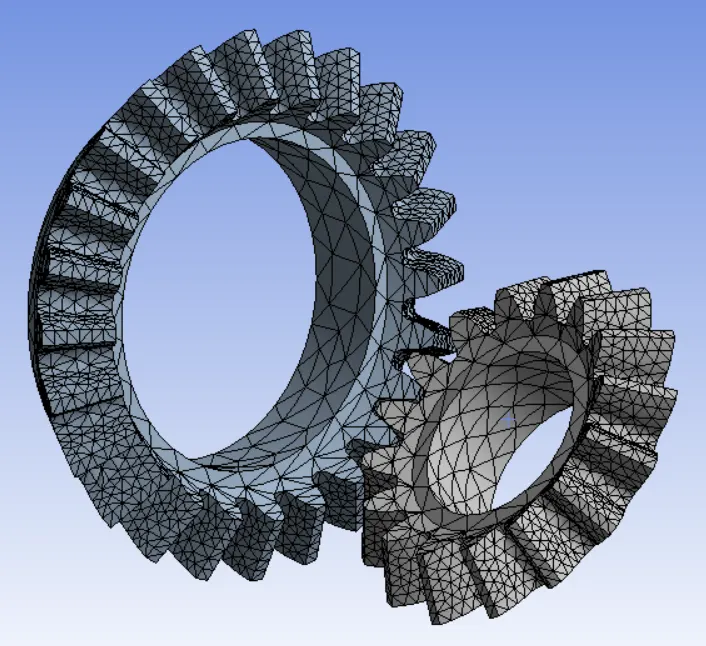
Element size:4mm
Face sizing : 1.75mm
No of elements: 14684
No of nodes: 26736
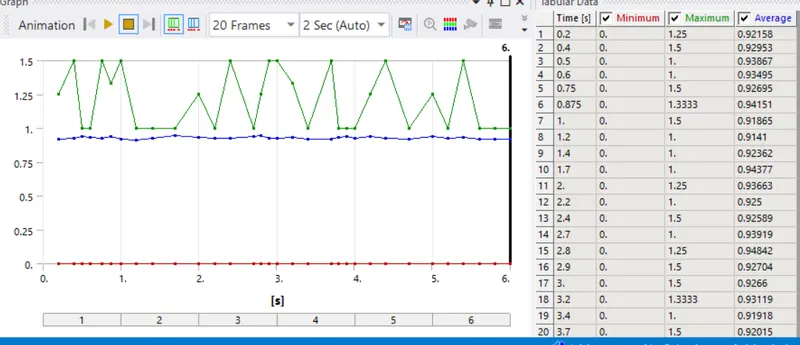
Convergence & Time Increment Plot:
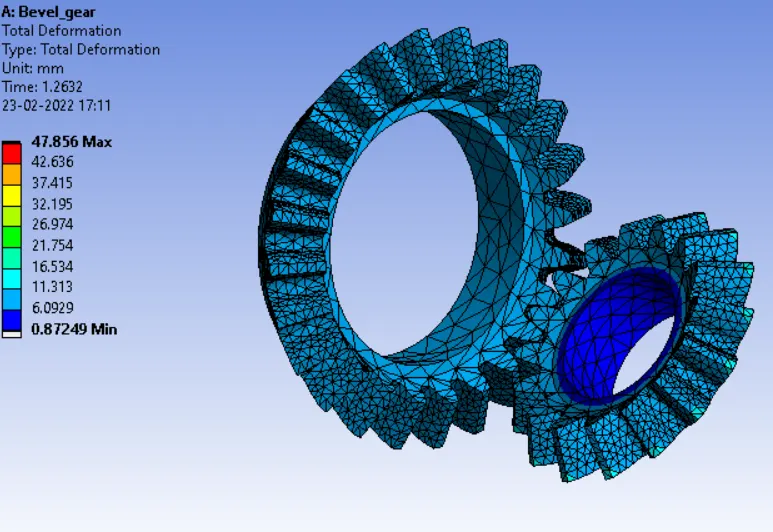
Total Deformation:-
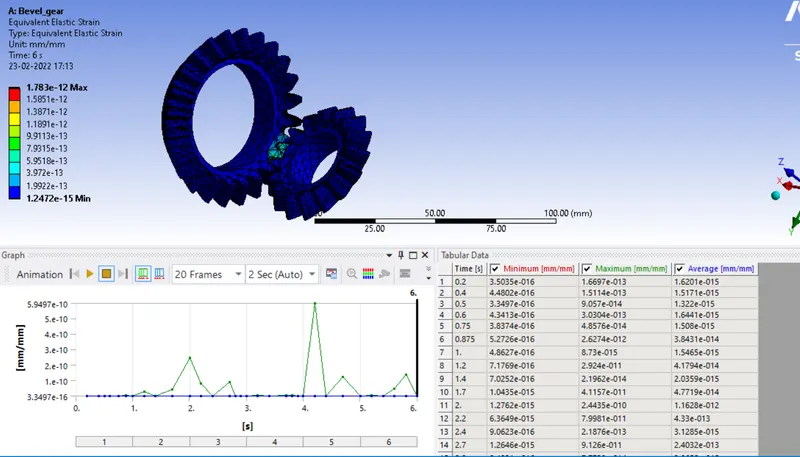
Equivalent strain:-
Equivalent stress:-
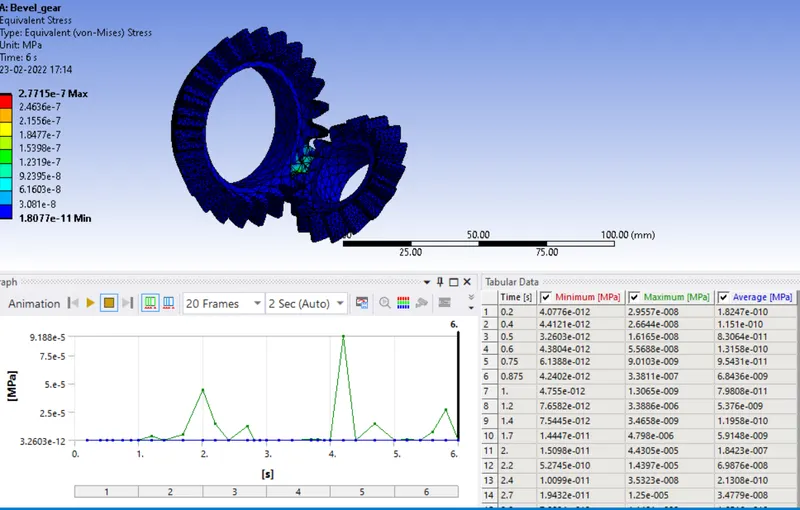
Simulation Model:-
https://drive.google.com/file/d/1hje_Yc-sVfJhAUrCcP1KajmDwodOqQHO/view?usp=sharing
Conclusion:-
- From the above results from each case, we can see the percentage difference in stress is less in fine mesh.
-When it comes to difference in strain ,it is negligible.
- Total deformation is same in all the cases
- Because of there is negligible amount of difference in strain, we can go with 5mm mesh because of computational time is more in finer mesh(4mm).