Week 2 : Basic Calibration of Single cylinder SI-Engine
AIM :
- To run the single cylinder SI Engine setup at 1800 rpm and list down parmeters such as air flow rate, BSFC, BMEP, In cylinder pressure.
- To run the same setup at 3600 rpm and to increase the output by 10%.
Theory:
An internal combustion engine (ICE) is a heat engine in which the combustion of a fuel occurs with an oxidizer (usually air) in a combustion engine, the expansion of high-temperature and high-pressure gases produced by combustion applies direct force to some component of the engine. The force is applied typically to pistons, turbine blades, a rotor, or a nozzle. The force
moves the component over a distance, transforming chemical energy into useful work.
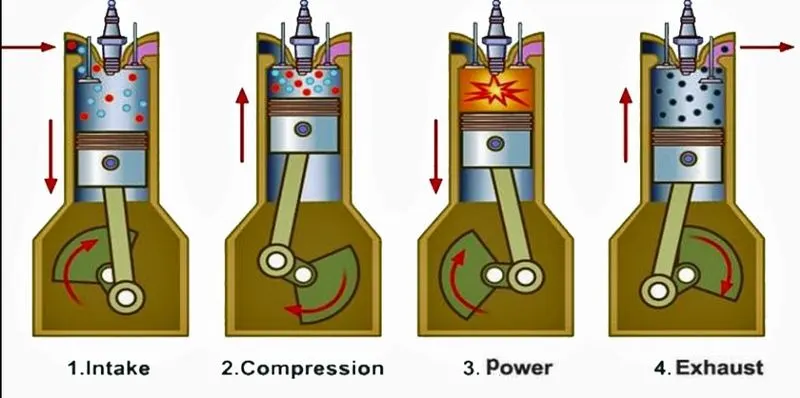
Intake stroke:
- Piston moves down the cylinder bore from top dead center (TDC) to bottom dead center(BDC)
- Intake valve is open, the exhaust valve is closed
- Downward piston motion creates a vaccum (nagative air pressure) that drawn that air/fuel mixture into the engine via the open intake valve
Compression stroke:
- Piston moves up the cylinder bore from bottom dead center to top dead center
- Both the intake and exhaust valves are closed
- Upward piston motion compression air/fuel mixture in the combustion chamber
Power stroke:
- At the end of the compression(previous) stroke, the spark plug fires and the ignites the compressed air/fuel mixture. The ignition/explosion forces the piston back down the cylinder bore and rotates the crankshaft, propelling the vehicle forward
- Piston moves down the cylinder bore from top dead center to bottom dead center
- Both the intake and exhaust valves are closed
Exhaust stroke:
- Piston moves up the cylinder bore from bottom dead center to top dead center. The momentum caused by the power stroke is what continue the crankshaft movement and the other 3 strokes consecutively
- Intake valve is closed, the exhaust valve is open
- This final stroke forces the exhaust out of the cylinder. The cycle is now complete and the piston is ready to begin the intake stroke
Air flow rate:
It is the amount of air that is entering the engine and it is important because it decided how the fuel combustion takes place. A low air flow produces incomplete leading to CO emissions whereas a higher air flow leads to NOx emission. Therefore, an air flow close to stoichiometry is desired.
Brake mean effective pressure:
It is the ratio of of gross work-done per cycle to the volume displaced per cycle. It provides a valuable measure of the engine performance which is independent of the engine displacement.
Brake specific fuel consumption:
It is the amount of fuel consumed per unit power produced in a cycle. Low value of BFSC are desired.
In-Cylinder pressure:
It is the maximum pressure that is developed inside the engine during a single cycle. It provides a measure of the work that can be extracted from the engine.
Model setup:
The model is imported from tutorials > modeling applications > engine_performance > 1cylSi-final.gtm
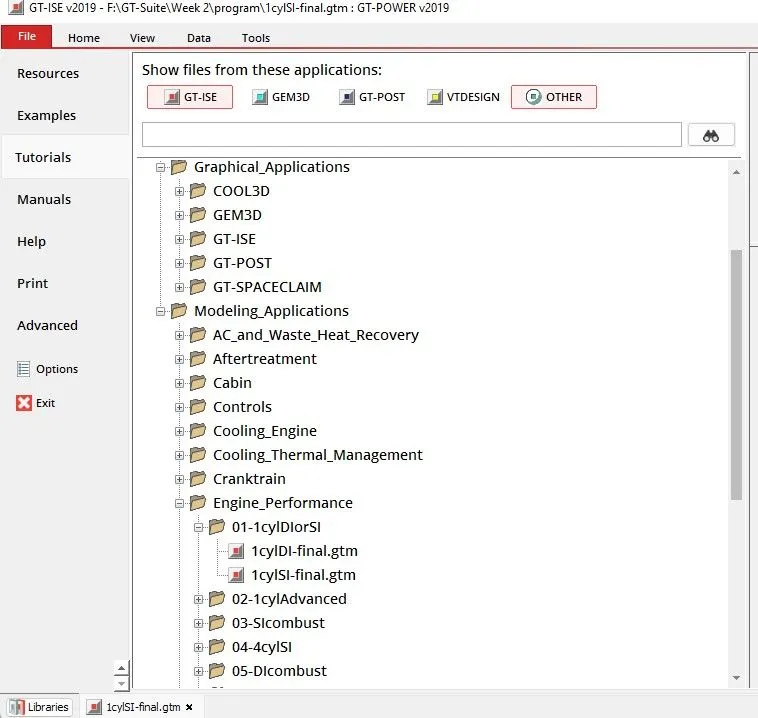
Then model is setup from scratch by following the in-built tutorial on single cylinder SI engine. The following figure shown the final structure of the model.
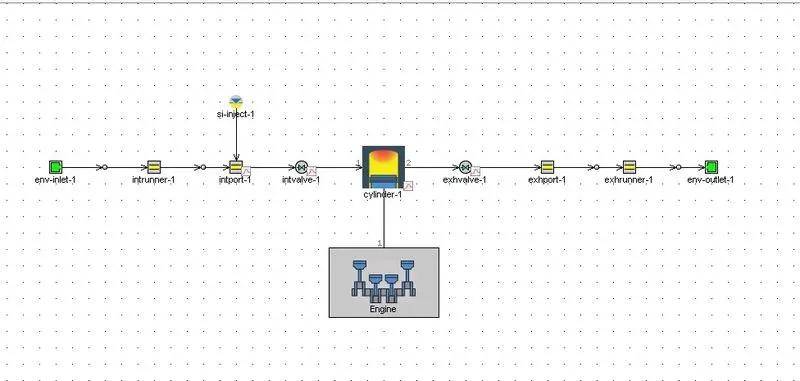
This model uses the Woschni GT model for heat-transfer. This model closely emulates the
Case 1:
Simulation of the single cylinder engine at the 1800 rpm:
The intake runner sucks the air from the ambient environment, further the air flows through the intake port, where the fuel is injected through the fuel injector and then combine. During Suction stroke both air and fuel mixture enter into the engine cylinder from the intake valve. After the completing of combustion process of power stroke the burnt gases are removed from the exhaust valve which are move out through the exhaust runner to the environment via exhaust port.
- Click on Case Setup button and change the engine speed should be changed to 1800 rpm and put the remaining values default.
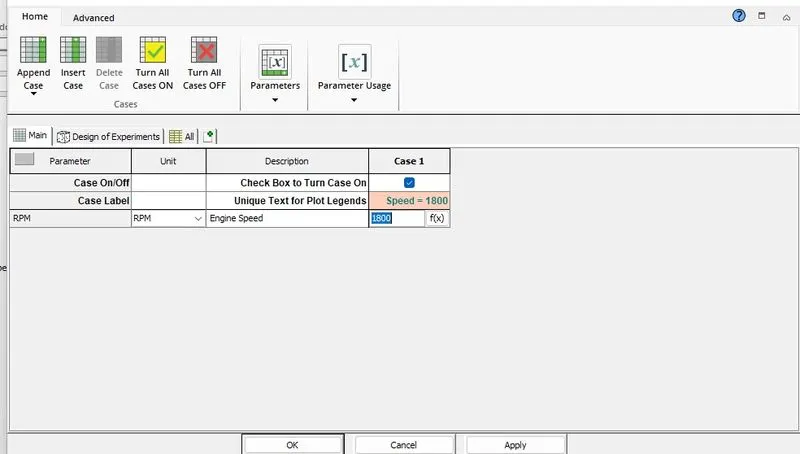
- Run the case and evaluate the results.( Click on the Run button right above the diagram and click on FINISH button and GT-post App will be pop up)
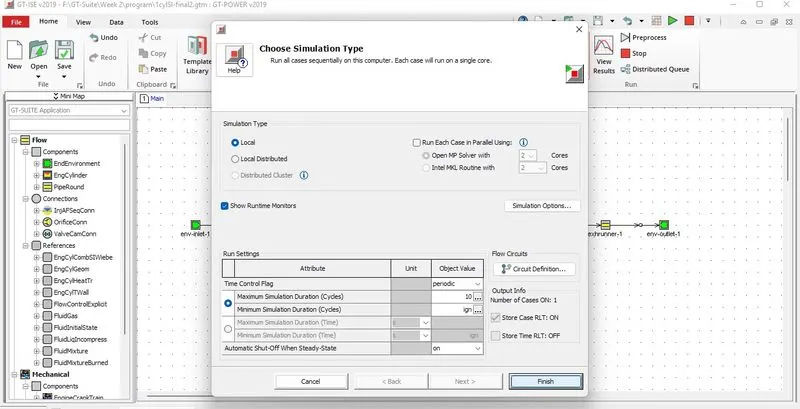
- Here in the GT-Post we can see the results is Converged and all details are given below.
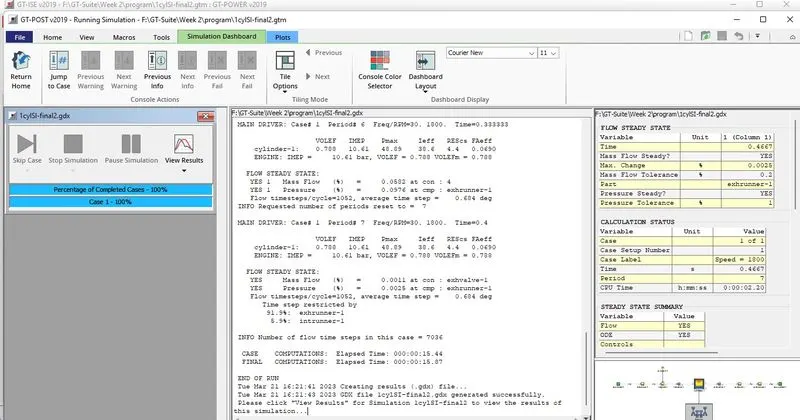
Click on the VIEW RESULTS and
Results -
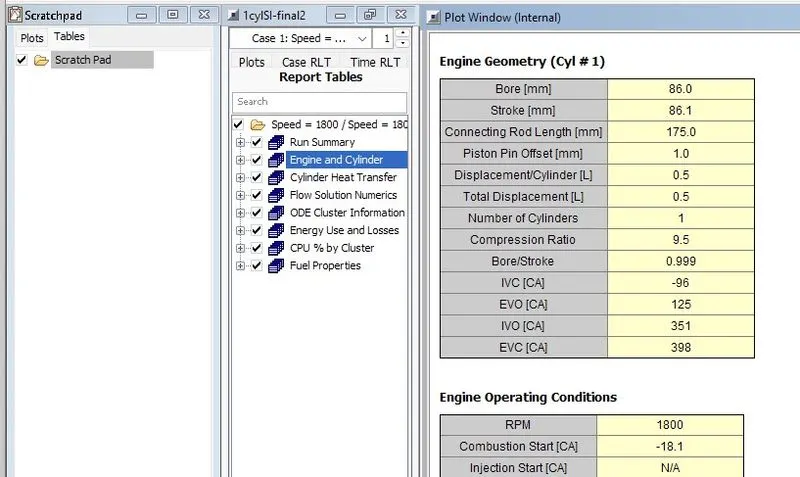
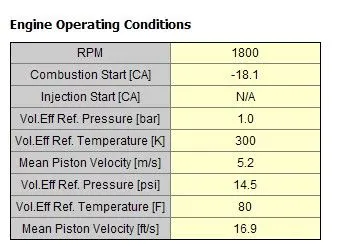
CASE 2:
To Calibrate the Single cylinder SI Engine with Speed of 3600 RPM:
- The Engine Speed should be changed to 3600 RPM and put the remaining value default.
Run the case and evaluate the results.
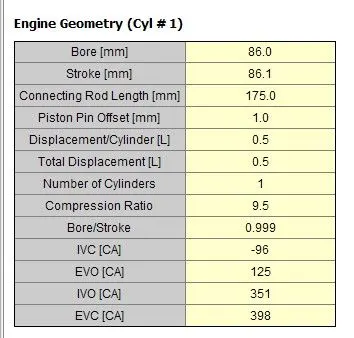
Power Output of Engine at 3600 RPM:
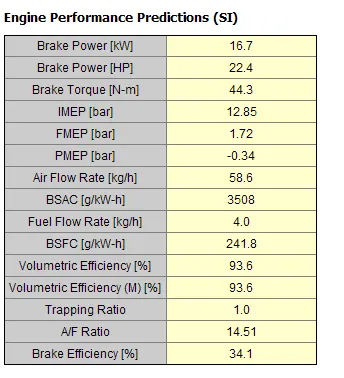
The Brake power of the Engine with Speed of 3600 RPM is 16.7 KW.
CASE 3:
Increase the Power output can be achieved by following the below factors:
Increasing the compression ratio.
Increasing the breathing capacity of engine (Supercharging/ Turbocharging)
Increase the bore of engine.
Increasing intake port size.
Adding More fuel.
To Calibrate the Single Cylinder SI Engine with Speed of 3600 RPM and increase th Power Output by 10%:
- The Engine Speed should be changed to 3600 RPM and put the remaining value must be changed in order to increase the power output.
- Increased the bore diameter and Stroke Length and Connecting Rod Length and Compression Ratio in order to increase the power output of the engine.
- Double tap on the Engine which is given in the CHART and given pop-up window could be shown
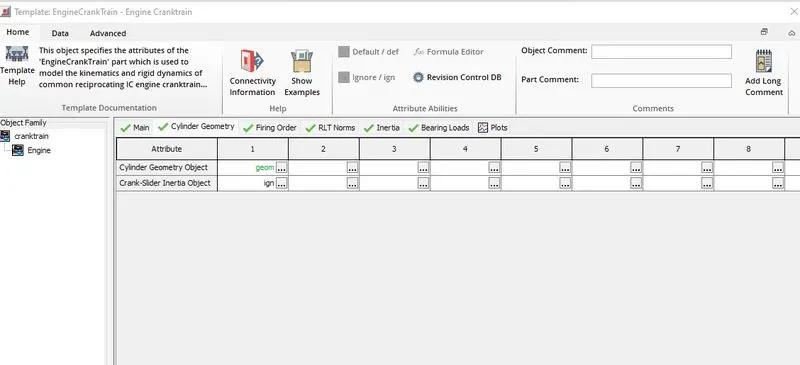
- Double tap on the 'geom' and new pop up window was pop up and i provided the appropriate values such as in the object value column type [Bore] and [Stroke] we are looking for to change the values of bore and stroke.
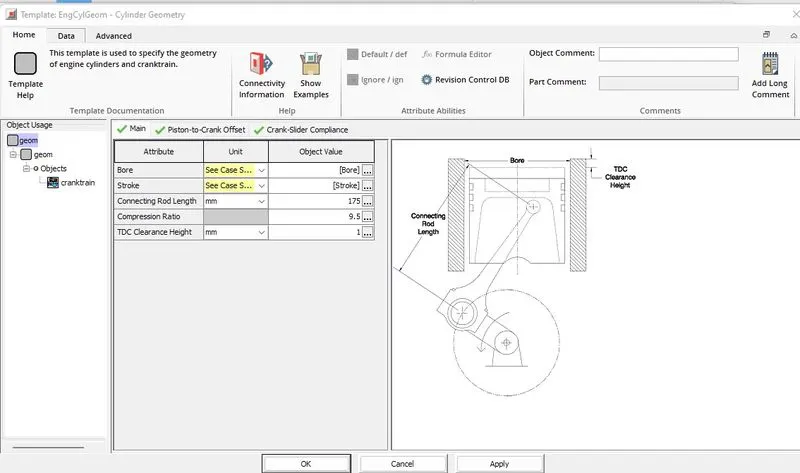
- Now, Click on case setup and Provide the bore values 86,66,90,90.1 and Stroke value is 86.1 in oder to achieve the power output by 10%
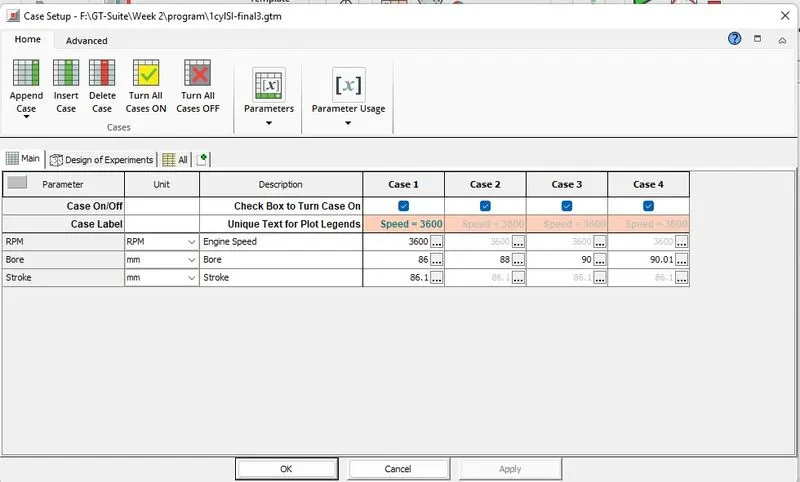
- Run the case and evaluate the results and below ouput were come into the frame.
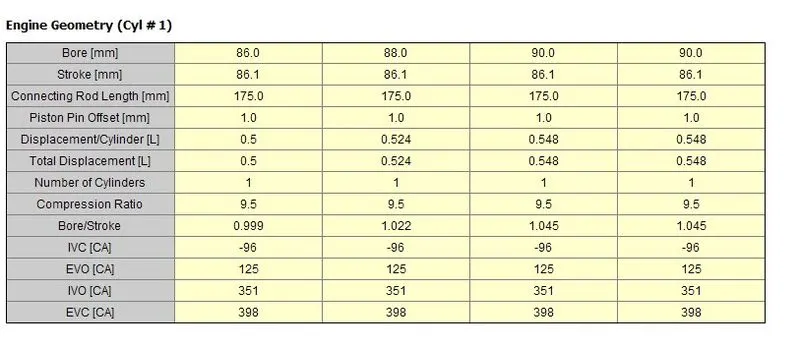
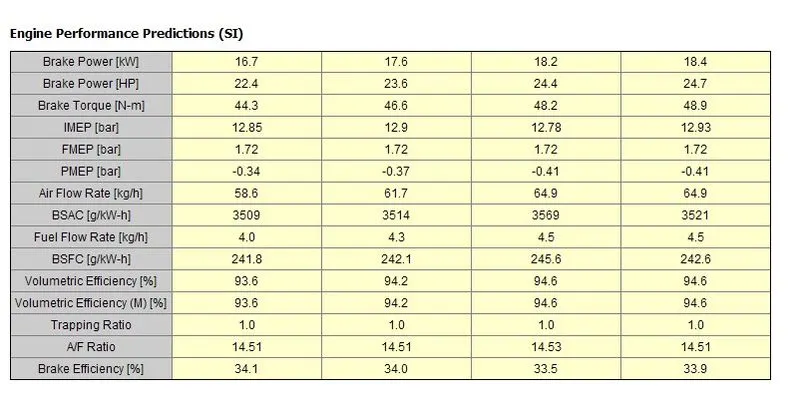
16.7 * 10% = 1.67
=> 16.7 + 1.67 = 18.37
So we get Nearly about 18.4
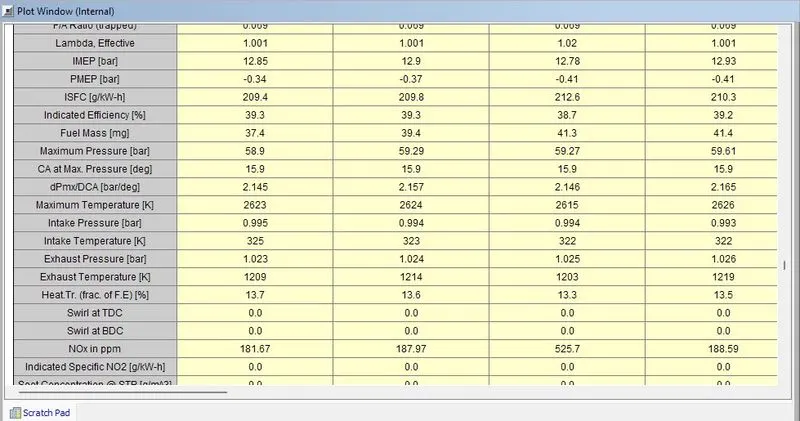
Conclusion:-
- Successfully run the simulation with 1800 RPM and find out all the parameters liek Airflow, BMEP, BSFC, In-Cylinder Pressure.
- Execute the power of the single cylinder engine with 3600 RPM and find out the Brake Power.
- Thus the power of the single cylinder engine can be increased by 10% by changing the Bore, Stroke, Connecting Rod Length and Compression Ratio. Thus it also reduces th NOx emissions and the inside cylinder pressure changes but they are within limits.