Week 2 : Basic Calibration of Single cylinder SI-Engine
Aim:
1. To Simulate a Single Cylinder SI Engine at 1800 Rpm and to capture the important parameters such as,
- Air Flow Rate
- BMEP
- BSFC
- In-cylinder Pressure
2. Vary the RPM to 3600 and to observe the changes in the above mentioned parameters.
3. Increse the Power at 3600 RPM by 10%.
Intoduction:
It is an internal combustion engine in which the ignition of the air-fuel mixture takes place by the spark. The spark is generated with the help of spark-plug. Since in this engine, the spark is responsible for the ignition of the fuel, it is named as spark ignition engine (SI engine). This engine uses petrol as a fuel for its working. It works on the principle of otto cycle. The fuel in this engine is injected through carburetor or fuel injector during suction stroke. The compression ratio of this engine is usually 6 to 10. It has light weight engine and used in light duty vehicles like motorcycle, cars etc.
Working:
1. Suction Stroke: Air-fuel mixture enters into the cylinder.
2. Compression Stroke: Compression of Air Fuel mixture takes place.
3. Power Stroke: Combustion of Fuel and Power Generation.
4. Exhaust Stroke: Escaping of burnt gases out of the Engine.
Important Parameters of SI Engine:
Air Flow Rate:
It is the amount of air that is entering the engine. When an engine can ingest more air, more fuel can be put into it, which inturn can produce more power.
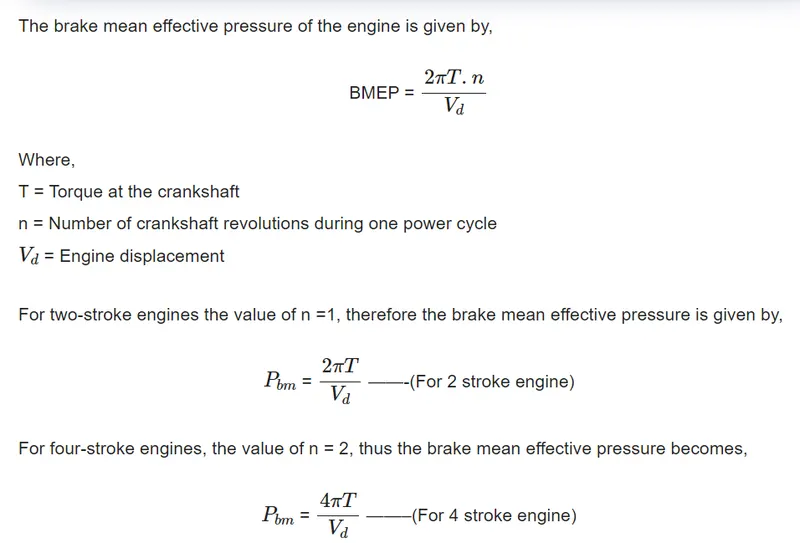
Brake Mean Effective Pressure:
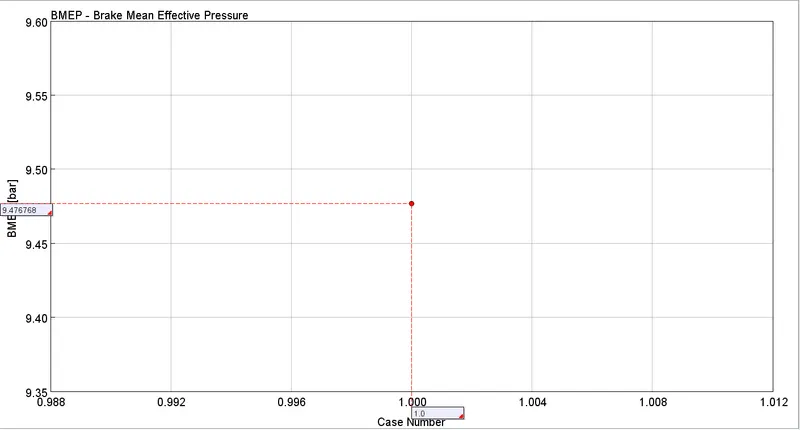
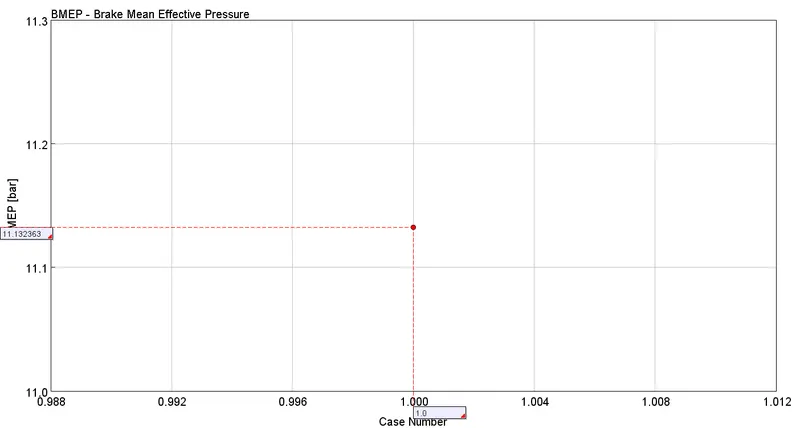
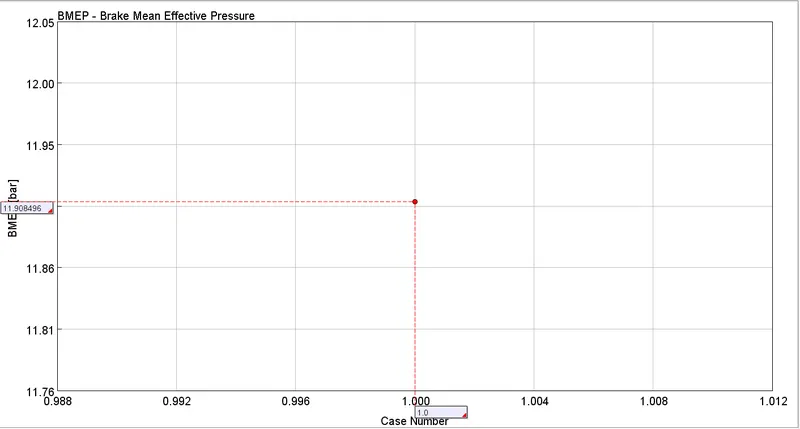
Brake Mean Effective Pressure is a calculation of the engine cylinder pressure that would give the measured brake horsepower. Brake mean effective pressure is an indication of engine efficiency regardless of capacity or engine speed.
Brake Specific Fuel Consumption:
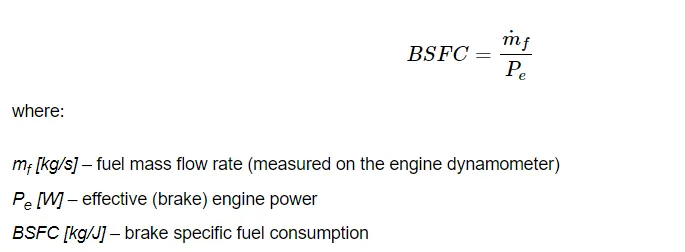
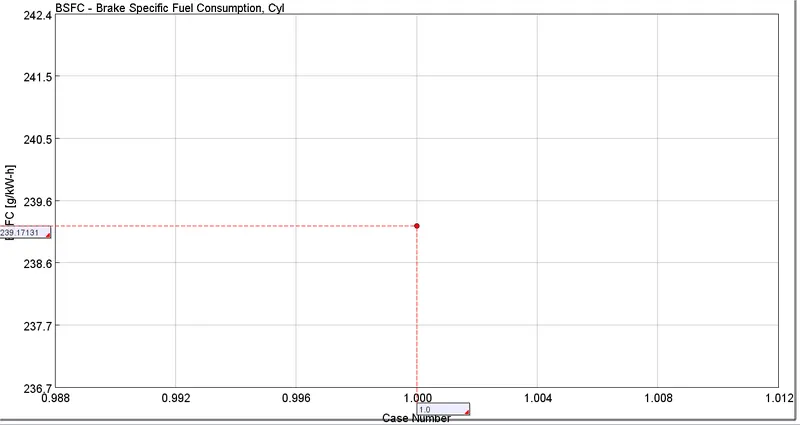
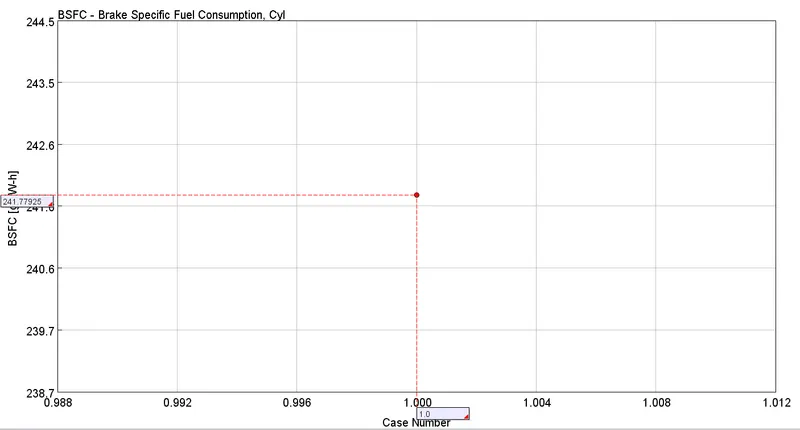
Brake specific fuel consumption (BSFC) is a parameter that reflects the efficiency of a combustion engine which burns fuel and produces rotational power (at the shaft or crankshaft). In automotive applications, BSFC is used to evaluate the efficiency of the internal combustion engines (ICE). The keyword “brake” is related to the use of a dynamometer (electric brakes) to measure the engine parameters (fuel mass flow rate, torque, etc.).
In Cylinder Pressure:
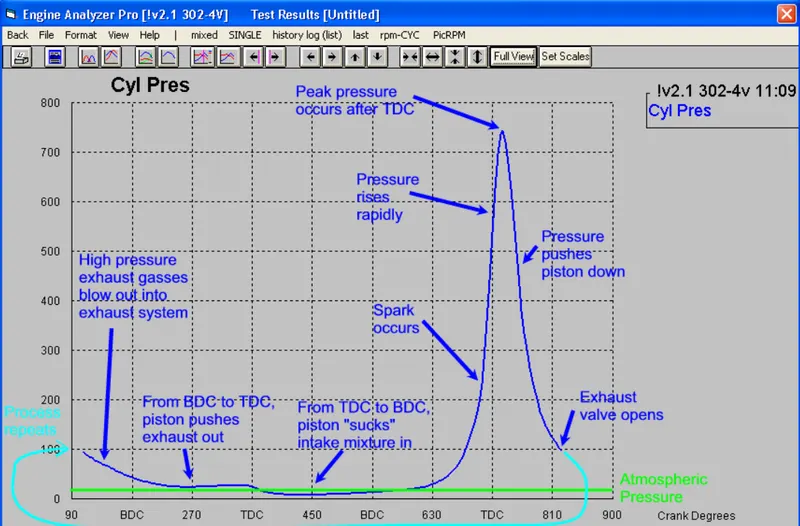
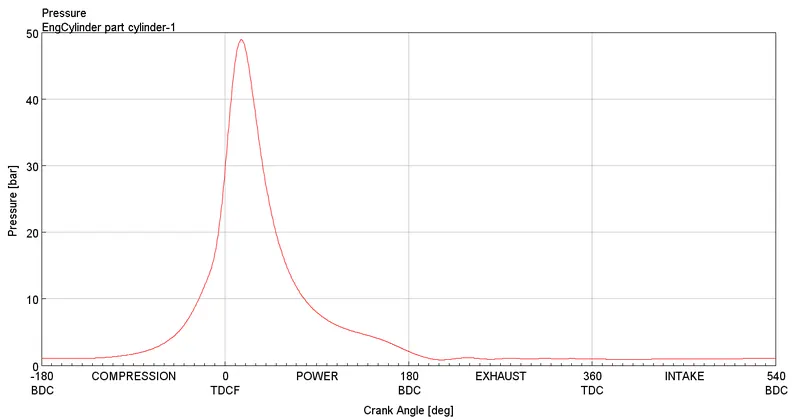
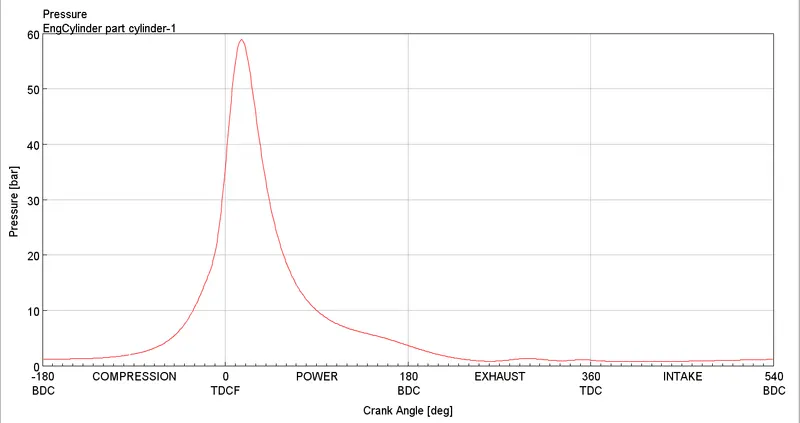
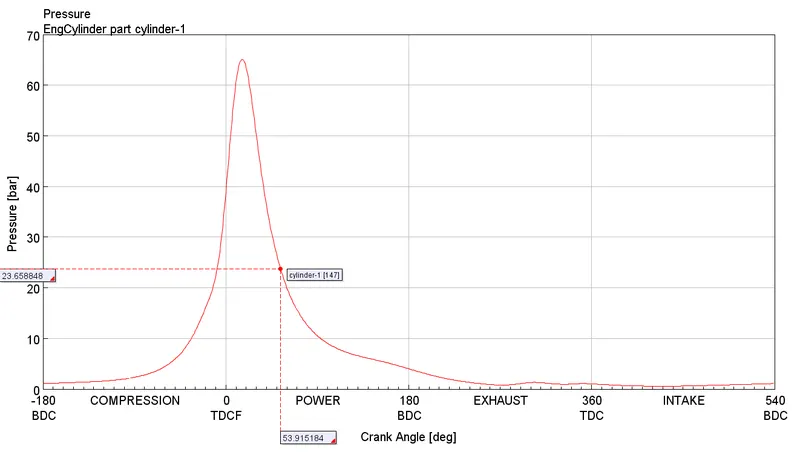
Cylinder Pressure is the pressure in the engine cylinder during the 4 strokes of engine operation (intake, compression, combustion and expansion, and exhaust). You could argue that pressure during expansion is the most important, because that is the cylinder pressure pushing on the piston to produce power. But the cylinder pressure during all 4 strokes is necessary for accurate engine performance prediction.
Simulation:
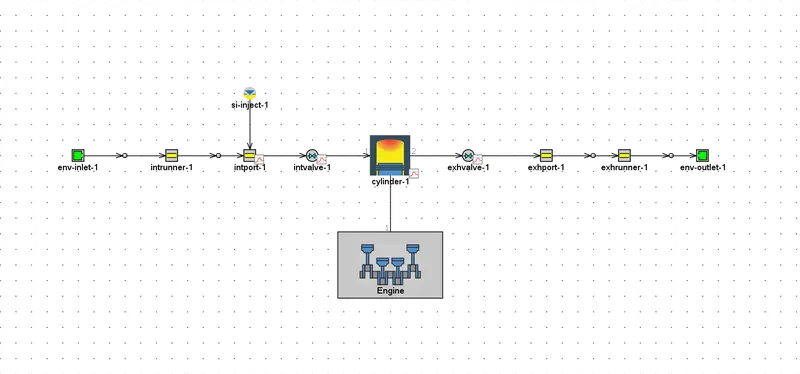
Single Cylinder SI Engine Model
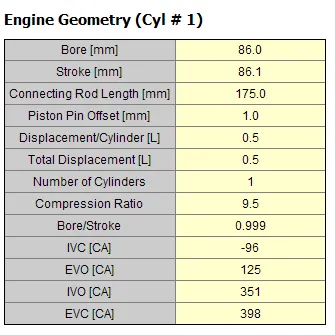
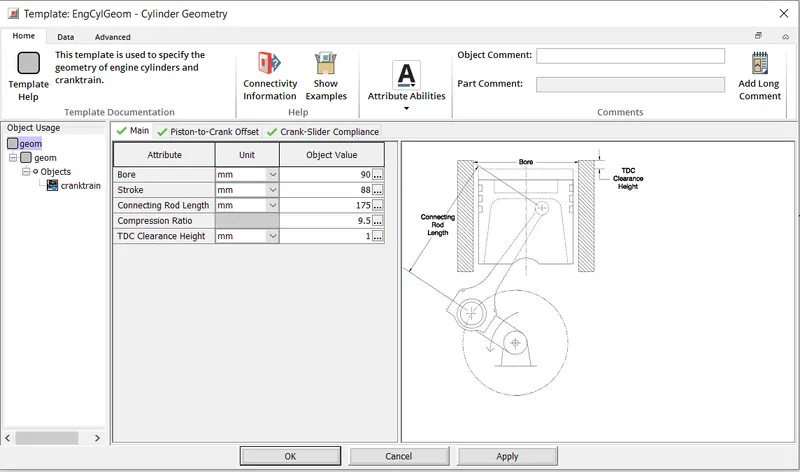
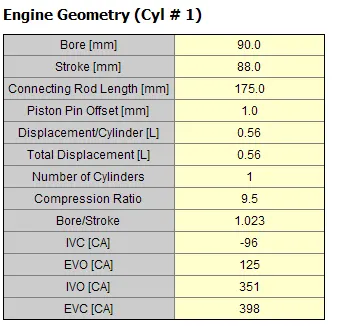
Geometric Information of the Engine:
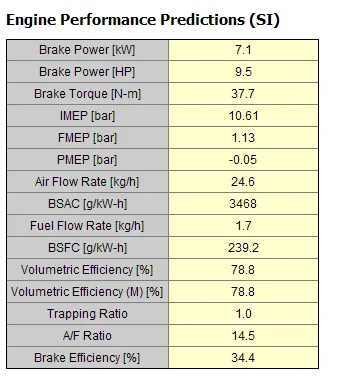
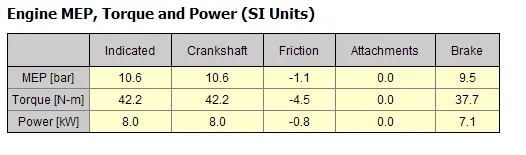
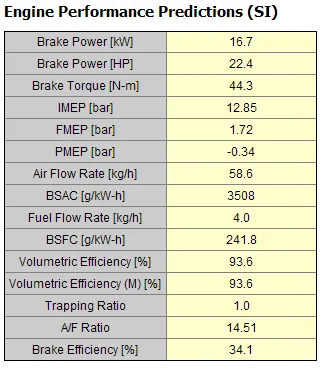
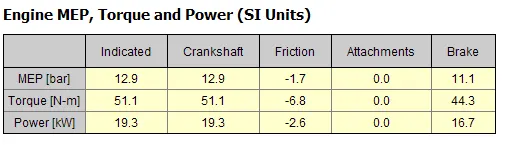
Simulation Result @ 1800 RPM:
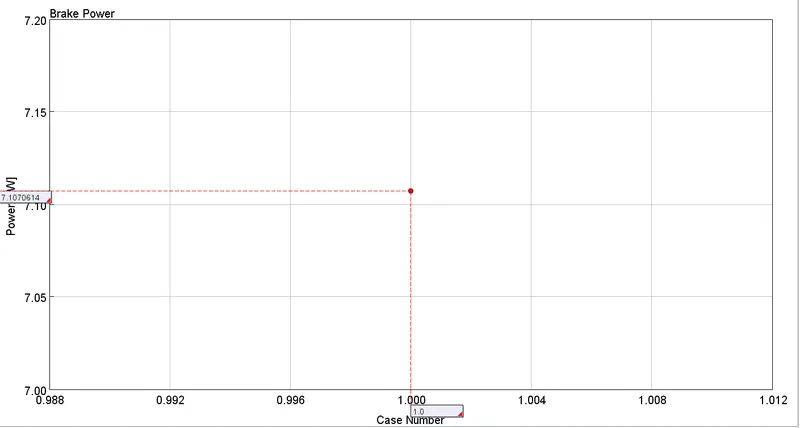
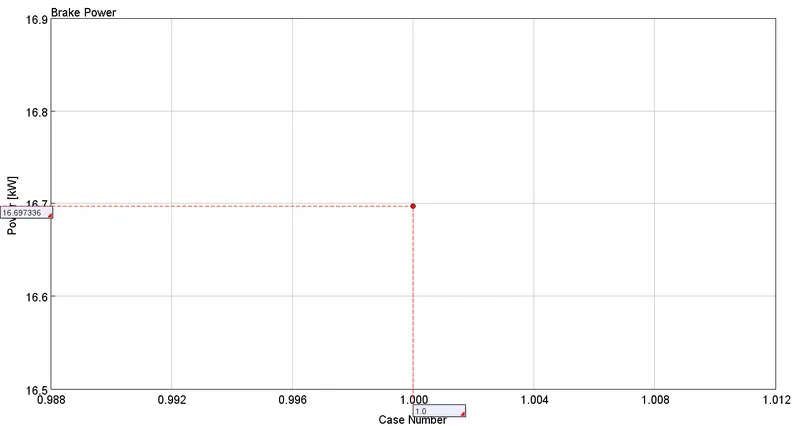
Power
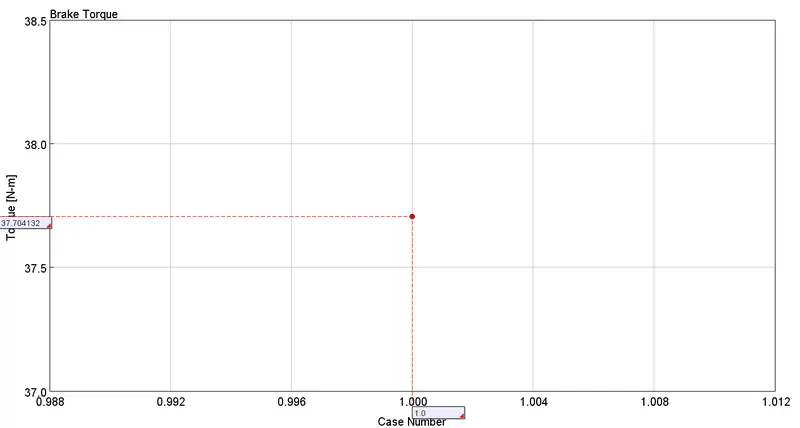
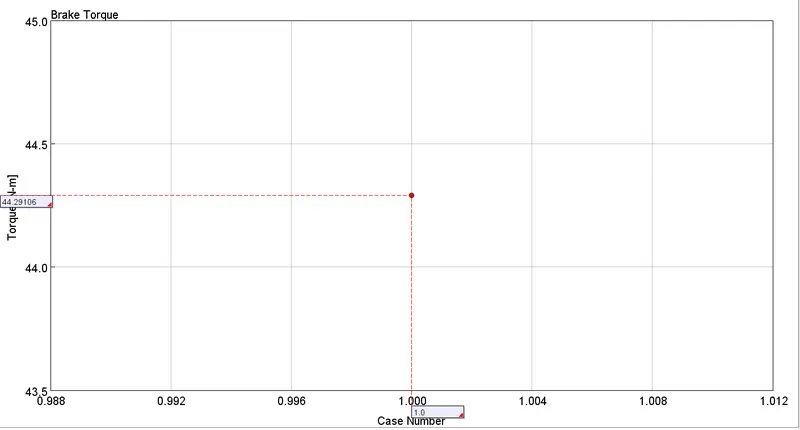
Torque
In Cylinder Pressure
BMEP
BSFC
Simulation Result @ 3600 RPM:
Power
Torque
In Cylinder Pressure
BMEP
BSFC
Simulation Result @ 3600 RPM:
In this simulation we will have to improve the performance of the engine by 10%. In order to do that we will have to check, which parameters will influence the performance of the engine.
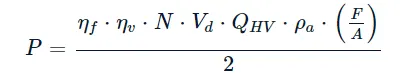
Where
P">P= Engine Power
ηf">ηf = Fuel Conversion Efficiency
ηv">ηv = Volumetric Efficiency
N">N = Rotational Speed of the Crankshaft
Vd">Vd = Displacement Volume
QHV">QHV= Heating Value of the Fuel
ρa">ρa= Density of Incoming Air
(FA)">(F/A) = Fuel-Air Ratio
From the above equation, it can observed that the power of an engine can be increased by
- Increasing the Volumetric Efficiency.
- Increasing the RPM.
- Increasing the Displacement Volume.
- Increasing the Density of the Incoming Air.
- Increasing the Fuel Air Ratio.
Procedure:
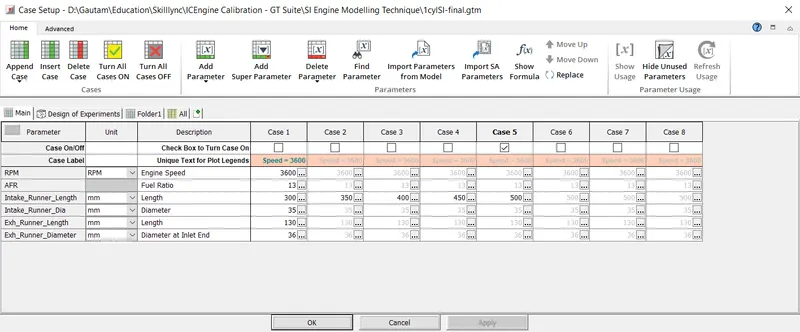
- Inorder to increase the Power Output of the engine, from the above equation it was decided to change the Volume of the engine followed by Volumetric Efficiency and AFR Tuning.
- Initially the volume of the Engine was 500cc, which was then increased by 60cc to 560cc.
- Increasing the volume of the engine does increase the power output, but Intake and Exhaust Runners have to be tunned accordingly.
- So inorder to accomodate the change in engine's volume, Intake and Exhaust Pipe's Length and Diameter was optimized to match the engine. Followed which AFR was tunned.
Result:
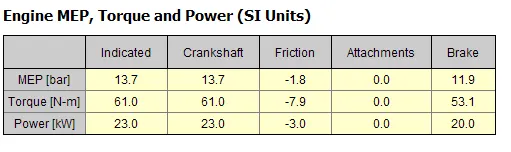
Power
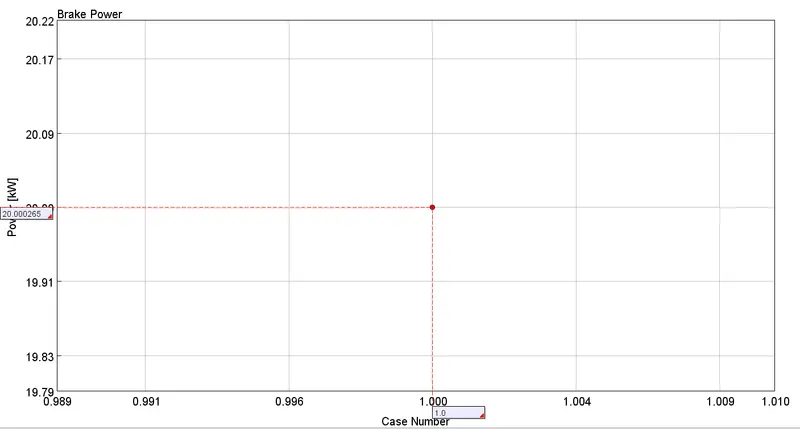
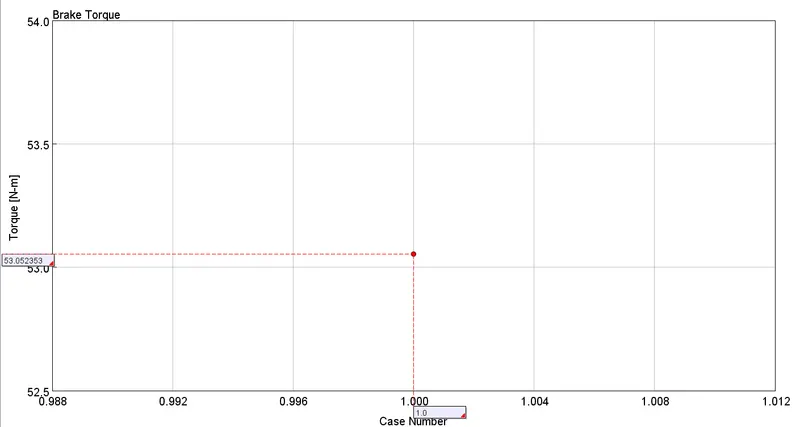
Torque
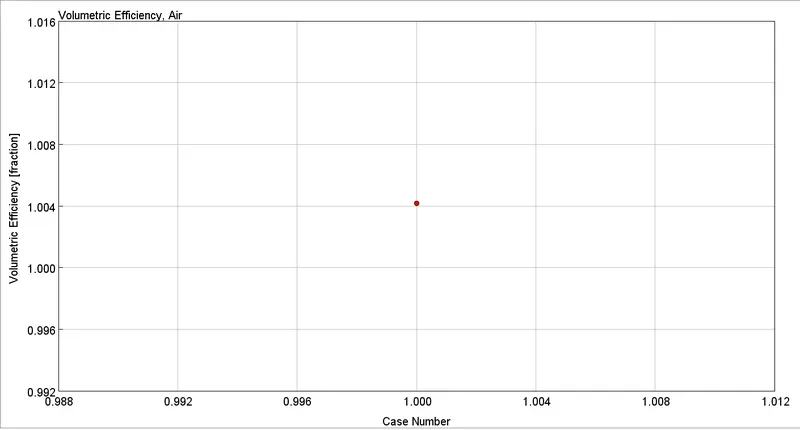
Volumetric Efficiency
In Cylinder Pressure
BMEP
BSFC
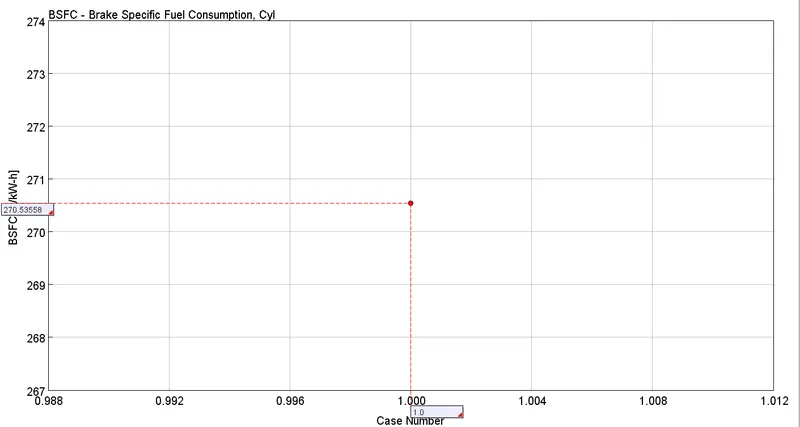
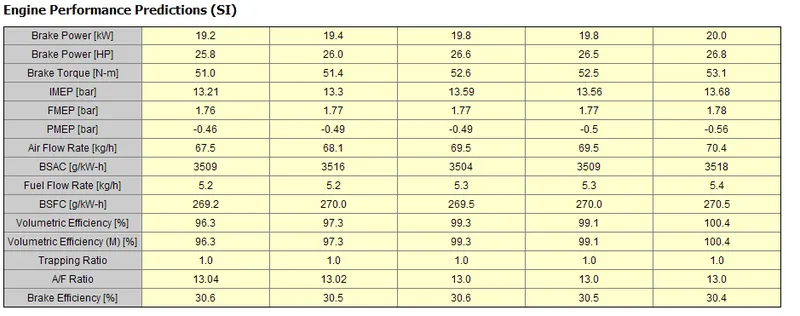
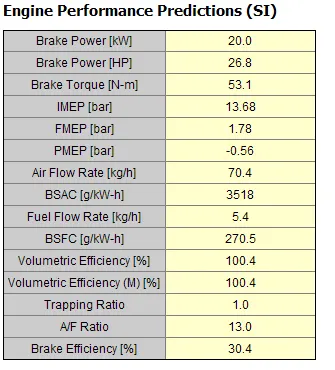
From the above result we can see that the engine is able to produce 20% more power. This is due to the fact that the change in engine's volume and tuning of intake, exhaust runners, increased engines volumetric efficiency.
From the above graph we can see that the engine's volumetric efficiency is 100%, which is not practically possible in an Naturally Aspirated SI engine through out its operating point, but when the runners are tunned properly based on Helmholtz Resonance theory it is possible to achieve 100% volumetric efficiency only at a particular RPM.
Since the volumetric efficiency is increased, more fuel can be injected into the cylinder which inturn produces more power.
Conclusion:
In this project, 1D model of a Single Cylinder 4-stroke SI engine was sucessfully developed in GT-Suite. The model was then used to study the effects of different parameters of the engine.